China on Tuesday announced its delegation for the upcoming Milan-Cortina 2026 Olympic Winter Games, comprising 286 members, including 126 athletes.
With ages ranging from 17 to 41 and an average age of 25, the squad will be led by defending Olympic champions Gu Ailing in freestyle skiing and Su Yiming in snowboarding.
They will be joined by veterans such as short track speed skater Fan Kexin, freestyle skier Xu Mengtao and figure skating pair Sui Wenjing and Han Cong, all gold medalists on home ice and snow at Beijing 2022, where China won 15 medals, including nine golds.
Among the veterans, Xu Mengtao, Qi Guangpu, Cai Xuetong, and Liu Jiayu will make their fifth Olympic appearances in Italy.
A total of 67 athletes will make their Olympic debut in Milan-Cortina, and the youngest team member is 17-year-old snowboard halfpipe athlete Ren Chongshuo.
The Chinese delegation will compete in 91 events across 15 disciplines, marking the country's largest-ever team and widest event participation at an overseas Winter Olympics.
The 2026 Winter Games will take place from Feb. 6 to 22, featuring 116 events across 16 disciplines.
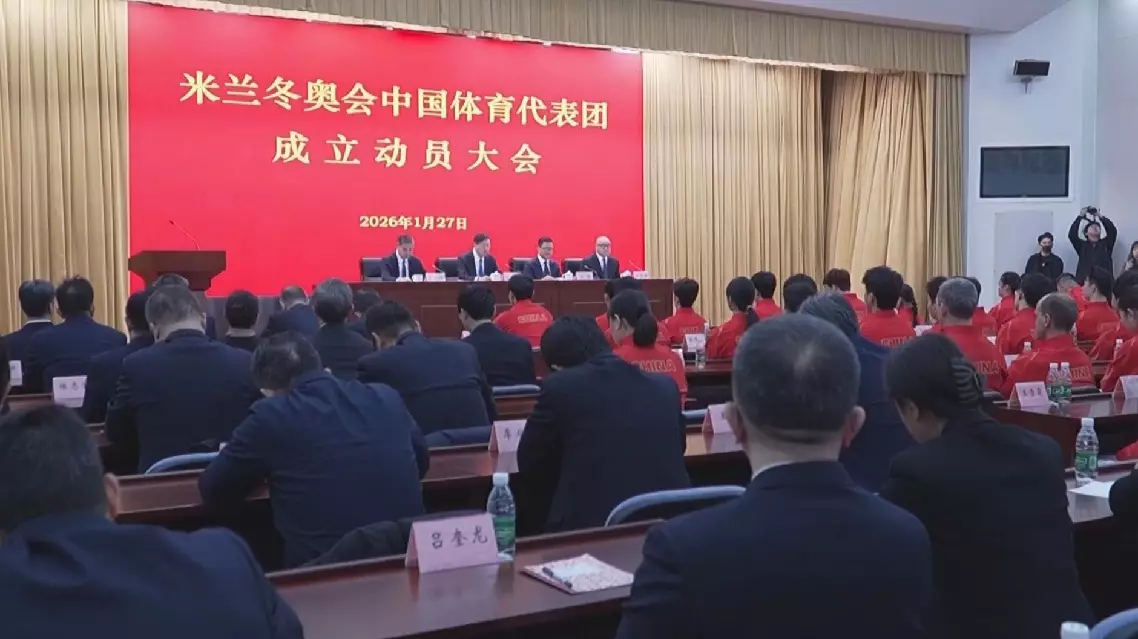
China forms 126-athlete squad for Milan-Cortina 2026 Winter Olympics
Chinese researchers have successfully developed an all-superconducting user magnet with a central magnetic field strength of 35.6 teslas -- more than 700,000 times that of Earth's magnetic field -- setting a new world record for all-superconducting user magnets.
The breakthrough marks China's attainment of internationally advanced capabilities in high-temperature superconducting applications and is expected to provide strong technical support for research in materials science, life sciences and nuclear fusion, among other fields.
The all-superconducting user magnet, which uses a high-temperature superconducting insert magnet as its core, has a bore diameter of 35 millimeters. It first achieved a magnetic field of 30 teslas in 2023 and has since been opened to domestic and international users.
Following continuous upgrades to materials, structure and manufacturing processes, the research team has recently raised the maximum magnetic field to 35.6 teslas, while keeping the bore size unchanged.
With this achievement, the system has become the world’s only all-superconducting user magnet capable of providing magnetic fields above 30 teslas for materials science research, significantly enhancing China’s strength in strong-magnetic-field studies.
According to the research team, the magnet was designed and manufactured by the Institute of Electrical Engineering under the Chinese Academy of Sciences (CAS), while the Institute of Physics under CAS addressed challenges such as system health monitoring. The facility will support frontier research conducted by scientific teams from China and abroad. Going forward, the team plans to further enhance the magnet’s overall performance and develop all-superconducting user magnets with even higher magnetic field strengths.
"Under extreme high magnetic fields, we can obtain the most fundamental structural and functional information of matter. As the magnetic field strength increases, we are able to study larger molecular structures and probe deeper into the internal structure and functions of materials. In this sense, 35 teslas represents a technological leap. Our next goal is to reach 40 teslas,” said a CAS academician of Wang Qiuliang, also a fellow from the Institute of Electrical Engineering under the CAS.
"With stronger magnetic fields, nuclear magnetic resonance can achieve higher resolution, allowing us to observe biological details more clearly. In plasma confinement, strong magnetic fields offer an effective solution. High-temperature superconductors can generate even stronger magnetic fields, providing better confinement and technological support for future magnetic confinement in nuclear fusion research," said Luo Jianlin, a fellow from the Institute of Physics under the CAS.
The fully superconducting user magnet system is housed at the Comprehensive Research Facility for Extreme Conditions, a major national scientific infrastructure in Huairou Science City, Beijing. The facility, which integrates extreme experimental conditions including ultra-low temperatures, strong magnetic fields, ultra-high pressure, and ultrafast optical fields, passed national acceptance in February 2025.
Working in coordination with other extreme-condition research platforms at the facility, the 35.6-tesla fully superconducting user magnet will provide technical support for scientists on microscopy research.
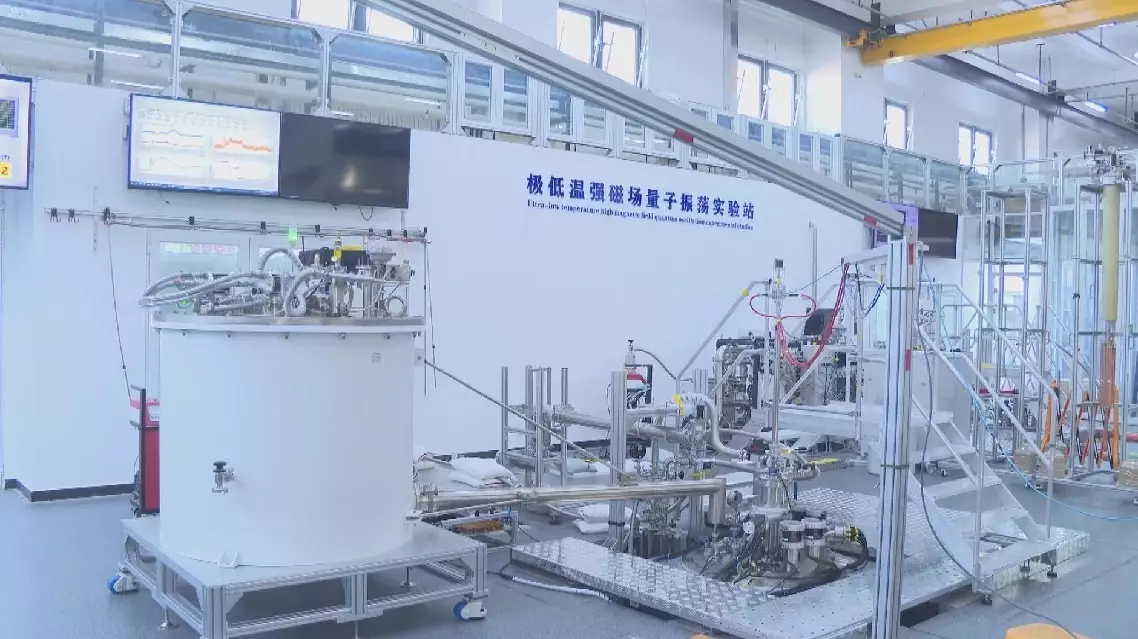
China sets new world record with 35.6-tesla all-superconducting user magnet