Guangdong-Hong Kong-Macao Greater Bay Area Development Office holds seminar in Shenzhen to explore cross-boundary applications of low-altitude economy
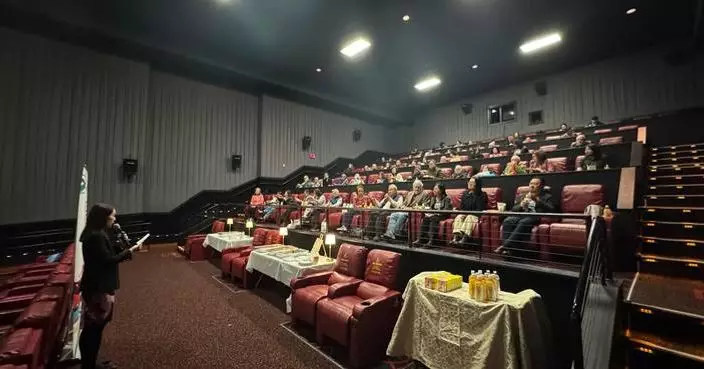
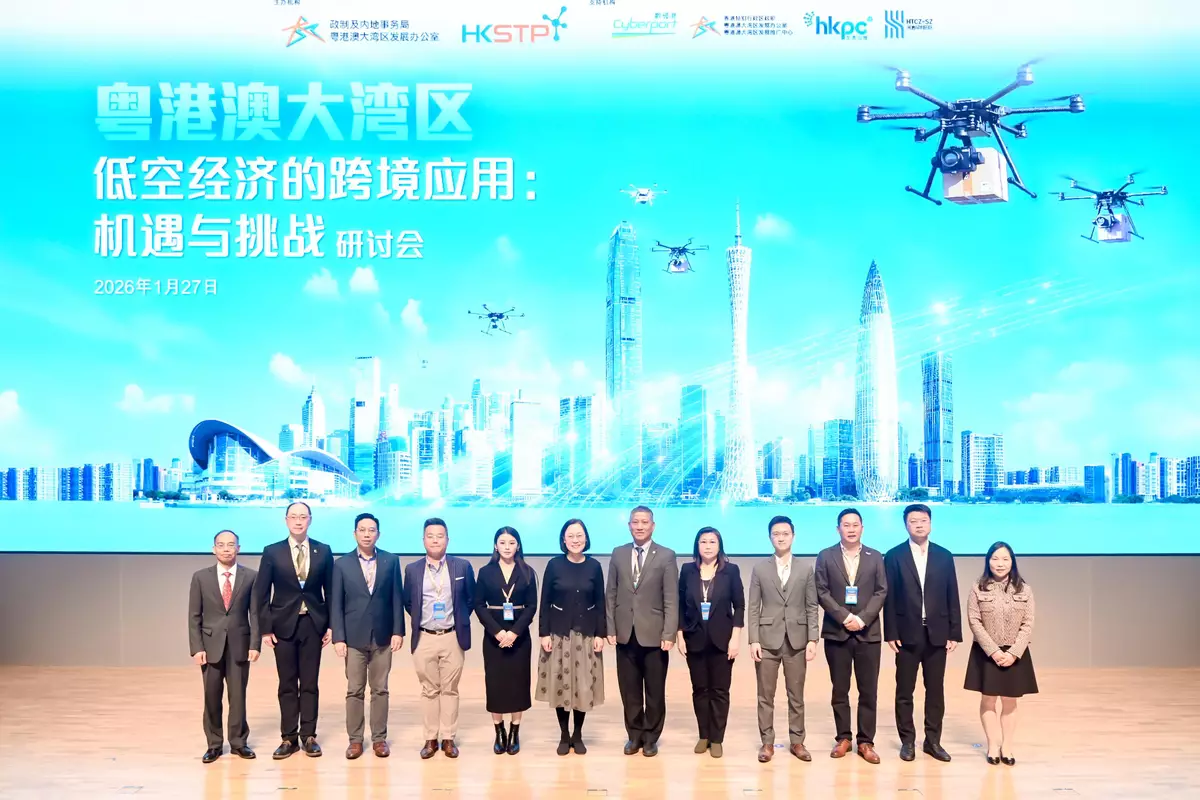
The Guangdong-Hong Kong-Macao Greater Bay Area Development Office (GBA Office) held a seminar on the "cross-boundary applications of the low-altitude economy in the Guangdong-Hong Kong-Macao Greater Bay Area: opportunities and challenges" in Shenzhen today (January 27) to explore technical developments and challenges in low-altitude cross-boundary air routes, the establishment of low-altitude management systems, the commercialisation of electric vertical take-off and landing aircraft in the high-end cross-boundary travel market of the Guangdong-Hong Kong-Macao Greater Bay Area (GBA), and the future development directions of the low-altitude economy. The seminar attracted over 200 participants from Hong Kong and a number of Mainland cities.
Delivering a pre-recorded speech at the opening session, the Commissioner for the Development of the Guangdong-Hong Kong-Macao Greater Bay Area, Ms Maisie Chan, said that the 15th Five-Year Plan clearly identified the low-altitude economy as one of the nation's strategic emerging industrial clusters for accelerated development, establishing it as an important engine for economic growth. The GBA, with its solid industrial foundation and strong economic vitality, not only provides fertile ground for the development of the low-altitude economy but is also well-positioned to be a global pioneer and pilot demonstration area in the low-altitude economy. The GBA covers three administrative regions, which offers abundant scenarios for cross-boundary applications of the low-altitude economy. As a core city and key driving engine of the GBA, Hong Kong is contributing proactively to the low-altitude economy area. Following the launch of the Regulatory Sandbox X scheme, the Hong Kong Special Administrative Region (HKSAR) Government will issue the Action Plan on Developing Low-Altitude Economy this year to promote Hong Kong as a hub for low-altitude innovation and applications through institutional innovation and technological advancement.
The Acting Chief Business Development Officer of the Hong Kong Science and Technology Parks Corporation (HKSTP), Mr Oscar Wong, said that the HKSTP is a member of the Greater Bay Area Low Altitude Economy Alliance to support the development of the low-altitude economy, and has been actively collaborating and communicating closely with the HKSAR Government and various stakeholders. This has enabled the successful launch of the first batch of pilot projects under the low-altitude economy regulatory sandbox, including food delivery via drones over Science Park and pharmaceutical delivery trials by another park company. The HKSTP looks forward to seeing more outcomes in the future.
The seminar was co-organised by the GBA Office and the HKSTP. Industry leaders and think tank representatives were invited to share their insights on the opportunities and challenges of cross-boundary applications of the low-altitude economy. The panel discussions were lively, with guests actively exchanging views and offering forward-looking suggestions that provided practical references for the audience, reflecting the sector's keen anticipation on cross-boundary operations in the low-altitude economy.
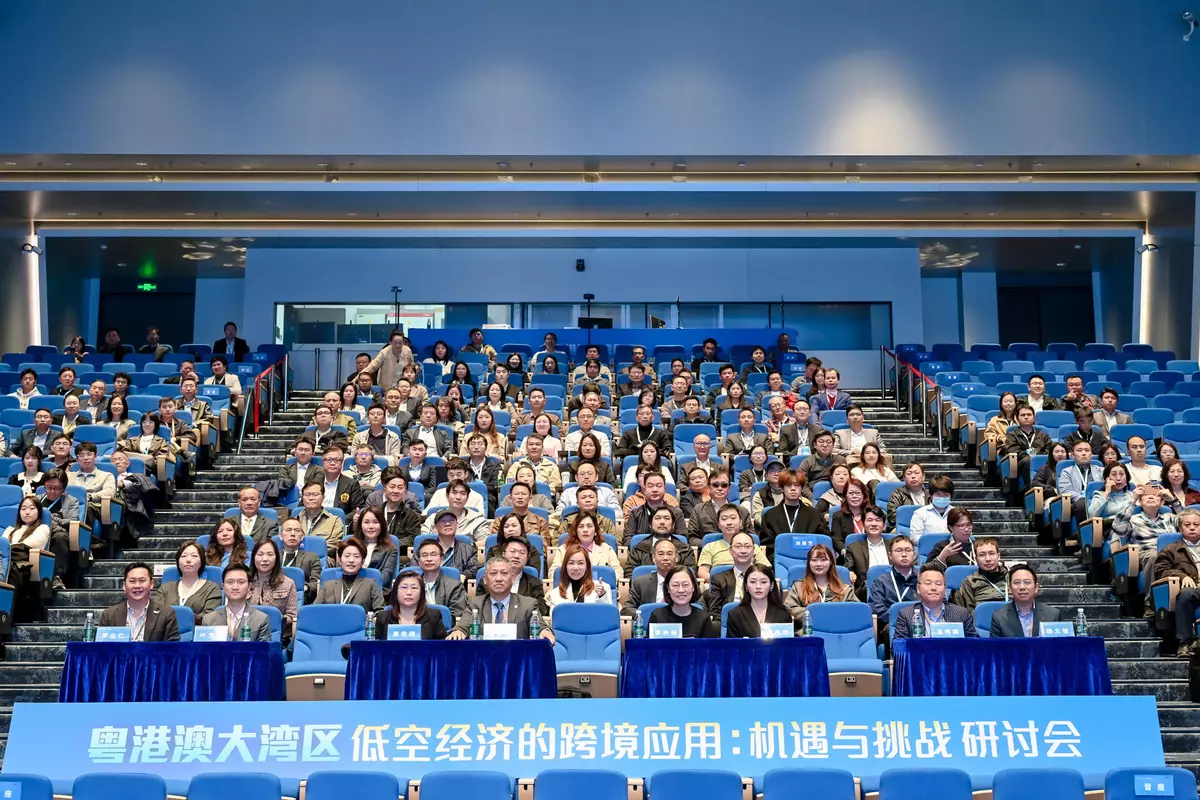
Guangdong-Hong Kong-Macao Greater Bay Area Development Office holds seminar in Shenzhen to explore cross-boundary applications of low-altitude economy Source: HKSAR Government Press Releases


FEHD releases fourth batch of gravidtrap indexes for Aedes albopictus in January
The Food and Environmental Hygiene Department (FEHD) today (January 27) released the fourth batch of gravidtrap indexes and density indexes for Aedes albopictus in January, covering 26 survey areas, as follows:
District |
Survey Area |
January 2026 |
First Phase Gravidtrap Index |
First Phase Density Index |
Central and Western |
Central and Admiralty |
0.0% |
N/A |
Sheung Wan and Sai Ying Pun |
0.0% |
N/A |
Wan Chai |
Happy Valley and Tai Hang |
0.0% |
N/A |
Islands |
Cheung Chau |
0.0% |
N/A |
Kowloon City |
Ho Man Tin |
0.0% |
N/A |
Kowloon City |
0.0% |
N/A |
Kwun Tong |
Kowloon Bay |
0.0% |
N/A |
Lam Tin and Sau Mau Ping |
0.0% |
N/A |
Mong Kok |
Mong Kok and Tai Kok Tsui |
0.0% |
N/A |
Sham Shui Po |
Cheung Sha Wan |
0.0% |
N/A |
Sham Shui Po and Shek Kip Mei |
0.0% |
N/A |
Wong Tai Sin |
Wong Tai Sin East |
0.0% |
N/A |
Wong Tai Sin West |
0.0% |
N/A |
North |
Sheung Shui |
0.0% |
N/A |
Tai Po |
Tai Po West |
0.0% |
N/A |
Kwai Tsing |
Kwai Chung West |
0.0% |
N/A |
Lai King |
0.0% |
N/A |
Tsing Yi North |
0.0% |
N/A |
Tuen Mun |
So Kwun Wat |
1.8% |
1.0 |
Tuen Mun North |
0.0% |
N/A |
Yuen Long |
Hung Shui Kiu and Ping Shan |
0.0% |
N/A |
District |
Survey Area |
January 2026 |
Area Gravidtrap Index |
Area Density Index |
Southern |
Pok Fu Lam |
0.0% |
N/A |
Wong Tai Sin |
Ngau Chi Wan and San Po Kong |
0.0% |
N/A |
Sai Kung |
Sai Kung Town |
0.0% |
N/A |
Tuen Mun |
Tuen Mun West |
0.0% |
N/A |
Yuen Long |
Yuen Long Town |
0.0% |
N/A |
Among the fourth batch of First Phase Gravidtrap Indexes covering 21 survey areas and Area Gravidtrap Indexes covering five survey areas in January, all were below 10 per cent.
The FEHD has so far released four batches of gravidtrap indexes for Aedes albopictus in January 2026, covering 59 survey areas; most of the areas recorded 0 per cent, indicating that the distribution of Aedes albopictus mosquitoes was not extensive.
The eggs of Aedes albopictus can withstand long periods of desiccation and will hatch when the temperature becomes suitable and water is present. Members of the public should continue to take mosquito control measures during winter to eliminate mosquito eggs.
Public participation is crucial to the effective control of mosquito problems. The FEHD appeals to members of the public to continue to work together in strengthening personal mosquito control measures, including:
tidy up their premises and check for any accumulation of water inside their premises;
remove all unnecessary water collections and eliminate the sources;
check household items (those placed in outdoor and open areas in particular), such as refuse containers, vases, air conditioner drip trays, and laundry racks to prevent stagnant water;
change the water in flower vases and clear the water in saucers of potted plants at least once every seven days;
properly cover all containers that hold water to prevent mosquitoes from accessing the water;
properly dispose of articles that can contain water, such as empty lunch boxes and cans; and
scrub drains and surface sewers with alkaline detergent at least once a week to remove any mosquito eggs.
Starting in August 2025, following the completion of the surveillance of individual survey areas, and once the latest gravidtrap index and the density index are available, the FEHD has been disseminating relevant information through press releases, its website and social media. It aims to allow members of the public to quickly grasp the mosquito infestation situation and strengthen mosquito control efforts, thereby reducing the risk of chikungunya fever (CF) transmission.
Following recommendations from the World Health Organization and taking into account the local situation in Hong Kong, the FEHD sets up gravidtraps in districts where mosquito-borne diseases have been recorded in the past, as well as in densely populated places such as housing estates, hospitals and schools to monitor the breeding and distribution of Aedes albopictus mosquitoes, which can transmit CF and dengue fever (DF). After reviewing the present DF and CF vector surveillance programme, the FEHD has expanded the coverage for monitoring Aedes albopictus mosquitoes starting from 2026. The number of survey areas set up in the community has been revised to 62, with some survey areas renamed. Additional gravidtraps will also be set up at different locations across the territory to strengthen the monitoring of the breeding of mosquitoes. Under the present surveillance mechanism, the FEHD has set up gravidtraps in survey areas of the community, with a surveillance period of two weeks. During the surveillance period, the FEHD will collect the gravidtraps once a week. After the first week of surveillance, the FEHD will immediately examine the glue boards inside the retrieved gravidtraps for the presence of adult Aedine mosquitoes to compile the Gravidtrap Index (First Phase) and Density Index (First Phase). At the end of the second week of surveillance, the FEHD will instantly check the glue boards for the presence of adult Aedine mosquitoes. Data from the two weeks of surveillance will be combined to obtain the Area Gravidtrap Index and the Area Density Index. The gravidtrap and density indexes for Aedes albopictus in different survey areas, as well as information on mosquito prevention and control measures, are available on the department's webpage (www.fehd.gov.hk/english/pestcontrol/dengue_fever/Dengue_Fever_Gravidtrap_Index_Update.html#).
Source: AI-found images