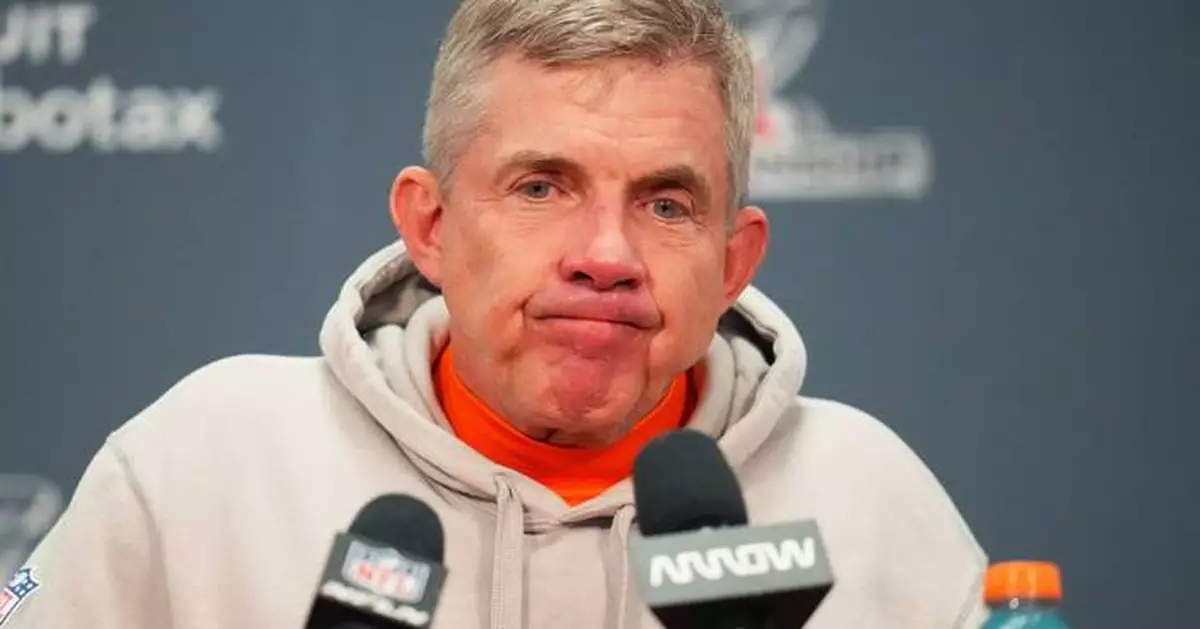
Skip to Content Facebook Feature Image

Sean Payton's gamble: The decision that derailed the Broncos' Super Bowl dreams

Sport

Sean Payton's gamble: The decision that derailed the Broncos' Super Bowl dreams
Sport

Sport

Sean Payton's gamble: The decision that derailed the Broncos' Super Bowl dreams

2026-01-27 19:00 Last Updated At:19:10

DENVER (AP) — With a blizzard bearing down on Empower Field at Mile High, coach Sean Payton went for the jugular instead of the points, short-circuiting the Denver Broncos' drive to Super Bowl 60.

“There will always be second thoughts,” Payton said in the anguished aftermath of Denver's 10-7 loss to the New England Patriots in the AFC championship Sunday.

Backup quarterback Jarrett Stidham's first completion in 749 days was a 52-yard dart to Marvin Mims Jr. that set up Courtland Sutton’s 6-yard touchdown catch in the first quarter. Stidham drove the Broncos to the Patriots' doorstep again early in the second quarter and the stadium was rocking with the thought of the franchise's ninth Super Bowl berth and first in a decade.

Payton called a timeout on fourth-and-1 at the New England 14. But instead of sending out Wil Lutz for a 31-yard field goal attempt — two yards shorter than an extra point — Payton kept his offense on the field, and not to try to draw the Patriots offside, either.

His first intention was a run up the middle behind the NFL's highest-paid offensive line, one that features a pair of All-Pros in right guard Quinn Meinerz and left tackle Garett Bolles, but Payton opted to have his swashbuckling backup QB, the one with one career victory in six NFL seasons, run a bootleg right and throw the ball.

Stidham could have found wide receiver Lil'Jordan Humphrey open over the middle, but he keyed in on running back R.J. Harvey. And when Stidham was pressured, he threw the ball at Harvey's feet incomplete.

Instead of a two-score lead over an opponent that had managed a measly 12 yards of offense to that point and with nasty weather on the horizon, the Broncos saw their early momentum evaporate along with the first-half sunshine.

The Broncos never got inside the New England 30-yard line again.

“Hindsight, the initial run thought was a better decision,” Payton said. “There’s always regrets. Look, I felt like here we are fourth-and-1. I felt close enough. Also, it’s a call you make based on the team you are playing and what you are watching on the other side of the ball. But, there will always be second thoughts.”

Pundits, critics and commentators have been giving Payton the third degree ever since.

“Go up 10-0. Keep the momentum," ESPN analyst Booger McFarland insisted. "Because you did your homework before the game. You knew the weather was going to turn nasty. Even though Wil Lutz is a good kicker, it was going to be tough to kick in inclement weather. I thought this was a poor coaching decision and move by Sean Payton.

“If you’re going to go for it, how about run the ball?” McFarland added. “I mean, it’s fourth and 3 feet. Or a 31-yard field goal. Instead, you go reverse-pivot with a quarterback making his first start.”

Mark Schlereth, NFL analyst for Fox Sports, said on “The Dan Patrick Show” that he was in Peyton Manning's suite at the game with Manning, Mike Shanahan and Brandon Stokley. He said they all figured Payton would send out his kicker to make it a two-score game.

“You've got a backup quarterback, you've got a chance to go up 10-0 and your defense is balling out of control,” Schlereth said. "All of us were in agreement at that point: just kick the field goal, just kick the field goal. And you come out with a little roll-out pass and it was a debacle to begin with.

"And plus, at that point, you hadn't run the ball for 2 inches. So, it's not like you feel like, hey man, they're really going to respect our run game. They're really going to respect what we're doing here as an offense so we're just going to run the QB sneak or we're just going to run some power down the middle or iso and really smash-mouth these people. They were kicking our (behind) up front.

“So, I was like, kick the field goal, take the points, man, 10-0 is a big score, especially with the weather report that it was going to get nasty in the second half."

Patrick brought up the trend of NFL coaches going for it on fourth down — they're 25 of 51 in the playoffs so far.

“It almost seems like you're a failure if you don't go for it on fourth down and you take the field goal and you leave four points out there," he said. "But I don't know if the data is able to show, well, who's my quarterback? Who am I going against? What are the conditions? What time of the game am I doing all of this stuff?”

Schlereth is old school; he hates the analytics that have become such a prominent part of the game.

“Math has never made a tackle,” he said. “Math has never blocked anybody. Math has never done any of that stuff. ... So to me, that math is faulty. And you've got to have a feel of the game and I thought Sean made a major gaffe not kicking that field goal. But that has become endemic of the league in general. It's almost like you're a (coward) if you kick a field goal. And I hate the momentum shift. I hate it all. Like, take the points.”

McFarland also questioned Rams coach Sean McVay's decision to go for it with just under five minutes remaining on fourth-and-4 at the Seattle 6 with Los Angeles trailing 31-27 in the NFC championship. McFarland argued McVay should have sent out Harrison Mevis for a chip-shot field goal. Instead, Matthew Stafford threw incomplete and when the Rams got the ball back in the waning seconds, they needed a TD, not a field goal, to win.

Make it a one-point game and "now you put the pressure back on Seattle’s offense,” McFarland said. "And so now, if you’re Seattle’s offense, and if you go three-and-out or (the Rams) get a ball back, we don’t need to drive for a touchdown. We've got a kicker that can kick a 50-yarder. And we’re on turf, so we don’t have to worry about the footing. And so now, the pressure goes back to Seattle’s offense to keep the football.”

Behind the Call analyzes the biggest decisions in the NFL.

AP NFL: https://apnews.com/hub/NFL
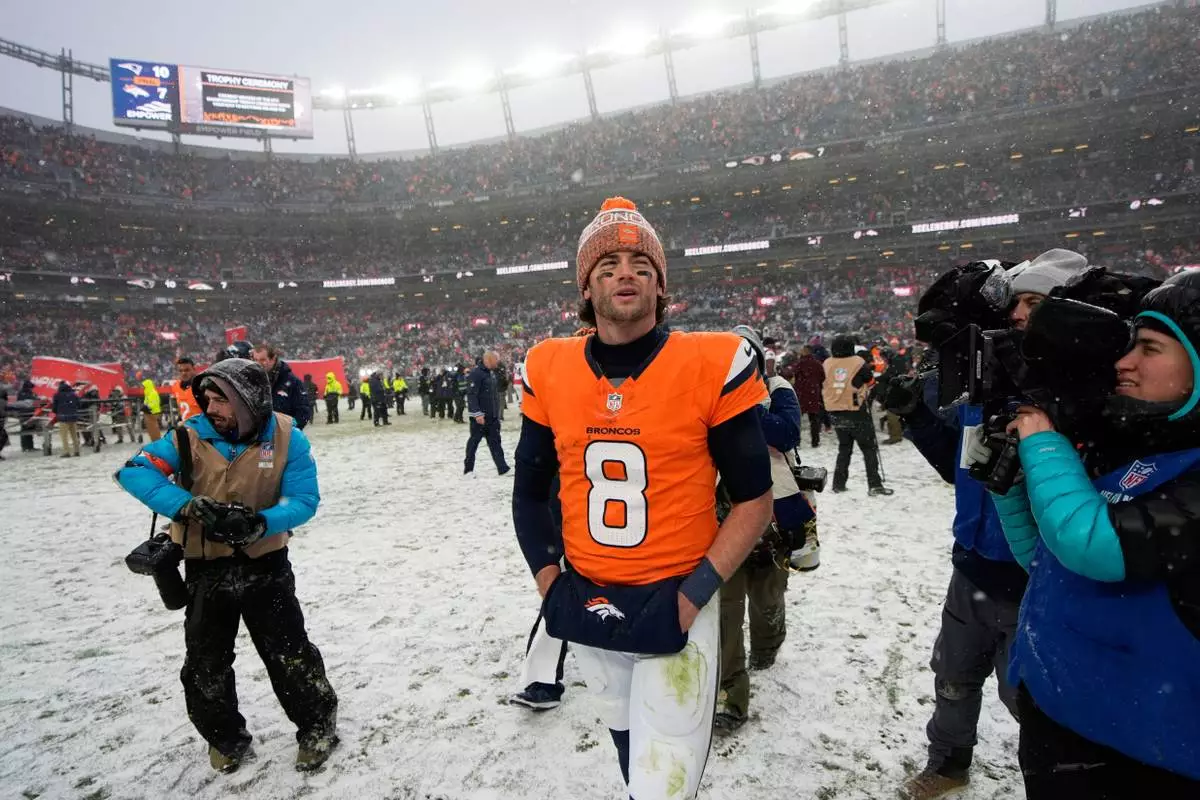
Denver Broncos quarterback Jarrett Stidham leaves the field after the AFC Championship NFL football game between the Denver Broncos and the New England Patriots, Sunday, Jan. 25, 2026, in Denver. (AP Photo/John Locher)
Denver Broncos quarterback Jarrett Stidham leaves the field after the AFC Championship NFL football game between the Denver Broncos and the New England Patriots, Sunday, Jan. 25, 2026, in Denver. (AP Photo/John Locher)

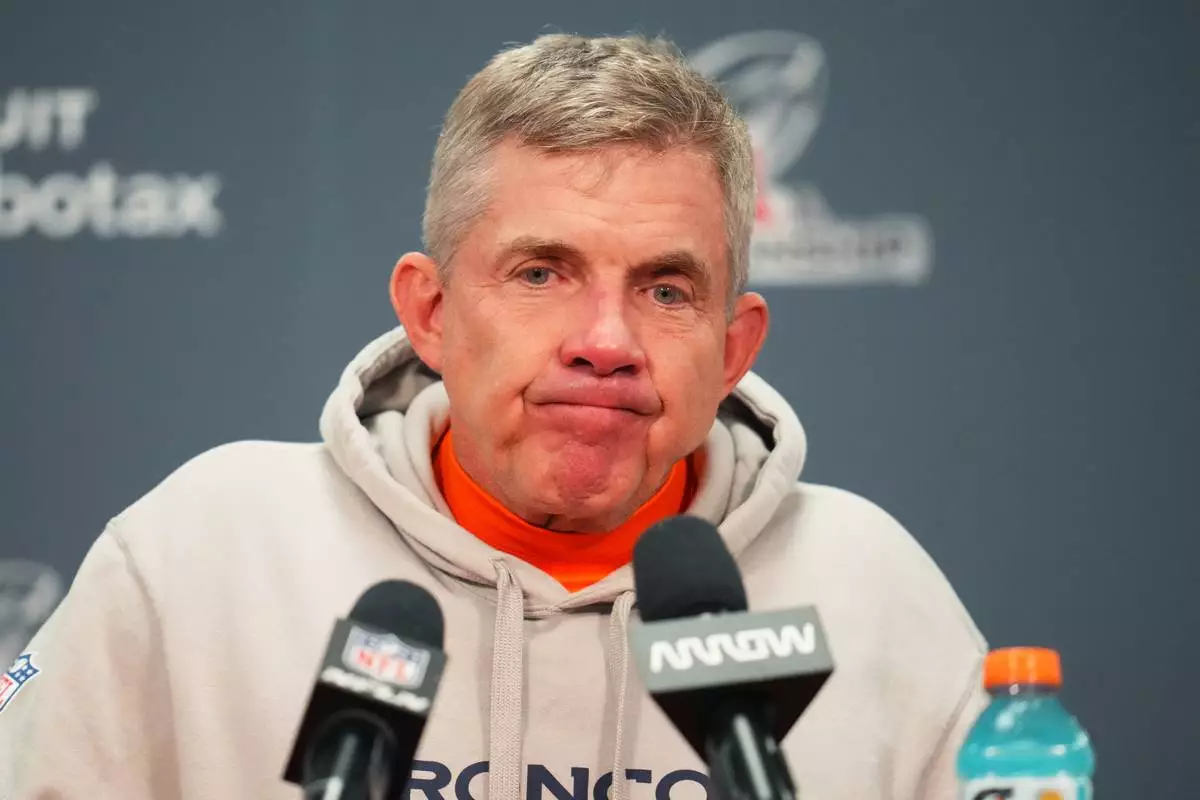
Denver Broncos head coach Sean Payton speaks during a news conference after the AFC Championship NFL football game between the Denver Broncos and the New England Patriots, Sunday, Jan. 25, 2026, in Denver. (AP Photo/Garrett W. Ellwood)
Denver Broncos head coach Sean Payton speaks during a news conference after the AFC Championship NFL football game between the Denver Broncos and the New England Patriots, Sunday, Jan. 25, 2026, in Denver. (AP Photo/Garrett W. Ellwood)
DUBAI, United Arab Emirates (AP) — Iran's bloody crackdown on nationwide protests killed at least 6,126 people while many others still are feared dead, activists said Tuesday, as a U.S. aircraft carrier group arrived in the Middle East to lead any American military response to the crisis. Iran's currency, the rial, meanwhile fell to a record low of 1.5 million to $1.

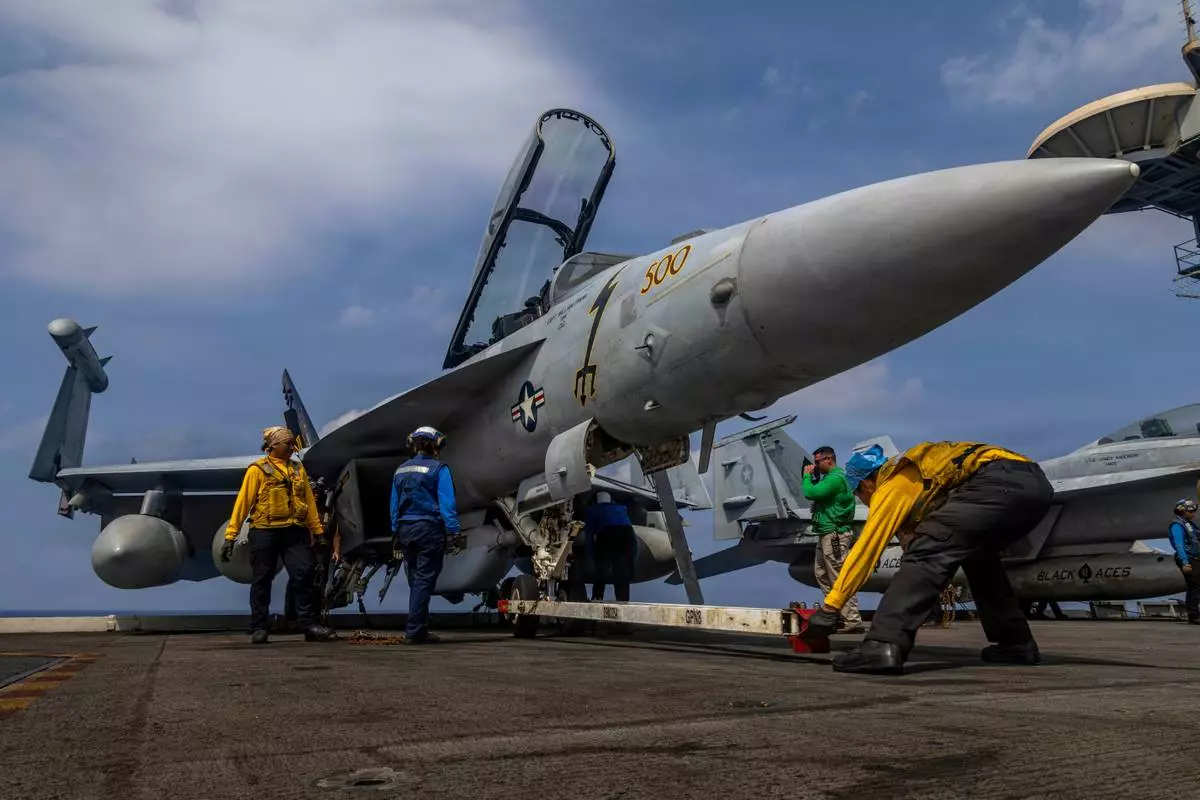
The arrival of the USS Abraham Lincoln aircraft carrier and guided missile destroyers accompanying it provide the U.S. the ability to strike Iran, particularly as Gulf Arab states have signaled they want to stay out of any attack despite hosting American military personnel.

Two Iranian-backed militias in the Mideast have signaled their willingness to launch new attacks, likely trying to back Iran after U.S. President Donald Trump threatened military action over the killing of peaceful protesters or Tehran launching mass executions in the wake of the demonstrations.

Iran has repeatedly threatened to drag the entire Mideast into a war, though its air defenses and military are still reeling after the June war launched by Israel against the country. But the pressure on its economy may spark new unrest as everyday goods slowly go out of reach of its people.

The new figures Tuesday came from the U.S.-based Human Rights Activists News Agency, which has been accurate in multiple rounds of unrest in Iran. The group verifies each death with a network of activists on the ground in Iran.

It identified the dead as including at least 5,777 protesters, 214 government-affiliated forces, 86 children and 49 civilians who weren't demonstrating. The crackdown has seen over 41,800 arrests, it added.

The Associated Press has been unable to independently assess the death toll given authorities cutting off the internet and disrupting calls into the Islamic Republic.

Iran’s government has put the death toll at a far lower 3,117, saying 2,427 were civilians and security forces, and labeled the rest “terrorists.” In the past, Iran’s theocracy has undercounted or not reported fatalities from unrest.

That death toll exceeds that of any other round of protest or unrest there in decades, and recalls the chaos surrounding Iran’s 1979 Islamic Revolution.

The protests in Iran began on Dec. 28, sparked by the fall of the Iranian currency, the rial, and quickly spread across the country. They were met by a violent crackdown by Iran’s theocracy, the scale of which is only starting to become clear as the country has faced more than two weeks of internet blackout — the most comprehensive in its history.

Iran’s U.N. ambassador told a U.N. Security Council meeting late Monday that Trump’s repeated threats to use military force against the country “are neither ambiguous nor misinterpreted.” Amir Saeid Iravani also repeated allegations that the U.S. leader incited violence by “armed terrorist groups” supported by the United States and Israel, but gave no evidence to support his claims.

Iranian state media has tried to accuse forces abroad for the protests as the theocracy remains broadly unable to address the country's ailing economy, which is still squeezed by international sanctions, particularly over its nuclear program.

On Tuesday, exchange shops offered the record-low rial-to-dollar rate in Tehran.

Already, Iran has vastly limited its subsidized currency rates to cut down on corruption. It also has offered the equivalent of $7 a month to most people in the country to cover rising costs. However, Iran's people have seen the rial fall from 32,000 to $1 just a decade ago — which has devoured the value of their savings.

Iran projected its power across the Mideast through the “Axis of Resistance,” a network of proxy militant groups in Gaza, Lebanon, Yemen, Syria and Iraq, and other places. It was also seen as a defensive buffer, intended to keep conflict away from Iranian borders. But it has collapsed after Israel targeted Hamas, Hezbollah in Lebanon and others during the Gaza war. Meanwhile, rebels in 2024 overthrew Syria’s Bashar Assad after a yearslong, bloody war in which Iran backed his rule.

Yemen's Houthi rebels, backed by Iran, have repeatedly warned they could resume fire if needed on shipping in the Red Sea, releasing old footage of a previous attack Monday. Ahmad “Abu Hussein” al-Hamidawi, the leader of Iraq's Kataib Hezbollah militia, warned "the enemies that the war on the (Islamic) Republic will not be a picnic; rather, you will taste the bitterest forms of death, and nothing will remain of you in our region.”

The Lebanese militant group Hezbollah, one of Iran’s staunchest allies, refused to say how it planned to react in the case of a possible attack.

“During the past two months, several parties have asked me a clear and frank question: If Israel and America go to war against Iran, will Hezbollah intervene or not?” Hezbollah leader Sheikh Naim Kassem said in a video address.

He said the group is preparing for “possible aggression and is determined to defend” against it. But as to how it would act, he said, “these details will be determined by the battle and we will determine them according to the interests that are present.”

Associated Press writers Edith Lederer at the United Nations and Abby Sewell in Beirut contributed to this report.

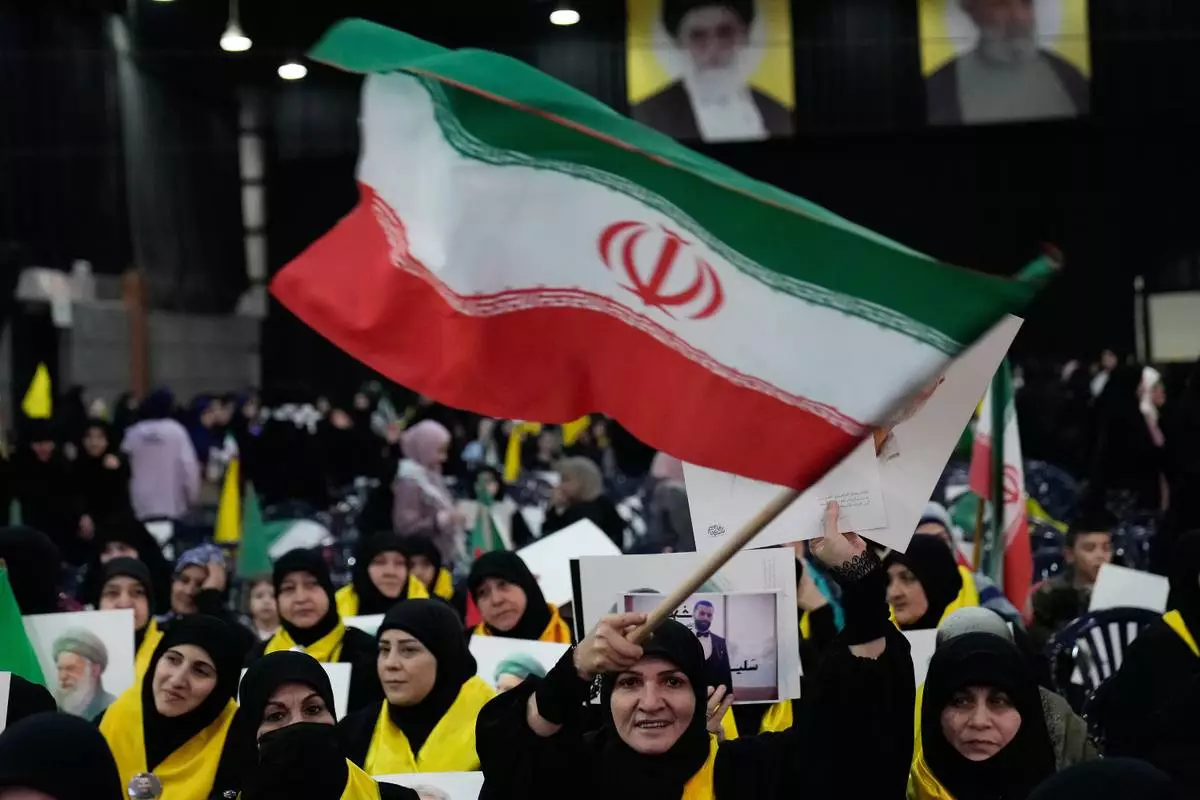
A Hezbollah supporter waves an Iranian flag during a rally to show their solidarity with the Iranian government, in the southern suburb of Beirut, Lebanon, Monday, Jan. 26, 2026. (AP Photo/Hussein Malla)

A Hezbollah supporter waves an Iranian flag during a rally to show their solidarity with the Iranian government, in the southern suburb of Beirut, Lebanon, Monday, Jan. 26, 2026. (AP Photo/Hussein Malla)

This photo provided by the U.S. Navy shows sailors preparing a Boeing EA-18G Growler on the flight deck of the Nimitz-class aircraft carrier USS Abraham Lincoln in the Indian Ocean on Jan. 21, 2026. (Mass Communication Specialist Seaman Daniel Kimmelman/U.S. Navy via AP)

This photo provided by the U.S. Navy shows sailors preparing a Boeing EA-18G Growler on the flight deck of the Nimitz-class aircraft carrier USS Abraham Lincoln in the Indian Ocean on Jan. 21, 2026. (Mass Communication Specialist Seaman Daniel Kimmelman/U.S. Navy via AP)

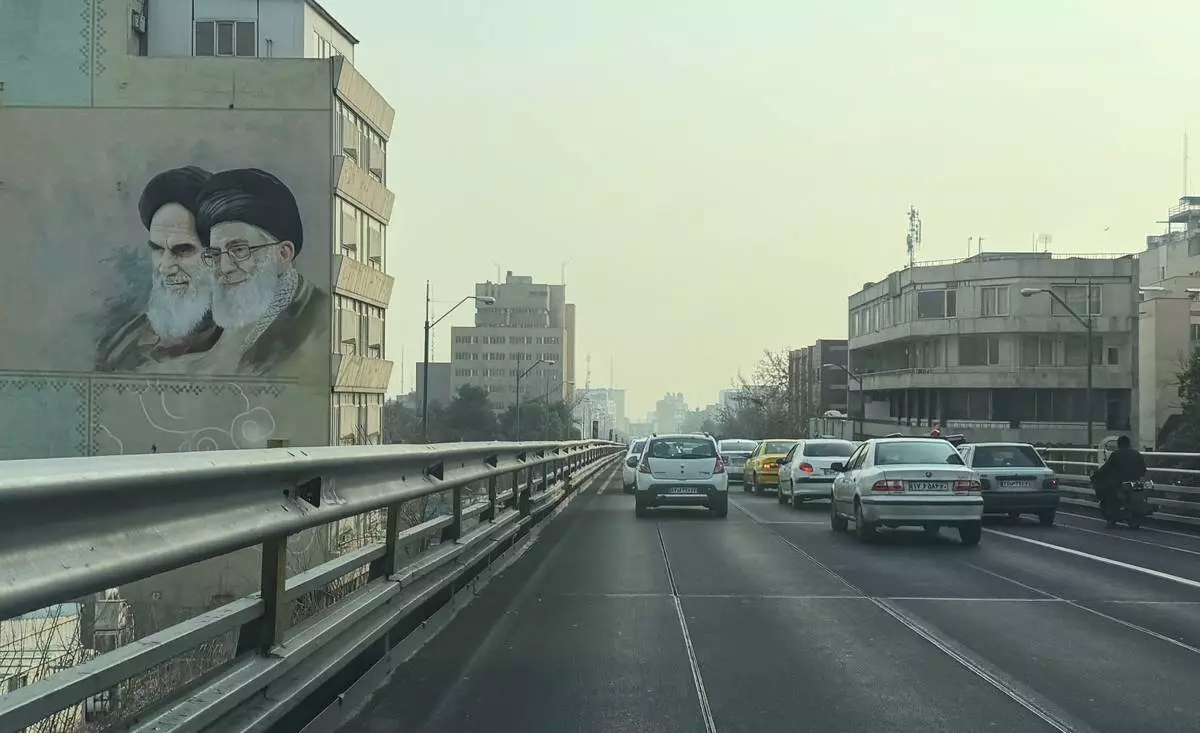
Vehicles drive past portrait of the late Iranian revolutionary founder Ayatollah Khomeini, left, and Supreme Leader Ayatollah Ali Khamenei, in downtown Tehran, Iran, Sunday, Jan. 25, 2026. (AP Photo/Vahid Salemi)

Vehicles drive past portrait of the late Iranian revolutionary founder Ayatollah Khomeini, left, and Supreme Leader Ayatollah Ali Khamenei, in downtown Tehran, Iran, Sunday, Jan. 25, 2026. (AP Photo/Vahid Salemi)

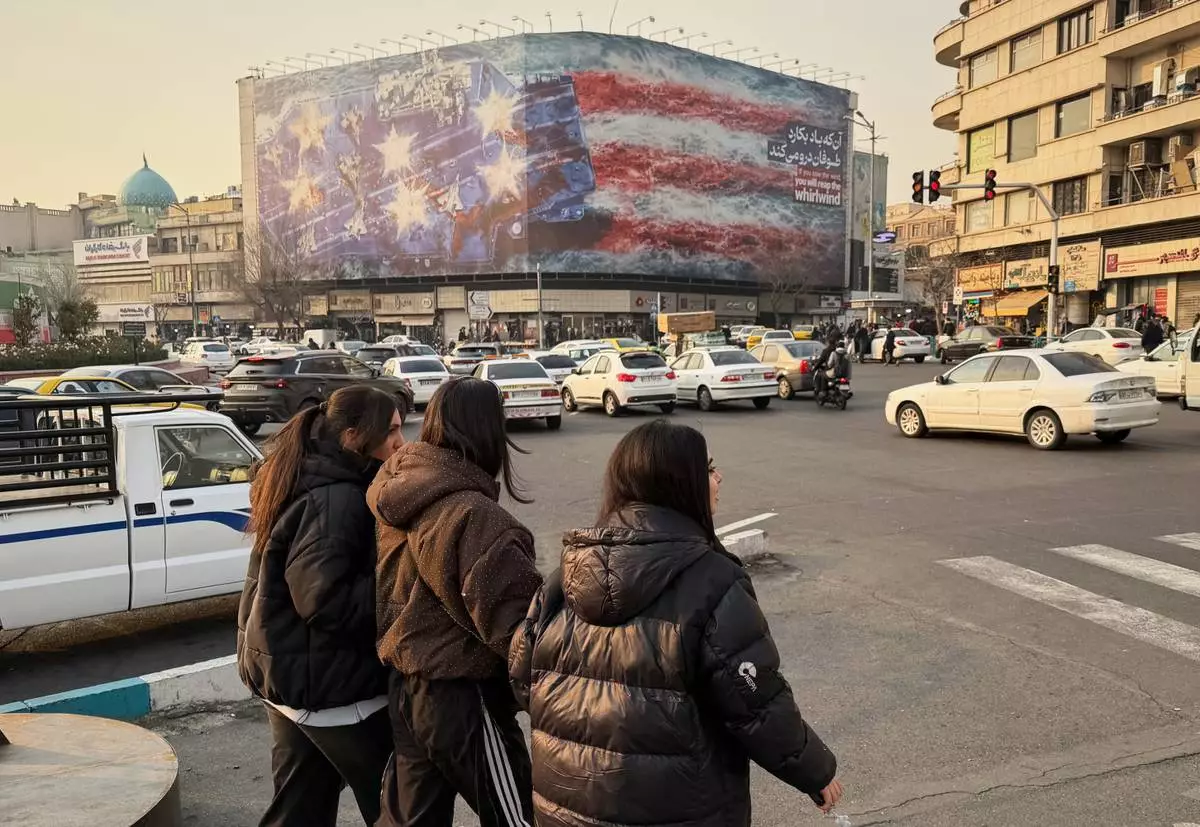
People walk in front a billboard with graphic showing a U.S aircraft carrier with damaged fighter jets on its deck, and sign reading in Farsi and English: "If you sow the wind, you'll reap whirlwind," at the Enqelab-e-Eslami (Islamic Revolution) square, in Tehran, Iran, Sunday, Jan. 25, 2026. (AP Photo/Vahid Salemi)

People walk in front a billboard with graphic showing a U.S aircraft carrier with damaged fighter jets on its deck, and sign reading in Farsi and English: "If you sow the wind, you'll reap whirlwind," at the Enqelab-e-Eslami (Islamic Revolution) square, in Tehran, Iran, Sunday, Jan. 25, 2026. (AP Photo/Vahid Salemi)

Recommended Articles