Skip to Content Facebook Feature Image

Trump's immigration crackdown led to drop in US growth rate last year as population hit 342 million

News

Trump's immigration crackdown led to drop in US growth rate last year as population hit 342 million
News

News

Trump's immigration crackdown led to drop in US growth rate last year as population hit 342 million

2026-01-28 04:02 Last Updated At:04:10

ORLANDO, Fla. (AP) — President Donald Trump's crackdown on immigration contributed to a year-to-year drop in the nation's growth rate as the U.S. population reached nearly 342 million people in 2025, according to population estimates released Tuesday by the U.S. Census Bureau.

The 0.5% growth rate for 2025 was a sharp drop from 2024's almost 1% growth rate, which was the highest in two decades and was fueled by immigration. The 2024 estimates put the U.S. population at 340 million people.

Immigration increased by almost 1.3 million people last year, compared with 2024's increase of almost 2.8 million people. If trends continue, the annual gain from immigrants by mid-2026 will drop to only 321,000 people, according to the Census Bureau, whose estimates do not distinguish between legal and illegal immigration.

In the past 125 years, the lowest growth rate was in 2021, during the height of the coronavirus pandemic, when the U.S. population grew by just 0.16%, or 522,000 people and immigration increased by just 376,000 people because of travel restrictions into the U.S. Before that, the lowest growth rate was just under 0.5% in 1919 at the height of the Spanish flu.

Births outnumbered deaths last year by 519,000 people. While higher than the pandemic-era low at the beginning of the decade, the natural increase was dramatically smaller than in the 2000s, when it ranged between 1.6 million and 1.9 million people.

The immigration drop dented growth in several states that traditionally have been immigrant magnets.

California had a net population loss of 9,500 people in 2025, a stark change from the previous year, when it gained 232,000 residents, even though roughly the same number of Californians already living in the state moved out in both years. The difference was immigration since the number of net immigrants who moved into the state dropped from 361,000 people in 2024 to 109,000 in 2025.

Florida had year-to-year drops in both immigrants and people moving in from other states. The Sunshine State, which has become more expensive in recent years from surging property values and higher home insurance costs, had only 22,000 domestic migrants in 2025, compared with 64,000 people in 2024, and the net number of immigrants dropped from more than 411,000 people to 178,000 people.

New York added only 1,008 people in 2025, mostly because the state's net migration from immigrants dropped from 207,000 people to 95,600 people.

South Carolina, Idaho and North Carolina had the highest year-over-year growth rates, ranging from 1.3% to 1.5%. Texas, Florida and North Carolina added the most people in pure numbers. California, Hawaii, New Mexico, Vermont and West Virginia had population declines.

The South, which has been the powerhouse of growth in the 2020s, continued to add more people than any other region, but the numbers dropped from 1.7 million people in 2024 to 1.1 million in 2025.

“Many of these states are going to show even smaller growth when we get to next year,” Brookings demographer William Frey said Tuesday.

Tuesday's data release comes as researchers have been trying to determine the effects of the second Trump administration's immigration crackdown after the Republican president returned to the White House in January 2025. Trump made a surge of migrants at the southern border a central issue in his winning 2024 presidential campaign.

The numbers made public Tuesday reflect change from July 2024 to July 2025, covering the end of President Joe Biden's Democratic administration and the first half of Trump's first year back in office.

The figures capture a period that reflects the beginning of enforcement surges in Los Angeles and Portland, Oregon, but do not capture the impact on immigration after the Trump administration's crackdowns began in Chicago; New Orleans; Memphis, Tennessee; and Minneapolis, Minnesota.

The 2025 numbers were a jarring divergence from 2024, when net international migration accounted for 84% of the nation’s 3.3 million-person increase from the year before. The jump in immigration two years ago was partly because of a new method of counting that added people who were admitted for humanitarian reasons.

“They do reflect recent trends we have seen in out-migration, where the numbers of people coming in is down and the numbers going out is up,” Eric Jensen, a senior research scientist at the Census Bureau, said last week.

Unlike the once-a-decade census, which determines how many congressional seats and Electoral College votes each state gets, as well as the distribution of $2.8 trillion in annual government funding, the population estimates are calculated from government records and internal Census Bureau data.

The release of the 2025 population estimates was delayed by the federal government shutdown last fall and comes at a challenging time for the Census Bureau and other U.S. statistical agencies. The bureau, which is the largest statistical agency in the U.S., lost about 15% of its workforce last year due to buyouts and layoffs that were part of cost-cutting efforts by the White House and its Department of Government Efficiency.

Other recent actions by the Trump administration, such as the firing of Erika McEntarfer as Bureau of Labor Statistics commissioner, have raised concerns about political meddling at U.S. statistical agencies. But Frey said the bureau's staffers appear to have been “doing this work as usual without interference.”

“So I have no reason to doubt the numbers that come out,” Frey said.

Follow Mike Schneider on the social platform Bluesky: @mikeysid.bsky.social.

Follow the AP's coverage of the U.S. Census Bureau at https://apnews.com/hub/us-census-bureau.
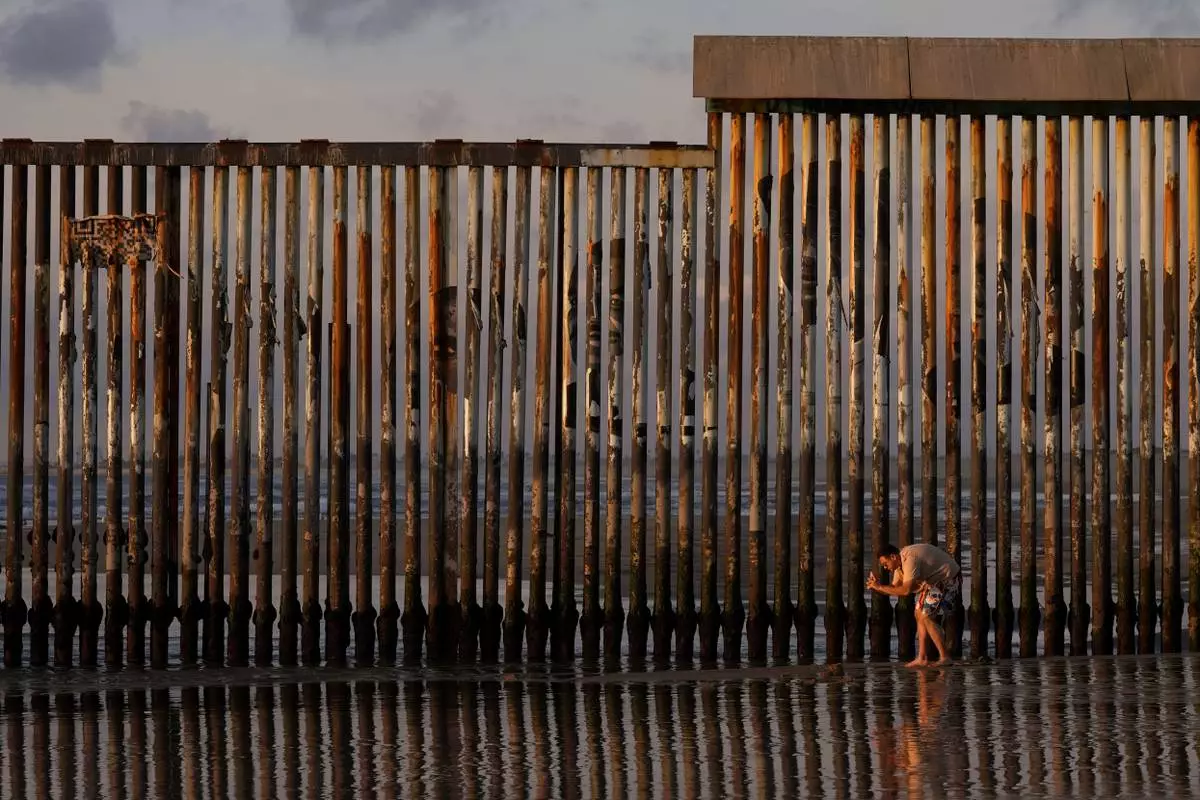
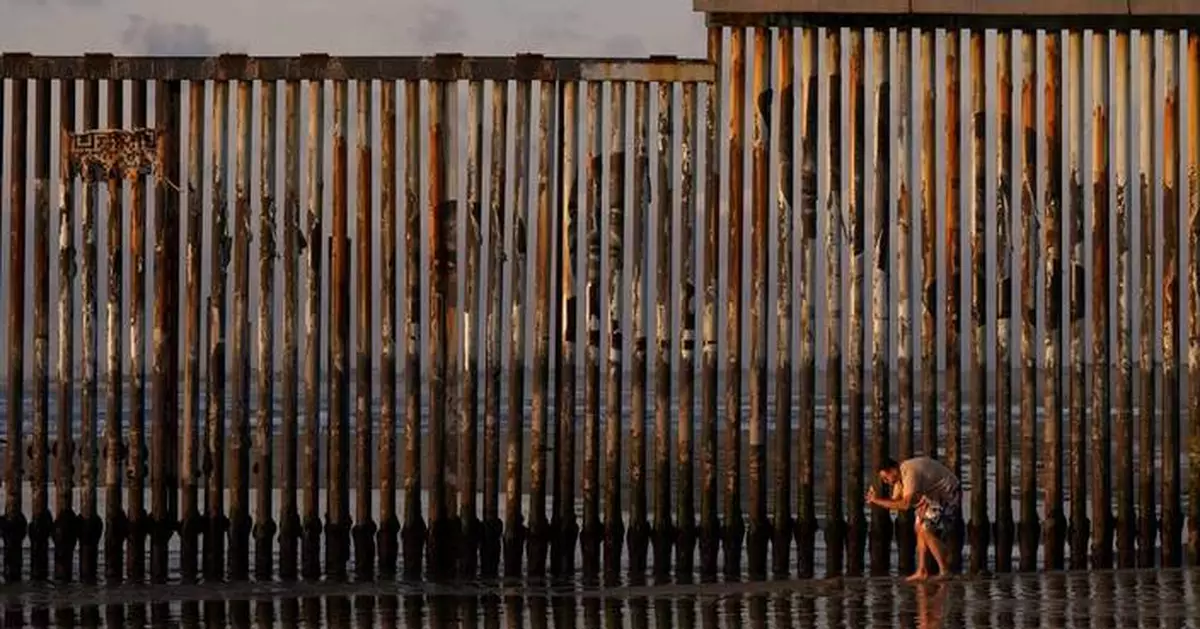
FILE - A man takes an image with his phone next to where the border wall separating Mexico and the United States reaches the Pacific Ocean Jan. 28, 2025, in Tijuana, Mexico. (AP Photo/Gregory Bull, File)

FILE - A man takes an image with his phone next to where the border wall separating Mexico and the United States reaches the Pacific Ocean Jan. 28, 2025, in Tijuana, Mexico. (AP Photo/Gregory Bull, File)
MELBOURNE, Australia (AP) — Iga Swiatek picked up a theme that Coco Gauff left the Australian Open with after the 21-year-old American's racket-smashing, frustration-releasing moments away from the court went viral.

Gauff said a “conversations needs to had” about the seemingly limitless access-all-areas cameras that track players from the locker room to the court and just about everywhere in between.

After her 7-5, 6-1 quarterfinal loss to fifth-seeded Elena Rybakina on Wednesday, Swiatek was asked how she feels about the lack of off-camera areas for the players and what she thinks should the balance between entertainment, constant content and player privacy.

“Yeah, the question is, are we tennis players, or are we, like, animals in the zoo where they are observed even when they poop, you know?” she said, apologizing slightly for the latter reference. “OK, that was exaggerating obviously, but it would be nice to have some privacy.

"It would be nice also to, I don’t know, have your own process and not always be, like, observed.”

Swiatek and Gauff are two of the top three players in women’s tennis, so it stands to reason they’ll be more in focus at the tournament.

Vision of Swiatek being stopped by security after forgetting her credential became a meme. She's won four French Open titles as well as Wimbledon and the U.S. Open. But security is, well, security.

The off-court camera surveillance occurs at other tournaments and isn't confined to the Australian Open, where organizers have created a three-week festival around the season-opening major by incorporating all kinds of fan engagement activities.

The vision from the non-public areas stadium isn't always broadcast, but players don't need reminding that some moments that get captured will turn up on the internet for being cute, informative or just outright dramatic.

No. 2-ranked Swiatek said there were parts of her game she'd like to practice immediately before walking out for a match and “it would be nice to have some space where you can do that without the whole world watching.”

The 24-year-old is one of Poland's star athletes, and is fully aware that being in the public gaze is part-and-parcel of being a tennis champion.

“We’re tennis players. We’re meant to be watched on the court, you know, and in the press. That’s our job,” she said. "It’s not our job, like, be a meme when you forget your accreditation.

“Oh, it’s funny, yeah, for sure. People have something to talk about. But for us I don’t think it’s necessary.”

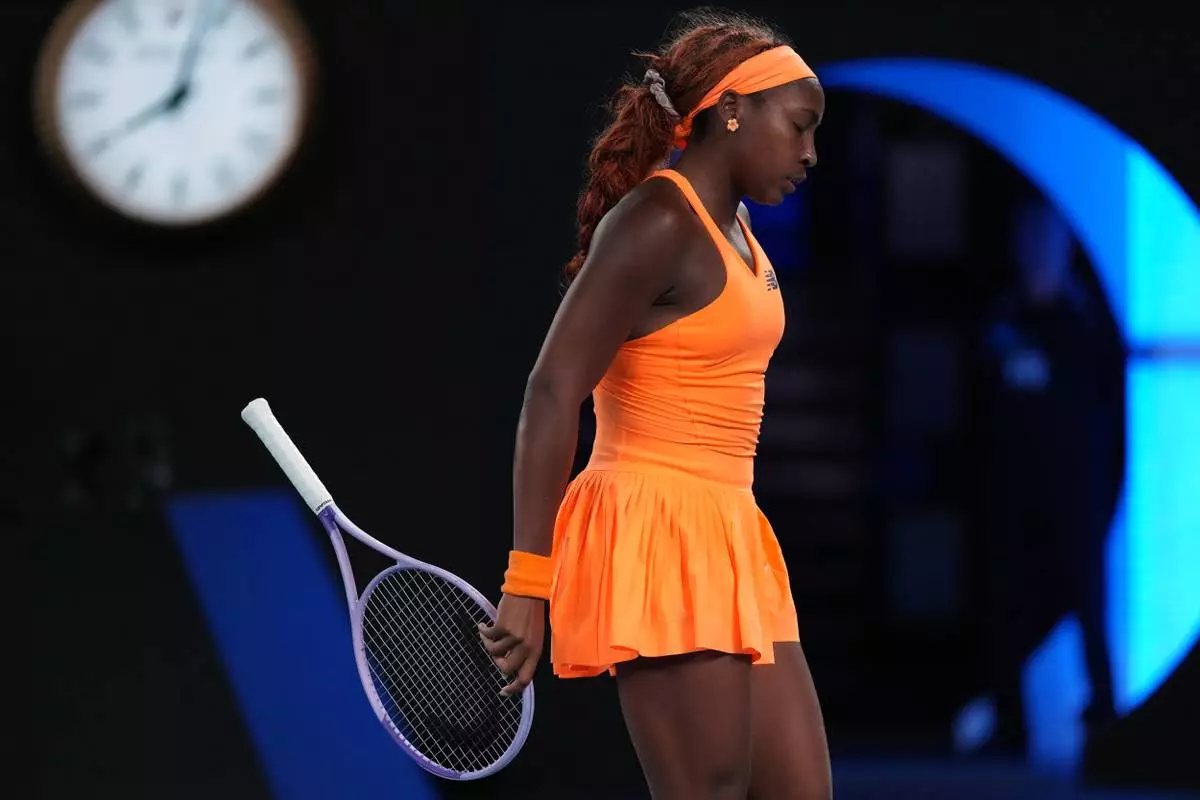
No. 3-ranked Gauff, a two-time major winner, smashed her racket into the concrete floor of a ramp near the player area seven times after her Australian Open quarterfinal loss to Elina Svitolina on Day 10.

She struggled with her serve in the 59-minute match, and stayed composed as she left the center court before trying to find somewhere in the shadows to vent.

Turned out, there’s pretty much no place with the confines of Rod Laver Arena except for the locker rooms that is beyond the scope of the cameras.

“Certain moments — the same thing happened to Aryna (Sabalenka) after I played her in the final of the U.S. Open — I feel like they don’t need to broadcast,” Gauff said in her post-match news conference. “I tried to go somewhere where I thought there wasn’t a camera because I don’t necessarily like breaking rackets."

She said she didn't want to smash her racket on the court within sight of fans because she didn't think it was a good look, which is why she saved it for a quieter area.

“So, yeah, maybe some conversations can be had," she said, "because I feel like at this tournament the only private place we have is the locker room.”

Jessica Pegula, right, of the U.S. is congratulated by compatriot Amanda Anisimova, left, following their quarterfinal match at the Australian Open tennis championship in Melbourne, Australia, Wednesday, Jan. 28, 2026. (AP Photo/Asanka Brendon Ratnayake)

Jessica Pegula, right, of the U.S. is congratulated by compatriot Amanda Anisimova, left, following their quarterfinal match at the Australian Open tennis championship in Melbourne, Australia, Wednesday, Jan. 28, 2026. (AP Photo/Asanka Brendon Ratnayake)

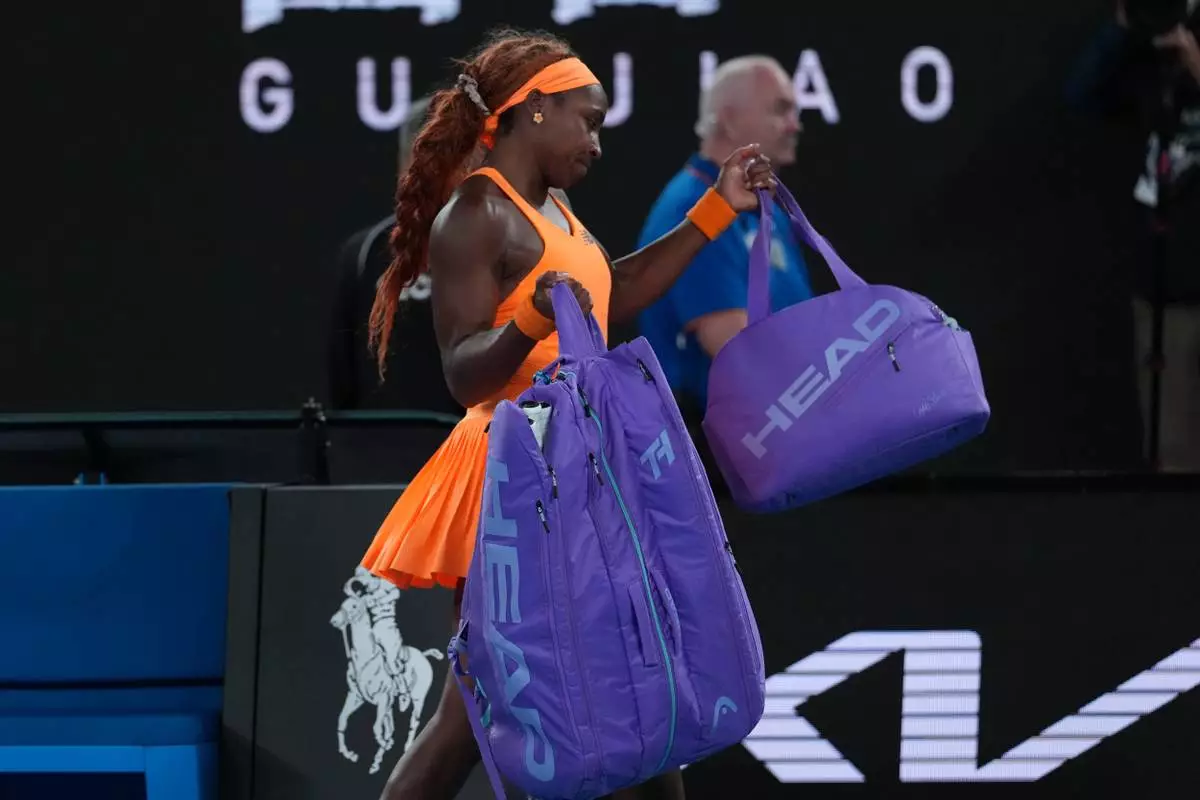
Coco Gauff of the U.S. walks from the court following her quarterfinal loss to Elina Svitolina of Ukraine at the Australian Open tennis championship in Melbourne, Australia, Tuesday, Jan. 27, 2026. (AP Photo/Dita Alangkara)

Coco Gauff of the U.S. walks from the court following her quarterfinal loss to Elina Svitolina of Ukraine at the Australian Open tennis championship in Melbourne, Australia, Tuesday, Jan. 27, 2026. (AP Photo/Dita Alangkara)

Coco Gauff of the U.S. reacts during her quarterfinal match against Elina Svitolina of Ukraine during their quarterfinal match at the Australian Open tennis championship in Melbourne, Australia, Tuesday, Jan. 27, 2026. (AP Photo/Dita Alangkara)

Coco Gauff of the U.S. reacts during her quarterfinal match against Elina Svitolina of Ukraine during their quarterfinal match at the Australian Open tennis championship in Melbourne, Australia, Tuesday, Jan. 27, 2026. (AP Photo/Dita Alangkara)

Iga Swiatek of Poland takes a drink during her quarterfinal match against Elena Rybakina of Kazakhstan at the Australian Open tennis championship in Melbourne, Australia, Wednesday, Jan. 28, 2026. (AP Photo/Dita Alangkara)

Iga Swiatek of Poland takes a drink during her quarterfinal match against Elena Rybakina of Kazakhstan at the Australian Open tennis championship in Melbourne, Australia, Wednesday, Jan. 28, 2026. (AP Photo/Dita Alangkara)

Iga Swiatek of Poland walks from the court following her quarterfinal loss to Elena Rybakina of Kazakhstan at the Australian Open tennis championship in Melbourne, Australia, Wednesday, Jan. 28, 2026. (AP Photo/Aaron Favila)

Iga Swiatek of Poland walks from the court following her quarterfinal loss to Elena Rybakina of Kazakhstan at the Australian Open tennis championship in Melbourne, Australia, Wednesday, Jan. 28, 2026. (AP Photo/Aaron Favila)

Recommended Articles