MELBOURNE, Australia (AP) — Novak Djokovic was the first to admit he's lucky to be back in the Australian Open semifinals instead of Lorenzo Musetti.
Despite being two sets down, slowed by a serious blister on his foot and already thinking about his flight home, the 24-time major winner won Wednesday's quarterfinal when fifth-seeded Musetti retired with an injury.
Click to Gallery
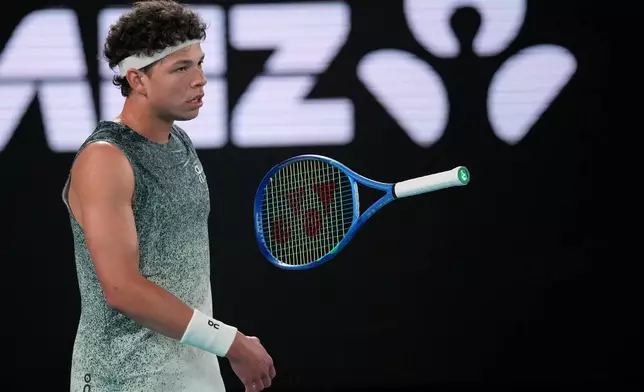
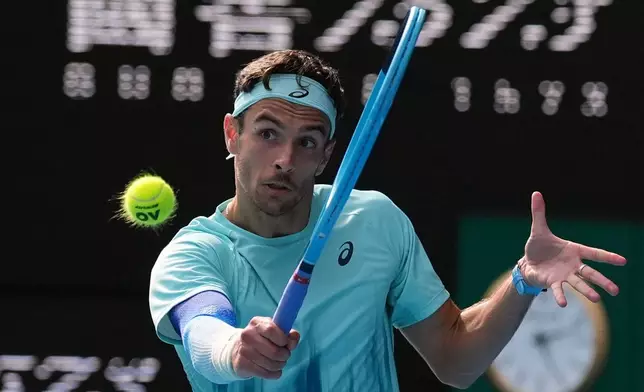
Ben Shelton of the U.S. reacts during his quarterfinal match against Jannik Sinner of Italy at the Australian Open tennis championship in Melbourne, Australia, Wednesday, Jan. 28, 2026. (AP Photo/Dita Alangkara)
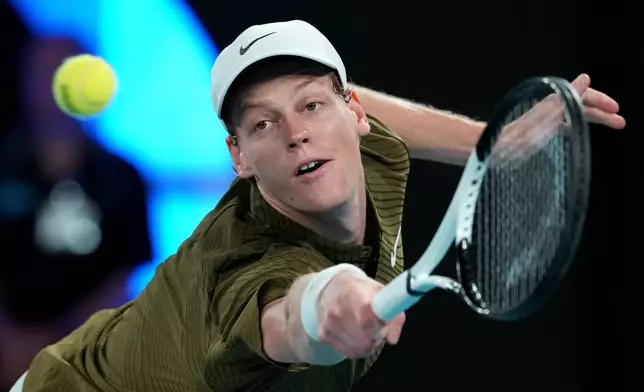
Jannik Sinner of Italy plays a backhand return to Ben Shelton of the U.S. during their quarterfinal match at the Australian Open tennis championship in Melbourne, Australia, Wednesday, Jan. 28, 2026. (AP Photo/Aaron Favila)
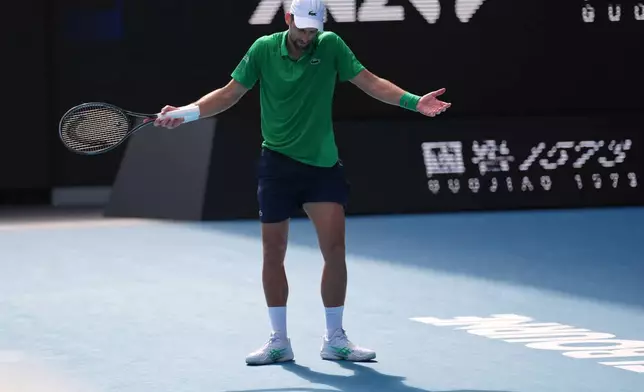
Novak Djokovic of Serbia reacts during his quarterfinal match against Lorenzo Musetti of Italy at the Australian Open tennis championship in Melbourne, Australia, Wednesday, Jan. 28, 2026. (AP Photo/Dita Alangkara)
Lorenzo Musetti of Italy plays a backhand return to Novak Djokovic of Serbia during their quarterfinal match at the Australian Open tennis championship in Melbourne, Australia, Wednesday, Jan. 28, 2026. (AP Photo/Dita Alangkara)
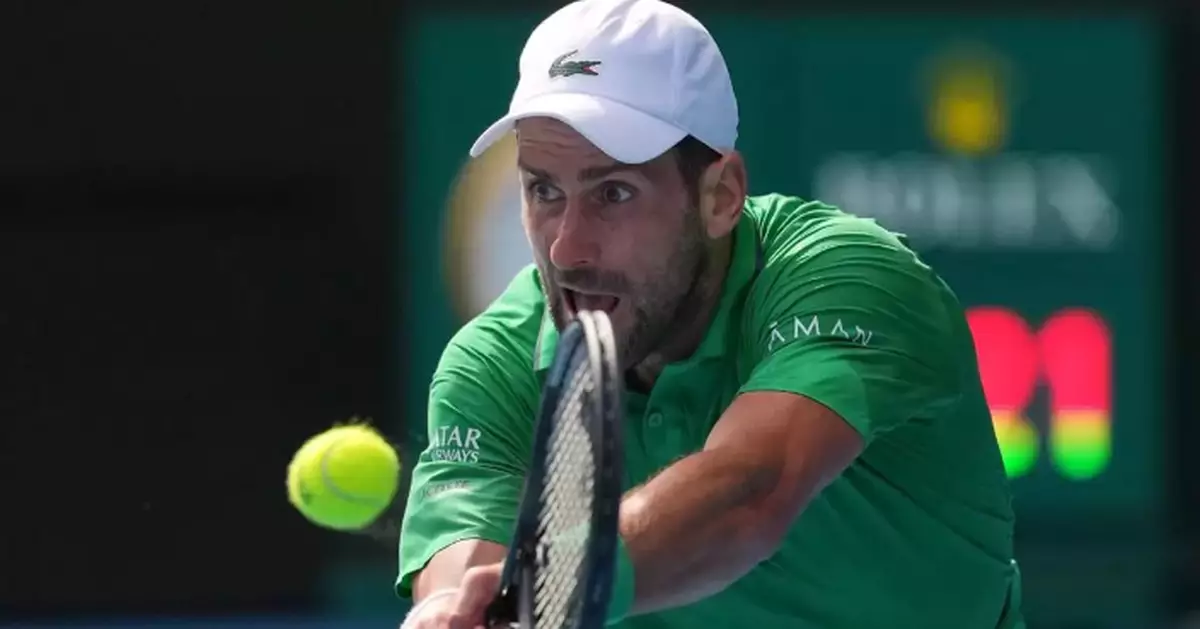
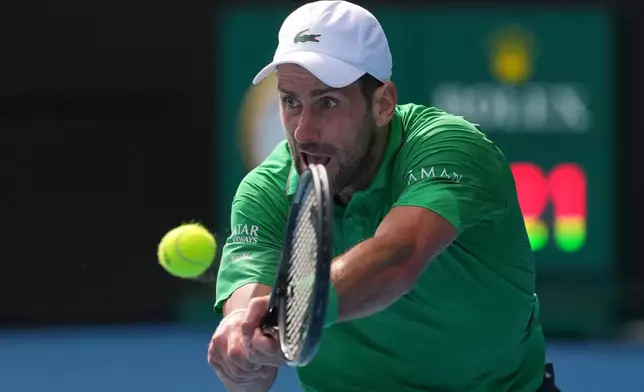
Novak Djokovic of Serbia plays a backhand return to Lorenzo Musetti of Italy during their quarterfinal match at the Australian Open tennis championship in Melbourne, Australia, Wednesday, Jan. 28, 2026. (AP Photo/Dita Alangkara)
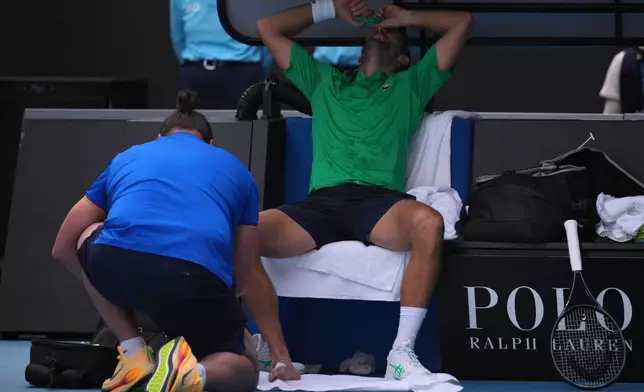
Novak Djokovic of Serbia reacts as he receives treatment to a foot injury during his quarterfinal match against Lorenzo Musetti of Italy at the Australian Open tennis championship in Melbourne, Australia, Wednesday, Jan. 28, 2026. (AP Photo/Dita Alangkara)
Musetti took the first two sets 6-4, 6-3 but needed a medical timeout for treatment on his upper right leg after being broken in the third game of the third. The 23-year-old Italian played on for almost two games but couldn’t continue.
After serving a double-fault in the fifth game to give Djokovic another breakpoint chance, Musetti wiped a hand across his face, walked toward the net and removed his headband before exchanging a handshake and quick hug.
Djokovic, who was leading the third set 3-1, will continue his bid for an 11th Australian title and a record 25th major but acknowledged he was lucky this time. He also said, it happens in tennis.
“It happened to me a few times. But being in the quarters of a Grand Slam, two sets to love up and being in full control — I mean, so unfortunate,” for Musetti, Djokovic said in an on-court TV interview. "He should have been a winner today.”
Musetti was also forced to retire from the French Open semifinals last year —- with an injured left leg — after taking a set from eventual champion Carlos Alcaraz.
“I feel really sorry for him," the 38-year-old Djokovic said. "He was a far better player — I was on my way home tonight.”
In the first set, Djokovic tried to go out hard. He took an early break and was just a point away from a 3-0 lead before Musetti responded and took control of the match.
The situation appeared to get more dire for Djokovic when he needed a medical timeout after the second set for a serious blister on the ball of his right foot.
“I tried my best yes. A blister here and there. I just wasn’t feeling the ball today due to his quality, and his variety in the game,” he said. “I’m extremely lucky.”
But in tennis, no player takes any victory for granted. Just a few days ago, Djokovic received a walkover into the quarterfinals when Jakub Mensik withdrew 24 hours ahead of their scheduled fourth-round match with an abdominal injury.
Djokovic has seen it from the other side. None more dramatic than here last year when he had to quit the Australian Open semifinals with a torn leg muscle. He was booed off the court when he retired immediately after dropping the first set against Alexander Zverev.
Djokovic will next face the winner of Wednesday's later quarterfinal between No. 8 Ben Shelton and two-time defending Australian Open champion Jannik Sinner.
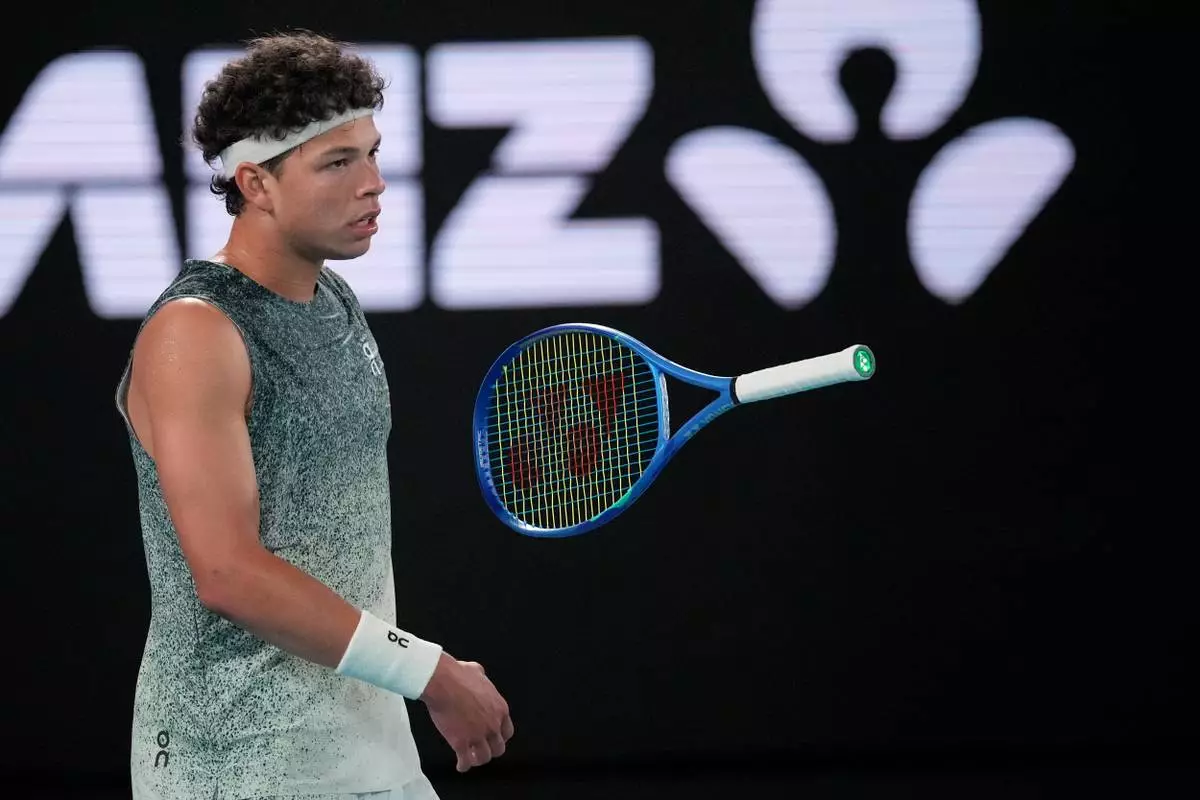
Ben Shelton of the U.S. reacts during his quarterfinal match against Jannik Sinner of Italy at the Australian Open tennis championship in Melbourne, Australia, Wednesday, Jan. 28, 2026. (AP Photo/Dita Alangkara)
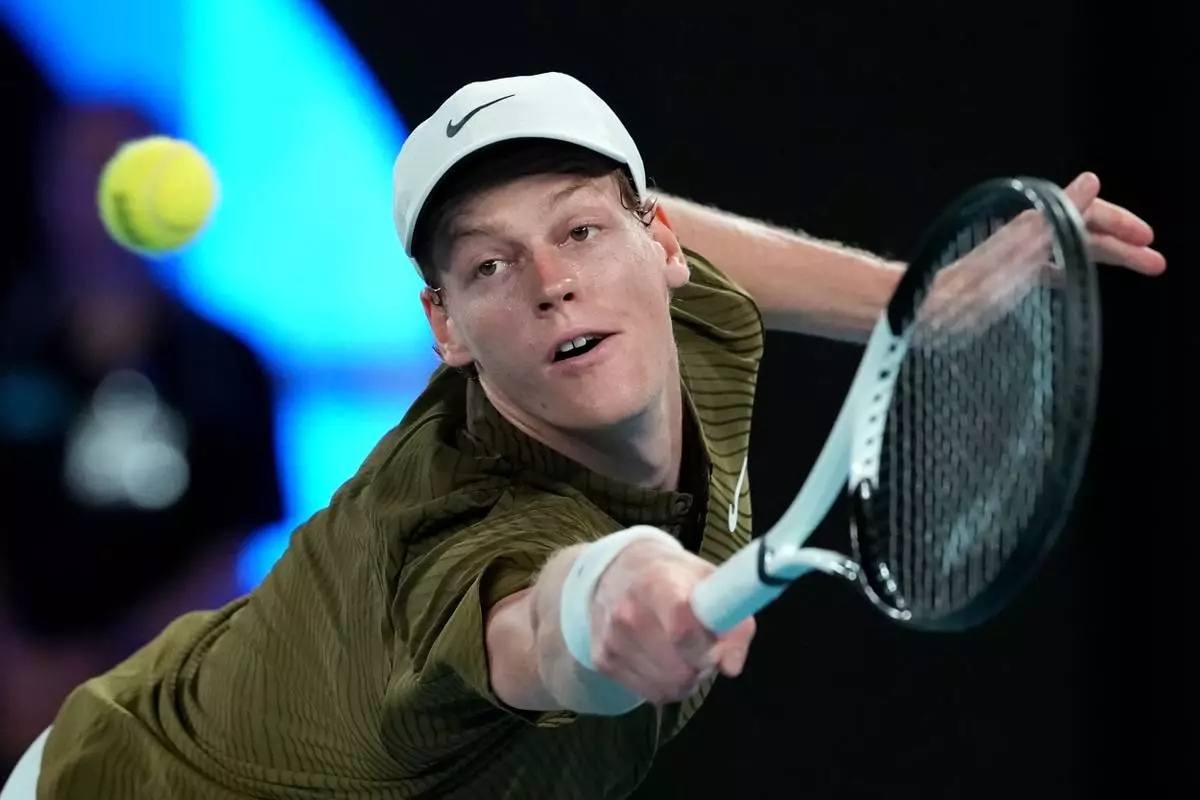
Jannik Sinner of Italy plays a backhand return to Ben Shelton of the U.S. during their quarterfinal match at the Australian Open tennis championship in Melbourne, Australia, Wednesday, Jan. 28, 2026. (AP Photo/Aaron Favila)
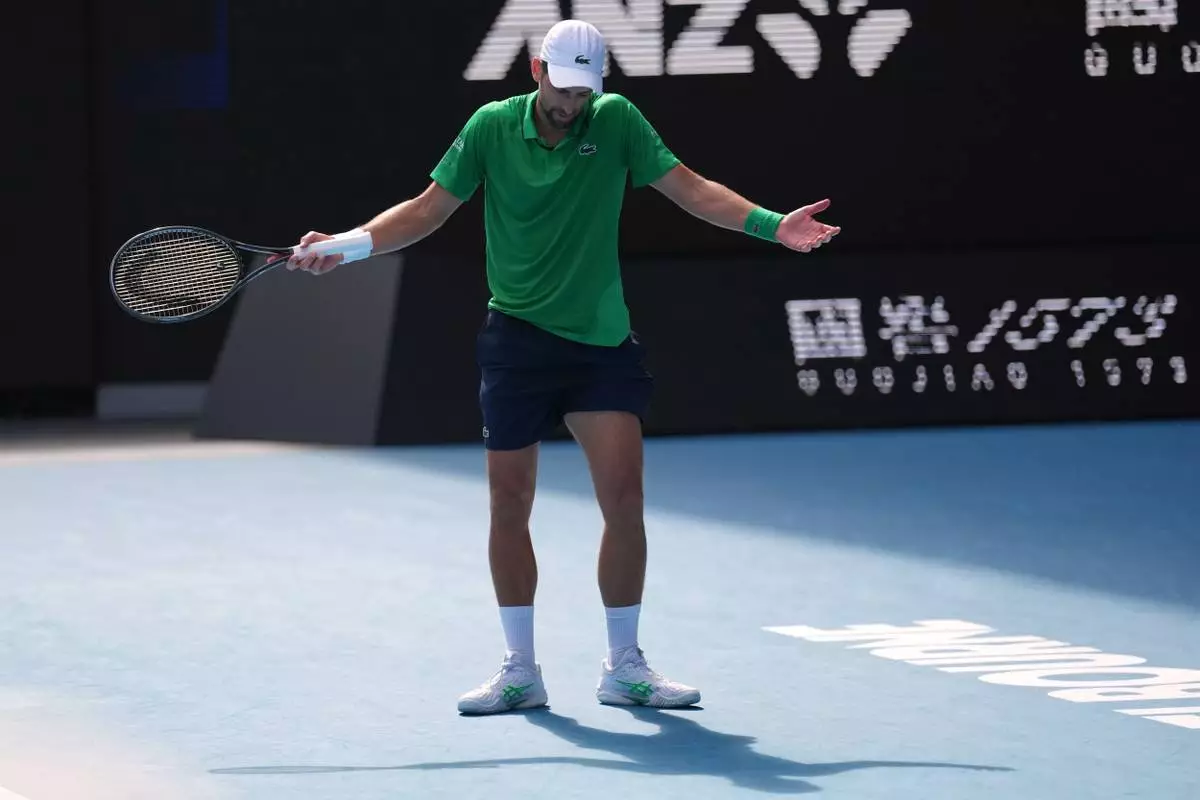
Novak Djokovic of Serbia reacts during his quarterfinal match against Lorenzo Musetti of Italy at the Australian Open tennis championship in Melbourne, Australia, Wednesday, Jan. 28, 2026. (AP Photo/Dita Alangkara)
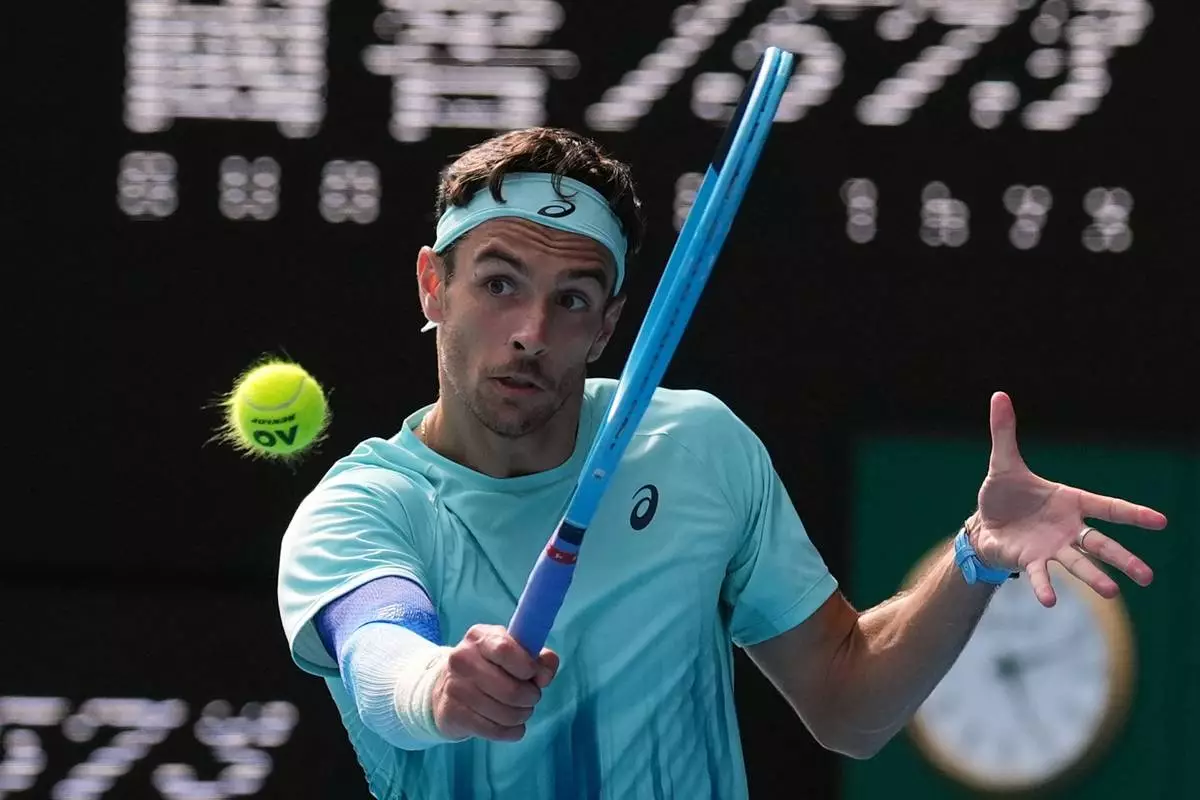
Lorenzo Musetti of Italy plays a backhand return to Novak Djokovic of Serbia during their quarterfinal match at the Australian Open tennis championship in Melbourne, Australia, Wednesday, Jan. 28, 2026. (AP Photo/Dita Alangkara)
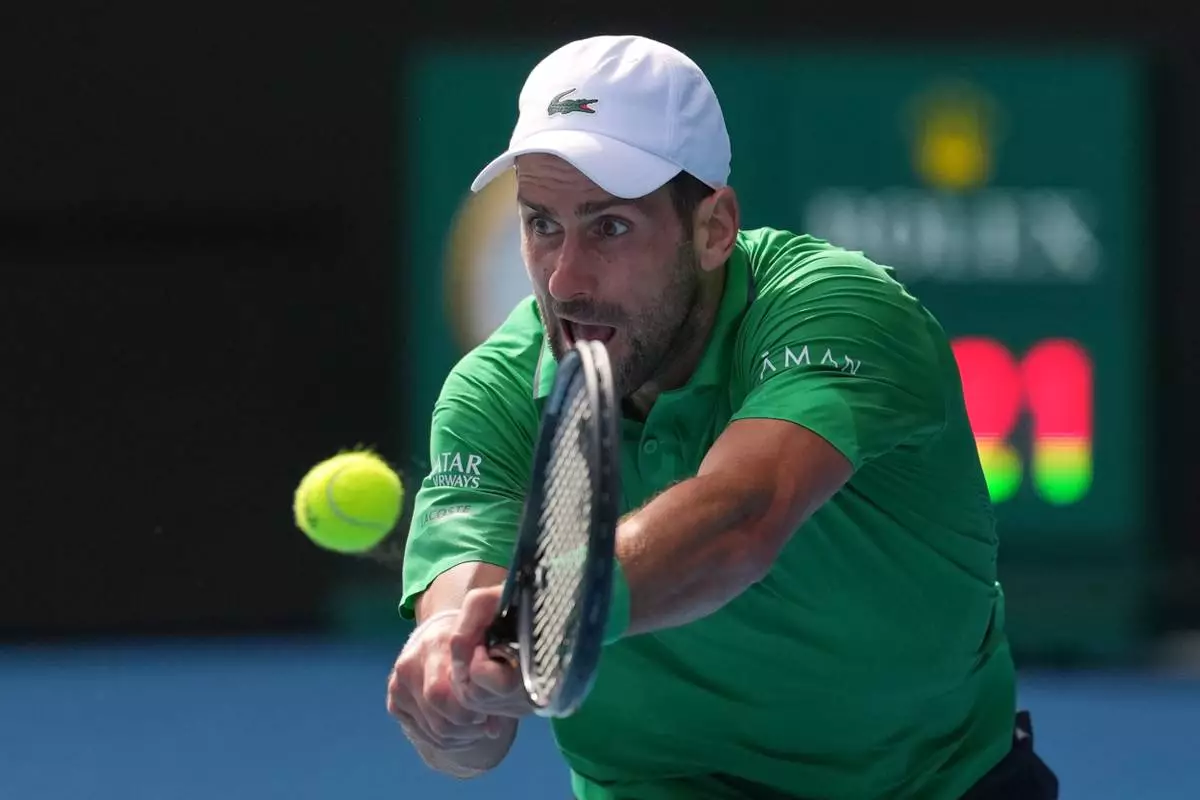
Novak Djokovic of Serbia plays a backhand return to Lorenzo Musetti of Italy during their quarterfinal match at the Australian Open tennis championship in Melbourne, Australia, Wednesday, Jan. 28, 2026. (AP Photo/Dita Alangkara)
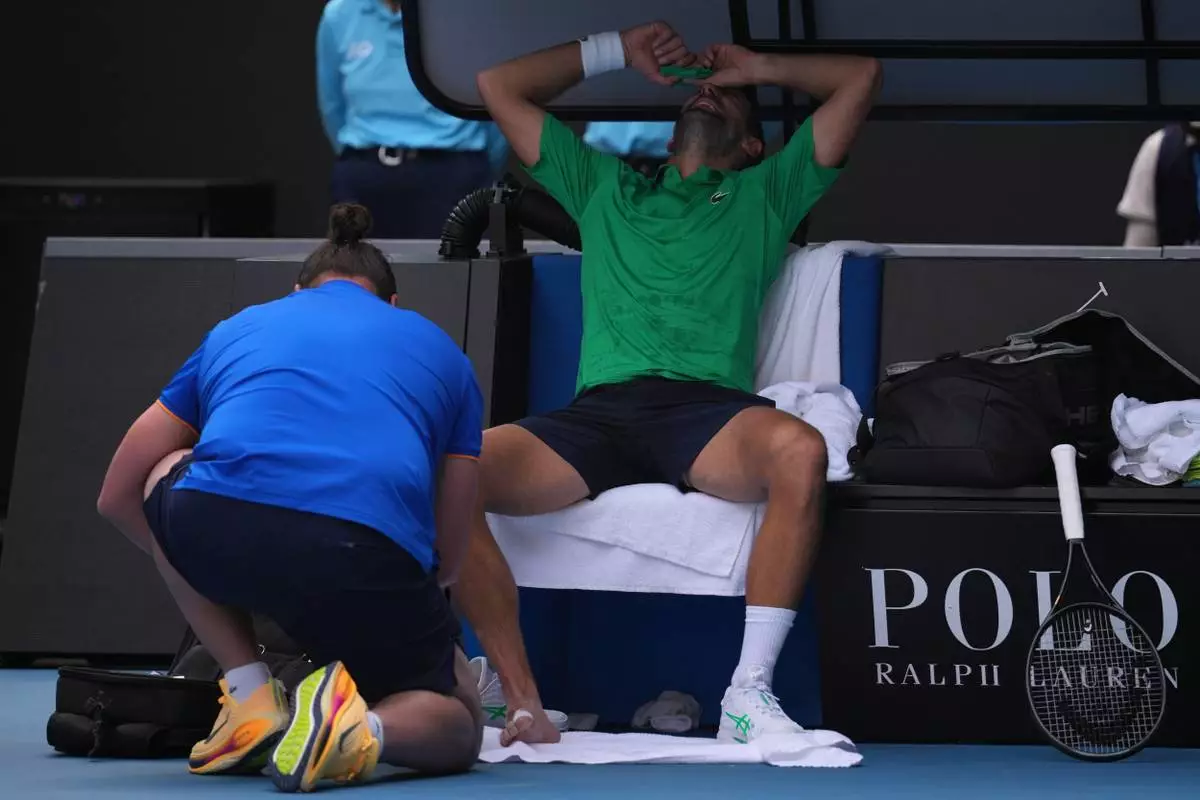
Novak Djokovic of Serbia reacts as he receives treatment to a foot injury during his quarterfinal match against Lorenzo Musetti of Italy at the Australian Open tennis championship in Melbourne, Australia, Wednesday, Jan. 28, 2026. (AP Photo/Dita Alangkara)
WASHINGTON (AP) — John Wrory Ficklin was 7 when he learned that his father, the son of a slave, was important.
It was 1963, and the nation was mourning President John F. Kennedy. Wrory Ficklin was sitting with his mother and brother, watching funeral coverage on TV in the family's Washington apartment, when she gasped.
His father, James Woodson Ficklin, was wearing a morning suit and standing beside Kennedy's casket with other White House ushers. He was a White House butler at the time, but Kennedy's widow, Jacqueline, asked that he join the ushers that day.
Woodson Ficklin worked a remarkable 44 years on the White House residence staff. His son, Wrory Ficklin, had a lengthy White House career, too — 40 years on the staff of the National Security Council.
Presidents come and go from the White House every four years or eight years, but the Ficklin family — Woodson Ficklin, his wife, some of his brothers and sisters, and son Wrory Ficklin — was a constant presence there for nearly eight decades, serving 13 presidents from Franklin D. Roosevelt to Barack Obama.
One family by the president’s side for one-third of America’s 250-year existence.
With his 2015 retirement, Wrory became the last Ficklin employed there full time, capping a record of family service documented in his book, “An Unusual Path: Three Generations from Slavery to the White House.”
“The book is my family’s history, it's African American history and it's our country’s history," he told The Associated Press in an interview. “My dad and I both stand on my grandfather's shoulders, and I like to think that we both contributed a lot to our country."
The first chapter in what Wrory Ficklin described as a “truly American story” opens with his grandfather, James Strother Ficklin, who was born a slave around 1854 in Rappahannock County, Virginia.
Strother was a water boy for the Confederate army during the Civil War. After emancipation, he did odd jobs for the family that used to own him.
He remarried in 1894 after his first wife died during childbirth, and moved to Youngstown, Ohio, to escape racism in Virginia and earn a living in the booming coal and steel industries. Records showed they returned to Rappahannock some years later, though it was unclear why.
Strother and his second wife, Helen, had saved enough money to buy 37 acres (0.15 square kilometers) of land in Amissville, Virginia, in 1901. He built a house and farmed the land to help feed the family. After Helen died while giving birth, Strother married his third wife, Vallie Lee Davenport, in 1907. They had 10 children — five girls and five boys.
One of those boys was John Woodson Ficklin.
Woodson Ficklin was 15 when he moved to Washington in 1934 to live with an older sister and her husband. He worked odd jobs and went to high school at night, graduating in 1939 — the year an older brother, Charles, began work as a White House butler. Charles Ficklin helped him land a part-time position washing dishes and doing whatever the butlers did not have time to do themselves.
Military service during World War II briefly interrupted their White House careers, but they received promotions after they came home, with Charles Ficklin and Woodson Ficklin becoming head butler and butler, respectively. Woodson Ficklin met President Harry Truman and first lady Bess Truman on his second day as a butler when he served the couple breakfast.
New promotions followed under Dwight Eisenhower, with Charles Ficklin becoming maître d’ — the most senior butler — and Woodson Ficklin taking over as head butler, putting him in charge of six full-time butlers.
Woodson Ficklin succeeded his brother again in March 1967, when Charles Ficklin retired.
Woodson Ficklin was now responsible for the planning and execution of White House social events, ranging from luncheons and state dinners to birthday parties and South Lawn barbecues.
There were visits by British royals and the annual round of Christmas parties, the White House wedding of Richard Nixon's daughter Tricia in 1971, and Gerald Ford's daughter Susan's decision to host her senior class prom at the White House.
Along the way, Woodson Ficklin earned the trust and confidence of the presidents and first ladies who relied on his expertise. Some sent thank-you notes after flawlessly executed events.
First lady Patricia Nixon wrote in October 1969 about “the great number of complimentary remarks we receive following each White House social event,” according to a copy of the letter reprinted in the book. “Our family is most grateful to you for the time and interest you devote to make each occasion so enjoyable and memorable for our guests and for us.”
President Jimmy Carter expressed appreciation in a March 1979 letter for the work Woodson Ficklin and his team did surrounding the signing of an Egypt-Israel peace treaty.
“Everything was perfect and we are grateful,” Carter wrote.
Woodson Ficklin retired in May 1983. In perhaps the biggest show of appreciation for his 44-year career, the Reagans invited him and his wife, Nancy, to a state dinner that year for the emir of Bahrain.
He is believed to be the first member of the White House residence staff to be a guest at a state dinner, and he became the subject of a media blitz as a result. Woodson Ficklin sat at the first lady's table and told an interviewer that she "put me at ease and made me feel like a guest.” Asked about the service, he replied, “Those are my boys. I trained them.”
Woodson Ficklin died in December 1984 at 65.
“Seeing my Dad on television was a big deal, and to see him participating in our president’s funeral service was beyond my youthful comprehension,” Wrory Ficklin wrote. He said years passed before he understood "the severity and the importance” of his father’s work.
Yet Wrory Ficklin ended up doing important work at the White House, too, after a summer job during high school delivering sealed envelopes between the White House and the special prosecutor on the Watergate investigation. He also worked for his father in the pantry during state dinners and other big events.
Wrory Ficklin joined the NSC staff in 1975, beginning a 40-year tenure that overlapped with his father and other family members. He started by working evenings as a clerk while attending college during the day and by 1987 was training new staff.
Under Obama, Wrory Ficklin was promoted to special assistant to the president for national security affairs. He retired in 2015 with a special request for his boss, national security adviser Susan Rice: Could he attend a state dinner, like his dad?
Wrory Ficklin and his wife, Patrice, were invited to the 2015 state dinner for Chinese President Xi Jinping. With some minor alterations, he wore the tuxedo jacket and cummerbund his father wore in 1983.
The dinner was the highlight of his career, he said.
“Just to experience firsthand the quality of the service, the precision of the butlers, the type of service that they provided, was a legacy to my dad, actually,” Wrory Ficklin said in the interview.
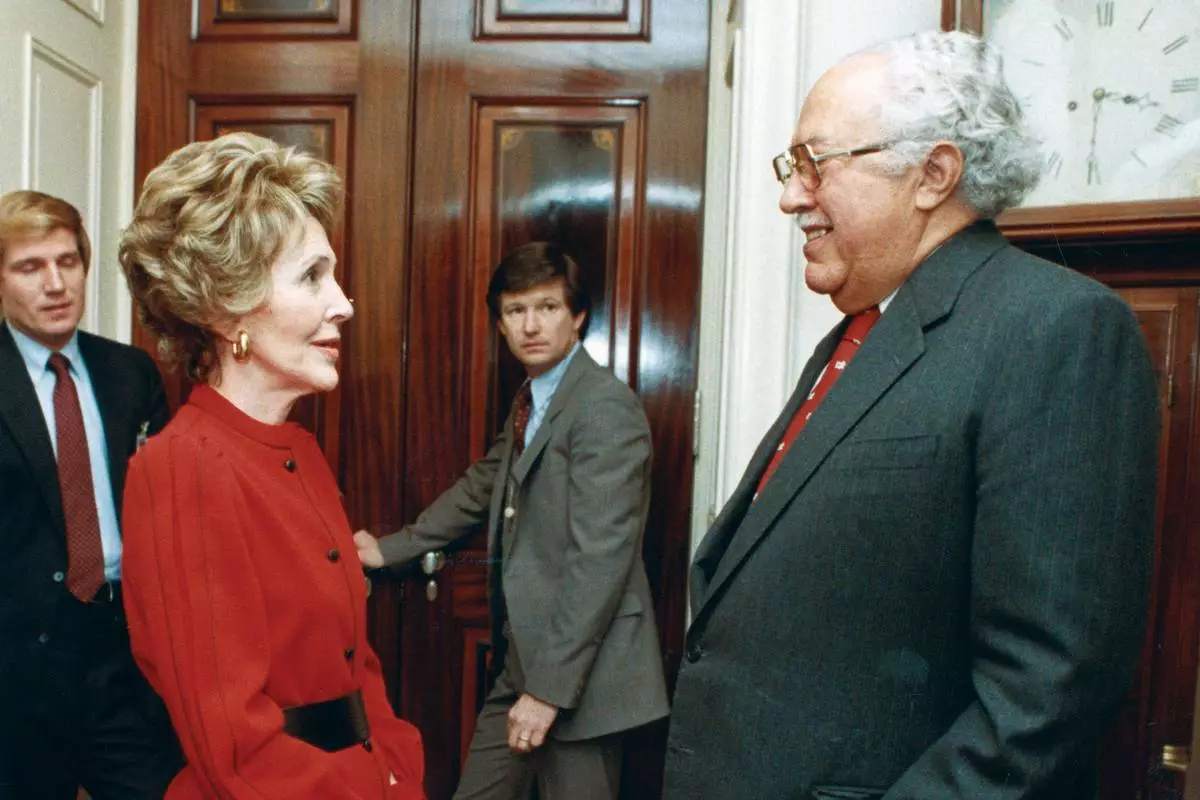
In this 1983 photo provided by The White House, John Woodson Ficklin talks with first lady Nancy Reagan at the White House in Washington. (The White House via AP)
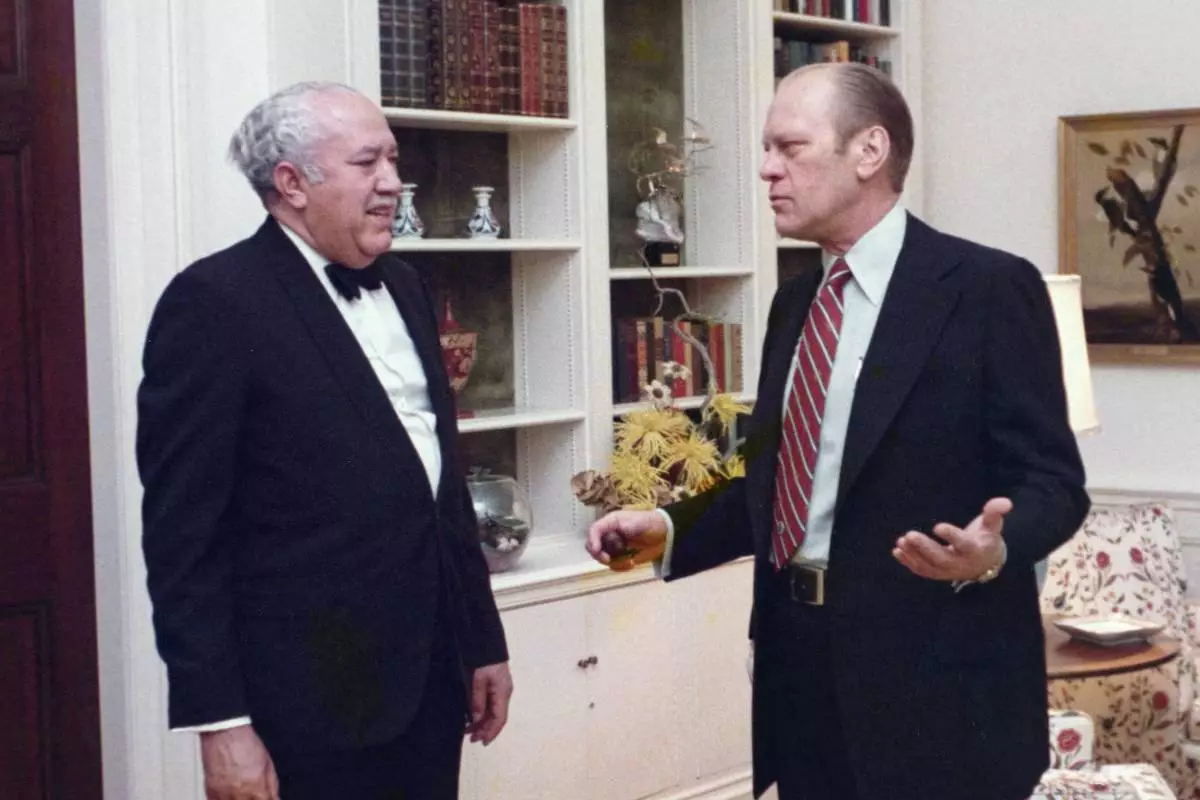
In this 1975 photo provided by The White House, President Gerald Ford speaks with John Woodson Ficklin in the residence of the White House in Washington. (White House Historical Association/The White House via AP)
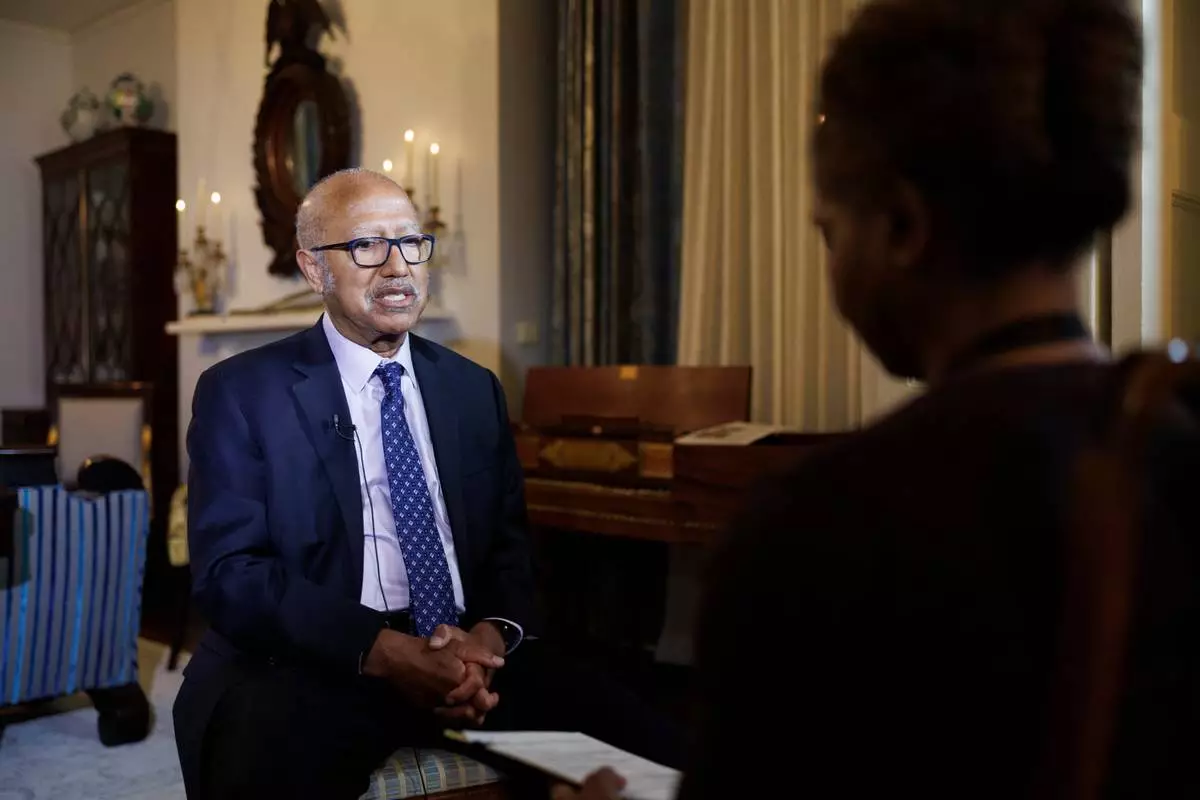
John Wrory Ficklin speaks during an interview with the Associated Press inside the Decatur House at the White House Historical Society, Feb. 18, 2026, in Washington. (AP Photo/Tom Brenner)
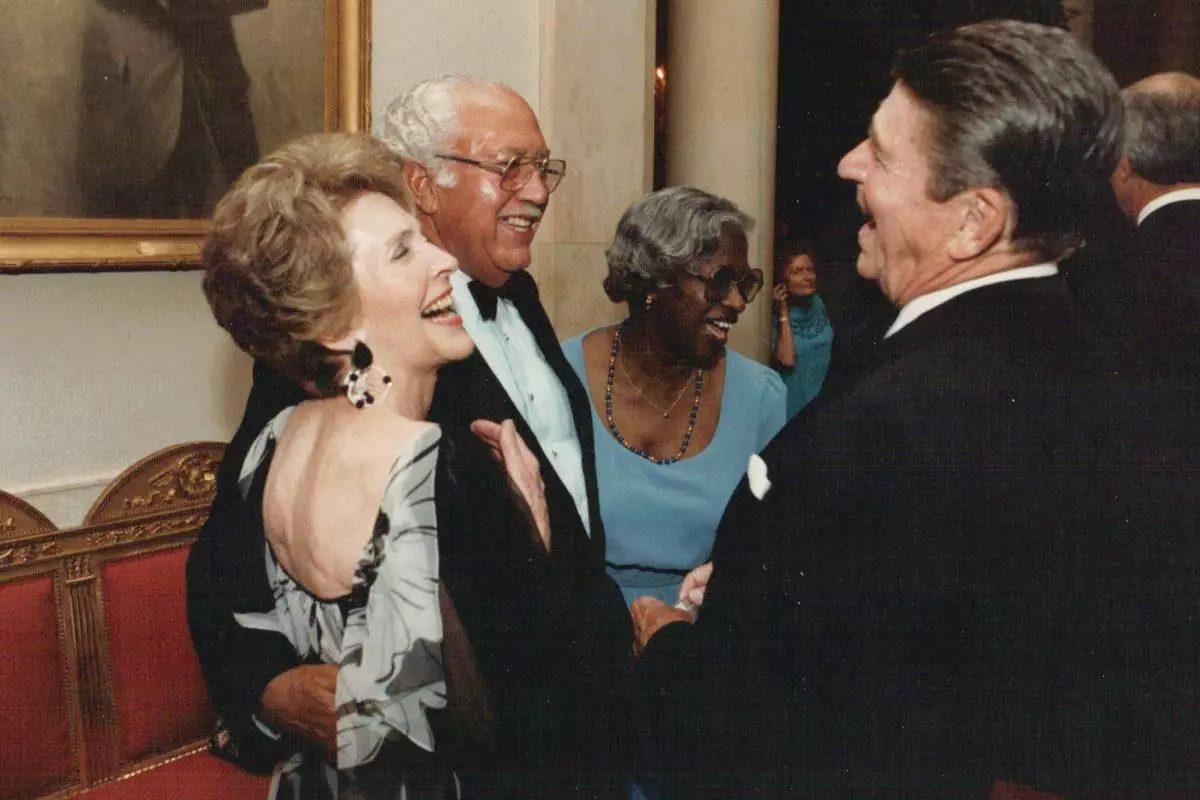
In this photo provided by The White House, John Woodson Ficklin and his wife Nancy talk with President Ronald Reagan and first lady Nancy Reagan as they attend as guests at a State Dinner at the White House on July 19, 1983, in Washington. (The White House via AP)
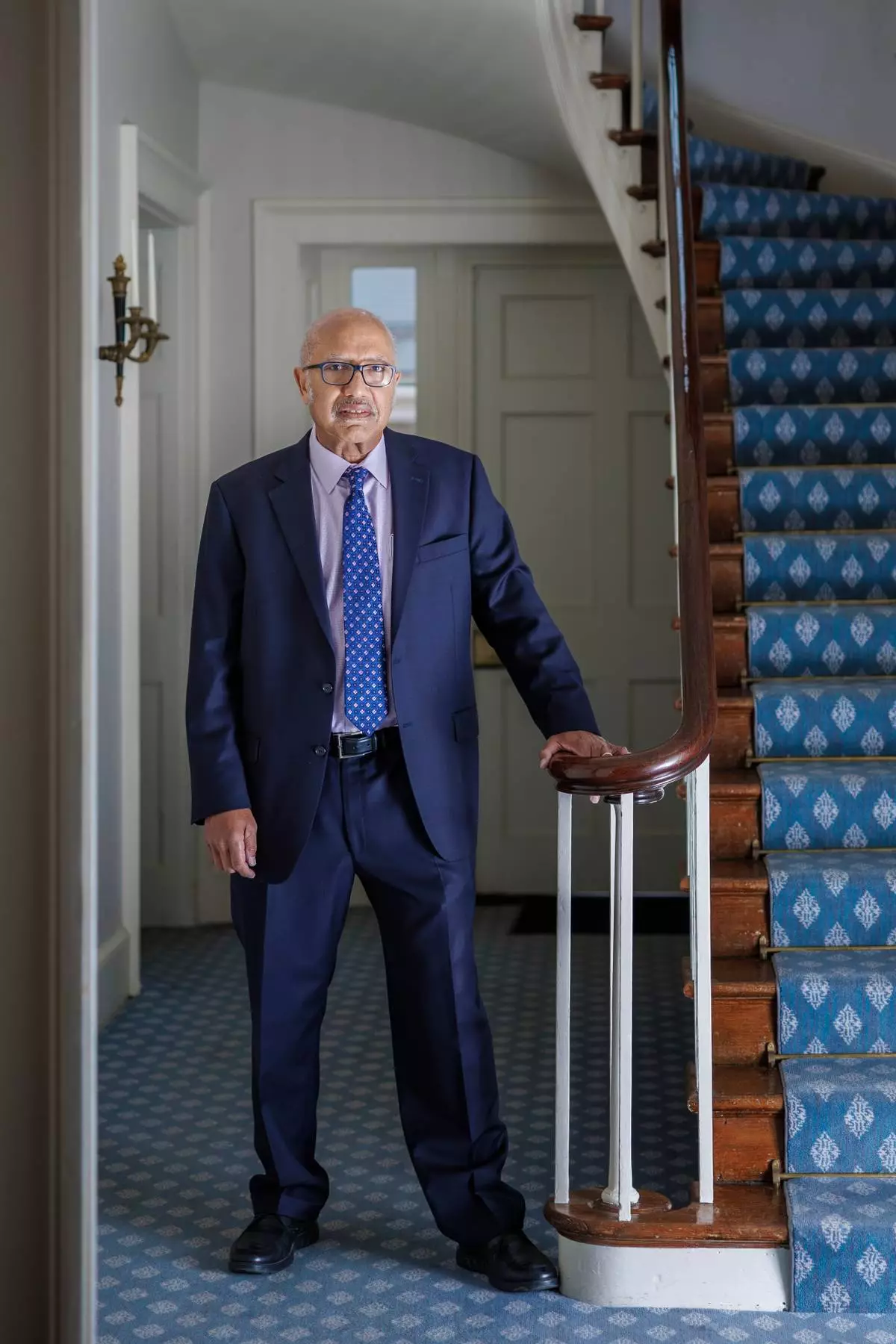
John Wrory Ficklin poses for a photo inside the Decatur House at the White House Historical Society, Feb. 18, 2026, in Washington. (AP Photo/Tom Brenner)
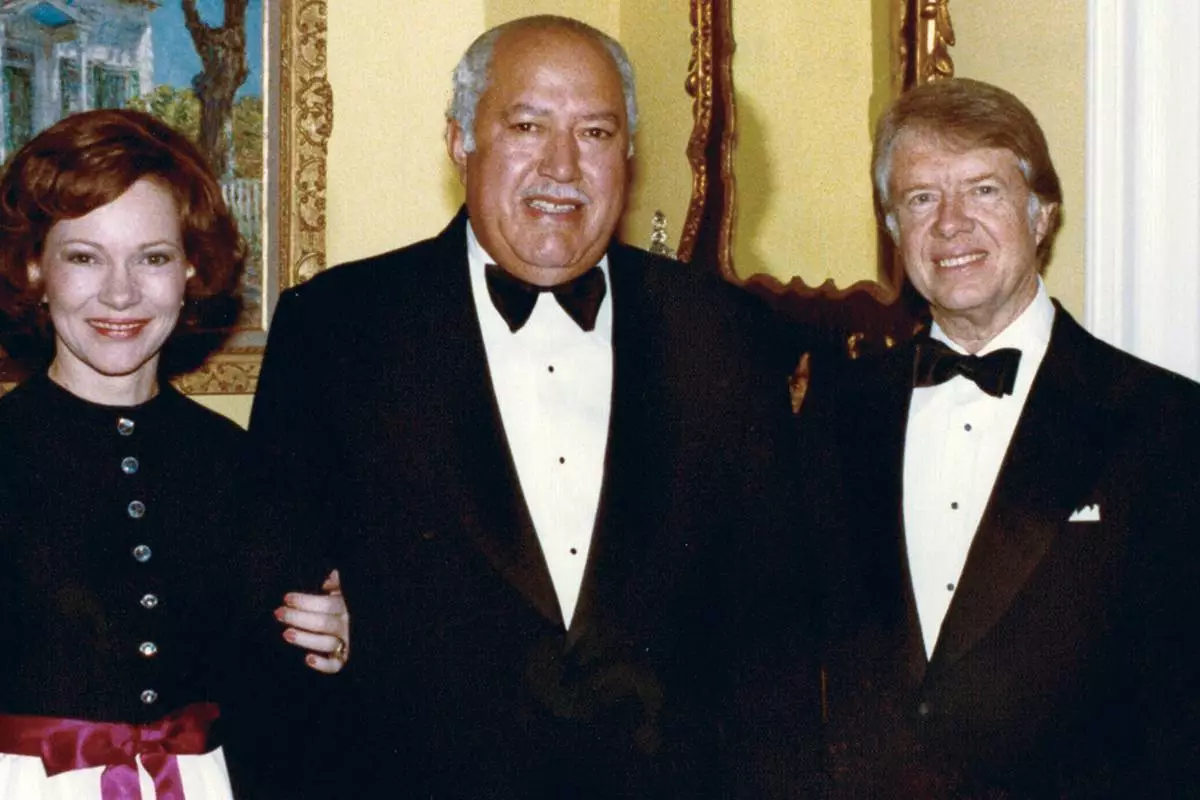
In this undated photo provided by The White House, John Woodson Ficklin poses for a photos with President Jimmy Carter and first lady Rosalynn Carter at the White House in Washington. (The White House via AP)