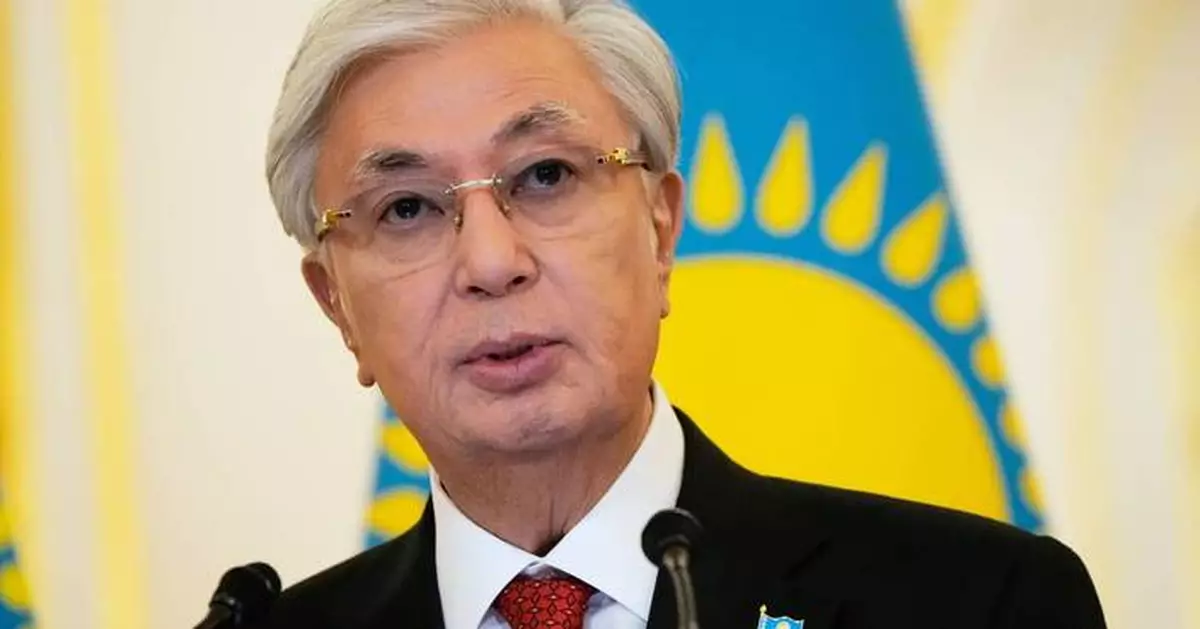
Voters in Kazakhstan headed to the polls Sunday for a referendum on a new constitution that would strengthen President Kassym-Jomart Tokayev’s grip on power in Central Asia’s largest country.
The proposal merges the Kazakhstani parliament’s two chambers into one and gives the president the right to appoint key government officials with parliament's approval, including the restoration of the post of vice president.
Click to Gallery
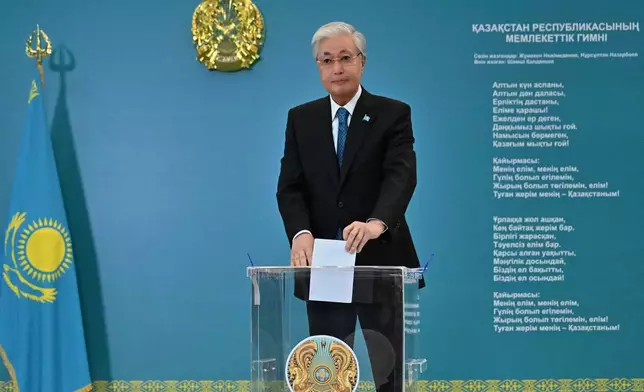
In this photo released by Kazakhstan's President Press Office, Kazakhstan's President Kassym-Jomart Tokayev casts his ballot at a polling station during a referendum on a new constitution, in Astana, Kazakhstan, Sunday, on Sunday, March 15, 2026. (Kazakhstan's President Press Office via AP)
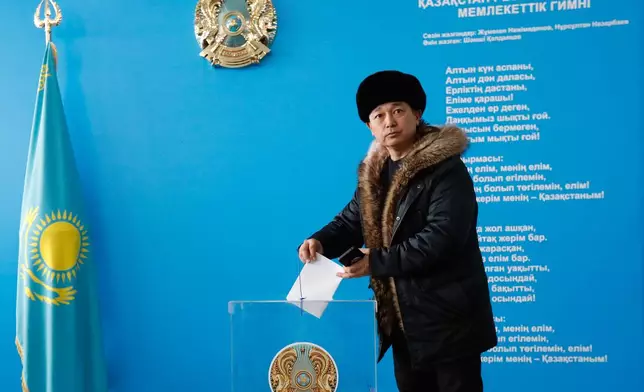
A man poses for a photo as he casts his ballot at a polling station during a referendum on a new constitution, in Astana, Kazakhstan, Sunday, on Sunday, March 15, 2026. (AP Photo)
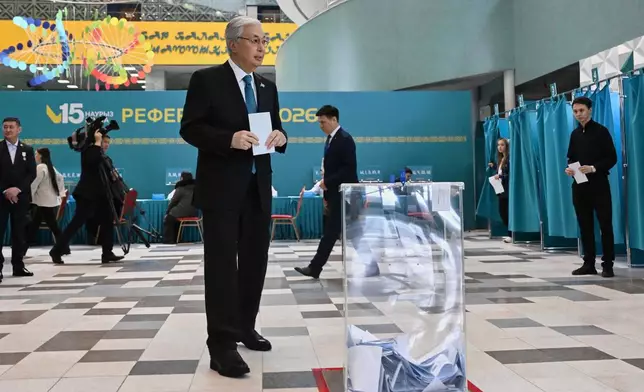
In this photo released by Kazakhstan's President Press Office, Kazakhstan's President Kassym-Jomart Tokayev walks to cast his ballot at a polling station during a referendum on a new constitution, in Astana, Kazakhstan, Sunday, March 15, 2026. (Kazakhstan's President Press Office via AP)
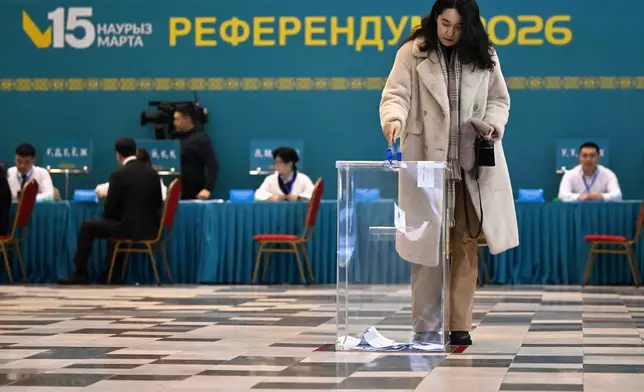
In this photo released by Kazakhstan's President Press Office, a woman casts her ballot at a polling station during a referendum on a new constitution, in Astana, Kazakhstan, Sunday, March 15, 2026. (Kazakhstan's President Press Office via AP)
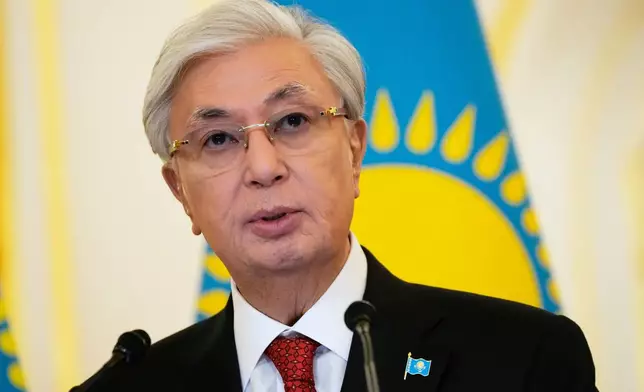
FILE - Kazakhstan's President Kassym-Jomart Tokayev addresses the plenary session of the Russia–Kazakhstan Interregional Cooperation Forum in Uralsk, Kazakhstan, via videoconference during a meeting with Russia's President Vladimir Putin at the Grand Kremlin Palace in Moscow, Wednesday, Nov. 12, 2025. (AP Photo/Alexander Zemlianichenko, File)
“The transition to a single-chamber parliament will not necessarily strengthen democracy, especially as the proposed amendments broadly expand presidential powers,” Mario Bikarski, senior Eastern Europe and Central Asia analyst at risk intelligence firm Verisk Maplecroft, told The Associated Press. “There is growing public demand for greater political accountability and justice, which these reforms are unlikely to address.”
If the constitutional changes pass, a new body, the People’s Council, will be created alongside parliament, empowered to initiate legislation and initiate referendums. Its members will be appointed entirely by the president.
This second constitutional change in four years was initiated by Tokayev. Analysts say it could pave the way for him to retain power after his term expires.
The 72-year-old Tokayev, a former Soviet official and Kazakhstani diplomat who previously served at the U.N., is currently limited to one seven-year term until 2029. Analysts believe Tokayev could use the referendum to reset presidential term limits.
“If the transition of power doesn’t go as Tokayev would like ... then he will be able to say that with the adoption of the new Constitution, we have reset presidential term limits,” analyst Temur Umarov, a fellow at the Carnegie Russia Eurasia Center, told The Associated Press. “The new constitution could provide Tokayev with a loophole for reelection to another term.”
Leaders of several former Soviet republics, including Russia, Belarus, Uzbekistan, and Tajikistan, have previously used new or amended constitutions to revise statutory term limits.
The proposed new constitution also stipulates that marriage will no longer be a union of two people, but rather a union of a man and a woman. Analysts say this provision was introduced in the new constitution as a follow-up to a law banning what authorities view as “propaganda” of LGBTQ+ relations.
“What we previously saw in the Russian Constitution has migrated to the Kazakhstani one. This trend toward visible and ostentatious ‘traditionalism’ demonstrates a certain bias toward which the Kazakhstani political regime will likely drift in the future,” Umarov said.
Tokayev, who has maintained a delicate balance between Moscow and the West since the imposition of sanctions against Russia, explains the constitutional changes as a response to the need to make quick decisions in a rapidly changing world.
“This step is of exceptional importance, especially in the current period, when the geopolitical situation is unstable and challenges and threats to national security are becoming increasingly tangible,” Tokayev said at a forum in the capital, Astana, on Thursday.
The opposition in Kazakhstan is not represented in government structures and, in the month since the referendum was announced, has failed, or “simply hasn’t had time,” to significantly influence public sentiment, analysts say.
“There’s no formally formed opposition in Kazakhstan,” said analyst Umarov. “There are opposition-minded politicians and civil society activists. They’re trying to demonstrate their discontent in some way, trying to hold various protests, calling for voting in a certain way.”
The vote is taking place at a difficult time for Kazakhstan, where inflation reached 11.7% in February and tax increases have fueled public discontent.
Analysts say economic problems could trigger a new wave of protests akin to nationwide unrest in 2022, triggered by hikes in fuel prices, in which dozens of protesters and police were killed — something Tokayev is trying to contain by consolidating power in his own hands.
“Preventing a repeat of the 2022 unrest remains a key priority for Tokayev,” said Bikarski. “Kazakhstan is the highest-risk Central Asian country on our predictive Civil Unrest Index, reflecting the increased incidence of industrial action, particularly in oil-producing regions.”
Karmanau reported from Tallinn, Estonia, and Morton reported from Thessaloniki, Greece.
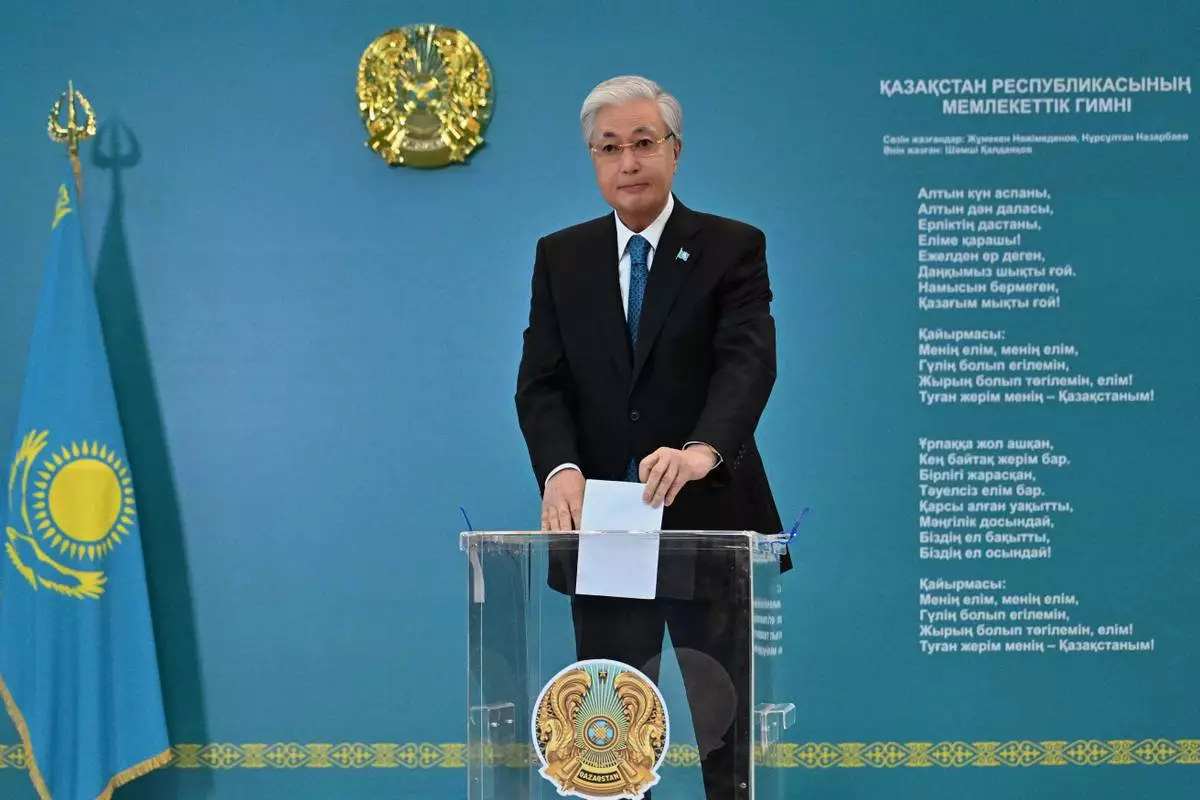
In this photo released by Kazakhstan's President Press Office, Kazakhstan's President Kassym-Jomart Tokayev casts his ballot at a polling station during a referendum on a new constitution, in Astana, Kazakhstan, Sunday, on Sunday, March 15, 2026. (Kazakhstan's President Press Office via AP)
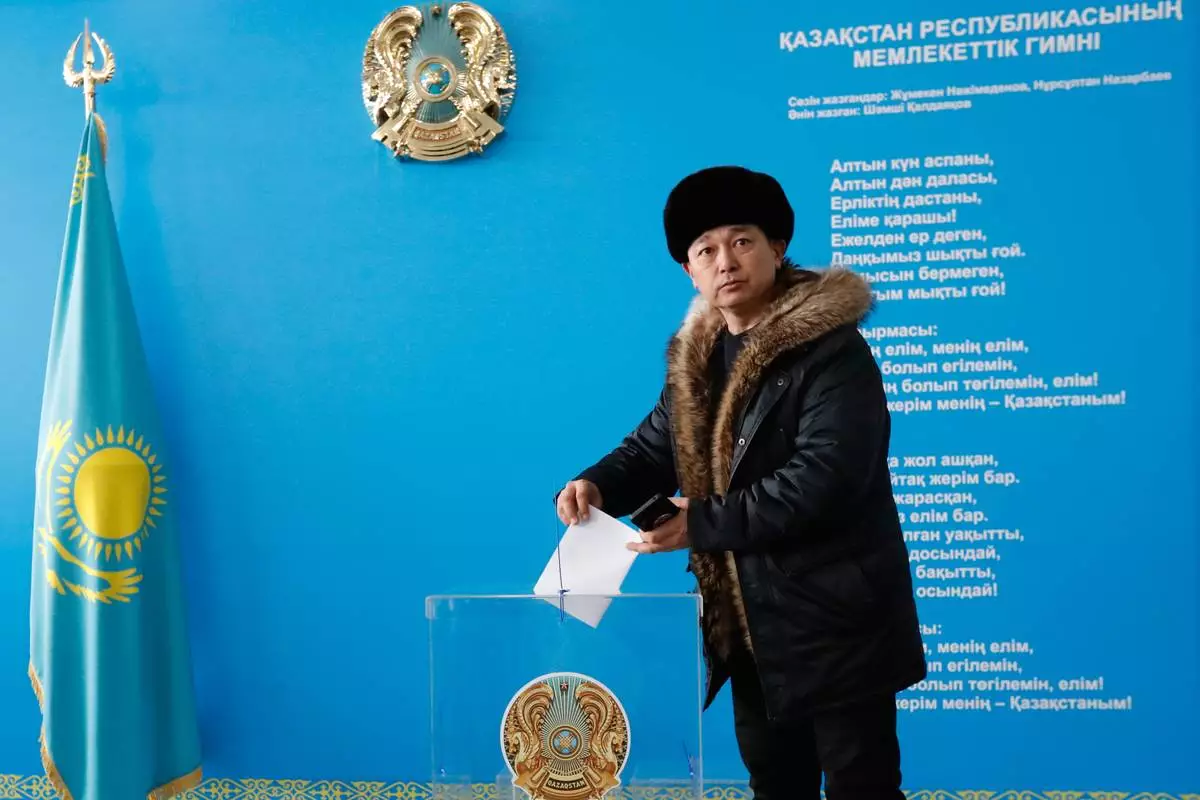
A man poses for a photo as he casts his ballot at a polling station during a referendum on a new constitution, in Astana, Kazakhstan, Sunday, on Sunday, March 15, 2026. (AP Photo)
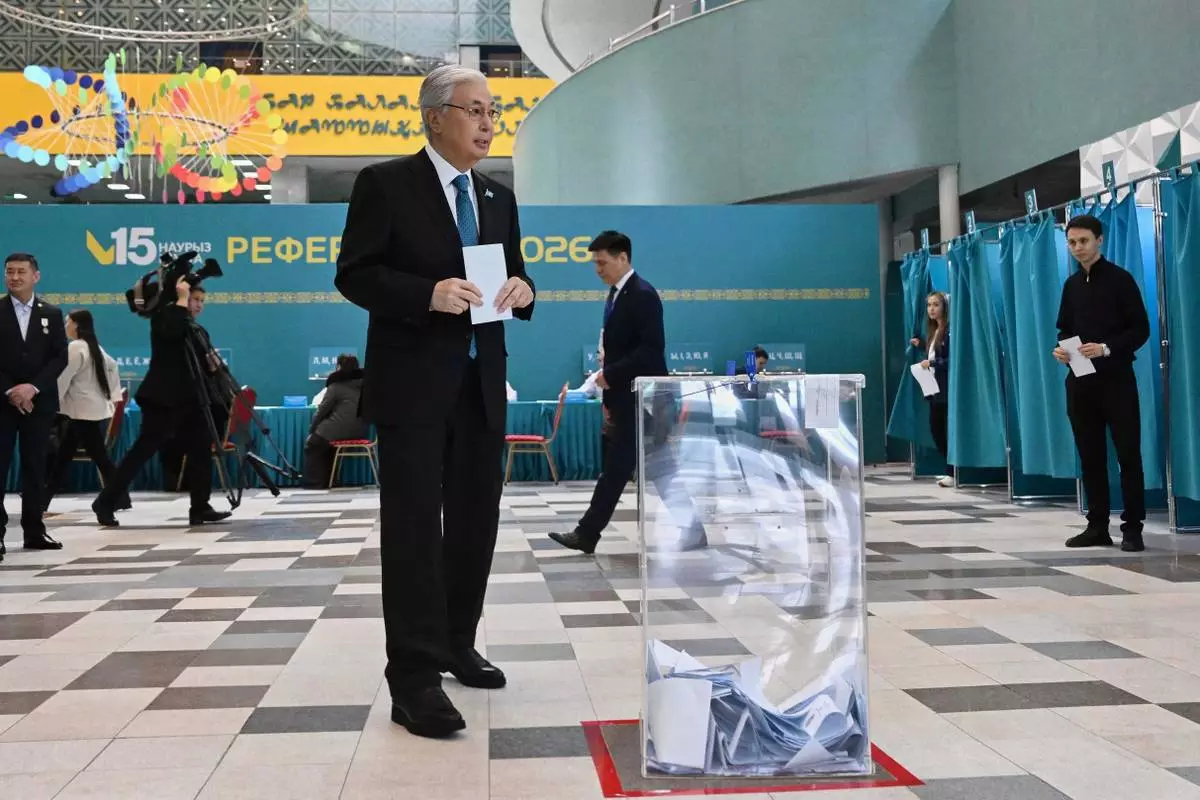
In this photo released by Kazakhstan's President Press Office, Kazakhstan's President Kassym-Jomart Tokayev walks to cast his ballot at a polling station during a referendum on a new constitution, in Astana, Kazakhstan, Sunday, March 15, 2026. (Kazakhstan's President Press Office via AP)
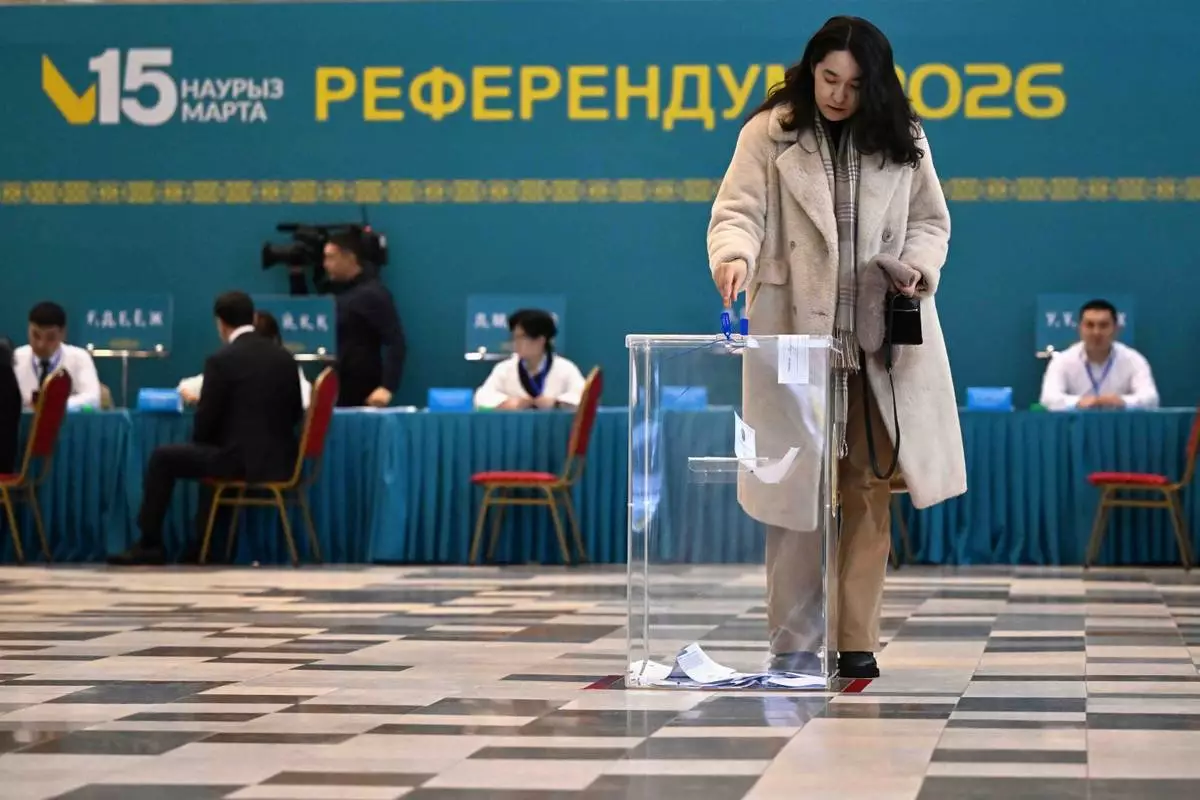
In this photo released by Kazakhstan's President Press Office, a woman casts her ballot at a polling station during a referendum on a new constitution, in Astana, Kazakhstan, Sunday, March 15, 2026. (Kazakhstan's President Press Office via AP)
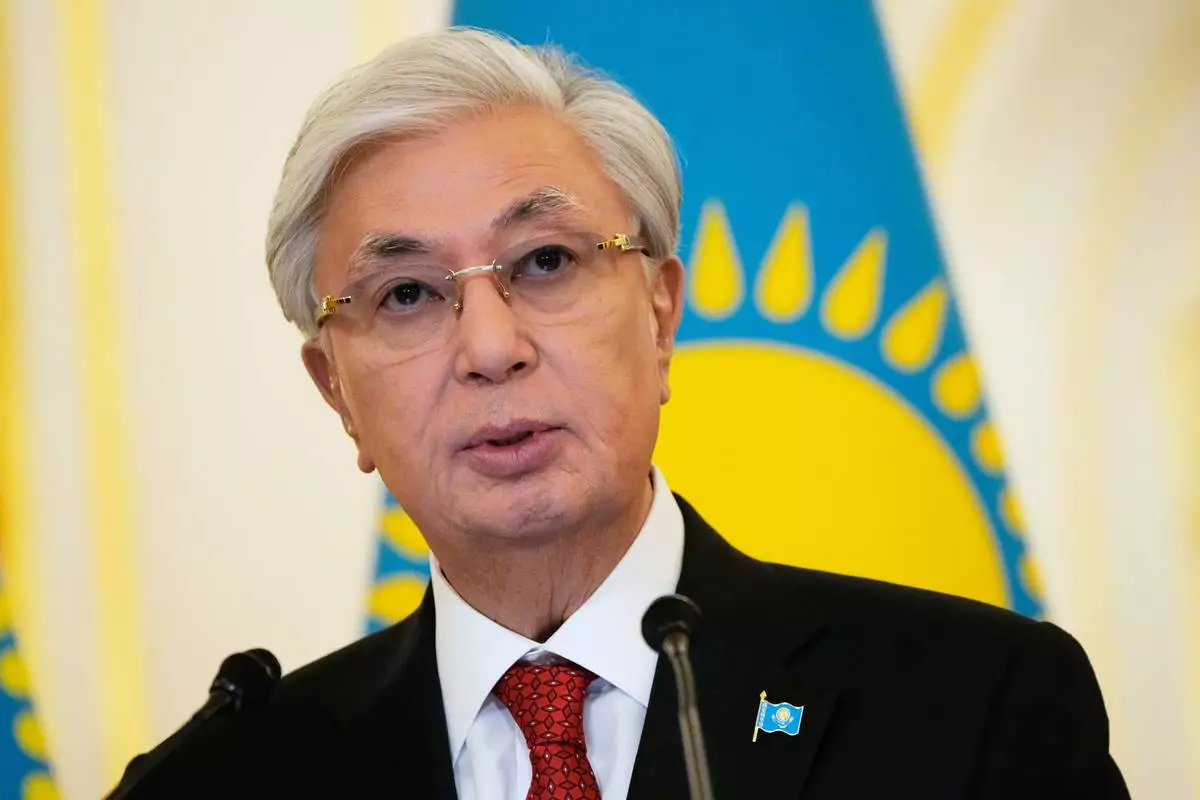
FILE - Kazakhstan's President Kassym-Jomart Tokayev addresses the plenary session of the Russia–Kazakhstan Interregional Cooperation Forum in Uralsk, Kazakhstan, via videoconference during a meeting with Russia's President Vladimir Putin at the Grand Kremlin Palace in Moscow, Wednesday, Nov. 12, 2025. (AP Photo/Alexander Zemlianichenko, File)