CAIRO (AP) — Yemen’s Iran-backed Houthi rebels have so far remained on the sidelines as the Iran war widens across the Middle East, raising questions about why — and when the battle-hardened group might join the fight.
Iran has retaliated against the United States and Israel with missiles and drones, targeting American military bases and other locations in Gulf Arab countries, disrupting trade routes, choking fuel supplies and threatening regional air traffic.
Iran’s new supreme leader, Ayatollah Mojtaba Khamenei, suggested on Thursday in his first written statement since succeeding his father, who was killed in the war's opening salvo, that Iran may open up new fronts in the conflict — a sign, analysts say, the Houthis may get involved soon.
Until now, the Houthis have been reluctant to fight, fearing assassinations of their leaders, internal divisions in Yemen and uncertainties over weapons supplies, the experts said.
But that may change as Iran seeks to increase pressure on global oil supply routes through potential attacks by the Houthis, who have had previous success targeting oil facilities in the region, the analysts said.
Iran has asserted its influence across the Middle East through its proxy forces in Gaza, Syria, Lebanon, Iraq and Yemen's Houthis.
Some of its closest allies have already joined the conflict, with Hezbollah resuming strikes on Israel within two days of the attack on Iran — and just 15 months after the last Israel-Hezbollah war ended in a November 2024 ceasefire. Militias linked to the Islamic Resistance in Iraq have claimed drone strikes on U.S. bases in Irbil.
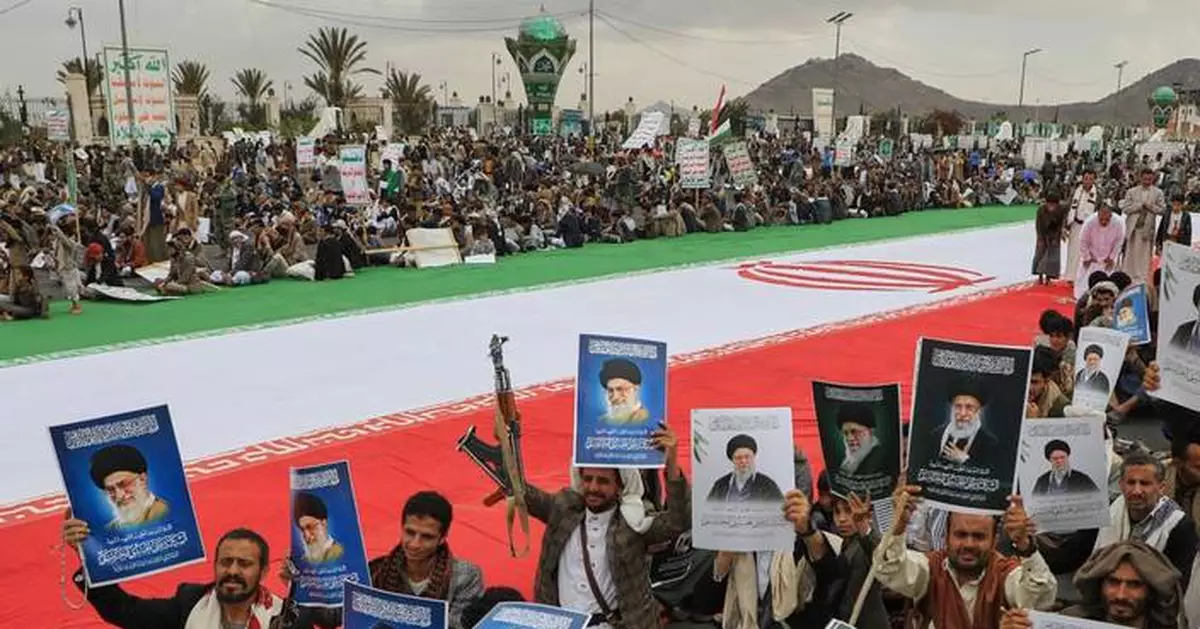
Meanwhile, the Houthis have only held protests and issued declarations condemning the Iran war, in contrast to the waves of missile and drone attacks they launched on Israel and shipping in the Red Sea after the Oct. 7, 2023, Hamas attacks on Israel sparked the war in the Gaza Strip.
Here’s a look at the Houthis’ military capabilities and where they stand in the conflict.
Armed by Iran, the Houthis seized most of Yemen’s north and its capital, Sanaa, in 2014, pushing the country’s internationally recognized government into exile. A Saudi-led coalition backing Yemen’s government entered the conflict the following year, and the Houthis have since fought a long-running but largely stalemated civil war in Yemen.
While the Houthis share some political and religious ties with Iran, they follow a different doctrine of Shiite Islam and are independent of Iran’s supreme leader, unlike the Lebanese militant Hezbollah group and several Iran-backed Iraqi militias.
Still, they are key to Iran’s regional influence and the current war is unlikely to weaken that, according to Ahmed Nagi, a senior Yemen analyst at the International Crisis Group think tank.
“From Tehran’s perspective, the Houthis have proven themselves to be a capable and effective front, able to generate real pressure,” Nagi said.
He said the Houthi leaders' decision to distance themselves from the conflict is a calculated choice that has been fully coordinated with the Iranians.
Two Houthi members of the group's media and political offices told The Associated Press that the rebels' weapons stockpile is running low after its attacks during the Israel-Hamas war. The Iran war has further impeded the flow of weapons, said the officials, speaking on condition of anonymity because they weren’t authorized to talk to the media.
Still, the group has a large stockpile of drones, said another official, who spoke on condition of anonymity to discuss the weapons issue, about which he is well-informed.
Nagi said the Houthis appear to be building up their forces by recruiting more fighters, relying on local weapons production and sending reinforcements to Yemen’s western coastline on the Red Sea, signaling they are preparing for escalation.
“The decision is not about unwillingness to intervene, but about timing," Nagi said. "Iran’s broader strategy seems to be to avoid throwing all its cards on the table at once, instead using its partners and capabilities gradually as the confrontation evolves.”
The Houthis are likely to step in if the conflict widens, Nagi added, or if they perceive an existential threat to Iran, such as significant deterioration in military capabilities.
Houthi leader Abdulmalik al-Houthi has repeatedly emphasized the group is ready to intervene, claiming their “hands are on the trigger,” though its unclear what that involvement would entail.
″Houthis, of course, are always ready for any war,” said Farea al-Muslimi, a research fellow at the Chatham House think tank in London. “Some weaponry moved in different areas inside Yemen recently ... but it’s still not clear whether it's for a military escalation.”
If the Houthis enter the war, they will most likely resume attacks on shipping in the Red Sea and the Gulf of Aden, while also striking Israel, Nagi said. They could also join Iran's attacks on Gulf countries, targeting U.S. military assets and interests.
Attacks on vessels during the Israel-Hamas war upended shipping in the Red Sea, through which about $1 trillion worth of goods passed each year before the war. The rebels also fired drones at Israel.
Should the Houthis join the Iran war, their primary targets would likely be oil tankers, the analysts said, since shipping offers the most immediate pressure point and attacking it would signal escalation while impacting energy supply chains.
Attacks on oil installations could also be considered. The Houthis have previously struck oil facilities in Saudi Arabia during their long-running conflict against the Saudi-led coalition.
Meanwhile, U.S. military sites in the region might also become targets, Nagi said.
Abdel-Bari Taher, a political analyst and former head of the press syndicate in Yemen, said any decision to join the war is impacted by the internal situation in Yemen, including recent deadly clashes in south Yemen, public opposition in Sanaa to joining the war and heightened caution among Houthi leaders after high-profile assassinations.
The two Houthi officials from the group's media and political offices said the U.S. has sent warnings via Omani mediators against participating in the war. They said Houthi political and security leaders have also been alerted that their cellphones are under surveillance by the U.S. and Israel. Fearing potential Israeli assassinations, Houthi leaders have been instructed not to appear in public, the officials said.
″Despite these constraints and the complex domestic and regional dynamics, Houthi involvement in the conflict remains a possibility,” Taher said.
Al-Muslimi, the Chatham House analyst, said the Houthis don’t have the military capabilities or an internal Yemeni interest that would force them to join the war, and the group seems committed to a ceasefire with the U.S. that was brokered by Oman last year.
“They hope to fight, especially with Israel, but they can’t be the ones to fire the first shot,” al-Muslimi said.
He said the Houthis would likely need a local Yemeni cause to join the fighting — a reason that would strengthen support among their local base.
Notes al-Muslimi: The Houthis “are a local group that Iran uses and supports, but didn't create.”
Associated Press journalist Ahmed al-Haj in Aden, Yemen, contributed to this report.
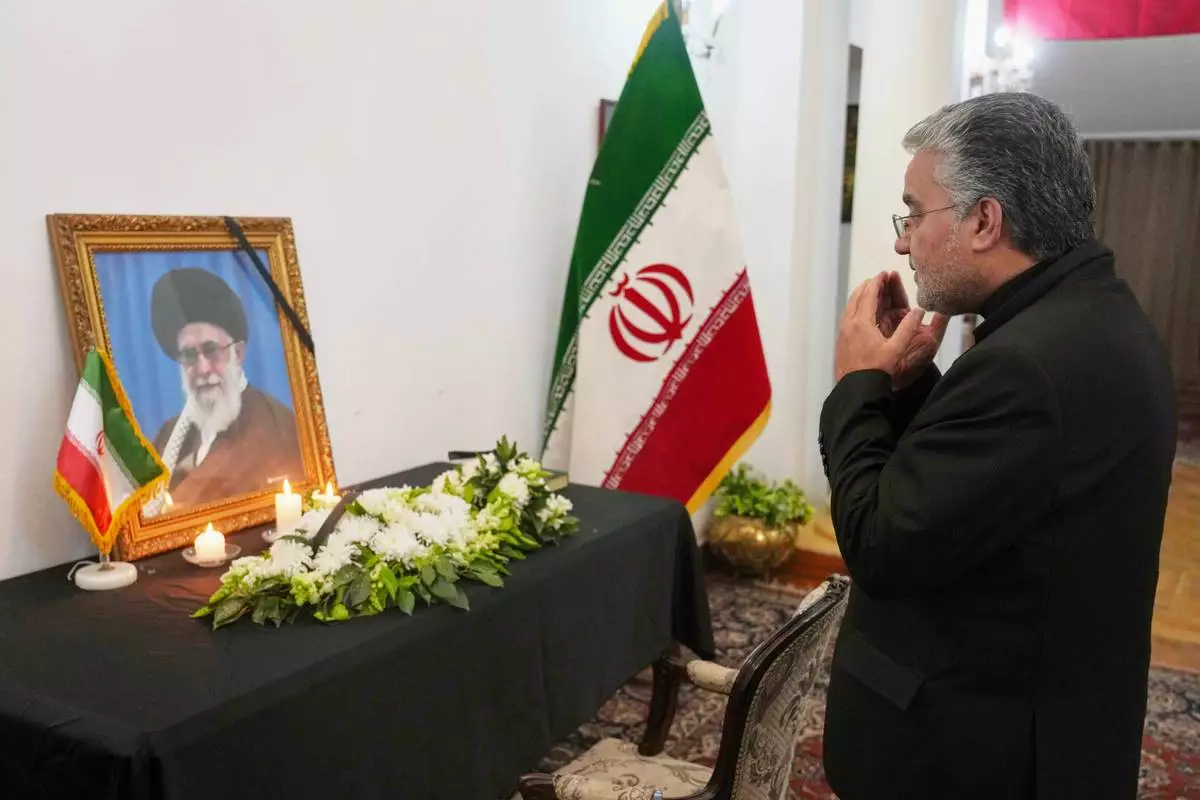
Mojtaba Ferdousi Pour, Iranian Ambassador to Egypt, prays in front of a a makeshift memorial for Iran's late Supreme Leader Ayatollah Ali Khamenei, who was killed in a major attack by Israel and the United States, at the Iranian embassy in Cairo, Thursday, March 5, 2026. (AP Photo/Amr Nabil)
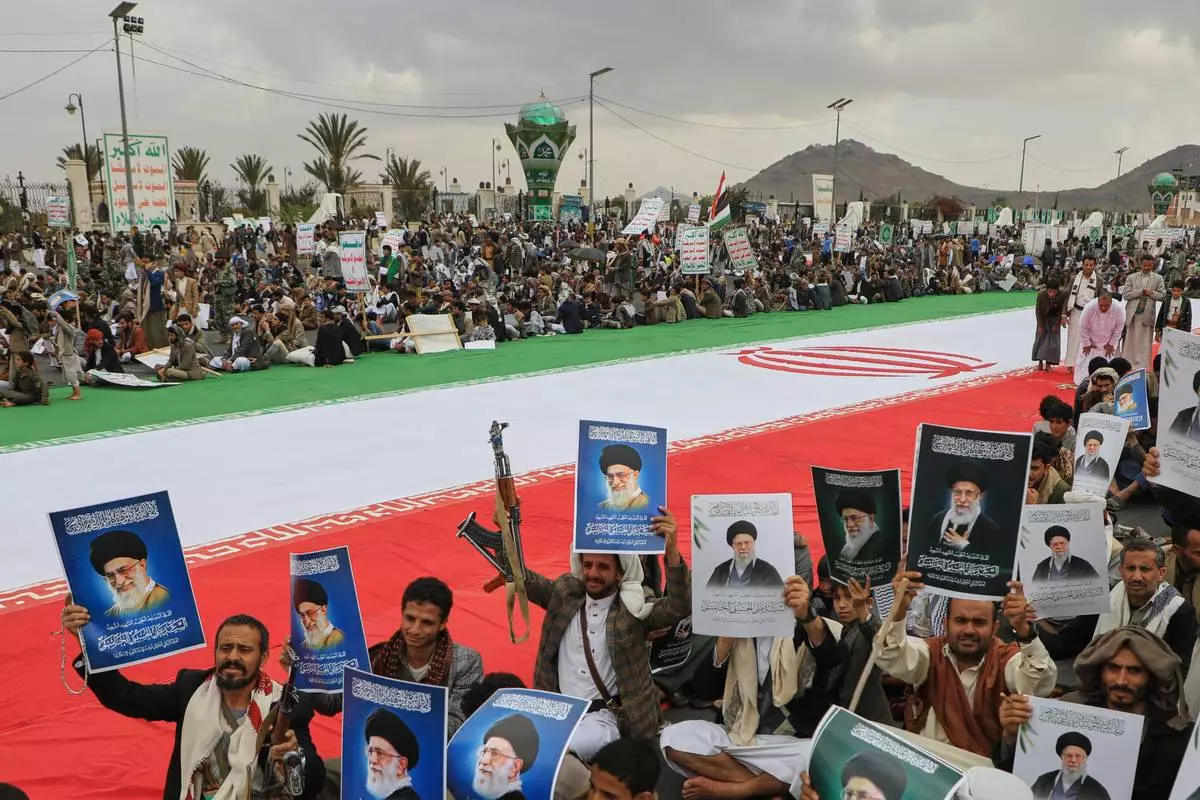
Houthi supporters hold posters of Iran's late Supreme Leader Ayatollah Ali Khamenei, who was killed in an attack by Israel and the U.S., next to a giant Iranian flag as they protest the war on Iran, in Sanaa, Yemen, Friday, March 6, 2026. (AP Photo/Osamah Abdulrahman)
Gulf countries reported new attacks Sunday morning, a day after Iran called for the evacuation of three major ports in the United Arab Emirates, threatening for the first time a neighboring country’s non-U.S. assets.
Tehran accused the United States of using “ports, docks and hideouts” in the UAE to launch strikes on Kharg Island, home to the main terminal handling Iran’s oil exports, without providing evidence, as the war showed no signs of ending.
U.S. President Donald Trump said he hoped allies would send warships to secure the vital Strait of Hormuz.
Meanwhile, Israeli strikes have deepened Lebanon's humanitarian crisis, with more than 800 people killed and over 850,000 displaced.
Here is the latest:
Israel’s rescue service Magen David Adom said two men were lightly wounded in central Israel from an Iranian missile attack.
Video released by the service showed a large hole in a city street and shrapnel damage to an apartment building.
The Israeli rescue service United Hatzalah said it was aware of 23 damaged sites.
Israeli police said authorities were inspecting the scenes. Magen David Adom, another rescue service, posted pictures of a car partially set on fire after the barrage.
Iran’s top diplomat says his country is ready to consider any proposal that includes “a complete end” to the U.S.-Israeli war on the Islamic Republic, according to an interview with an Arab daily.
Iranian Foreign Minister Abbas Araghchi was quoted as saying by the London-based Al-Araby al-Jadeed that mediations by Iran’s neighbors were underway to de-escalate and present “ideas to end the war.” He gave no indication on whether progress has been made.
Araghchi also insisted that Iran’s attacks on its Arab neighbors were limited to U.S. bases and assets. He said Tehran is ready to establish a joint committee with its neighbors to investigate such attacks.
A tanker was seen loading oil Sunday on Iran’s Kharg Island, two days after the U.S. struck military facilities there.
The vessel-tracking platform TankerTrackers said seven more tankers are seen at the anchorage. Five had already loaded fuel oil, while two are waiting to load, according to satellite imagery. It wasn’t immediately clear who the tankers belong to.
Bahrain said Sunday its air defenses have intercepted 125 missiles and 211 drones since the Iran war began.
The small island nation — home to the U.S. Navy’s Fifth Fleet — has been among the most affected by Iranian strikes, which have hit ports, a hotel, a refinery and a water desalination plant. Similar in size to Singapore and less than one-third the size of Rhode Island, it relies on U.S.-made air defense systems. At least one person has been killed in the attacks.
The International Organization for Migration said Sunday that deteriorating conditions in Iranian cities were “driving increasingly complex mobility patterns.” It says the destruction of homes and facilities that provide basic services are pushing many Iranians to northern provinces, where they think they could be safer.
The U.N. agency said people have been displaced to more than 20 provinces and that shelters were facing strain throughout Iran. Iranians are also fleeing to neighboring states, the agency said, including nearly 32,000 to Afghanistan and nearly 4,000 to Pakistan, even though airports and most border crossings — especially to Iraq — are closed.
Iran’s Health Ministry says U.S. and Israeli strikes have killed 223 women and 202 children since the start of the war on Feb. 28, according to Mizan, the official Iranian judiciary news agency.
The Iranian Red Crescent has said that more than 1,300 people have been killed.
A U.S.-Israeli attack early Sunday morning targeted an impoverished residential neighborhood in the southern city of Shiraz, Iran’s state-run news agency IRNA said.
The strike, which occurred southeast of the city, destroyed several housing units belonging to workers and people supported by the state welfare organization, the report said. It said a number of homes were destroyed and several people were injured. There were no reports of fatalities.
There was no immediate comment from Israel or the U.S. On Friday, Israel said it targeted a missile facility in Shiraz. It also has gone after what it says are checkpoints erected by Iran’s paramilitary Basij force.
Neutral Switzerland says it refused permission for two overflights by U.S. reconnaissance planes “in the context of the war in Iran.”
The government said late Saturday that Switzerland’s neutrality law forbids overflights by parties to a conflict that have a military purpose in connection with that conflict. But it does allow humanitarian and medical transit, as well as flights unconnected with the conflict.
Switzerland said it did give clearance for two U.S. transport aircraft to fly over the country on Sunday and for a newly serviced plane to transit on Tuesday.
Iran’s Revolutionary Guard vowed Sunday to hunt down Israeli Prime Minister Benjamin Netanyahu, according to the state-run IRNA news agency.
“If the criminal Zionist prime minister is still alive, we will continue to pursue and kill him with full force,” the IRGC said in a statement.
The Israeli military says Iran has launched a new barrage of missiles toward Israel.
It says sirens are alerting residents in areas under attack and air defenses have been activated.
“This reflects a confused policy that missed the point, lost its direction, and lacked wisdom,” Anwar Gargash, adviser to the president of the United Arab Emirates, wrote on social media late Saturday.
Gargash was referring to Iranian Foreign Minister Abbas Araghchi’s comments in which he accused the U.S. of using the UAE as a base for its attacks on Iran's Kharg Island.
Sirens sounded in Bahrain ahead of an assault on Sunday, while the United Arab Emirates reported a missile attack, urging residents to shelter in safe locations.
Saudi Arabia’s Defense Ministry said its systems intercepted and destroyed 10 drones over the capital, Riyadh, and the kingdom’s eastern region.
Iran’s joint military command accused in a statement Sunday "the enemy” of using copycat Iranian drones to attack neighboring countries and pin the blame on Tehran, state media reported.
Tehran usually uses “the enemy” as a reference to the United States and Israel.
The statement said copies of Iran's Shahed-136 drone, known as LUCAS, were used to hit “irrelevant targets in the regional states," including attacks on Turkey, Iraq and Kuwait. No evidence was provided.
The military command also said Iran openly shares its targets, which it describes as U.S. and Israeli interests, and urged trust and cooperation from regional countries.
The United Arab Emirates reported a missile attack Sunday morning.
Authorities urged residents to remain in safe locations.
The U.S. Department of Defense on Saturday identified six service members who died when the military refueling aircraft they were aboard crashed Thursday while supporting operations against Iran.
The service members were Maj. John A. Klinner, 33; Capt. Ariana G. Savino, 31; Tech. Sgt. Ashley B. Pruitt, 34; Capt. Seth R. Koval, 38; Capt. Curtis J. Angst, 30; and Tech. Sgt. Tyler H. Simmons, 28, according to U.S. officials.
The crash in western Iraq followed an unspecified incident involving two aircraft in “friendly airspace,” according to U.S. Central Command. The other plane landed safely.
Israel’s military said early Sunday that Iran launched another round of missiles toward Israel.
Sirens sounded in Tel Aviv and loud booms were heard.
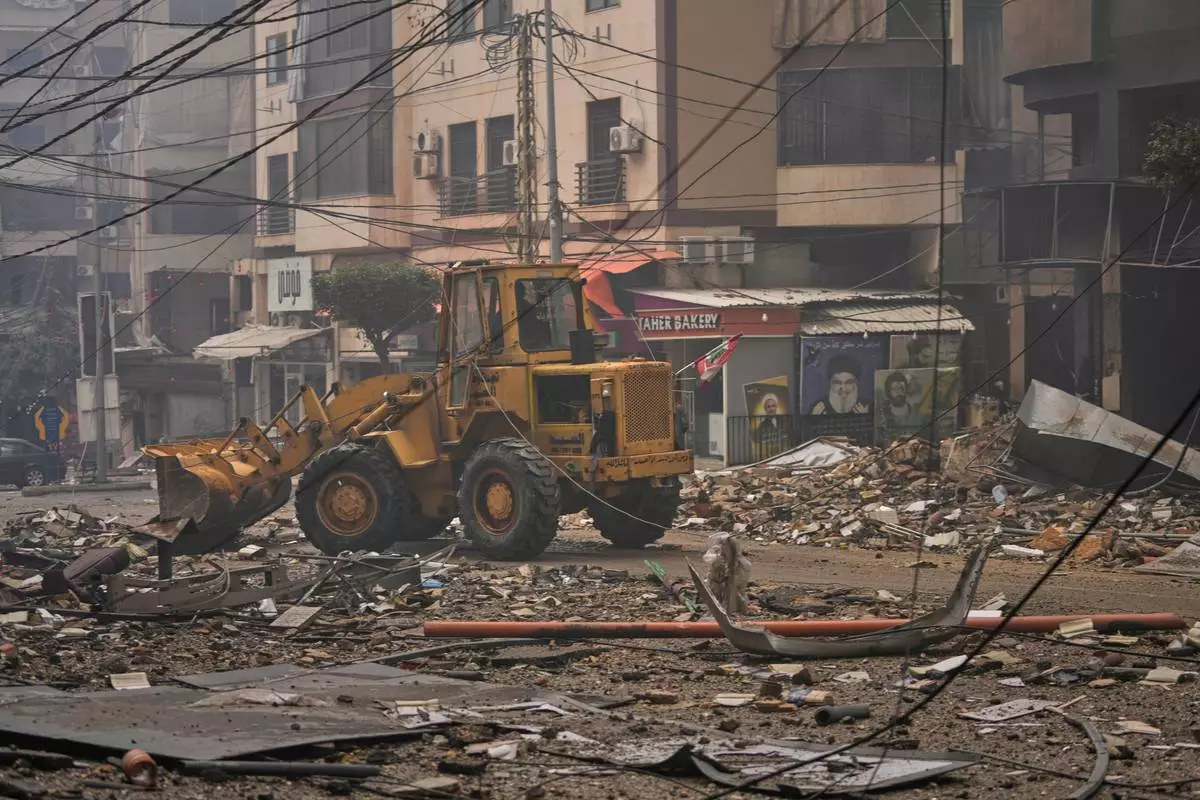
A bulldozer clears debris from the rubble of buildings destroyed in an Israeli airstrike in Dahiyeh, Beirut's southern suburbs, Lebanon, Sunday, March 15, 2026. (AP Photo/Hassan Ammar)
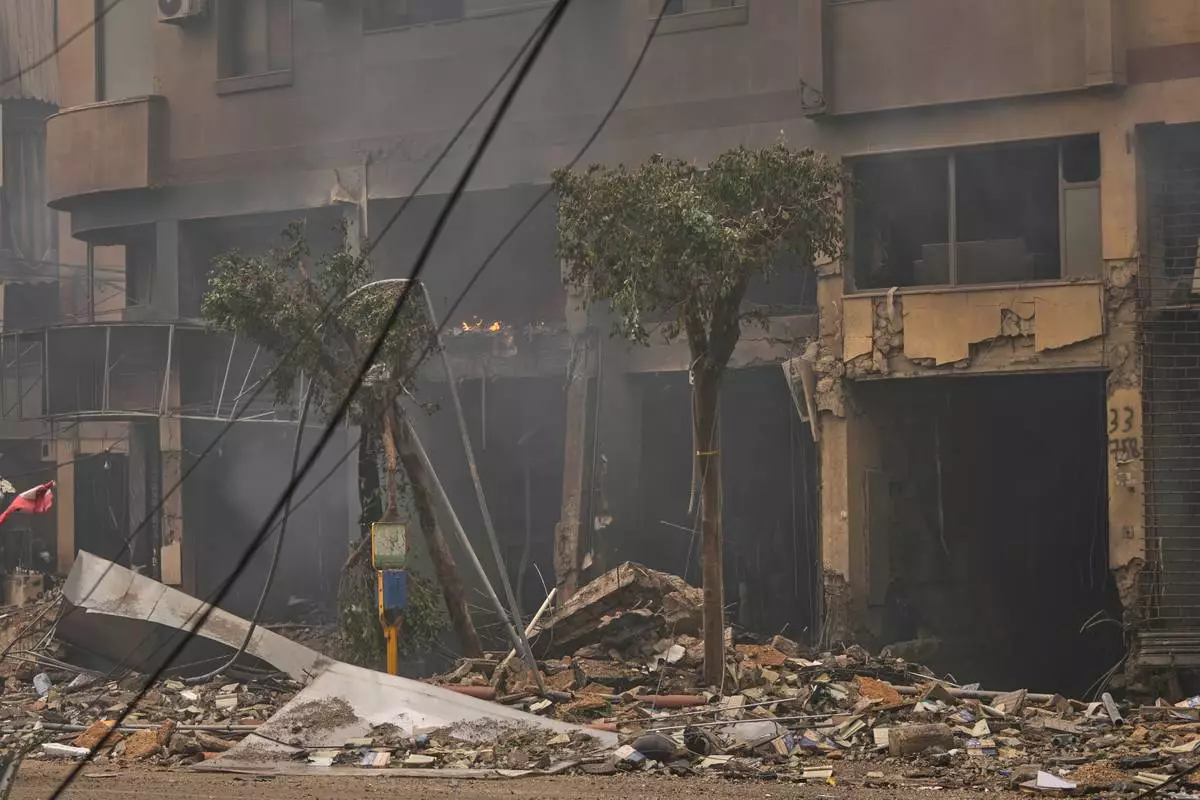
Debris litters the street as smoke rises from buildings damaged in an Israeli airstrike in Dahiyeh, Beirut's southern suburbs, Lebanon, Sunday, March 15, 2026. (AP Photo/Hassan Ammar)
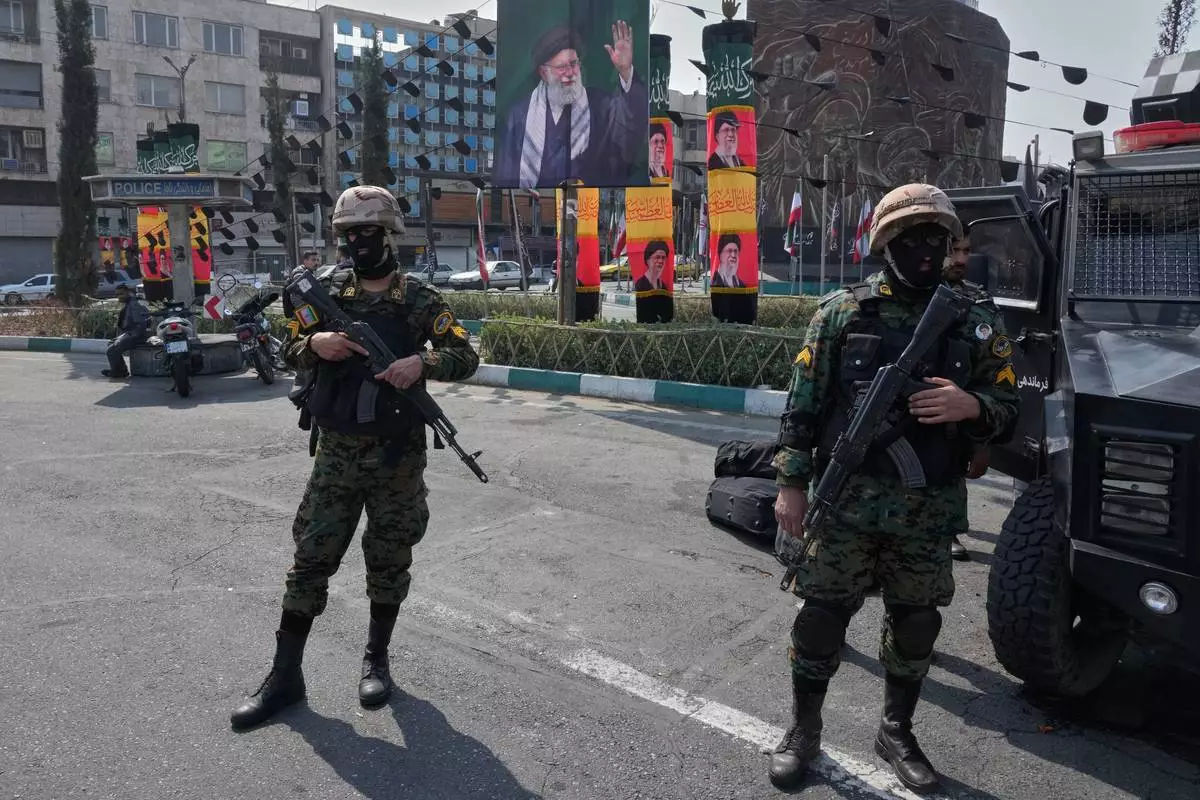
Policemen stand guard next to the banners showing portraits of the late Iranian Supreme Leader Ayatollah Ali Khamenei at the Enqelab-e-Eslami, or Islamic Revolution, square in downtown Tehran, Iran, Saturday, March 14, 2026. (AP Photo/Vahid Salemi)
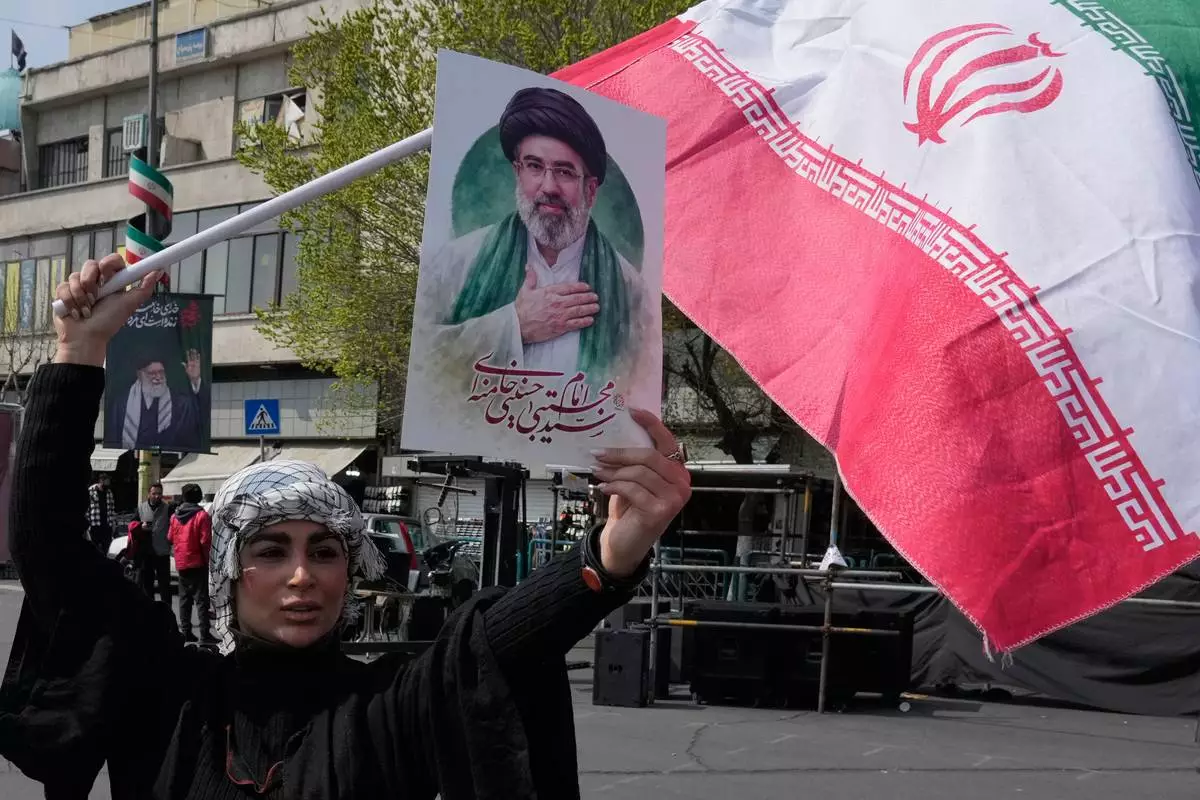
A woman displays a poster of the Iranian Supreme Leader Ayatollah Mojtaba Khamenei as she waves her country's flag during a campaign in support of the government at the Enqelab-e-Eslami, or Islamic Revolution, square in downtown Tehran, Iran, Saturday, March 14, 2026. (AP Photo/Vahid Salemi)

Israeli security forces inspect damage at the site of an Iranian missile strike in Holon, central Israel, Sunday, March 15, 2026. (AP Photo/Ohad Zwigenberg)
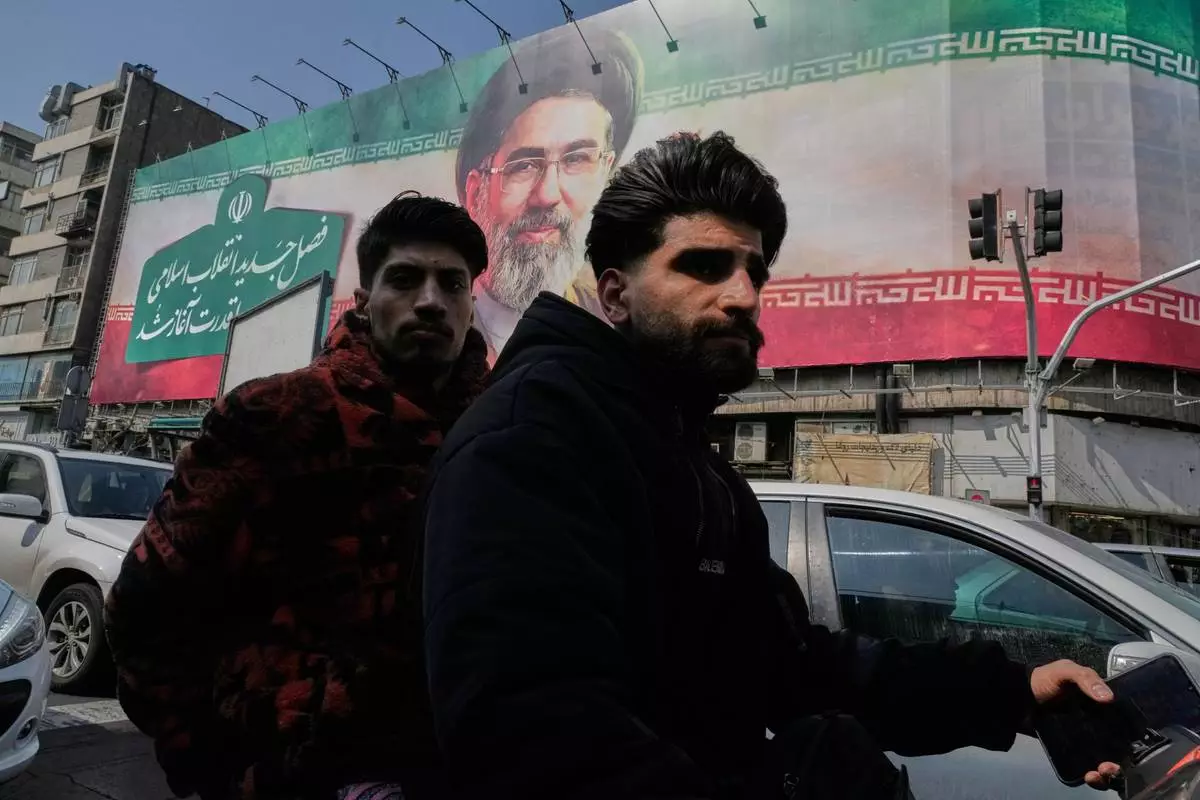
Two men ride their motorbike past a billboard of the Iranian Supreme Leader Ayatollah Mojtaba Khamenei in downtown Tehran, Iran, Saturday, March 14, 2026. (AP Photo/Vahid Salemi)
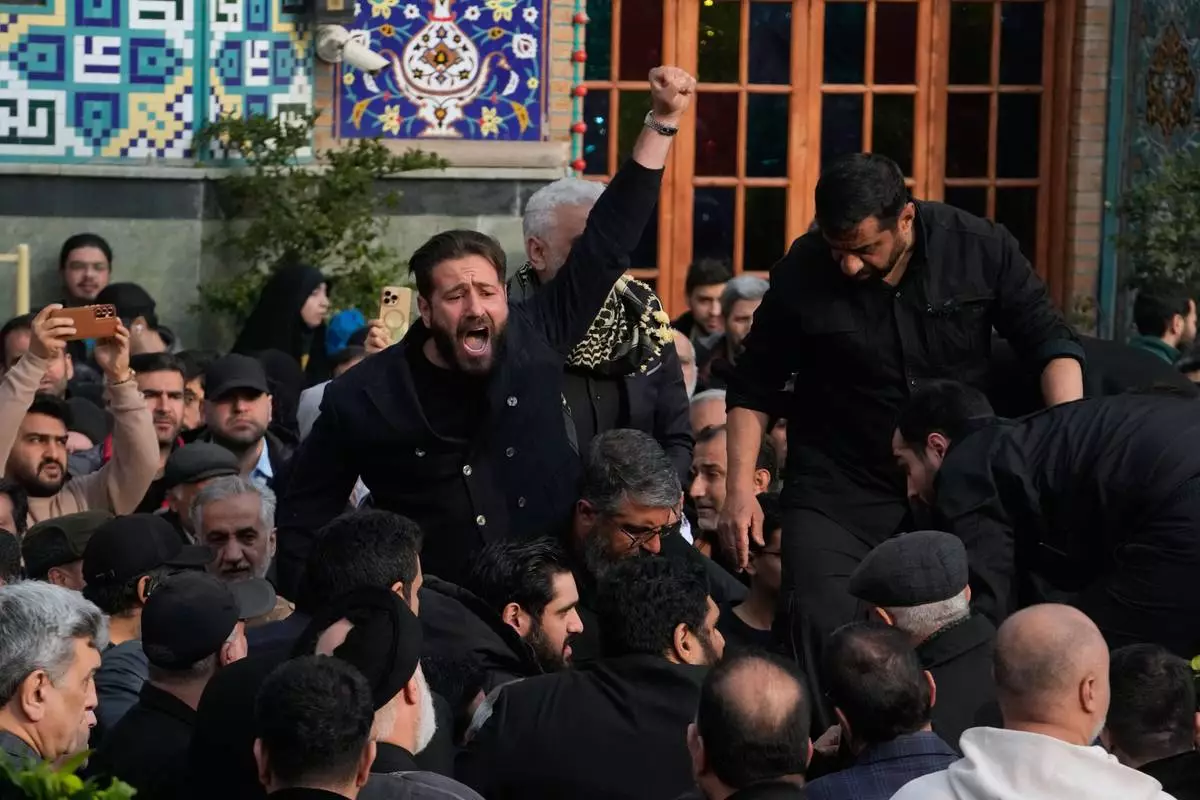
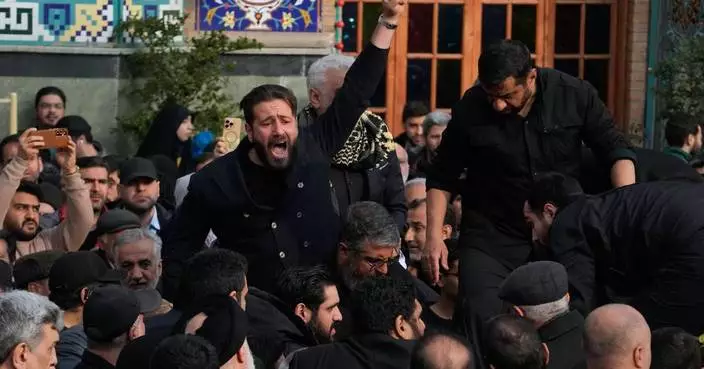
A man chants slogan while the body of Gen. Ali Shamkhani, secretary of Iran's Defense Council and a senior adviser to the Supreme Leader who was killed in a strike, is being buried at the courtyard of the Imamzadeh Saleh shrine in Tehran, Iran, Saturday, March 14, 2026. (AP Photo/Vahid Salemi)
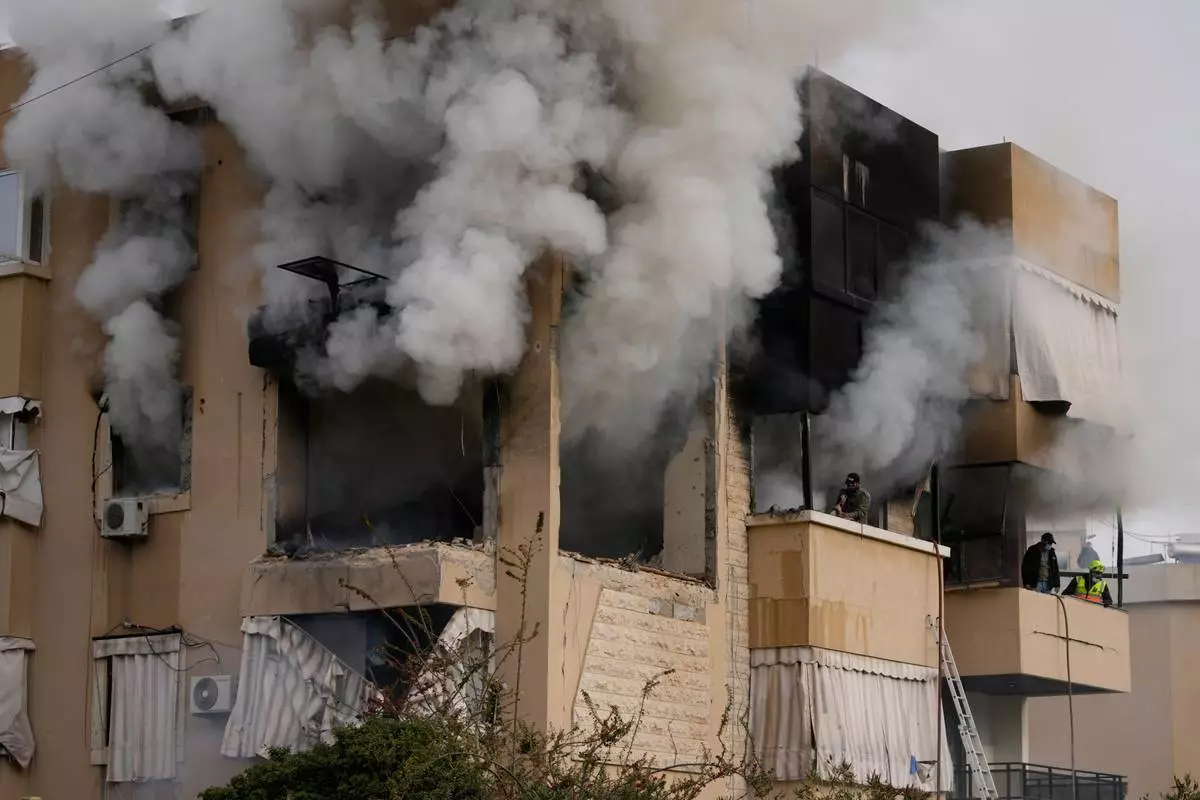
Rescue workers inspect an apartment damaged in an Israeli airstrike as thick smoke fills the building in the southern port city of Sidon, Lebanon, Saturday, March 14, 2026. (AP Photo/Mohammad Zaatari)
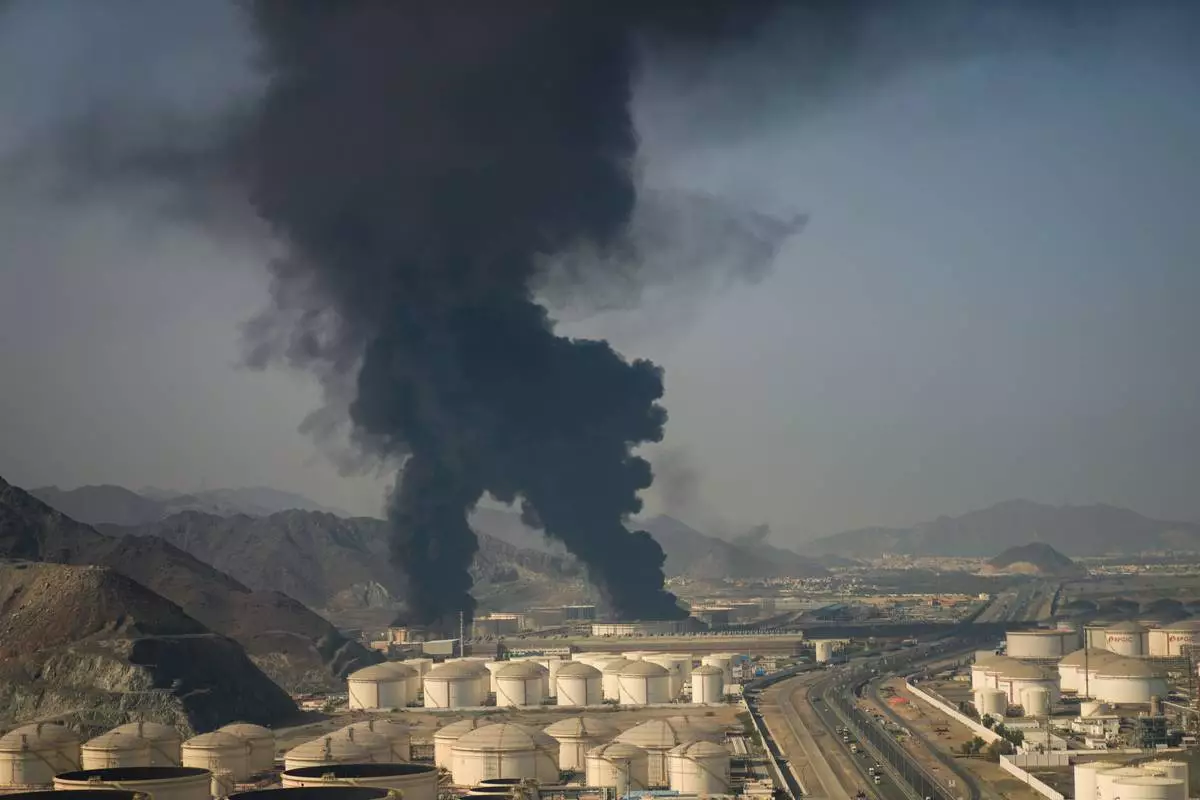
Fire and plumes of smoke rise from an oil facility in Fujairah, United Arab Emirates, Saturday, March 14, 2026. (AP Photo/Altaf Qadri)