COURCHEVEL, France (AP) — Marco Odermatt secured the World Cup super-G title on Sunday for the fourth consecutive season.
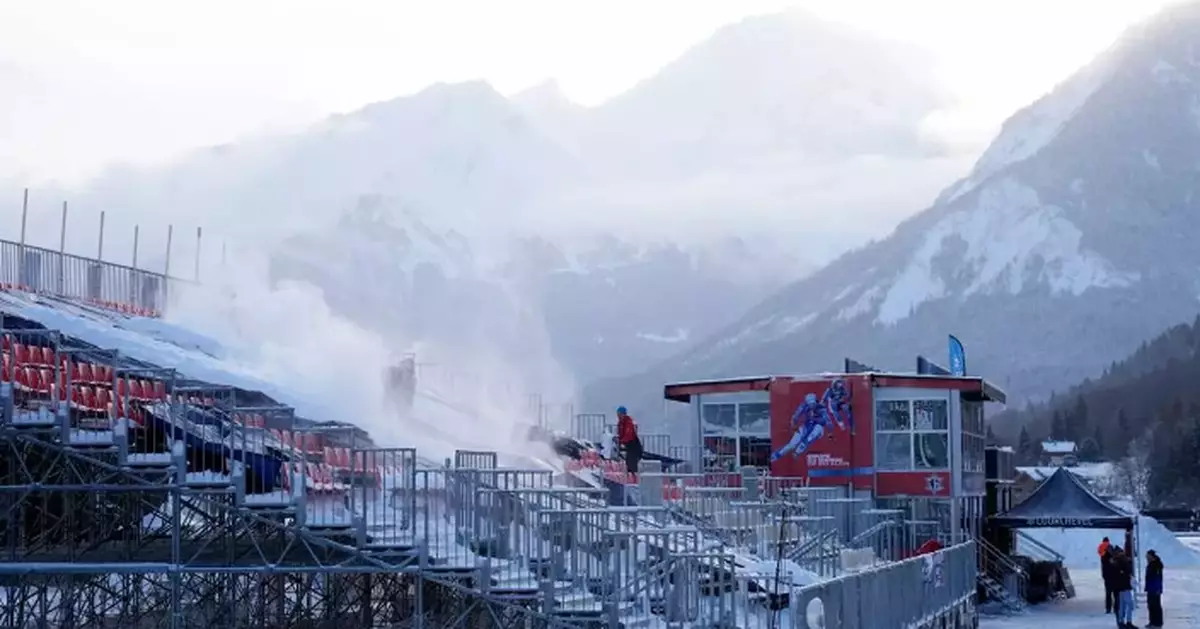
The Swiss star, though, didn’t have to race for it this weekend as both scheduled super-G events in the French Alps were canceled amid heavy snowfall.
Odermatt holds an insurmountable 158-point lead over runner-up Vincent Kriechmayr of Austria in the discipline standings with just one super-G remaining, next weekend at the World Cup Finals in Norway.
A race win is worth 100 points.
Organizers called off Sunday’s race as “the slope is unfortunately not safe to race on,” the International Ski and Snowboard Federation said hours before its scheduled start.
Saturday’s race was canceled because of fog and ongoing snowfall, and with the season ending next week, both races were not rescheduled.
Odermatt won two of the six super-G events this season and is the only racer with multiple wins in the discipline.
He added the super-G globe to the overall and downhill titles he locked up following his third-place finish in Friday’s downhill. He is also a strong favorite to take the giant slalom title next week.
Odermatt won those four globes also in each of the past two years.
AP skiing: https://apnews.com/hub/alpine-skiing
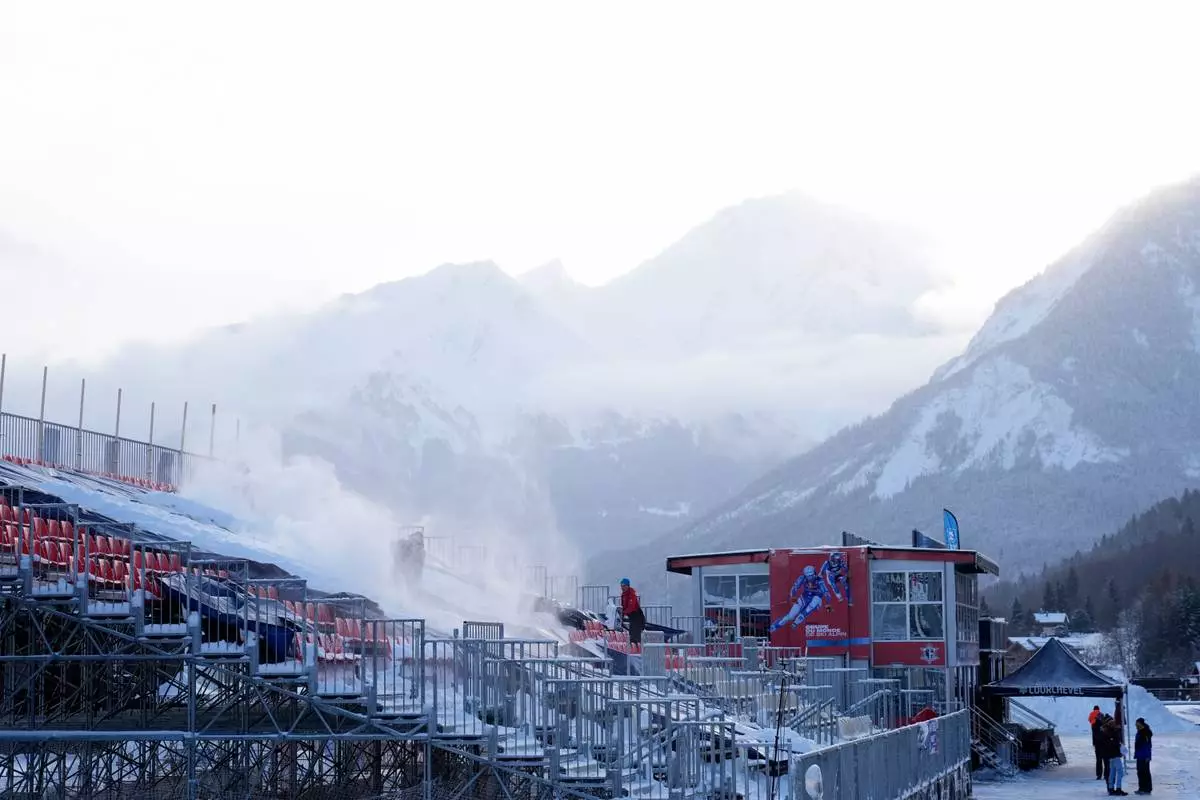
Workers clear snow from the stands as an alpine ski, men's World Cup super-G was cancelled following a heavy snowfall, in Courchevel, France, Sunday, March 15, 2026. (AP Photo/Giovanni Auletta)
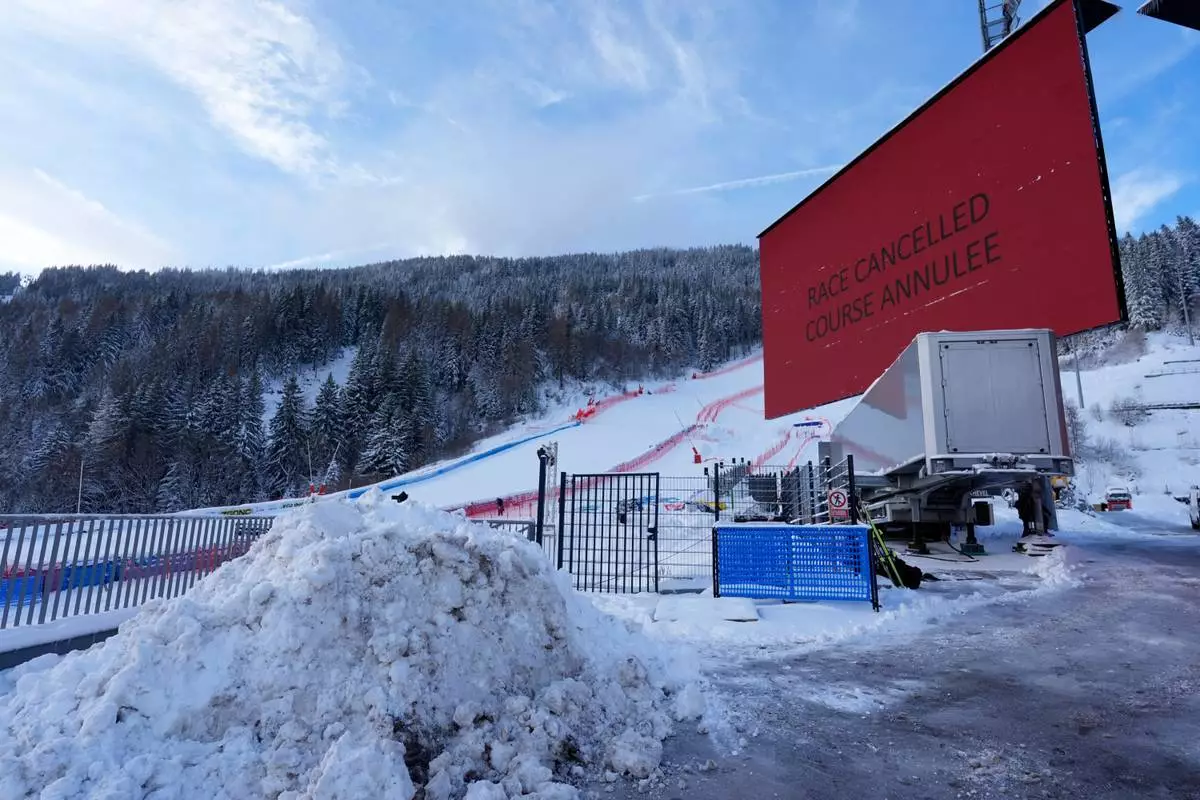
A view of the finish area as an alpine ski, men's World Cup super-G was cancelled following a heavy snowfall, in Courchevel, France, Sunday, March 15, 2026. (AP Photo/Giovanni Auletta)
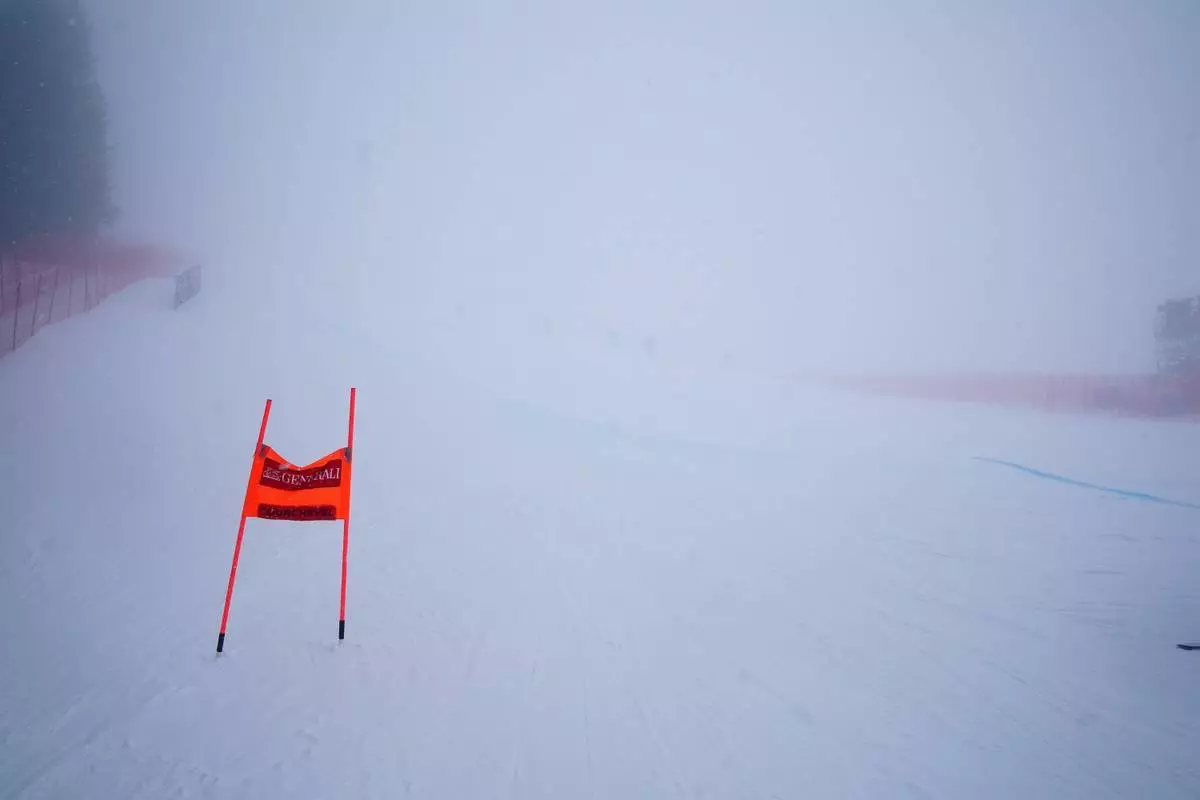
Fog shrouds the course as a men's World Cup super-G was cancelled due to bad weather, in Courchevel, France, Saturday, March 14, 2026. (AP Photo/Pier Marco Tacca)

CAIRO (AP) — Arab Gulf states reported new missile and drone attacks Sunday after Iran threatened to widen its campaign as the war in the Middle East entered its third week.
Israel and the United States attacked Iran on Feb. 28, saying they were striking nuclear and military sites and encouraging the Iranian people to rise against their leaders. Iran has responded with attacks against Israel and neighboring Gulf states. The war, which shows no signs of ending soon, has upended global air travel, disrupted oil exports from the region and sent fuel prices rising across the world.
Bahrain, Saudi Arabia and the United Arab Emirates warned residents on Sunday that they were working to intercept incoming projectiles, a day after Iran called for the evacuations of three major UAE ports, threatening for the first time a neighboring country’s non-U.S. assets.
Iran earlier accused the U.S. of using “ports, docks and hideouts” in the UAE to launch strikes on Kharg Island, home to the main terminal handling Iran’s oil exports, without providing evidence. The UAE and other Gulf countries that host U.S. bases have denied allowing their land or airspace to be used for military operations against Iran.
Iranian strikes have killed at least a dozen civilians in Gulf states, most of them migrant workers. In Iran, the International Committee for the Red Cross said more than 1,300 people have been killed so far. That includes 223 women and 202 children, according to Iranian Health Ministry figures reported by Mizan, the judiciary's official news agency.
In Israel, 12 people were reported dead by Iranian missile fire, said the national rescue service Magen David Adom. At least 13 members of the U.S. military have also been killed since the war began, including seven in combat and six who died in a plane crash over Iraq last week.
U.S. President Donald Trump said he hoped allies would send warships to secure the Strait of Hormuz.
Meanwhile, Lebanon’s humanitarian crisis deepened, with over 820 people killed, according to the Ministry of Health, and 850,000 displaced as Israel launched waves of strikes and sent additional troops into southern Lebanon.
Iran’s foreign minister, Abbas Araghchi, said the U.S. attacked Kharg Island and Abu Musa Island from two locations in the UAE, Ras Al Khaimah and a place “very close to Dubai,” calling that dangerous and saying Iran “will try to be careful not to attack any populated area” there.
U.S. Central Command said it had no response to Iran’s claim. A diplomatic adviser to the UAE’s president, Anwar Gargash, rejected accusations that the U.S. used its land or air as a base for its attacks on Kharg Island.
Iran has fired hundreds of missiles and drones at Arab Gulf neighbors during the war, but it has said it was targeting U.S. assets, even as hits or attempts were reported on civilian ones such as airports and oil fields.
Araghchi said the Strait of Hormuz was closed only to “those who are attacking us and their allies.”
As global anxiety soars over oil prices and supplies, Trump said Saturday that he hopes China, France, Japan, South Korea, the United Kingdom and others send warships to keep the Strait of Hormuz “open and safe.” Britain, in response, said it was discussing with allies a “range of options” to secure shipping.
Araghchi, in a social media post, urged neighbors to “expel foreign aggressors” and described Trump’s call as “begging.”
Iran’s joint military command has reiterated its threat to attack U.S.-linked “oil, economic and energy infrastructures” in the region if the Islamic Republic’s oil infrastructure is hit.
The U.S. Department of Defense on Saturday identified six service members who died when the military refueling aircraft they were aboard crashed Thursday while supporting operations against Iran.
The service members were Maj. John A. Klinner, 33; Capt. Ariana G. Savino, 31; Tech. Sgt. Ashley B. Pruitt, 34; Capt. Seth R. Koval, 38; Capt. Curtis J. Angst, 30; and Tech. Sgt. Tyler H. Simmons, 28, according to U.S. officials.
The crash in western Iraq followed an unspecified incident involving two aircraft in “friendly airspace,” according to U.S. Central Command. The other plane landed safely.
A missile struck a helipad inside the U.S. Embassy compound in Baghdad late Saturday. No one immediately claimed responsibility for the attack. The embassy complex, one of the largest U.S. diplomatic facilities in the world, has been repeatedly targeted by rockets and drones fired by Iran-aligned militias.
The State Department again warned citizens in Iraq to leave “now,” and by land since commercial flights were not available. It noted that Iran and Iran-aligned militia groups “may continue to target” U.S. citizens, interests and infrastructure.
Metz reported from Ramallah, West Bank, and Magdy from Cairo. Associated Press writers Sally Abou AlJoud in Beirut and Tia Goldenberg in Washington contributed to this report.
Israeli air defense system fires to intercept missiles during an Iranian attack over Tel Aviv, Israel, early Sunday, March 15, 2026. (AP Photo/Ohad Zwigenberg)
Smoke rises from the U.S. embassy building in Baghdad, Iraq, Saturday, March 14, 2026. (AP Photo/Ali Jabar)
Mourners react during the funeral ceremony for Gen. Ali Shamkhani, secretary of Iran's Defense Council and a senior adviser to the Supreme Leader who was killed in a strike, at the courtyard of the Imamzadeh Saleh shrine in Tehran, Iran, Saturday, March 14, 2026. (AP Photo/Vahid Salemi)
Two men ride their motorbike past a billboard of the Iranian Supreme Leader Ayatollah Mojtaba Khamenei in downtown Tehran, Iran, Saturday, March 14, 2026. (AP Photo/Vahid Salemi)
Fire and plumes of smoke rise from an oil facility in Fujairah, United Arab Emirates, Saturday, March 14, 2026. (AP Photo/Altaf Qadri)
A man chants slogan while the body of Gen. Ali Shamkhani, secretary of Iran's Defense Council and a senior adviser to the Supreme Leader who was killed in a strike, is being buried at the courtyard of the Imamzadeh Saleh shrine in Tehran, Iran, Saturday, March 14, 2026. (AP Photo/Vahid Salemi)