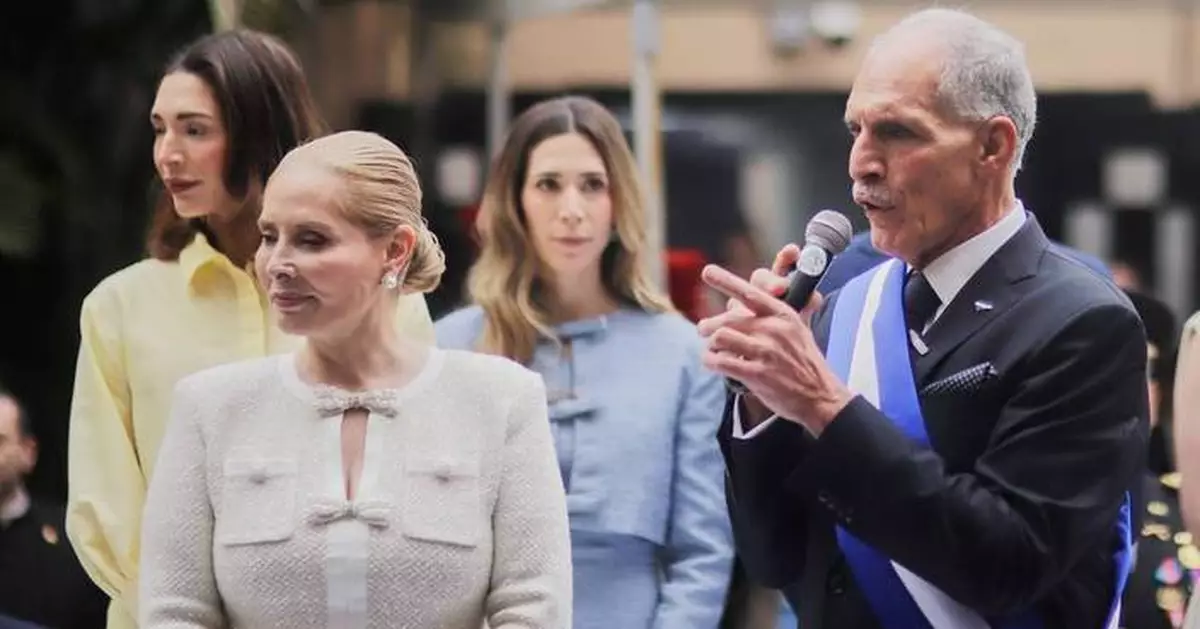
TEGUCIGALPA, Honduras (AP) — Trump-backed businessman Nasry Asfura was sworn in Tuesday as president of Honduras, and pledged to create jobs, crack down on crime and improve key social services like education and health care.
The 67-year-old president said he would lead the country "with the full commitment required to deliver real solutions to every corner of our beloved Honduras.”
The inauguration was held in an austere, simple ceremony at Congress without the presence of dignitaries from other nations, though representatives of various countries attended through the diplomatic corps and international organizations.
Asfura's rise to power was marked with controversy after U.S. President Donald Trump threw his support behind the Honduran conservative in the lead up to the election. Competitors called the elections fraudulent as vote counts dragged on for weeks and Asfura won by less than a 1% lead.
Honduran authorities said Asfura won with 40.27% of the vote, just ahead of conservative competitor Salvador Nasralla with 39.53%. Nasralla maintains he's the rightful president.
Asfura on Tuesday said he would shrink the size of the state to improve efficiency and direct resources to those most in need.
He pledged to “confront insecurity head-on" as gang violence continues to ravage the Central American nation, and said he would invest in health care and education. Asfura also emphasized the need to attract investment to generate jobs and to boost infrastructure so there is greater connectivity among municipalities.
Asfura served two terms as mayor of Tegucigalpa from 2014 to 2022. He previously served as secretary of the Honduran Social Investment Fund during the administration of Porfirio Lobo Sosa (2010–2014).
The new president won the presidency on his second attempt as the candidate of the conservative National Party, after losing in 2021 to former President Xiomara Castro of the leftist Liberty and Refoundation Party, known as Libre.
Asfura is from the same political party as former President Juan Orlando Hernández, who was pardoned and freed from U.S. prison by Trump in the midst of the election. Hernández, who was extradited to the U.S. after leaving office in 2022, was serving a 45-year sentence for his role in a drug trafficking operation that moved hundreds of tons of cocaine to the U.S.
The outcome of the complicated election is part of a broader shift to the right taking place in Latin America and came after Chile elected far-right politician José Antonio Kast as president.
Follow AP’s Latin America coverage at https://apnews.com/hub/latin-america
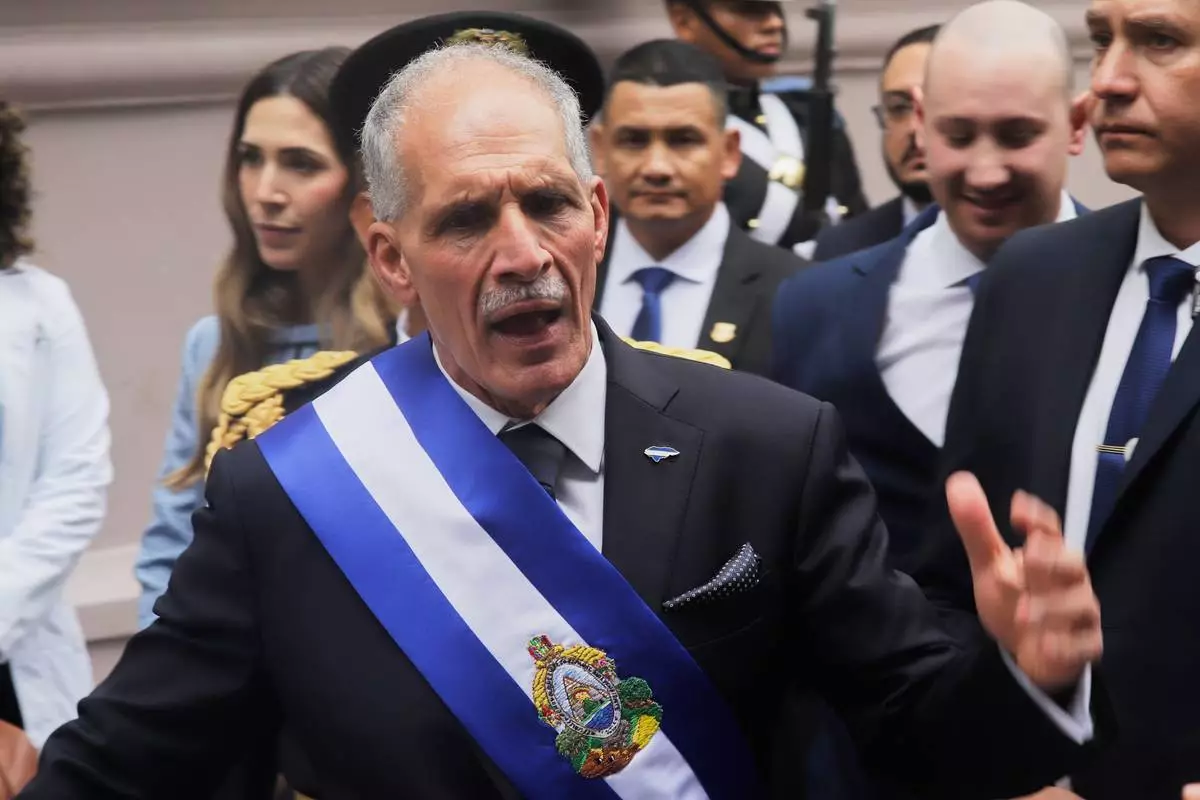
Honduran President Nasry Asfura speaks wearing the presidential sash after his inauguration ceremony at Congress in Tegucigalpa, Honduras, Tuesday, Jan. 27, 2026. (AP Photo/Fernando Destephen)
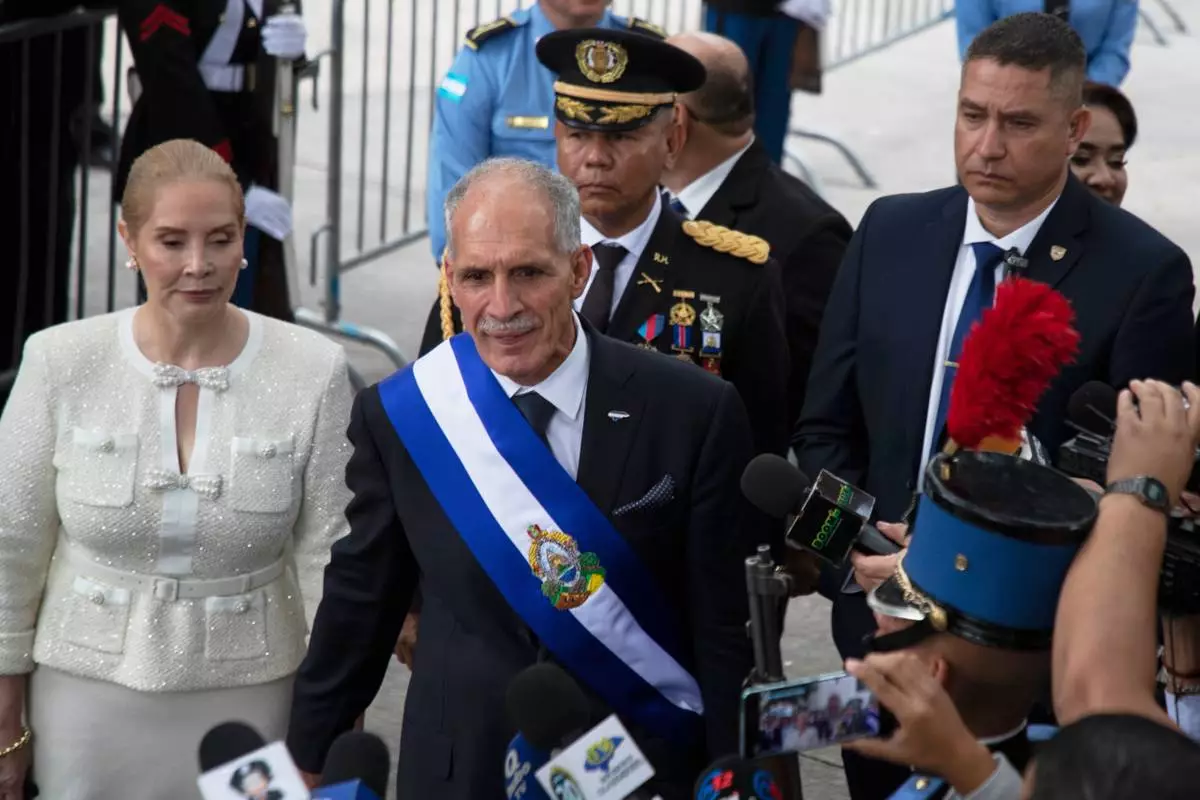
Honduran President Nasry Asfura wears the presidential sash as he walks with his wife, first lady Lissette del Cid, after his inauguration ceremony as they leave Congress in Tegucigalpa, Honduras, Tuesday, Jan. 27, 2026. (AP Photo/Fernando Destephen)
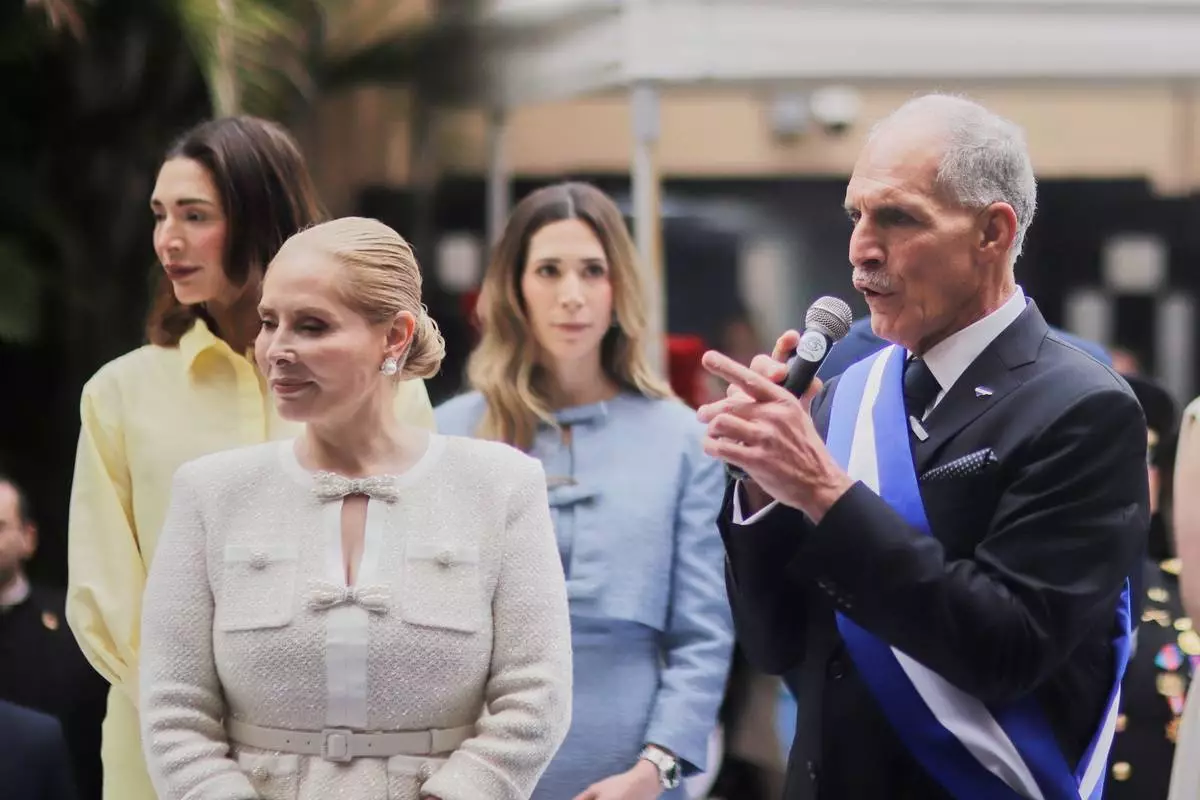
Honduran President Nasry Asfura speaks next to his wife, first lady Lissette del Cid, after his inauguration ceremony as they leave Congress in Tegucigalpa, Honduras, Tuesday, Jan. 27, 2026. (AP Photo/Fernando Destephen)
Associated Press (AP) — A Nicaraguan man who died at a troubled Texas detention camp days after he was detained by immigration agents in Minnesota appeared to have died by suicide, according to a 911 call and records released Wednesday.
Victor Manuel Diaz, 36, was found by guards on Jan. 14 in a room at Camp East Montana in El Paso, Texas, after he tried to die by suicide, a camp official reported on a 911 call obtained by The Associated Press through a public information request.
“They were doing rounds and they just found him with his pants tied up to his neck, I believe,” said the caller, who identified himself as a health administrator named Luis Gonzalez.
Diaz’s death was at least the third of a detainee housed at Camp East Montana, which opened last year at Fort Bliss to hold 5,000 detainees in the desert near the U.S.-Mexico border. Advocates for detainees have alleged a pattern of violence, abuse and neglect at the camp. One earlier death has been ruled a homicide.
Randall Kallinen, an attorney for Diaz's family, said they are suspicious of the claim that his death was a suicide because he was not depressed and would have been reunited with his mother, two sons and siblings in Nicaragua if he had been deported.
“Even if it is suicide, was there something that happened to him that drove him to suicide?” Kallinen asked. “There still has to be an investigation.”
Messages seeking comment were left with ICE on Wednesday.
Gonzalez did not witness Diaz's suicide attempt. A separate report by emergency medical services that was released Wednesday said Diaz was suspected of hanging himself with a bed sheet. Federal authorities have not released the findings of an autopsy, but have said the death was a “presumed suicide.”
U.S. Immigration and Customs Enforcement picked up Diaz on Jan. 6 as agents fanned out across Minneapolis looking for people who may be in the country illegally. He was then sent to the sprawling Texas tent complex.
Diaz crossed the U.S.-Mexico border in 2024, requested asylum and was released. A judge later ordered his removal after he didn’t show up for an immigration hearing, according to ICE.
Relatives in Nicaragua lost contact with Diaz after he went to work at a suburban restaurant on Jan. 6 and later learned he'd been detained. They received a call on Jan. 15 from ICE saying Diaz was dead. Family members “were in disbelief,” said Carlos Morales, board president of Texas Nicaraguan Community, a nonprofit that helped the family raise money to repatriate Diaz's remains to Nicaragua.
A coalition of groups and a Democratic congresswoman who represents El Paso have called for Camp East Montana to be closed.
Some of those calls came after the Jan. 3 death of 55-year-old Cuba native Geraldo Lunas Campos. A medical examiner has ruled that a homicide, citing physical restraint by guards.
A witness has described guards pinning Lunas Campos to the ground in handcuffs, with one restraining him in a chokehold until he could no longer breathe. ICE has said the guards intervened to try to help Lunas Campos after he attempted suicide, and that he resisted them. A camp official initially told police it was a suicide.
Lawyers for the family of Lunas Campos have asked a judge for an emergency order to prevent ICE from deporting detainees who witnessed the struggle.
ICE, which oversees the camp, announced Diaz’s death on Jan. 18, saying security staff “found Diaz unconscious and unresponsive in his room.” The agency said he “died of a presumed suicide” but that the cause was still under investigation.
In addition to Lunas Campos and Diaz, ICE announced that on Dec. 3 an immigrant from Guatemala held in Camp East Montana died after being transferred to a El Paso hospital for care. The agency said Francisco Gaspar-Andres, 48, was suspected to have died of liver and kidney failure.
Unlike with the two prior deaths, Diaz’s body wasn’t sent to the county medical examiner in El Paso for an autopsy. Kallinen said an Armed Forces pathologist conducted the autopsy at Fort Bliss, and that he's been told it could take months for findings to be released.
The 911 caller in the case told the dispatcher that a team of doctors and nurses were working to try to revive Diaz after his suicide attempt and they needed an ambulance.
Paramedics found him laying on his back in a hospital bed without a heartbeat, according to an El Paso Fire Department incident report.
AP reporter Michael Biesecker contributed from Washington.
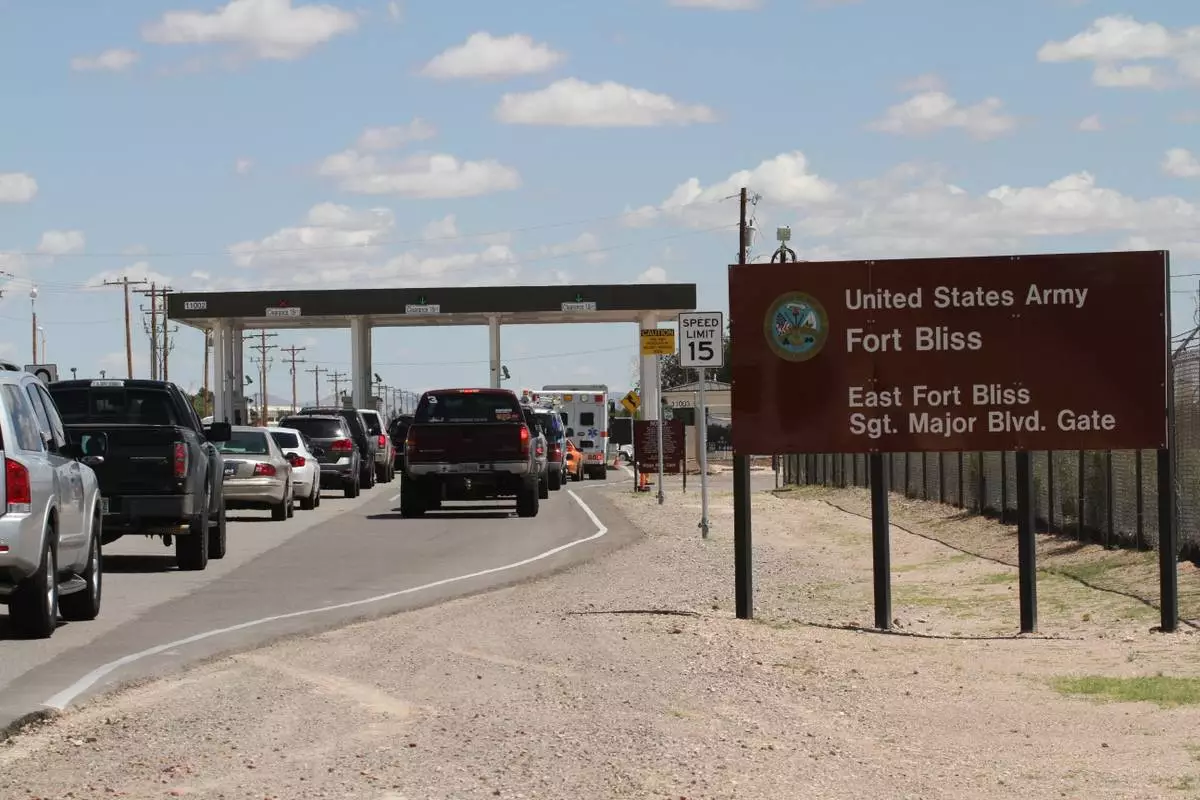
FILE - Cars wait to enter Fort Bliss in El Paso, Texas, Sept. 9, 2014. (AP Photo/Juan Carlos Llorca, File)