WASHINGTON (AP) — President Donald Trump warned Iraq on Tuesday that the U.S. would no longer support the country if its former prime minister, Nouri al-Maliki, returns to power.
Trump made the threat days after the dominant political bloc known as the Coordination Framework, a collection of Shiite parties, announced it was backing the nomination of al-Maliki, who the U.S. administration views as too close to Iran.
“Last time Maliki was in power, the Country descended into poverty and total chaos. That should not be allowed to happen again,” Trump said in a social media post announcing his opposition to al-Maliki. “Because of his insane policies and ideologies, if elected, the United States of America will no longer help Iraq and, if we are not there to help, Iraq has ZERO chance of Success, Prosperity, or Freedom.”
Trump's intervention into Iraqi politics comes at a fraught moment for Trump in the Middle East as he weighs carrying out new strikes on Iraq's neighbor Iran, which has maintained deep influence in Iraq's government since the U.S. ouster of Saddam Hussein in 2003.
Trump has left open the possibility of military action in response to Tehran's deadly crackdown on recent protests against the Islamic government.
Caretaker Prime Minister Mohammed Shia al-Sudani 's bloc won the largest share of seats in November’s parliamentary elections. But he stepped aside earlier this month after he was unable to form a government. That cleared the field for al-Maliki after the two had competed for the backing of the Coordination Framework.
Al-Maliki, who first served as prime minister in 2006, is the only Iraqi prime minister to serve two terms since the U.S. toppled Saddam Hussein in 2003. Al-Maliki's bid for a third term failed after he was accused of monopolizing power and alienating the country's sizable Sunni and Kurdish populations.
When he came to power in May 2006, al-Maliki was initially embraced by President George W. Bush. Al-Maliki took over as prime minister months after the bombing of the al-Askari shrine, a significant Shiite mosque. It was a moment that deepened sectarian tension in Iraq and sparked a period of intense violence in the country.
But within months, U.S. officials soured on al-Maliki. They saw his government as too often favoring Shiite factions and alienating Sunni populations, which exacerbated the security crisis.
For years, concerns were frequently raised in Washington about al-Maliki’s closeness to Iran and his ability to govern independently of Tehran’s influence.
By 2014, the Obama administration had lost confidence in al-Maliki’s ability to manage the security situation, particularly the rise of the Islamic State group, which had seized large swaths of the country.
The Trump administration began publicly signaling its concerns about the political situation in Iraq in recent days, with Secretary of State Marco Rubio telling caretaker Prime Minister al-Sudani in a phone call Sunday that the U.S. was concerned about a pro-Iran government taking root in Iraq.
“The Secretary emphasized that a government controlled by Iran cannot successfully put Iraq’s own interests first, keep Iraq out of regional conflicts, or advance the mutually beneficial partnership between the United States and Iraq,” said State Department principal deputy spokesperson Tommy Pigott in a statement.
Hussain Abdul-Hussain, a research fellow focused on the Middle East at the Foundation for Defense of Democracies, a hawkish Washington think tank, said that Trump's public opposition creates a difficult hurdle for al-Maliki to overcome.
“But this is Iraq, so never say never,” said Abdul-Hussein. “And this was a guy whose political life was supposed to have expired many, many years ago, and yet Maliki is still here.”
The U.S. also has been pushing Baghdad to disarm Iran-backed groups operating inside Iraq — a difficult proposition, given the political power that many of them hold.
It's not the first time that Trump has intervened in another country's politics since returning to office. He also offered strong backing last year for right-wing candidates in Argentina, Honduras, and Poland.
The long-frayed relationship between the U.S. and Iran remains tense after Trump earlier this month repeatedly threatened Tehran with military action if his administration found the Islamic Republic was using deadly force against anti-government protesters.
He then said he was holding off on strikes after claiming that Iran had halted the execution of some 800 people detained in the protests — something Iran’s top prosecutor, Mohammad Movahedi, has strongly denied.
Trump may have been at least temporarily dissuaded from carrying out a strike because of a shift in the U.S. naval presence from the Middle East to South America.
The aircraft carrier USS Gerald Ford was redirected from the Mediterranean Sea in November to support operations targeting drug smugglers in the Caribbean Sea and eastern Pacific as well as this month's capture of former Venezuelan president Nicolás Maduro.
But the aircraft carrier USS Abraham Lincoln and three accompanying warships have arrived in the Middle East, U.S. Central Command confirmed Monday. That's raised anew speculation that Trump could soon opt to order airstrikes on Iran for its crackdown on protesters.
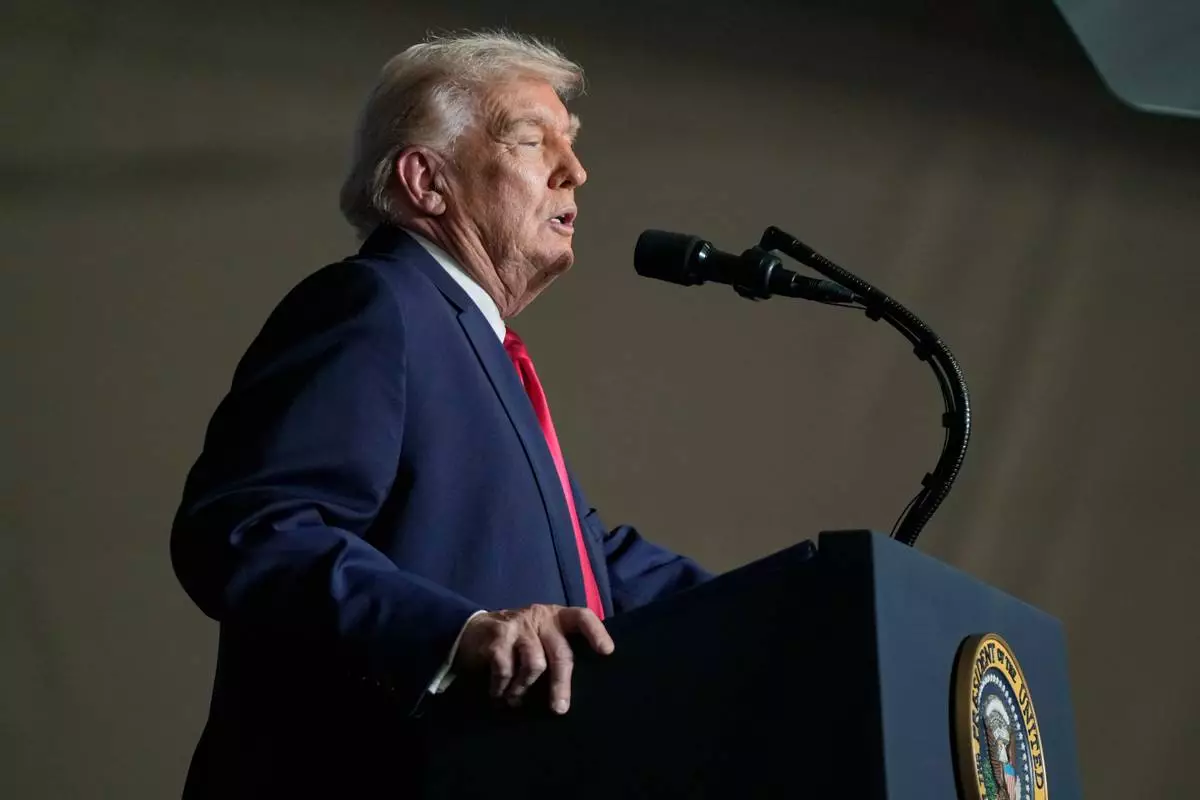
President Donald Trump speaks during an event at the Horizon Events Center in Clive, Iowa, Tuesday, Jan. 27, 2026. (AP Photo/Mark Schiefelbein)
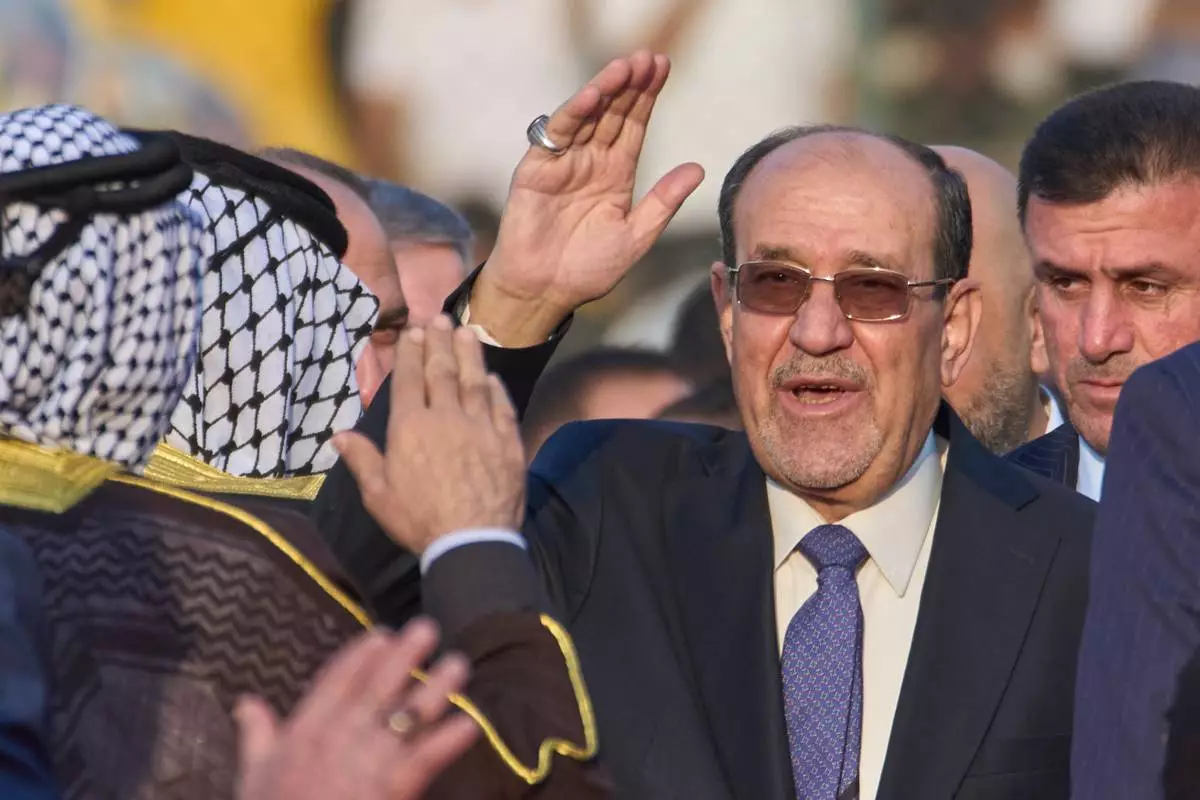
FILE - Former Iraqi Prime Minister Nouri al-Maliki arrives to his political block campaign rally before the parliamentary elections in Baghdad, Iraq, Friday, Nov. 7, 2025. (AP Photo/Hadi Mizban, File)
PORTLAND, Maine (AP) — Six people died when a business jet crashed during takeoff as a snowstorm moved in and visibility diminished in Maine Sunday night.
The Bombardier Challenger 600 flipped over and burned on takeoff at Bangor International Airport around 7:45 p.m. Sunday night as the nation’s massive winter storm was beginning to reach the area.
An audio recording of air traffic controllers posted by www.LiveATC.net includes someone saying “Aircraft upside down. We have a passenger aircraft upside down,” about 45 seconds after a plane was cleared for takeoff. First responders arrived less than a minute later, airport director Jose Saavedra said.
Experts say the weather and questions about whether ice accumulating on the wings kept the plane from getting airborne — as has happened at least twice before on that plane model — will likely be an initial focus by the National Transportation Safety Board. However, the agency will consider all possible factors.
“You can count on the fact that NTSB is going to look very closely at this,” said John Cox, who is CEO of Safety Operating Systems.
The airport said Monday afternoon there were six people aboard, according to the flight manifest, and all died. Earlier in the day, the Federal Aviation Administration had said seven died and one was injured but warned the numbers were subject to change, and the agency defers to local authorities.
Snowfall was heavy elsewhere at the time of the crash, but accumulation had just started in Bangor. Other planes had been taking off safely. But about half an hour before the crash, the pilot of a Florida-bound Allegiant plane radioed the tower to abort his takeoff.
“One, our deice fluid has failed and two, I don’t think the visibility is good enough for us to go, so we’re going to have to taxi back to the gate here,” the Allegiant pilot radioed. The controller responded by saying he was just getting ready to warn the pilot that visibility had dropped to about three-quarters of a mile.
At about the same time, the pilot of the Bombardier had taxied over to the deicing pad and was radioing in a request to get his plane's wings and tail treated, according to audio posted by www.LiveATC.net. The plane remained at the deicing pad for about 20 minutes before taxiing to the runway.
The Bombardier Challenger 600 model “has a history of problems with icing on takeoff” that caused previous deadly crashes in Birmingham, England; and Montrose, Colorado, more than 20 years ago, aviation safety consultant Jeff Guzzetti said. Even a little bit of ice on the wings can cause serious problems, so careful inspections and de-icing are a crucial step before takeoff, the former federal crash investigator said. And there is a time limit on how long de-icing remains effective. It could last only about 20 minutes.
The National Weather Service in Caribou, Maine, said the airport eventually received nearly 10 inches of snow, but it was just beginning to fall at the time of the crash. Wind speeds were about 10 mph, which is not out of the ordinary. Temperatures dropped below 3 degrees (minus 16 Celsius) while the jet was in Bangor.
Cox said those conditions wouldn't keep planes from flying.
The plane that crashed had just landed at Bangor from Houston at 6:09 p.m., according to FlightRadar24.com, so it would have likely been sitting outside in the snow for more than an hour before it tried to takeoff again. And it wouldn’t have taken long for ice to start building up on the wings — particularly if the plane was refueled with cold jet fuel that’s stored in wing tanks, a factor the NTSB has cited in previous crashes.
“Given the weather conditions at the time, and the history of wing contamination with this particular aircraft, I’m sure that’s something the NTSB is going to look into immediately,” Guzzetti said. “If there was any kind of precipitation at all, freezing precipitation, they would have needed to clean off those wings before they took off.”
The Bombardier Challenger 600 is a wide-bodied business jet configured for nine to 11 passengers. It was launched in 1980 as the first private jet with a “walk-about cabin” and remains a popular charter option, according to aircharterservice.com.
Crash investigators in England recommended improved procedures for ice detection after a 2002 crash, but significant changes weren't made until after the NTSB finished its investigation in 2006 of the Colorado crash that killed the son of NBC television executive Richard Ebersol.
The FAA published new rules afterward to make clear to pilots and airports that even a small amount of frost on the wings can be a problem. The agency also clarified the standards for de-icing to make certain that all frozen particles are removed from the wings, and it required a combination of tactile and visual inspections.
Bombardier was also required to add a cold weather operations warning to the plane's flight manual after three incidents in Canada where one of these planes rolled unexpectedly in ways the pilot didn't command during take offs in cold weather and icing conditions.
The planemaker said it has delivered more than 1,000 of Challenger 600s, and the plane is designed to be safe. Bombardier said it is deeply saddened by the crash and will work with investigators to determine what happened.
The identities of those onboard won’t be released publicly until they can be confirmed, officials said.
The jet was registered to a corporation that shares the same address in Houston as the personal injury law firm Arnold and Itkin Trial Lawyers, and one of the law firm’s founding partners is listed as the registered agent for the company that owns the plane.
The international airport in Bangor, about 200 miles (320 kilometers) north of Boston, is one of the closest in the U.S. to Europe and is often used to refuel private jets flying overseas. The Bombardier was headed for France when it crashed.
The airport shut down after the crash and will remain closed at least until Wednesday so the FAA and National Transportation Safety Board investigators can examine and remove the wreckage.
A preliminary report outlining the facts of the crash should be released in about a month, but the final version likely won't be published for more than a year.
Ramer contributed to this report from Concord, New Hampshire; and Funk contributed from Omaha, Nebraska.
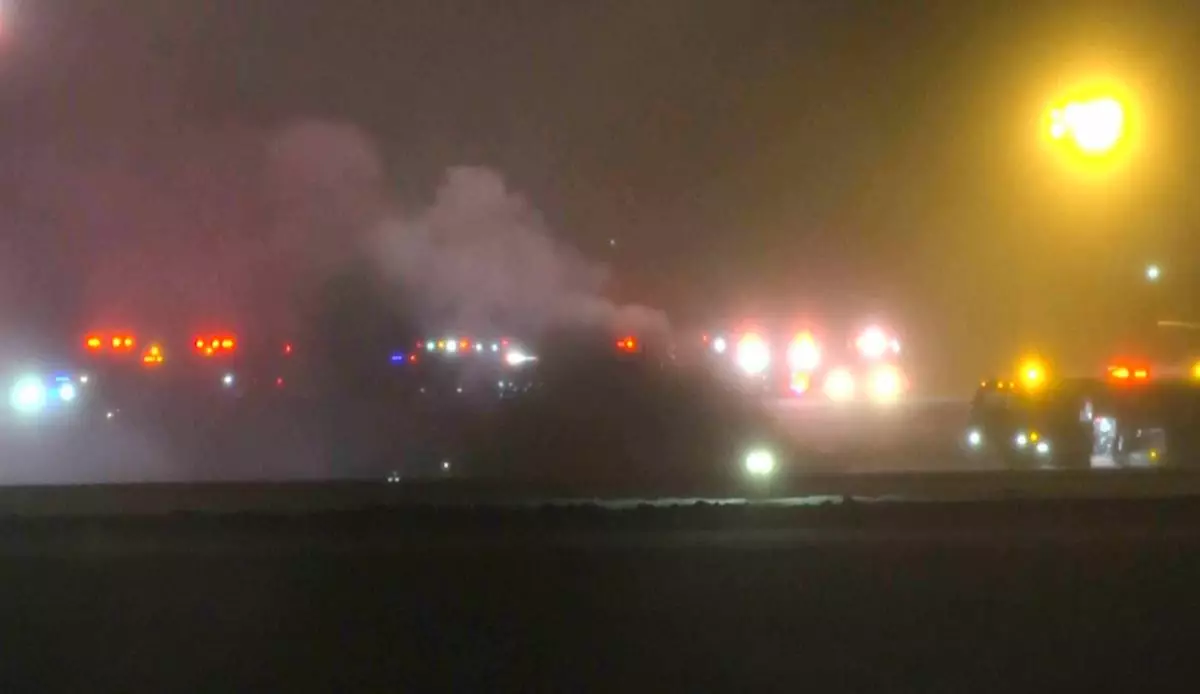
This image taken from video provided by WABI television, emergency services work on a scene of the Bombardier Challenger 600 crash at the Bangor Airport in Maine, late Sunday, Jan. 25, 2026. (WABI via AP)