LAS VEGAS--(BUSINESS WIRE)--Jan 27, 2026--
As the U.S. mental health system faces sustained funding instability, workforce burnout, and rising demand for rapid, nonpharmaceutical support, JOYELY, LLC, an emotional regulation pilot program, is launching in California this February.
This press release features multimedia. View the full release here: https://www.businesswire.com/news/home/20260127009923/en/
The timing reflects growing strain across the mental health ecosystem. Federal agencies and community providers have faced staffing disruptions and grant uncertainty, while public concern about emotional well-being continues to rise.
The JOY Intelligence™ framework, formalized as Emotional Recognition Baseline Therapy (ERBT) for clinical application, developed by Sheryl Lynn and Bailey Romatoski, addresses what traditional systems often cannot: teaching leaders and professionals to regulate emotions under pressure, preventing communication breakdowns, therapist burnout, and escalating mental health crises.
A pilot program using the JQ System and Integrated Valence Theory begins in February in California under the direction of Ehsan Gharadjedaghi Psy.D., Founder and Clinical Director of Norooz Clinic Foundation, a nonprofit mental health community center providing affordable behavioral healthcare and training for emerging therapists.
"When clients learn to recognize and process emotions with structure and safety, therapy becomes less about reacting and more about navigating," said Dr. Gharadjedaghi. "ERBT offers a science-informed way to reframe emotional experience and support lasting change."
Internal data from thousands of participants from previously conducted user experiences shows 94% reported immediate relief post-session. In a healthcare worker pilot (n≈80), self-regulation scores improved 68% on average. These findings are being formally evaluated in the pilot program.
Grounded in the patent-pending Integrated Valence Theory, the methodology begins with the Chair of JOY®, a 60-second guided practice to sit, breathe, think, and feel without judgment.
Pilot programs beginning in February will evaluate the framework's application beyond suicide prevention, to workplace leadership, crisis communication, and the daily emotional regulation required to function under pressure. A public demonstration featuring 60 speakers takes place on January 28 in Las Vegas.
JQ60 VOICES Event:
Wednesday, January 28, 2026
Livestream:https://joyely.com/jq60/
For more information:
JOYELY: https://joyely.com
About
Chair of JOY, Inc. is a nonprofit organization operated exclusively for charitable and educational purposes.
Chair of JOY provides global support services that help individuals and families build emotional regulation skills that strengthen mental health, resilience, and connection. Its programs serve family-owned businesses, veterans, and seniors, focused on creating emotional safety, steady presence, and sustainable well-being across all stages of life.
SOURCE: JOYELY
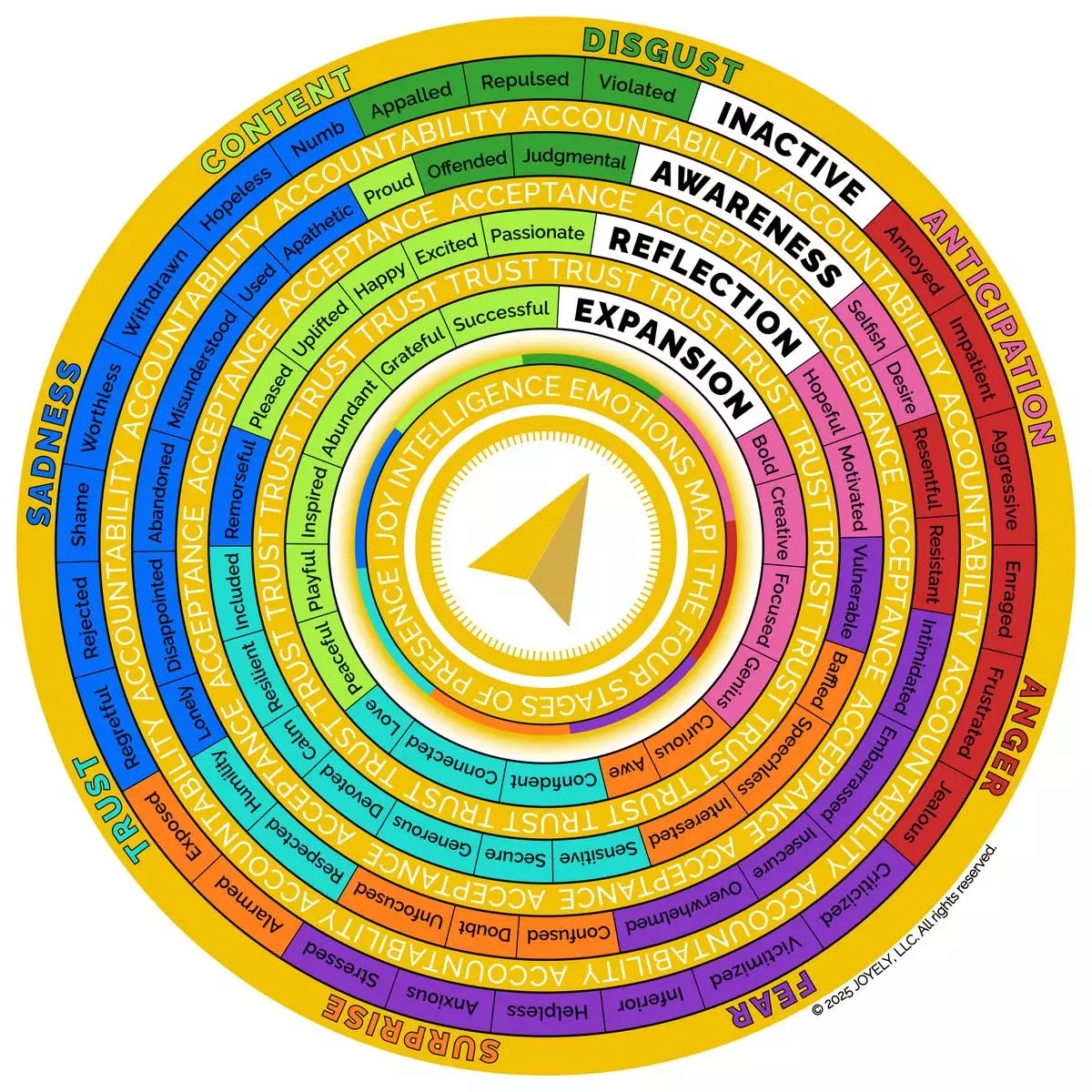
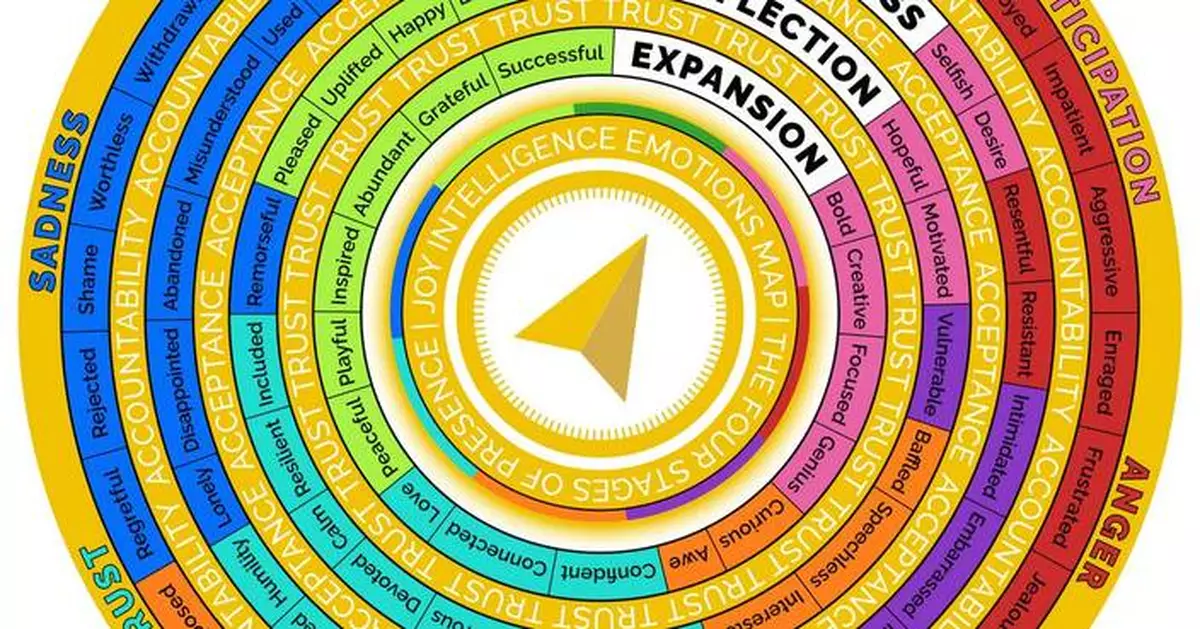
JOY Intelligence™ (JQ) is the ability to move through emotions with precision and purpose, using emotional information as data rather than something to suppress or override. The JQ Emotions Map™ was created to bring structure and simplicity to emotional processing so people can respond with greater presence and intention in real time. Rooted in neuroscience, emotional intelligence, and behavioral psychology, the system integrates principles of brain-heart coherence, vagus nerve regulation, self-regulation, resilience, and pattern interruption. These disciplines support the understanding that emotions are not obstacles to performance, but signals that inform decision-making and behavior. While more than 3,000 emotions have been identified in research, the JQ framework refined this landscape into 160 core emotions, then 80 clearly defined emotions that are accessible and easy to use. For learning and development, 20 foundational emotions build fluency and real-time emotional awareness.
Mississippi officials said they were sending 135 snowplows Wednesday to clear ice and snow from two interstate highways where frozen conditions caused huge traffic jams.
Emergency officials said they were rushing supplies to drivers stalled along ice-covered stretches of Interstates 55 and 22 in northern Mississippi, an area still reeling from a weekend winter storm that blasted parts of the South and the Northeast with ice and snow.
Helping stranded drivers and moving stalled vehicles “remains a top priority,“ Mississippi Gov. Tate Reeves said in a social media post. The Mississippi National Guard said citizen-soldiers equipped with wreckers began arriving before dawn to help clear I-55 and I-22.
Traffic remained snarled on the two interstates in northern Mississippi at mid-day Wednesday, many hours after problems began when plunging temperatures Tuesday night caused the highways to refreeze. Roadside cameras operated by the Mississippi Department of Transportation showed semitrucks and pickups bumper-to-bumper on stretches of I-22 lined with snow.
The Mississippi National Guard said citizen-soldiers equipped with wreckers began arriving before dawn to help clear I-55 and I-22.
In the small community of Red Banks, Mississippi, local authorities were asking people with all-terrain vehicles to bring water, food, blankets or gas to stranded motorists, said Lacey Clancy, who works at a cafe near I-22 and neighboring Highway 178.
Clancy said sheets of ice covered the highways and cars and trucks sat idle, covering the highways and backing up along on ramps and exit ramps.
“The highway kind of looks like a parking lot," Clancy said in a phone interview. “A lot of people have run out of gas, abandoned their vehicles.”
Most of the eastern U.S. was still grappling with frigid weather days after a weekend storm blasted the Northeast and parts of the South with snow and ice.
More than 380,000 homes and businesses, most of them in Mississippi and Tennessee, remained without electricity, according to the outage tracking website poweroutage.us. And at least 50 people had been reported dead in states afflicted by the dangerous cold.
The toll includes three Texas brothers — ages 6, 8 and 9 — who perished after falling through the frozen surface of a pond in Texas. Another child, a toddler, died at a Virginia hospital after being pulled from a frigid pond Monday, according to local police.
Temperatures in the Midwest and Northeast were forecast to remain well below freezing throughout the day Wednesday, according to the National Weather Service.
Residents still shivering in the South were getting little relief. In Nashville, Tennessee, where nearly 100,000 power outages lingered early Wednesday, high temperatures were to rise just above freezing before plunging to 13 F (minus 10 C) overnight.
One Nashville hospital was seeing a spike in patients being treated for carbon monoxide poisoning as people without electricity turned to fuel-burning generators, stoves, gas heaters and fireplaces to warm their homes. At least 48 children exposed to the deadly gas had been treated since Saturday at the emergency department at Monroe Carrell Jr. Children’s Hospital at Vanderbilt, spokesperson Jessica Pasley said.
Forecasters predicted even colder weather for much of the U.S. this weekend. A new blast of arctic air is expected Friday and Saturday from the northern Plains to the Southeast, where meteorologists say record cold could stretch as far as Miami.
The weather service said the prolonged freeze “could be the longest duration of cold in several decades.”
Forecasters said there is an increasing chance of heavy snow this weekend in the Carolinas and parts of Virginia, with more snowfall possible from Georgia to Maine.
Bynum reported from Savannah, Georgia. Martin reported from Atlanta. Associated Press writers Jonathan Mattise in Nashville, Tennessee, and Sarah Brumfield in Washington contributed to this report.
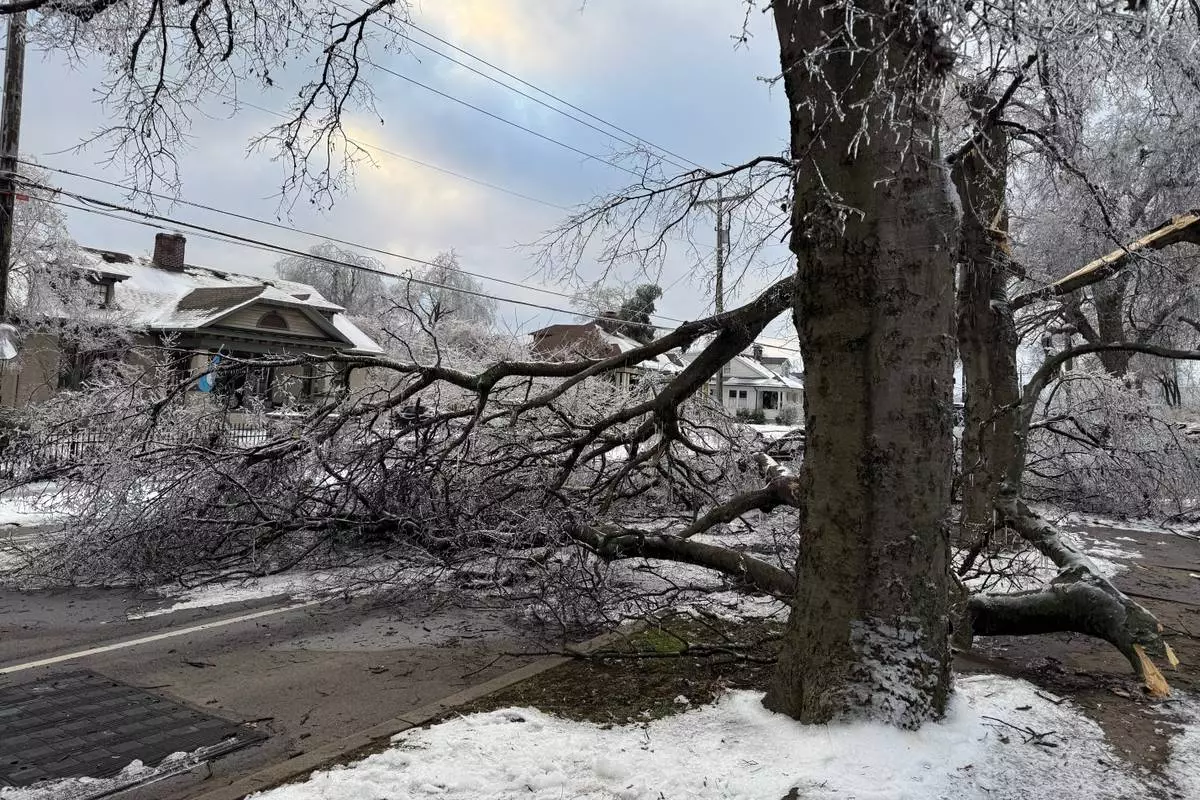
A tree blocks the road days after an ice storm in Nashville, Tenn., on Tuesday, Jan. 27, 2026. (AP Photo/Travis Loller)