DUBAI, United Arab Emirates (AP) — Iranian officials reached out to the wider Middle East on Wednesday over the threat of a possible U.S. military strike on the country, a month since the start of protests in Iran that soon spread nationwide and sparked a bloody crackdown.
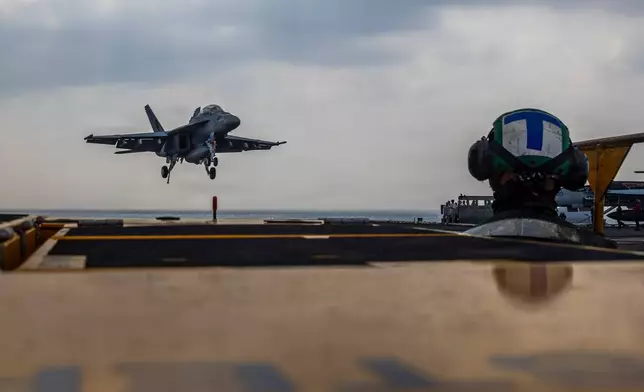
Two nations, Saudi Arabia and the United Arab Emirates, have signaled they won't allow their airspace to be used for any attack. But America has moved the USS Abraham Lincoln and several guided missile destroyers into the region, which can be used to launch attacks from the sea.
Click to Gallery
A vendor sells vegetables at the Tajrish bazaar, a market in northern Tehran, Iran, Tuesday, Jan. 27, 2026. (AP Photo/Vahid Salemi)
This photo provided by the U.S. Navy shows a Boeing F/A-18E Super Hornet landing on the Nimitz-class aircraft carrier USS Abraham Lincoln in the Indian Ocean on Jan. 22, 2026. (Mass Communication Specialist Seaman Daniel Kimmelman/U.S. Navy via AP)
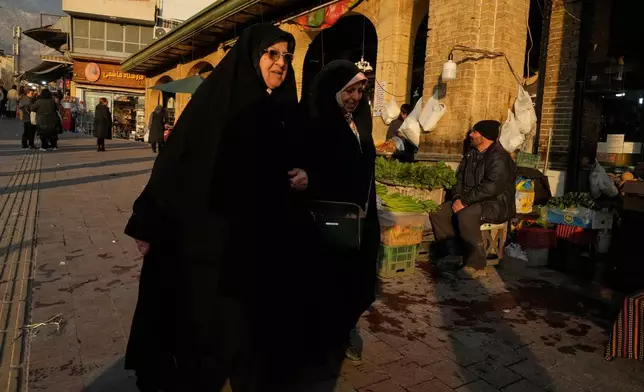
Women walk past the Tajrish bazaar in northern Tehran, Iran, Tuesday, Jan. 27, 2026. (AP Photo/Vahid Salemi)
People walk along the sidewalk in northern Tehran, Iran, Tuesday, Jan. 27, 2026. (AP Photo/Vahid Salemi)
People walk through the Tajrish bazaar market in northern Tehran, Iran, Tuesday, Jan. 27, 2026. (AP Photo/Vahid Salemi)
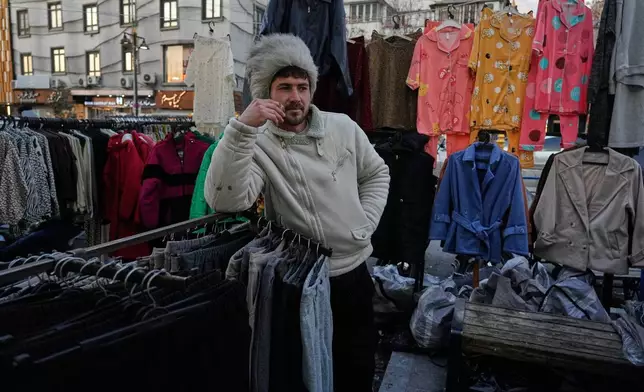
A vendor waits for customers at Tajrish Square in Tehran, Iran, Tuesday, Jan. 27, 2026. (AP Photo/Vahid Salemi)
It remains unclear what U.S. President Donald Trump will decide about using force, though he laid down two red lines — the killing of peaceful demonstrators and the possible mass execution of detainees. The protests saw at least 6,221 people killed as Iran launched a bloody crackdown on the demonstrations, with many others feared dead, activists said Wednesday.
Iran's state-run media, which now only refers to protesters as “terrorists,” remains the sole source of news for many as Tehran cut off access to the global internet some three weeks ago. But Iranians have become angry and anxious in the weeks since, seeing footage of protesters shot and killed while worrying about what may happen next as the country's economy sinks further.
“I feel that my generation failed to give a better lesson to younger ones," said Mohammad Heidari, a 59-year-old high school teacher in Tehran. “The result of decades of teaching by my colleagues and me led to death of thousands, and maybe more injured and prisoners.”
Egypt's Foreign Ministry said its top diplomat, Badr Abdelatty, separately spoke with Iranian Foreign Minister Abbas Araghchi and U.S. Mideast envoy Steve Witkoff to “work toward achieving calm, in order to avoid the region slipping into new cycles of instability.”
The statement offered no details, though Iranian state media quoted Araghchi as saying third-party mediators had been in touch. Witkoff, a billionaire real estate developer and Trump's friend, had earlier negotiated over Iran's nuclear program. There was no immediate acknowledgment from the White House of the call.
Meanwhile, Saudi Arabia's Crown Prince Mohammed bin Salman held a call with Iranian President Masoud Pezeshkian, saying the kingdom would “not allow its airspace or territory to be used for any military actions against Iran or for any attacks from any party, regardless of their origin.” That follows a similar pledge by the UAE.
Both Saudi Arabia and the UAE host American air assets and troops. Both also have faced attacks in the last decade. A 2019 assault believed by the West to have been carried out by Iran briefly halved Saudi oil production. The UAE faced several attacks claimed by Yemen's Houthi rebels in 2022.
However, America's biggest base in the region is Qatar's vast Al Udeid Air Base, which serves as the forward operating headquarters of the U.S. military's Central Command. Both Araghchi and Ali Larijani, a top Iranian security official, held calls with Qatar's Prime Minister Mohammed bin Abdulrahman Al Thani. Qatar acknowledged the calls, but offered few specifics on what was discussed.
Iran attacked Al Udeid in June in response to Trump sending American warplanes to bomb Iranian nuclear enrichment sites after Israel launched a 12-day war on the Islamic Republic.
“Our position is exactly this: Applying diplomacy through military threats cannot be effective or constructive,” Araghchi told journalists Wednesday outside of a Cabinet meeting. “If they want negotiations to take shape, they must abandon threats, excessive demands, and the raising of illogical issues. Negotiations have their own principles: they must be conducted on an equal footing, based on mutual respect, and for mutual benefit.”
While the protests have been halted for weeks after the crackdown, information slowly trickling out of Iran via Starlink satellite dishes is reaching activists, who have been trying to tally the carnage.
On Wednesday, the U.S.-based Human Rights Activists News Agency, which has been accurate in multiple rounds of unrest in Iran, said at least 6,221 dead it counted included at least 5,858 protesters, 214 government-affiliated forces, 100 children and 49 civilians who weren’t demonstrating. More than 42,300 have been arrested, it added.
The group verifies each death and arrest with a network of activists on the ground in Iran. The Associated Press has been unable to independently assess the death toll given that authorities cut off the internet and disrupted calls into the Islamic Republic.
Iran’s government has put the death toll at a far lower 3,117, saying 2,427 were civilians and security forces, and labeled the rest “terrorists.” In the past, Iran’s theocracy has undercounted or not reported fatalities from unrest.
That death toll exceeds that of any other round of protest or unrest in Iran in decades, and recalls the chaos surrounding the 1979 Islamic Revolution.
The protests began on Dec. 28, sparked by the fall of the Iranian currency, the rial, and quickly spread across the country. They were met by a violent crackdown, the scale of which is only starting to become clear as the country has faced more than two weeks of internet blackout — the most comprehensive in its history.
Associated Press writer Fay Abuelgasim in Cairo contributed to this report.

A vendor sells vegetables at the Tajrish bazaar, a market in northern Tehran, Iran, Tuesday, Jan. 27, 2026. (AP Photo/Vahid Salemi)
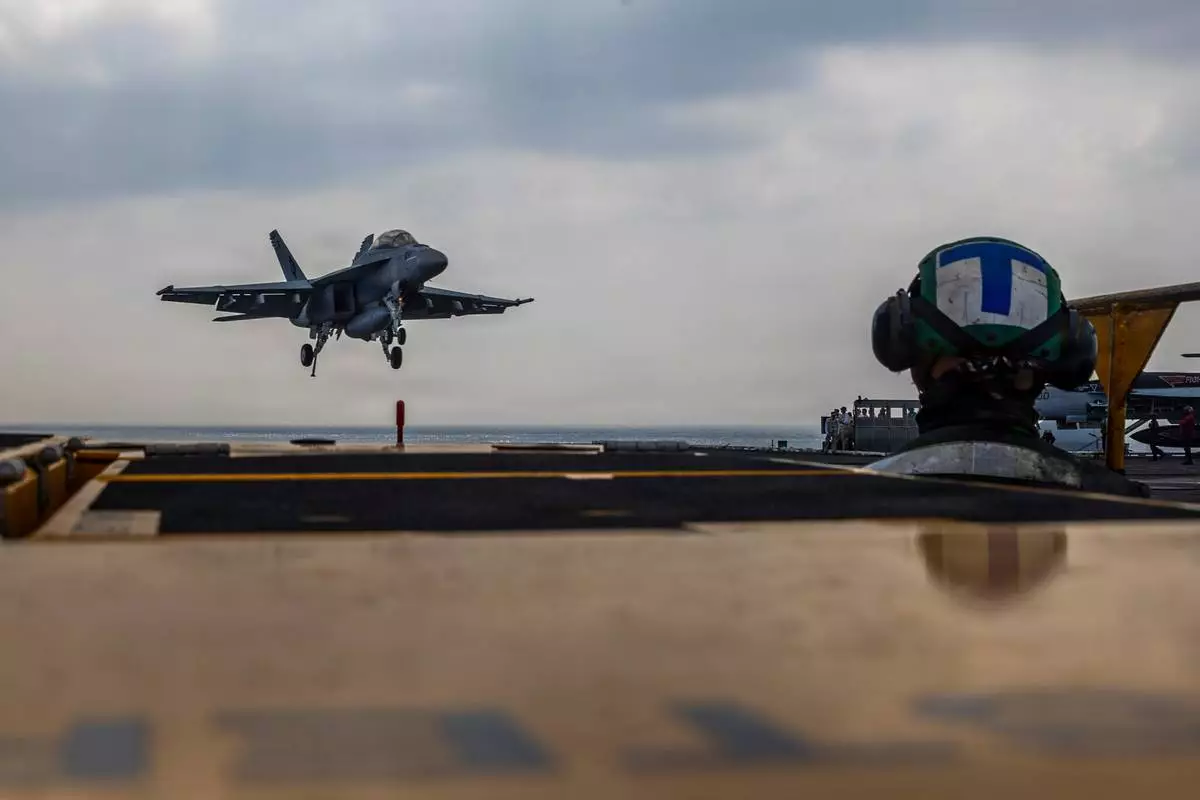
This photo provided by the U.S. Navy shows a Boeing F/A-18E Super Hornet landing on the Nimitz-class aircraft carrier USS Abraham Lincoln in the Indian Ocean on Jan. 22, 2026. (Mass Communication Specialist Seaman Daniel Kimmelman/U.S. Navy via AP)
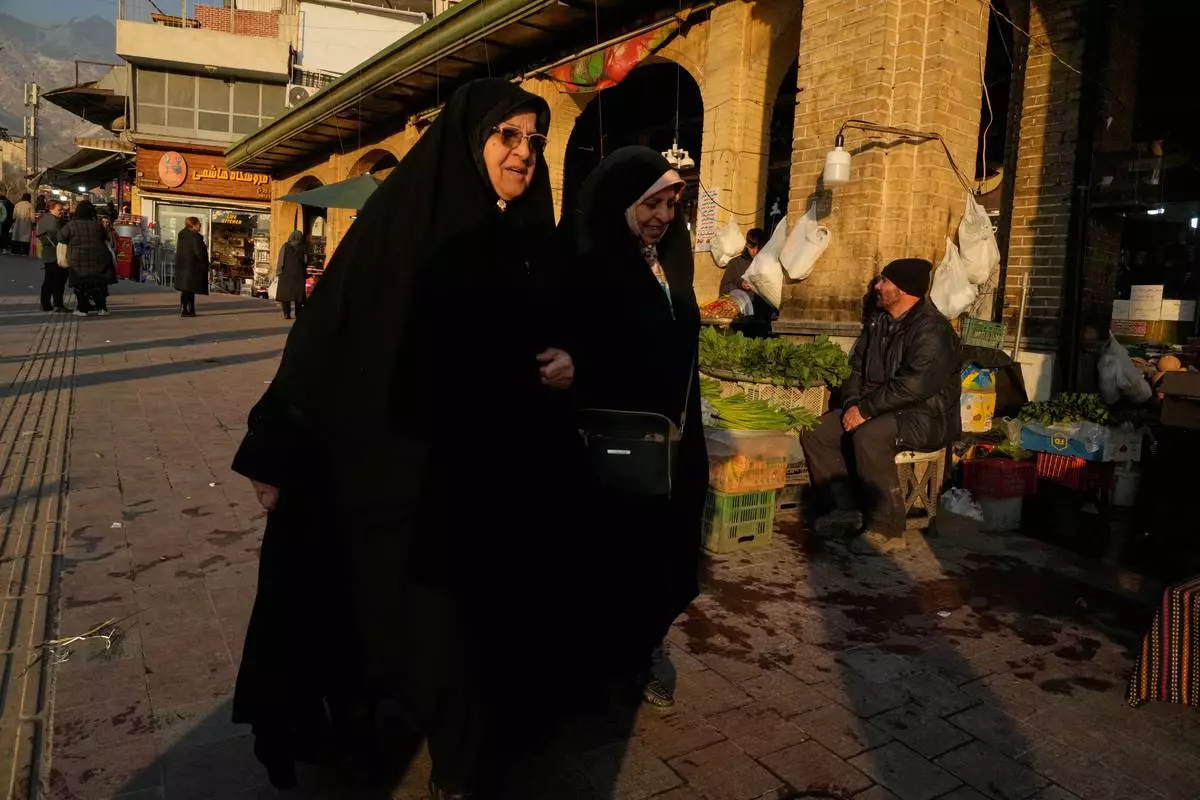
Women walk past the Tajrish bazaar in northern Tehran, Iran, Tuesday, Jan. 27, 2026. (AP Photo/Vahid Salemi)
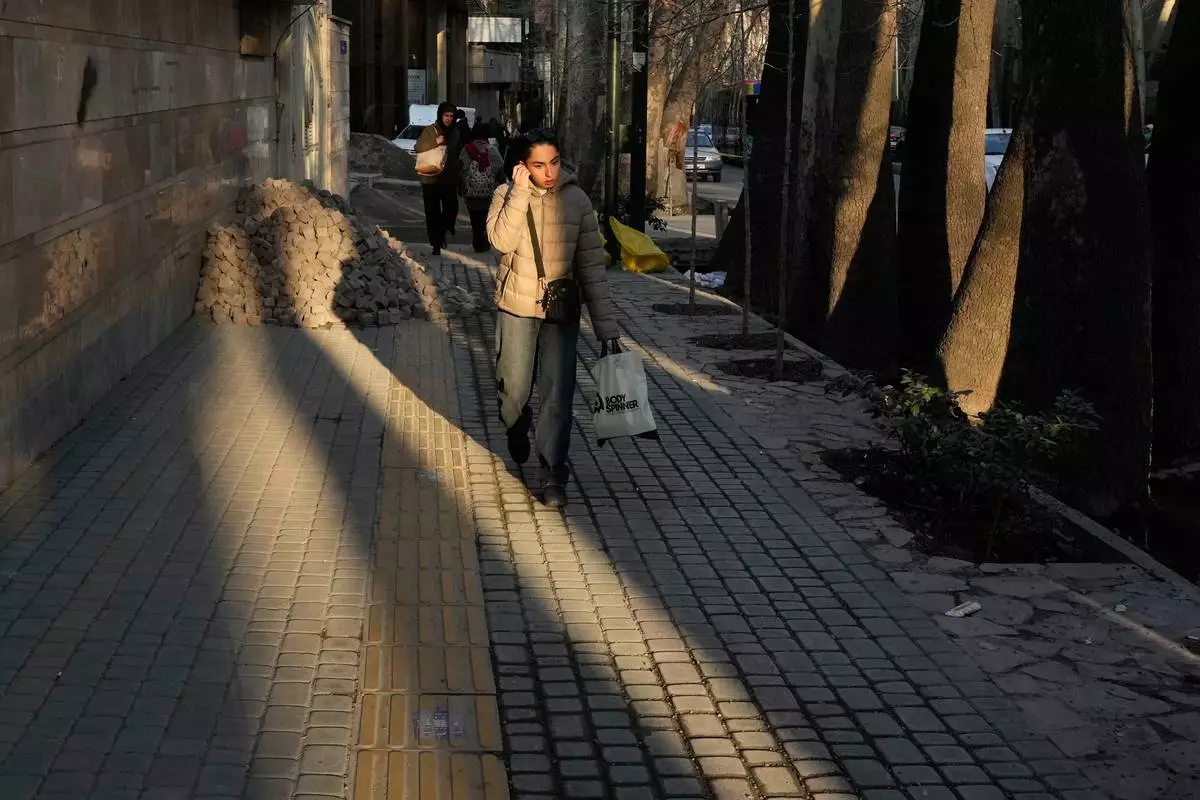
People walk along the sidewalk in northern Tehran, Iran, Tuesday, Jan. 27, 2026. (AP Photo/Vahid Salemi)

People walk through the Tajrish bazaar market in northern Tehran, Iran, Tuesday, Jan. 27, 2026. (AP Photo/Vahid Salemi)
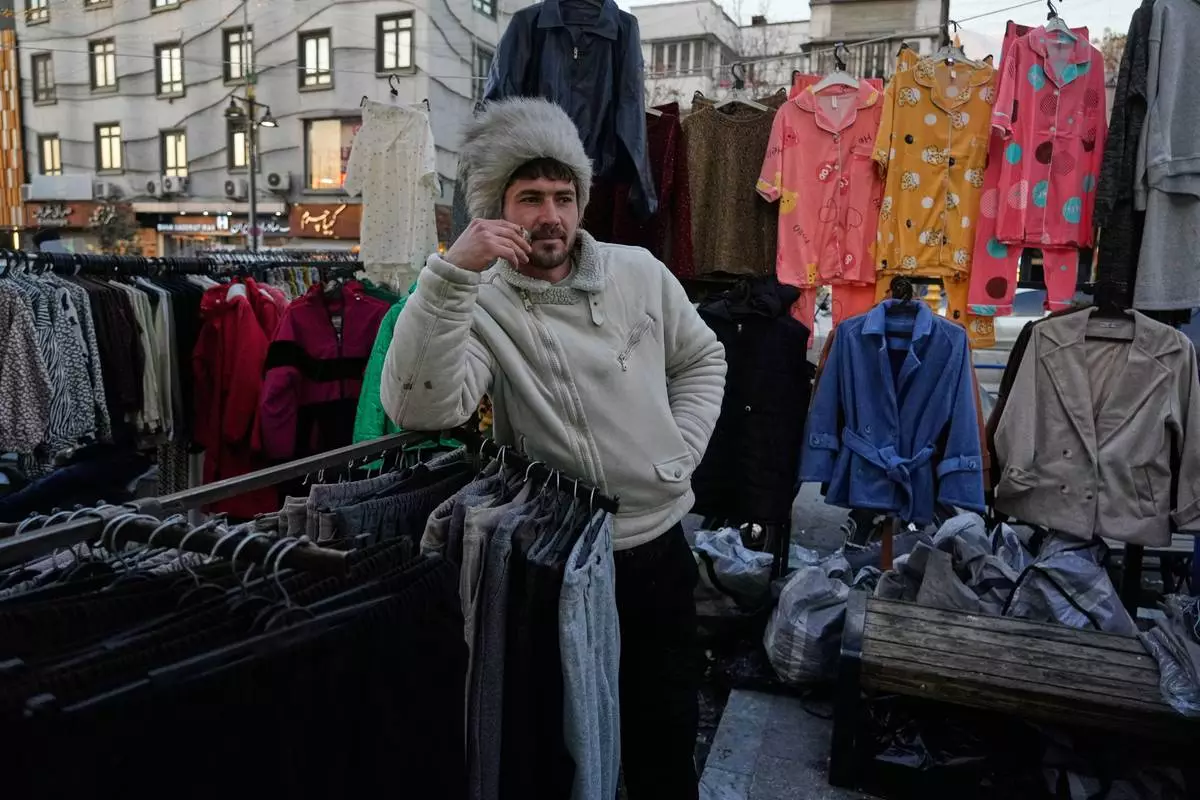
A vendor waits for customers at Tajrish Square in Tehran, Iran, Tuesday, Jan. 27, 2026. (AP Photo/Vahid Salemi)
NEW YORK (AP) — No quick dispatching of disease investigators. No televised news conference to inform the public. No timely health alerts to doctors.
In the midst of a hantavirus outbreak that involves Americans and is making headlines around the world, the U.S. government's top public health agency, the Centers for Disease Control and Prevention, has been uncharacteristically missing in action, according to a number of experts.
To President Donald Trump, "We seem to have things under very good control," as he told reporters Friday evening.
To experts, the situation aboard a cruise ship has not spiraled because, unlike COVID-19 or measles or the flu, hantavirus does not spread easily. It has been health experts in other countries, not the United States, who have been dealing primarily with the outbreak in the past week.
“The CDC is not even a player," said Lawrence Gostin, an international public health expert at Georgetown University. “I've never seen that before.”
Not until late Friday did CDC actions accelerate.
Health officials confirmed the deployment of a team to Spain's Canary Islands, where the ship was expected to arrive early Sunday local time, to meet the Americans onboard. They said a second team will go to Offutt Air Force Base in Nebraska as part of a plan to evacuate American passengers from the ship to a quarantine center. Also, the CDC issued its first health alert to U.S. doctors, advising them of the possibility of imported cases.
The CDC's diminished role in this outbreak is an indicator the agency is no longer the force in international health or the protector of domestic health that it once was, some experts said.
The hantavirus outbreak is “a sentinel event” that speaks to “how well the country is prepared for a disease threat. And right now, I’m very sorry to say that we are not prepared,” said Dr. Jeanne Marrazzo, chief executive officer of the Infectious Diseases Society of America.
Early last month, a 70-year-old Dutch man developed a feverish illness on a cruise ship traveling from Argentina to Antarctica and some islands in the South Atlantic. He died less than a week later. More people became sick, including the man's wife and a German woman, who both died.
Hantavirus was first identified as a cause of sickness of one of the cases on May 2. The World Health Organization swung into action and by Monday was calling it an outbreak. About two dozen Americans were on the ship, including about seven who disembarked last month and 17 who remained on board.
For decades, the CDC partnered with the WHO in such situations. The CDC acted as a mainstay of any international investigation, providing staff and expertise to help unravel any outbreak mystery, develop ways to control it and communicate to the public what they should know and how they should worry.
Such actions were a large reason why the CDC developed a reputation as the world's premier public health agency.
But this time, the WHO has been center stage. It made the risk assessment that has told people the outbreak is not a pandemic threat.
“I don’t think this is a giant threat to the United States,” said Jennifer Nuzzo, director of Brown University’s Pandemic Center. But how this situation has played out “just shows how empty and vapid the CDC is right now,” she said.
The current situation comes after 16 tumultuous months during which the Trump administration withdrew from the WHO, has restricted CDC scientists from talking to international counterparts at times and embarked on a plan to build its own international public health network through one-on-one agreements with individual countries.
The administration has laid off thousands of CDC scientists and public health professionals, including members of the agency's ship sanitation program.
As this was playing out, Trump's health secretary, Robert F. Kennedy Jr., said he was working to “restore the CDC’s focus on infectious disease, invest in innovation, and rebuild trust through integrity and transparency.”
The CDC has not been completely silent on hantavirus.
The agency on Wednesday issued a short statement that said the risk to the American public is “extremely low,” and described the U.S. government as “the world’s leader in global health security.”
Said Nuzzo: “Not only was that not helpful, it actually does damage because a core principle of public health communications is humility.”
The CDC's acting director, Dr. Jay Bhattacharya, posted a message on social media that the agency was lending its expertise in coordinating with other federal agencies and international authorities. Arizona officials this week said they learned from the CDC that one of the Americans who left the ship — a person with no symptoms and not considered contagious — had already returned to the state. WHO officials said the CDC has been sharing technical information.
The CDC also is “monitoring the health status and preparing medical support for all of the American passengers on the cruise,” Bhattacharya wrote.
But federal health officials have mostly been tight-lipped, declining interview requests.
In interviews this week, some experts made a comparison with a 2020 incident involving the Diamond Princess, a cruise ship docked in Japan that became the setting of one of the first large COVID-19 outbreaks outside of China.
The CDC sent personnel to the port, helped evacuate American passengers, ran quarantines, shared genetic data on the virus, coordinated with the WHO and Japan, held public briefings and rapidly published reports “that became the world’s reference data on cruise ship COVID transmission,” said Dr. Tom Frieden, a former CDC director.
Some aspects of the international response to the Diamond Princess were criticized, and it did not halt the outbreak or stop COVID-19’s spread across the world. But some experts say it was not for the CDC's lack of trying.
“The CDC was right on top of it, very visible, very active in trying to manage and contain it,” Gostin said, while the agency's work now is delayed and subdued.
Instead of working with nearly all of the world's nations through the WHO, the Trump administration has pursued bilateral health agreements with individual nations for information sharing, public health support, and what it describes as “the introduction of innovative American technologies.” Roughly 30 agreements are currently in place.
That's not sufficient, Gostin said. “You can't possibly cover a global health crisis by doing one-on-one deals with countries here and there,” he said.
Associated Press writers Ali Swenson in New York, Darlene Superville in Washington and Susan Montoya Bryan in Albuquerque, New Mexico, contributed to this report.
The Associated Press Health and Science Department receives support from the Howard Hughes Medical Institute’s Department of Science Education and the Robert Wood Johnson Foundation. The AP is solely responsible for all content.
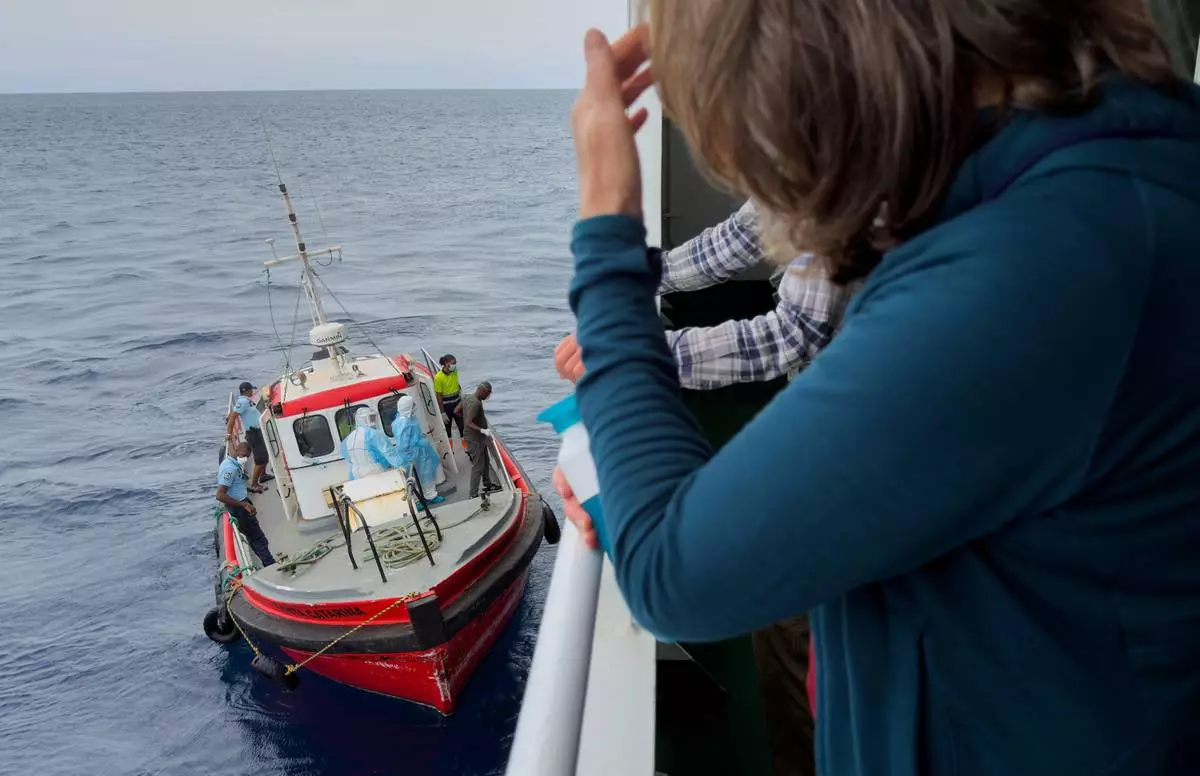
Passengers on the the hantavirus-stricken cruise ship, MV Hondius, watch epidemiologists board the boat in Praia, during their voyage to Spain's port of Tenerife, May 6, 2026. (AP Photo)
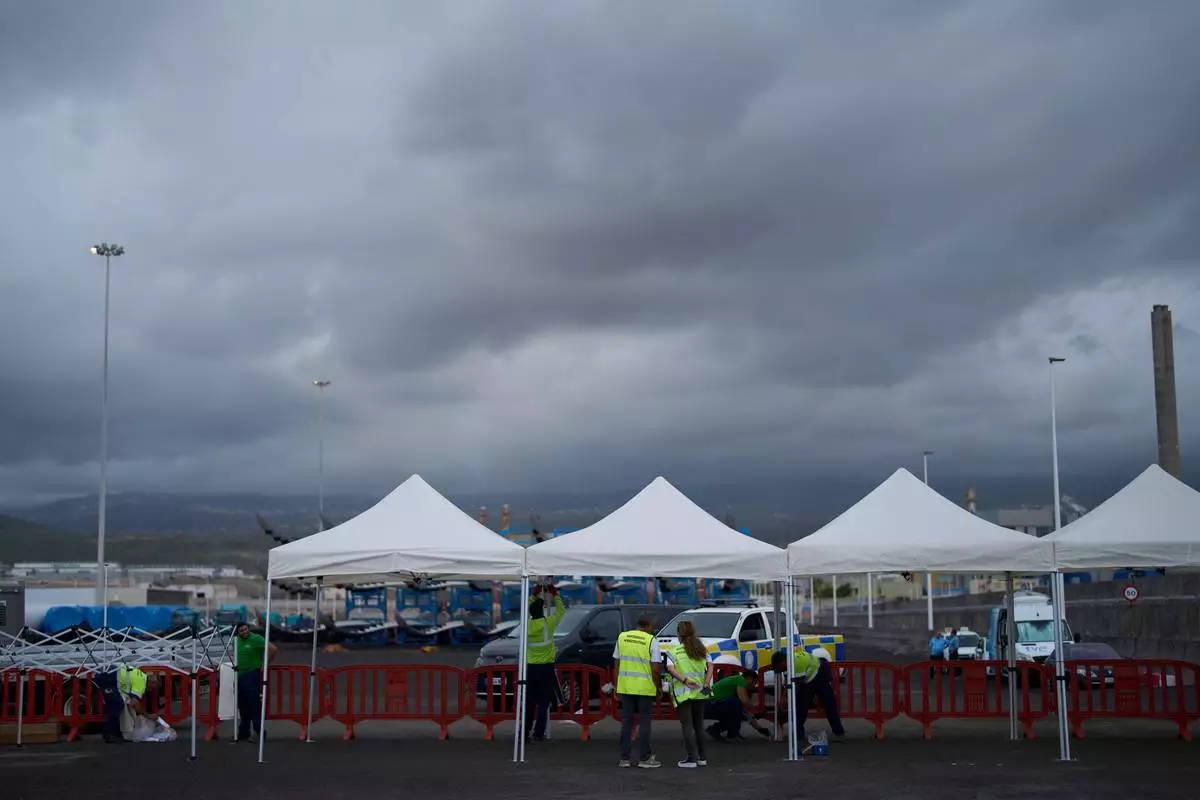
Workers set up temporary shelters in the area where passengers from the MV Hondius cruise ship are expected to arrive at the port of Granadilla in Tenerife, Canary Islands, Spain, Saturday, May 9, 2026. (AP Photo/Manu Fernandez)
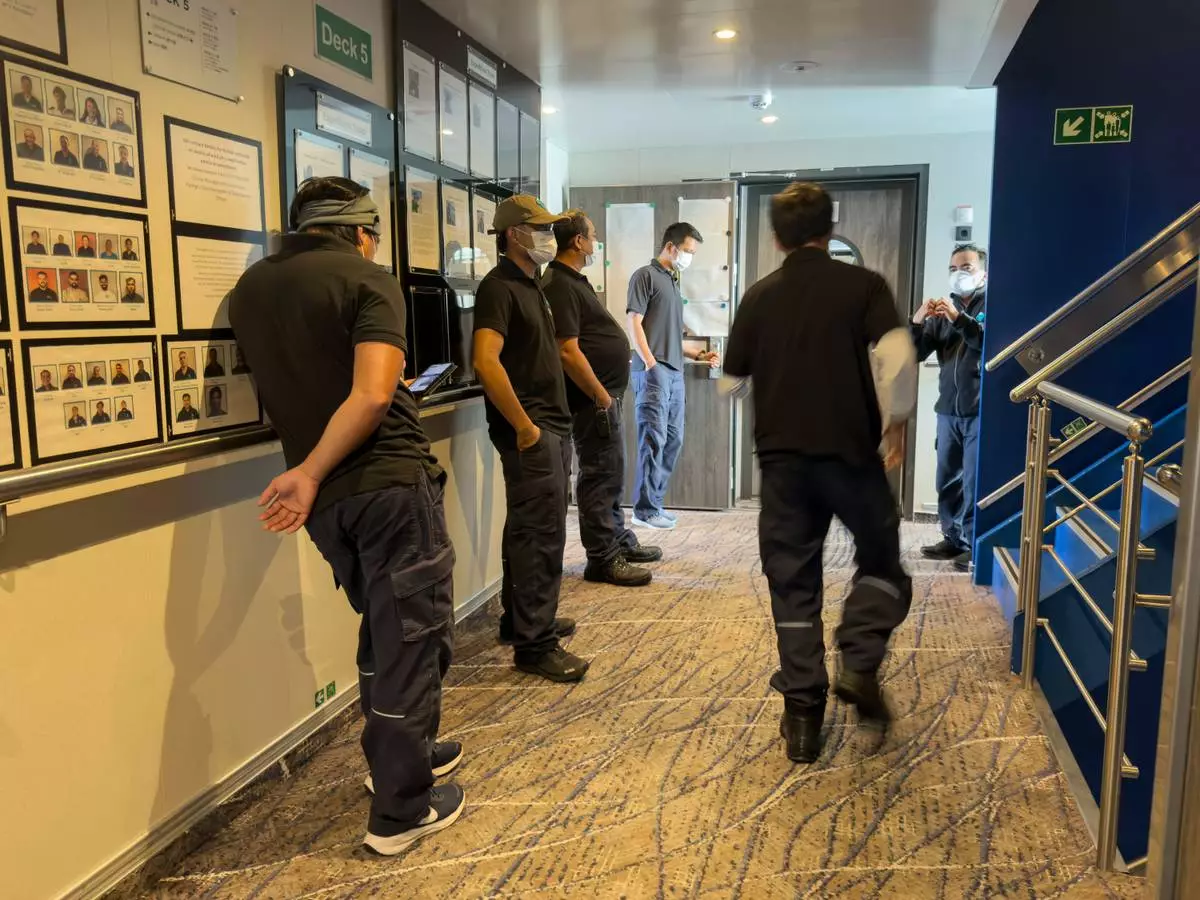
Crew members of the hantavirus-stricken cruise ship, MV Hondius, wait their turns for a first interview with epidemiologists, during the voyage to Spain's port of Tenerife, May 6, 2026. (AP Photo)
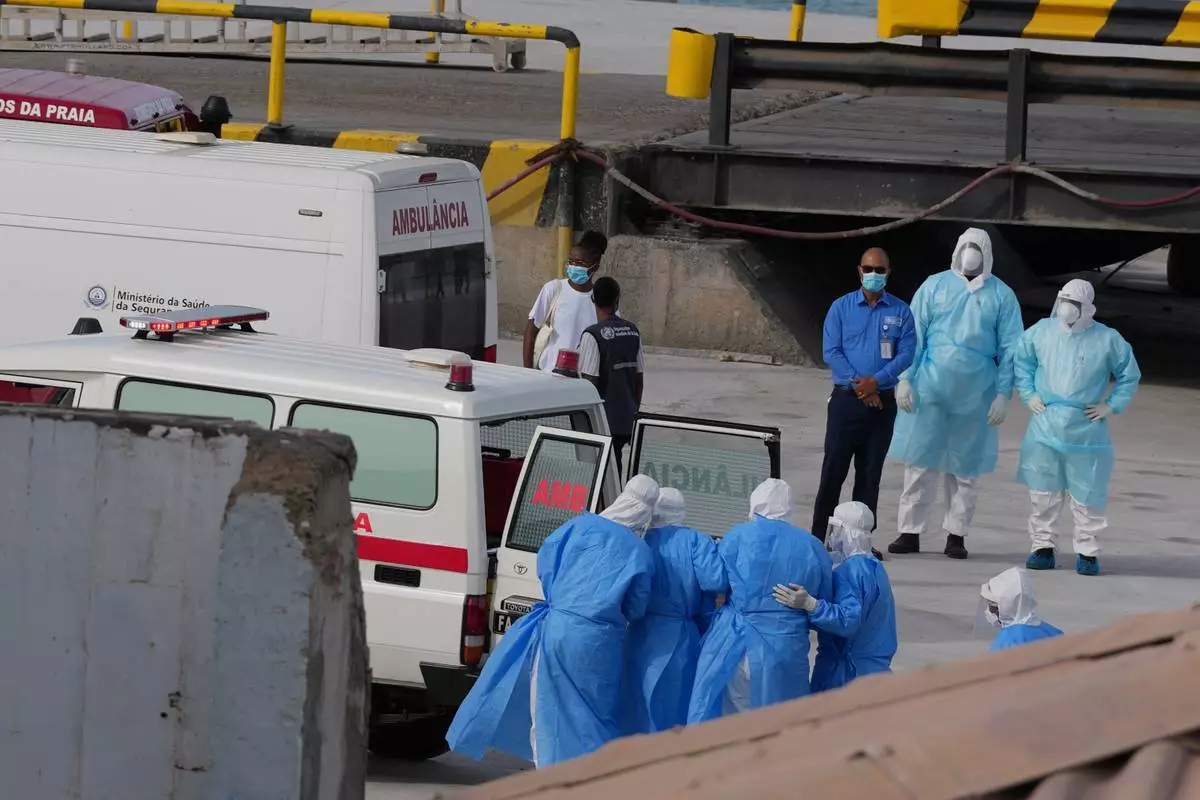
Health workers in protective gear evacuate patients from the MV Hondius cruise ship into an ambulance at a port in Praia, Cape Verde, Wednesday, May 6, 2026. (AP Photo/Misper Apawu)
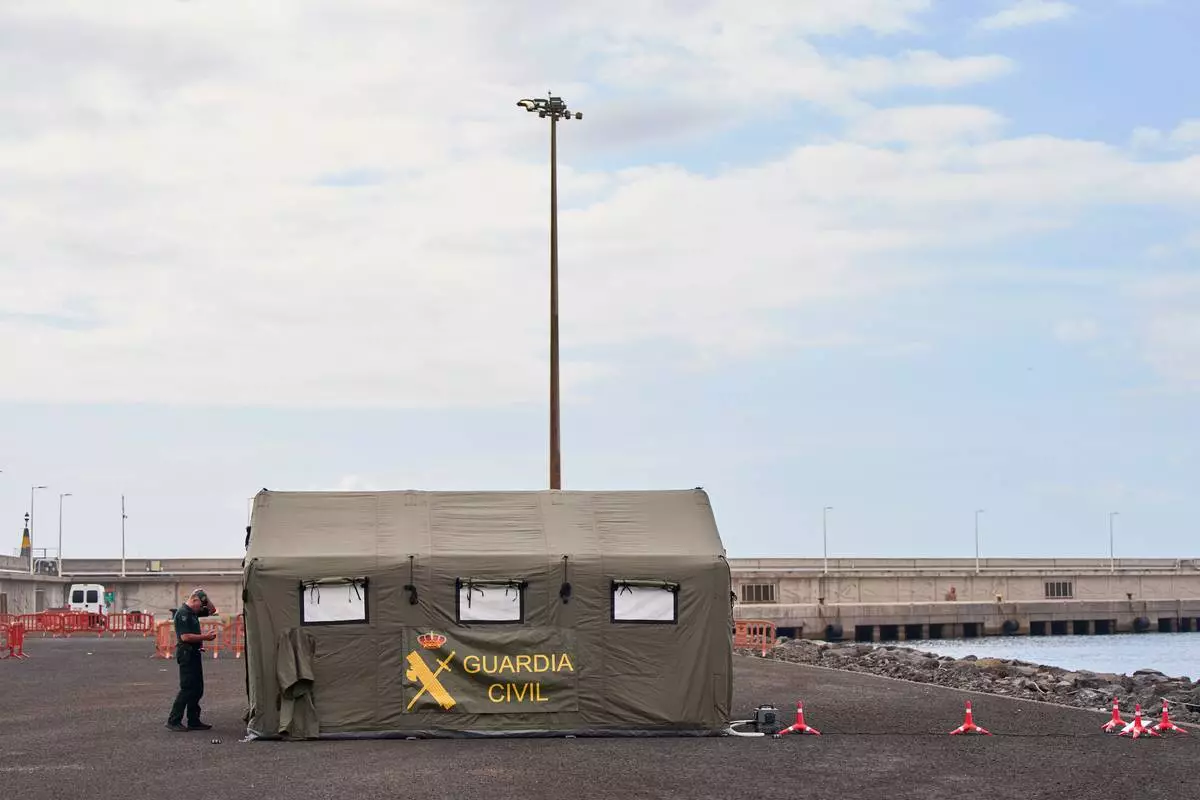
A Spanish Civil Guard officer inspects the area where passengers from the MV Hondius cruise ship are expected to arrive at the port of Granadilla in Tenerife, Canary Islands, Spain, Saturday, May 9, 2026. (AP Photo/Manu Fernandez)