China's General Administration of Customs on Tuesday began piloting a new supervision model for sea-rail and water-water multimodal transport to streamline customs procedures and improve logistic efficiency, ultimately facilitating international trade.
The pilot zones include ports and logistics hubs in both coastal and inland regions in Shandong, Shanghai, Jiangsu, Zhejiang, Fujian, Hainan, Guangxi, Chongqing and more.
Traditionally, importers have to go through separate procedures for sea, rail, and inland waterway transport, which involve multiple declarations and waybills, resulting in cumbersome processes and compromising efficiency.
Under the new model, enterprises only need one multimodal transport document to achieve seamless transition between different transport modes during the entire shipping process, significantly reducing customs clearance time and improving transportation efficiency.
"Import and export logistics often require transitions from different transport modes. Now, no matter how many domestic transit ports or transshipment points are involved, we don't have to go through customs transit procedures anymore and truly finish the entire trip using a single document," said Xia Liangliang, deputy business manager of Zhejiang Seaport Logistics Group.
Expanding on the existing rail-road export model, the pilot program will help improve logistics connections among coastal ports, border areas, and inland regions and bring benefits to more businesses, according to Wang Yu, deputy director of the supervision department at Ningbo Customs.
"This multimodal transport pilot program marks an expansion from just exports to also imports and realize two-way connectivity. Besides, the pilot program's sea-rail and water-water transport modes represent the most popular intermodal transport modes, thus extending the policy benefits to more logistics entities," Wang said.
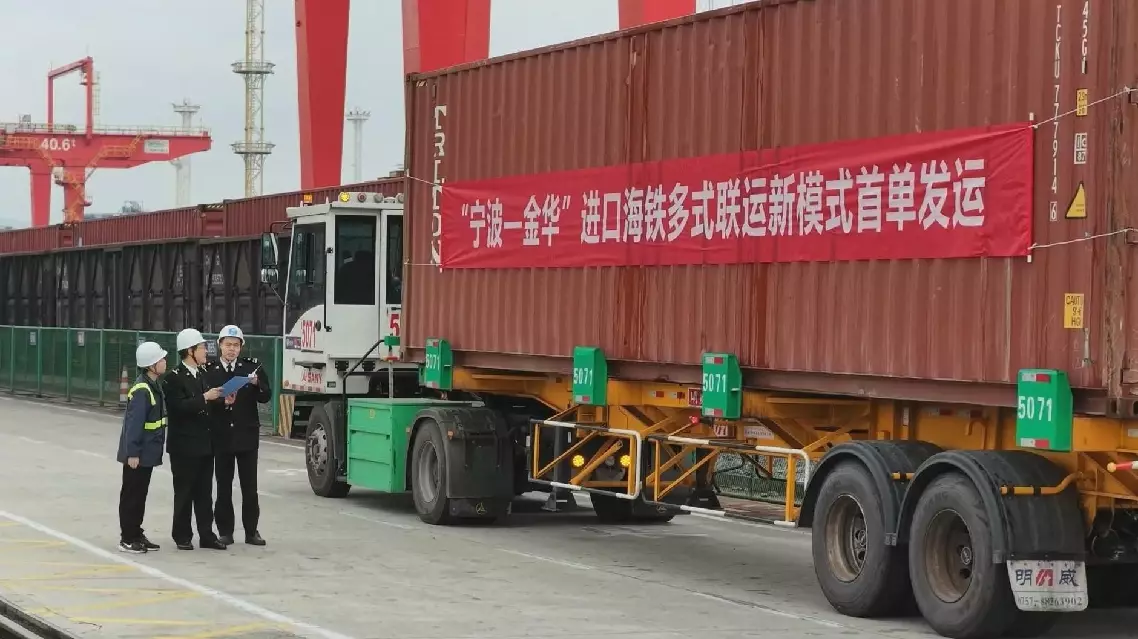
Customs pilots new multimodal transport supervision model to facilitate trade