Two giant pandas were spotted frolicking on trees and stumps at the Dujiangyan base of the China Conservation and Research Center for the Giant Panda (CCRCGP) in southwest China's Sichuan Province.
Video released by the center shows Chun Yu and Ji Fu, both females, playfully enjoying each other's company.
Chun Yu, born in August, 2022 at the CCRCGP, was given birth by Qiao Qiao, who was rescued by experts from the famous Siguniang Mountain in Sichuan.
Ji Fu, also born in August, 2022, was born to Cui Cui at the Shenshuping giant panda base of Wolong National Nature Reserve in Sichuan.
Weighing 270.4 grams at birth, Ji Fu is by far the world's heaviest cub born to a giant panda in captivity.
The practice of housing two pandas of the same age together is a form of social enrichment, experts said, adding that appropriate social interaction can enrich the behavior of giant pandas.
Panda enrichment refers to scientific conservation methods employed in captivity to enhance the welfare of these national treasures, meet their physiological and psychological needs, and encourage them to display more natural behaviors.
The CCRCGP is a pioneer in artificial breeding and reintroduction research and has the world's largest artificial captive population of giant pandas.
It also operates the largest and most extensive global cooperative exchange platform for giant pandas, and has established collaborative partnerships with 18 zoos in countries and regions overseas, 39 domestic animal breeding institutions, and over 10 research institutes.
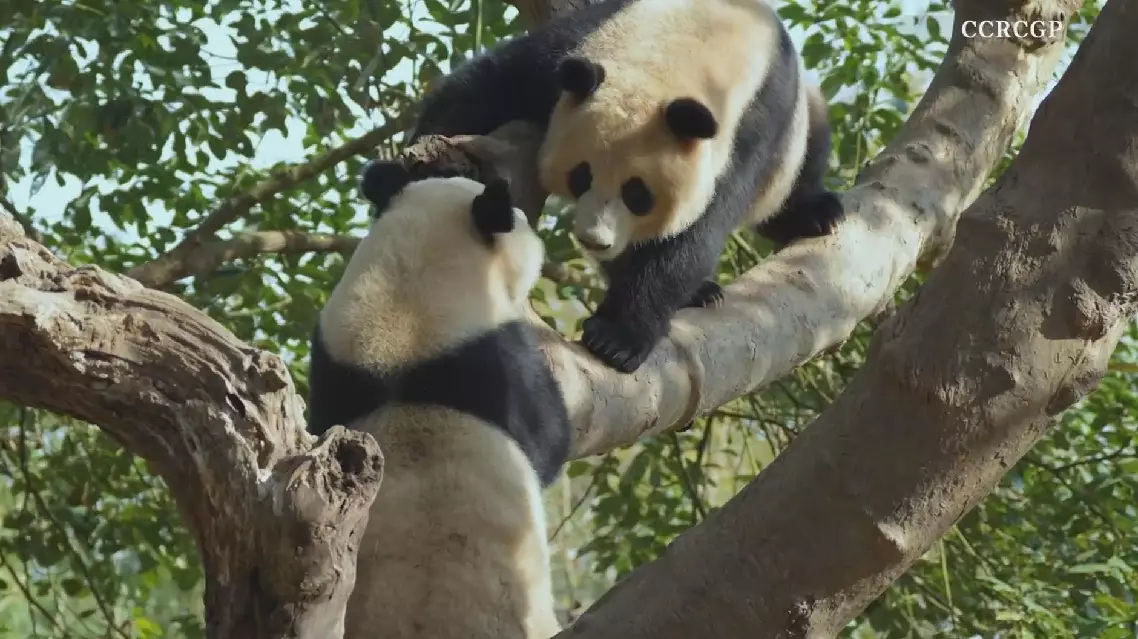
Playful pandas wrestle, frolic at Sichuan conservation base
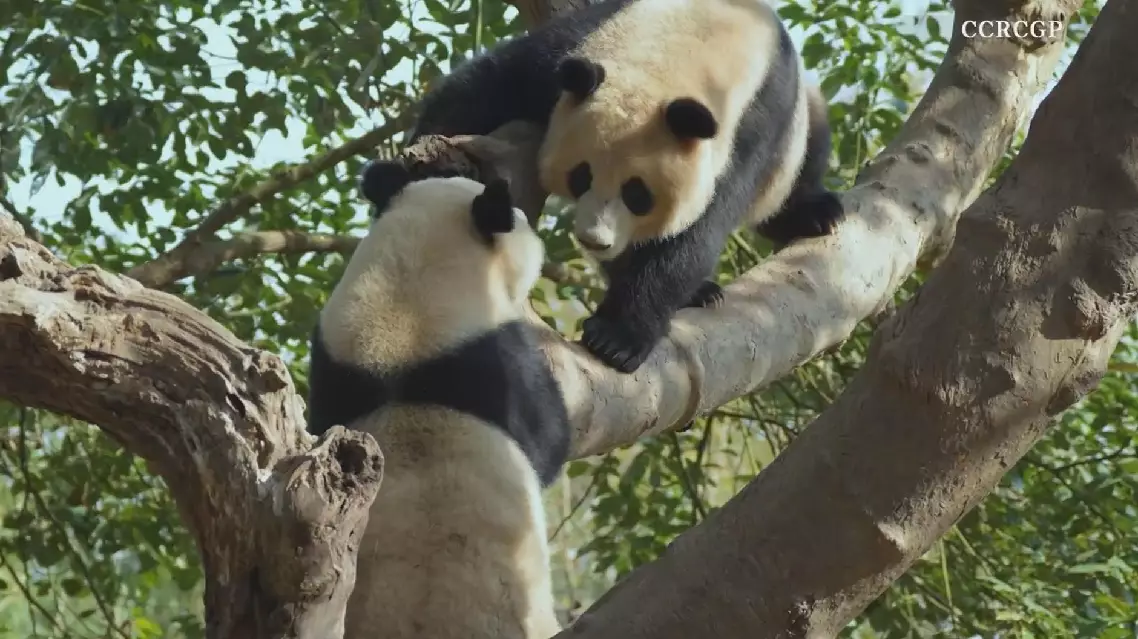
Playful pandas wrestle, frolic at Sichuan conservation base
Major Chinese commercial banks reported steady profit growth and low non-performing loan ratios in 2025, while signaling strong lending intentions for emerging industries outlined in the country's 15th Five-Year Plan, including integrated circuits, artificial intelligence and robotics.
The six largest state-owned banks, including Industrial and Commercial Bank of China (ICBC), Agricultural Bank of China, Bank of China, China Construction Bank, Bank of Communications and Postal Savings Bank, posted combined operating revenue of 3.6 trillion yuan, up 2.44 percent year on year, with net profit reaching 1.42 trillion yuan, a 1.65 percent increase. Prominently, ICBC became the world's first bank to exceed 50 trillion yuan in total assets.
"In 2025, Bank of Communications saw positive growth in core indicators such as net profit attributable to shareholders, net operating revenue, net interest income and net fee and commission income — the best performance in recent years," said Zhang Baojiang, president of Bank of Communications. "We have developed 43 bank-wide products and 208 region-specific products, ensuring that every key area of rural revitalization has a dedicated product offering," said Wang Zhiheng, president of Agricultural Bank of China.
Among the 10 listed joint-stock banks, including China CITIC Bank, asset scale grew steadily and operating indicators improved last year. Most banks maintained low non-performing loan ratios.
Loan allocation serves as a key economic indicator. While releasing their 2025 results, many banks also identified priority sectors for lending this year, with development opportunities under the 15th Five-Year Plan (2026-2030) drawing the most attention. Multiple banks have pledged to ramp up loan disbursements to support the real economy.
"In the first two months of this year, corporate loans exceeded 2 trillion yuan, with cumulative lending of over 60 billion yuan to projects supporting major national strategies and key security capacity building," said Wang Jingwu, senior executive vice president of ICBC. "Under the 15th Five-Year Plan, serving emerging industries like integrated circuits, AI and robotics could unlock multi-trillion-yuan opportunities, perhaps as much as 10 trillion yuan, for banks like ours," said Luo Feng, vice president of China Zheshang Bank.
Several banks also said they will increase support for technology finance, green finance, inclusive finance, pension finance, digital finance and consumer credit this year, while optimizing lending structures and accelerating the application of "AI Plus" in banking operations.
"Since the beginning of this year, our quota-based consumer loans have maintained rapid growth, with new loans exceeding 20 billion yuan, an increase of over 80 percent year on year," said Liang Shidong, retail business director of Postal Savings Bank of China.
"We will advance the 'AI Plus' initiative, developing AI application models for key areas such as credit, marketing and operations. We will also accelerate branch transformation and smart operations to provide one-stop, comprehensive services that meet the diverse needs of our customers," said Zhang Hui, president of Bank of China.
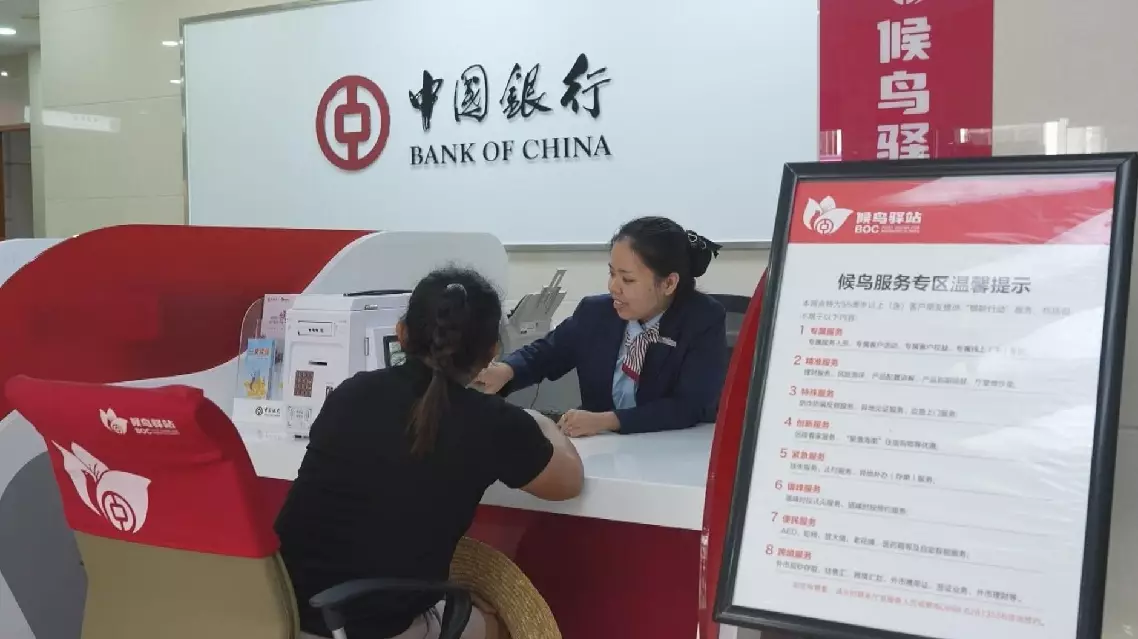
Chinese banks post steady profit growth, eye opportunities from 15th Five-Year Plan