Skip to Content Facebook Feature Image

New Motorola Solutions AI Offerings Help Public Safety Agencies Reclaim Hours Every Day

News

New Motorola Solutions AI Offerings Help Public Safety Agencies Reclaim Hours Every Day
News

News

New Motorola Solutions AI Offerings Help Public Safety Agencies Reclaim Hours Every Day

2026-01-28 22:00 Last Updated At:22:10

CHICAGO--(BUSINESS WIRE)--Jan 28, 2026--

Motorola Solutions (NYSE: MSI) today announced the launch of Assist Suites, a portfolio of role-based AI for public safety solutions designed to deliver the right intelligence to the right person at the right time. Assist Suites synthesize multiple sources of data from across an agency - 911 audio, body and in-car camera footage, radio transcripts and more - into a unified thread of intelligence to help accelerate emergency response times, enhance safety and transparently support the highest levels of operational and reporting accuracy.

This press release features multimedia. View the full release here: https://www.businesswire.com/news/home/20260128213950/en/

The Dispatcher Assist Suite helps streamline 911 information intake and emergency dispatch and coordination, and the Responder Assist Suite helps enhance field officer safety and reduce the administrative burden of report writing.

The suite’s flagship report-writing tool, Narrative Assist, cross-references an officer’s first-hand account with multiple sources of incident data to build a police report grounded by verified intelligence. Assist highlights discrepancies for the officer’s review to maintain human-led oversight and retains a clear audit log of all AI suggestions.

Assist Suites: role-based AI for public safety

Research reveals that nearly half of a call handler’s time on 911 calls is spent verifying information, while officers spend approximately 40% of their shift behind a keyboard rather than in the community. Assist Suites are designed to address challenges driven by the dual crises agencies face: a massive influx of data and a critical shortage of public safety personnel.

“In public safety, time can be the difference between a successful outcome and a tragedy,” said Mahesh Saptharishi, executive vice president and chief technology officer, Motorola Solutions. “Assist saves time and time saves lives. We’re focused on delivering the real value of AI through personalized suites that support the specific needs of each emergency responder. Assist seamlessly transitions intelligence from one person to the next to improve accuracy, speed and safety.”

The role-based suites recognize that AI’s value can vary significantly between the command center and a patrol car. More suites will follow this year to support additional public safety and enterprise security roles.

Dispatcher Assist Suite: accelerating the first seconds of response

Every second counts when someone dials 911, and research shows that 40% of 911 calls suffer from the inefficient exchange of information between roles. The Dispatcher Assist Suite provides real-time call transcription and translation to address language barriers that can add an average of 70 seconds to the call. Assist can highlight keywords like “gun” or “heart attack” and suggest immediate actions that allow call handlers to focus on faster and safer responses versus data entry.

“Real-time transcription and call summary give telecommunicators the important parts of the 911 call in real-time to send to responders,” said Stephen Kennedy, assistant county administrator, Board of Sumter County Commissioners, Florida. “They aren’t losing anything, and they don’t have to lose time checking the details; it’s right in front of them.”

Additionally, Assist can automate triage of non-emergency call traffic, which can account for 65% of call handlers’ workloads in some regions. This strategic filtering redirects routine inquiries and keeps human operators focused on the 911 crises where every second counts.

Responder Assist Suite: multi-source intelligence for safety and accuracy

Fifty percent of officers report that the incident details they receive en route frequently differ from what they encounter on scene. The Responder Assist Suite helps give first responders a verified picture of the situation before they arrive. On scene, Assist enables voice-activated queries of an agency’s data for eyes-up situational awareness and safety. Assist can also automatically tag evidence and redact sensitive subjects and objects to accelerate records documentation and support privacy.

Its Narrative Assist tool further helps solve the weight of report writing, a task that about 70% of officers identify as a significant administrative challenge AI can help address. Assist automates the critical process of cross-referencing the officer’s account with multiple data sources to verify facts and identify discrepancies, supporting the most accurate account of events.

“Motorola Solutions has helped us step into modern policing and made our department a lot more efficient, easily saving us up to 40 hours a week with these AI technologies," said police sergeant Michael Sellner of the White Bear Lake Police Department, Minnesota. “We’ve seen Narrative Assist cut report writing time from an hour down to 15 minutes and Redaction Assist drop video redaction time from 35 hours to just one. The AI features in Motorola Solutions’ Responder Assist Suite allow our officers to stop staring at screens and get back to proactive policing.”

Agencies can purchase Assist Suites on a simplified per-user, per-month basis, allowing them to equip specific roles with the AI tools they need without complexity. These features can be quickly enabled, allowing departments to realize the value of AI-assisted workflows. For more information, visit www.motorolasolutions.com/assist-suites or follow along at #MotoSolutionsAI.

Download the media kit here:https://motsol.ink/assist_suites_mediakit

About Motorola Solutions | Solving for safer

Safety and security are at the heart of everything we do at Motorola Solutions. We build and connect technologies to help protect people, property and places. Our solutions foster the collaboration that’s critical for safer communities, safer schools, safer hospitals, safer businesses, and ultimately, safer nations. Learn more about our commitment to innovating for a safer future for us all at www.motorolasolutions.com.

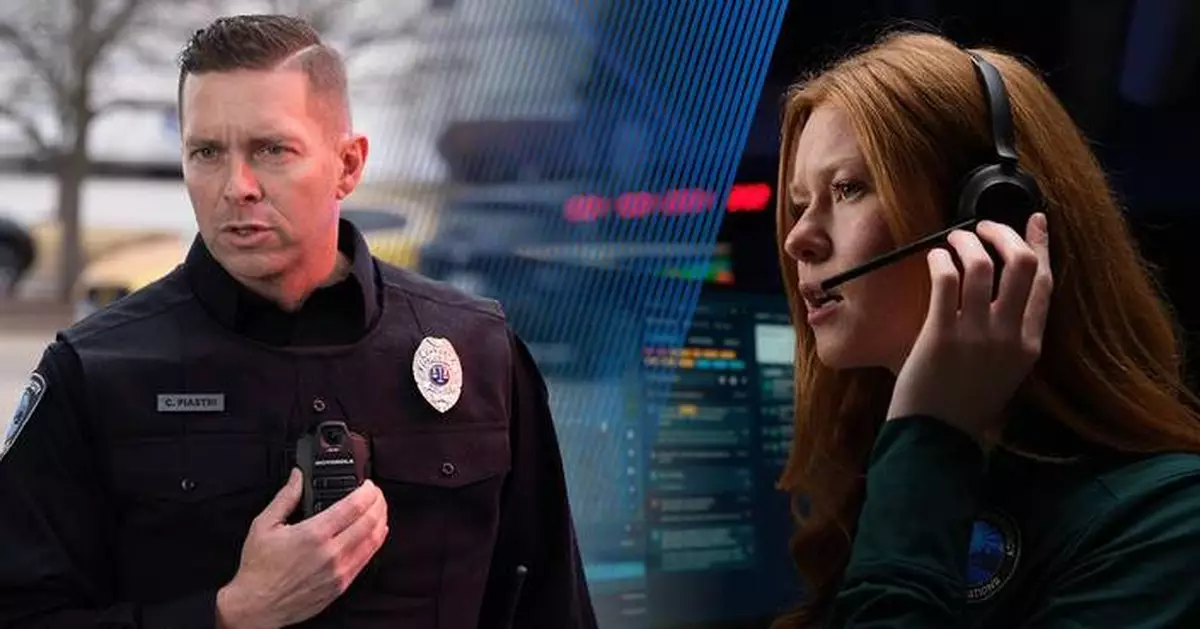
Assist is now even more powerful. Assist Suites are personalized to support the specific needs of each emergency responder in public safety, giving back time to spend in the communities you serve. Credit: Motorola Solutions


Assist is now even more powerful. Assist Suites are personalized to support the specific needs of each emergency responder in public safety, giving back time to spend in the communities you serve. Credit: Motorola Solutions
KYIV, Ukraine (AP) — A new report warns that the number of soldiers killed, injured or missing on both sides of Russia's war on Ukraine could hit 2 million by the spring, with Russia suffering the largest number of troop deaths recorded for any major power in any conflict since World War II.

Tuesday's report from the Center for Strategic and International Studies came less than a month before the fourth anniversary of Moscow's full-scale invasion of Ukraine on Feb. 24.

As the war grinds through another bitterly cold winter, Russian strikes hit an apartment block Wednesday on the outskirts of Kyiv, killing two people. Nine others were injured in attacks in the Ukrainian cities of Odesa and Kryvyi Rih and the front-line Zaporizhzhia region.

The CSIS report said Russia suffered 1.2 million casualties, including up to 325,000 troop deaths, between February 2022 and December 2025.

“Despite claims of battlefield momentum in Ukraine, the data shows that Russia is paying an extraordinary price for minimal gains and is in decline as a major power,” the report said. “No major power has suffered anywhere near these numbers of casualties or fatalities in any war since World War II."

It estimated that Ukraine, with its smaller army and population, had suffered between 500,000 to 600,000 military casualties, including up to 140,000 deaths.

Neither Moscow nor Kyiv gives timely data on military losses, and each side seeks to amplify the other side’s casualties.

Commenting on the report, Kremlin spokesperson Dmitry Peskov said Wednesday that the research could not be considered “reliable information” and that only Russia’s Ministry of Defense was authorized to provide information on military losses.

The ministry’s last statement on battlefield deaths was in September 2022, when it said that just under 6,000 Russian soldiers had been killed. It has not released any updated figures since then.

There was no immediate comment from the Ukrainian government.

In an interview with NBC in February 2025, Ukrainian President Volodymyr Zelenskyy said that more than 46,000 Ukrainian soldiers had been killed since the war began.

The report estimated that at current rates, combined Russian and Ukrainian casualties may be as high as 1.8 million and could reach 2 million by spring.

The figures from the CSIS were compiled using the Washington, D.C.-based think tank’s own analysis, data published by independent Russian news site Mediazona with the BBC, estimates by the British government and interviews with state officials.

Reports about military losses have been repressed in Russian media, activists and independent journalists say.

Mediazona, together with the BBC and a team of volunteers, has so far collected the names of over 160,000 troops killed by scouring news reports, social media and government websites.

The report also said that Russian forces were advancing at a sluggish pace since they seized the initiative on the battlefield in 2024, despite their much larger size.

Russia’s advance in Ukraine has largely settled into a grinding war of attrition, and analysts say that Russian President Vladimir Putin is in no rush to find a settlement, despite his army’s difficulties on the roughly 1,000-kilometer (600-mile) front line.

The report said Russian forces have advanced at an average rate of between 15 and 70 meters (49 to 230 feet) per day in their most prominent offensives.

That is “slower than almost any major offensive campaign in any war in the last century,” the report said.

Putin told his annual news conference last month that 700,000 Russian troops are fighting in Ukraine. He gave the same number in 2024, and a slightly lower figure — 617,000 — in December 2023. It was not possible to verify those figures.

Officials said Wednesday that two people were killed near the Ukrainian capital and at least nine others were injured in attacks across Ukraine.

A man and a woman died in an overnight attack in the Bilohorodka area on the outskirts of Kyiv, according to Mykola Kalashnyk, head of the regional military administration.

Officials in the Ukrainian cities of Odesa and Kryvyi Rih, as well as the Zaporizhzhia region, also reported Russian strikes overnight, wounding at least nine people and damaging infrastructure.

Ukraine's air force said that Russia attacked overnight with one ballistic missile and 146 strike drones, 103 of which were shot down or destroyed using electronic warfare.

Meanwhile, Russia's Ministry of Defense said its air defenses destroyed 75 Ukrainian drones overnight. Twenty-four were shot down over Russia’s southwestern Krasnodar region, with 23 more shot down over the Crimean Peninsula, which Russia illegally annexed in 2016.

Two drones were reportedly shot down over Russia's Voronezh region, where Ukraine's General Staff said Wednesday that it had struck the Khokholskaya oil depot. Regional Gov. Alexander Gusev wrote on Telegram that falling drone debris sparked a fire involving oil products, but did not give further details.

People pass a crater and damaged cars near an apartment building after a Russian attack in Zaporizhzhia, Ukraine, Wednesday, Jan. 28, 2026. (AP Photo/Kateryna Klochko)

People pass a crater and damaged cars near an apartment building after a Russian attack in Zaporizhzhia, Ukraine, Wednesday, Jan. 28, 2026. (AP Photo/Kateryna Klochko)

This photo provided by the Ukrainian Emergency Service, shows a burned car after Russian attack in Zaporizhzhia, Ukraine, Wednesday, Jan. 28, 2026. (Ukrainian Emergency Service via AP Photo)

This photo provided by the Ukrainian Emergency Service, shows a burned car after Russian attack in Zaporizhzhia, Ukraine, Wednesday, Jan. 28, 2026. (Ukrainian Emergency Service via AP Photo)

Rescuers carry the coffin of their fellow Oleksandr Zibrov, 36, who was killed in a secondary Russian drone strike on a residential building, at a fire station in Kyiv, Ukraine, Wednesday, Jan. 28, 2026. (AP Photo/Efrem Lukatsky)

Rescuers carry the coffin of their fellow Oleksandr Zibrov, 36, who was killed in a secondary Russian drone strike on a residential building, at a fire station in Kyiv, Ukraine, Wednesday, Jan. 28, 2026. (AP Photo/Efrem Lukatsky)

Relatives and colleagues attend the funeral of rescuer Oleksandr Zibrov, 36, who was killed in a secondary Russian drone strike on a residential building, at a fire station in Kyiv, Ukraine, Wednesday, Jan. 28, 2026. (AP Photo/Efrem Lukatsky)

Relatives and colleagues attend the funeral of rescuer Oleksandr Zibrov, 36, who was killed in a secondary Russian drone strike on a residential building, at a fire station in Kyiv, Ukraine, Wednesday, Jan. 28, 2026. (AP Photo/Efrem Lukatsky)

A local resident clears up debris from his broken balcony after a Russian attack in Zaporizhzhia, Ukraine, Wednesday, Jan. 28, 2026. (AP Photo/Kateryna Klochko)

A local resident clears up debris from his broken balcony after a Russian attack in Zaporizhzhia, Ukraine, Wednesday, Jan. 28, 2026. (AP Photo/Kateryna Klochko)

People pass by damaged cars near an apartment building after a Russian attack in Zaporizhzhia, Ukraine, Wednesday, Jan. 28, 2026. (AP Photo/Kateryna Klochko)

People pass by damaged cars near an apartment building after a Russian attack in Zaporizhzhia, Ukraine, Wednesday, Jan. 28, 2026. (AP Photo/Kateryna Klochko)

People pass a crater and damaged cars near an apartment building after a Russian attack in Zaporizhzhia, Ukraine, Wednesday, Jan. 28, 2026. (AP Photo/Kateryna Klochko)

People pass a crater and damaged cars near an apartment building after a Russian attack in Zaporizhzhia, Ukraine, Wednesday, Jan. 28, 2026. (AP Photo/Kateryna Klochko)

Recommended Articles