NEW YORK (AP) — Prosecutors have accused a top aide to former New York City Mayor Eric Adams of accepting diamond earrings from two real estate developers, then pressuring city regulators to expedite their construction projects, despite safety concerns.
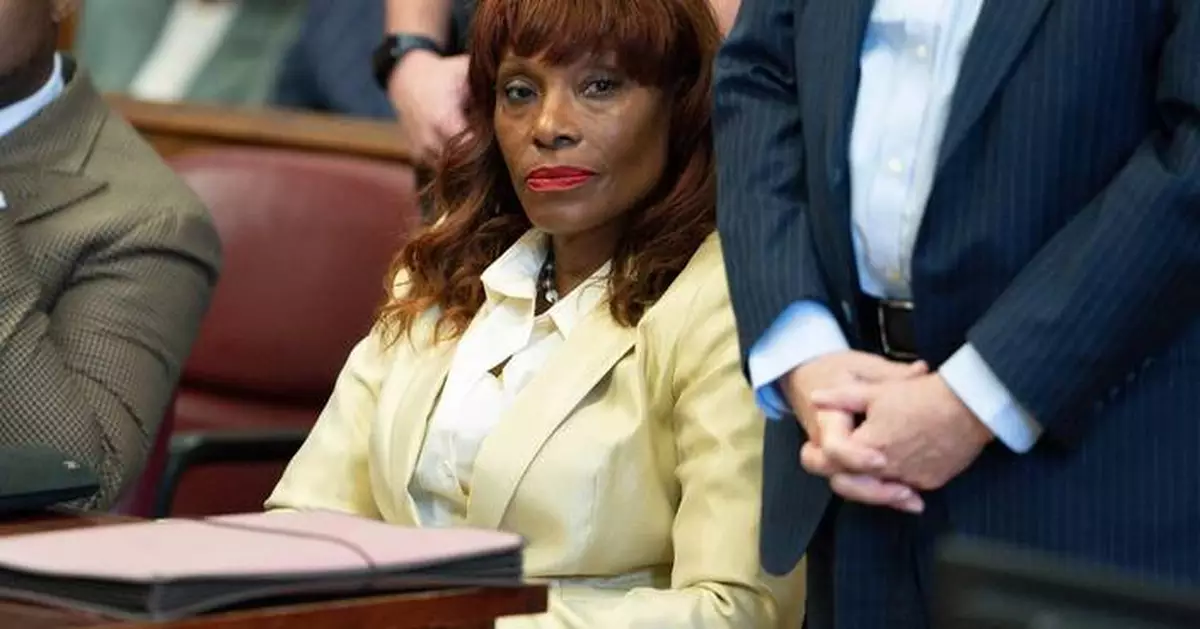
In court papers filed Tuesday, prosecutors in Manhattan offered new details about one of several bribery schemes they say was carried out by Ingrid Lewis-Martin, a close confidant of Adams who once served as the second-most powerful person in city government.
She resigned in late 2024 shortly before she and her son were charged with raking in over $100,000 in bribes from the two developers, Raizada Vaid and Mayank Dwivedi. All four have pleaded not guilty.
Lewis-Martin was then hit with a separate set of bribery charges in August, alleging she traded political favors — including nixing a planned bike lane and steering shelter contracts toward a favored developer — for cash, home renovations and even a speaking role on the TV show “Godfather of Harlem.” She has also pleaded not guilty to those allegations.
An attorney for Lewis-Martin has maintained that she was only helping her constituents cut through red tape.
The latest filing expands on the initial charges brought against Lewis-Martin and her son, Glenn D. Martin II, who performs under the stage name DJ Suave Luciano.
Shortly after meeting with Vaid and Dwivedi in 2022, Lewis-Martin received a set of 2-carat diamond earrings worth around $3,000 from the developers, according to the new court filing.
Lewis-Martin then pressured city regulators to speed up approvals for the developers’ projects, prosecutors allege. In one case, she urged the acting commissioner of the Department of Buildings to approve the proposed renovation of a Manhattan hotel owned by Vaid, despite “legitimate safety concerns” raised by building inspectors, prosecutors said.
After city regulators agreed to expedite the application, Lewis-Martin texted her son indicating that Vaid would have him “completely covered. You(r) fashion line is 100 percent,” according to the court filing. Vaid also promised to help Martin II open a Chick-fil-A franchise, prosecutors said.
In an email, an attorney for Lewis-Martin, Arthur Aidala, criticized the length of the filing, without addressing its substance.
“We look forward to submitting our robust reply to the prosecutor’s desperate 170 page answer to our motion to dismiss,” Aidala said. “It is the longest answer to a motion we have ever seen and that speaks volumes about their insecurity in their case.”
Inquiries to attorneys for Martin II, Vaid and Dwivedi were not returned.
The case against Lewis-Martin, brought by Manhattan District Attorney Alvin Bragg, first emerged amid a period of overlapping scandals for the Adams’ administration. It is unrelated to Adams’ own indictment on federal corruption charges, which was dismissed last year by the Justice Department. Adams is not accused of any wrongdoing in Lewis-Martin's case.
A spokesperson for Adams did not respond to an inquiry about the latest allegations against Lewis-Martin.
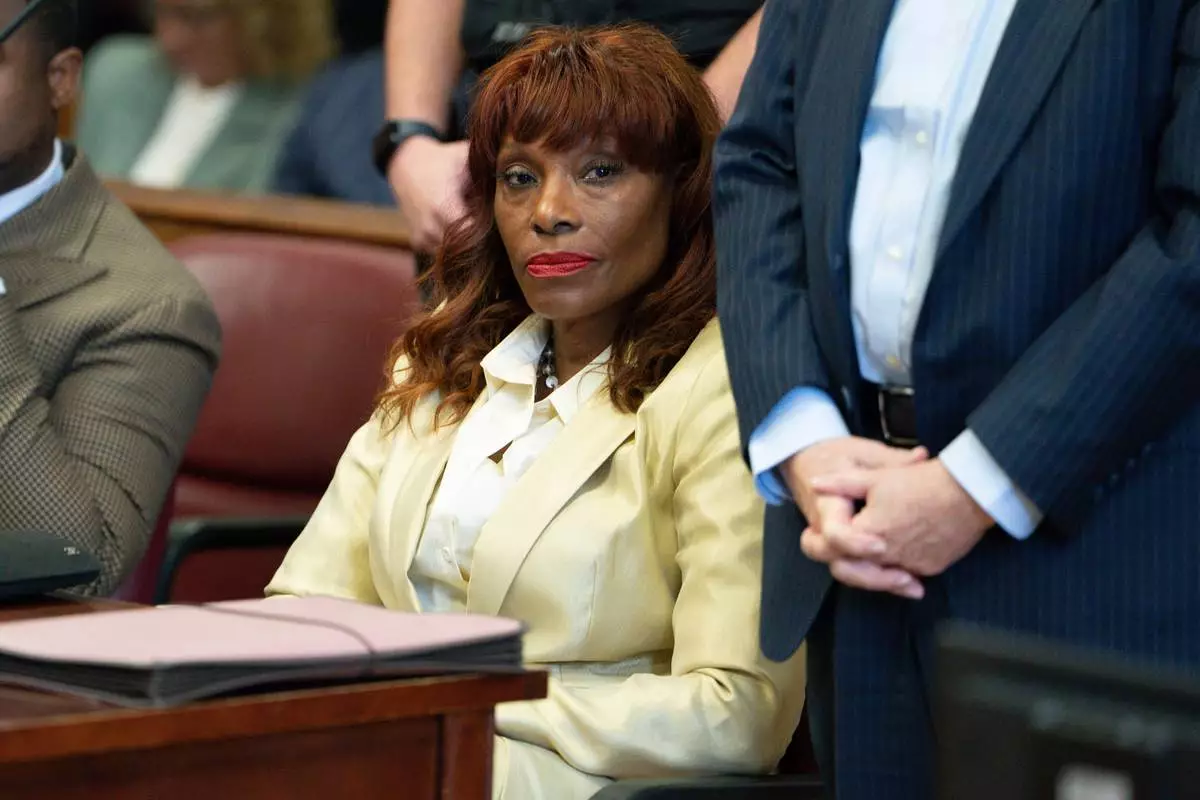
FILE - Former NYC Mayor Eric Adam's Chief of Staff Ingrid Lewis-Martin appears for arraignment on corruption charges in Manhattan criminal court, Aug. 21, 2025, in New York. (Steven Hirsch/New York Post via AP, Pool, File)
VATICAN CITY (AP) — Pope Leo XIV was expected to be admitted to a Rome hospital Tuesday for the removal of a lung nodule in an operation experts say will determine whether the lesion is malignant and if other treatment is needed.
Leo has offered a rare level of transparency about the first publicly disclosed major health problem of his 17-month papacy. He revealed the discovery of the small, localized nodule during his Sunday noon prayer and announced that he would have it removed.
The Vatican said Leo would be admitted to the Gemelli hospital late Tuesday morning, but there was no immediate word on the timing of the operation itself.
The surgery, which is usually performed under general anesthesia, will require a weeklong hospital stay and the Vatican on Monday canceled all Leo’s audiences through Oct. 20.
“These are things that can be treated very well, if the words he used reflect the clinical situation,” said Dr. Lorenzo Spaggiari, director of thoracic surgery at the European Institute of Oncology, or EIO, in Milan, who is not involved in the pope’s care but knows the team at Gemelli.
Spaggiari said he expected the team at Gemelli would perform a biopsy to determine whether Leo has lung cancer followed by the removal of a section or lobe of the lung where the nodule is located.
Both could be done using robotic techniques, and could be performed consecutively, under the same anesthesia, with different specialist teams, Spaggiari said.
A sophisticated robotic bronchoscopy technology called ION allows a biopsy on nodules as small as 3 millimeters (1/10 inch) , Spaggiari said. Both the Gemelli and the EIO have the technology, which has been available in Italy for just two years.
Gemelli also has robotic surgical technology, allowing the operation to remove the nodule to proceed “using a minimally invasive technique,” he said.
The technique involves the surgeon making four small incisions in the chest through which the instruments of the so-called da Vinci robot are inserted, he said. The surgeon then controls the robotic arms looking at a screen providing high-definition, 3D views of the surgical site.
“It’s a very well-established technology. This is something we have been doing for 20 years,” he said.
It wasn't known for certain what technique would be used on Leo. Gemelli has documented using both robotic procedures to diagnose and operate in under four hours.
The biopsy risk is “virtually zero,” while the surgical risk is very small, carrying a 0.6% to 0.8% mortality rate for patients in otherwise good health with good heart and lung function, Spaggiari said.
During the surgery to remove the nodule and part of the lung, doctors would also remove lymph nodes that drain the segment or lobe. “If all those lymph nodes turn out to be negative, so stage one, then the outlook is very good,” he said, adding that no other treatment would be necessary.
The nodule was discovered during regular checks, the Vatican has said, and Spaggiari said the pope has likely undergone other tests before being recommended for surgery.
“I think he has had a bit of luck. They found something that was asymptomatic — a lung nodule, possibly a tumor. He might call it something else; we call it luck,” he said.
EIO advises patients not to fly for three weeks after surgery — which would give the pope just the interval needed to make his planned Nov. 6-17 trip to Peru, Argentina and Uruguay, depending on his recovery.
“I think the Holy Father is in excellent hands at Gemelli,” Spaggiari said. “They have everything needed to keep the Holy Father alive for a long time.”
Leo’s surgery marks the first major health event of his pontificate. It was significant because the pope himself revealed the news, in perhaps the most public way possible: at the end of his Sunday noon blessing, with thousands of people in St. Peter’s Square.
The Vatican has for centuries zealously guarded the pope’s health and has often sent out confusing information, or none at all, about papal illnesses. Pope Francis tried to change that by being upfront about his frailties and musing on his eventual death. But even during his pontificate, information was tightly controlled.
Leo’s decision and reveal suggested an unusual level of transparency by the American pope.
“I really appreciated yesterday at the end of the Angelus, he himself said, ‘This is what’s going on — very transparent — and ask for prayers,’” said Quebec Cardinal Gérald Cyprien Lacroix at the Vatican Monday.
A lung nodule is a small abnormal area measuring less than 3 centimeters (1.2 inches) that sometimes appears on a CT scan of the chest or abdomen. Often, the scans are done to investigate trauma or a lung infection, unrelated to a lung cancer screening. A nodule can be benign or malignant, and oftentimes surgical removal is recommended both to establish whether it is cancer and to treat a malignancy while it is still localized.
Oncologists say even if the nodule turns out to be cancerous, Leo’s prognosis is “excellent” since it will have been removed at an early stage.
Barry reported from Milan.
Associated Press religion coverage receives support through the AP’s collaboration with The Conversation US, with funding from Lilly Endowment Inc. The AP is solely responsible for this content.
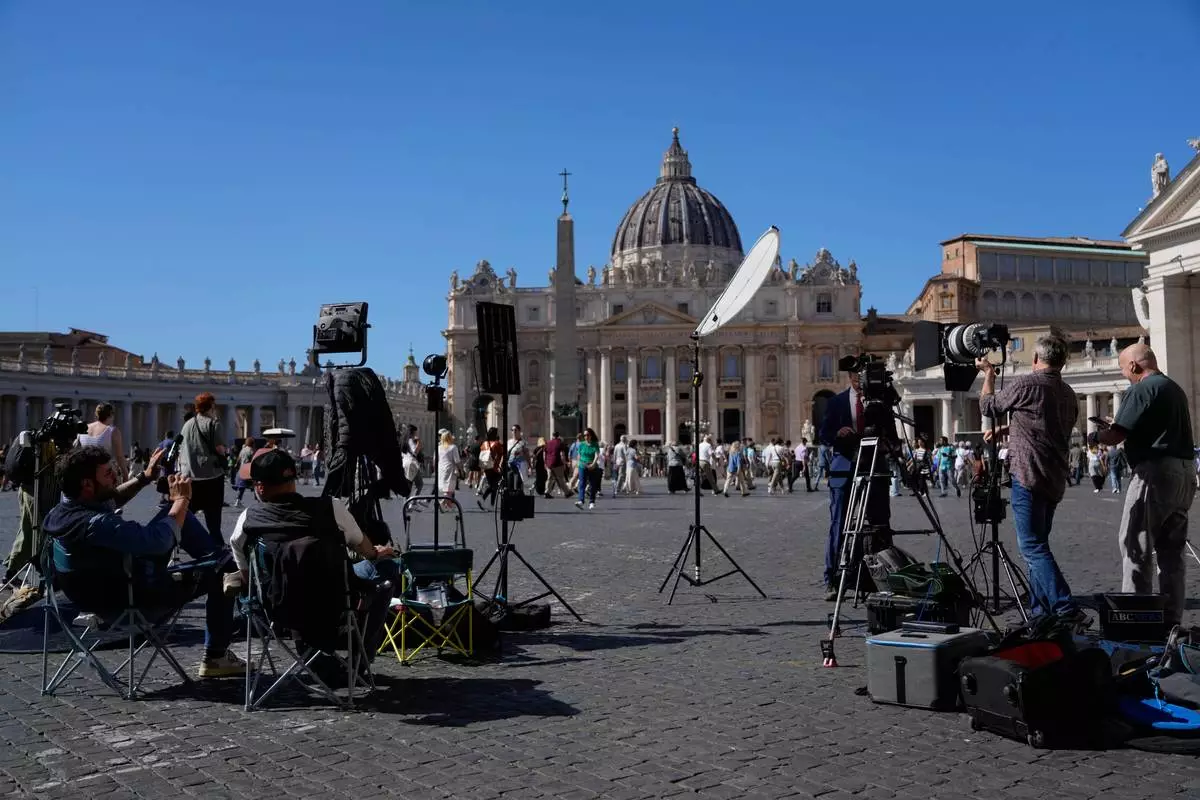
A TV news crew stands outside St. Peter's Square, in Rome, Monday, Oct. 12, 2026. (AP Photo/Gregorio Borgia)
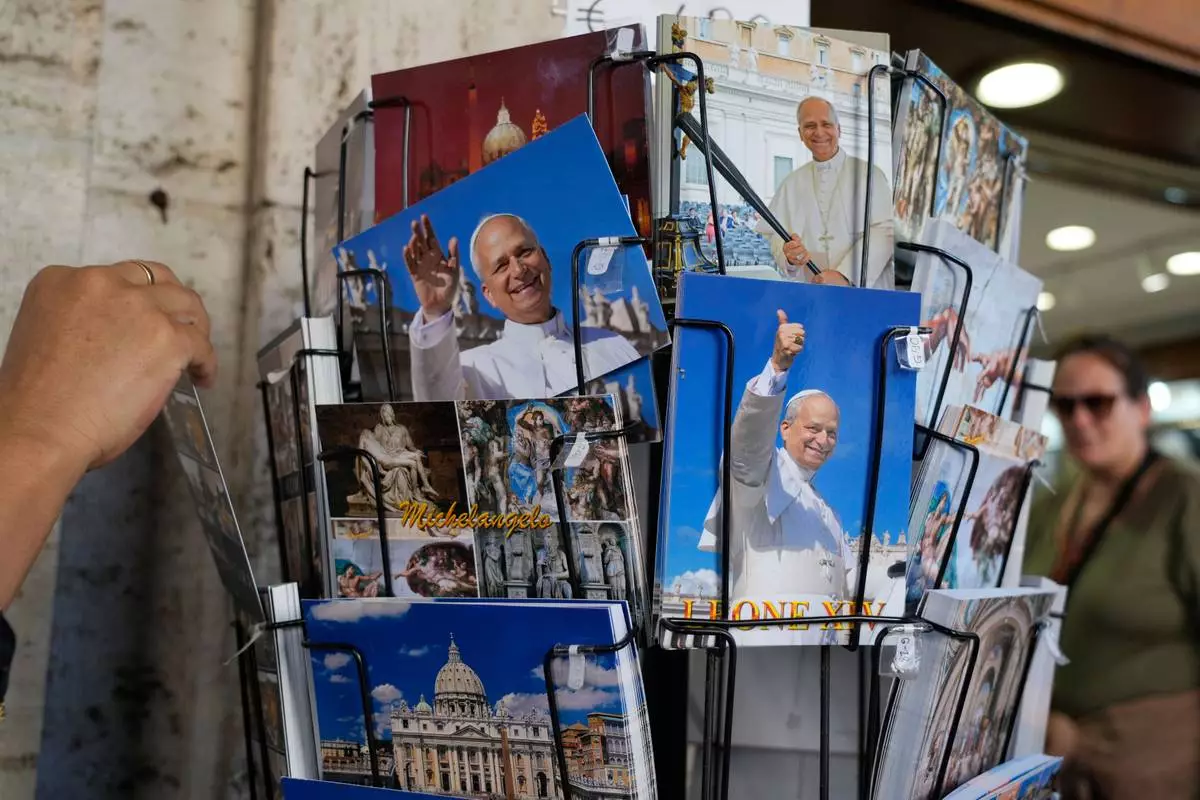
Postcards of Pope Leo XIV are displayed outside a shop selling religious items near St. Peter's Square, in Rome, Monday, Oct. 12, 2026. (AP Photo/Gregorio Borgia)
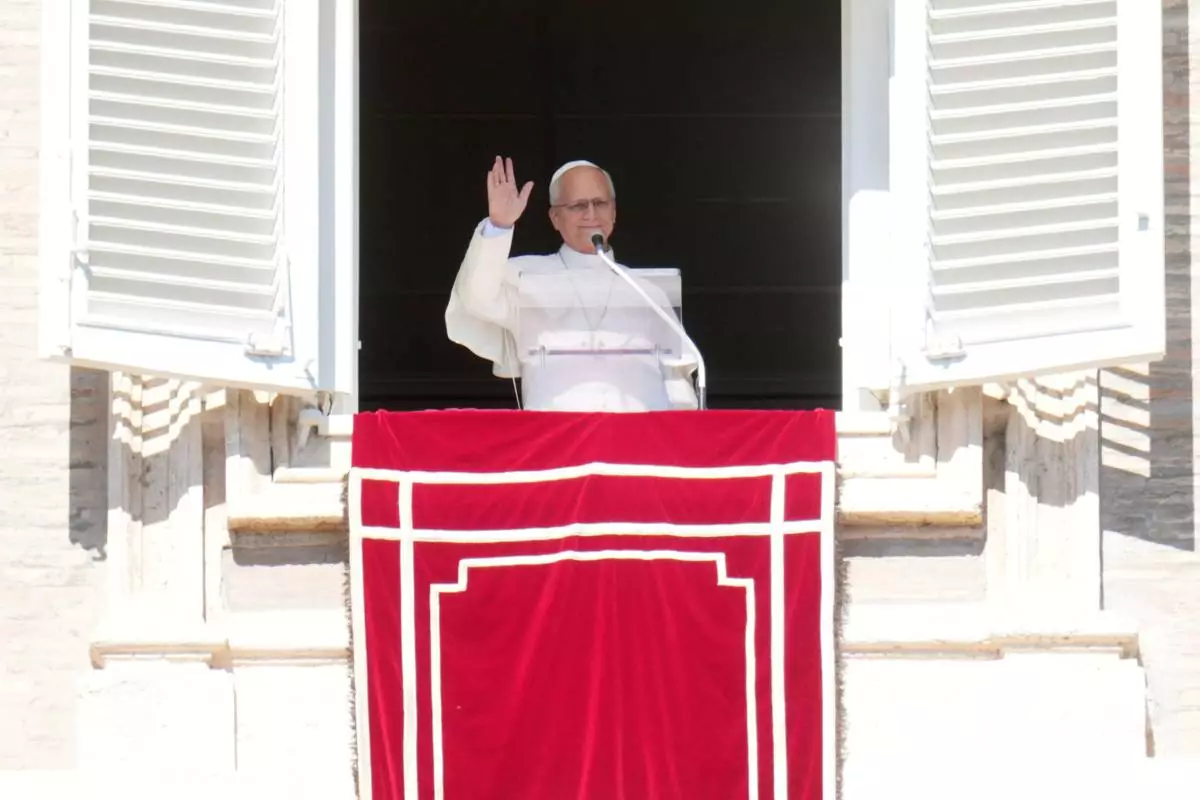
Pope Leo XIV leaves at the end the Angelus prayer in St. Peter's Square at the Vatican, Sunday, Oct. 11, 2026. (AP Photo/Gregorio Borgia)
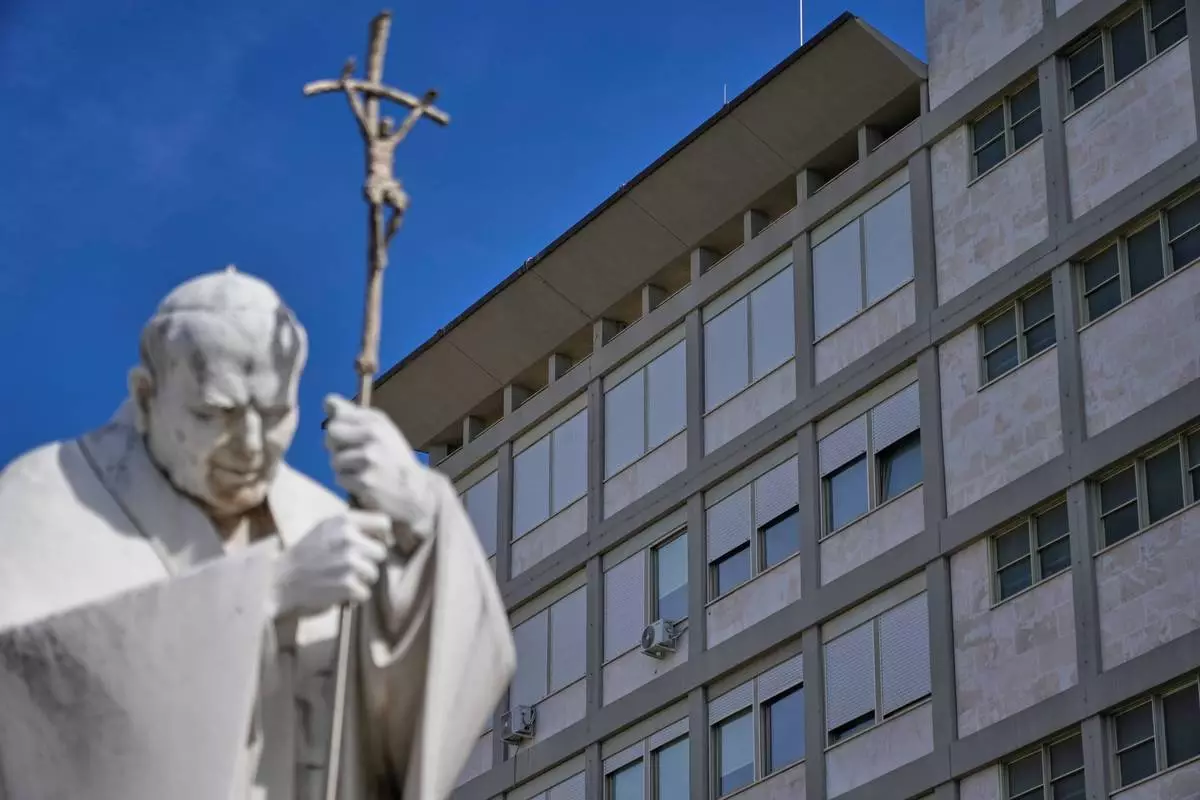
The statue of late Pope John Paul II is pictured at the Agostino Gemelli Polyclinic in Rome, Sunday, Oct. 11, 2026. (AP Photo/Gregorio Borgia)
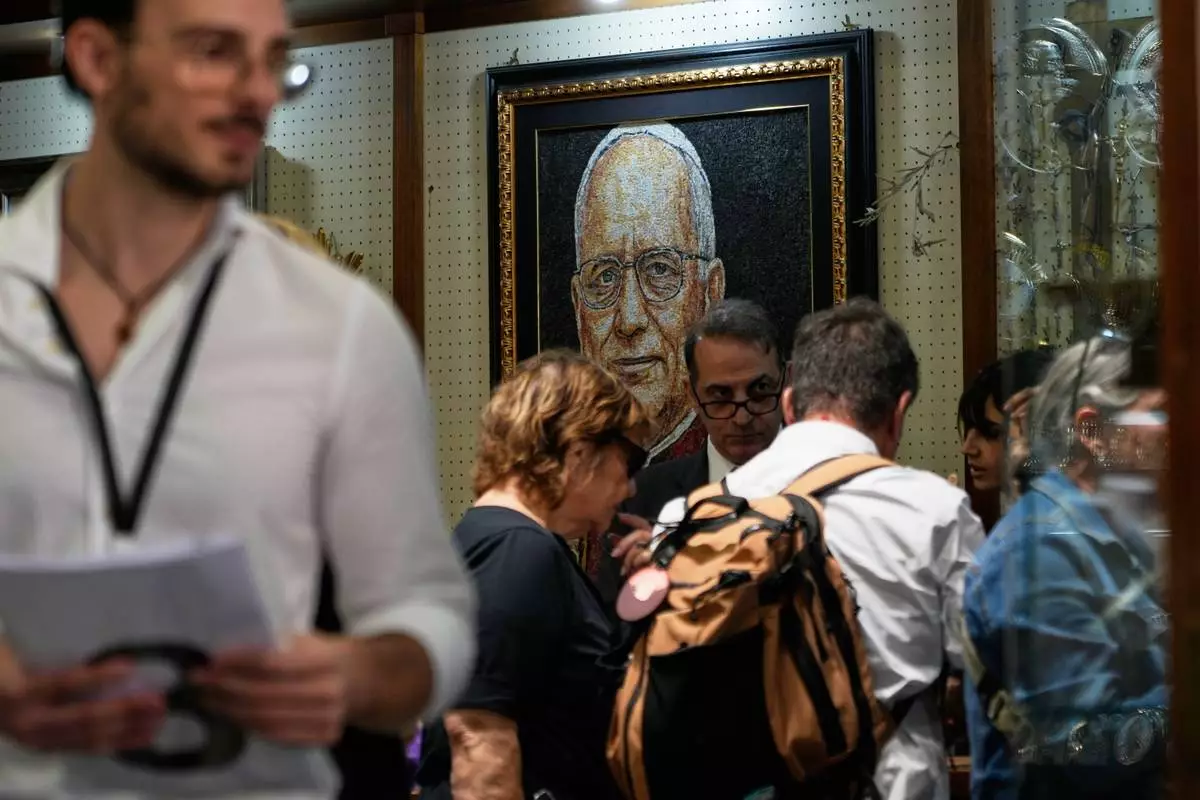
A mosaic of Pope Leo XIV is displayed inside a shop selling religious items near St. Peter's Square, in Rome, Monday, Oct. 12, 2026. (AP Photo/Gregorio Borgia)