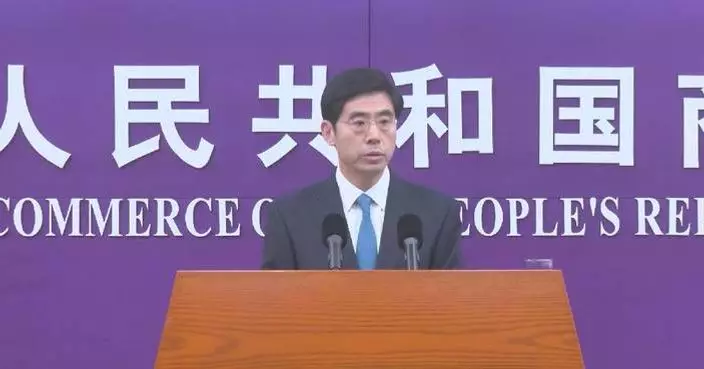
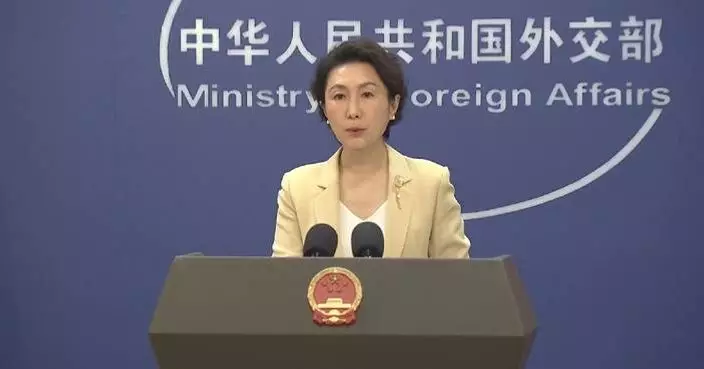
A Chinese mainland spokesperson said on Wednesday that peaceful reunification will create tremendous opportunities for Taiwan's economic and social development.
Backed by a strong motherland, all sectors of Taiwan will be better developed, Zhang Han, the spokesperson for the State Council Taiwan Affairs Office, said at a press conference, taking the high-speed railway as an example.
"The mainland has made remarkable progress in the construction of high-speed railways. Since the start of the 14th Five-Year Plan period (2021-2025), over 12,000 kilometers of high-speed railways have been built and put into operation in the mainland, connecting 128 counties through high-speed rail services. Currently, the total length of high-speed railways has reached 50,400 kilometers, linking 97 percent of the cities having a population of over 500,000. We have built the world's largest and most advanced high-speed railway network. Swiftly running trains help reduce the distance, and allow people to dream bigger. Faraway places now are no longer so far-off. Peaceful reunification will create tremendous opportunities for Taiwan's economic and social development. With the strong backing of the strong motherland, all sectors of Taiwan, including infrastructure, will be better developed. Taiwan compatriots will be able to join their mainland counterparts in sharing the dignity and triumph of our great nation, sharing the fruits of Chinese modernization, and embracing a bright future of prosperity and stability," Zhang said.
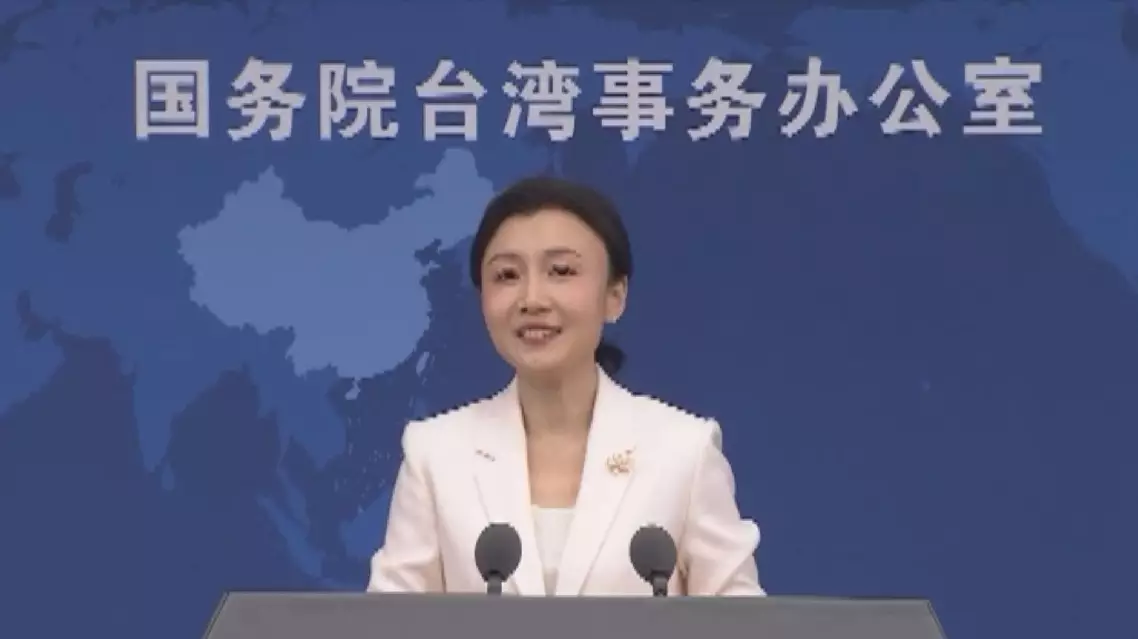
Peaceful reunification to bring opportunities to Taiwan: mainland spokesperson
More than 20 films will hit Chinese screens during the three-day Qingming Festival holiday from Saturday to Monday, spanning genres from revolutionary historical dramas, realism movies to suspense thrillers, according to the China Film Administration on Thursday.
Revolutionary historical films such as Blood-Spattered Cliff, Eight Sons, Eight Soldiers, and Half Of The Quilt, will pay tribute to martyrs through the lens.
Three films -- It's OK, Now I Met Her, and Sunshine Women's Choir -- tell moving stories of love, growth, and reconciliation.
It's OK is a contemporary family comedy that follows a mother and daughter navigating their joyful yet turbulent relationship. Now I Met Her tells a rebellious teenager who gets to know his late mother through her old diary. Sunshine Women's Choir, a film from the Taiwan region of China, portrays the "perfect" maternal love of "imperfect mothers."
The suspense film Game of Identity tells the story of two people from different backgrounds who accidentally swap lives, setting off an unexpected adventure. The documentary films Seeking Nature: The Code of Life, and Missions to the Moon (Part One) explore the connection between humanity and science.
Imported films from different countries, including The Super Mario Bros. Movie 2, Project Hail Mary, and Hoppers, will deliver spectacular cinematic experiences to audiences.
The Qingming Festival, or Tomb-Sweeping Day, falls on April 5 this year. It is a traditional Chinese festival for honoring the deceased and paying tribute to ancestors. The holiday also provides a short break for Chinese citizens as they engage in outdoor activities and sightseeing.
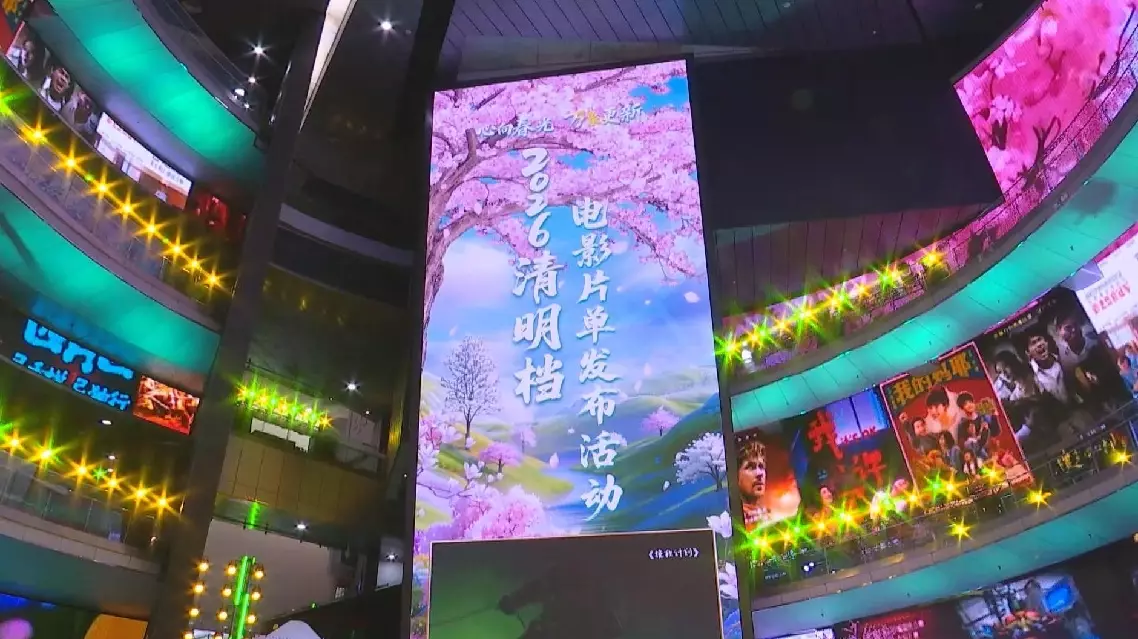
Over 20 films expected to hit Chinese screens during Qingming Festival Holiday