An official of the United Nations Relief and Works Agency for Palestine Refugees (UNRWA) has condemned Israel for demolishing the buildings within the UN agency's East Jerusalem compound.
Israeli authorities stormed the Sheikh Jarrah compound of UNRWA last week. After a full day of demolition, all buildings inside the compound had been flattened or severely damaged. Israeli flags were seen raised at the site, while the United Nations (UN) flag had been taken down.
Olaf Becker, director of UNRWA affairs in Jordan, said the Israeli action gravely violates international law and poses challenges to the operations of UN agencies.
Expressing his deep concerns over Israel's unilateral action, Becker said UNRWA will continue its work in the region and make every effort to ensure that basic public services for Palestinian refugees are not interrupted.
"It's obviously in contravention to international law. It's in contravention to Israel's obligations under the UN Charter as well. While Sheikh Jarrah is highly symbolic, and of course it really impedes our ability for our leadership to operate and coordinate activities. We have offices around the West Bank as well, and we are still operational in those places," Becker said.
Following the demolition, the Israeli Foreign Ministry said in a statement that the compound "does not enjoy any immunity", and that the action complied with the law.
In response, Becker said Israel's denial of the privileges and immunity of UN agencies would directly undermine the legal foundation of the UN system, warning long-term impacts on UN agencies' ability to independently and effectively fulfill their duties within the framework of international law in the Middle East and globally, and worrying consequences for the UN and the multilateral system.
Israel considers all of Jerusalem as its capital, a claim not recognized internationally, while the UN regards East Jerusalem as occupied territory. Israeli officials have long accused UNRWA of employing Hamas members, which the agency denies.
In October 2024, the Israeli parliament passed a law banning UNRWA, which provides desperately-needed aid to Palestinians in Gaza, the West Bank and other areas, from operating in areas under Israeli jurisdiction, and prohibiting Israeli authorities from maintaining contact or cooperation with the agency, a move UNRWA and international bodies say violates international law. Israel then amended the law in December 2025 to ban electricity or water to UNRWA facilities.
Last month, Israeli authorities seized UNRWA's offices in East Jerusalem.
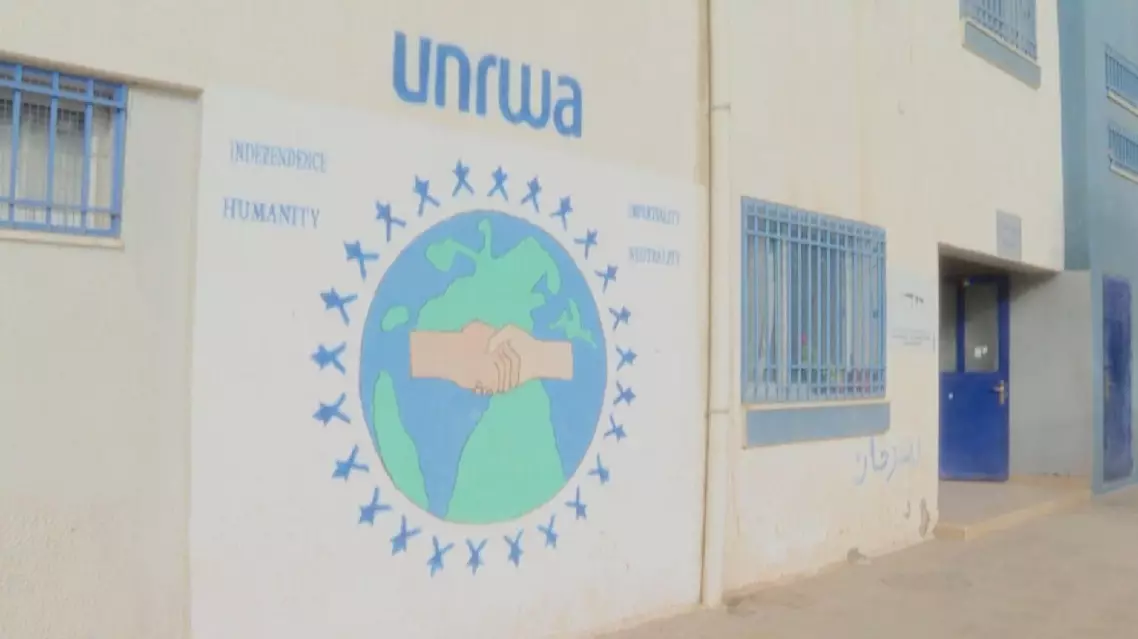
UNRWA official condemns Israeli demolition of agency’s buildings in East Jerusalem

Multiple Middle Eastern countries have recently called on the United States and Iran to resume dialog to solve their differences and work toward de-escalating regional tensions as the U.S. continues to exert pressure on Iran.
During a phone call with Iranian President Masoud Pezeshkian on Tuesday, Saudi Crown Prince and Prime Minister Mohammed bin Salman Al Saud said that Saudi Arabia always respects Iran's sovereignty and will not permit any party to use its airspace or territory to launch military operations or attacks of any kind against Iran, regardless of the intended targets.
Saudi Arabia supports all efforts to resolve differences through dialog to promote regional security and stability, he said.
The United Arab Emirates (UAE) on Monday reaffirmed its commitment not to allow its airspace, territory or waters to be used in any military actions against Iran, according to a statement issued by the UAE Ministry of Foreign Affairs.
The ministry added that the UAE will not provide any logistical support for hostile military operations against Iran.
Egyptian Foreign Minister Badr Abdelatty on Wednesday made separate phone talks with Iranian Foreign Minister Seyed Abbas Araghchi and U.S. President Donald Trump's special envoy Steve Witkoff on the recent regional developments amid the escalated tensions.
Abdelatty stressed the necessity to intensify efforts to reduce escalation and ease tensions, working to prevent the region from sliding into new cycles of instability, according to an Egyptian Foreign Ministry statement.
Abdelatty also stressed the importance of prioritizing diplomatic channels to reach sustainable political solutions that support regional security and stability.
Also on Wednesday, Qatari Prime Minister and Foreign Minister Sheikh Mohammed bin Abdulrahman bin Jassim Al-Thani held a phone conversation with Secretary of Iran's Supreme National Security Council Ali Larijani, emphasizing Qatar's support for resolving differences through peaceful means and easing regional tensions by promoting political solutions to maintain regional security and stability.
Attacking Iran would be wrong and would risk reigniting war, Turkish Foreign Minister Hakan Fidan said, adding that diplomacy remains viable and that Tehran is ready to re-engage on its nuclear file.
"Attacking Iran is wrong. Restarting the war is wrong," Fidan said in an interview with Al Jazeera, parts of which were aired on Wednesday. "When you begin negotiations, Iran is ready to renegotiate the nuclear dossier," he said.
Fidan said he has consistently advised U.S. officials to address issues with Iran step by step, beginning with the nuclear file.
He said that he visited Iran two months earlier and held frank discussions with the Iranian side, emphasizing the need for Tehran to build trust in the region.
Middle Eastern countries urge US, Iran to resolve differences through dialog