More than three weeks after U.S. strikes on military sites in Venezuela, many Caracas residents said the psychological scars remain deep, even as people push forward with everyday routines.
The strikes on January 3 focused on military targets in Caracas, including Fort Tiuna, a major military installation in southwestern Caracas, which includes command centers, and civilian neighborhoods built by the government for low-income families.
The strikes left parts of the complex in ruins, with civilians living nearby experiencing intense fear and disruption.
Yesenia Acevedo, who runs a small convenience store in the residential area of Fort Tiuna, described how business has declined after the attack. Her shop, which had enjoyed steady customers for three years, was forced to close for a week due to safety concerns.
"After the bombing, this area was designated as a war zone. Everyone was forced to evacuate. After the airstrikes on January 3, the number of customers dropped sharply. Some of them were regulars. I think they're afraid and won't come back. If they personally experienced the bombing that day, it must have been a nightmare," said Acevedo.
Emma Chavez, owner of a bakery in the neighborhood, was out of the city when the strikes occurred. Family and employees called to alert her to the chaos.
"When I returned, I felt the vibe here was very strange, full of uncertainty. Everyone was talking about it [the bombing]. Many people came back because they had nowhere else to go, they had to return. Their hearts are filled with fear, even now. But everyone has to look forward and continue with normal life," said Chavez.
Both Acevedo and Chavez condemned the U.S. strikes as illegal and inhumane, while emphasizing the resilience of Venezuelans in the face of adversity.
"It's not so much about believing we can get through the hard times; it's that we have to keep living normally. We have no other choice. Venezuelans are very resilient, we can endure any adversity. Of course, we're afraid, because we don't know what the future holds. Everyone knows the United States is a warlike country, and war is a business for the U.S. But we Latin Americans love peace. For us, war is something from games or movies. I think it's inhumane, I can't imagine anyone thinking it's justified," said Chavez.
"I think all of America's actions toward Venezuela are illegal. The raid has become a turning point in our lives. It's hard to say our lives can return to normal right away, because the psychological trauma is still there. But Venezuelans are tough and unyielding; we always keep moving forward," said Acevedo.
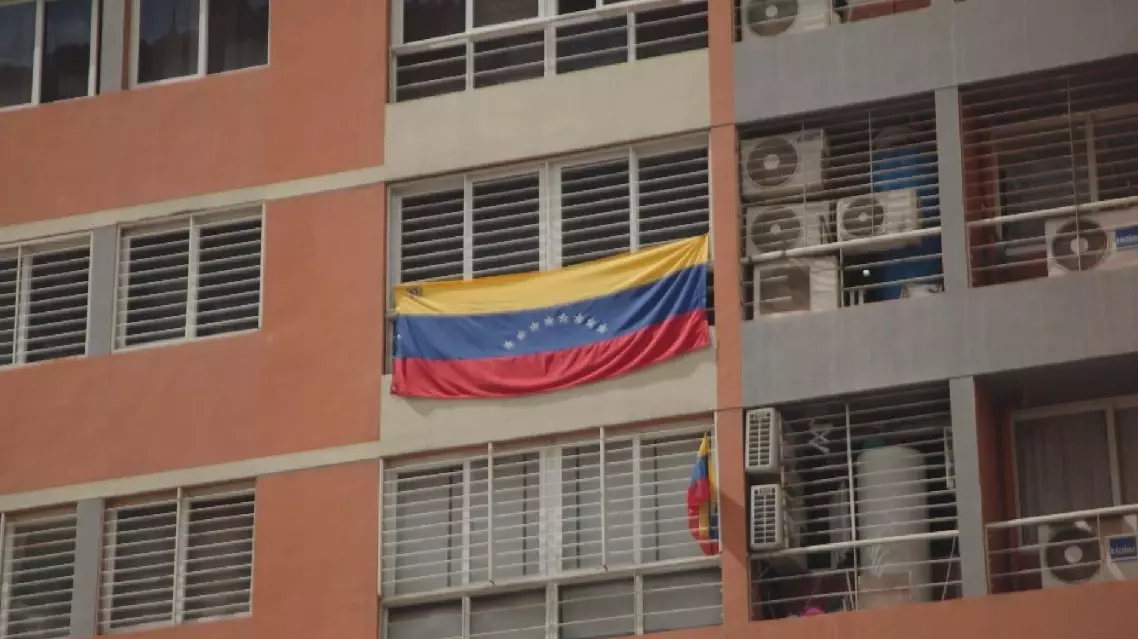
Caracas residents struggle to rebuild life amid lingering trauma from US strikes
Multiple Middle Eastern countries have recently called on the United States and Iran to resume dialog to solve their differences and work toward de-escalating regional tensions as the U.S. continues to exert pressure on Iran.
During a phone call with Iranian President Masoud Pezeshkian on Tuesday, Saudi Crown Prince and Prime Minister Mohammed bin Salman Al Saud said that Saudi Arabia always respects Iran's sovereignty and will not permit any party to use its airspace or territory to launch military operations or attacks of any kind against Iran, regardless of the intended targets.
Saudi Arabia supports all efforts to resolve differences through dialog to promote regional security and stability, he said.
The United Arab Emirates (UAE) on Monday reaffirmed its commitment not to allow its airspace, territory or waters to be used in any military actions against Iran, according to a statement issued by the UAE Ministry of Foreign Affairs.
The ministry added that the UAE will not provide any logistical support for hostile military operations against Iran.
Egyptian Foreign Minister Badr Abdelatty on Wednesday made separate phone talks with Iranian Foreign Minister Seyed Abbas Araghchi and U.S. President Donald Trump's special envoy Steve Witkoff on the recent regional developments amid the escalated tensions.
Abdelatty stressed the necessity to intensify efforts to reduce escalation and ease tensions, working to prevent the region from sliding into new cycles of instability, according to an Egyptian Foreign Ministry statement.
Abdelatty also stressed the importance of prioritizing diplomatic channels to reach sustainable political solutions that support regional security and stability.
Also on Wednesday, Qatari Prime Minister and Foreign Minister Sheikh Mohammed bin Abdulrahman bin Jassim Al-Thani held a phone conversation with Secretary of Iran's Supreme National Security Council Ali Larijani, emphasizing Qatar's support for resolving differences through peaceful means and easing regional tensions by promoting political solutions to maintain regional security and stability.
Attacking Iran would be wrong and would risk reigniting war, Turkish Foreign Minister Hakan Fidan said, adding that diplomacy remains viable and that Tehran is ready to re-engage on its nuclear file.
"Attacking Iran is wrong. Restarting the war is wrong," Fidan said in an interview with Al Jazeera, parts of which were aired on Wednesday. "When you begin negotiations, Iran is ready to renegotiate the nuclear dossier," he said.
Fidan said he has consistently advised U.S. officials to address issues with Iran step by step, beginning with the nuclear file.
He said that he visited Iran two months earlier and held frank discussions with the Iranian side, emphasizing the need for Tehran to build trust in the region.
Middle Eastern countries urge US, Iran to resolve differences through dialog