Multiple foreign companies on Wednesday expressed their continued confidence in the Chinese market and reaffirmed their commitment to expanding investment in China.
At a special exchange session on serving foreign investment during the 15th Five-Year Plan period (2026-2030) in Beijing, representatives from foreign companies said that China's rapid development in fields such as artificial intelligence and biopharmaceuticals have drawn global attention, with its burgeoning innovation capabilities emerging as the core driver attracting sustained foreign investment.
"I think the greatest potential lies in making use of the new economy and innovations for furthering development in various industries. We have plans to continue to develop and grow in China, specifically a plan for a comprehensive integrated medical campus in Beijing," said Roberta Lipson, founder of United Family Healthcare and chair emeritus of the American Chamber of Commerce in China.
"The economy has been changing quite a bit recently, and sectors are emerging like high tech, advanced technologies, and these are all sectors which are very close to the heart of German industry. At the same time, China continues to be an important market by itself and the German industry is happy to be part of that," said Oliver Oehms, executive director and board member of the German Chamber of Commerce in China (north China).
Foreign enterprises said they are paying close attention to the new blueprint outlined in the recommendations for formulating the 15th Five-Year Plan, which is expected to present new opportunities for foreign investment in China.
"We'll be very interested in speaking with authorities responsible for the various plans to understand how we can contribute and how we can benefit from this Five-Year Plan," said Adam Dunnett, secretary general of the European Union Chamber of Commerce in China.
Liu Zhengfu from the China Council for the Promotion of International Trade (CCPIT), organizer of Wednesday's meeting, said more measures will be taken in 2026 to promote foreign investment.
"More and more foreign-funded enterprises are demonstrating through concrete actions that investing in China means investing in the future. In 2026, the CCPIT will further leverage its strengths and adopt multiple measures to help foreign-funded enterprises take root in China for long term development," said Liu, director of CCIPT's development research department.
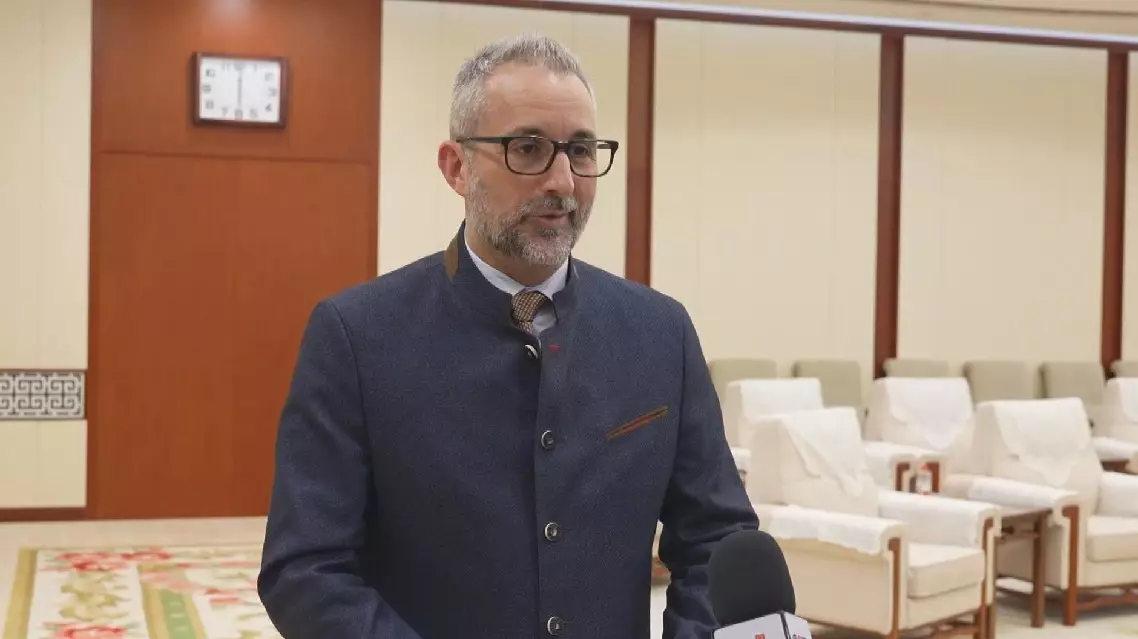
Foreign companies bullish on Chinese market
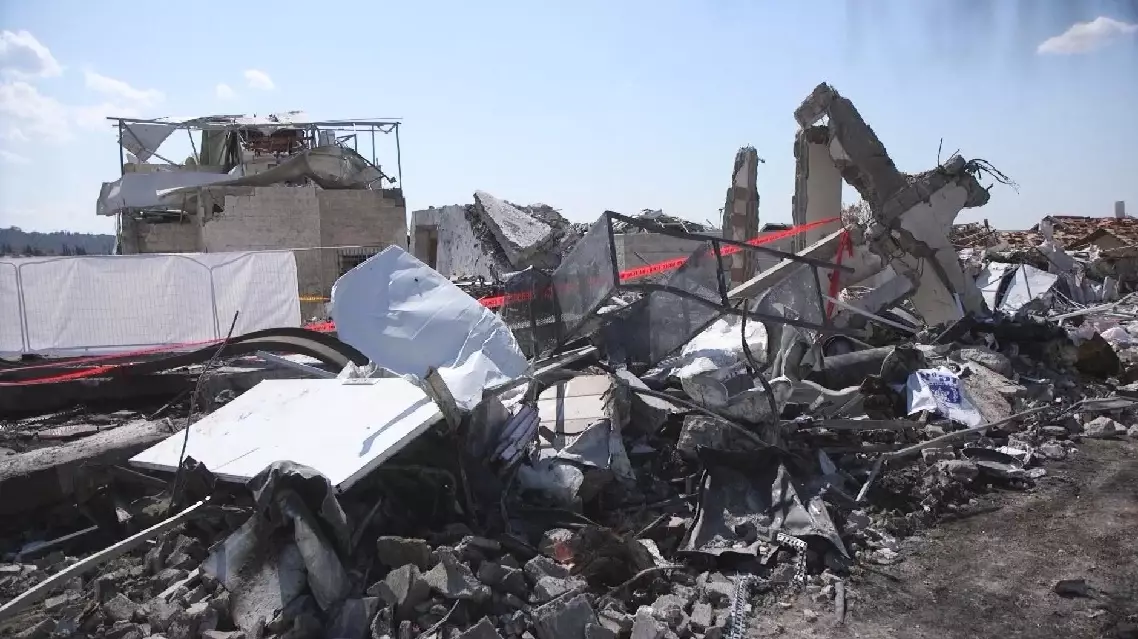
More than three weeks after U.S. strikes on military sites in Venezuela, many Caracas residents said the psychological scars remain deep, even as people push forward with everyday routines.
The strikes on January 3 focused on military targets in Caracas, including Fort Tiuna, a major military installation in southwestern Caracas, which includes command centers, and civilian neighborhoods built by the government for low-income families.
The strikes left parts of the complex in ruins, with civilians living nearby experiencing intense fear and disruption.
Yesenia Acevedo, who runs a small convenience store in the residential area of Fort Tiuna, described how business has declined after the attack. Her shop, which had enjoyed steady customers for three years, was forced to close for a week due to safety concerns.
"After the bombing, this area was designated as a war zone. Everyone was forced to evacuate. After the airstrikes on January 3, the number of customers dropped sharply. Some of them were regulars. I think they're afraid and won't come back. If they personally experienced the bombing that day, it must have been a nightmare," said Acevedo.
Emma Chavez, owner of a bakery in the neighborhood, was out of the city when the strikes occurred. Family and employees called to alert her to the chaos.
"When I returned, I felt the vibe here was very strange, full of uncertainty. Everyone was talking about it [the bombing]. Many people came back because they had nowhere else to go, they had to return. Their hearts are filled with fear, even now. But everyone has to look forward and continue with normal life," said Chavez.
Both Acevedo and Chavez condemned the U.S. strikes as illegal and inhumane, while emphasizing the resilience of Venezuelans in the face of adversity.
"It's not so much about believing we can get through the hard times; it's that we have to keep living normally. We have no other choice. Venezuelans are very resilient, we can endure any adversity. Of course, we're afraid, because we don't know what the future holds. Everyone knows the United States is a warlike country, and war is a business for the U.S. But we Latin Americans love peace. For us, war is something from games or movies. I think it's inhumane, I can't imagine anyone thinking it's justified," said Chavez.
"I think all of America's actions toward Venezuela are illegal. The raid has become a turning point in our lives. It's hard to say our lives can return to normal right away, because the psychological trauma is still there. But Venezuelans are tough and unyielding; we always keep moving forward," said Acevedo.
Caracas residents struggle to rebuild life amid lingering trauma from US strikes