Additionally, MLBB was unveiled as the first title for the inaugural Esports Nations Cup (ENC) 2026 in Saudi Arabia; it will also debut at the 20th Asian Games Aichi-Nagoya 2026 as a medal event. These all ladder up to MLBB Esports' ambitions to reach over 70 regions, stage over 5,000 events, and surpass 600 million Hours Watched (HW) in 2026.
Next: All eyes on Türkiye
The M8 Finals will be hosted in January, 2027, in Türkiye—the first time the M Series takes place in Europe. Meanwhile, the M8 Wild Card will debut in Thailand, which will also mark the country's first M Series event.
Tiger said: "Hosting the M8 World Championship in Türkiye is a defining moment for MLBB Esports. For the first time in M Series history, we're stepping beyond our Southeast Asian strongholds and expanding its footprints in a new region. This move reflects our confidence in the growth of emerging MLBB regions and our focus on integrating them into a broader, connected ecosystem. Strategically, the M8 World Championship shapes MOONTON Games' approach to regional integration and reinforces our vision for a unified, global competitive ecosystem. It also lays the foundation for sustainable, long-term development, positioning MLBB Esports for continued leadership in the years ahead."
Five regions, one unified goal
In 2026, MLBB Esports will transition to a five-region structure—Southeast Asia (SEA); Eastern Europe and Central Asia (EECA); Europe, the Middle East and Africa (EMEA); East Asia (EA); and the Americas (AMER). This framework unifies the global MLBB Esports ecosystem while empowering each region through tailored infrastructure and talent development pathways. At the heart of the plan is the Championship Tour, an intercontinental tournament piloting across AMER, EA, and SEA to elevate regional competition and spotlight emerging talent. The shift to a region-focused model reflects MLBB Esports' ambition to balance local development with global integration, where each region upholds the strength of the global ecosystem.
History made in Indonesia
A double for the history books! The M7 became the most-watched mobile esports tournament in history after twice surpassing the previous record during the tournament. The Grand Finals clash between Aurora Gaming PH (RORA) and Alter Ego (AE) had more than 5.68 million Peak Concurrent Viewers (PCV), according to Esports Charts. The record-breaking viewership cements its presence at the forefront of the global esports entertainment circuit.
Tiger Xu, Global Head of MLBB Esports at MOONTON Games, said: "The M7 has shown what MLBB Esports has grown into—a global ecosystem that unites millions of fans at the same moment. The record-breaking viewership we're celebrating is more than just a milestone; it's a signal of what's to come. As more regions rise and audiences continue to grow, we enter a new phase where MLBB Esports is shaped collectively. Our focus now is on building an ecosystem that connects regions more deeply, supports long-term competitive development, and allows the global community to grow together. This is the foundation for the next chapter of MLBB Esports."
"The record peak shows how quickly mobile esports is growing and attracting mainstream audiences. The tournament also broke multiple viewership records across platforms and regions. This includes new highs for Indonesian, Tagalog, and Malaysian language broadcasts, as well as on TikTok Live. These results set a new benchmark for future mobile esports events," said Artyom Odintsov, co-founder and CEO of Esports Charts.
The tournament took place in Jakarta, Indonesia, from 3 to 25 January. It marked the seventh edition of MLBB's flagship international tournament and its return to the country since the M4. This edition also welcomed global brands, Visa, Red Bull, and realme onboard, highlighting the growing commercial appeal of MLBB Esports.
Launched in 2016 by international video game company MOONTON Games, MLBB enters its 10th anniversary this year as a global gaming phenomenon. Over the past decade, the title has commanded a worldwide playerbase of over 1.5 billion installations and 110 million Monthly Active Users (MAU). Its nine-year-long esports ecosystem has earned the distinction of the world's most popular mobile esports title from Esports Charts every year since 2021.
Hashtag: #MOONTONGames #MLBB #M7
https://en.moonton.com
https://www.linkedin.com/company/moontongames/
The issuer is solely responsible for the content of this announcement.
** The press release content is from Media OutReach Newswire. Bastille Post is not involved in its creation. **
Code4Mzansi highlights the growing strength of South Africa’s developer ecosystem and the role of youth-led innovation in shaping the country’s digital future
JOHANNESBURG, SOUTH AFRICA - Media OutReach Newswire - 26 May 2026 - South Africa’s emerging developers are building close to the ground, with many of the strongest solutions at the inaugural Huawei Code4Mzansi finals focused on systems people use every day: township retail, healthcare, energy, agriculture, payments and the creative economy.
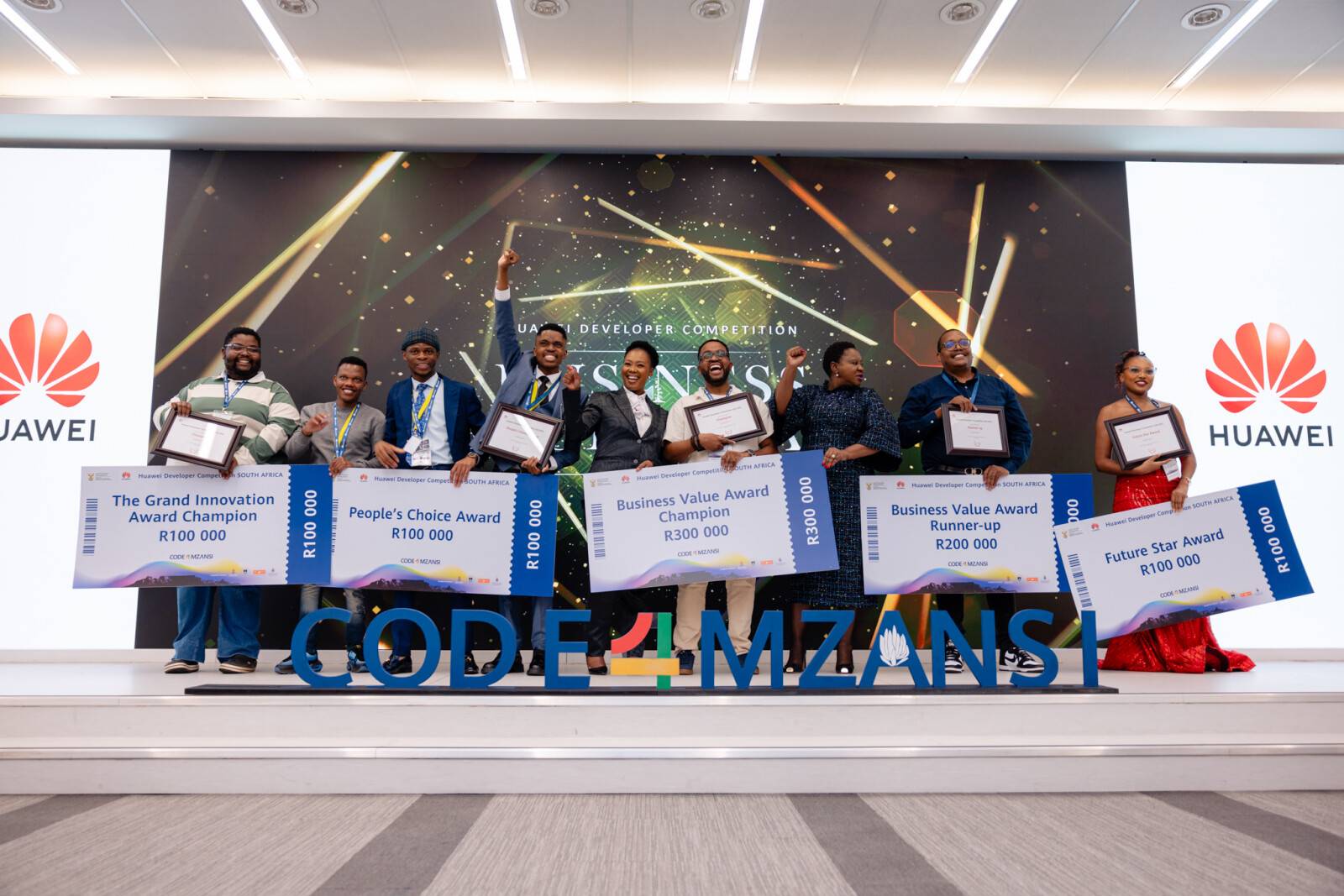 The winners at the Huawei Developer Competition, Code4Mzansi
 The competition was held in partnership with the Department of Small Business Development. "The Code4Mzansi competition is not just a celebration of achievement, it is a launchpad for the future," said Minister Stella Ndabeni, whose department co-hosted the event and delivered the closing address.
The finals revealed a clear shift from building abstract digital products to practical tools that help small businesses trade better, communities access services more easily, and local industries solve problems faster.
Four finalist teams focused directly on the township economy, with solutions covering food safety verification for spaza shops, offline point-of-sale systems built for load-shedding, WhatsApp-native marketplaces for informal retailers, and community credit systems for SASSA grant recipients.
Others addressed AI-driven healthcare access, electricity theft detection, smart agriculture, financial infrastructure for the creator economy, and AI-generated African music.
Held at Huawei Office Park in Woodmead, the finals brought together more than 100 attendees, including government representatives, academic partners, industry leaders and media.
"The quality of the finalist solutions demonstrated the potential of local innovation to respond to real market needs," said Steven Chen, Cloud CEO of Huawei Technologies South Africa.
Academic partners included the University of Pretoria, the University of Johannesburg, the University of the Witwatersrand and the University of Cape Town.
"Small businesses are the backbone of our economy, and technology is their greatest accelerator. The participants here today are future entrepreneurs who will drive South Africa's digital economy forward," said Professor Thokozani Shongwe, Vice Dean of Postgraduate Studies, Research and Internationalisation at the University of Johannesburg's Faculty of Engineering and the Built Environment.
Industry partner rain also attended. Leon Nortje, Principal and Senior Architect at rain, said the competition offered a strong view of the country’s emerging technology pipeline.
"It is always good to see new projects and new teams working on solutions that are valuable and industry-related. We will be looking out for potential new employees," said Nortje.
The winners
The finalists competed for a prize pool of R800,000. MAAT by SIMVAK was named the overall grand winner and received the Business Value Award, taking home R300,000. The platform addresses food safety and regulatory compliance in South Africa’s informal retail sector through AI agents, real-time product recall alerts, and counterfeit detection for the spaza shop ecosystem.
"The spaza network is the supply chain for most South African households," said SIMVAK founder Shingirayi Mandebvu.
HealthHive by FTCK received second prize in the Business Value Award category, taking home R200,000, for its AI telemedicine platform that matches patients with the right medical practitioners based on their symptoms.
Auraa received the Grand Innovation Award for its AI music engine built to generate authentic African sound. The platform has been associated with an album that has crossed one million streams.
The Future Star Award went to e-Khadi, a community credit and stokvel platform giving SASSA grant recipients access to essentials at their local spaza shops, supported by AI-assisted credit scoring and fraud detection.
The People’s Choice Award, voted by the public on Huawei’s social media channels, went to DevRift, a semi-finalist in the competition, who took home R100,000.
Minister Ndabeni delivered the closing address, positioning Code4Mzansi within the government’s agenda for youth entrepreneurship, small business development and digital inclusion.
"Our task is to ensure that innovation does not remain a moment of applause, but becomes a pathway to enterprise creation, digital inclusion, and sustainable growth," she said.
"Thank you to Huawei for being a perfect partner on the journey that we are travelling, and of course, those that matter most, the developers who dared to compete," she said.
Code4Mzansi forms part of the global Huawei Cloud Developer Competition. In its inaugural edition, South Africa attracted more participants than any other country: 1,041 across 353 teams, including 176 enterprise teams, resulting in the highest enterprise participation rate among all competing markets. Twenty semi-finalists were selected before the top nine advanced to the final.
For the finalists, the work is just beginning. As Minister Ndabeni said, "Go home today proud. But tomorrow, wake up, build again."
Hashtag: #Huawei #Code4Mzansi #SouthAfrica
https://www.huawei.com/za/
https://www.linkedin.com/company/Huawei
https://twitter.com/HuaweiSAR
https://www.facebook.com/HuaweiSAR
http://www.google.com/+Huawei
http://www.youtube.com/Huawei
The issuer is solely responsible for the content of this announcement.
About Huawei
Founded in 1987, Huawei is a leading global provider of information and communications technology (ICT) infrastructure and smart devices. With 213,000 employees operating in over 170 countries, we serve more than three billion people worldwide.
Huawei is committed to bringing digital to every person, home, and organisation for a fully connected, intelligent world. In 2025, Huawei generated CNY880.9 billion in revenue, reinvesting 21.8% (CNY192.3 billion) into R&D, with about 53.7% of its employees working in R&D. As a private company fully owned by its employees, Huawei focuses on customer-centric innovation and open collaboration to create lasting value and drive technological breakthroughs globally.
For more information, please visit Huawei online at www.huawei.com or follow us on:
http://www.huawei.com/za/
https://twitter.com/HuaweiSAR
https://www.facebook.com/HuaweiSAR
http://www.linkedin.com/company/Huawei
http://www.google.com/+Huawei
http://www.youtube.com/Huawei
JOHANNESBURG, SOUTH AFRICA - Media OutReach Newswire - 26 May 2026 - South Africa’s emerging developers are building close to the ground, with many of the strongest solutions at the inaugural Huawei Code4Mzansi finals focused on systems people use every day: township retail, healthcare, energy, agriculture, payments and the creative economy.
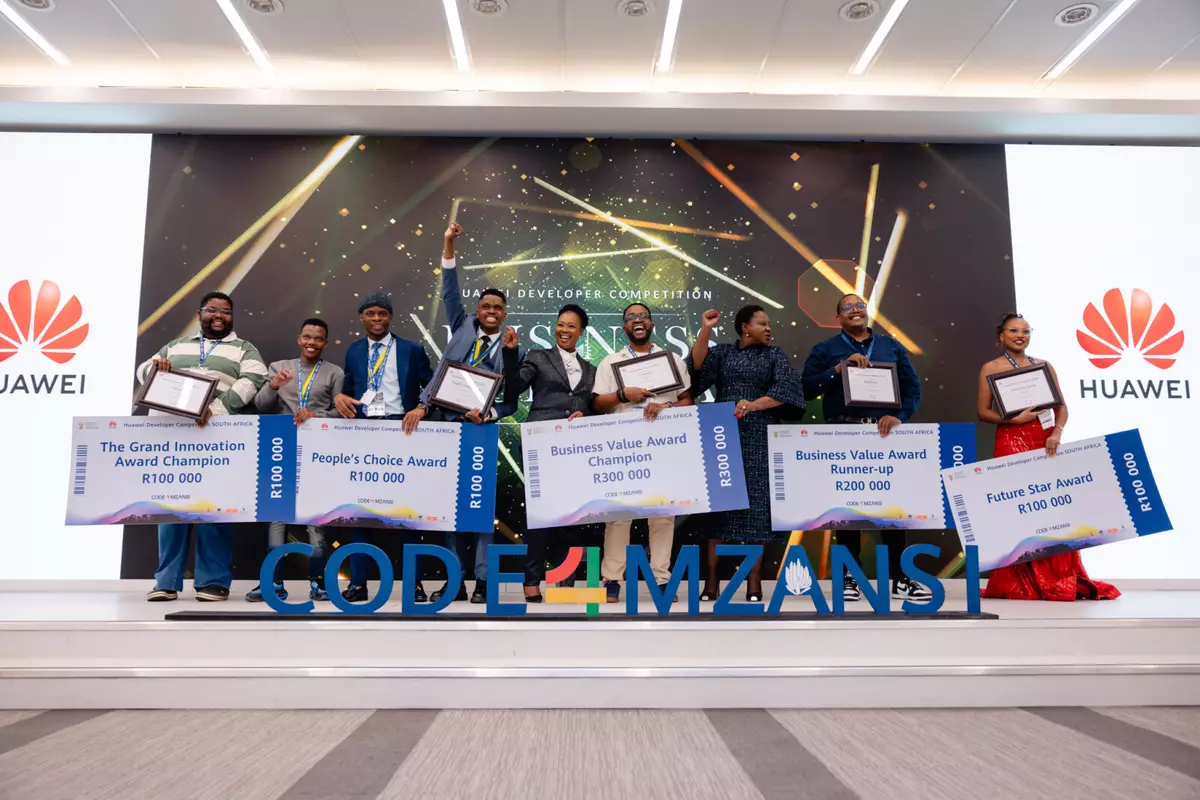
The winners at the Huawei Developer Competition, Code4Mzansi
The competition was held in partnership with the Department of Small Business Development. "The Code4Mzansi competition is not just a celebration of achievement, it is a launchpad for the future," said Minister Stella Ndabeni, whose department co-hosted the event and delivered the closing address.
The finals revealed a clear shift from building abstract digital products to practical tools that help small businesses trade better, communities access services more easily, and local industries solve problems faster.
Four finalist teams focused directly on the township economy, with solutions covering food safety verification for spaza shops, offline point-of-sale systems built for load-shedding, WhatsApp-native marketplaces for informal retailers, and community credit systems for SASSA grant recipients.
Others addressed AI-driven healthcare access, electricity theft detection, smart agriculture, financial infrastructure for the creator economy, and AI-generated African music.
Held at Huawei Office Park in Woodmead, the finals brought together more than 100 attendees, including government representatives, academic partners, industry leaders and media.
"The quality of the finalist solutions demonstrated the potential of local innovation to respond to real market needs," said Steven Chen, Cloud CEO of Huawei Technologies South Africa.
Academic partners included the University of Pretoria, the University of Johannesburg, the University of the Witwatersrand and the University of Cape Town.
"Small businesses are the backbone of our economy, and technology is their greatest accelerator. The participants here today are future entrepreneurs who will drive South Africa's digital economy forward," said Professor Thokozani Shongwe, Vice Dean of Postgraduate Studies, Research and Internationalisation at the University of Johannesburg's Faculty of Engineering and the Built Environment.
Industry partner rain also attended. Leon Nortje, Principal and Senior Architect at rain, said the competition offered a strong view of the country’s emerging technology pipeline.
"It is always good to see new projects and new teams working on solutions that are valuable and industry-related. We will be looking out for potential new employees," said Nortje.
The winners
The finalists competed for a prize pool of R800,000. MAAT by SIMVAK was named the overall grand winner and received the Business Value Award, taking home R300,000. The platform addresses food safety and regulatory compliance in South Africa’s informal retail sector through AI agents, real-time product recall alerts, and counterfeit detection for the spaza shop ecosystem.
"The spaza network is the supply chain for most South African households," said SIMVAK founder Shingirayi Mandebvu.
HealthHive by FTCK received second prize in the Business Value Award category, taking home R200,000, for its AI telemedicine platform that matches patients with the right medical practitioners based on their symptoms.
Auraa received the Grand Innovation Award for its AI music engine built to generate authentic African sound. The platform has been associated with an album that has crossed one million streams.
The Future Star Award went to e-Khadi, a community credit and stokvel platform giving SASSA grant recipients access to essentials at their local spaza shops, supported by AI-assisted credit scoring and fraud detection.
The People’s Choice Award, voted by the public on Huawei’s social media channels, went to DevRift, a semi-finalist in the competition, who took home R100,000.
Minister Ndabeni delivered the closing address, positioning Code4Mzansi within the government’s agenda for youth entrepreneurship, small business development and digital inclusion.
"Our task is to ensure that innovation does not remain a moment of applause, but becomes a pathway to enterprise creation, digital inclusion, and sustainable growth," she said.
"Thank you to Huawei for being a perfect partner on the journey that we are travelling, and of course, those that matter most, the developers who dared to compete," she said.
Code4Mzansi forms part of the global Huawei Cloud Developer Competition. In its inaugural edition, South Africa attracted more participants than any other country: 1,041 across 353 teams, including 176 enterprise teams, resulting in the highest enterprise participation rate among all competing markets. Twenty semi-finalists were selected before the top nine advanced to the final.
For the finalists, the work is just beginning. As Minister Ndabeni said, "Go home today proud. But tomorrow, wake up, build again."
Hashtag: #Huawei #Code4Mzansi #SouthAfrica
https://www.huawei.com/za/
https://www.linkedin.com/company/Huawei
https://twitter.com/HuaweiSAR
https://www.facebook.com/HuaweiSAR
http://www.google.com/+Huawei
http://www.youtube.com/Huawei
The issuer is solely responsible for the content of this announcement.
About Huawei
Founded in 1987, Huawei is a leading global provider of information and communications technology (ICT) infrastructure and smart devices. With 213,000 employees operating in over 170 countries, we serve more than three billion people worldwide.
Huawei is committed to bringing digital to every person, home, and organisation for a fully connected, intelligent world. In 2025, Huawei generated CNY880.9 billion in revenue, reinvesting 21.8% (CNY192.3 billion) into R&D, with about 53.7% of its employees working in R&D. As a private company fully owned by its employees, Huawei focuses on customer-centric innovation and open collaboration to create lasting value and drive technological breakthroughs globally.
For more information, please visit Huawei online at www.huawei.com or follow us on:
http://www.huawei.com/za/
https://twitter.com/HuaweiSAR
https://www.facebook.com/HuaweiSAR
http://www.linkedin.com/company/Huawei
http://www.google.com/+Huawei
http://www.youtube.com/Huawei
** This press release is distributed by Media OutReach Newswire through automated distribution system, for which the client assumes full responsibility. **