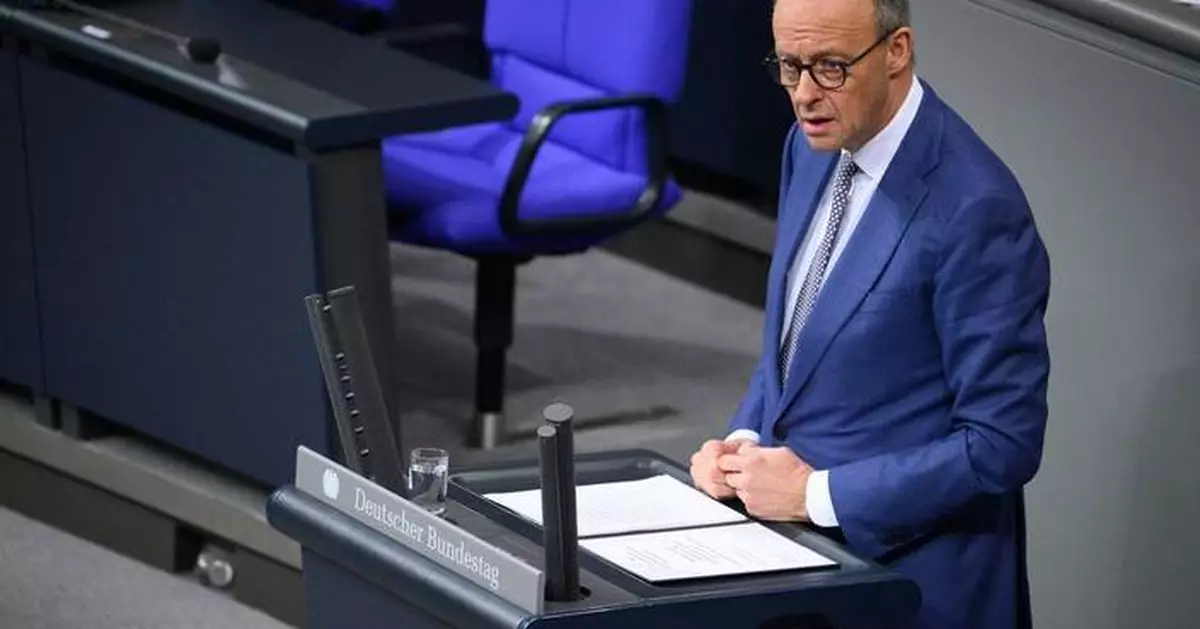
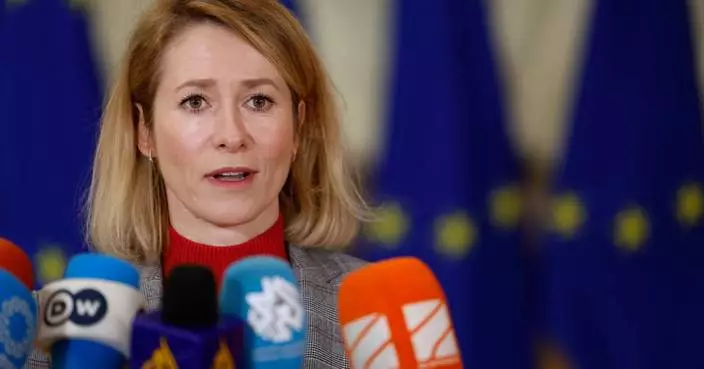
BERLIN (AP) — German Chancellor Friedrich Merz hailed the European Union on Thursday as an “alternative to imperialism and autocracy” that can forge deals with like-minded partners in a world of increasing great power rivalry.
Merz underlined the continuing value of a NATO in which Europe will intensify its defense efforts, and said it will always seek cooperation with the United States — but not as a “subordinate.” He also joined other European leaders in pushing back against U.S. President Donald Trump's assertion that troops from non-U.S. NATO countries avoided the front line during the war in Afghanistan.
Merz spoke to the German parliament about foreign policy a week after Trump withdrew a threat of new tariffs against Germany and seven other European countries to press for U.S. control over Greenland, a semiautonomous territory of NATO ally and EU member Denmark.
“We are seeing increasingly clearly in the last few weeks that a world of great powers is beginning to form,” Merz said. “A harsh wind is blowing in this world, and we will be feeling it for the foreseeable future.”
But that also opens opportunities for Europe, he said, as democracies with open and growing markets “seek what we have to offer them, namely partnerships on the basis of mutual respect, trust and reliability.”
“We should not underestimate how attractive this European model can be for new partners and new alliances,” Merz told lawmakers. “We are also a normative alternative to imperialism and autocracy in the world.”
He emphasized the value of unity in the sometimes fractious 27-nation EU, saying the bloc had shown last week that it could act fast. “We agreed that we would not be intimidated again by tariff threats,” he said.
But he said that Europe also needs to “learn the language of power politics” to assert itself in a changing world, for example by taking greater responsibility for its security, striving for greater “technological independence” and boosting its economic growth.
Merz is a strong backer of the EU making more trade deals, including one with South America's Mercosur bloc and another struck this week with India.
While seeking new alliances, “it is also clear for us and for me that we should not carelessly jeopardize existing alliances,” Merz said, adding that “trans-Atlantic trust is a value in itself even today.”
He said that Europeans want to preserve NATO and make it stronger, and “we will always reach out the hand of cooperation to the United States of America.”
“At the same time, the basis of this guiding principle remains ... as democracies, we are partners and allies and not subordinates,” he added.
Merz noted that 59 German troops died in Afghanistan during the country's nearly 20-year deployment in Afghanistan, and well over 100 were wounded.
He did not directly reference an interview by Trump last week when the president said he wasn’t sure the other 31 nations in NATO would be there to support the United States if and when requested and that troops from those countries stayed “a little off the front lines" in Afghanistan.
Merz said that “we will not allow this deployment, which we also performed in the interest of our ally, the United States of America, to be disparaged and demeaned today.”
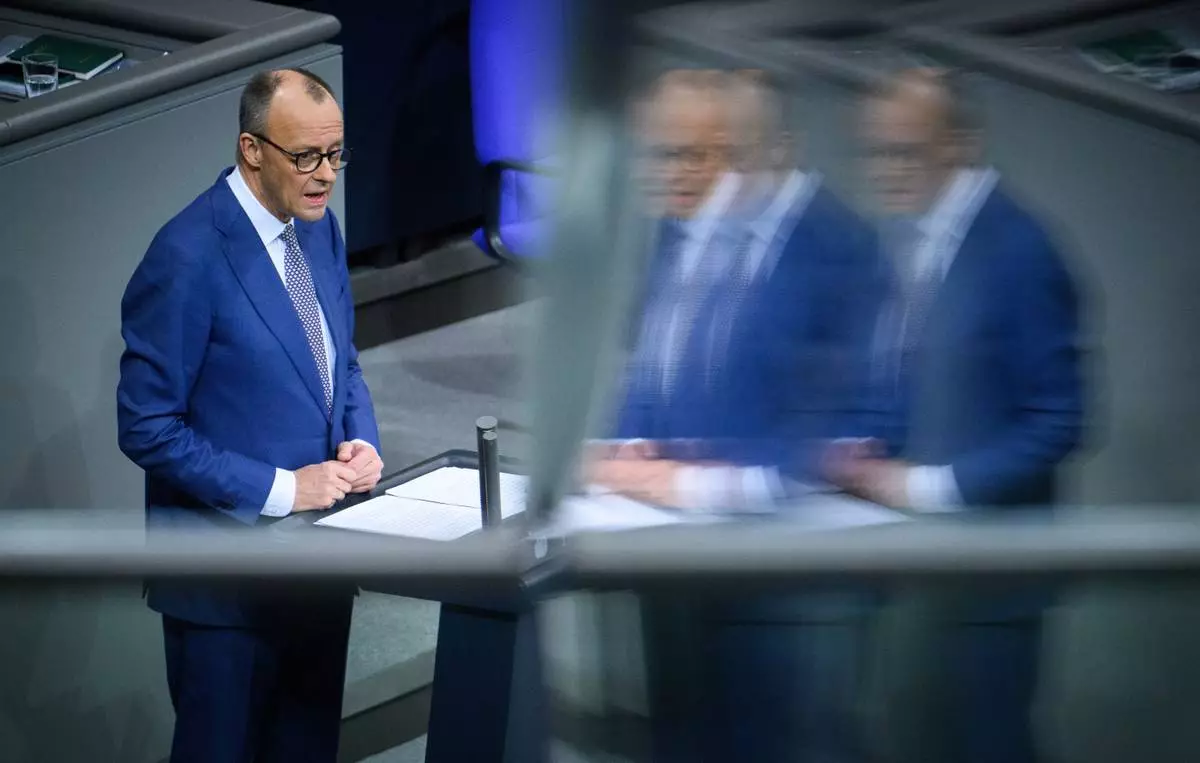
German Chancellor Friedrich Merz makes a government statement on the current foreign policy situation in the German Bundestag, Berlin, Thursday, Jan. 29, 2026. (Bernd von Jutrczenka/dpa via AP)
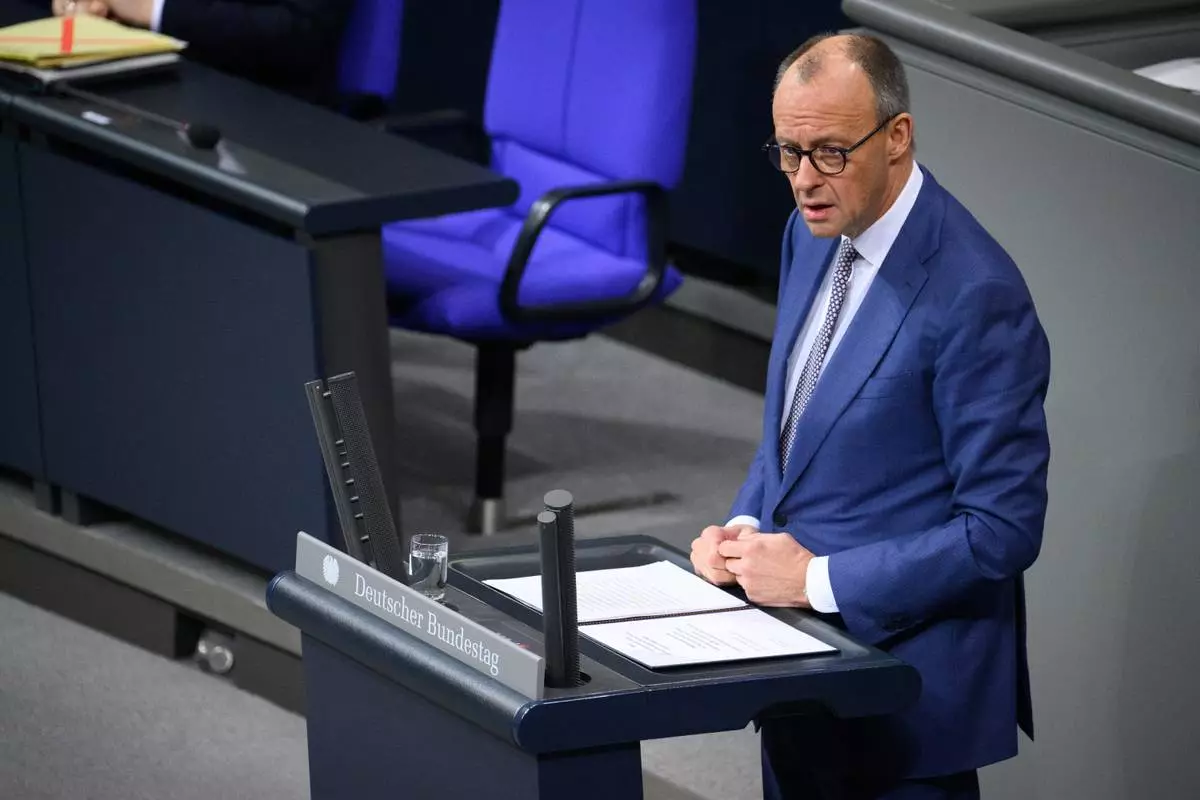
German Chancellor Friedrich Merz makes a government statement on the current foreign policy situation in the 56th plenary session of the 21st legislative period in the German Bundestag, in Berlin, Thursday Jan. 29, 2026. (Bernd von Jutrczenka/dpa via AP)
CAPE TOWN, South Africa (AP) — More than $1 million in fines and bans for Senegal and Morocco have followed a shambolic Africa Cup final this month that FIFA condemned and Africa’s soccer body called unacceptable.
The bans apply only to Africa games and not the World Cup kicking off in June that Senegal and Morocco have both qualified for.
In the Jan. 18 final in Rabat won by Senegal 1-0 in extra time, Senegal left the field in protest during stoppage time for 15 minutes, fans tried to storm the field and fighting broke out among journalists afterward.
The Senegalese Football Association was fined $615,000 in total, the Moroccan Football Association was fined $315,000 in total, and Senegal coach Pape Thiaw fined $100,000 and suspended for five Africa games for bringing the game into disrepute, the Confederation of African Football said on Wednesday.
Senegal players Iliman Ndiaye and Ismaila Sarr were banned for two African games, Morocco’s Achraf Hakimi banned for two games with one suspended, and Morocco’s Ismael Saibari banned for three games and fined $100,000 for unsporting behavior.
Senegal was angered in stoppage time of a 0-0 draw when Morocco was awarded a penalty. Thiaw led a walk-off by his players and delayed the game for 15 minutes. Morocco missed the penalty and Senegal scored the only goal in extra time.
Beside supporters jumping the barricades and players from both side scuffling on the sidelines, there was a bizarre sequence in which Moroccan ball boys attempted to seize a towel belonging to Senegal goalkeeper Edouard Mendy in an apparent bid to distract him. That behavior by the ball boys alone led to a $200,000 fine for Morocco.
Morocco coach Walid Regragui said the Africa Cup final gave African soccer a “shameful” image. The incidents also reflected badly on Morocco, which will co-host the 2030 World Cup alongside Spain and Portugal. FIFA president Gianni Infantino called the Africa Cup incidents ugly and expected sanctions from CAF.
Morocco was hoping to host the 2030 World Cup final at the under-construction Hassan II Stadium, set to be the largest soccer arena in the world with a capacity of 115,000 after its planned completion in 2028. Spain said this week it will host the 2030 final.
CAF dismissed an appeal by Morocco to have the result canceled and Morocco declared the winner because of the Senegalese walk-off.
The game even strained diplomatic ties between Senegal and Morocco and prompted political officials in the nations to pledge to stay friends and call for calm. In Morocco, rights groups denounced what they called hate speech targeting sub-Saharan African residents in the country.
Senegal Prime Minister Ousmane Sonko said on an investment-related trip to Morocco days after the final that the reaction to it should be seen as “emotional outbursts produced by fervour and not as political or cultural rifts.”
This story has been corrected to show that the Africa Cup final was on Jan. 18 and not Jan. 23.
AP soccer: https://apnews.com/hub/soccer

Senegal's Sadio Mane holds the trophy aloft as he celebrates with teammates after winning the Africa Cup of Nations final soccer match between Senegal and Morocco in Rabat, Morocco, Sunday, Jan. 18, 2026. (AP Photo/Youssef Loulidi)
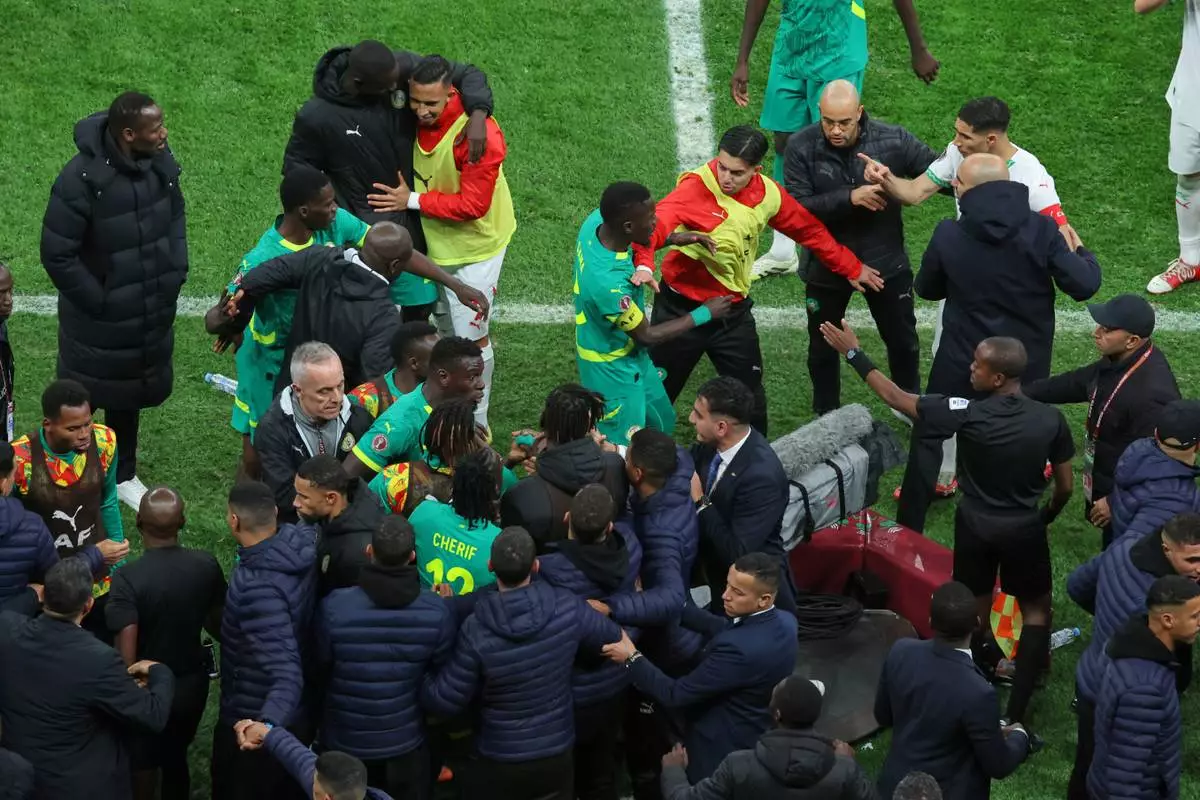
Players from both sides clash after a controversial penalty was awarded to Morocco late on during the Africa Cup of Nations final soccer match between Senegal and Morocco in Rabat, Morocco, Sunday, Jan. 18, 2026. (AP Photo/Youssef Loulidi)
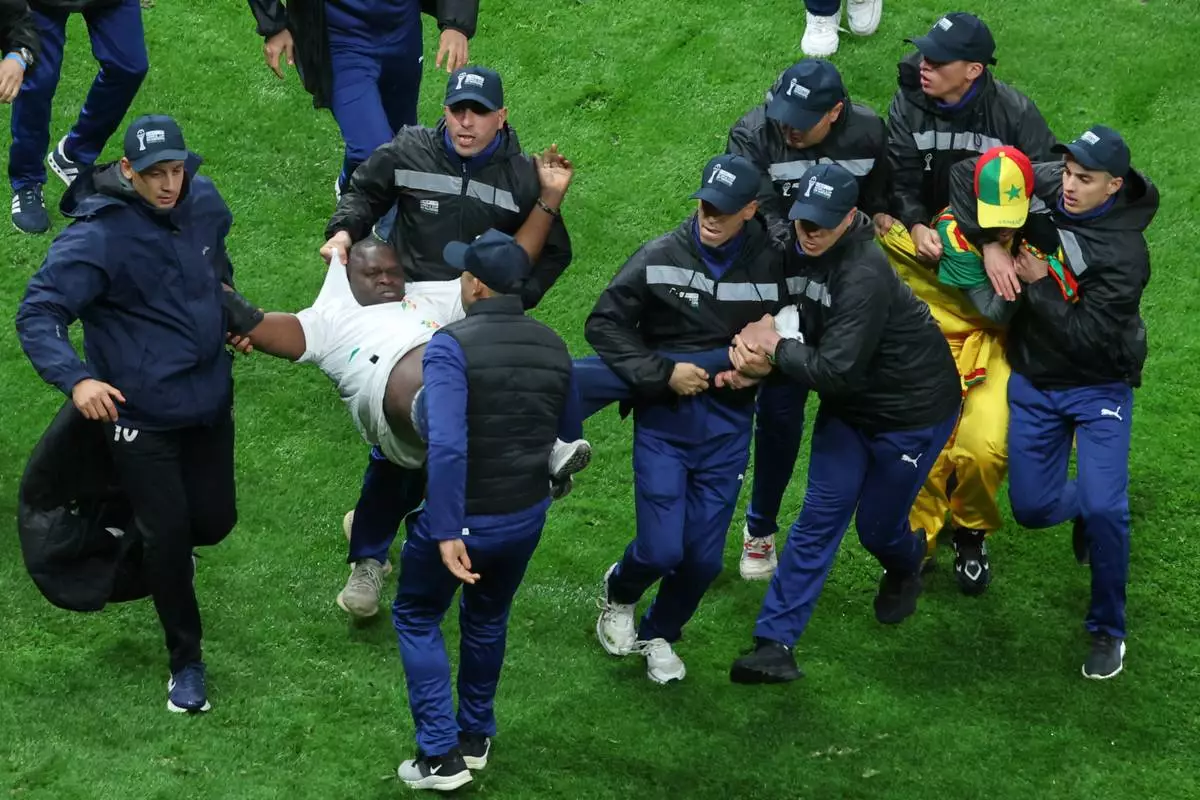
Senegal supporters are taken from the stadium by security officers after a controversial penalty was awarded to Morocco late on during the Africa Cup of Nations final soccer match between Senegal and Morocco in Rabat, Morocco, Sunday, Jan. 18, 2026. (AP Photo/Youssef Loulidi)