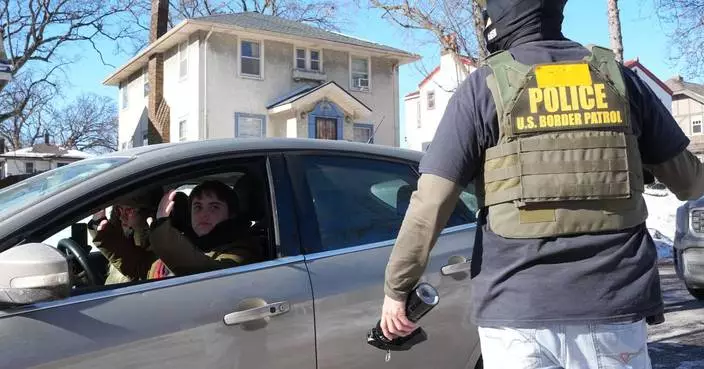
WASHINGTON (AP) — Aggressive immigration enforcement in Minnesota, which resulted in the shooting deaths of two U.S. citizens by federal agents, and this week's FBI search of the election office in Georgia's most populous county have Democratic election officials concerned about what could be in store for this fall's midterm elections.
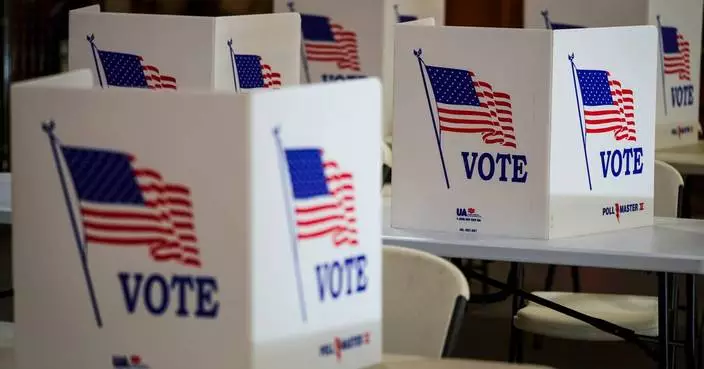
During an annual gathering of state election officials on Thursday, several Democratic secretaries of state said they had begun planning for a range of ways the Trump administration might seek to interfere with voting or how they run elections. Immigration agents near polling places or attempts to seize voting equipment are among the concerns, they said.
“It’s no longer just about making sure everyone gets their ballots and those ballots are counted securely. There’s now an election security component that involves this type of scenario planning, also in response to the fact that the Trump administration, very clearly, is planting seeds to potentially interfere in our elections in the future,” said Michigan Secretary of State Jocelyn Benson, a Democrat who is running for governor.
Those officials said they are increasing their preparations for potential steps the Trump administration could take following Thursday's search of the Atlanta-area election center, in which federal agents took ballots and other records related to the 2020 election. The FBI search renewed President Donald Trump's longstanding grievances over the 2020 presidential election, which he falsely claims was marred by widespread fraud.
Benson said her office is planning for various crisis scenarios with officials across the state, training that now includes the possibility of bomb threats and U.S. Immigration and Customs Enforcement agents appearing at polling places.
“This is how we deter, this is how we mitigate, this is when we go to court, this is when we need law enforcement to show up and help us protect, this is when we don’t,” Benson said of her instructions to local election officials.
Colorado Secretary of State Jena Griswold is preparing for this year's midterm elections by revamping previous years’ contingency plans and running disaster simulations with the state’s governor, attorney general and county clerks.
In an interview ahead of the conference, she said one of the most worrisome changes under the Trump administration has been its dismantling of efforts to track election interference and foreign meddling.
She also worried about whether the Trump administration would make changes through the U.S. Postal Service, which already has taken some steps that concern officials in states that rely heavily on mail ballots.
The White House did not immediately respond to a request to comment on the election officials' concerns.
Trump has made his interest in overhauling elections clear since early in his second term, signing a wide-ranging executive order that has been largely halted by the courts. The Constitution gives states and, to an extent, Congress authority over elections.
Recently, administration officials connected the president's deportation agenda to election administration, an unusual move that alarmed democracy advocates.
Attorney General Pam Bondi recently wrote to Minnesota Gov. Tim Walz, a Democrat, urging him to share the state’s voter rolls as part of a way to “help bring back law and order” in the state, which has seen widespread protests over increased immigration enforcement and the deadly shootings by federal immigration agents.
The Justice Department has filed lawsuits against at least 23 states and the District of Columbia seeking detailed voter information that includes names, dates of birth, residential addresses, driver’s license numbers and partial Social Security numbers. State election officials who have resisted, most of them Democrats, have said the request violates state and federal privacy laws.
“That idea of using police force to push policy is un-American,” Griswold said.
Maine Secretary of State Shenna Bellows said federal law will be on the side of the states to constrain the most extraordinary conduct, especially if armed federal agents show up around polling places.
“That won’t be a hard case,” she said.
But she is worried the show of force by immigration officers, arrests and deportations in various cities might deter some people from going out to cast a ballot.
“If people are too afraid to leave their homes to go get groceries, they’re going to be too afraid to go vote if ICE or other federal agents are patrolling the streets,” Bellows said.
Scenes of violent arrests by ICE agents and protests on the streets of American cities over the last year also have raised concerns among lawmakers in Congress about how the administration's aggressive approach to law enforcement might collide with the midterm elections.
“I don’t want roving gangs of ICE showing up at polling stations. That would obviously intimidate voters,” said Sen. Mark Warner, a Virginia Democrat.
Associated Press writer Ali Swenson in New York contributed to this report.
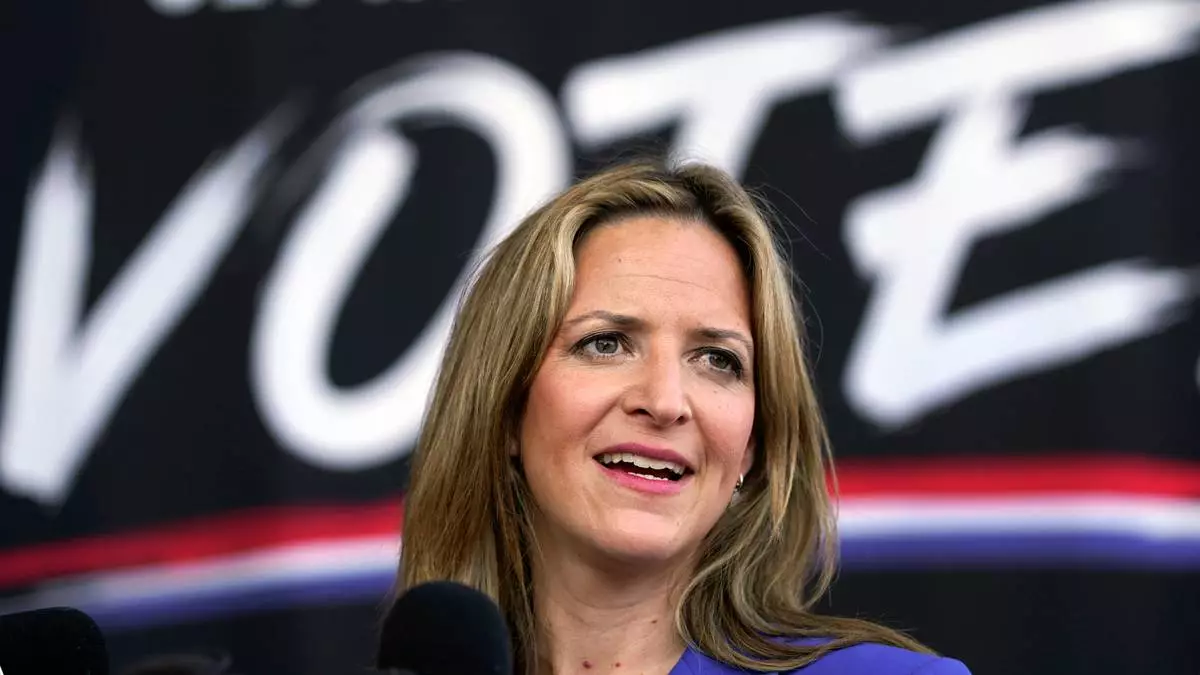
FILE - Michigan Secretary of State Jocelyn Benson speaks in Detroit, Sept. 24, 2020. (AP Photo/Paul Sancya, File)
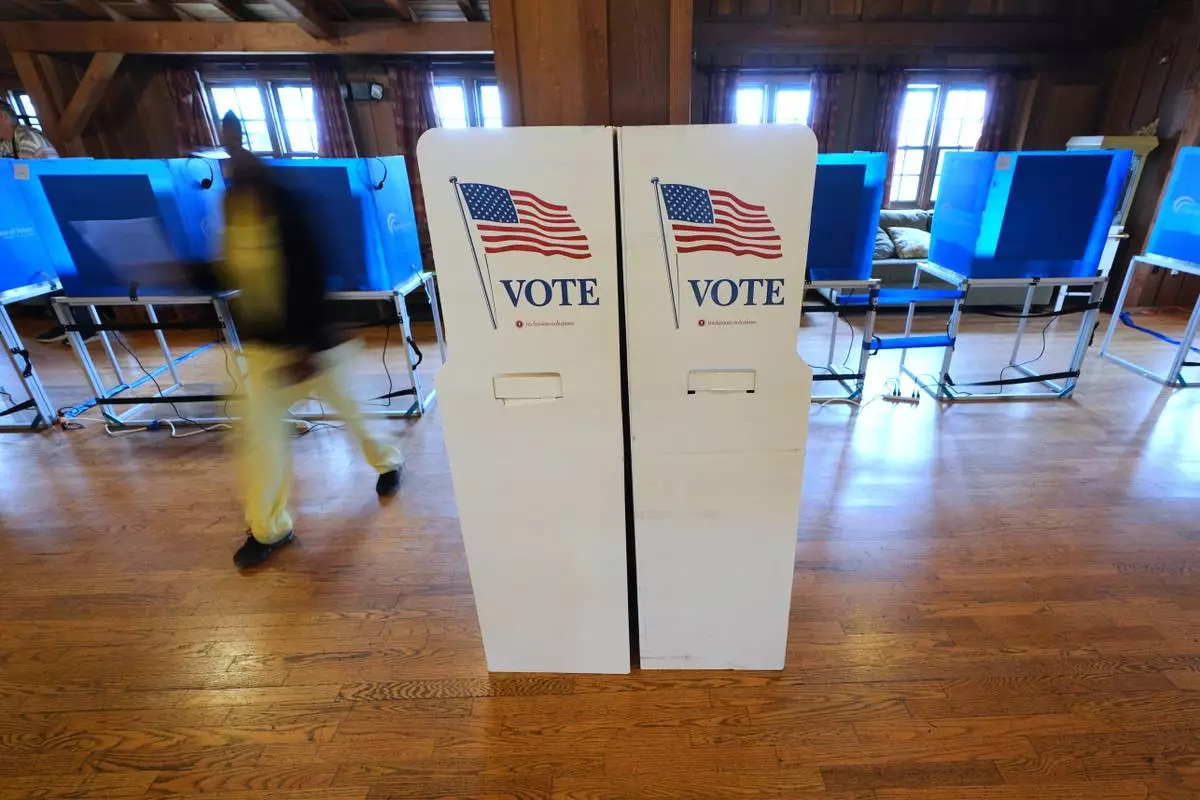
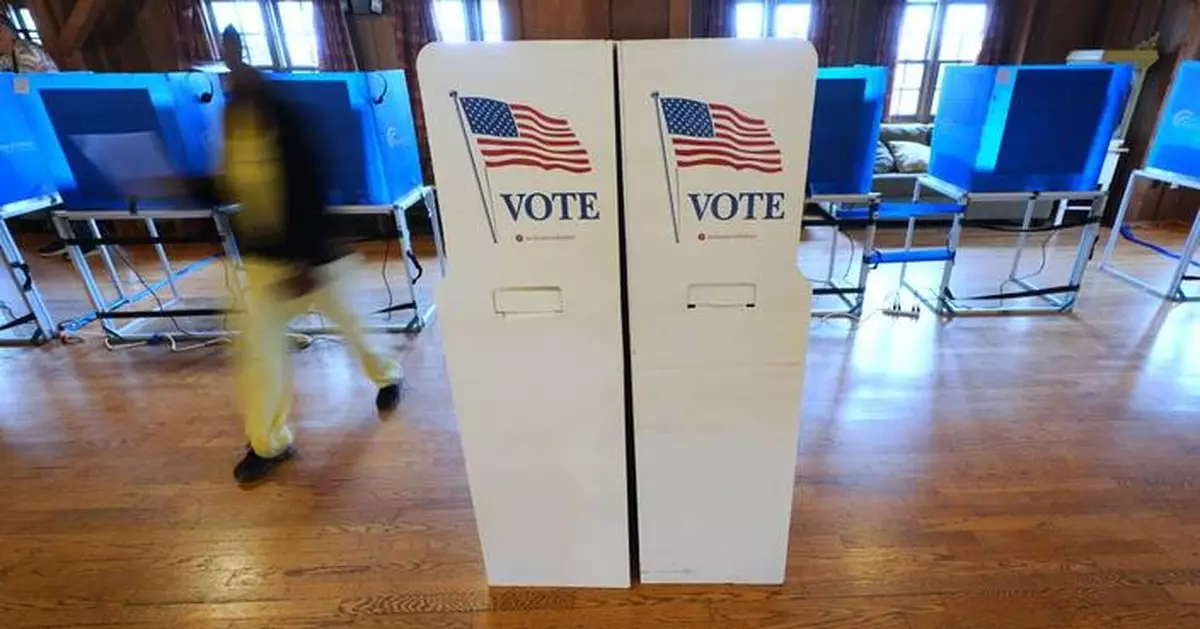
FILE - Signs welcomes voters Nov. 4, 2025, in Del Mar, Calif. (AP Photo/Gregory Bull, File)
MINNEAPOLIS (AP) — U.S. Sen. Amy Klobuchar said Thursday she is running for governor of Minnesota, promising to take on President Donald Trump while unifying a state that has endured a series of challenges even before the federal government's immigration crackdown.
Klobuchar's decision gives Democrats a high-profile candidate and proven statewide winner as their party tries to hold onto the office occupied by Gov. Tim Walz. The 2024 Democratic vice presidential nominee, Walz abandoned his campaign for a third term this month amid criticism over mismanagement of taxpayer funding for child care programs.
“Minnesota, we've been through a lot,” Klobuchar said in a video announcement. “These times call for leaders who can stand up and not be rubber stamps of this administration — but who are also willing to find common ground and fix things in our state.”
Klobuchar cited Trump’s immigration crackdown in Minnesota, federal officers killing two Minnesotans, the assassination of a state legislative leader and a school shooting that killed multiple children — all within the past year. She avoided direct mention of ongoing fraud investigations into the child care programs that Trump has made a political cudgel.
“I believe we must stand up for what’s right and fix what’s wrong,” Klobuchar said.
Klobuchar becomes the fourth sitting senator to announce plans to run for governor in 2026. The other races are in Alabama, Colorado and Tennessee.
Multiple Minnesota Republicans are campaigning in what could become a marquee contest among 36 governorships on the ballot in November. Among them are MyPillow founder and chief executive Mike Lindell, a 2020 election denier who is close to Trump; state House Speaker Lisa Demuth; Dr. Scott Jensen, a former state senator who was the party’s 2022 gubernatorial candidate; and state Rep. Kristin Robbins.
Running for governor is a relatively low-risk move for Klobuchar. If she loses, she’ll keep her Senate seat and won’t be up for reelection until 2030. If she wins, either she or Walz will appoint someone to fill the vacancy, depending on the timing of her resignation from the Senate. Resigning a little early would give her successor a slight seniority advantage.
A special election would later be held to choose a successor to finish the rest of Klobuchar's term.
The Minnesota contest is likely to test Trump and his fellow Republicans’ uncompromising law-and-order approach and mass deportation program against Democrats’ criticisms of his administration’s tactics.
Federal agents have detained children and adults who are U.S. citizens, entered homes without warrants and engaged protesters in violent exchanges. Renee Good was shot three times and killed by an Immigration and Customs Enforcement officer in early January. On Saturday, federal officers fatally shot ICU nurse Alex Pretti during an encounter.
Many Democrats on Capitol Hill, in turn, have voted against spending bills that fund Trump’s Department of Homeland Security. A standoff over the funding could lead to a partial government shutdown.
Trump and other Republicans also will try to saddle Klobuchar — or any other Democrat — with questions about the federal investigation into Minnesota’s child care programs and its Somali community. Trump also has made repeated assertions of widespread fraud in state government, and his administration is conducting multiple investigations of state officials, including Walz. The Democrat has maintained that his administration has investigated, reduced and prosecuted fraud.
Demuth was quick to release a new video and a web page that illustrate what’s likely to be another main line of her campaign: that Klobuchar cannot be trusted to end the fraud in public programs or curb the growth of government.
“Minnesotans only need to look at her record to know that she simply cannot deliver the change that our state needs, and would be nothing more than a third term of Tim Walz,” Demuth said in a statement.
Now in her fourth Senate term, Klobuchar is a former local prosecutor and onetime presidential candidate who positions herself as a moderate and has demonstrated the ability to win across Minnesota.
She won her 2024 reelection bid by nearly 16 percentage points and received 135,000 more votes than Democratic presidential nominee Kamala Harris. Harris outpaced Trump by fewer than 5 percentage points.
Klobuchar gained attention during Trump’s first term for her questioning of his judicial nominees, including now-Supreme Court Justice Brett Kavanaugh. At Kavanaugh’s acrimonious confirmation hearings, she asked the future justice, who had been accused of sexual assault as a teenager, if he ever had so much to drink that he didn’t remember what happened. Kavanaugh retorted, “Have you?”
The senator, who had talked publicly of her father’s alcoholism, continued her questioning. Kavanaugh, who was confirmed by a single vote, later apologized to Klobuchar.
After Trump’s first presidency, Klobuchar was among the most outspoken lawmakers during bipartisan congressional inquiries of the insurrection on Jan. 6, 2021, when Trump supporters attacked the U.S. Capitol during certification of Democrat Joe Biden’s victory in the 2020 election. As Senate Rules Committee chair, she pressed Capitol Police, administration officials and others for details of what authorities knew beforehand and how rioters breached the Capitol.
“It’s our duty to have immediate responses to what happened,” she said after helping write a report focused not on Trump’s role but on better security protocols for the seat of Congress.
Klobuchar sought the presidential nomination in 2020, running as a moderate in the same political lane as Biden. She launched her campaign standing outside in a Minnesota snowstorm to promote her “grit” and Midwestern sensibilities that have anchored her political identity.
As a candidate, Klobuchar faced stories of disgruntled Senate staffers who described her as a difficult boss but also distinguished herself on crowded debate stages as a determined pragmatist. She outlasted several better-funded candidates and ran ahead of Biden in the Iowa caucuses and the New Hampshire primary. But Biden, then a former vice president, trounced her and others in the South Carolina primaries, prompting her to drop out and join others in closing ranks behind him.
After Biden’s victory, Klobuchar would have been well-positioned for a Cabinet post, perhaps even attorney general. But the Senate’s 50-50 split made it untenable for Biden to create any opening for Republicans to regain control of the chamber.
Klobuchar announced in 2021 that she had been treated for breast cancer and in 2024 announced that she was cancer-free but undergoing another round of radiation.
Barrow reported from Atlanta. Associated Press reporter Maya Sweedler in Washington contributed.
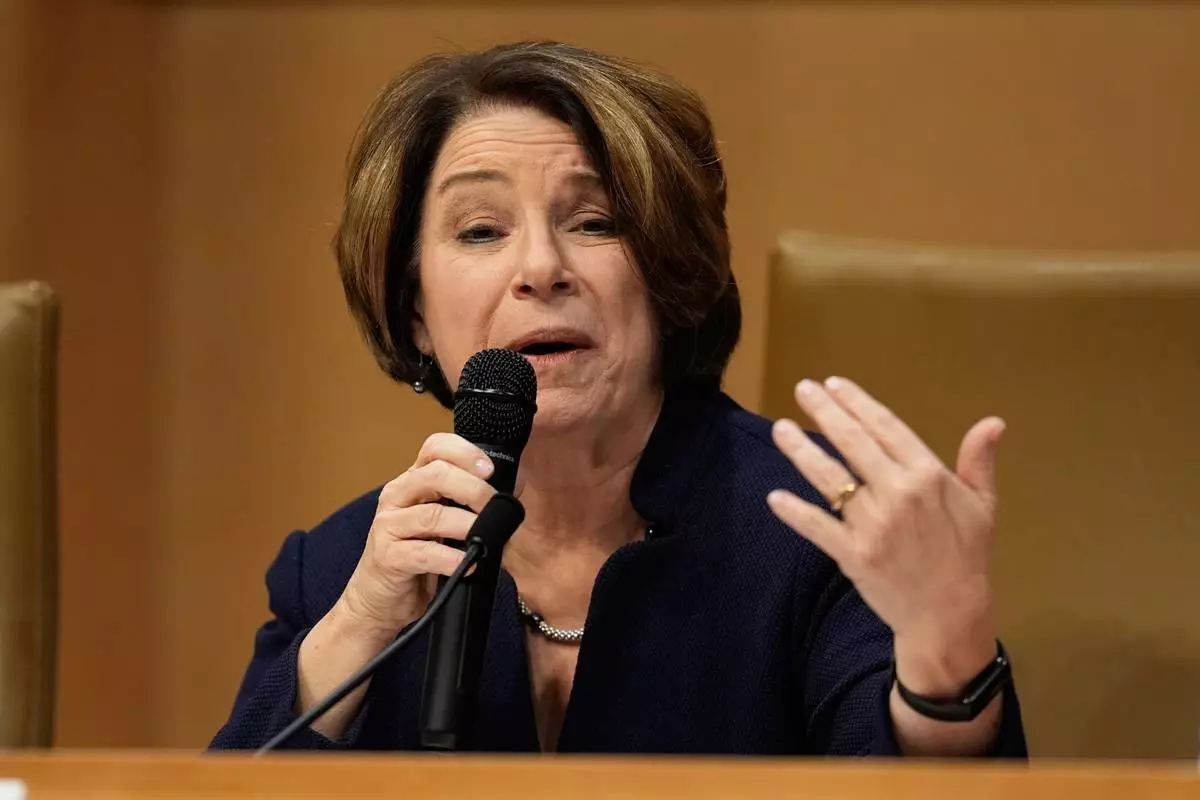
Sen. Amy Klobuchar, D-Minn, speaks during a field hearing on immigration Friday, Jan. 16, 2026, in St. Paul, Minn. (AP Photo/Abbie Parr)