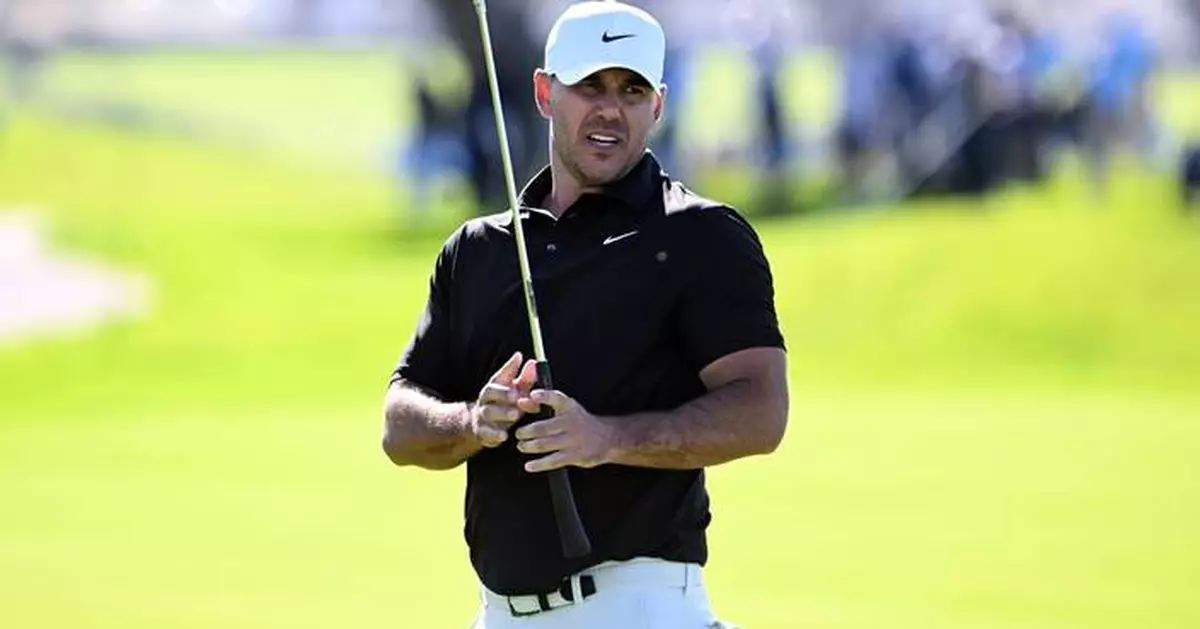
SAN DIEGO (AP) — Brooks Koepka felt nerves he had not experienced in years. The swagger that was such a hallmark of his five major championships was replaced by concern about the reception he would get upon his return to the PGA Tour after nearly four years on Saudi-funded LIV Golf.
Koepka didn't make a birdie until his final hole Thursday. He failed to break par on the tough South course at Torrey Pines in the Farmers Insurance Open.
And there was a small measure of relief.
“I’m just grateful to be out here and have a chance to compete with these guys,” Koepka said.
A large gallery followed him around on a glorious day along the Pacific bluffs with occasional shouts of, “Welcome back, Brooks.” On his way to the second tee, two young boys called out to him and Koepka walked over for fist bumps. He walked the entire 30 yards of a fence where fans wanted his autograph after his 1-over 73.
“I care about what everybody’s thinking out here, what everybody’s doing, and just trying to be as good of a person and good of a player as I can be,” Koepka said. “Just wanted a warm reception. Just like everybody else, you walk into a room, nobody wants to feel exiled. They just want to be loved.”
Koepka was freed from the final year of his nine-figure contract with LIV Golf on Dec. 23, applied for his PGA Tour membership about two weeks later and in three days was provided a path back.
The hard part was how he would be received. That's what brought the relief, and a big smile even after a round in which he hit the ball cleanly and couldn't buy a putt. The 8-footer for birdie on the 18th was the longest putt he made all day.
“I'm the only one in the entire world that’s going through this situation so it’s very difficult to explain,” Koepka said. “But I’m enjoying it, I really am.”
And now he has company, with former Masters champion Patrick Reed leaving LIV Golf with a chance to return to the PGA Tour as early as September. Koepka didn't see that coming and only learned about it during his pro-am Wednesday.
“Yeah, it's wild,” Koepka said. “Whatever Patrick wants to do and to be the best golfer he can be, best for his family, I'm in full support of that.”
Koepka said he felt nervous on the first tee, though it didn't show. He piped his drive 301 yards at sea level into the fairway, one of his better iron shots of the day to 10 feet and missed his putt.
“I guess I should have been more nervous the rest of the round,” Koepka said.
The South course is among the strongest on the PGA Tour, producing more pars than any excitement. Koepka missed birdie chances on both par 5s on the front nine, and he made a sloppy bogey on the par-5 13th when his flip wedge up the steep hill to a flag he couldn't see was too strong and went into the rough behind the green.
He was 11 shots behind Justin Rose, who had a 62 on the easier North course, and eight shots worse than Seamus Power, who had a 65 for the low score on the South.
“It’s been a while since I played competitive golf, so I like the way I’m playing,” said Koepka, who last played Oct. 5 at the Dunhill Links Championship in Scotland. “I just need to kind of play my way into it.”
His departure to LIV Golf in 2022 — one of the biggest surprises among the players who left the PGA Tour for the guaranteed Saudi riches — felt much longer ago. Koepka couldn't recall if he heard any comments outside the ropes in Portland when he made his LIV debut.
And he wasn't sure what to expect in San Diego.
“I don’t like thinking ahead at all or trying to anticipate what was going to happen, but I wasn’t sure, which is kind of weird being uneasy,” he said. “From the first tee on, it was great. It actually made me settle down a little bit. Like I said, it made me feel good just to be out here.”
Koepka is in the Phoenix Open next week. He is not in the $20 million signature events unless he qualifies. His return also stipulates a $5 million charity donation, no access to PGA Tour equity shares for five years, no FedEx Cup bonus money he might earn this year.
The tour also said whenever Koepka plays he will be added to the field to not take a spot from anyone. And then two more players get into tournaments on Monday of tournament week to make sure every group is a threesome.
The two beneficiaries this week were Jackson Suber and Lanto Griffin, a big deal to Griffin because Torrey Pines is his favorite course and he otherwise would not be in except for Koepka.
That led Griffin to say jokingly, “If Brooks really wants to create some goodwill, he should enter every tournament and then withdraw on Tuesday.”
AP golf: https://apnews.com/hub/golf
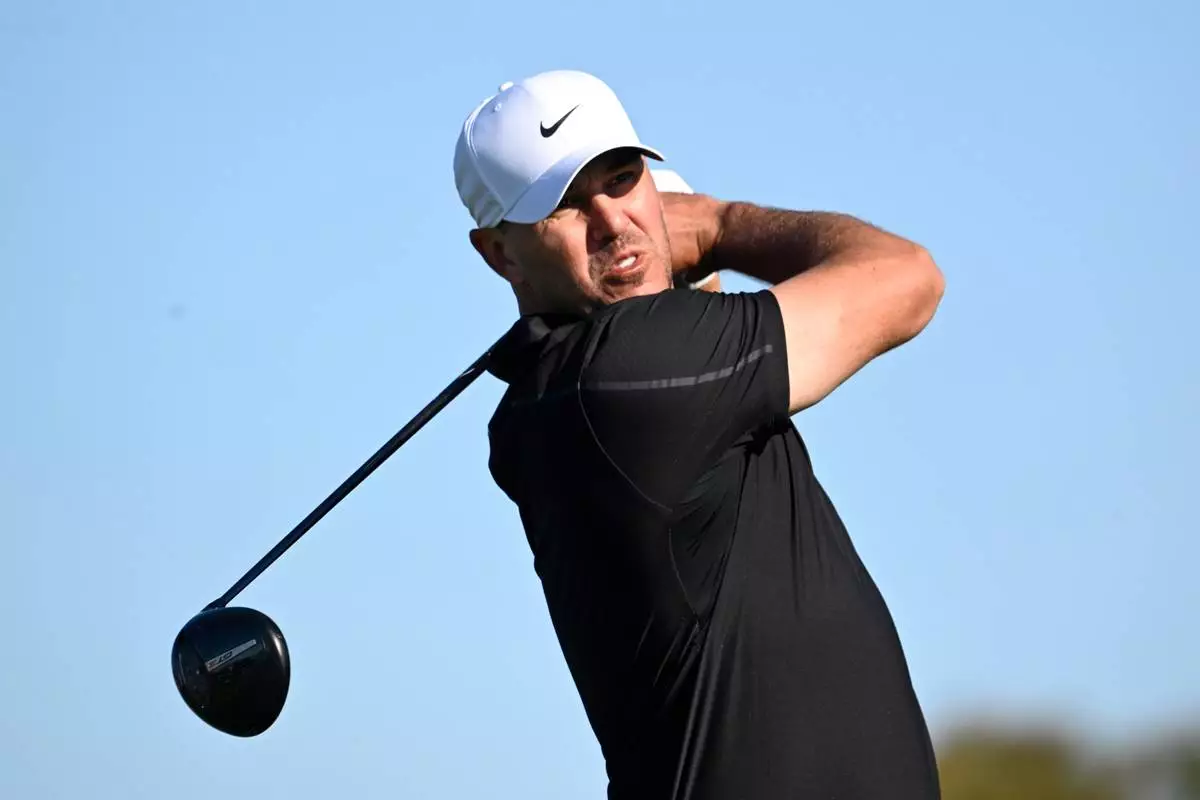
Brooks Koepka tees off on the second hole on the South Course at Torrey Pines during the first round of the Farmers Insurance Open golf tournament Thursday, Jan. 29, 2026, in San Diego. (AP Photo/Denis Poroy)
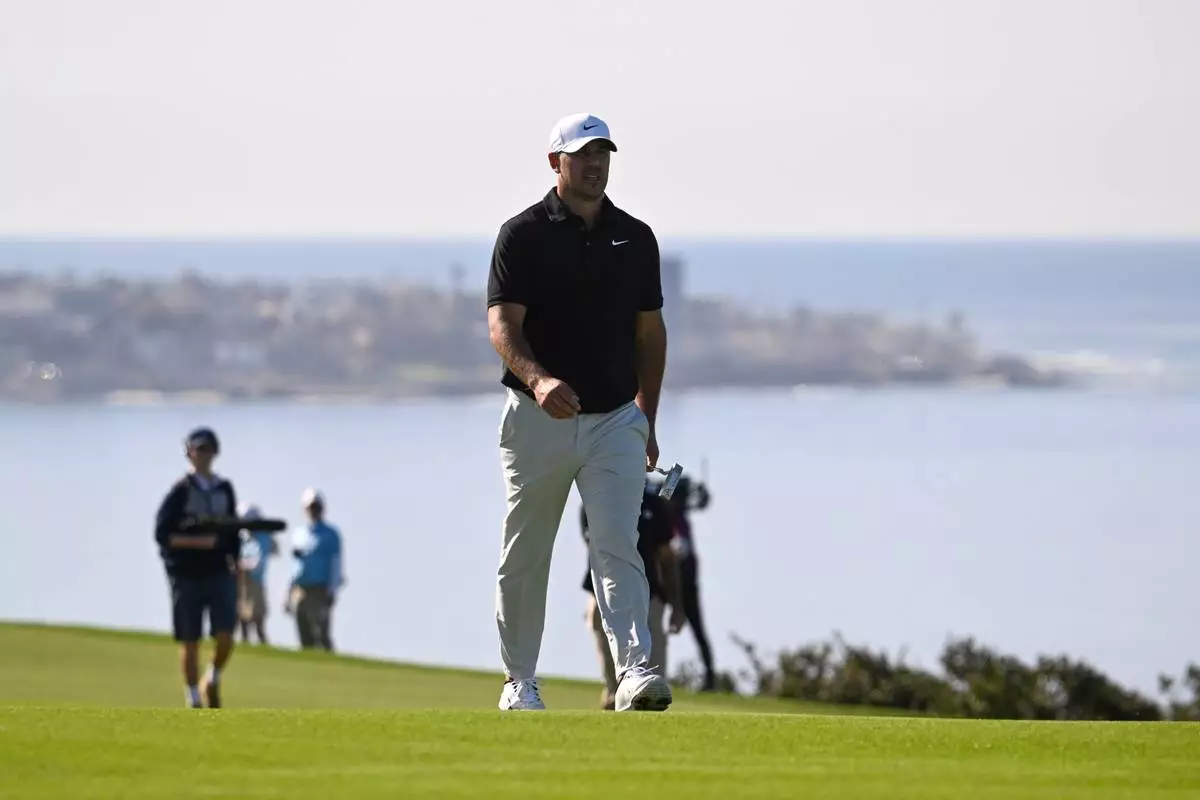
Brooks Koepka walks the fourth fairway on the South Course at Torrey Pines during the first round of the Farmers Insurance Open golf tournament Thursday, Jan. 29, 2026, in San Diego. (AP Photo/Denis Poroy)
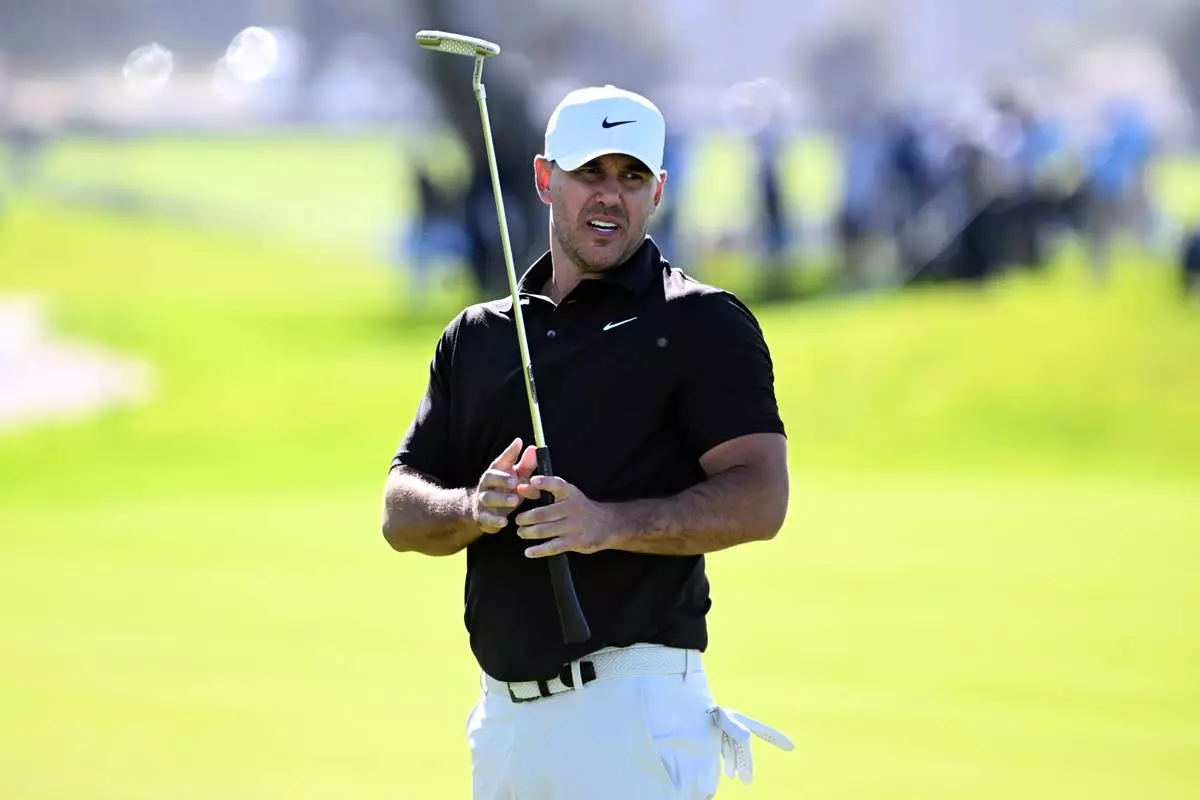
Brooks Koepka reacts after missing a birdie putt on the fourth hole on the South Course at Torrey Pines during the first round of the Farmers Insurance Open golf tournament Thursday, Jan. 29, 2026, in San Diego. (AP Photo/Denis Poroy)
NEW YORK (AP) — Kamala Harris “wrote off rural America" during the 2024 presidential campaign and failed to attack Donald Trump with sufficient “negative firepower," according to a long-awaited post-election autopsy released on Thursday by the Democratic National Committee.
The committee's chair, Ken Martin, shared the 192-page report only after facing intense internal pressure from frustrated Democratic operatives concerned with his leadership. Martin had originally promised to release the autopsy, only to keep it under wraps for months because he was concerned it would be a distraction ahead of the midterms as Democrats mobilize to take back control of Congress.
On Tuesday, Martin apologized for his handling of the situation and conceded that the report was withheld because it “was not ready for primetime."
Although the autopsy criticizes Democrats' focus on “identity politics,” it sidesteps some of the most controversial elements of the 2024 campaign. The report does not address former President Joe Biden’s decision to seek reelection, the rushed selection of Harris to replace him on the ticket or the party's acrimonious divide over the war in Gaza.
“I am not proud of this product; it does not meet my standards, and it won’t meet your standards,” Martin wrote in an essay on Substack on Thursday. “I don’t endorse what’s in this report, or what’s left out of it. I could not in good faith put the DNC’s stamp of approval on it. But transparency is paramount.”
A spokesperson for Harris did not immediately respond to a request for comment.
The initial reaction from Democratic operatives was a mix of bafflement and anger over Martin's handling of the situation.
“Why not say this in 2024, or bring in more people to finish it, instead of turning this into the dumbest media cycle for 7-8 months?” Democratic strategist Steve Schale wrote on social media.
The postelection report, which was authored by Democratic consultant Paul Rivera, calls for “a renewed focus on the voters of Middle America and the South, who have come to believe they are not included in the Democratic vision of a stronger and more dynamic America for everyone.”
“Millions of Americans are suffering from poor access to healthcare, manufacturing and job losses, and a failing infrastructure, yet continue to be persuaded to vote against their best interests because they do not see themselves reflected in the America of the Democratic Party,” the report says.
The autopsy points to a reduction in support and training for Democratic state parties, voter registration shifts and “a persistent inability or unwillingness to listen to all voters.”
Thursday's release comes as Martin confronts a crisis of confidence among party officials who are increasingly concerned about the health of their political machine barely a year into his term. Some Democratic operatives have had informal discussions about recruiting a new chair, even though most believe that Martin’s job wasn't in serious jeopardy ahead of the midterm elections.
The report found that Harris and her allies failed to focus enough on Trump's negatives, especially his felony convictions. This was part of a broader criticism that Democrats' messaging is too focused on reason and winning arguments, “even in cycles when the electorate is defined by rage.”
“There was a decision in the 2024 Democratic leadership not to engage in negative advertising at the scale required,” the report states. “The Trump campaign and supportive Super PACs went full throttle against Vice President Harris, but there was not sufficient or similar negative firepower directed at Trump by Democrats.”
The report continues: “It was essential to prosecute a more effective case as to why Trump should have been disqualified from ever again taking office. The grounds were there, but the messaging did not make the case.”
Trump's attack on Harris' transgender policies were cited as a key contrast.
Specifically, the report suggested the Democratic nominee was “boxed” in by the Trump campaign's “very effective” ad that highlighted Harris' previous statement of support for taxpayer-funded gender-affirming surgeries for prison inmates.
Democratic pollsters believed that “if the Vice President would not change her position – and she did not – then there was nothing which would have worked as a response," the report said.
The report criticized Harris' outreach to key segments of America while condemning the party's focus on “identity politics.”
“Harris wrote off rural America, assuming urban/suburban margins would compensate. The math doesn’t work,” the report says. “You can’t lose rural areas by overwhelming margins and make it up elsewhere when rural voters are a significant share of the electorate. If Democrats are to reclaim leadership in the Heartland or the South, candidates must perform well in rural turf. Show up, listen, and then do it again.”
The report also references Democrats' underperformance with male voters of color.
“Male voters require direct engagement. The gender gap can be narrowed. Deploy male messengers, address economic concerns, and don’t assume identity politics will hold male voters of color,” it says.
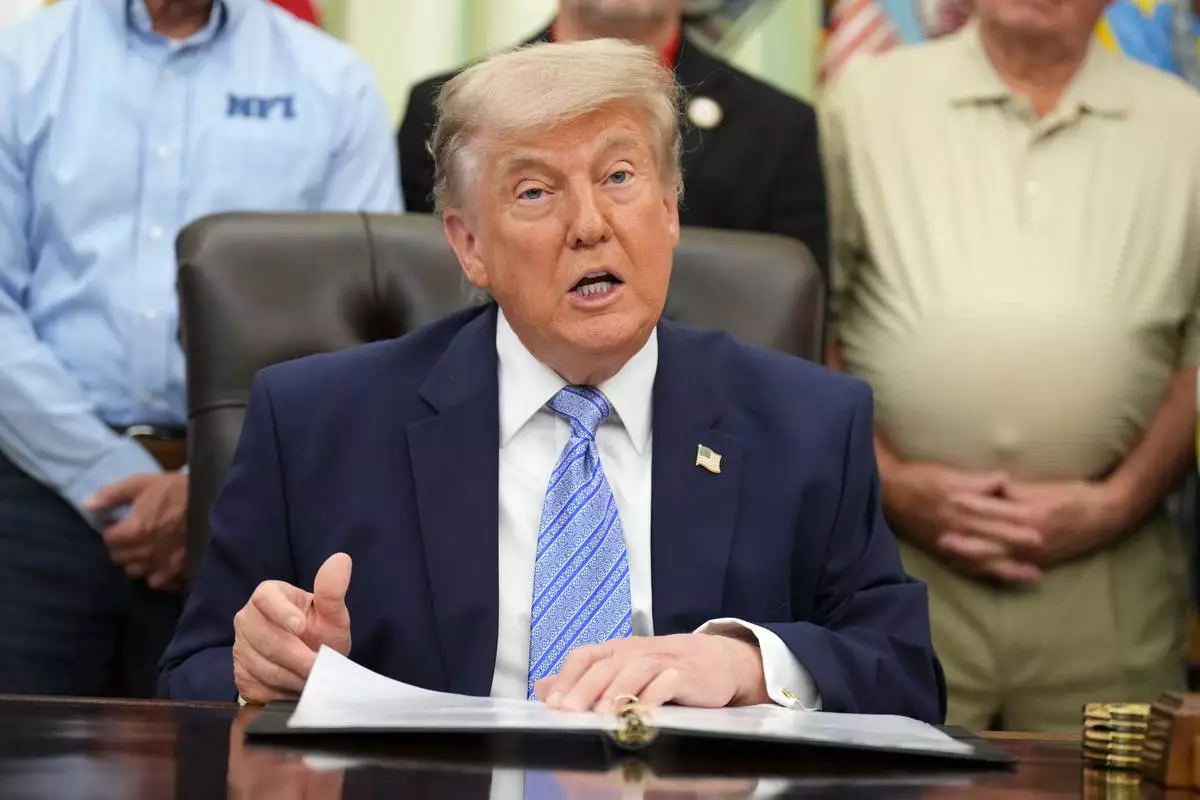
President Donald Trump speaks during an event about loosening a federal refrigerant rule, in the Oval Office at the White House, Thursday, May 21, 2026, in Washington. (AP Photo/Jacquelyn Martin)
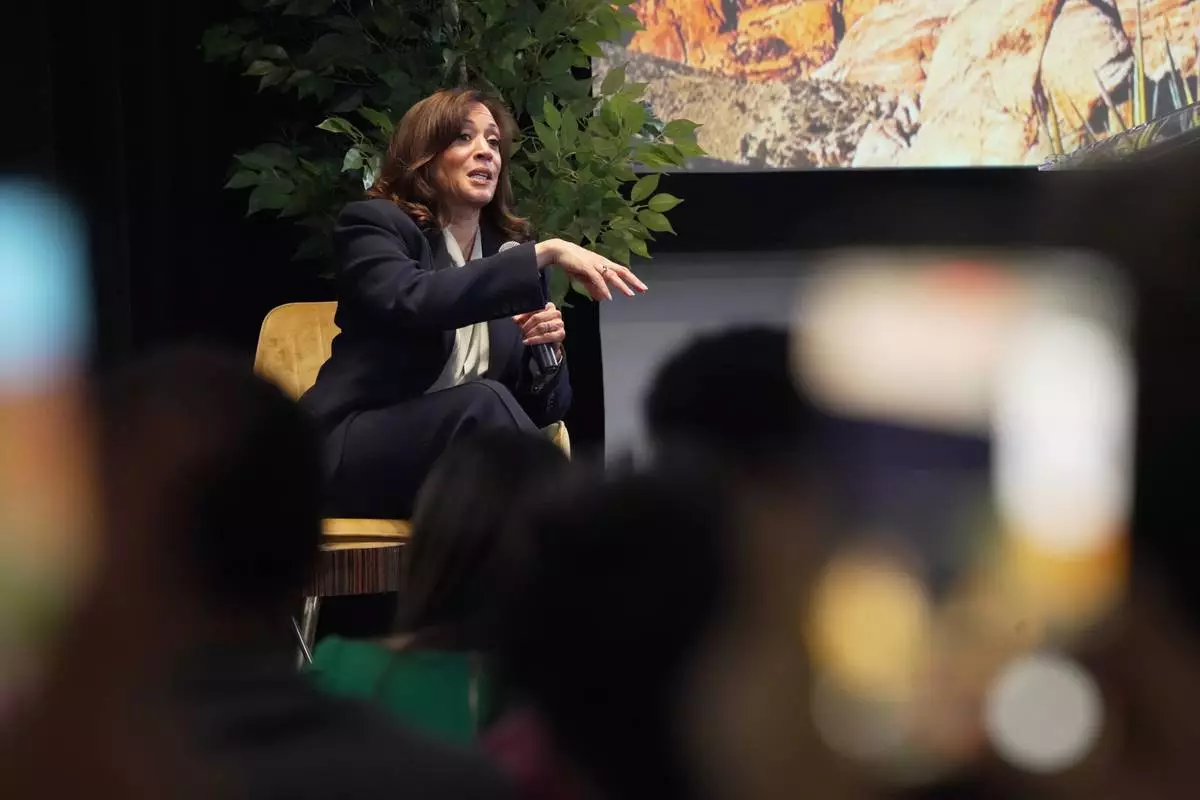
Former Vice President Kamala Harris speaks during a fireside chat on Thursday, May 7, 2026, in Las Vegas. (AP Photo/Ty ONeil)
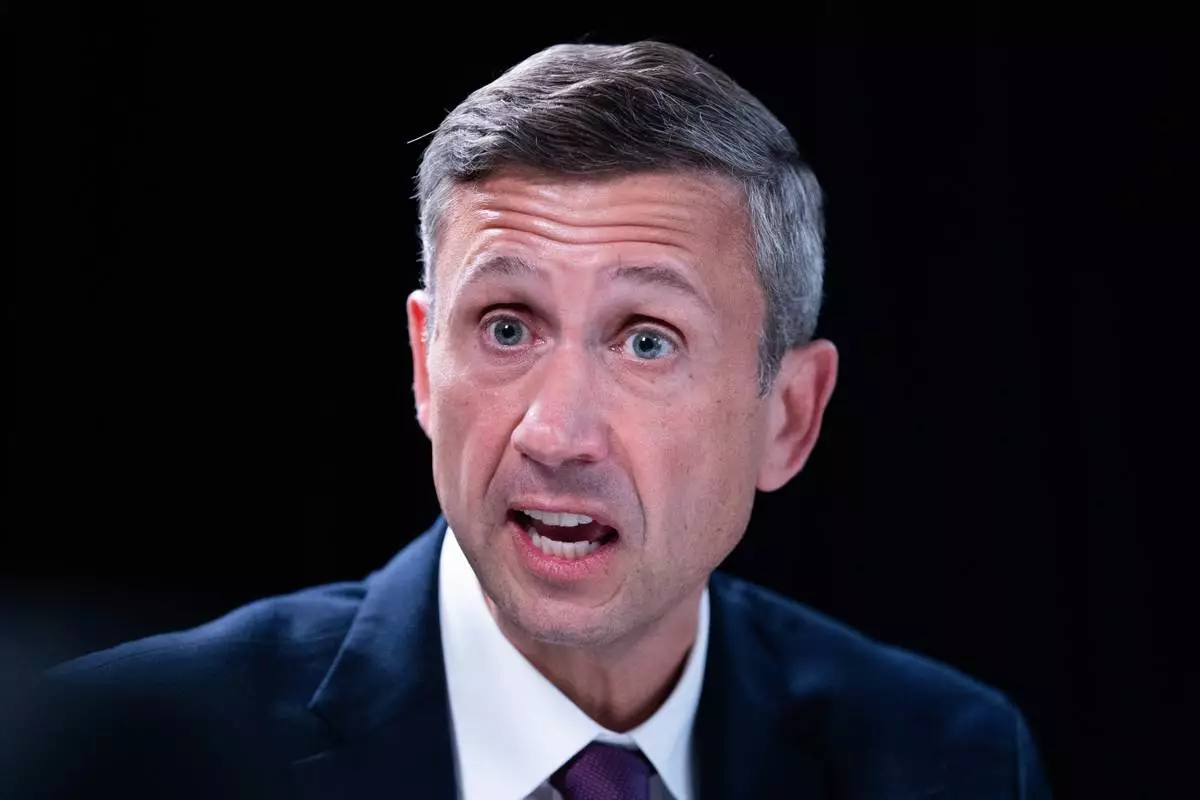
FILE - Democratic National Committee chair Ken Martin speaks during an interview with The Associated Press at DNC headquarters, Jan. 12, 2026, in Washington. (AP Photo/Allison Robbert, File)