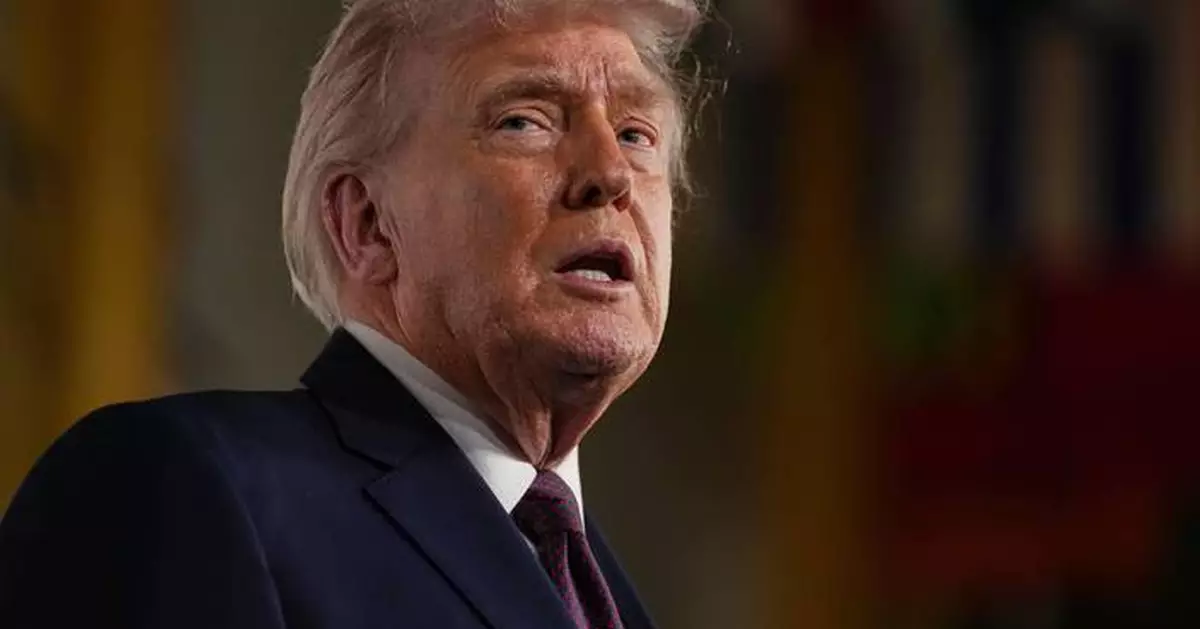
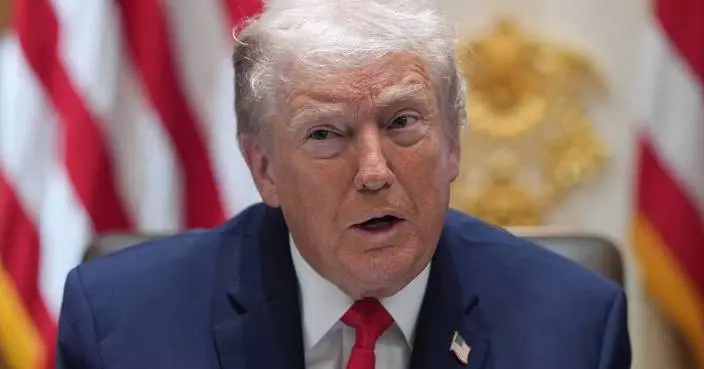
WASHINGTON (AP) — President Donald Trump said he plans to announce his choice for chairman of the Federal Reserve on Friday morning, a long-awaited decision that could set up a showdown on whether the U.S. central bank preserves its independence from the White House and electoral politics.
For the past year, the president has aggressively attacked Fed Chair Jerome Powell, whose term as the head of the U.S. central bank ends in May. Trump maintains that Powell should cut the Fed's benchmark interest rates more drastically to fuel faster economic growth, while the Fed chair has taken a far more judicious approach in the wake of Trump's tariffs because inflation is already elevated.
“I’ll be announcing the Fed chair tomorrow morning,” Trump told reporters on Thursday night as he went into the screening of the documentary “Melania” about his wife. “It’s going to be, somebody that is very respected, somebody that’s known to everybody in the financial world. And I think it’s going to be a very good choice. I hope so.”
Trump stayed relatively cryptic about his pick. His search was led by Treasury Secretary Scott Bessent with four known finalists: Kevin Warsh, a former Fed governor; Christopher Waller, a current Fed governor; Rick Rieder, an executive with the financial firm BlackRock, and Kevin Hassett, director of the White House National Economic Council. Trump, in the past, suggested that Hassett was the front-runner, only to recently say that he wanted him to remain in his current post.
Trump did say on Thursday night that “a lot of people think that this is somebody that could have been there a few years ago,” fueling speculation that he had chosen Warsh, who was a finalist in the 2017 search for Fed chair that led to Powell's selection.
Tensions between Trump and the central bank had been steadily mounting as the president used the renovation costs of the Fed's headquarters to further lambaste Powell, a campaign that resulted in the Fed getting subpoenas from the Justice Department earlier this month. The Fed chair took the rare step of issuing a video statement in which he said: “The threat of criminal charges is a consequence of the Federal Reserve setting interest rates based on our best assessment of what will serve the public, rather than following the preferences of the president.”
Trump has long teased his Fed choice while saying his nominee would slash interest rates that influence the supply of money in the U.S. economy, the rate of inflation and the stability of the job market.
On the cusp of Trump's announcement, Powell might have the ability to block him in an effort to ensure the Fed preserves its credibility by staying away from political considerations.
While his term as chair ends in roughly three months, Powell's term on the Fed's board of governors runs through 2028 and he could choose to remain in that post, likely blocking Trump's ability to have his nominees control the majority of the seats on the board. Of the seven Fed governors, former President Joe Biden picked three of them in addition to renominating Powell to a second term as chair.
If Powell stays on the board, he could also create a small procedural hurdle for Trump's ability to nominate someone new to the board. This would mean Trump would either have to choose an existing board member as chair or replace Stephen Miran, who is on leave from his job as chair of the White House Council of Economic Advisers to fill a term as governor that technically ends on Saturday. If Trump chooses to replace Miran, he could name someone new to the board.
At a Wednesday news conference, Powell declined to say whether he would leave the board. But he did offer some advice to any successor about balancing the need for independent judgment with public accountability.
“Don’t get pulled into elected politics — don’t do it,” Powell said. “Another is, that our window into democratic accountability is Congress. And it’s not a passive burden for us to go to Congress and talk to people. It’s an affirmative regular obligation.”
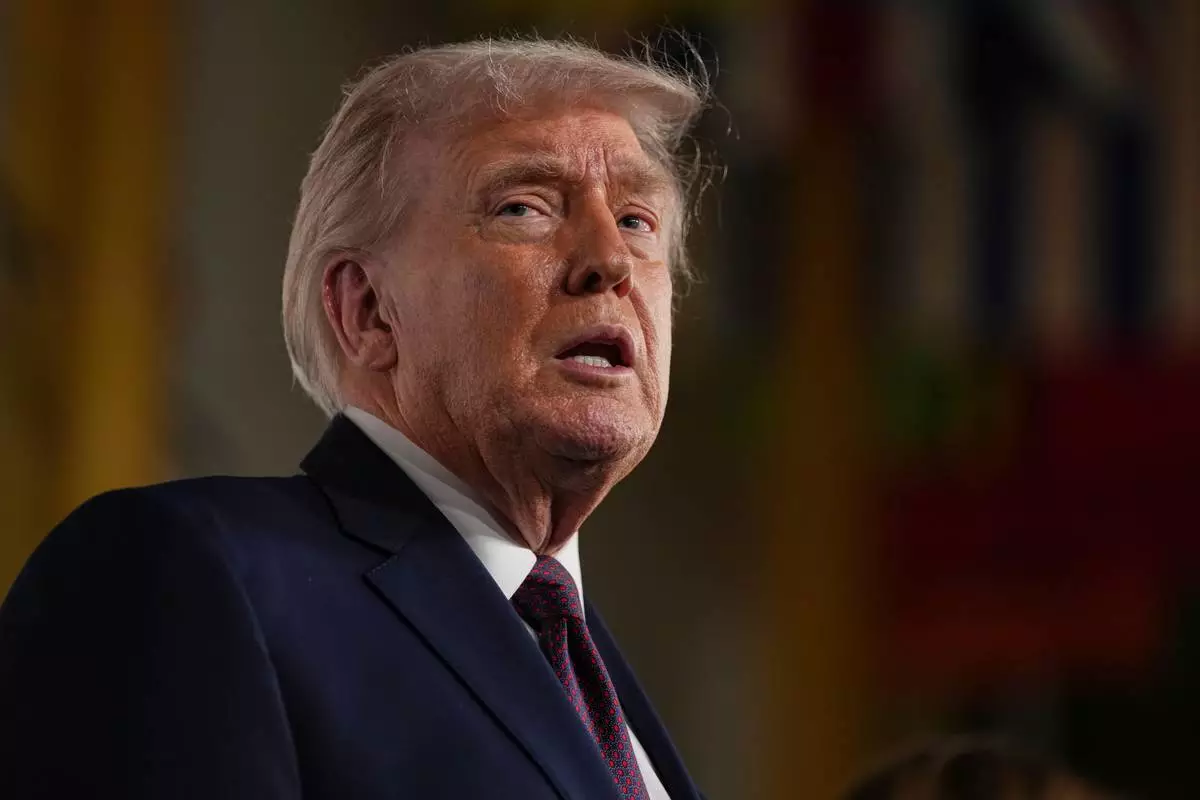
President Donald Trump arrives for the premiere of first lady Melania Trump's movie "Melania" at The John F. Kennedy Memorial Center For The Performing Arts, Thursday, Jan. 29, 2026, in Washington. (AP Photo/Allison Robbert)
WASHINGTON (AP) — House Republicans are proposing sweeping changes to the nation's voting laws, a long-shot priority for President Donald Trump that would impose stricter requirements, including some before Americans vote in the midterm elections in the fall.
The package released Thursday reflects a number of the party's most sought-after election changes, including requirements for photo IDs before people can vote and proof of citizenship, both to be put in place in 2027. Others, including prohibitions on universal vote-by-mail and ranked choice voting — two voting methods that have proved popular in some states — would happen immediately. The Republican president continues to insist that the 2020 election he lost to Democrat Joe Biden was rigged.
“Americans should be confident their elections are being run with integrity — including commonsense voter ID requirements, clean voter rolls, and citizenship verification,” said Rep. Bryan Steil, chairman of the House Administration Committee, in a statement.
“These reforms will improve voter confidence, bolster election integrity, and make it easy to vote, but hard to cheat,” said Steil, R-Wis.
The legislation faces a long road in the narrowly-split Congress, where Democrats have rejected similar ideas as disenfranchising Americans' ability to vote with onerous registration and ID requirements. The effort comes as the Trump administration is turning its attention toward election issues before the November election, when control of Congress will be at stake.
The administration sent FBI agents Wednesday to raid the election headquarters of Fulton County, Georgia, which includes most of Atlanta, seeking ballots from the 2020 election. That follows Trump’s comments earlier this month when he suggested that charges related to that election were imminent.
The top Democrat on the House Administration Committee, Rep. Joe Morelle of New York, said Trump and the Republican Party are trying to “rig” the system.
"This is their latest attempt to block millions of Americans from exercising their right to vote," Morelle said in a statement. He said he would “fight the bill at every turn.”
Republicans are calling their new legislation the “Make Elections Great Again Act" and say their proposal should provide the minimum standard for elections for federal offices.
The 120-plus-page bill includes requirements that people present a photo ID before they vote and that states verify the citizenship of individuals when they register to vote, starting next year.
More immediately, this fall it would require states to use “auditable” paper ballots in elections, which most already do; prohibit states from mailing ballots to all voters through universal vote-by-mail systems; and ban ranked choice voting, which is used in Maine and Alaska.
States risk losing federal election funds at various junctures for noncompliance. For example, states would be required to have agreements with the attorney general’s office to share information about potential voter fraud or risk losing federal election funds in 2026.
And starting this year, it would require states to more frequently update their voting rolls, every 30 days.
Stephen Richer, a Republican who clashed with Trump over the president's false election conspiracy theories while he served as the recorder in Maricopa County, Arizona, posted on the social media site X that the bill is reminiscent of a Democratic effort to reshape national elections in the opposite direction that floundered during Biden's term.
He wrote that the legislation “flattens federalism, and takes away many rights from the states.”
Similar Republican proposals have drawn alarm from voting rights group, which say such changes could lead to widespread problems for voters.
For example, prior Republican efforts to require proof of citizenship to vote have been criticized by Democrats as disenfranchising married women whose last names do not match birth certificates or other government documents.
The Brennan Center for Justice and other groups estimated in a 2023 report that 9% of U.S. citizens of voting age, or 21.3 million people, do not have proof of their citizenship readily available. Almost half of Americans do not have a U.S. passport.
Trump has long signaled a desire to change how elections are run in the United States. Last year he issued an executive order that included a citizenship requirement, among other election-related changes.
At the time, House Republicans approved legislation, the “Safeguard American Voter Eligibility Act,” that would cement Trump’s order into law. That bill has stalled in the Senate, though lawmakers have recently revived efforts to bring it forward for consideration.
__
Associated Press writer Nicholas Riccardi in Denver contributed to this report.
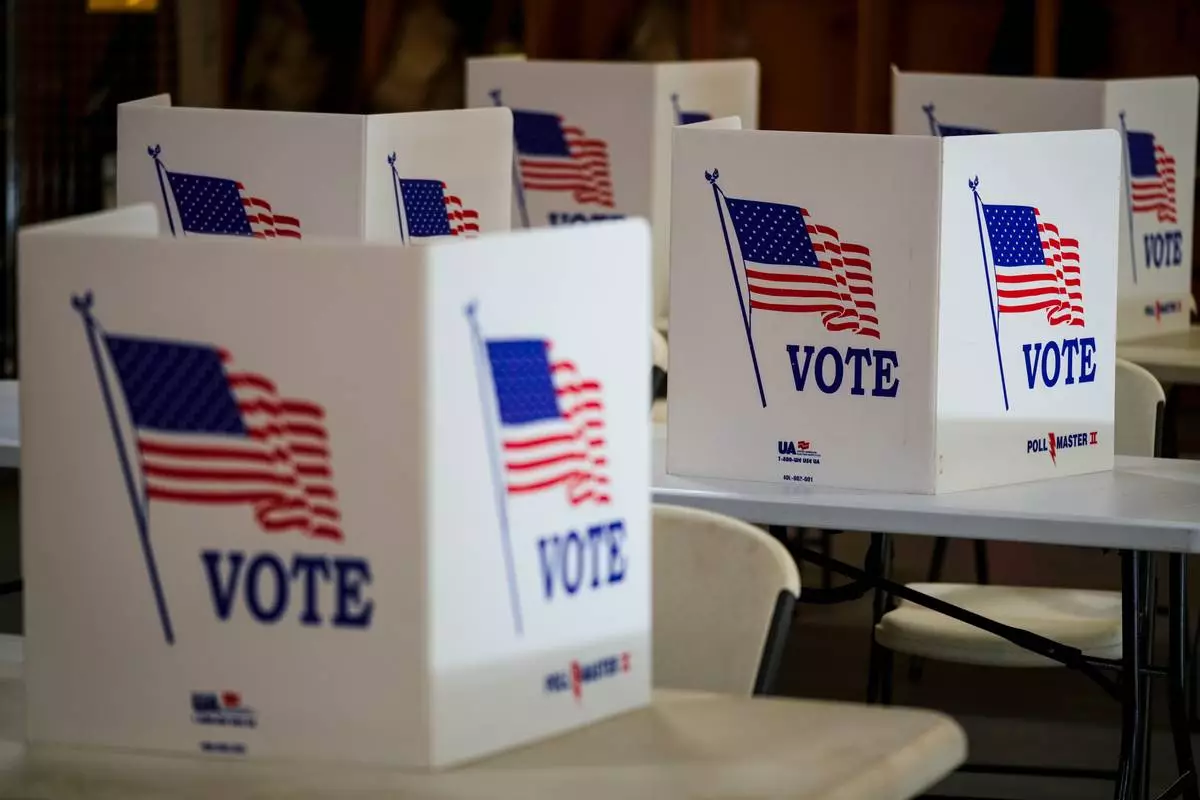
FILE- Voting booths are set up at a polling place in Newtown, Pa, April 23, 2024. (AP Photo/Matt Rourke, File)