Skip to Content Facebook Feature Image

Fearing ICE, Native Americans rush to prove their right to belong in the US

News

Fearing ICE, Native Americans rush to prove their right to belong in the US
News

News

Fearing ICE, Native Americans rush to prove their right to belong in the US

2026-01-30 18:44 Last Updated At:18:50

MINNEAPOLIS (AP) — When U.S. Immigration and Customs Enforcement flooded Minneapolis, Shane Mantz dug his Choctaw Nation citizenship card out of a box on his dresser and slid it into his wallet.

Some strangers mistake the pest-control company manager for Latino, he said, and he fears getting caught up in ICE raids.

More Images
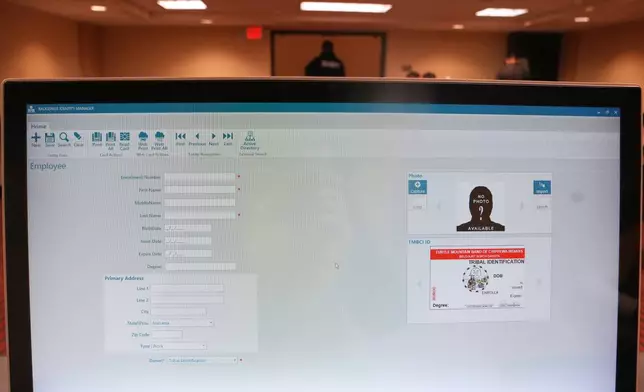
A template of a tribal identification card is displayed on a computer Friday, Jan. 23, 2026, in Minneapolis. (AP Photo/Abbie Parr)
A template of a tribal identification card is displayed on a computer Friday, Jan. 23, 2026, in Minneapolis. (AP Photo/Abbie Parr)

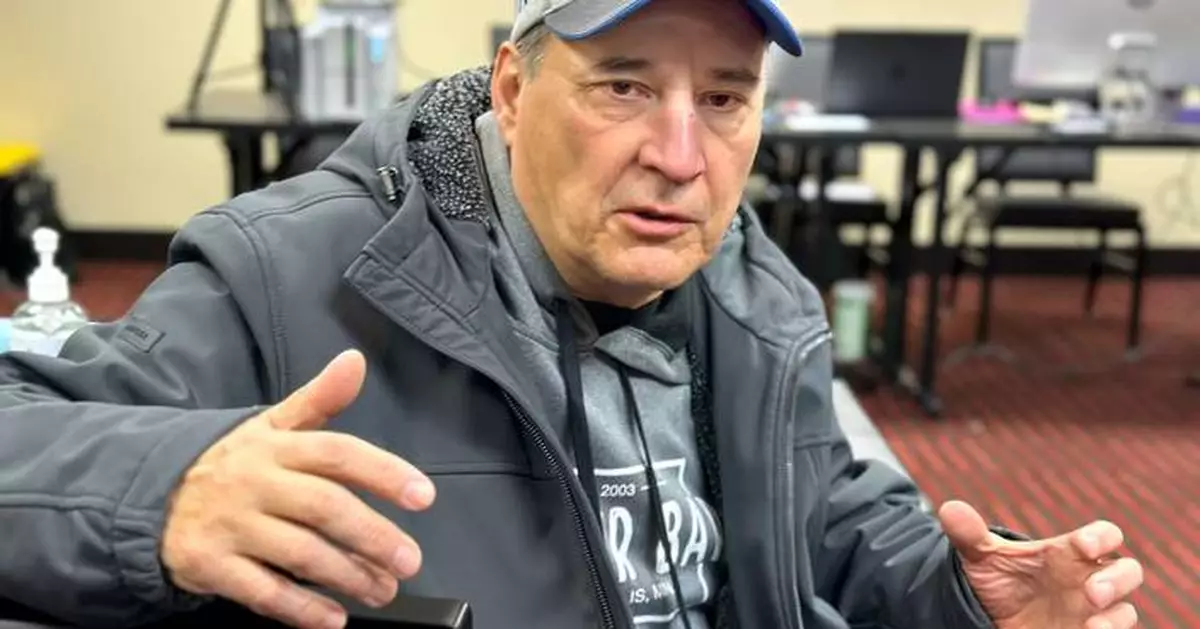
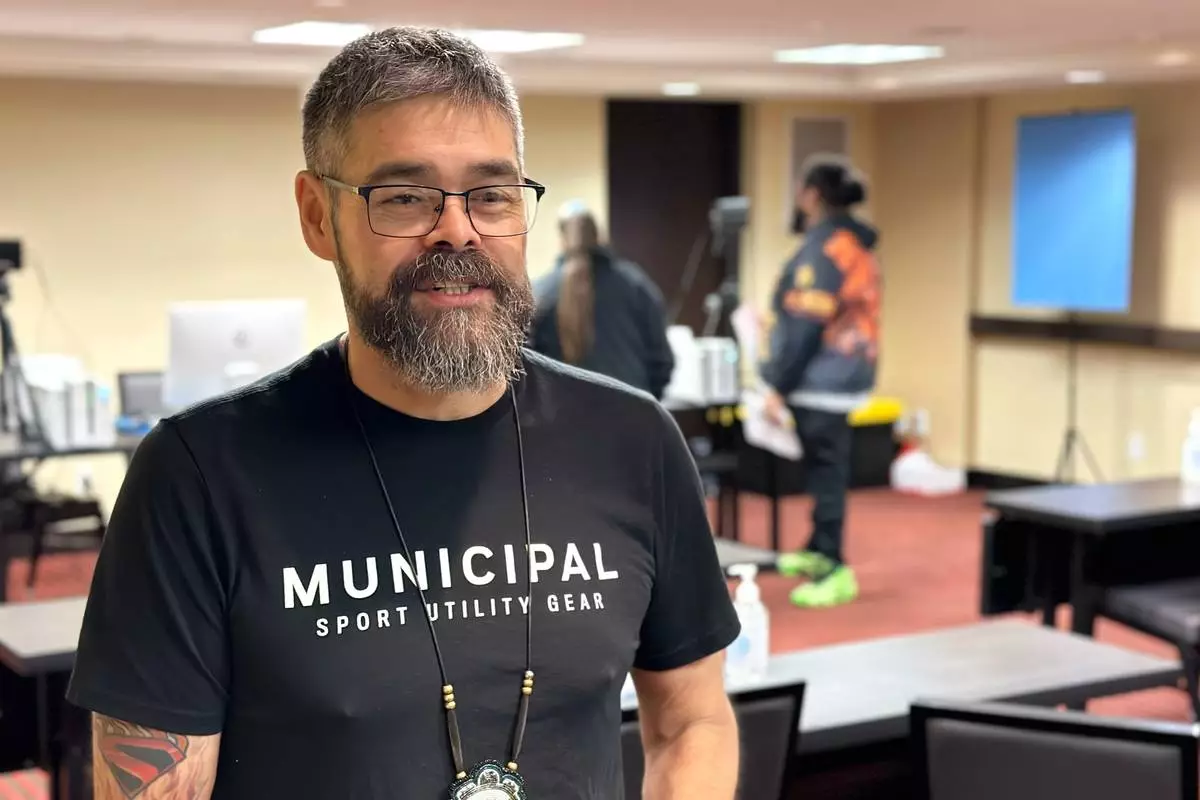
Turtle Mountain Band of Chippewa Chairman Jamie Azure speaks about an effort for tribal citizens to get tribal IDs at a pop-up event in Minneapolis on Friday, Jan. 23, 2026. (Stewart Huntington/ICT via AP)
Turtle Mountain Band of Chippewa Chairman Jamie Azure speaks about an effort for tribal citizens to get tribal IDs at a pop-up event in Minneapolis on Friday, Jan. 23, 2026. (Stewart Huntington/ICT via AP)

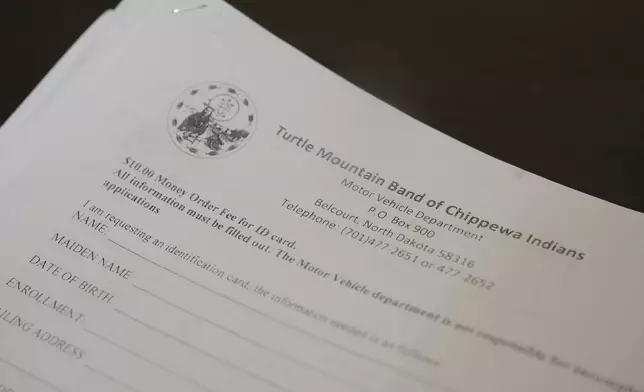
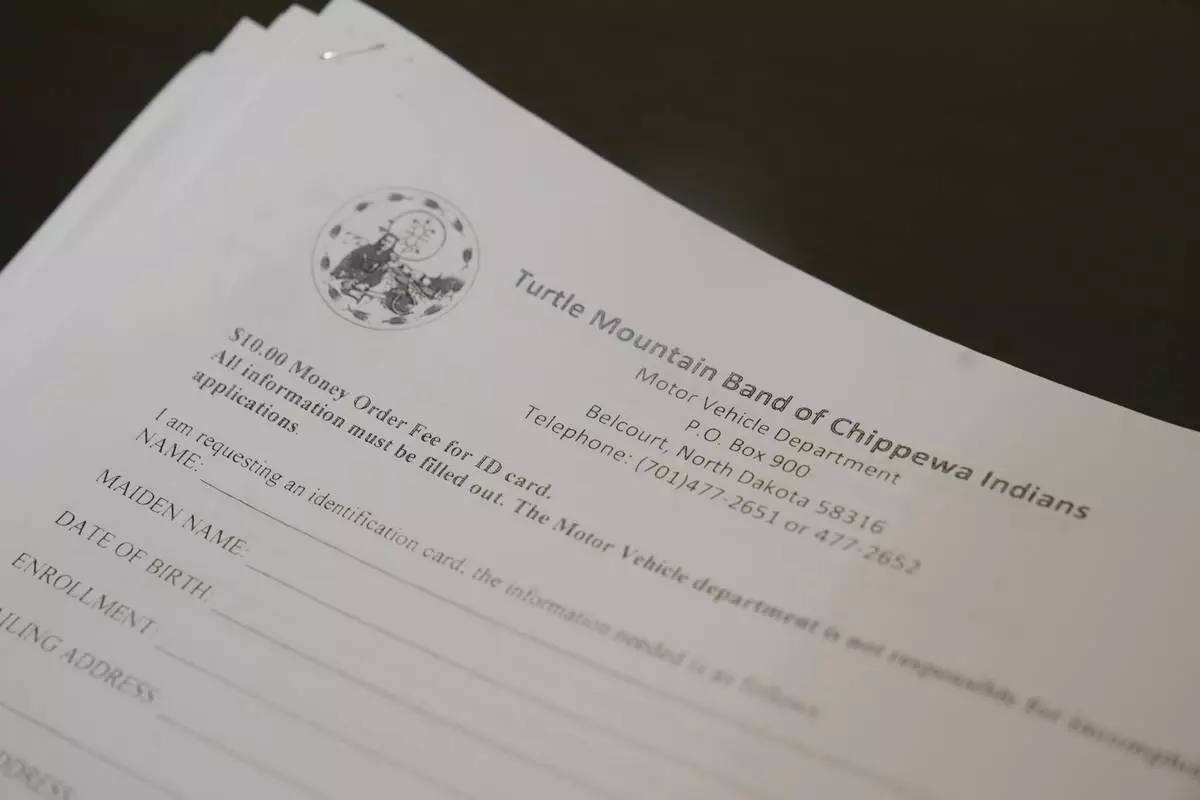
Paperwork to apply for a tribal identification card is displayed Friday, Jan. 23, 2026, in Minneapolis. (AP Photo/Abbie Parr)
Paperwork to apply for a tribal identification card is displayed Friday, Jan. 23, 2026, in Minneapolis. (AP Photo/Abbie Parr)

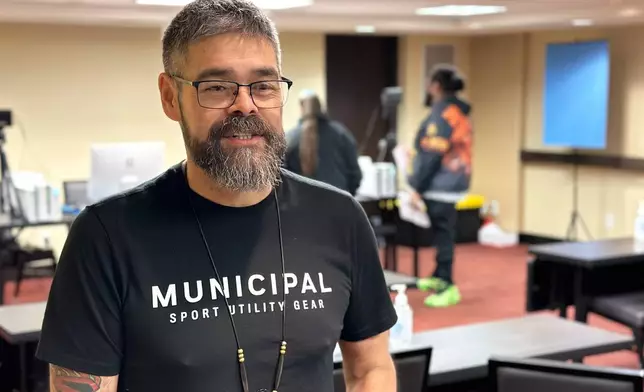
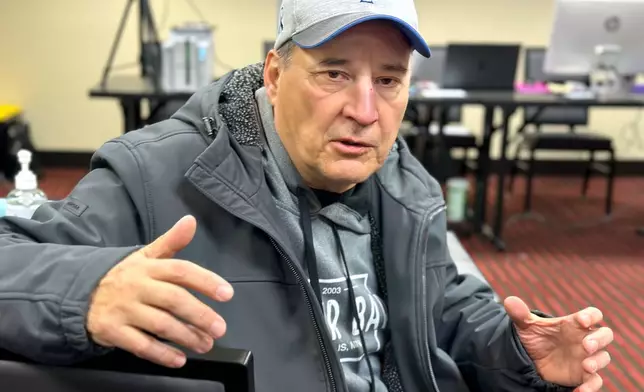
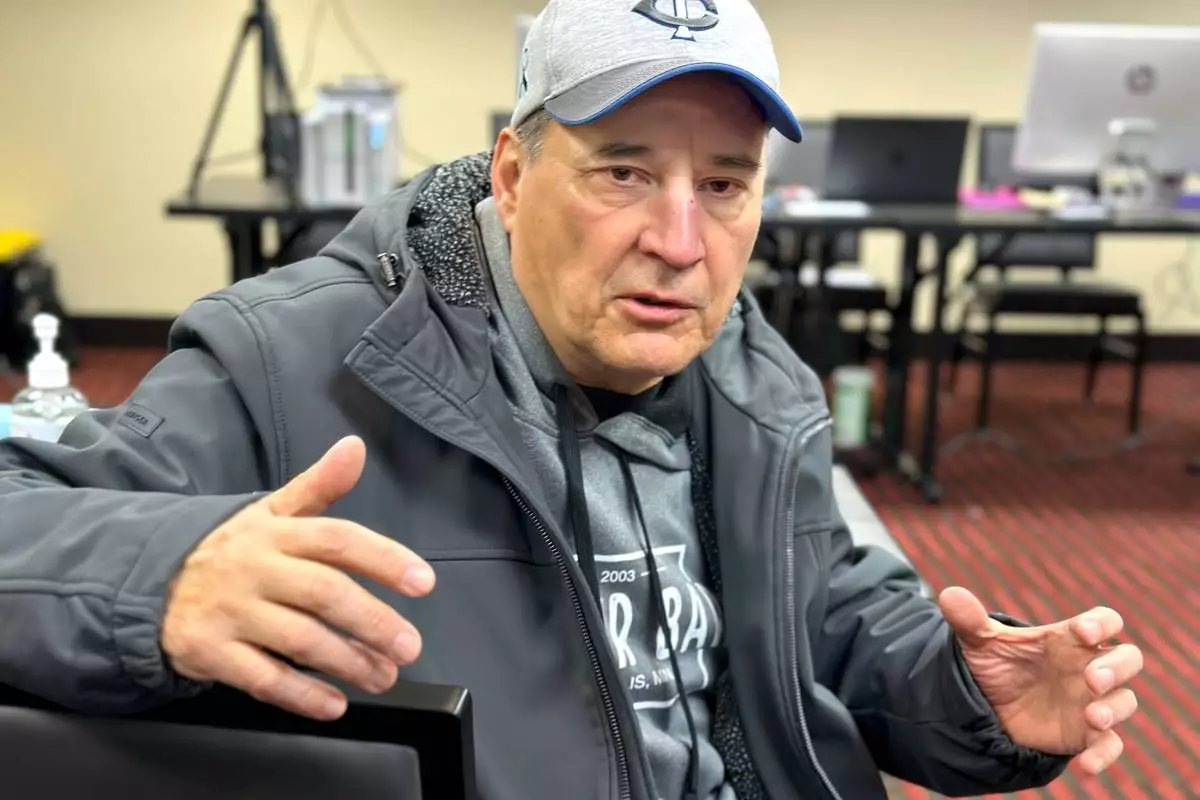
Faron Houle, a citizen of the Turtle Mountain Band of Chippewa, speaks about applying for a tribal identification card at a pop-up event in Minneapolis on Friday, Jan. 23, 2026. (Stewart Huntington/ICT via AP)

Faron Houle, a citizen of the Turtle Mountain Band of Chippewa, speaks about applying for a tribal identification card at a pop-up event in Minneapolis on Friday, Jan. 23, 2026. (Stewart Huntington/ICT via AP)

Like Mantz, many Native Americans are carrying tribal documents proving their U.S. citizenship in case they are stopped or questioned by federal immigration agents. This is why dozens of the 575 federally recognized Native nations are making it easier to get tribal IDs. They're waiving fees, lowering the age of eligibility — ranging from 5 to 18 nationwide — and printing the cards faster.

It's the first time tribal IDs have been widely used as proof of U.S. citizenship and protection against federal law enforcement, said David Wilkins, an expert on Native politics and governance at the University of Richmond.

“I don’t think there’s anything historically comparable,” Wilkins said. “I find it terribly frustrating and disheartening.”

As Native Americans around the country rush to secure documents proving their right to live in the United States, many see a bitter irony.

“As the first people of this land, there’s no reason why Native Americans should have their citizenship questioned,” said Jaqueline De León, a senior staff attorney with the nonprofit Native American Rights Fund and member of Isleta Pueblo.

The U.S. Department of Homeland Security didn’t respond to more than four requests for comment over a week.

Since the mid- to late 1800s, the U.S. government has kept detailed genealogical records to estimate Native Americans’ fraction of “Indian blood” and determine their eligibility for health care, housing, education and other services owed under federal legal responsibilities. Those records were also used to aid federal assimilation efforts and chip away at tribal sovereignty, communal lands and identity.

Beginning in the late 1960s, many tribal nations began issuing their own forms of identification. In the last two decades, tribal photo ID cards have become commonplace and can be used to vote in tribal elections, to prove U.S. work eligibility and for domestic air travel.

About 70% of Native Americans today live in urban areas, including tens of thousands in the Twin Cities, one of the largest urban Native populations in the country.

There, in early January, a top ICE official announced the “largest immigration operation ever.”

Masked, heavily armed agents traveling in convoys of unmarked SUVs became commonplace in some neighborhoods. By this week, more than 3,400 people had been arrested, according to Immigration and Customs Enforcement. At least 2,000 ICE officers and 1,000 Border Patrol officers were on the ground.

Representatives from at least 10 tribes traveled hundreds of miles to Minneapolis — the birthplace of the American Indian Movement — to accept ID applications from members there. Among them were the Lac Courte Oreilles Band of Ojibwe of Wisconsin, the Sisseton Wahpeton Oyate of South Dakota and the Turtle Mountain Band of Chippewa of North Dakota.

Turtle Mountain citizen Faron Houle renewed his tribal ID card and got his young adult son's and his daughter's first ones.

“You just get nervous,” Houle said. “I think (ICE agents are) more or less racial profiling people, including me.”

Events in downtown coffee shops, hotel ballrooms, and at the Minneapolis American Indian Center helped urban tribal citizens connect and share resources, said Christine Yellow Bird, who directs the Mandan, Hidatsa and Arikara Nation’s satellite office in Fargo, North Dakota.

Yellow Bird made four trips to Minneapolis in recent weeks, putting nearly 2,000 miles on her 2017 Chevy Tahoe to help citizens in the Twin Cities who can’t make the long journey to their reservation.

Yellow Bird said she always keeps her tribal ID with her.

“I’m proud of who I am,” she said. “I never thought I would have to carry it for my own safety.”

Last year, Navajo Nation President Buu Nygren said that several tribal citizens reported being stopped and detained by ICE officers in Arizona and New Mexico. He and other tribal leaders have advised citizens to carry tribal IDs with them at all times.

Last November, Elaine Miles, a member of the Confederated Tribes of the Umatilla Indian Reservation in Oregon and an actress known for her roles in “Northern Exposure” and “The Last of Us,” said she was stopped by ICE officers in Washington state who told her that her tribal ID looked fake.

The Oglala Sioux Tribe this week banned ICE from its reservation in southwestern South Dakota and northwestern Nebraska, one of the largest in the country.

The Standing Rock Sioux Tribe of North and South Dakota said a member was detained in Minnesota last weekend. And Peter Yazzie, who is Navajo, said he was arrested and held by U.S. Immigration and Customs Enforcement in Phoenix for several hours last week.

Yazzie, a construction worker from nearby Chinle, Arizona, said he was sitting in his car at a gas station preparing for a day of work when he saw ICE officers arrest some Latino men. The officers soon turned their attention to Yazzie, pushed him to the ground, and searched his vehicle, he said.

He said he told them where to find his driver's license, birth certificate, and a federal Certificate of Degree of Indian Blood. Yazzie said the car he was in is registered to his mother. Officers said the names didn’t match, he said, and he was arrested, taken to a nearby detention center and held for about four hours.

“It’s an ugly feeling. It makes you feel less human. To know that people see your features and think so little of you,” he said.

DHS did not respond to questions about the arrest.

Mantz, the Choctaw Nation citizen, said he runs pest-control operations in Minneapolis neighborhoods where ICE agents are active and he won't leave home without his tribal identification documents.

Securing them for his children is now a priority.

“It gives me some peace of mind. But at the same time, why do we have to carry these documents?” Mantz said. “Who are you to ask us to prove who we are?”

Brewer reported from Oklahoma City and Peters from Edgewood, New Mexico.
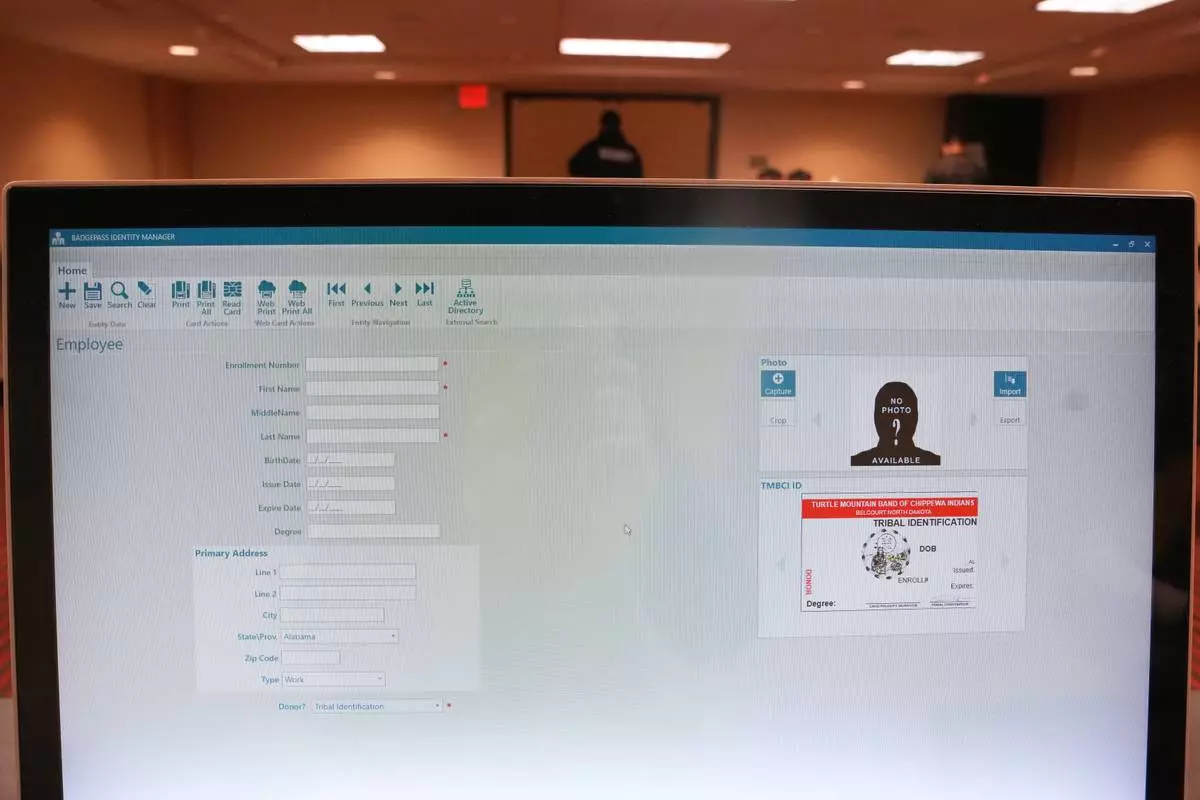
A template of a tribal identification card is displayed on a computer Friday, Jan. 23, 2026, in Minneapolis. (AP Photo/Abbie Parr)
A template of a tribal identification card is displayed on a computer Friday, Jan. 23, 2026, in Minneapolis. (AP Photo/Abbie Parr)

Turtle Mountain Band of Chippewa Chairman Jamie Azure speaks about an effort for tribal citizens to get tribal IDs at a pop-up event in Minneapolis on Friday, Jan. 23, 2026. (Stewart Huntington/ICT via AP)
Turtle Mountain Band of Chippewa Chairman Jamie Azure speaks about an effort for tribal citizens to get tribal IDs at a pop-up event in Minneapolis on Friday, Jan. 23, 2026. (Stewart Huntington/ICT via AP)

Paperwork to apply for a tribal identification card is displayed Friday, Jan. 23, 2026, in Minneapolis. (AP Photo/Abbie Parr)
Paperwork to apply for a tribal identification card is displayed Friday, Jan. 23, 2026, in Minneapolis. (AP Photo/Abbie Parr)

Faron Houle, a citizen of the Turtle Mountain Band of Chippewa, speaks about applying for a tribal identification card at a pop-up event in Minneapolis on Friday, Jan. 23, 2026. (Stewart Huntington/ICT via AP)
Faron Houle, a citizen of the Turtle Mountain Band of Chippewa, speaks about applying for a tribal identification card at a pop-up event in Minneapolis on Friday, Jan. 23, 2026. (Stewart Huntington/ICT via AP)
MELBOURNE, Australia (AP) — Carlos Alcaraz overcame injury to fend off Alexander Zverev in an epic, momentum-swinging five-setter Friday, becoming the youngest man in the Open era to reach the finals of all four Grand Slam events.

At 22, he’s aiming to be the youngest man to complete a career Grand Slam.

He reached his first Australian Open final the hard way, winning 6-4, 7-6 (5), 6-7 (3), 6-7 (4), 7-5 in 5 hours, 27 minutes. It was the longest match of the tournament so far, and the longest semifinal ever at the Australian Open — surpassing the 2009 classic between Rafael Nadal and Fernando Verdasco.

That's despite him being two points away in the third set from a semifinal victory in a tournament where he hadn’t dropped a set through five rounds.

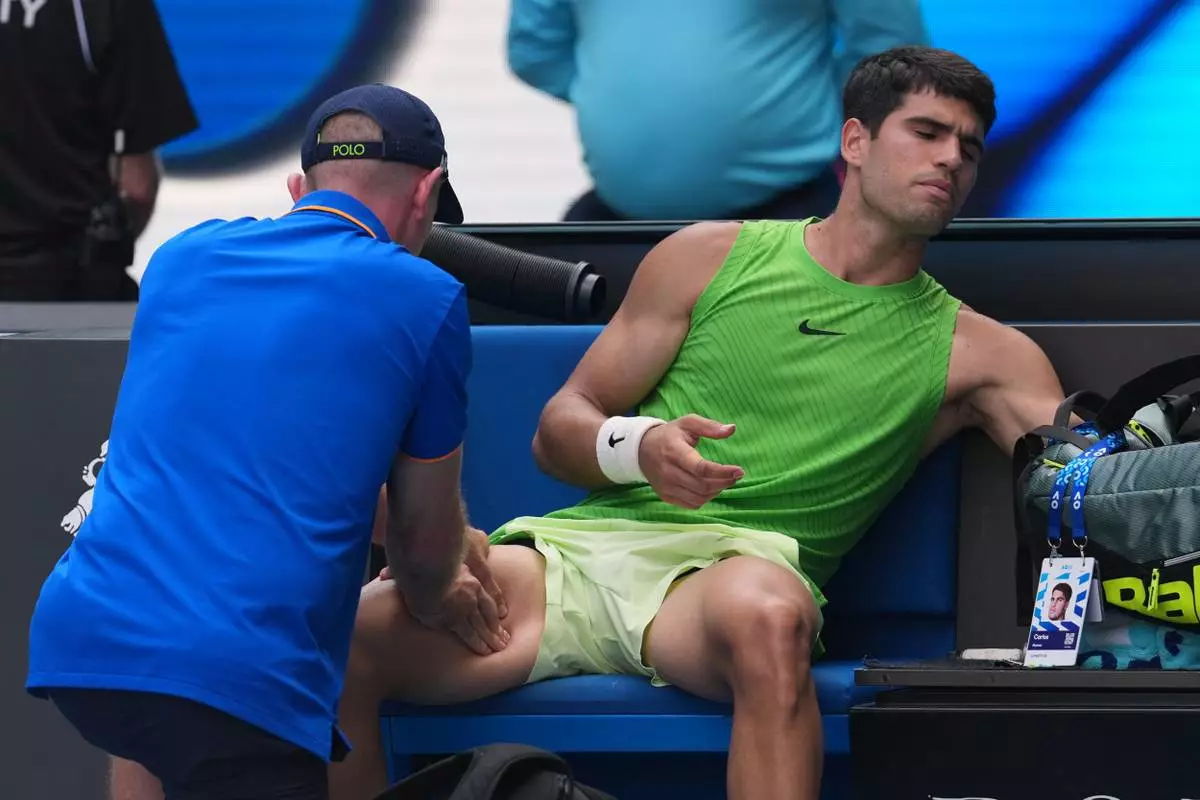
After a medical timeout for treatment on his upper right leg and massages on the same area at two changeovers, Alcaraz's footwork wasn't up to his usual elite standard.

He made it through the third and fourth sets and was behind in the fifth after dropping serve in the first game. But he kept up the pressure and didn’t break back until Zverev was serving for the match in the 10th. He won the last four games.

The top-ranked Alcaraz will next face either two-time defending champion Jannik Sinner or 10-time Australian Open winner Novak Djokovic, who is bidding for an unprecedented 25th Grand Slam singles crown. The marathon afternoon match delayed the start of the night semifinal.

Asked how he was able to recover despite being so close to defeat, Alcaraz just said he kept “believing, believing, all the time.”

“I was struggling in the middle of the third set. You know, physically it was one of the most demanding matches that I have ever played," he said. "But I’ve been in these situations, I’ve been in these kind of matches before, so I knew what I had to do.

“I had to put my heart into the match. I think I did it. I fought until the last ball. Extremely proud (of) myself.”

Alcaraz had only lost one of his previous 15 matches that went to five sets. Zverev had a good record in that department, too, at 23-14. But this was the longest match of his career, and he said he ran out of steam.

When he led by two sets, Alcaraz appeared to be in the kind of form that won him the U.S. Open last year and has helped him evenly split the last eight majors with Sinner.

In the ninth game of the third, Alcaraz started limping and having problems with his upper right leg. After holding for 5-4, he took a medical timeout in the changeover. It may have been cramp, but he rubbed the inside of his thigh and called for the trainer.

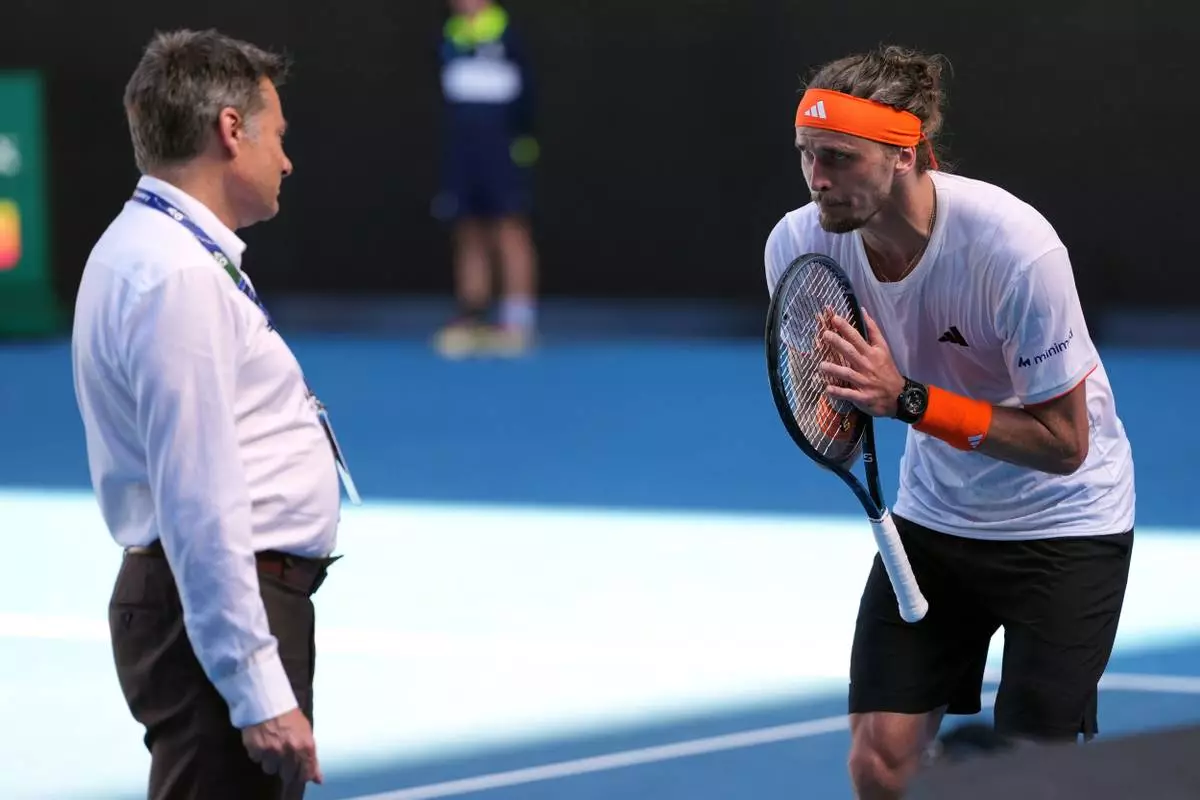
Zverev was demonstrably upset, taking it up with a tournament supervisor, when his rival was given the three-minute break for treatment.

“He was cramping, so normally you can’t take a medical timeout for cramping,” Zverev said. “What can I do? I didn’t like it, but it’s not my decision.

"But, to be honest, I don’t want to talk about this right now, because I think this is one of the best battles there ever was in Australia. It doesn’t deserve to be the topic now."

No. 3 Zverev, the 2025 runner-up, retained his composure despite Alcaraz’s obvious discomfort and the crowd on Rod Laver Arena being firmly behind the Spaniard.

He won the last four points of the third set and then the tiebreaker, and was in front for the entire fourth set. More than four hours had elapsed when the match went to a fifth set — the first five-setter on the center court in 2026.

Alcaraz dropped serve in the opening game but hung with Zverev, getting five breakpoint chances without being able to convert.

In the sixth game Alcaraz sprinted across court to track down a drop shot and slid at full pace for an angled forehand winner. The crowd went crazy, and Alcaraz was back.

Alcaraz finally converted a break when Zverev was serving for the match at 5-4.

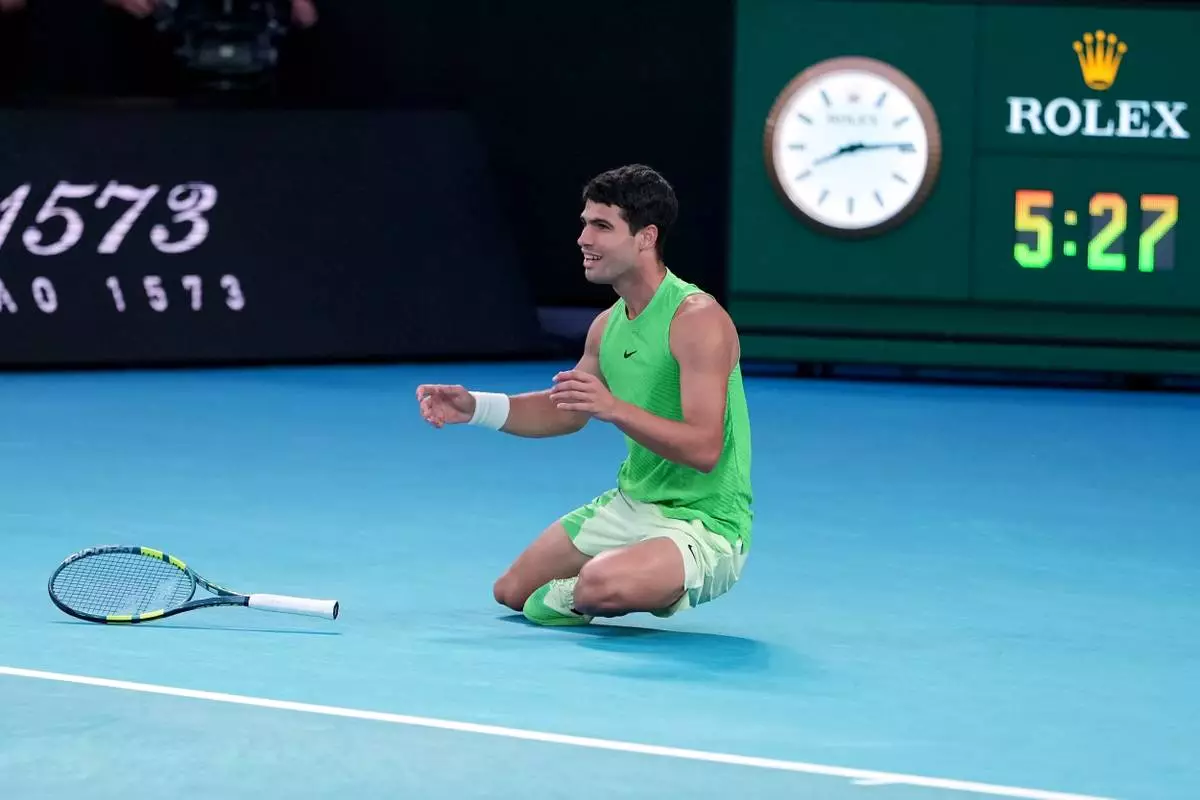
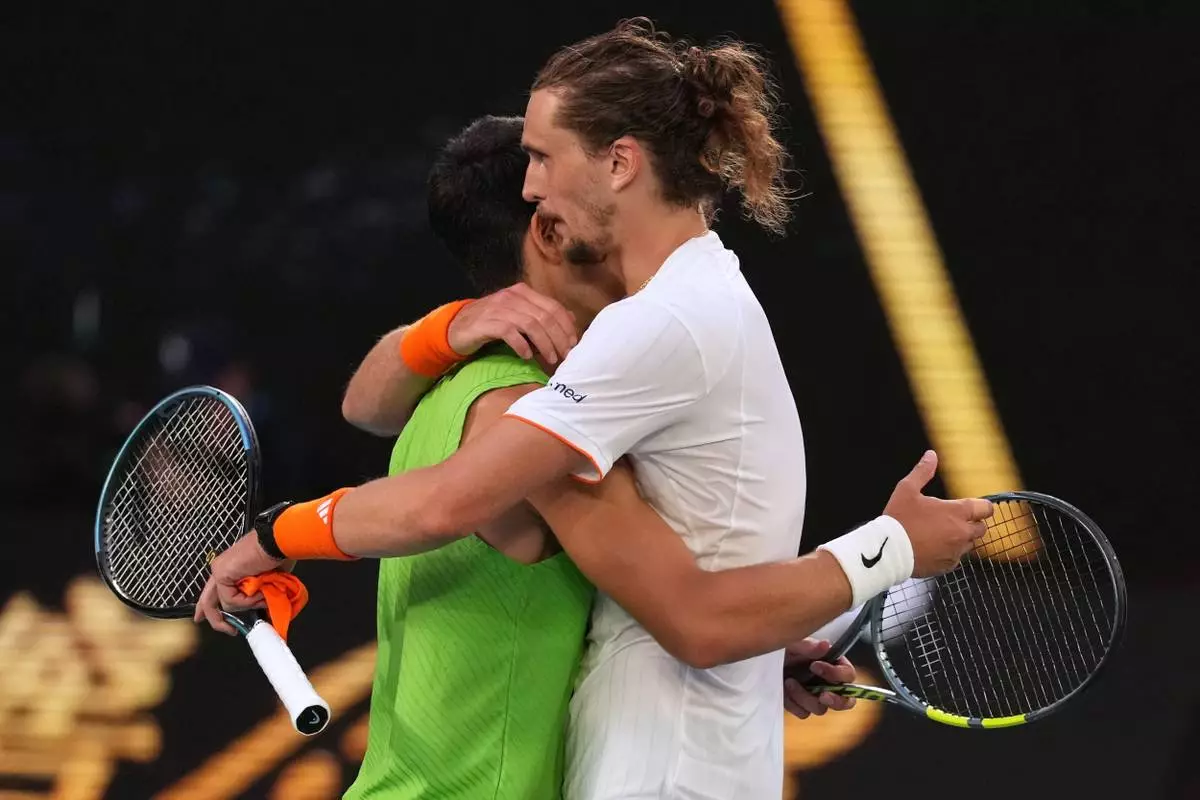
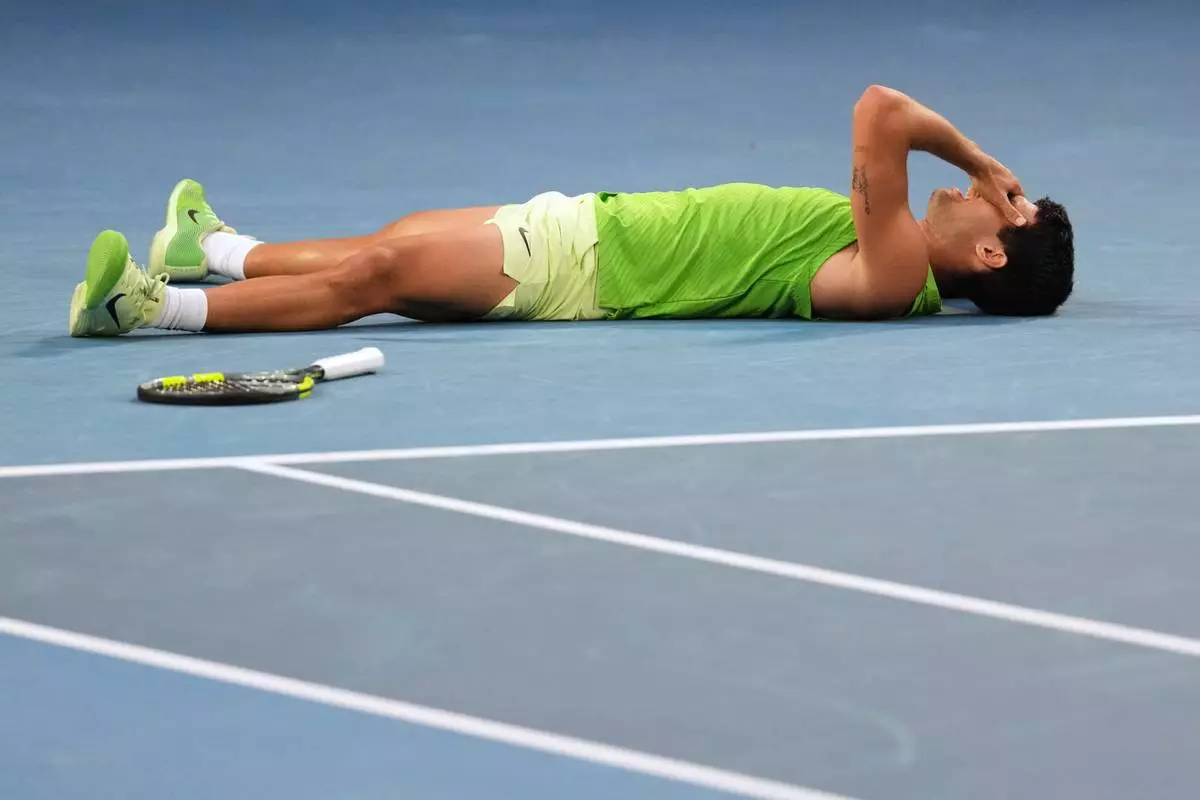
After holding serve and piling all the pressure back on his rival, Alcaraz clinched it on his first match point when Zverev netted. He let his racket slip and flopped on the court, lying on his back. By the time he got up, Zverev had come around the net for a congratulatory hug.

“I’m just really happy to have the chance to play my first final here in Melbourne," Alcaraz said. “It is something that I was pursuing a lot, chasing a lot, having the chance to fight for the title.”

AP tennis: https://apnews.com/hub/tennis

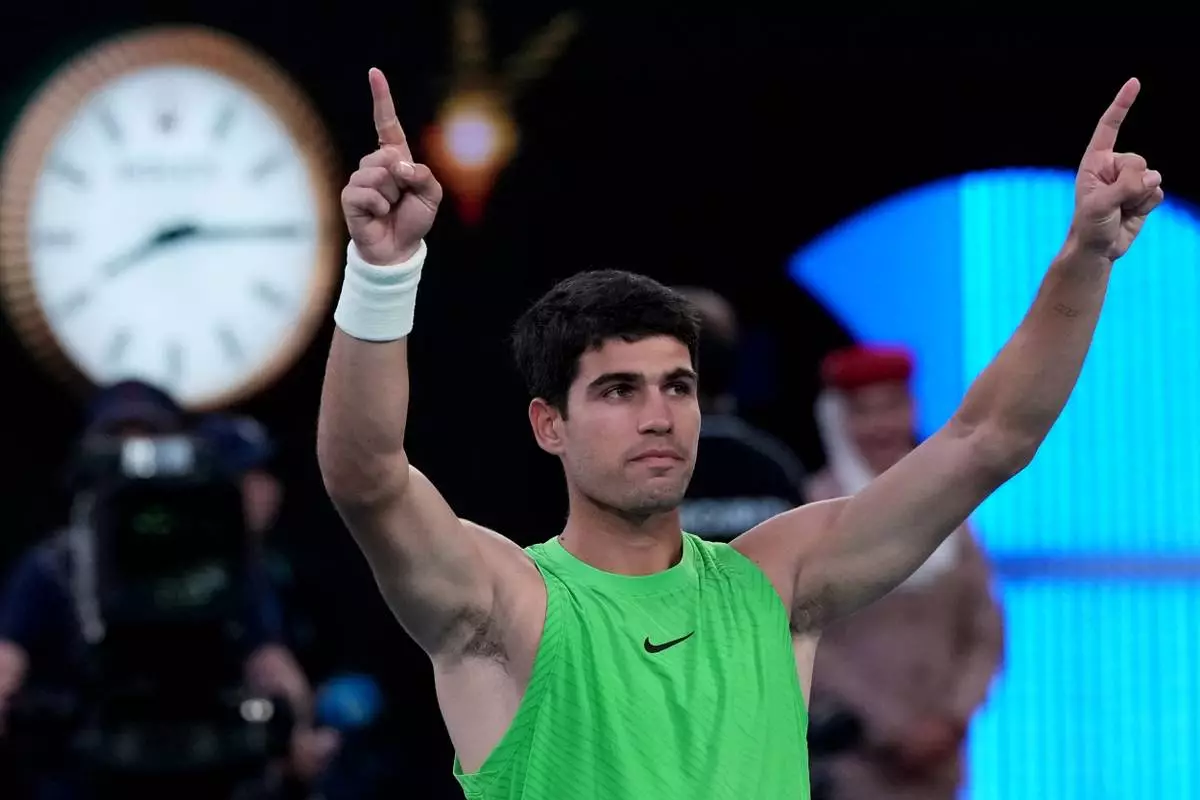
Carlos Alcaraz of Spain celebrates after defeating Alexander Zverev of Germany in their semifinal match at the Australian Open tennis championship in Melbourne, Australia, Friday, Jan. 30, 2026. (AP Photo/Aaron Favila)

Carlos Alcaraz of Spain celebrates after defeating Alexander Zverev of Germany in their semifinal match at the Australian Open tennis championship in Melbourne, Australia, Friday, Jan. 30, 2026. (AP Photo/Aaron Favila)

Carlos Alcaraz of Spain is congratulated by Alexander Zverev, right, of Germany following their semifinal match at the Australian Open tennis championship in Melbourne, Australia, Friday, Jan. 30, 2026. (AP Photo/Dita Alangakra)

Carlos Alcaraz of Spain is congratulated by Alexander Zverev, right, of Germany following their semifinal match at the Australian Open tennis championship in Melbourne, Australia, Friday, Jan. 30, 2026. (AP Photo/Dita Alangakra)

Carlos Alcaraz of Spain celebrates after defeating Alexander Zverev of Germany in their semifinal match at the Australian Open tennis championship in Melbourne, Australia, Friday, Jan. 30, 2026. (AP Photo/Dita Alangakra)

Carlos Alcaraz of Spain celebrates after defeating Alexander Zverev of Germany in their semifinal match at the Australian Open tennis championship in Melbourne, Australia, Friday, Jan. 30, 2026. (AP Photo/Dita Alangakra)

Carlos Alcaraz of Spain celebrates after defeating Alexander Zverev of Germany in their semifinal match at the Australian Open tennis championship in Melbourne, Australia, Friday, Jan. 30, 2026. (AP Photo/Asanka Brendon Ratnayake)

Carlos Alcaraz of Spain celebrates after defeating Alexander Zverev of Germany in their semifinal match at the Australian Open tennis championship in Melbourne, Australia, Friday, Jan. 30, 2026. (AP Photo/Asanka Brendon Ratnayake)

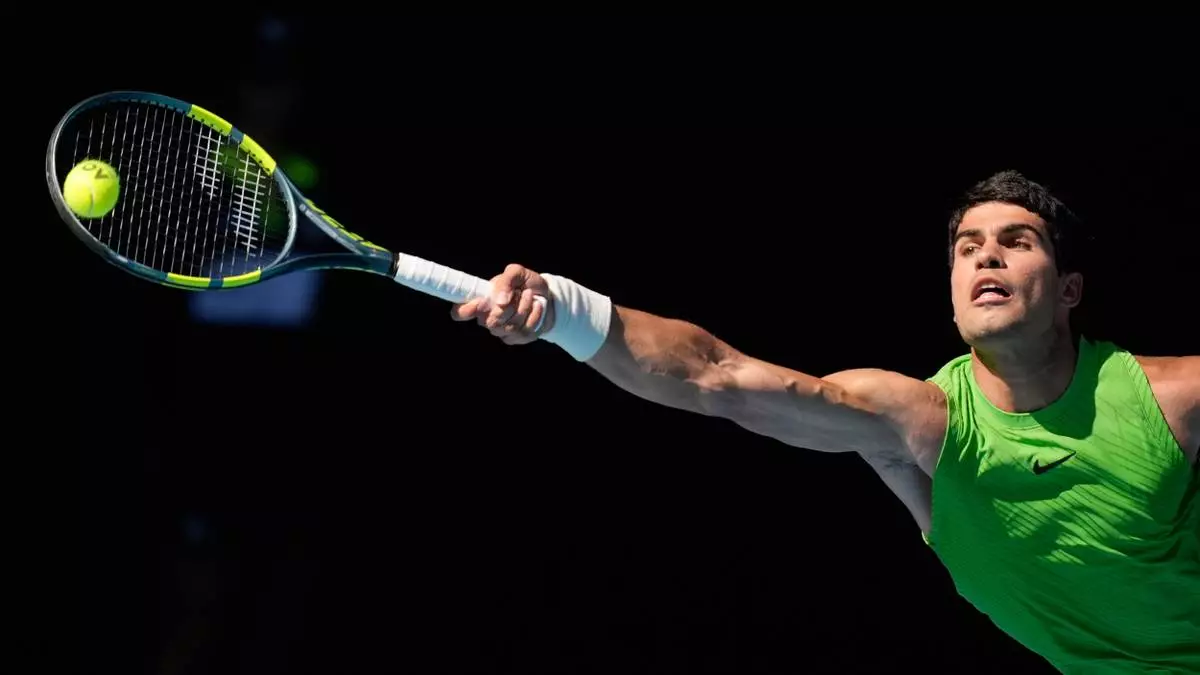
Carlos Alcaraz of Spain plays a forehand return to Alexander Zverev of Germany during their semifinal match at the Australian Open tennis championship in Melbourne, Australia, Friday, Jan. 30, 2026. (AP Photo/Asanka Brendon Ratnayake)

Carlos Alcaraz of Spain plays a forehand return to Alexander Zverev of Germany during their semifinal match at the Australian Open tennis championship in Melbourne, Australia, Friday, Jan. 30, 2026. (AP Photo/Asanka Brendon Ratnayake)

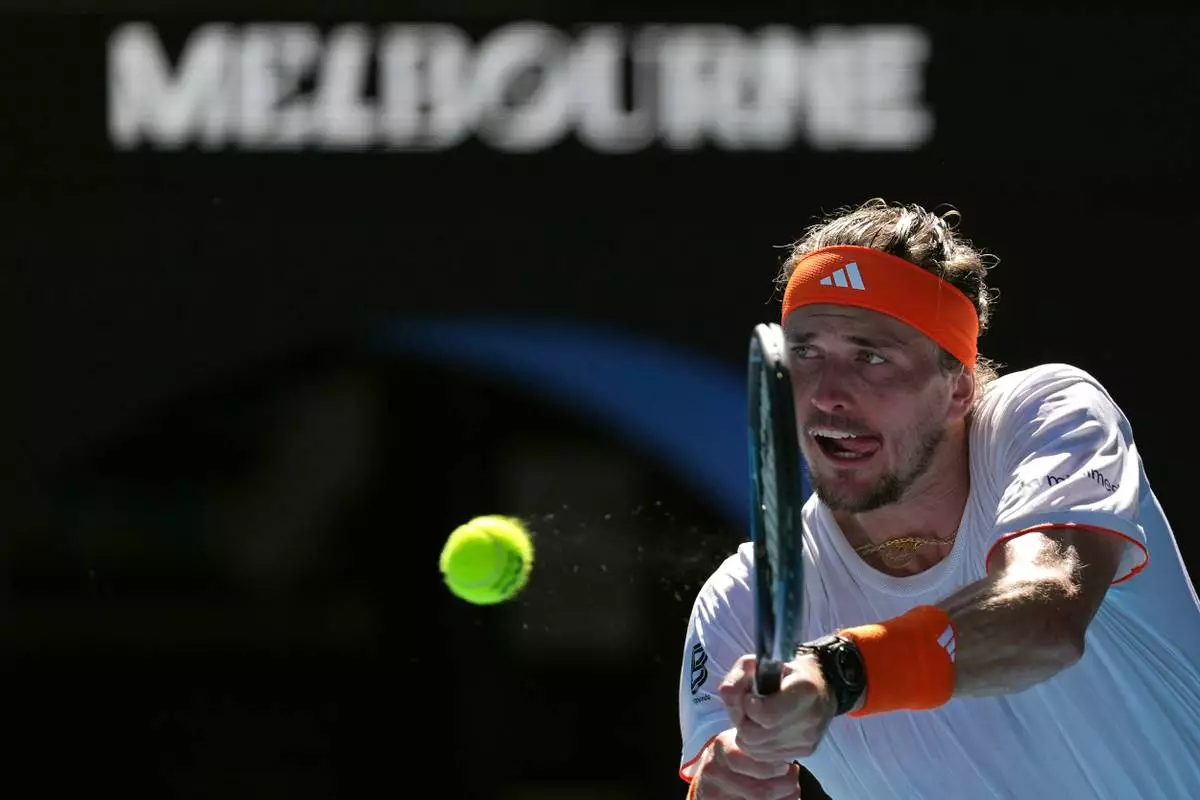
Alexander Zverev of Germany plays a backhand return to Carlos Alcaraz of Spain during their semifinal match at the Australian Open tennis championship in Melbourne, Australia, Friday, Jan. 30, 2026. (AP Photo/Dita Alangakra)

Alexander Zverev of Germany plays a backhand return to Carlos Alcaraz of Spain during their semifinal match at the Australian Open tennis championship in Melbourne, Australia, Friday, Jan. 30, 2026. (AP Photo/Dita Alangakra)

Alexander Zverev of Germany gesturers to a tournament official during his semifinal match against Carlos Alcaraz of Spain at the Australian Open tennis championship in Melbourne, Australia, Friday, Jan. 30, 2026. (AP Photo/Asanka Brendon Ratnayake)

Alexander Zverev of Germany gesturers to a tournament official during his semifinal match against Carlos Alcaraz of Spain at the Australian Open tennis championship in Melbourne, Australia, Friday, Jan. 30, 2026. (AP Photo/Asanka Brendon Ratnayake)

Carlos Alcaraz of Spain receives treatment during his semifinal match against Alexander Zverev of Germany at the Australian Open tennis championship in Melbourne, Australia, Friday, Jan. 30, 2026. (AP Photo/Dita Alangakra)

Carlos Alcaraz of Spain receives treatment during his semifinal match against Alexander Zverev of Germany at the Australian Open tennis championship in Melbourne, Australia, Friday, Jan. 30, 2026. (AP Photo/Dita Alangakra)

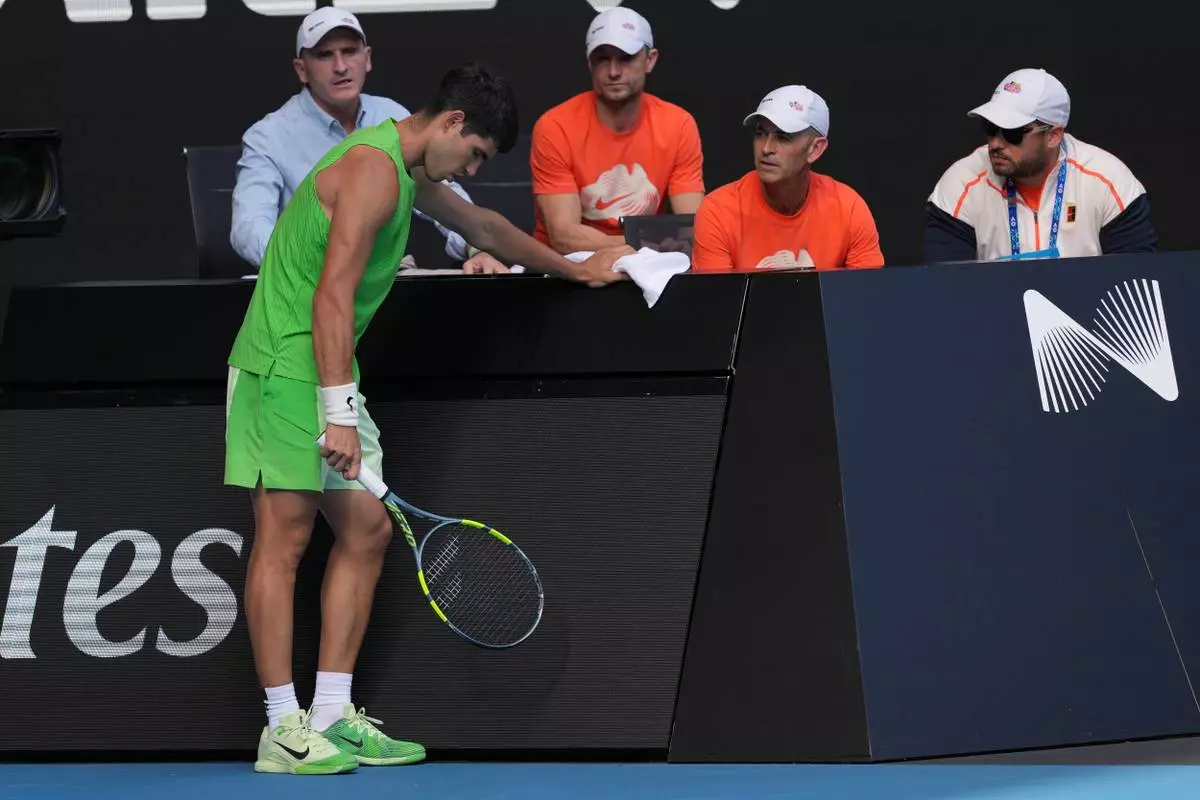
Carlos Alcaraz of Spain talks to his team during his semifinal match against o Alexander Zverev of Germany at the Australian Open tennis championship in Melbourne, Australia, Friday, Jan. 30, 2026. (AP Photo/Asanka Brendon Ratnayake)

Carlos Alcaraz of Spain talks to his team during his semifinal match against o Alexander Zverev of Germany at the Australian Open tennis championship in Melbourne, Australia, Friday, Jan. 30, 2026. (AP Photo/Asanka Brendon Ratnayake)

Recommended Articles