MELBOURNE, Australia (AP) — Novak Djokovic finally beat one of the two men who've been blocking his path to an unprecedented 25th Grand Slam singles title when he edged Jannik Sinner in five sets to reach the Australian Open final Friday.
To get that coveted No. 25, he'll have to beat the other: Top-ranked Carlos Alcaraz.
Click to Gallery
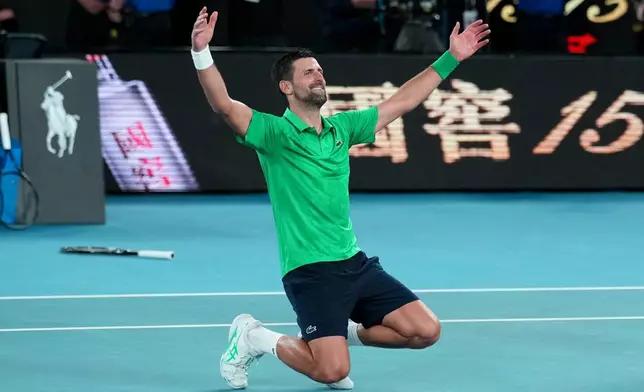
Novak Djokovic of Serbia celebrates after defeating Jannik Sinner of Italy in their semifinal match at the Australian Open tennis championship in Melbourne, Australia, early Saturday, Jan. 31, 2026. (AP Photo/Dita Alangkara)
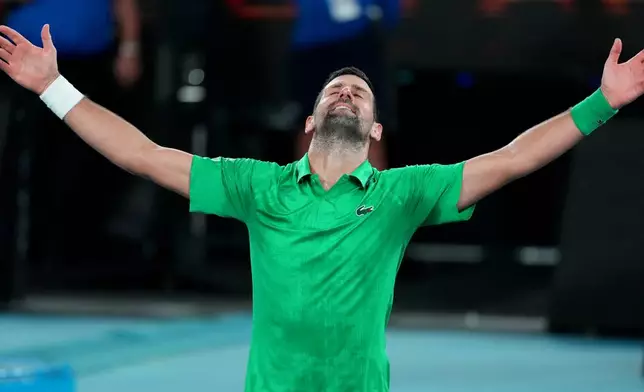
Novak Djokovic of Serbia celebrates after defeating Jannik Sinner of Italy in their semifinal match at the Australian Open tennis championship in Melbourne, Australia, early Saturday, Jan. 31, 2026. (AP Photo/Asanka Brendon Ratnayake)
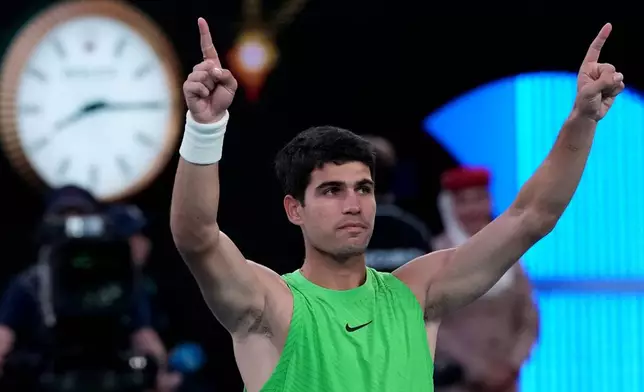
Carlos Alcaraz of Spain celebrates after defeating Alexander Zverev of Germany in their semifinal match at the Australian Open tennis championship in Melbourne, Australia, Friday, Jan. 30, 2026. (AP Photo/Aaron Favila)
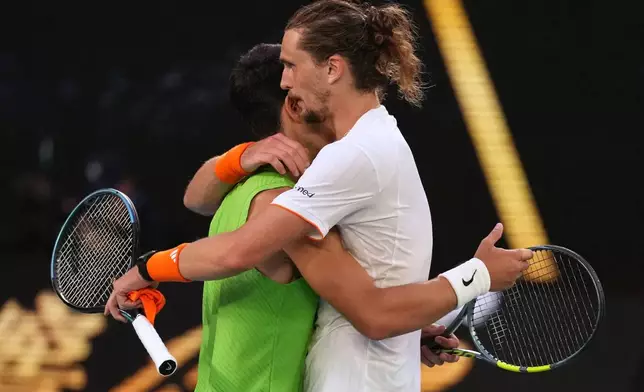
Carlos Alcaraz of Spain is congratulated by Alexander Zverev, right, of Germany following their semifinal match at the Australian Open tennis championship in Melbourne, Australia, Friday, Jan. 30, 2026. (AP Photo/Dita Alangakra)
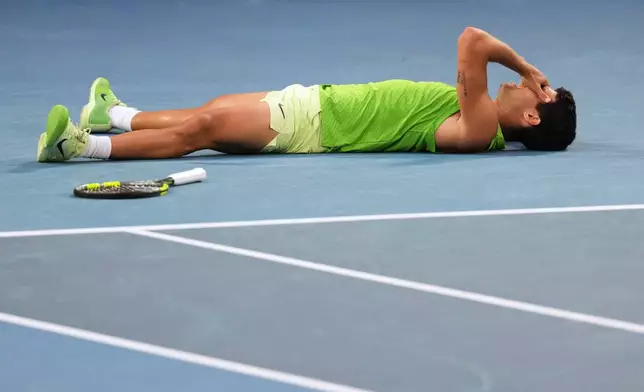
Carlos Alcaraz of Spain celebrates after defeating Alexander Zverev of Germany in their semifinal match at the Australian Open tennis championship in Melbourne, Australia, Friday, Jan. 30, 2026. (AP Photo/Dita Alangakra)
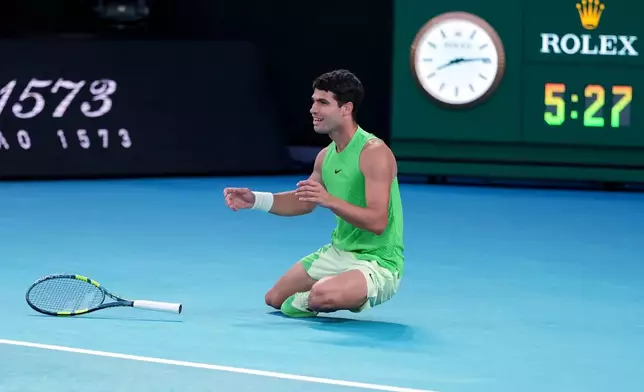
Carlos Alcaraz of Spain celebrates after defeating Alexander Zverev of Germany in their semifinal match at the Australian Open tennis championship in Melbourne, Australia, Friday, Jan. 30, 2026. (AP Photo/Asanka Brendon Ratnayake)
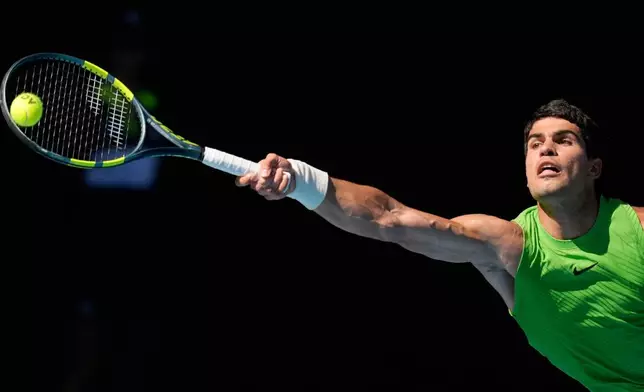
Carlos Alcaraz of Spain plays a forehand return to Alexander Zverev of Germany during their semifinal match at the Australian Open tennis championship in Melbourne, Australia, Friday, Jan. 30, 2026. (AP Photo/Asanka Brendon Ratnayake)
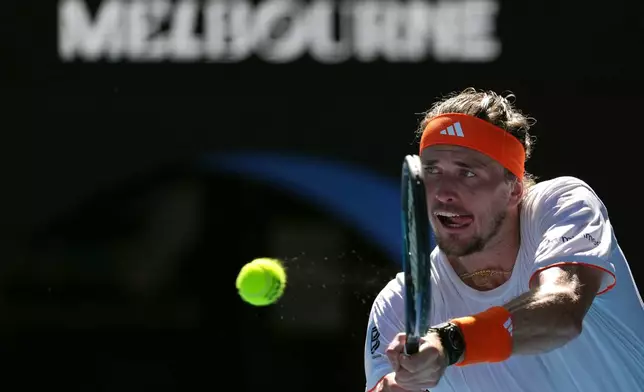
Alexander Zverev of Germany plays a backhand return to Carlos Alcaraz of Spain during their semifinal match at the Australian Open tennis championship in Melbourne, Australia, Friday, Jan. 30, 2026. (AP Photo/Dita Alangakra)
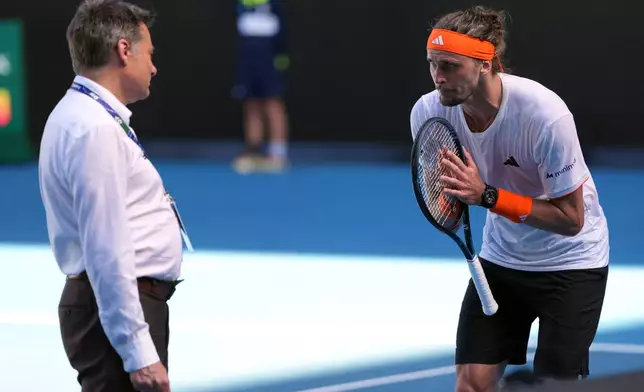
Alexander Zverev of Germany gesturers to a tournament official during his semifinal match against Carlos Alcaraz of Spain at the Australian Open tennis championship in Melbourne, Australia, Friday, Jan. 30, 2026. (AP Photo/Asanka Brendon Ratnayake)
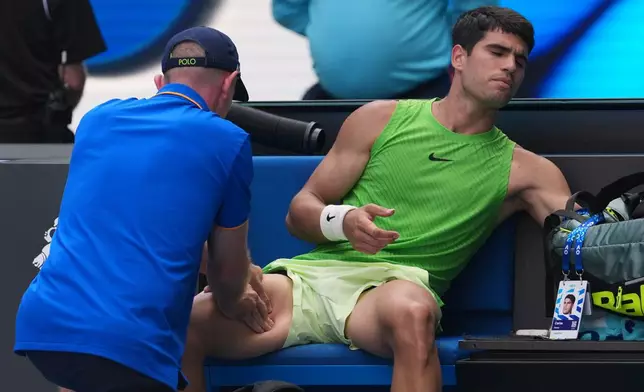
Carlos Alcaraz of Spain receives treatment during his semifinal match against Alexander Zverev of Germany at the Australian Open tennis championship in Melbourne, Australia, Friday, Jan. 30, 2026. (AP Photo/Dita Alangakra)
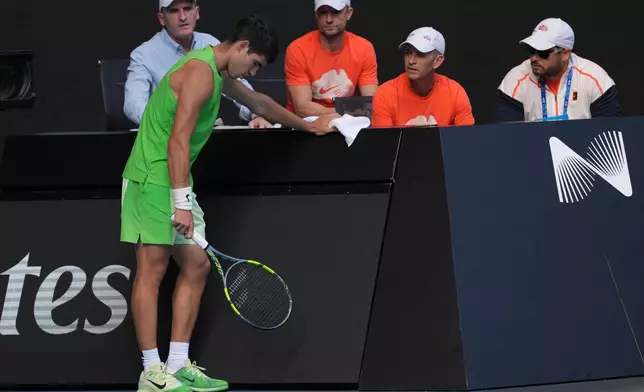
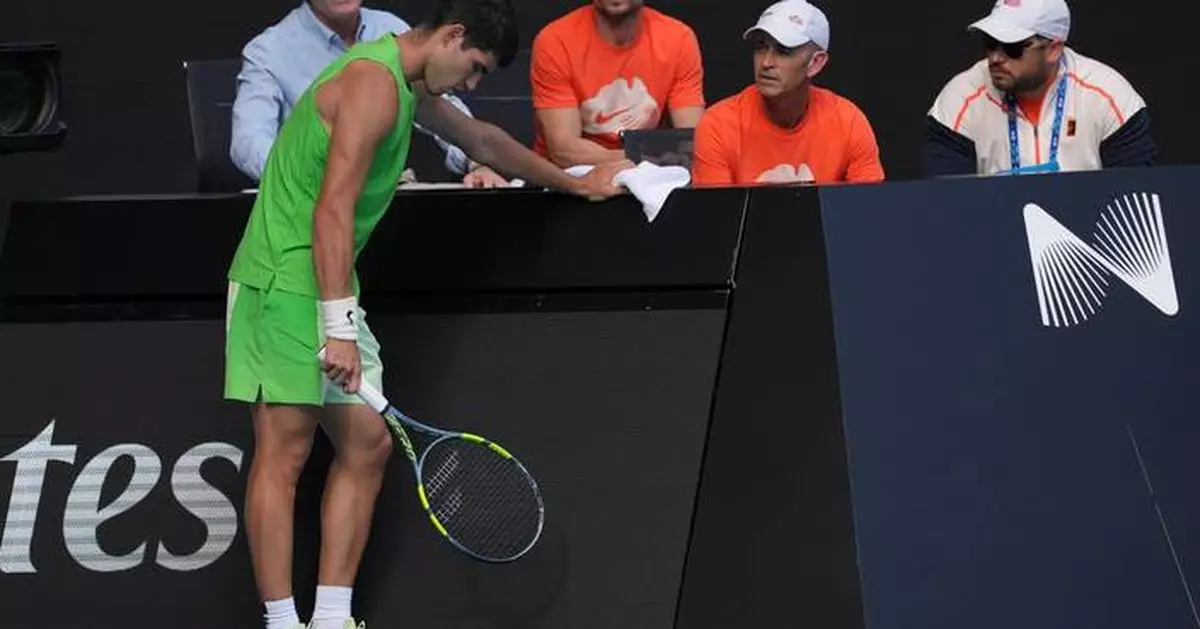
Carlos Alcaraz of Spain talks to his team during his semifinal match against o Alexander Zverev of Germany at the Australian Open tennis championship in Melbourne, Australia, Friday, Jan. 30, 2026. (AP Photo/Asanka Brendon Ratnayake)
They're both chasing history in Sunday's championship decider, with Alcaraz striving to become the youngest man at 22 ever to complete a career Grand Slam.
“There’s always, for me, also for Carlos because of his age and everything he's achieved, history is on the line for both of us," Djokovic told reporters packed into a small room deep inside the stadium in a brief interview approaching 3 a.m. "Finals of a Grand Slam. There’s a lot at stake.”
The top-ranked Alcaraz came through his own grueling five-setter. He overcame cramps and a sore right leg to fend off No. 3 Alexander Zverev 6-4, 7-6 (5), 6-7 (3), 6-7 (4), 7-5 in a match that started in the warmth of the afternoon and, 5 hours, 27 minutes later, became the longest semifinal ever at the Australian Open.
That pushed the scheduled start of the Sinner-Djokovic semifinal back a couple of hours, and the 38-year-old Djokovic finally won 3-6, 6-3, 4-6, 6-4, 6-4 just after 1:30 a.m.
“It feels surreal,” Djokovic said of his 4-hour, 9-minute triumph. “Honestly, it feels like winning already tonight. I know I have to come back … and fight the No. 1 of the world. I just hope that I’ll have enough gas to stay toe-to-toe with him.
“For me, this is a win that almost equals winning a Grand Slam.”
Djokovic conceded he was lucky to even get to the semifinals. He narrowly missed hitting a ball girl with a reckless swipe in the third round to be almost defaulted from the tournament, got a walkover in the fourth round, and felt he was heading home in the quarterfinals when he trailed Lorenzo Musetti by two sets until the Italian retired with an injured right leg.
Djokovic hadn't won a set since the third round but against Sinner, the two-time defending champion, Djokovic was at the peak of his attacking and defensive powers. He fended off 16 of the 18 breakpoints he faced and stifled Sinner's opportunities. It ended a run of five losses to Sinner, and a run of four semifinal exits for Djokovic at the majors.
“Had many chances, couldn’t use them, and that’s the outcome,” Sinner said. “Yeah, it hurts, for sure.”
Alcaraz and Sinner have split the last eight major titles between them since Djokovic won his last title at the 2023 U.S. Open.
But nobody knows how to win more often at Melbourne Park than Djokovic. He has won all 10 times he's contested the Australian Open final. He has been saying for months that Alcaraz and Sinner have been playing at a higher level than everyone else. He also said he never doubted he could rise to that level.
“I never stopped doubting. I never stopped believing in myself,” he said. "There’s a lot of people that doubted me ... a lot of experts all of a sudden that wanted to retire me.
“I want to thank them all because they gave me strength. They gave me motivation to prove them wrong, which I have tonight.”
The top four seeds reached the men’s semifinals for just the fifth time and Day 13 was destined to produce some much-needed drama. The season-opening major had been a relatively slow burn until the back-to-back five-setters lasting a combined 9 hours, 36 minutes.
Alcaraz and Zverev, the 2025 runner-up, surpassed the 2009 classic between Rafael Nadal and Fernando Verdasco as the longest ever Australian Open semifinal.
Alcaraz was as close as two points from victory in the third set but was hampered by pain in his upper right leg and his medical timeout became contentious.
He said initially it didn’t feel like cramping because the pain seemed to be just in one muscle, the right adductor, and he needed an assessment.
He endured the third and fourth sets and was behind in the fifth after dropping serve in the first game. He kept up the pressure but didn’t break back until Zverev was serving for the match. He then won the last four games.
“Physically we pushed each other to the limit today. We pushed our bodies to the limit,” Alcaraz said. “I rank this one in the top position of one of the best matches that I have ever won.”
Alcaraz admitted he was struggling but he kept “believing, believing, all the time.”
“I knew what I had to do. I had to put my heart into the match. I think I did it."
Zverev was demonstrably upset about the time out in the third set, taking it up with a tournament supervisor. Later, he said that episode shouldn't overshadow the contest.
“I don’t want to talk about this right now because this is one of the best battles there ever was in Australia,” he said. “It doesn’t deserve to be the topic now.”
AP tennis: https://apnews.com/hub/tennis
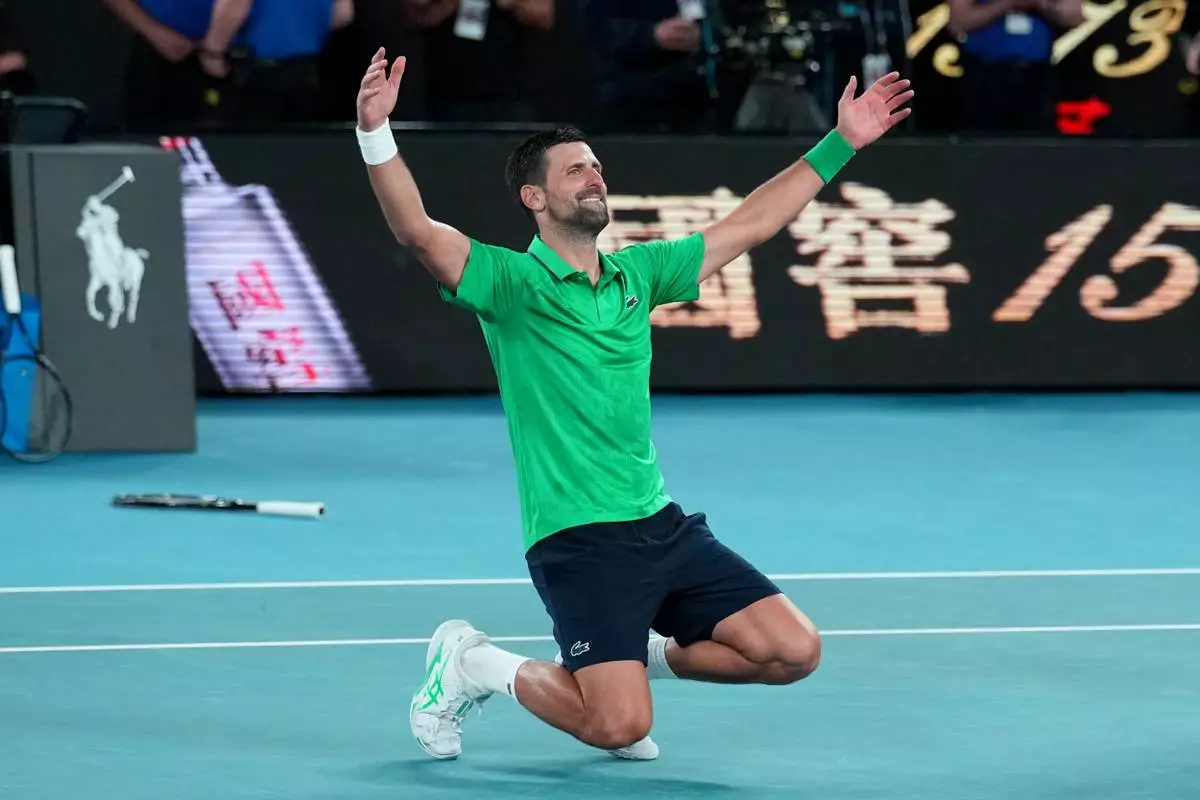
Novak Djokovic of Serbia celebrates after defeating Jannik Sinner of Italy in their semifinal match at the Australian Open tennis championship in Melbourne, Australia, early Saturday, Jan. 31, 2026. (AP Photo/Dita Alangkara)
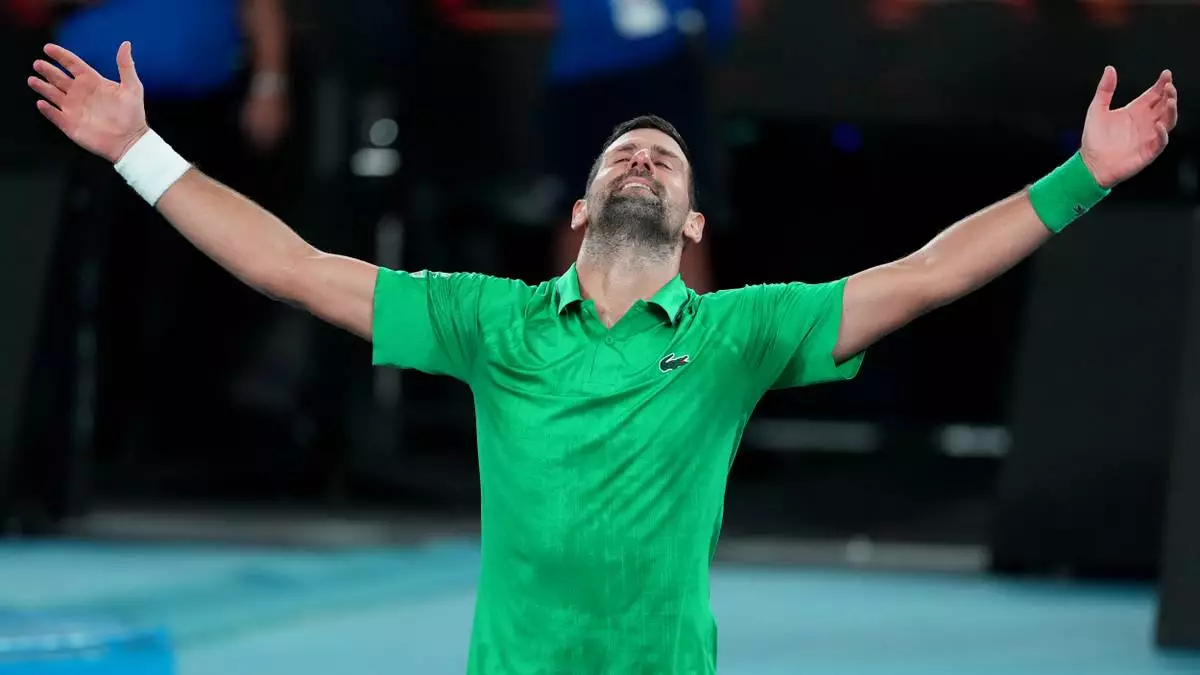
Novak Djokovic of Serbia celebrates after defeating Jannik Sinner of Italy in their semifinal match at the Australian Open tennis championship in Melbourne, Australia, early Saturday, Jan. 31, 2026. (AP Photo/Asanka Brendon Ratnayake)
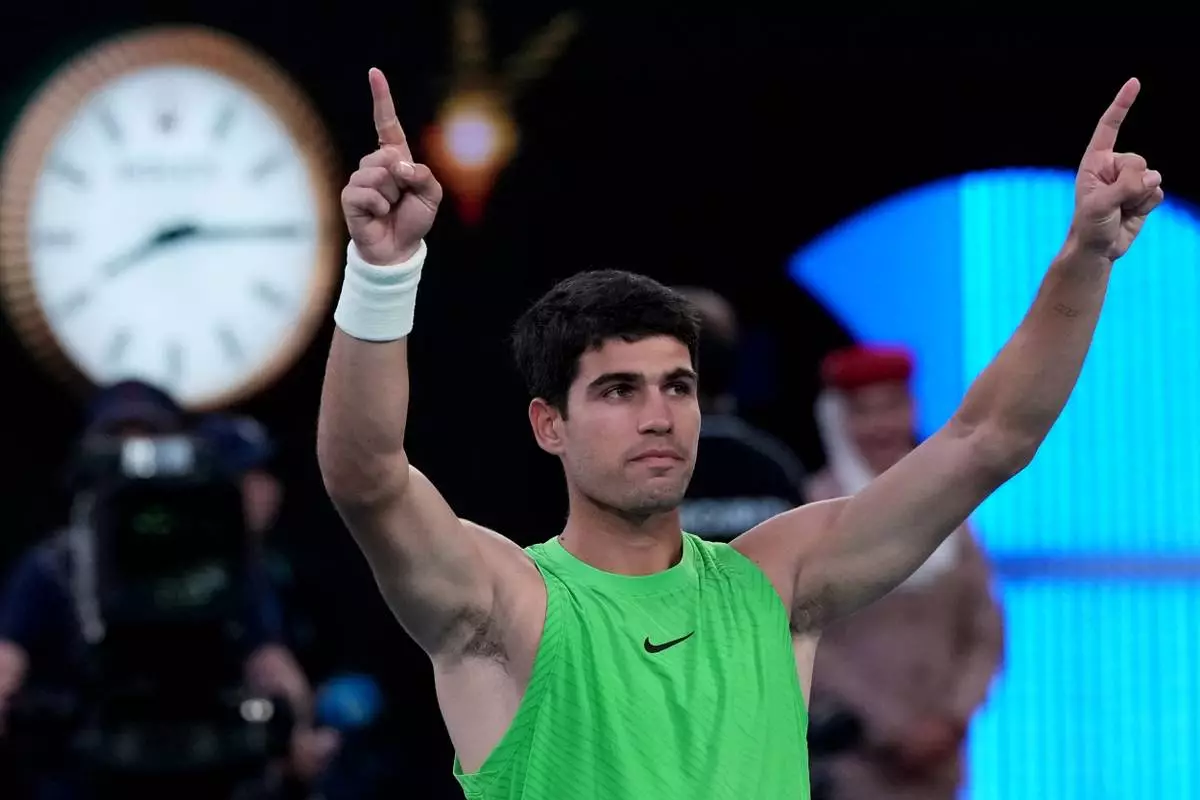
Carlos Alcaraz of Spain celebrates after defeating Alexander Zverev of Germany in their semifinal match at the Australian Open tennis championship in Melbourne, Australia, Friday, Jan. 30, 2026. (AP Photo/Aaron Favila)
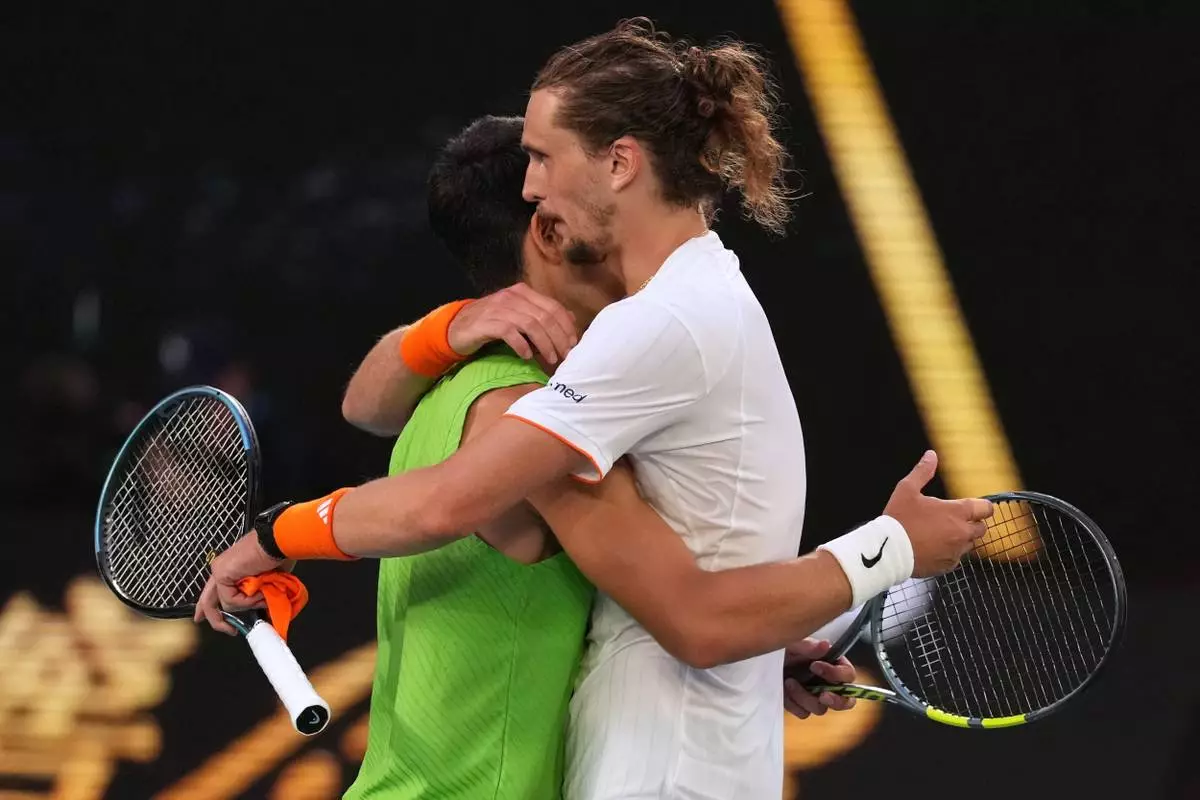
Carlos Alcaraz of Spain is congratulated by Alexander Zverev, right, of Germany following their semifinal match at the Australian Open tennis championship in Melbourne, Australia, Friday, Jan. 30, 2026. (AP Photo/Dita Alangakra)
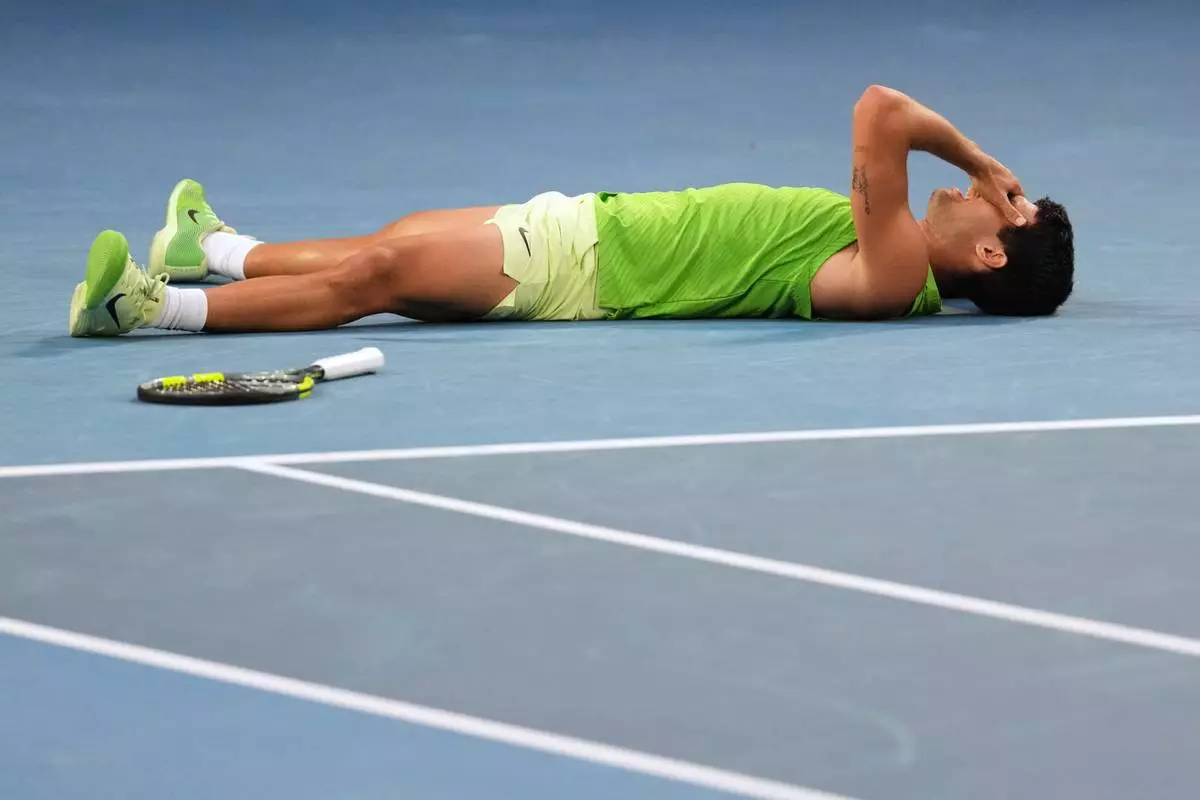
Carlos Alcaraz of Spain celebrates after defeating Alexander Zverev of Germany in their semifinal match at the Australian Open tennis championship in Melbourne, Australia, Friday, Jan. 30, 2026. (AP Photo/Dita Alangakra)
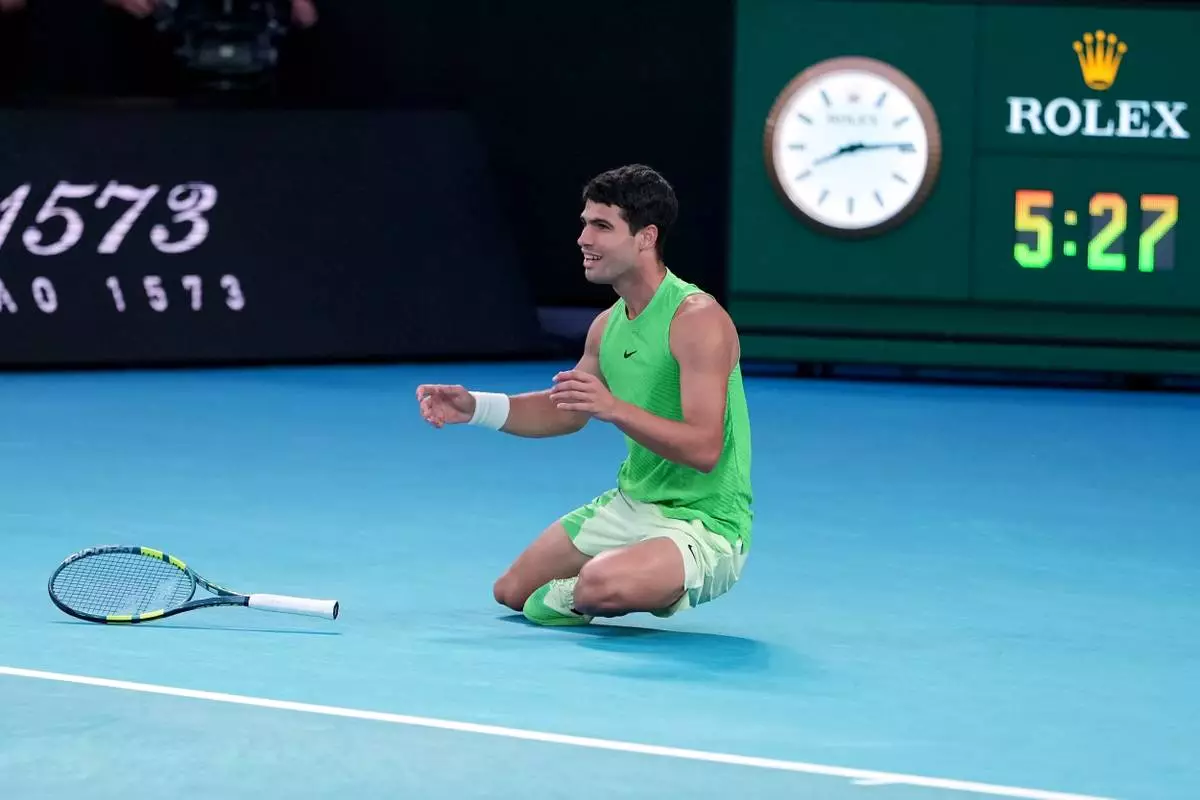
Carlos Alcaraz of Spain celebrates after defeating Alexander Zverev of Germany in their semifinal match at the Australian Open tennis championship in Melbourne, Australia, Friday, Jan. 30, 2026. (AP Photo/Asanka Brendon Ratnayake)
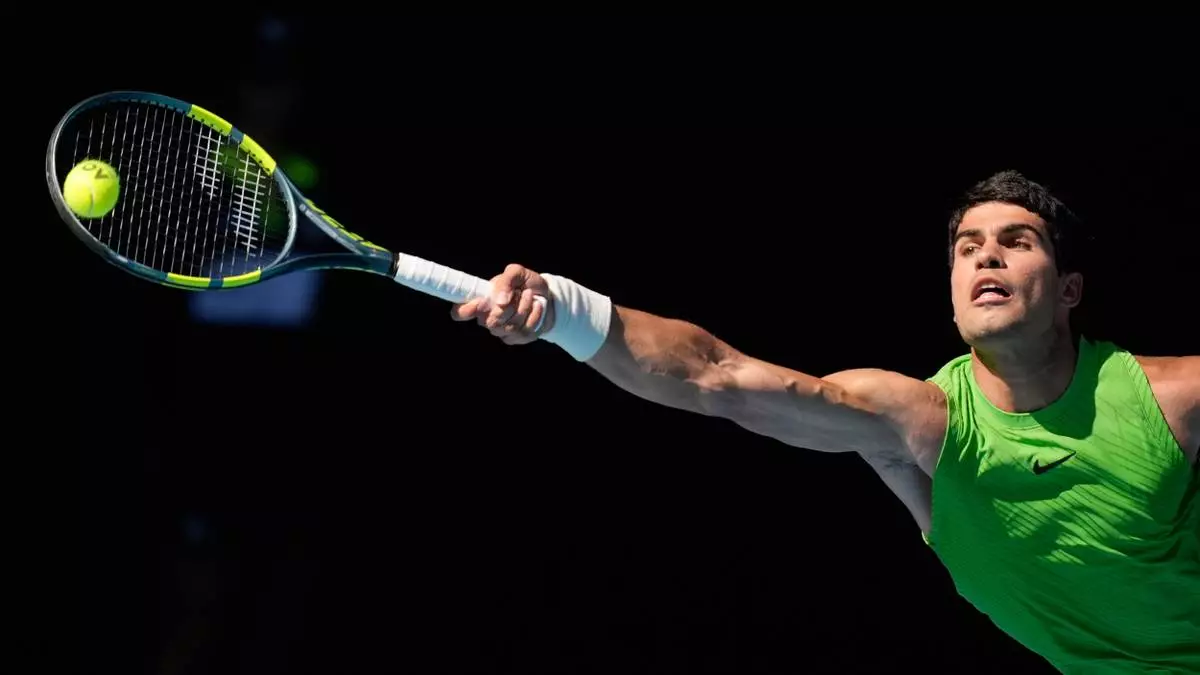
Carlos Alcaraz of Spain plays a forehand return to Alexander Zverev of Germany during their semifinal match at the Australian Open tennis championship in Melbourne, Australia, Friday, Jan. 30, 2026. (AP Photo/Asanka Brendon Ratnayake)
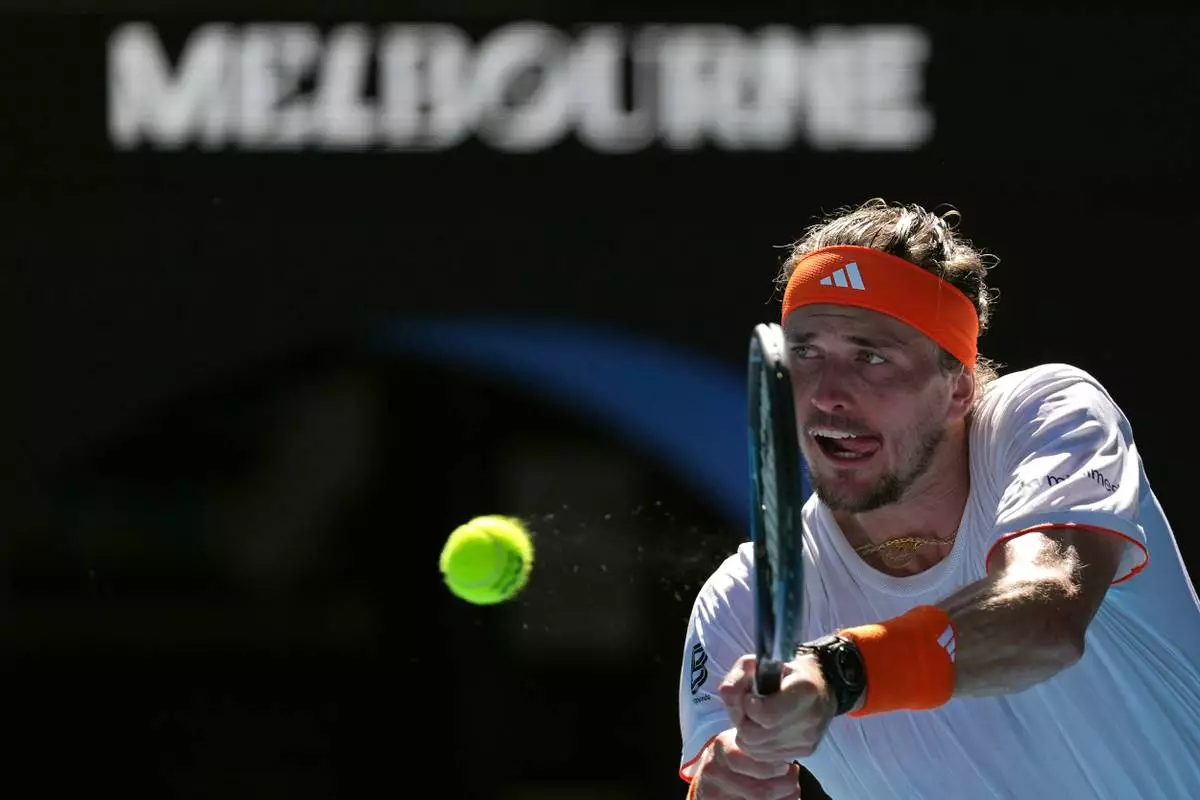
Alexander Zverev of Germany plays a backhand return to Carlos Alcaraz of Spain during their semifinal match at the Australian Open tennis championship in Melbourne, Australia, Friday, Jan. 30, 2026. (AP Photo/Dita Alangakra)
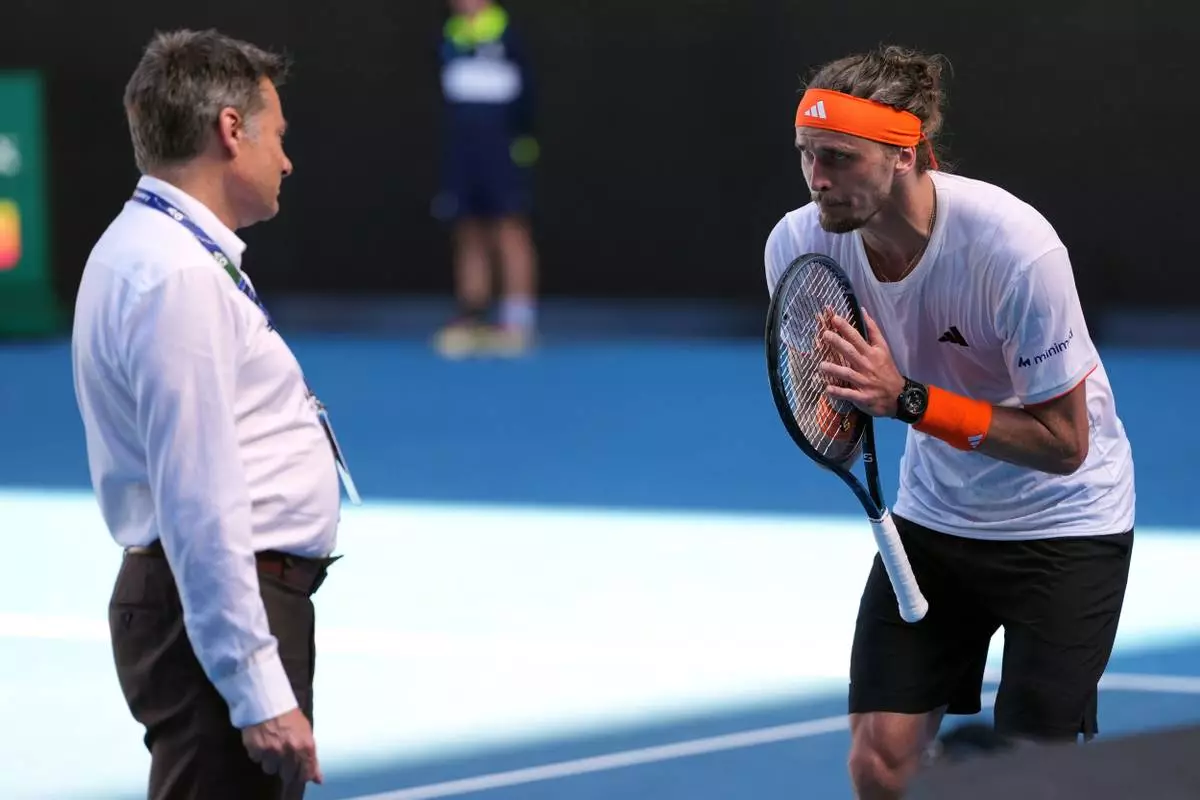
Alexander Zverev of Germany gesturers to a tournament official during his semifinal match against Carlos Alcaraz of Spain at the Australian Open tennis championship in Melbourne, Australia, Friday, Jan. 30, 2026. (AP Photo/Asanka Brendon Ratnayake)
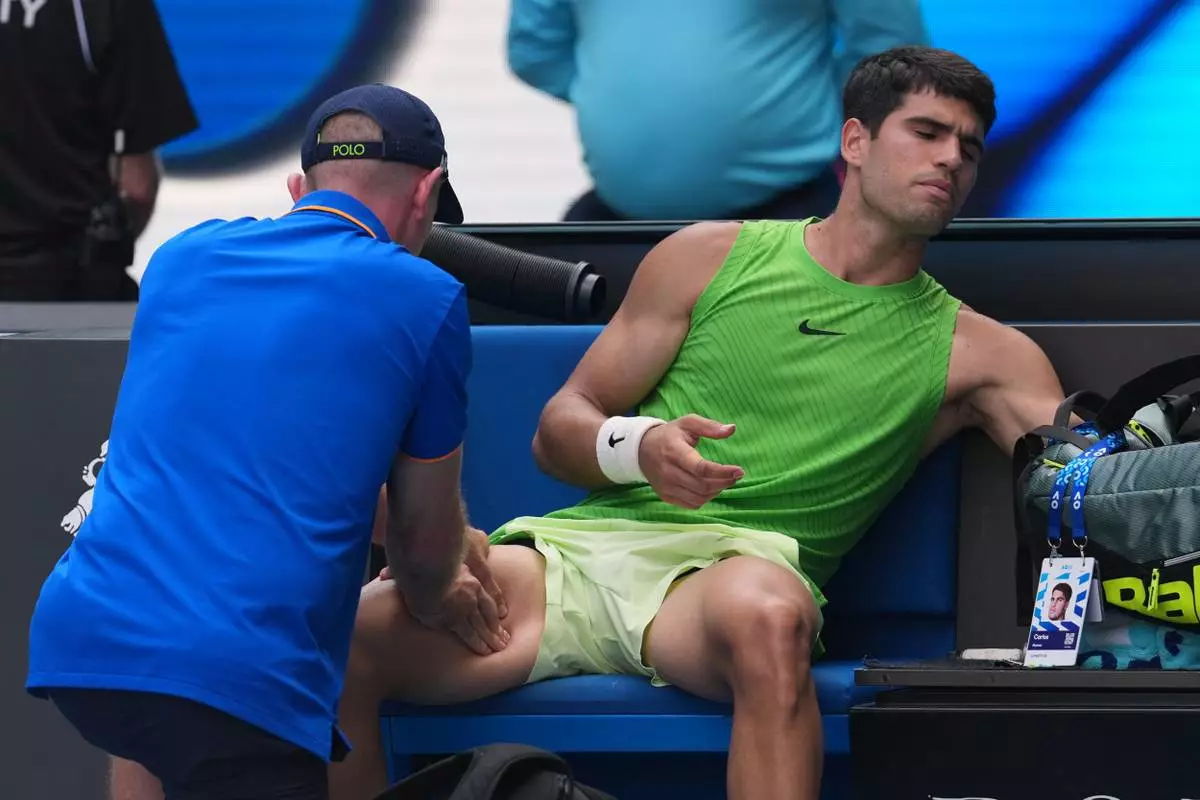
Carlos Alcaraz of Spain receives treatment during his semifinal match against Alexander Zverev of Germany at the Australian Open tennis championship in Melbourne, Australia, Friday, Jan. 30, 2026. (AP Photo/Dita Alangakra)
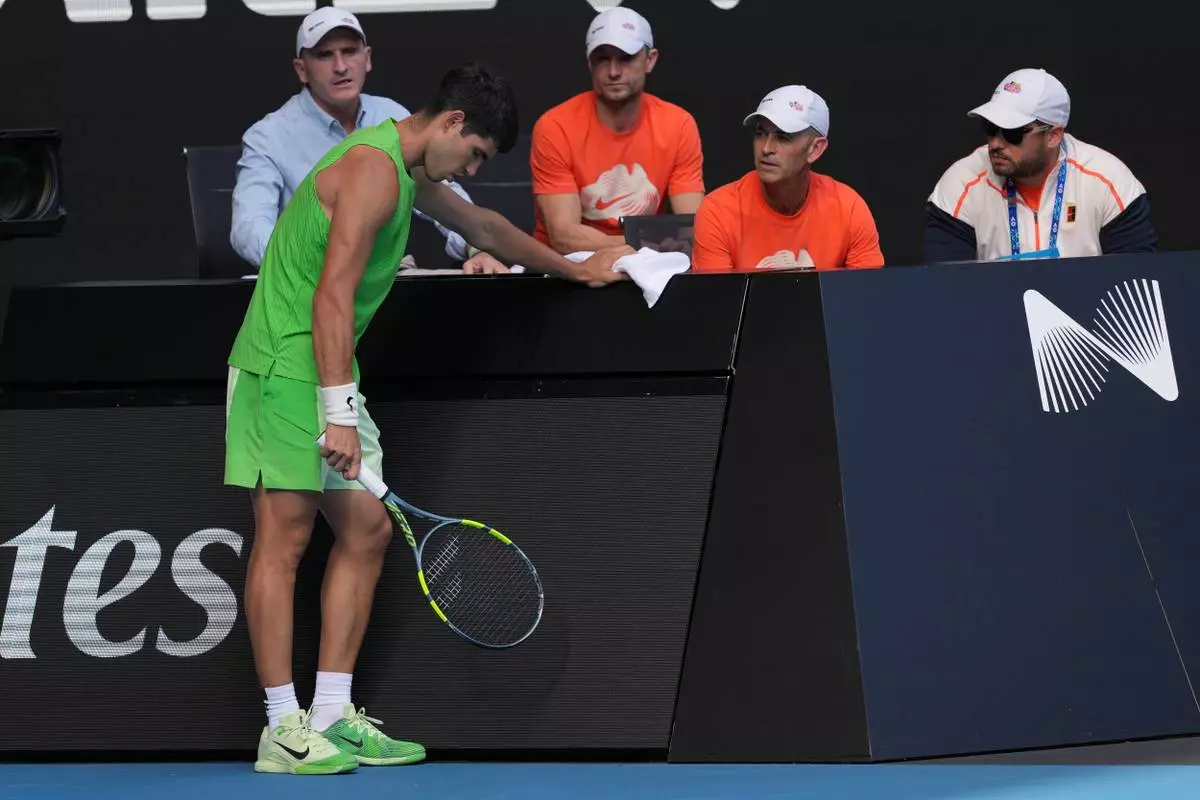
Carlos Alcaraz of Spain talks to his team during his semifinal match against o Alexander Zverev of Germany at the Australian Open tennis championship in Melbourne, Australia, Friday, Jan. 30, 2026. (AP Photo/Asanka Brendon Ratnayake)