Skip to Content Facebook Feature Image

Detroit Opera orchestra to set George Clinton, Parliament-Funkadelic hits to classical music

ENT

Detroit Opera orchestra to set George Clinton, Parliament-Funkadelic hits to classical music
ENT

ENT

Detroit Opera orchestra to set George Clinton, Parliament-Funkadelic hits to classical music

2026-01-30 19:22 Last Updated At:19:30

DETROIT (AP) — “I was strung out on Bach, and Beethoven was my thing. I dug jazz, I dug rock, anything with a swing” — or so goes Funkadelic's 1978 groove “Cholly (Funk Getting Ready to Roll!).”

Now Parliament-Funkadelic is going orchestral.

The Detroit Opera will showcase some of funk maestro George Clinton 's and P-Funk's greatest hits this weekend, performed by violins, cellos, horns and other instruments tuned more for arias or sonatas than for tunes like “Flash Light,” “(Not Just) Knee Deep” and “One Nation Under a Groove.”

Ray Chew, arranger and conductor of “Symphonic PFunk: Celebrating the Music of Parliament Funkadelic,” believes Saturday's show will be the first time an orchestra has performed the iconic group's music.

Chew, himself a musician, has performed and arranged music for some of the industry's biggest names. He's also a fan of the funk.

“The arrangements that I'm making are going to really be key to how we bring it all together,” he said of Saturday's performance. “George's and P-Funk's music is just waiting to explode through that orchestra.”

For Clinton, it was inevitable.

“I’ve been waiting on it to happen over the years,” the 84-year-old founder and frontman told The Associated Press. “We knew we were going to be doing this one day. We expected to gravitate into classical or something.”

Clinton formed The Parliaments in Plainfield, New Jersey, in 1955. The doo wop group's “(I Wanna) Testify” became a hit in 1967 for Detroit-based Revilot Records.

Funkadelic was founded the following year after a naming rights issue with Revilot, though Clinton later regained rights to The Parliaments name.

Virtually the same stable of singers and musicians would record albums and perform live under both monikers throughout the 1970s.

Where Parliament was the engine for funk — highlighted by stacked harmonies and overlapping vocals — Funkadelic played the rawest of rock, emphasizing electric and bass guitars, heavy drum beats and (often) NSFW lyrics.

“It started out as a singing group, then a band and a group, and then it became a ‘thang,’” Clinton said. “We call it Parliafunkadelicamentthang.”

Some of the era's top musicians, vocalists and songwriters carved out roles in the “thang,” including keyboardist Bernie Worrell, guitarist and lead singer Garry Shider and Walter “Junie” Morrison. All wrote and arranged some of P-Funk’s greatest jams.

While setting the group's catalog to classical might seem unusual, Chew says it's “just a different discipline,” adding that he believes some P-Funk members would have excelled in the genre if they'd chosen that route.

Rickey Vincent, professor of African American Studies and lecturer at the University of California, Berkeley, says yes.

“Musicians are stumped by how seriously complex this funky music is,” said Vincent, who authored “Funk: The Music, the People, and the Rhythm of The One.” “You can take an orchestra and do all kinds of funky things with it.”

“Audacity of sophistication, that’s what funk plays with,” he added. “Junie Morrison … one of those people like Bernie (Worrell) who could manipulate a string ensemble for fun. They were top-shelf musicians who basically snuck that into their arrangements.”

Legendary Motown musician and arranger Paul Riser says it’s about integrating all the parts.

“You take what they’ve done,” Riser said of Parliament-Funkadelic. “You don’t try to make it different. You just try to add to it. You don’t try to make it your thing.”

Vincent pointed out that bagpipes and banjo were used on Parliament’s 1970 debut album, “Osmium.”

“And they work with that stuff. It’s not just a gimmick,” Vincent said. “Funk has always been about toying with institutions, manipulating canon.”

Chew declined to say which P-Funk songs would be performed, but said 47 players have been assembled in the orchestra. They will play standard orchestral instruments, including a full string section and a harp, and saxophones. About a half-dozen musicians, including a keyboardist and guitarists, will join them on stage.

“The colors that are already in the music are going to be spoken through violins and French horns and everything. We don’t even have to invent new notes. All the notes are there,” he said.

Outside of the music, part of P-Funk's appeal occurred during packed live concerts as singers and musicians — some taking on far-out alter egos, like Star Child and Dr. Funkenstein — crowded the stage.

Clinton acknowledged that P-Funk's “Mothership Connection,” “Funkentelechy Vs. The Placebo Syndrome” and other albums were part of a “funk opera” where the mission was simply getting Sir Nose D'Voidoffunk to dance. Sir Nose was the antagonist and embodiment of everything “unfunky.” He vowed never to dance, but eventually succumbed to the power of the funk.

The highlight of those sold-out shows was the “Mothership” — a glittering prop space capsule — descending with lights flashing and smoke billowing onto the stage as Clinton's P-Funk mob whipped the crowd up with “swing down sweet chariot stop and let me ride.”

The original “Mothership” first was used during a 1976 concert in New Orleans. A new version is under construction.

“We were trying to be the Beatles with the big extravagant arrangements,” said Clinton, a big fan of the Fab Four’s “Sgt. Pepper’s Lonely Hearts Club Band” concept album.

Looking ahead, Clinton said he's working on a couple of new albums. The group has been on the road for the past three years and last performed in Detroit about a year ago.

“To go back there now feels really good,” he said of the Motor City. “I feel a future coming in the place where we have a helluva past. That's where all the music was born.”

FILE - George Clinton performs during the 54th annual Songwriters Hall of Fame induction and awards gala in New York on June 12, 2025. (Photo by Charles Sykes/Invision/AP, File)
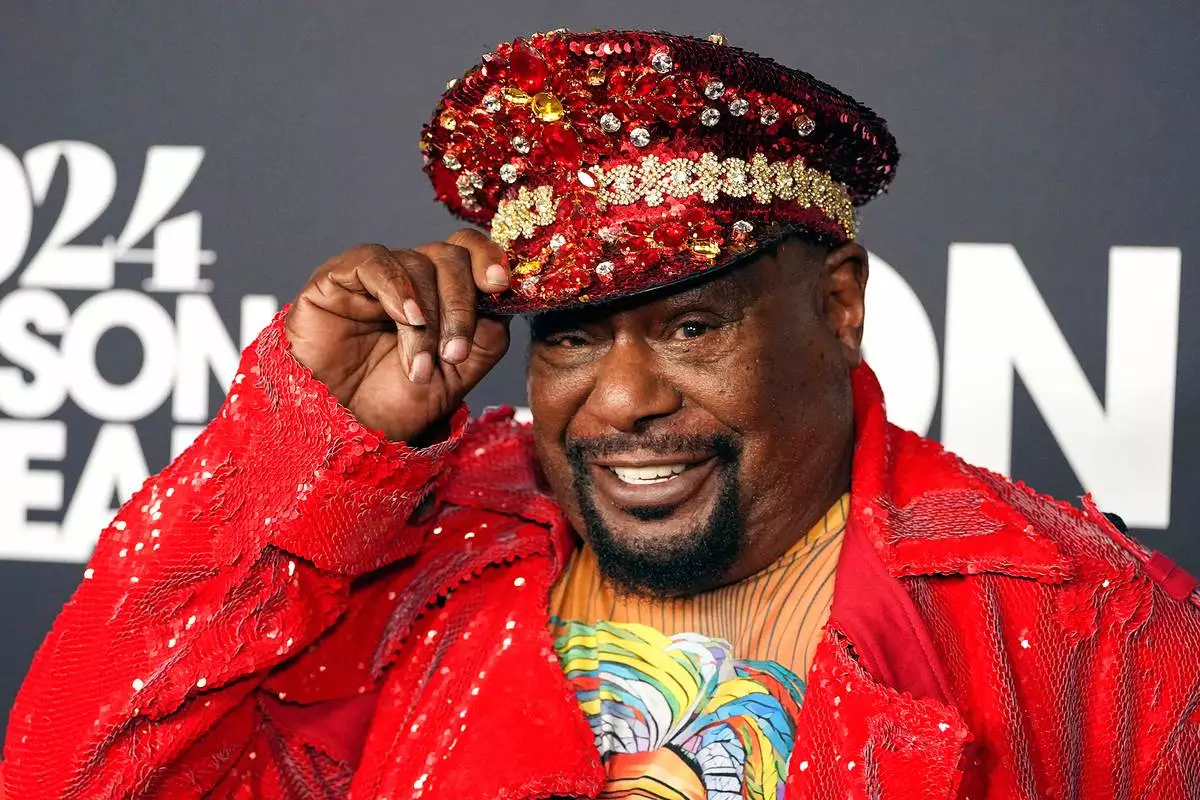
FILE - George Clinton performs during the 54th annual Songwriters Hall of Fame induction and awards gala in New York on June 12, 2025. (Photo by Charles Sykes/Invision/AP, File)

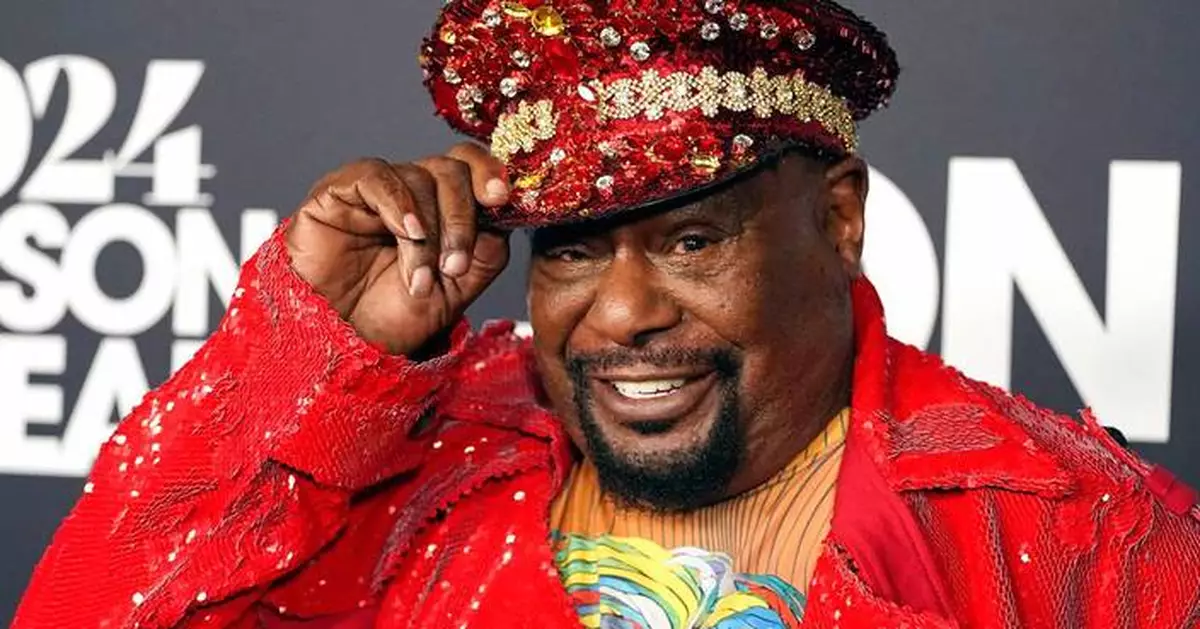
FILE - George Clinton appears at MusiCares Person of the Year honoring Jon Bon Jovi in Los Angeles on Feb. 2, 2024. (Photo by Jordan Strauss/Invision/AP, File)


FILE - George Clinton appears at MusiCares Person of the Year honoring Jon Bon Jovi in Los Angeles on Feb. 2, 2024. (Photo by Jordan Strauss/Invision/AP, File)
KYIV, Ukraine (AP) — Ukraine waited for signs on Friday that Russia is abiding by a commitment that U.S. President Donald Trump said it made to temporarily halt attacks on Ukraine’s power grid, as Kyiv and other regions are gripped by one of the most bitter winters in years.

Trump said late Thursday that Russian President Vladimir Putin had agreed to his request not to target the Ukrainian capital and other places for one week, as the region experiences frigid temperatures that have brought widespread hardship to civilians.

“I personally asked President Putin not to fire on Kyiv and the cities and towns for a week during this ... extraordinary cold,” Trump said during a Cabinet meeting at the White House, adding that Putin has “agreed to that.”

Trump didn't say when the call with Putin took place or when the moratorium would go into effect, and the White House didn't immediately respond to a query seeking clarity about the scope and timing of any limited pause.

Kremlin spokesperson Dmitry Peskov confirmed Friday that Trump “made a personal request” to Putin to stop targeting Kyiv for a week until Feb. 1 “in order to create favorable conditions for negotiations,” Peskov said.

The mention of Feb. 1 was confusing since that is only two days away — not a week. Also, the cold weather is expected to get worse next week, with temperatures dropping even further.

Asked if Moscow agreed to Trump’s proposal, Peskov said, “Yes, of course.” But he refused to answer further questions about whether the agreement covered only energy infrastructure or all aerial strikes, and when the halt on strikes on Kyiv was supposed to start.

Over the past week Russia has struck Ukrainian energy assets in the southern Ukrainian city of Odesa and northeastern Kharkiv. It also hit the Kyiv region on Jan. 28, killing two people and injuring four.

Ukrainian President Volodymyr Zelenskyy was skeptical about Putin’s readiness for such a concession as Russia’s all-out invasion, which began on Feb. 24, 2022, approaches its four-year anniversary next month with no signs that Moscow is willing to reach a peace settlement despite a U.S.-led push to end the fighting.

“I do not believe that Russia wants to end the war. There is a great deal of evidence to the contrary,” Zelenskyy said Thursday in comments made public on Friday.

He said that Ukraine is ready to halt its attacks on Russia’s energy infrastructure, including oil refineries, if Moscow also stops its bombardment of the Ukrainian power grid and other energy assets.

While there was no official word on whether those conciliatory steps had been taken, the grinding war of attrition dragged on.

Russia fired 111 drones and one ballistic missile at Ukraine overnight, injuring at least three people, the Ukrainian Air Force said. The Russian Defense Ministry, meanwhile, said that its air defenses overnight shot down 18 Ukrainian drones over several Russian regions, as well as the illegally annexed Crimea and the Black Sea.

Forecasters say Kyiv, which recently endured severe power shortages, will see a brutally cold stretch starting Friday that is expected to last into next week. Temperatures in some areas will drop to minus 30 degrees Celsius (minus 22 Fahrenheit), the State Emergency Service said.

Russia has sought to deny Ukrainian civilians heat, light and running water over the course of the war, in a strategy that Ukrainian officials describe as “weaponizing winter.”

The possibility of a respite in energy sector attacks was discussed at last weekend’s meeting in Abu Dhabi, the capital of the United Arab Emirates, between envoys of Ukraine, Russia and the United States, Zelenskyy said.

Zelenskyy said that he had agreed to adhere to a “reciprocal approach” on energy assaults.

“If Russia does not strike us, we will … take corresponding steps,” he told reporters.

Further talks were expected on Sunday in Abu Dhabi, the United Arab Emirates, but that could change because of a spike in tensions between the United States and Iran.

It was unclear whether and how any partial truce might work amid ongoing wider fighting and mistrust between the two countries.

“There is no ceasefire. There is no official agreement on a ceasefire, as is typically reached during negotiations,” Zelenskyy said. “There has been no direct dialogue and no direct agreements on this matter between us and Russia.”

Ukraine had originally proposed a limited energy ceasefire at talks in Saudi Arabia last year, Zelenskyy said, but it gained no traction.

Disagreement over what happens to occupied Ukrainian territory, and Moscow’s demand for possession of territory it hasn’t captured, are a key issue holding up a peace deal, according to Zelenskyy.

“We have repeatedly said that we are ready for compromises that lead to a real end to the war, but that are in no way related to changes to Ukraine’s territorial integrity,” Zelenskyy said. “The American side understands this and says that there is a compromise solution regarding a free economic zone.”

However, Ukraine demands control over such a zone, he said.

Follow AP’s coverage of the war in Ukraine at https://apnews.com/hub/russia-ukraine

In this photo provided by the Ukrainian Emergency Service, emergency services personnel work to extinguish a fire following a Russian attack in Odesa region, Ukraine, Thursday, Jan. 29, 2026. (Ukrainian Emergency Service via AP)

In this photo provided by the Ukrainian Emergency Service, emergency services personnel work to extinguish a fire following a Russian attack in Odesa region, Ukraine, Thursday, Jan. 29, 2026. (Ukrainian Emergency Service via AP)

In this photo provided by the Ukrainian Emergency Service, emergency services personnel work to extinguish a fire following a Russian attack in Odesa region, Ukraine, Thursday, Jan. 29, 2026. (Ukrainian Emergency Service via AP)

In this photo provided by the Ukrainian Emergency Service, emergency services personnel work to extinguish a fire following a Russian attack in Odesa region, Ukraine, Thursday, Jan. 29, 2026. (Ukrainian Emergency Service via AP)

Recommended Articles