CFS announces food safety report for December 2025 and summary of food surveillance programme for 2025
The Centre for Food Safety (CFS) of the Food and Environmental Hygiene Department today (January 30) released the findings of its food safety report for last month. The results of about 6 600 food samples tested(including food items purchased online) were found to be satisfactory except for four unsatisfactory samples which were announced earlier. The overall satisfactory rate was 99.9 per cent.
A CFS spokesman said about 1 500 food samples were collected for microbiological tests, and about 5 100 samples were taken for chemical and radiation level tests.
The microbiological tests covered pathogens and hygiene indicators; the chemical tests included testing for pesticides, preservatives, metallic contaminants, colouring matters, veterinary drug residues and others; and the radiation level tests included testing for radioactive caesium and iodine in samples collected from imported food from different regions.
The samples comprised about 2 100 samples of vegetables and fruit and their products; about 500 samples of cereals, grains and their products; about 700 samples of meat and poultry and their products; about 900 samples of milk, milk products and frozen confections; about 800 samples of aquatic and related products; and about 1 600 samples of other food commodities (including beverages, bakery products and snacks).
The four unsatisfactory samples comprised three white radish samples detected with pesticide residues exceeding the legal limits and a bamboo fungi sample detected with sulphur dioxide exceeding the legal limit.
The CFS has taken follow-up actions on the above-mentioned unsatisfactory samples including informing the vendors concerned of the test results, instructing them to stop selling the affected food items and tracing the sources of the food items in question.
The spokesman reminded the food trade to ensure that food is fit for human consumption and meets legal requirements. Consumers should patronise reliable shops when buying food and maintain a balanced diet to minimise food risks.
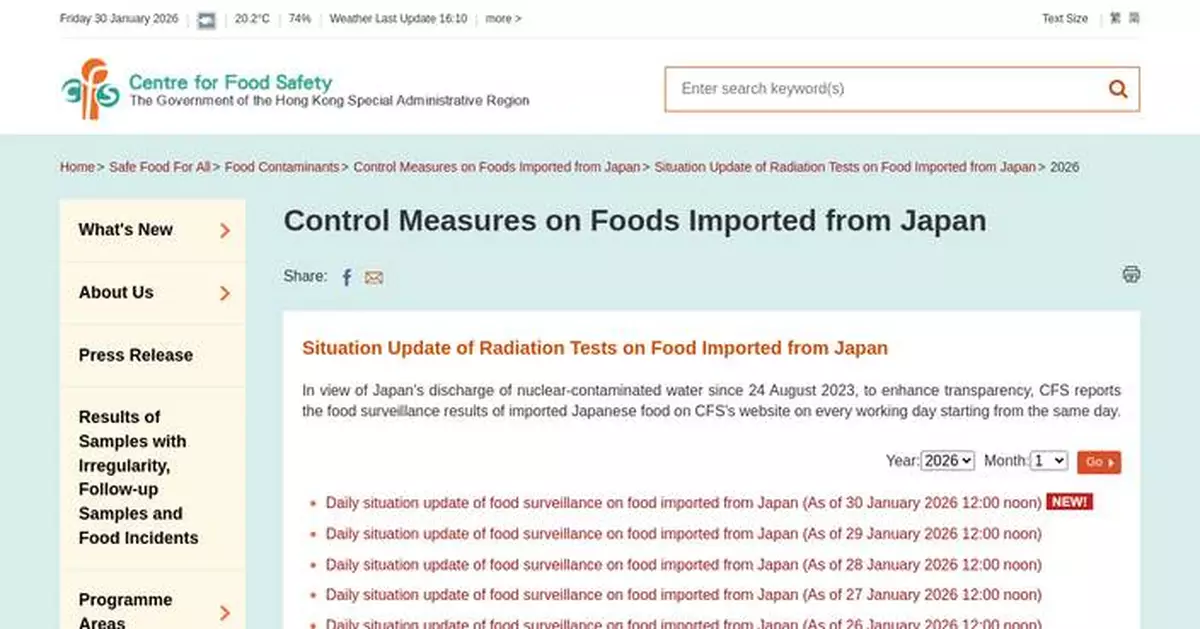
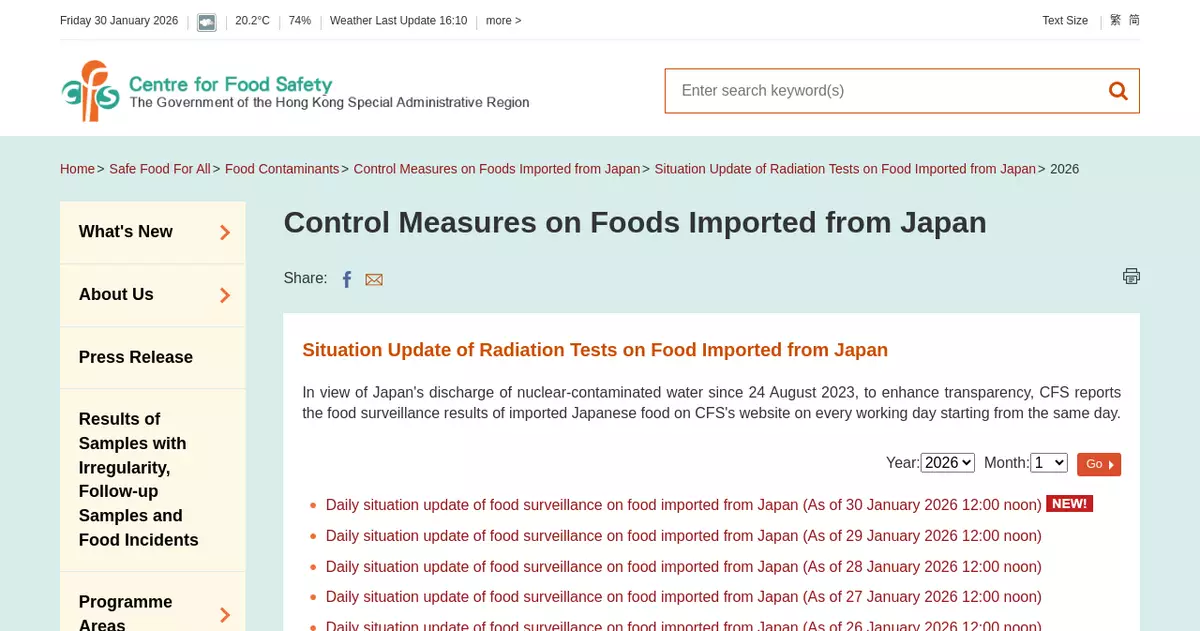
Separately, in response to the Japanese Government's discharge of nuclear-contaminated water at the Fukushima Nuclear Power Station, the CFS will continue enhancing the testing on imported Japanese food, and make reference to the risk assessment results to adjust relevant surveillance work in a timely manner. The CFS will announce every working day on its dedicated webpage (www.cfs.gov.hk/english/programme/programme_rafs/daily_japan_nuclear_incidents.html) the radiological test results of samples of food imported from Japan, with a view to enabling the trade and members of the public to have a better grasp of the latest safety information.
Summary of food surveillance programme for 2025
----------------------------------------------------------
Concluding the food surveillance programme for 2025, the spokesman said that apart from routine food surveillance, the CFS also conducted a number of targeted, seasonal and popular food surveillance projects.
"About 69 600 samples were tested by the CFS last year. The overall satisfactory rate was 99.9 per cent, which was comparable to the results in recent years. This indicates that food safety has been maintained at a high standard in Hong Kong," he said.
"The exceedances or breaches for most of the unsatisfactory samples were not serious and would not pose adverse health effects to the general public. For individual food items with unsatisfactory test results, the CFS has taken prompt and effective risk management actions to safeguard public health," he said.
He added that in planning the food surveillance programme, the CFS will take into consideration a number of factors such as the food consumption level and the risk of the food concerned in deciding on the number of samples to be tested and the frequency of sampling as well as the testing parameters. In addition, the CFS will also suitably adjust its food surveillance programme and strengthen relevant testing with regard to local and overseas food incidents as well as past surveillance data, in particular breaches of regulatory requirements that occurred more frequently, to safeguard food safety in Hong Kong.
Source: AI-found images