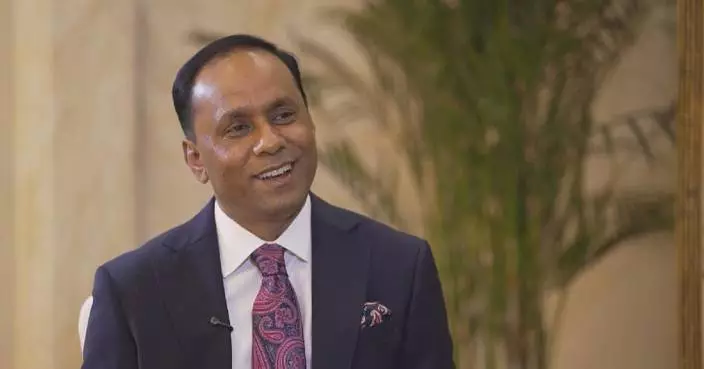
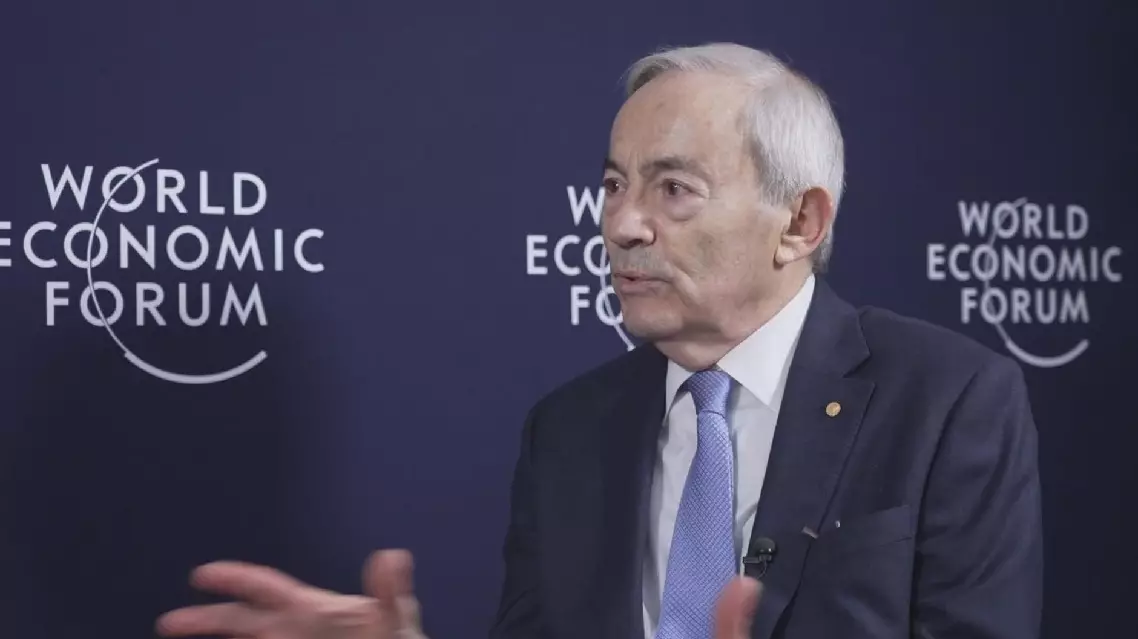
Closer collaboration and cooperation between the UK and China is absolutely crucial given the current set of global challenges, particularly as the world risks becoming more fragmented, according to Nobel Prize-winning economist Christopher Pissarides.
Pissarides, a Nobel Laurette who is also the Regius Professor of Economics at the London School of Economics, was speaking in an interview with the China Global Television Network (CGTN) on the sidelines of the recent World Economic Forum (WEF) in Davos, Switzerland.
The annual WEF meeting concluded in the Swiss Alpine town of Davos last Friday after drawing nearly 3,000 leaders and experts worldwide to discuss the most pressing global challenges under the theme "A Spirit of Dialogue."
Highlighting the significance of the key themes and topics at the forum, Pissarides emphasized the need for nations like the UK and China to build stronger relationships, while still respecting their different advantages.
"I think it's absolutely essential that they forge better relations. I agree with all the buzzwords and mottos of the World Economic Forum, so that we do need closer collaboration, (and) everyone will be better off. There's no doubt about that. As countries, we still have our comparative advantages on what we can do relatively better than other countries. But we can only enjoy even those if we collaborate," he said.
Pissarides also noted the importance of British Prime Minister Keir Starmer's visit to China -- the first by a British prime minister in eight years -- which also comes after the UK approved plans for the construction of a new Chinese embassy in London.
The Nobel Laurette stressed that moving beyond skepticism and advancing cooperation in a positive manner across several fields is the right direction for both countries, which will benefit both economies and improve the well-being of their respective peoples.
"What the Prime Minister is doing in Britain is absolutely right. I was pleased to see that China got approval to develop this amazing embassy that they were planning for London, which means that they do want to get closer and collaborate better. What I said about AI (artificial intelligence) before applies to relations here, too. I hope they get it right and they do it in a way that is positive both for our economies, the British and the Chinese, as well as the people generally, so that you remove any [disagreements], if there are any feelings of suspicions or that, which obviously pre-existed [until] now," he said.
However, Pissarides also noted some of the current headwinds and geopolitical challenges which pose risks to the international order, citing the uncertainty brought by the unilateral actions and protectionist policies of the present U.S. administration.
In the face of this, he emphasized that the spirit of cooperation must be upheld, and such efforts must extend beyond words to be matched with concrete actions.
"Britain, as you know, it's always been traditionally in the Western alliance, especially since World War II. I am very concerned about what I see, what I hear coming out of the United States, that the world is basically divided into three superpowers that grab a little bit here, a little bit there, and share it out -- I think that's a completely wrong approach in the spirit of collaboration. They are all talking it up, we are all supposing it, but in practice, we see more fragmentation and -- not quite destruction yet," he said.
Starmer arrived in Beijing on Wednesday to begin a four-day official visit to China, and held talks with Chinese President Xi Jinping on the following day, with both sides expressing willingness to develop a "long-term and stable comprehensive strategic partnership," and agreeing to deepen cooperation across various fields.
Closer China-UK ties key to future prosperity in face of global challenges: Nobel laureate