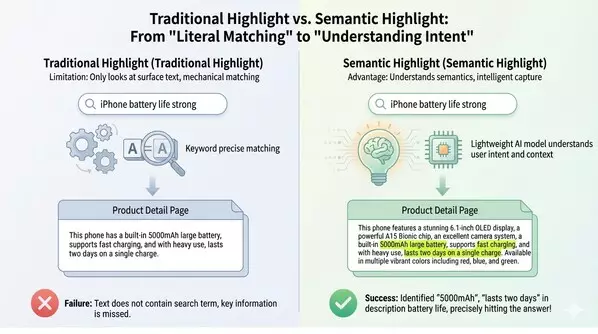
REDWOOD CITY, Calif., Jan. 31, 2026 /PRNewswire/ -- Zilliz, the company behind the leading open-source vector database Milvus, today announced the open-source release of its Bilingual Semantic Highlighting Model, an industry-first AI model designed to dramatically reduce token usage and improve answer quality in production RAG-powered AI applications.
This highlighting model introduces sentence-level relevance filtering, enabling AI developers to remove low-signal context before sending prompts to large language models. This approach directly addresses rising inference costs and accuracy issues caused by oversized context windows in enterprise RAG and RAG-powered AI deployments.
"As RAG systems move into production, teams are running into very real cost and quality limits," said James Luan, VP of Engineering at Zilliz. "This model gives developers a practical way to reduce prompt size and improve answer accuracy without reworking their existing pipelines."
Key Innovations and Technical Breakthroughs
- Bilingual relevance by design: Optimized for both English and Chinese, the model addresses cross-lingual relevance challenges common in global RAG deployments. It is built on the MiniCPM-2B architecture, enabling low-latency, production-ready performance.
- Sentence-level context filtering: Rather than scoring entire document chunks, the model evaluates relevance at the sentence level and retains only content that directly supports a user query before sending it to the LLM.
- Lower token usage, higher answer quality: Zilliz reports that sentence-level filtering significantly compresses prompt size while improving downstream response quality, helping teams reduce inference costs and improve generation speed in production environments.
Availability
The Bilingual Semantic Highlighting Model is available today as an open-source release. To learn more about the training methodology and performance benchmarks, visit the Zilliz Technical Blog.
Download: : zilliz/semantic-highlight-bilingual-v1
About Zilliz
Zilliz is the company behind Milvus, the world's most widely adopted open-source vector database. Zilliz Cloud brings that performance to production with a fully managed, cloud-native platform built for scalable, low-latency vector search and hybrid retrieval. It supports billion-scale workloads with sub-10ms latency, auto-scaling, and optimized indexes for GenAI use cases like semantic search and RAG.
Zilliz is built to make AI not just possible—but practical. With a focus on performance and cost-efficiency, it helps engineering teams move from prototype to production without overprovisioning or complex infrastructure. Over 10,000 organizations worldwide rely on Zilliz to build intelligent applications at scale.
Headquartered in Redwood Shores, California, Zilliz is backed by leading investors, including Aramco's Prosperity 7 Ventures, Temasek's Pavilion Capital, Hillhouse Capital, 5Y Capital, Yunqi Partners, Trustbridge Partners, and others. Learn more at Zilliz.com.
** The press release content is from PR Newswire. Bastille Post is not involved in its creation. **
Zilliz Open Sources Industry-First Bilingual "Semantic Highlighting" Model to Slash RAG Token Costs and Boost Accuracy
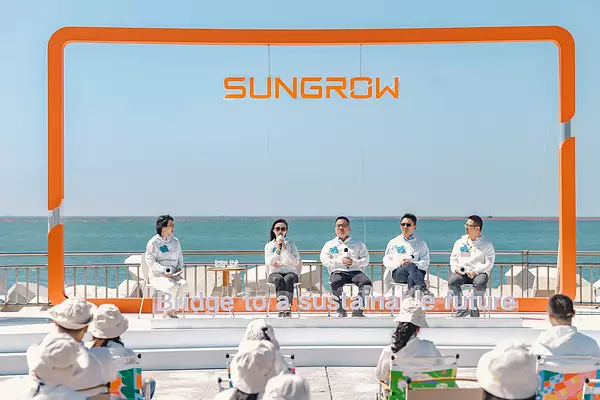
YANTAI, China, Sept. 14, 2026 /PRNewswire/ -- Sungrow, a global leading renewable energy company, recently hosted the latest edition of its PhD Talk series in China's Bohai Bay, bringing together experts and industry representatives in offshore PV, island microgrids, deep-water offshore wind and marine conservation.
Under the theme "The Power of Bridge: Bridge to The Deep Blue," the event identified five key trends shaping offshore renewables in the move from demonstration projects toward commercial deployment.
Offshore systems must withstand salt spray, high humidity, waves, tides and typhoons while navigating limited operation and maintenance (O&M) windows, insufficient grid support and coordination across multiple types of equipment.
Trend 1: Scenario-Defined Design Replaces a One-Size-Fits-All Approach
Offshore equipment cannot simply replicate land-based products, and different marine environments demand different designs. David Sun, General Manager of the R&D Center at Sungrow's Utility PV Business Unit, noted that tropical waters bring heat and humidity, cold-water environments create condensation risks, and nearshore industrial zones expose equipment to chemical corrosion.
Sungrow therefore uses a unified, high-standard technology platform while adapting materials, sealing processes and thermal management strategies to local conditions.
Trend 2: AI-Powered Reliability Supports Offshore Solar's Move to Commercial Scale
As offshore PV moves from demonstration projects toward commercial operation, harsher environmental loads and mounting cost pressures remain key challenges, according to Hui Xing, Chief Engineer of POWERCHINA Northwest Engineering Corporation Limited's New Energy Engineering Institute.
David further emphasized that project economics extend beyond upfront equipment costs to downtime, offshore inspections and long-term maintenance. Sungrow's Smart IV Curve Diagnosis identifies string faults, while self-learning algorithms monitor inverter air-duct health, enabling early warnings and dust removal. MPPT-level insulation detection reduces fault-location time to one-sixth of that required by conventional inverter-level diagnosis, while AI-based fault localization pinpoints issues to individual modules within a string.
Trend 3: Lifecycle Reliability and Proactive Safety Become Core Design Requirements
The SG465HX utility string inverter incorporates IP66 protection, C5-H corrosion resistance, a fully sealed electronics chamber, an IP68-rated fan, weather-resistant sealing materials and intelligent active dehumidification.
In a 1,440-hour cyclic neutral salt spray test (two hours in 5% sodium chloride spray and 22 hours at 40±2°C and 93% relative humidity per cycle), no corrosion appeared on the enclosure, structural parts or core internal components. Sungrow also received a third-party C5-H certification report.
The inverter's proactive safety features include intelligent string shutdown, AC and DC terminal temperature monitoring, a DC switch with a trip mechanism, and 24-hour insulation monitoring. Sungrow also developed two-stage waterproof terminal caps for protection during transportation, construction and long-term operation, including IP68-rated PA66 caps for unused terminals. A dedicated offshore DC switch uses corrosion- and wear-resistant coatings to reduce the risk of contact sticking and failure to interrupt fault current caused by salt spray.
Trend 4: Grid-Forming Technology Becomes the Backbone of Island Microgrid Stability
Island microgrids face three core challenges: generation uncertainty, load uncertainty and the absence of external grid support, making grid-forming technology and coordinated power-system control essential to stable power supply, according to Dr. Liu Hangyue, Deputy General Manager of Sungrow's Microgrid and Grid Solutions Center.
David said Sungrow's inverter portfolio offers grid-forming capability under all grid conditions, letting PV inverters in microgrids establish voltage and support frequency through grid-forming algorithms. In PowerMatrix, each sub-array can operate independently in grid-forming mode, enabling 10-millisecond voltage stabilization and a 5-millisecond inertia response.
Future island energy systems will require coordinated control across solar, wind, storage, the grid and loads, rather than relying on individual devices alone.
Trend 5: Deep-Water Offshore Wind Shifts from Equipment Adaptation to System-Level Co-Design
As offshore wind expands into deeper waters and farther from shore, the challenge is shifting from individual-device reliability to system-wide coordination and value-chain collaboration. Larger turbines can reduce costs and improve efficiency but introduce new issues involving fluid-structure interaction, material properties and multidisciplinary coordination, according to Xu Guodong, Deputy Chief Engineer of Windey Energy Technology Group.
Addressing this shift, Dr. Wang Lingxiang, Vice President of Sungrow and President of its Wind Energy Business Unit, said deep-water sites, evolving power-system requirements and complex marine conditions place greater demands on the reliability, overload capability and intelligent O&M of wind converters.
Electrical equipment must move from passive adaptation to active integration through system-level co-design with generators, cables and transformers, as well as participation in turbine load control and intelligent shutdown strategies. Grid-forming applications must also reflect specific grid-connection and power-transmission configurations, strengthening grid support while safeguarding generators and managing turbine loads. Hardware upgrades should be based on system design requirements.
Beyond technology, Sungrow Foundation joined WWF and the One Planet Foundation to launch a marine "Sun Forest" ecological restoration initiative in Bohai Bay, aiming to restore seagrass and macroalgal beds to improve marine habitats. The foundation also donated a 10.35 kW/10 kWh solar-plus-storage system, expected to generate approximately 12,000 kWh annually, to support emergency and stable power supply for an island community.
This edition of Sungrow's PhD Talk series traced the industry's shift from a focus on individual equipment performance toward scenario-specific design, lifecycle reliability, intelligent O&M and system-wide coordination. To support this transition, Sungrow will continue exploring solutions for different marine environments and energy applications through innovation in power conversion and grid technologies.
** This press release is distributed by PR Newswire through automated distribution system, for which the client assumes full responsibility. **
Sungrow PhD Talk Outlines 5 Key Trends in Offshore Renewables