MILWAUKEE (AP) — Freezing temperatures and long-term power outages can quickly create dangerous health situations.
Even at seemingly routine winter temperatures, the cold can exhaust the body and overwork the heart over time. The indoor risk of hypothermia and frostbite are especially a concern in areas where the infrastructure isn't built for wintry weather and people aren't as used to it.
Here are tips from emergency room doctors on how to stay safe.
Doctors diagnose hypothermia based on body temperature and symptoms, according to the Cleveland Clinic.
Mild hypothermia — when the body temperature is 89.6 to 95 degrees Fahrenheit (32 to 35 degrees Celsius) — can cause shivering, exhaustion, sleepiness, weak pulse and clumsiness.
Moderate hypothermia is when the body temperature is between 82.4 and 89.6 F (28 to 32 C). Symptoms include slurred speech, slowed heart rate, hallucinations and decreased shivering.
At less than 82.4 F (28 C), the body starts shutting down. Signs include loss of reflexes, complete muscle stiffness, fluid in the lungs, coma and death.
If someone is shivering for a long time, it's time to get ahead of things and get them somewhere warm, said Dr. Ben Weston, an ER doctor who directs health policy for the Milwaukee County Office of Emergency Management.
If someone is confused or showing more severe signs, call 911 right away, he said.
Some of the most dangerous situations happen when the temperature is low for a long time, even 30 to 40 F (minus-1 to 4 C), but not obviously arctic, Weston said.
In these situations, long-term cold exposure taxes the body, driving up blood pressure and working the heart.
Shivering, a normal response to cold, is a workout for your body, Weston said. Doing so for hours can lead to physical exhaustion — and older adults or people with other health issues are at higher risk.
“That additional stress and strain on the body and energy production can really push people to the limit," Weston said.
People might not realize they need help, or think to move into a different room or add layers.
“You think you're going to be OK with a sweatshirt and sweatpants and it kind of creeps up on people,” he said.
Doctors note that it can be hard to tell when you're dehydrated in cold weather, and being near a heater can further cause dehydration.
Staying hydrated helps the body stay warm, though, so they advise to keep drinking water.
Alcohol impairs the body’s ability to deal with cold, said Dr. Abhi Mehrotra, a University of North Carolina emergency medicine physician. It also can make you feel warmer than you actually are, Weston said, and affect your judgment.
Layering in the cold weather is key to helping the body trap heat.
The North Carolina Department of Emergency Management suggests wearing warm, loose-fitting, lightweight clothing in many layers that are easy to add or remove. It also recommends covering your mouth with scarves to protect the lungs from directly breathing in extremely cold air.
You lose the most heat from your head, hands and feet, Weston said, so make sure to cover those. While some online posts have shown people wearing latex gloves under their winter gloves for extra warmth, Weston said this is not ideal because it traps moisture and isn't breathable.
Be wary of internet hacks like putting cayenne pepper in your socks. The pepper actually irritates the skin and the tingling it causes can mask frostbite symptoms, Weston said.
Your body loses heat through evaporation, so one of the most important things is to make sure you’re dry at all times. Dry socks are one of the most important things to have on, Weston said.
Weston and Mehrotra recommended finding smaller spaces to contain heat.
That could mean closing all the doors in the house and keeping a heater in one room, as Weston recommends. Mehrotra suggested you could even pitch a tent indoors or get into a sleeping bag to create an even more confined space to trap body heat.
Both said one of the biggest things is to be safe with heat sources. Keep them away from flammable items. Do not use gas stoves, ovens or bring carbon monoxide -emitting heat sources indoors. Carbon monoxide is an odorless, colorless gas that is one of the most common killers of people during cold snaps.
If anyone in the home has symptoms of carbon monoxide poisoning, such as nausea and headaches, get outside to fresh air, Mehrotra said.
Young children, older adults and people with chronic health conditions such as diabetes and high blood pressure are the most at risk when it's cold, Mehrotra said.
Above all, the doctors said community awareness is key during dangerous cold spells. Many don't realize they need help until someone asks.
“Check on your neighbors,” Mehrotra said. “You don’t know how people are doing.”
The Associated Press Health and Science Department receives support from the Howard Hughes Medical Institute’s Department of Science Education and the Robert Wood Johnson Foundation. The AP is solely responsible for all content.
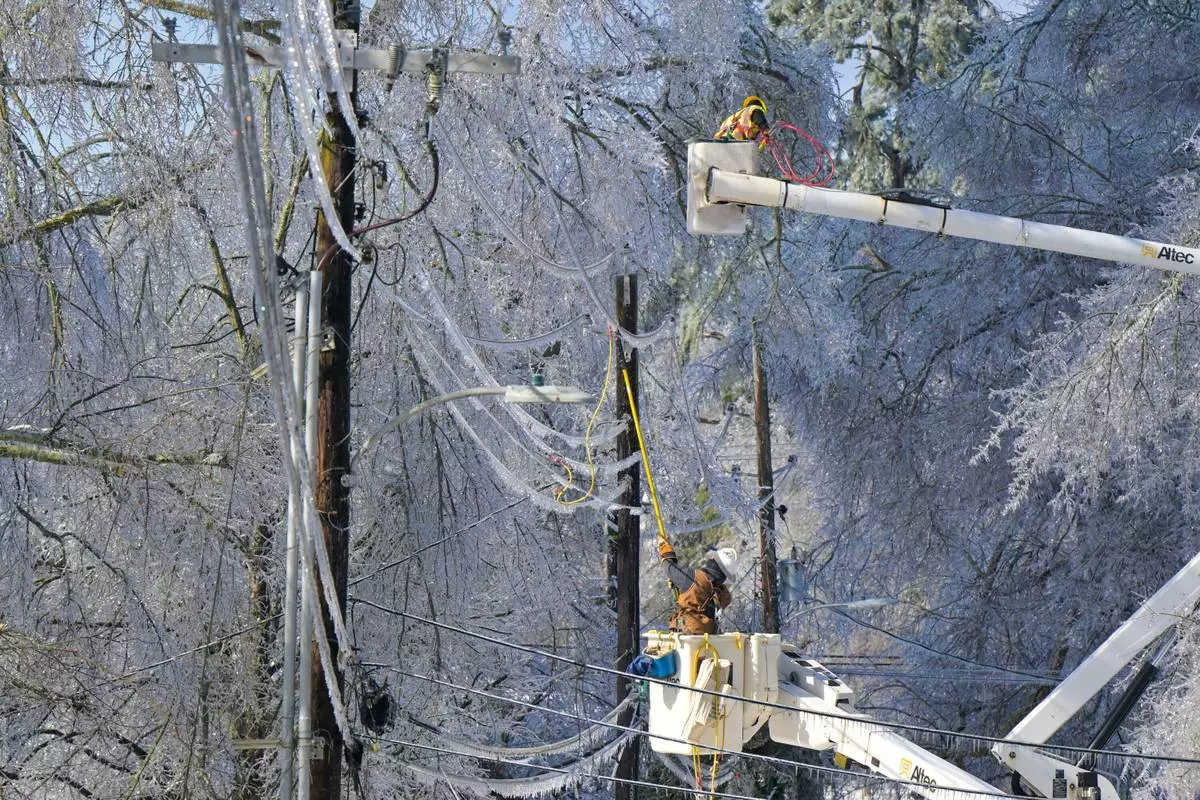
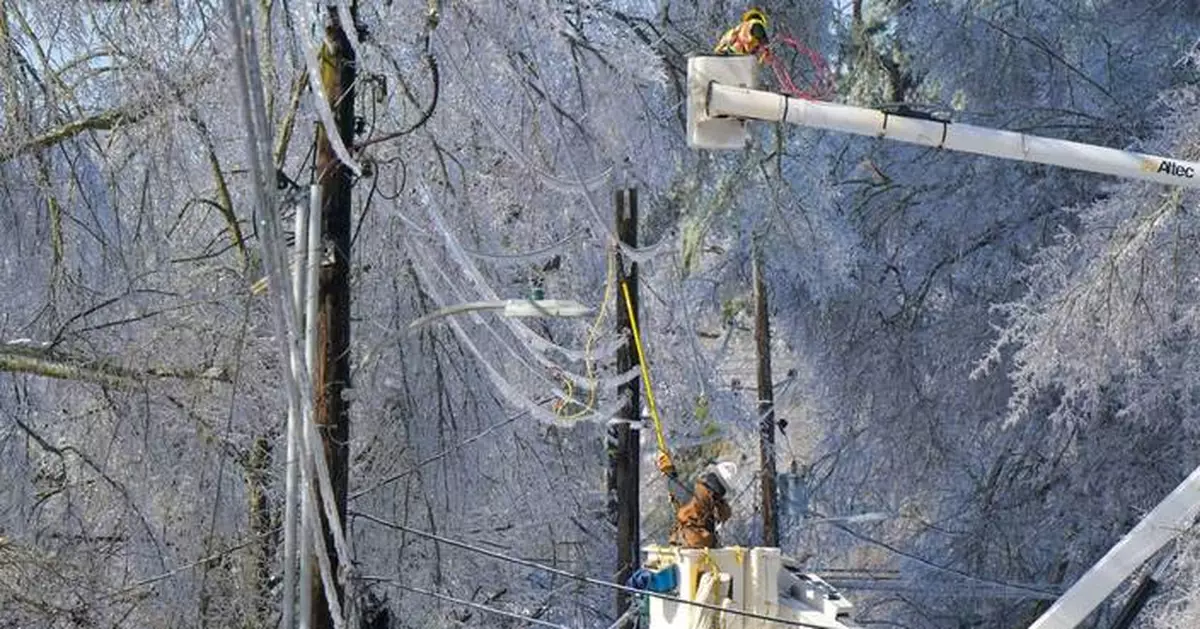
A lineman works to restore power in Oxford, Miss. on Monday, Jan. 26, 2026, following a weekend ice storm. (AP Photo/Bruce Newman)
LOS ANGELES (AP) — Catherine O’Hara, a gifted Canadian-born comic actor and “SCTV” alum who starred as Macaulay Culkin’s harried mother in two “Home Alone” movies and won an Emmy as the dramatically ditzy wealthy matriarch Moira Rose in “Schitt’s Creek,” died Friday. She was 71.
O’Hara died at her home in Los Angeles “following a brief illness,” according to a statement from her representatives at Creative Artists Agency. Further details were not immediately available.
O’Hara’s career was launched with the Second City comedy group in Toronto in the 1970s. It was there that she first worked with Eugene Levy, who would become a lifelong collaborator — and her “Schitt’s Creek” costar. The two would be among the original cast of the sketch show “SCTV,” short for “Second City Television.” The series, which began on Canadian TV in the 1970s and aired on NBC in the U.S., spawned a legendary group of esoteric comedians that O’Hara would work with often, including Martin Short, John Candy, Andrea Martin, Rick Moranis and Joe Flaherty.
O'Hara would win her first Emmy for her writing on the show.
Her second, for best actress in a comedy series, came four decades later, for “Schitt's Creek,” a career-capping triumph and the perfect personification of her comic talents. The small CBC series created by Levy and his son, Dan, about a wealthy family forced to live in a tiny town would dominate the Emmys in its sixth and final season. It brought O’Hara, always a beloved figure, a new generation of fans and put her at the center of cultural attention.
She told The Associated Press that she pictured Moira, a former soap opera star, as someone who had married rich and wanted to “remind everyone that (she was) special, too.” With an exaggerated Mid-Atlantic accent and obscure vocabulary, Moira spoke unlike anyone else, using words like “frippet,” “pettifogging” and “unasinous,” to show her desire to be different, O’Hara said. To perfect Moira’s voice, O’Hara would pore through old vocabulary books, “Moira-izing” the dialogue even further than what was already written.
O'Hara also won a Golden Globe and two SAG Awards for the role.
At first, Hollywood didn't entirely know what to do with O'Hara and her scattershot style. She played oddball supporting characters in Martin Scorsese's 1985 “After Hours” and Tim Burton's 1988 “Beetlejuice” — a role she would reprise in the 2024 sequel.
She played it mostly straight as a horrified mother who accidentally abandoned her child in the two “Home Alone” movies. The films were among the biggest box office earners of the early 1990s and their Christmas setting made them TV perennials. They allowed her moments of unironic warmth that she didn't get often.
Her co-star Culkin was among those paying her tribute Friday.
“Mama, I thought we had time,” Culkin said on Instagram alongside an image from “Home Alone” and a recent recreation of the same pose. “I wanted more. I wanted to sit in a chair next to you. I heard you. But I had so much more to say. I love you."
Meryl Streep, who worked with O'Hara in “Heartburn,” said in a statement that she “brought love and light to our world, through whipsmart compassion for the collection of eccentrics she portrayed.”
Roles in big Hollywood films didn't follow “Home Alone,” but O'Hara would find her groove with the crew of improv pros brought together by Christopher Guest for a series of mockumentaries that began with 1996's “Waiting for Guffman” and continued with 2000's “Best in Show,” 2003's “A Mighty Wind” and 2006's “For Your Consideration.”
“Best in Show” was the biggest hit and best-remembered film of the series. She and Levy play married couple Gerry and Cookie Fleck, who take their Norwich terrier to a dog show and constantly run into Cookie's former lovers along the way.
“I am devastated," Guest said in a statement to the AP. “We have lost one of the comic giants of our age.”
Born and raised in Toronto, O’Hara was the sixth of seven children in a Catholic family of Irish descent. She graduated from Burnhamthorpe Collegiate Institute, an alternative high school. She joined Second City in her early 20s, as an understudy to Gilda Radner before Radner left for “Saturday Night Live.” (O’Hara would briefly be hired for “SNL” but quit before appearing on air.)
Nearly 50 years later, her final roles would be as Seth Rogen’s reluctant executive mentor and freelance fixer on “The Studio” and a dramatic turn as therapist to Pedro Pascal and other dystopia survivors on HBO's “The Last of Us." Both earned her Emmy nominations. She would get 10 in her career.
“Oh, genius to be near you," Pascal said on Instagram. “Eternally grateful. There is less light in my world.”
Earlier this month, Rogen shared a photo on Instagram of him and O'Hara shooting the second season of “The Studio.”
O'Hara is survived by her husband, Bo Welch, sons Matthew and Luke, and siblings Michael O’Hara, Mary Margaret O’Hara, Maureen Jolley, Marcus O‘Hara, Tom O’Hara and Patricia Wallice.
Noveck reported from New York. AP Writers Lindsey Bahr, R.J. Rico and Leanne Italie contributed.
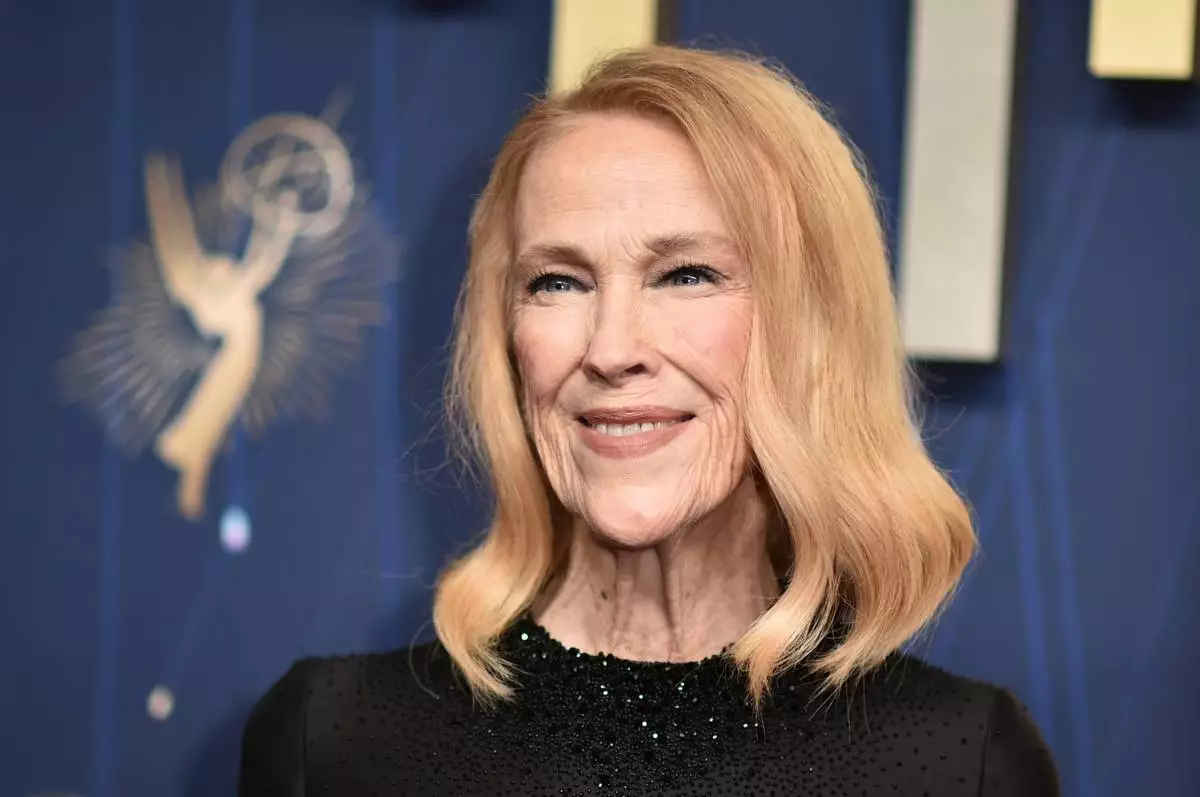
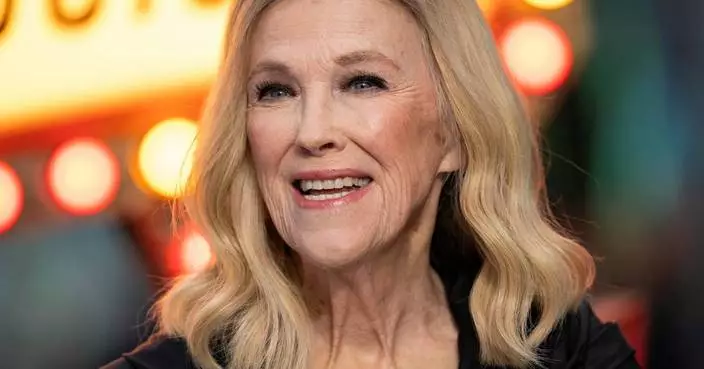
FILE - Catherine O'Hara arrives at the 77th Primetime Emmy Awards in Los Angeles on Sept. 14, 2025. (Photo by Richard Shotwell/Invision/AP, File)

FILE - Eugene Levy, from left, Annie Murphy, Daniel Levy and Catherine O'Hara cast members in the series "Schitt's Creek" pose for a portrait during the 2018 Television Critics Association Winter Press Tour in Pasadena, Calif., on Jan. 14, 2018. (Photo by Willy Sanjuan/Invision/AP, File)
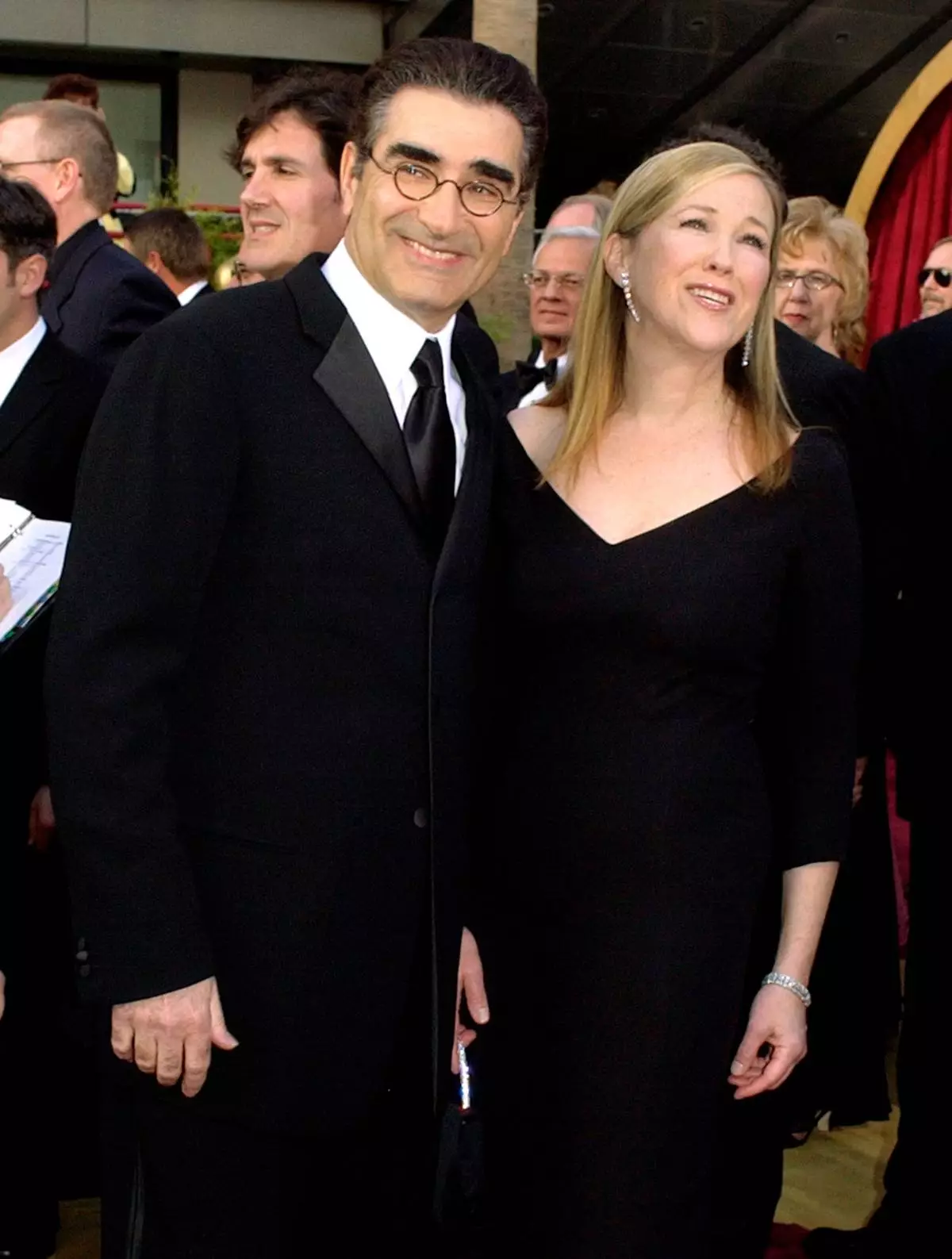
FILE - Eugene Levy, left, and Catherine O'Hara appear at the 76th annual Academy Awards in Los Angeles. on Feb. 29, 2004. (AP Photo/Laura Rauch, File)
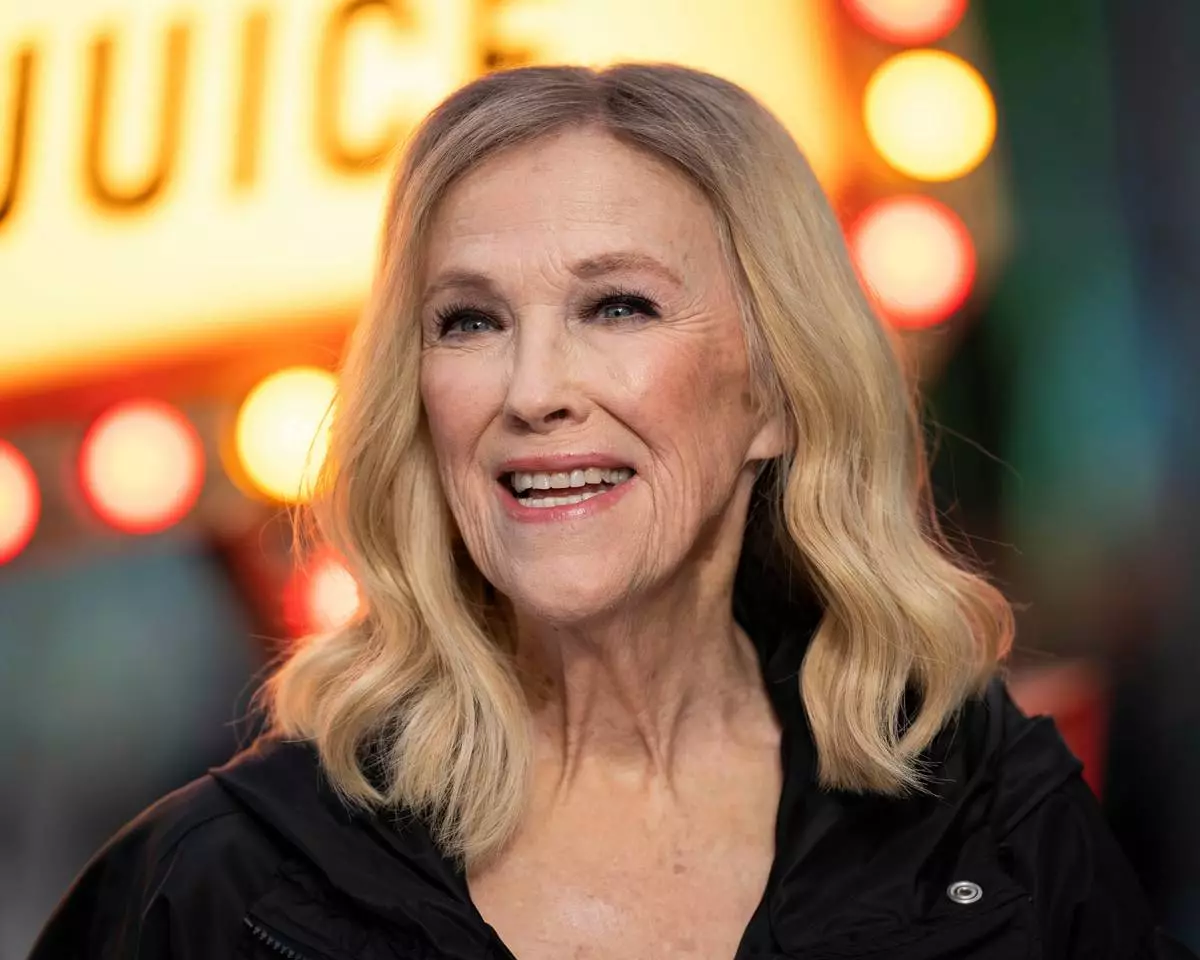
FILE - Catherine O'Hara poses for photographers upon arrival at the UK premiere of "Beetlejuice Beetlejuice" on Thursday, Aug. 29, 2024, in London. (Photo by Scott A Garfitt/Invision/AP)

FILE - Former cast members of SCTV, from left, Dave Thomas, Joe Flaherty, Catherine O'Hara, Andrea Martin, foreground, Harold Ramis, Eugene Levy and Martin Short, pose at the U.S. Comedy Arts Festival on March 6, 1999, in Aspen, Colo. (AP Photo/E Pablo Kosmicki, File)
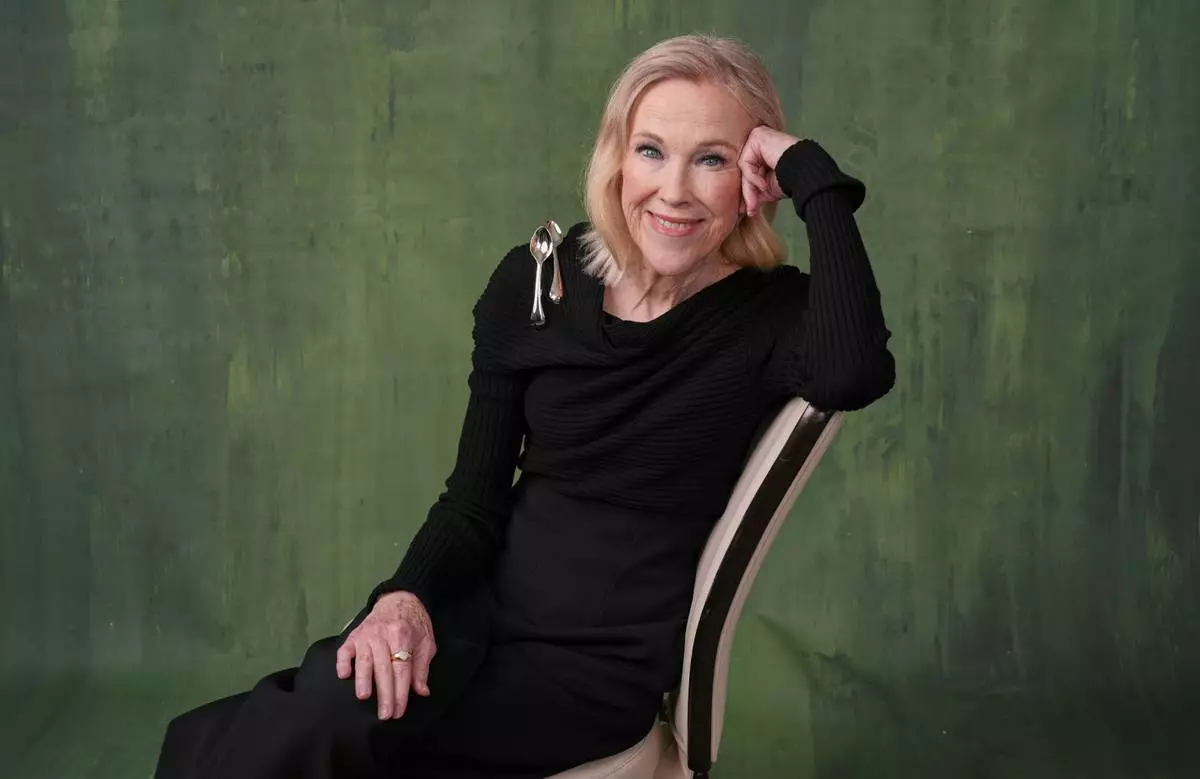
FILE - Catherine O'Hara, a cast member in the Apple+ series "The Studio," poses for a portrait on Thursday, March 20, 2025, in Los Angeles. (AP Photo/Chris Pizzello, File)