NEW YORK (AP) — Financial markets churned on Friday as investors tried to figure out what President Donald Trump’s new nominee to lead the Federal Reserve will mean for interest rates.
U.S. stocks fell, with the S&P 500 down 0.4% after sinking as much as 1.1% earlier in the day. The Dow Jones Industrial Average dropped 179 points, or 0.4%, and the Nasdaq composite lost 0.9%.
Click to Gallery
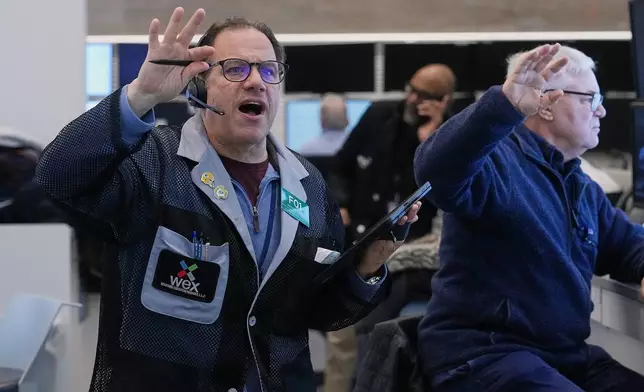
Anthony Spina, left, works with fellow options traders on the floor of the New York Stock Exchange, Wednesday, Jan. 28, 2026. (AP Photo/Richard Drew)
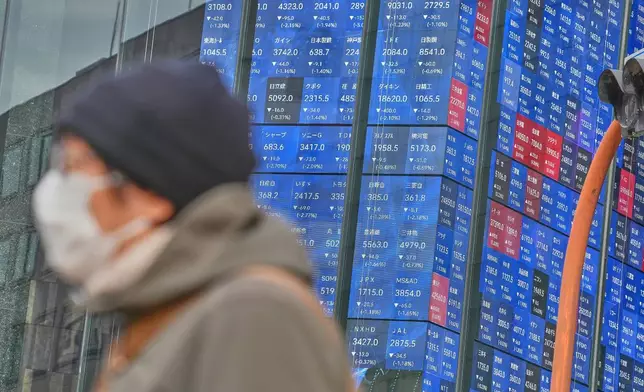
A person stands in front of an electronic stock board showing Japan's Nikkei index at a securities firm Wednesday, Jan. 28, 2026, in Tokyo. (AP Photo/Eugene Hoshiko)
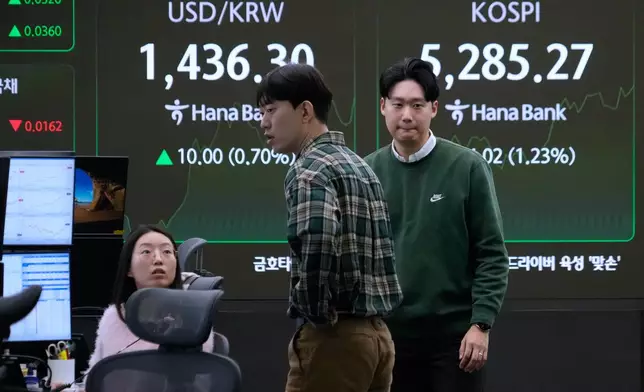
Currency traders work near a screen showing the Korea Composite Stock Price Index (KOSPI), right, and the foreign exchange rate between U.S. dollar and South Korean won at the foreign exchange dealing room of the Hana Bank headquarters in Seoul, South Korea, Friday, Jan. 30, 2026. (AP Photo/Ahn Young-joon)

Currency traders pass by a screen showing the Korea Composite Stock Price Index (KOSPI), right, and the foreign exchange rate between U.S. dollar and South Korean won at the foreign exchange dealing room of the Hana Bank headquarters in Seoul, South Korea, Friday, Jan. 30, 2026. (AP Photo/Ahn Young-joon)

A currency trader talks on the phone near a screen showing the Korea Composite Stock Price Index (KOSPI), top center, and the foreign exchange rate between U.S. dollar and South Korean won, top center left, at the foreign exchange dealing room of the Hana Bank headquarters in Seoul, South Korea, Friday, Jan. 30, 2026. (AP Photo/Ahn Young-joon)
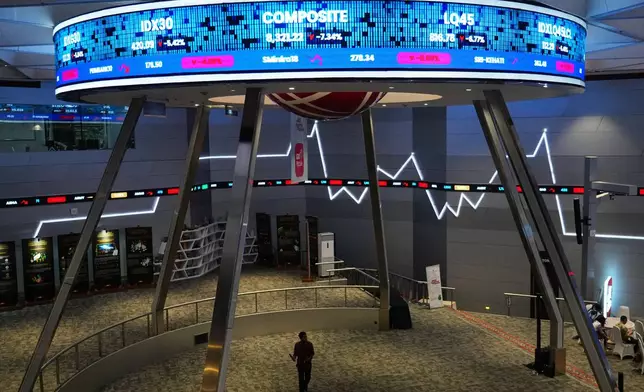
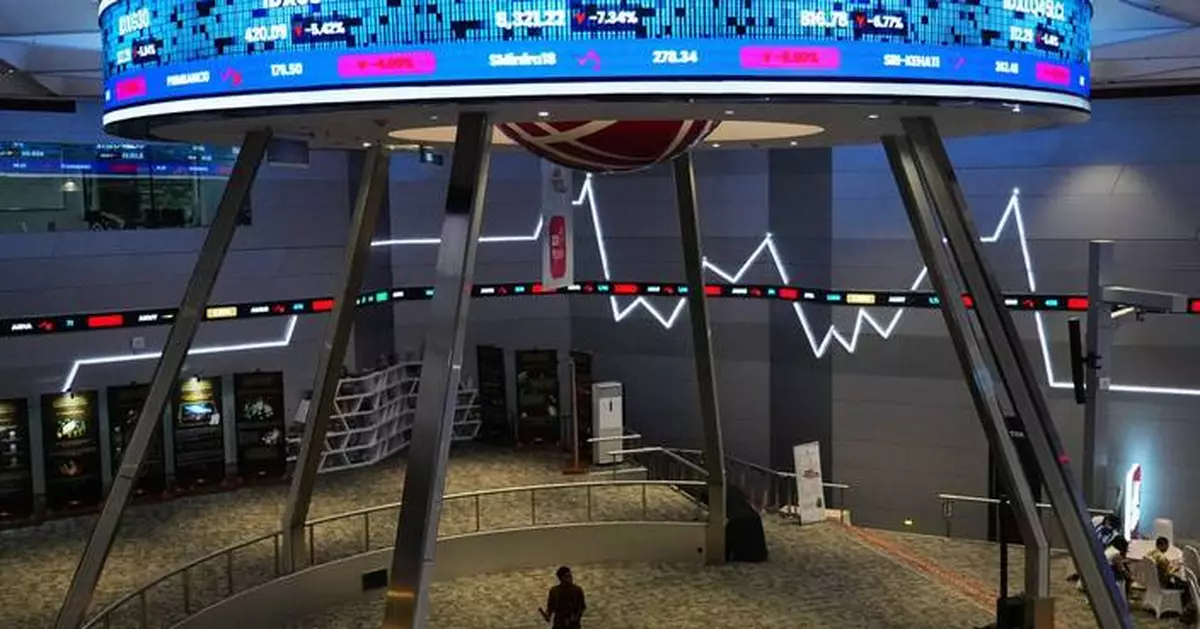
A man walks past an electronic board displaying stock prices and Jakarta Stock Exchange Composite Index, at the Indonesia Stock Exchange in Jakarta, Indonesia, Wednesday, Jan. 28, 2026. (AP Photo/Tatan Syuflana)
The value of the U.S. dollar rallied, but only after swiveling a couple times following Trump’s nomination of Kevin Warsh. And some of the wildest action was again in precious metals markets, where gold and silver prices plunged following their stellar runs over the last year.
Whoever leads the Fed has a big influence on the economy and markets worldwide by helping to dictate where the U.S. central bank moves interest rates. Such decisions lift or weigh on prices for all kinds of investments, as the Fed tries to keep the U.S. job market humming without letting inflation get out of control. Trump has been pushing for lower interest rates, which usually help goose the economy but can also cause higher inflation.
A fear in financial markets has been that the Fed will lose some of its independence because of Trump. That fear in turn helped catapult the price of gold and weaken the U.S. dollar’s value over the last year.
The longtime assumption has been that the Fed should operate separately from the rest of Washington so that it can make moves that are painful in the short term but necessary for the long term. To get inflation down to the Fed’s goal of 2%, for example, may require the unpopular choice to keep interest rates high and grind down on the economy for a while.
The big question is what Warsh’s nomination, which still requires approval from the Senate, means for the Fed’s independence.
Warsh used to be a governor on the Fed’s board, so investors are familiar with him. That could also mean Warsh is familiar with and hopes to continue the institution of the Fed as an independent operator. And while with the Fed, Warsh criticized the central bank’s buying of bonds to keep interest rates low.
Some on Wall Street took Warsh’s nomination as an encouraging signal for a still-independent Fed that will keep rates high, if necessary. Besides slowing the economy, higher interest rates would push downward on stock prices.
But Warsh has also recently been critical of the Fed’s current chair, Jerome Powell, and has voiced support for lower rates.
“Indeed, Warsh is not the Fed’s guy, he is Trump’s guy, and has shadowed Trump on monetary policy almost every step of the way since 2009,” according to Thierry Wizman, a strategist at Macquarie Group. “This doesn’t necessarily mean that Warsh will push the Fed into rate cuts soon,” but it could indicate he may be quicker to do so when the time comes.
On Wall Street, stocks of metals miners tumbled as the price of gold dropped 11.4% to settle at $4,745.10 per ounce. Gold’s price suddenly ran out of momentum following a tremendous rally where it roughly doubled over 12 months. It topped $5,000 for the first time on Monday and was around $5,600 at one point on Thursday.
Silver, which had been on a similar, jaw-dropping tear, fell even more. It plunged 31.4%.
Prices for gold and other precious metals had been surging as investors looked for safer places for their money while weighing a wide range of risks, including a potentially less independent Fed, a U.S. stock market that critics say is expensive, threats of tariffs and heavy debt loads for governments worldwide.
The dramatic halt may have been inevitable given how far and how fast metal prices had surged over the last year. Nothing goes up in price forever.
Friday’s drops for metals prices helped send the stock of miner Newmont down 11.5%. Freeport-McMoRan, another miner, dropped 7.5%.
Helping to limit the market’s losses was Tesla, which rose 3.3%. It bounced back after dropping on Thursday despite delivering better profit reports for the latest quarter than analysts expected.
Apple added 0.5% after the iPhone maker reported a stronger profit for the latest quarter than analysts expected.
All told, the S&P 500 fell 29.98 points to 6,939.03. The Dow Jones Industrial Average dipped 179.09 to 48,892.47, and the Nasdaq composite sank 223.30 to 23,461.82.
In the bond market, the yield on the 10-year Treasury inched up to 4.25% from 4.24% late Thursday. It got near 4.28% in the overnight and early-morning hours before falling back. A rise in a bond’s yield indicates that its price is weakening.
Yields may have felt some upward pressure from a report released Friday showing U.S. inflation at the wholesale level was hotter last month than economists expected. That could put pressure on the Fed to keep interest rates steady for a while instead of cutting them, as it did late last year.
In stock markets abroad, indexes rose in much of Europe following a mixed performance in Asia.
Stocks rose 1.2% in Jakarta after the CEO of Indonesia’s stock market resigned Friday. Stocks had stumbled there in prior days after MSCI, an influential company in the investment industry that creates stock and other indexes, warned about market risks such as a lack of transparency.
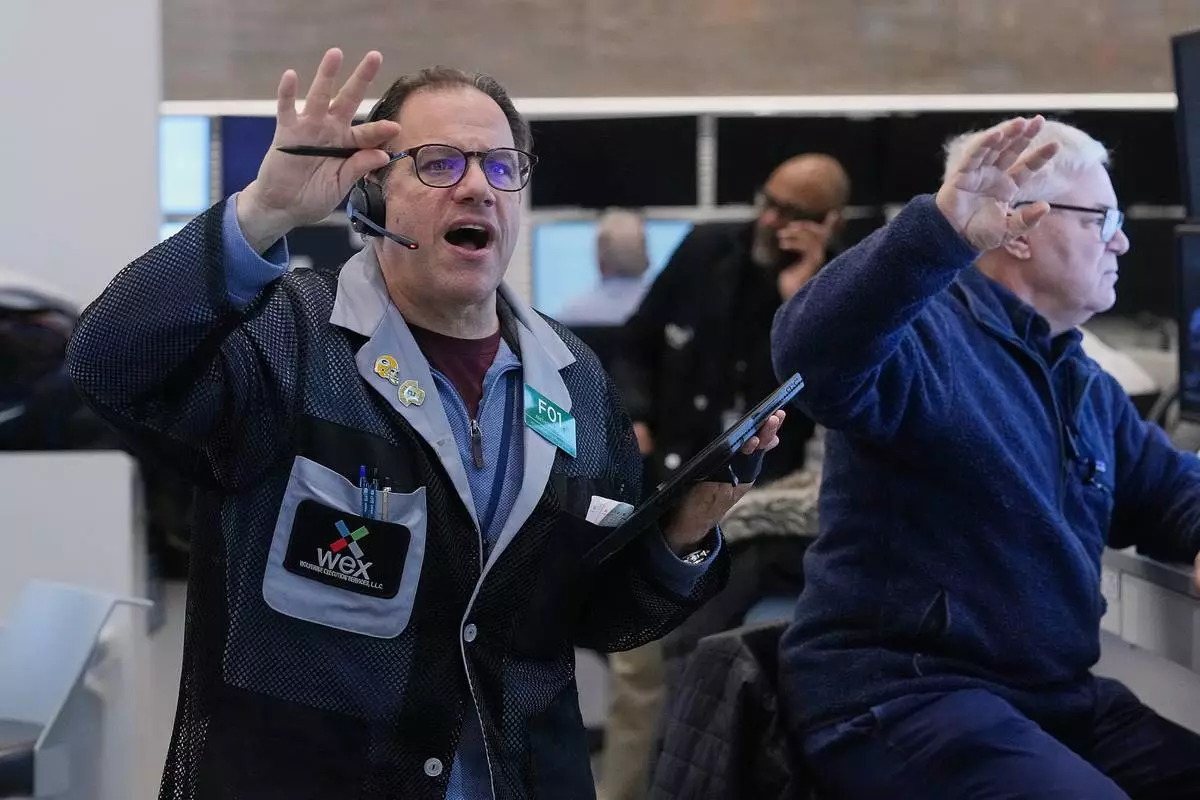
Anthony Spina, left, works with fellow options traders on the floor of the New York Stock Exchange, Wednesday, Jan. 28, 2026. (AP Photo/Richard Drew)
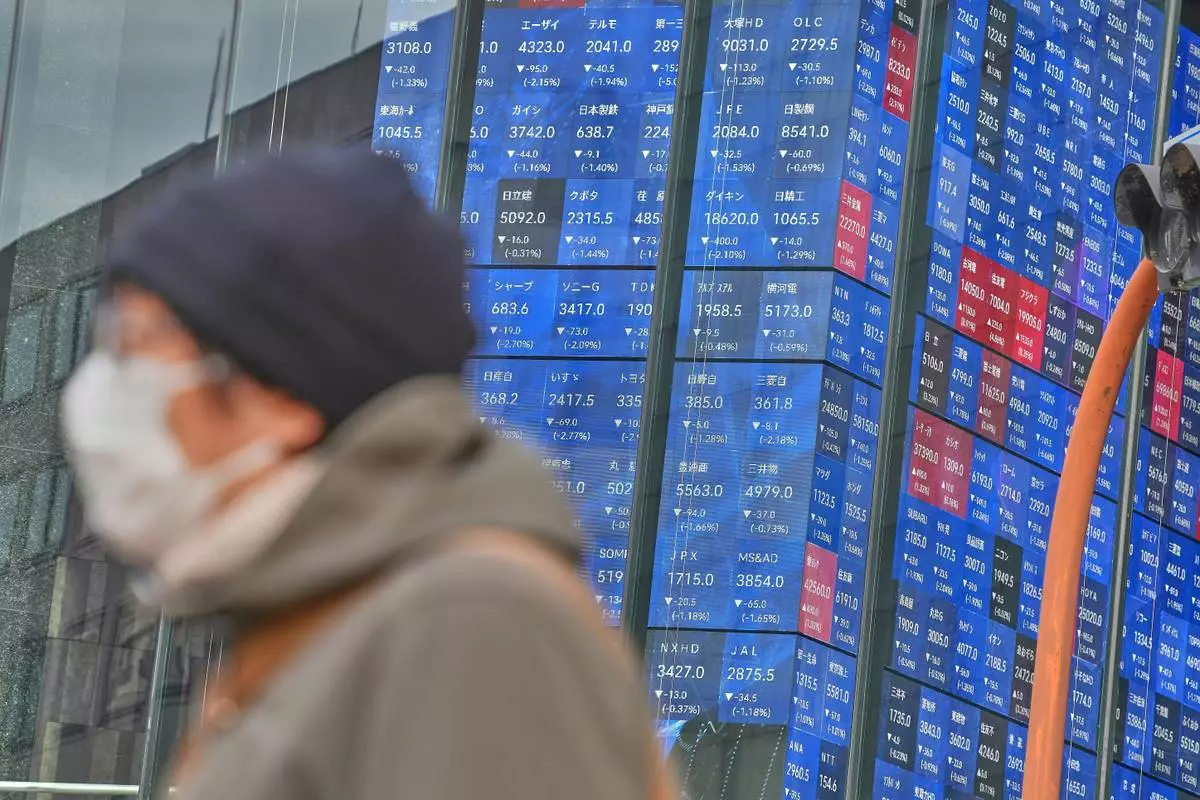
A person stands in front of an electronic stock board showing Japan's Nikkei index at a securities firm Wednesday, Jan. 28, 2026, in Tokyo. (AP Photo/Eugene Hoshiko)
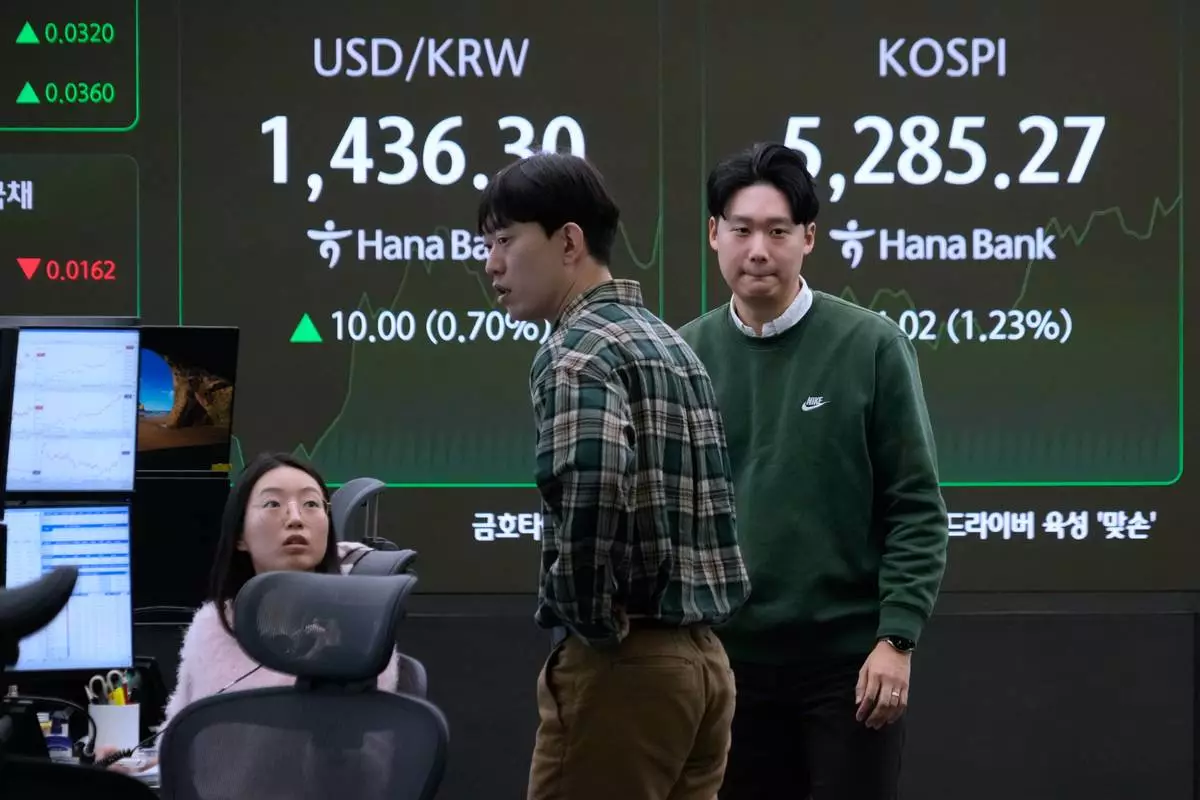
Currency traders work near a screen showing the Korea Composite Stock Price Index (KOSPI), right, and the foreign exchange rate between U.S. dollar and South Korean won at the foreign exchange dealing room of the Hana Bank headquarters in Seoul, South Korea, Friday, Jan. 30, 2026. (AP Photo/Ahn Young-joon)
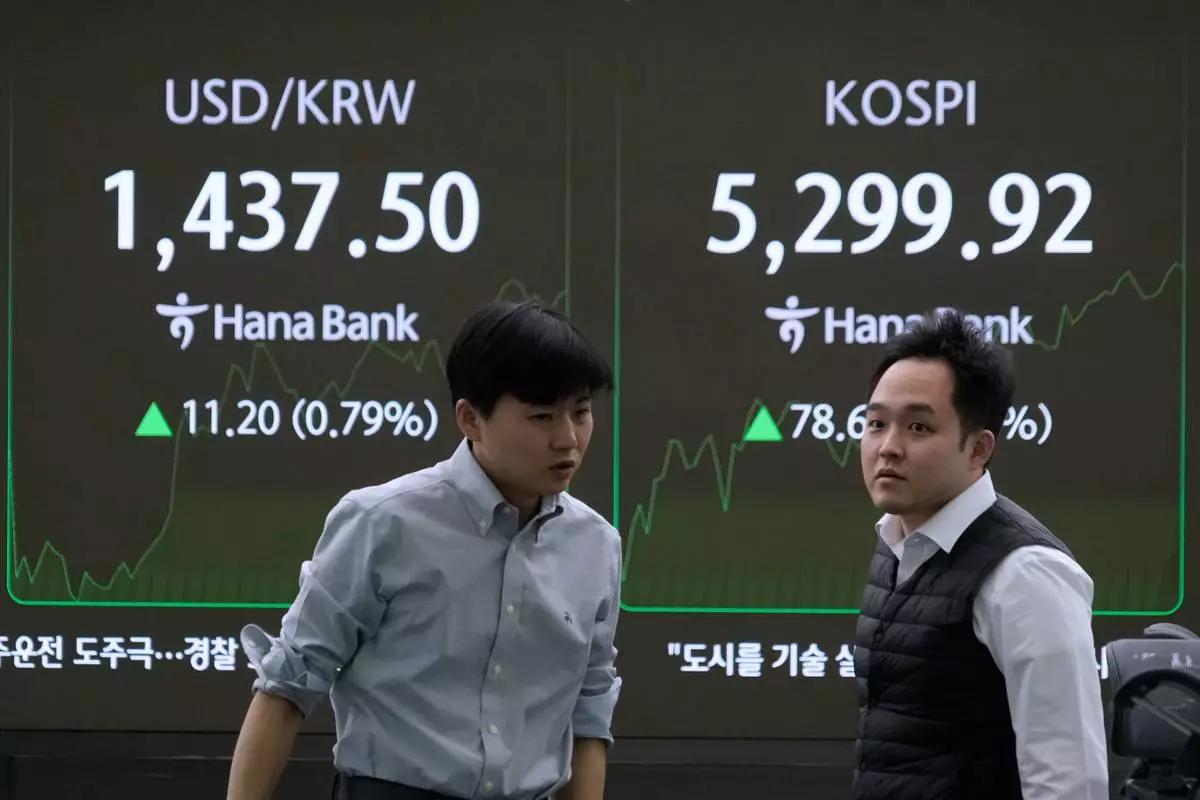
Currency traders pass by a screen showing the Korea Composite Stock Price Index (KOSPI), right, and the foreign exchange rate between U.S. dollar and South Korean won at the foreign exchange dealing room of the Hana Bank headquarters in Seoul, South Korea, Friday, Jan. 30, 2026. (AP Photo/Ahn Young-joon)
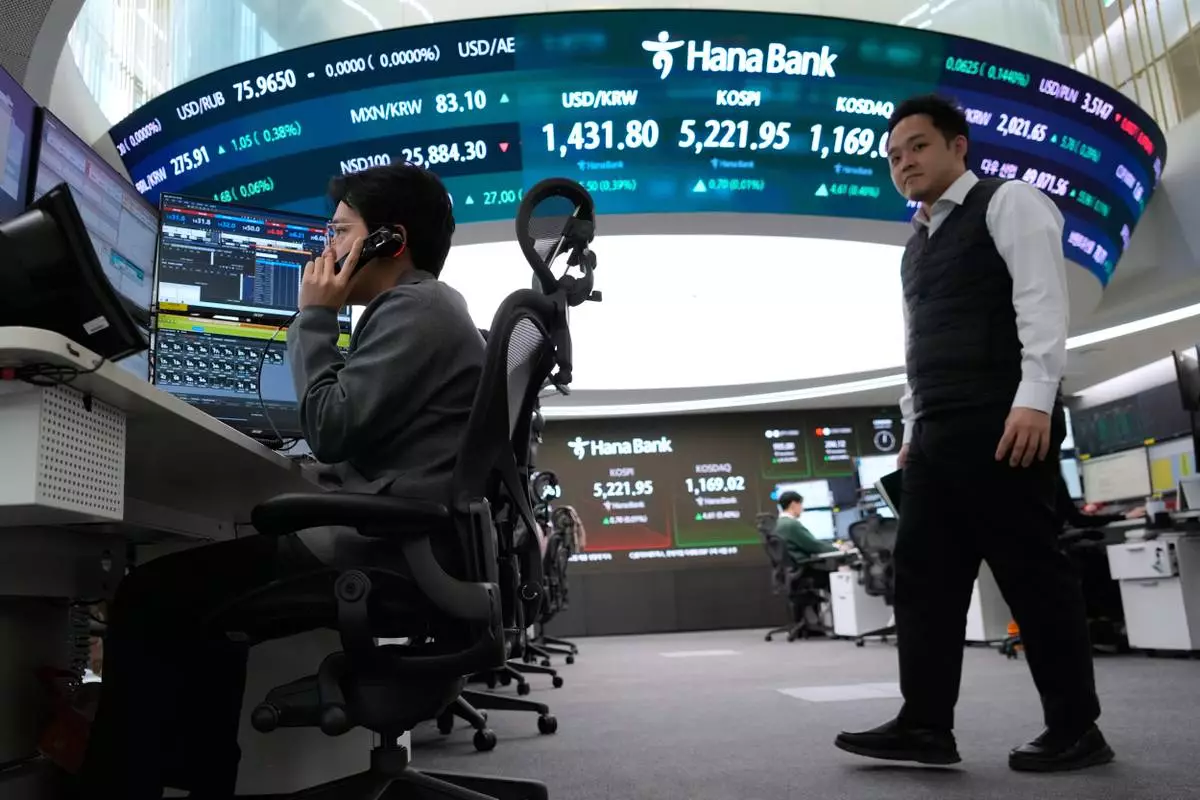
A currency trader talks on the phone near a screen showing the Korea Composite Stock Price Index (KOSPI), top center, and the foreign exchange rate between U.S. dollar and South Korean won, top center left, at the foreign exchange dealing room of the Hana Bank headquarters in Seoul, South Korea, Friday, Jan. 30, 2026. (AP Photo/Ahn Young-joon)
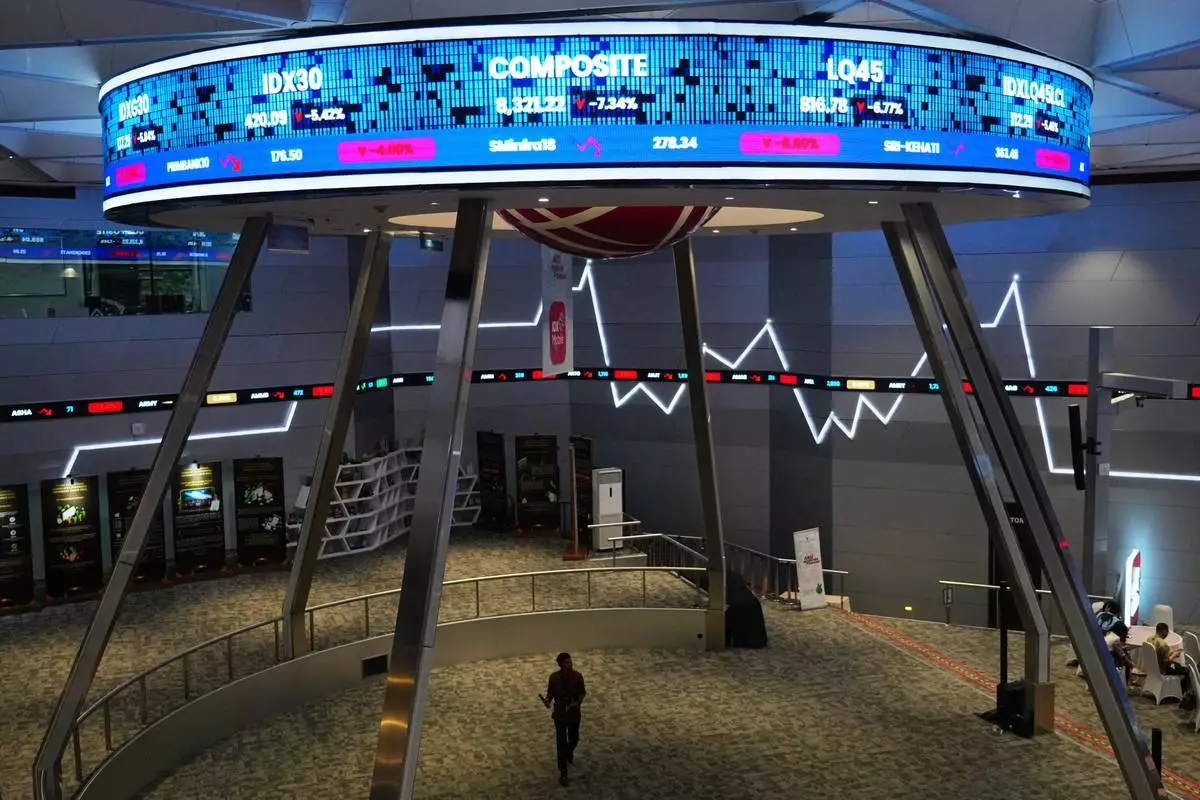
A man walks past an electronic board displaying stock prices and Jakarta Stock Exchange Composite Index, at the Indonesia Stock Exchange in Jakarta, Indonesia, Wednesday, Jan. 28, 2026. (AP Photo/Tatan Syuflana)