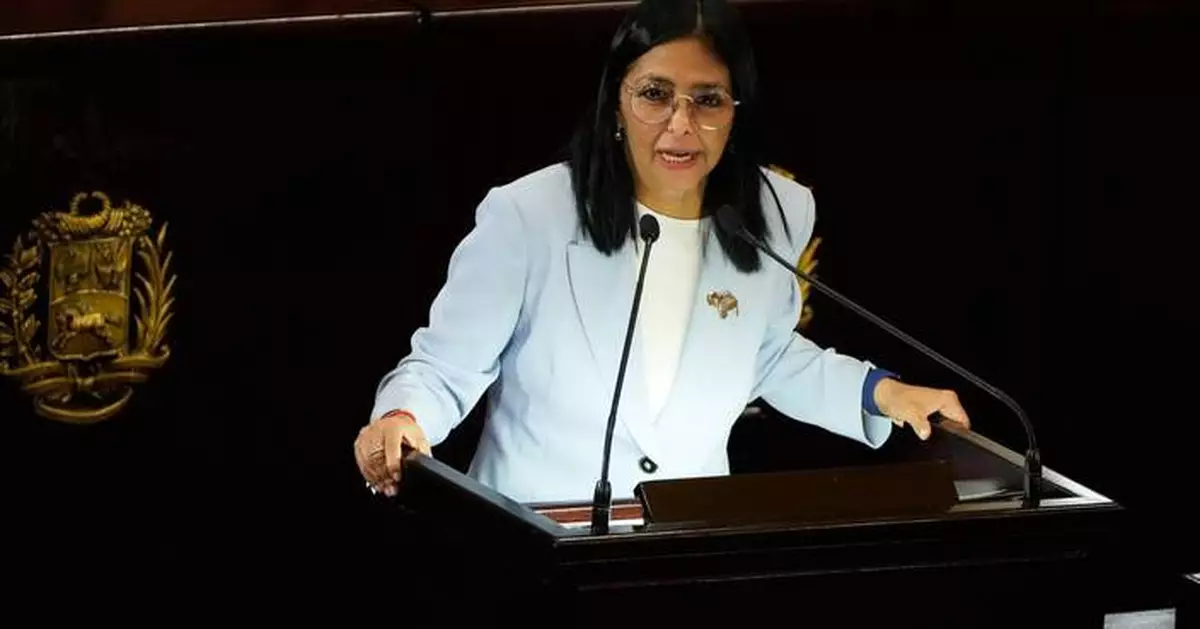
CARACAS, Venezuela (AP) — Venezuela’s acting President Delcy Rodríguez on Friday announced an amnesty bill that could lead to the release of hundreds of prisoners, including opposition leaders, journalists and human rights activists detained for political reasons.
The measure had long been sought by the United States-backed opposition. It is the latest concession Rodríguez has made since taking the reins of the country on Jan. 3 after the brazen seizure of then-President Nicolás Maduro in a U.S. military attack in Venezuela’s capital, Caracas.
Click to Gallery
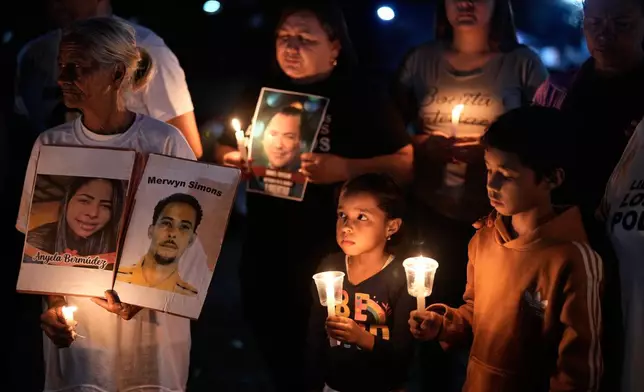
Relatives of people they consider political prisoners hold a vigil calling for the release of their loved ones outside the Rodeo I prison in Guatire, Venezuela, Friday, Jan. 23, 2026. (AP Photo/Ariana Cubillos)
Relatives of detainees gather the near El Helicoide, headquarters of Venezuela's intelligence service and a detention center, in Caracas, Venezuela, Friday, Jan. 30, 2026, on the same day acting President Delcy Rodríguez announced an amnesty bill that could lead to the release of hundreds of prisoners, including opposition leaders, journalists and human rights activists detained for political reasons. (AP Photo/Ariana Cubillos)
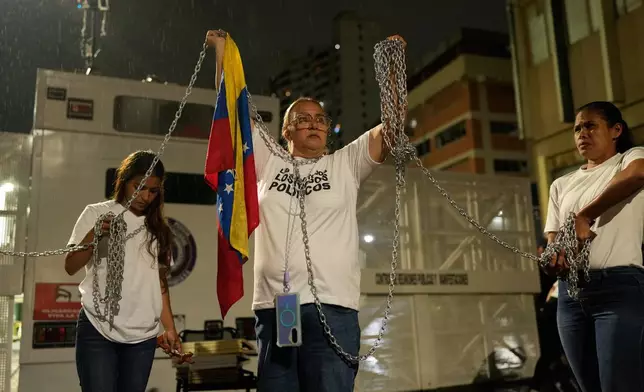
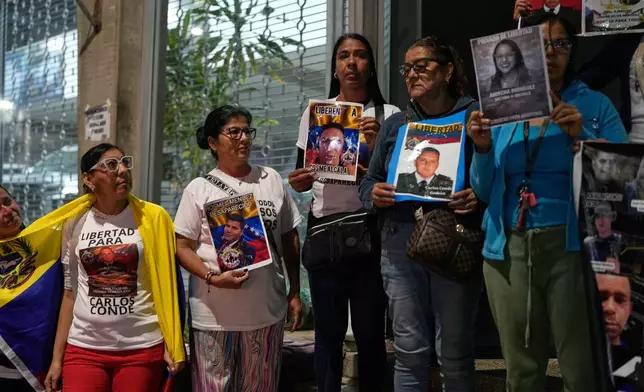
Relatives of people they consider to be detained for political reasons protest holding chains in front of police guarding the Zona 7 Bolivarian National Police detention center in Caracas, Venezuela, Friday, Jan. 30, 2026, on the same day acting President Delcy Rodríguez announced an amnesty bill that could lead to the release of hundreds of prisoners, including opposition leaders, journalists and human rights activists detained for political reasons. (AP Photo/Ariana Cubillos)
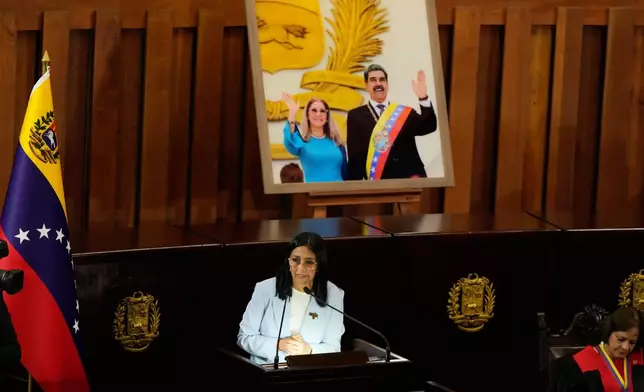
Venezuelan acting President Delcy Rodriguez speaks under a framed image of former President Nicolas Maduro and his wife Cilia Flores, during a ceremony marking the opening of the new judicial year at the Supreme Tribunal of Justice in Caracas, Venezuela, Friday, Jan. 30, 2026. (AP Photo/Ariana Cubillos)
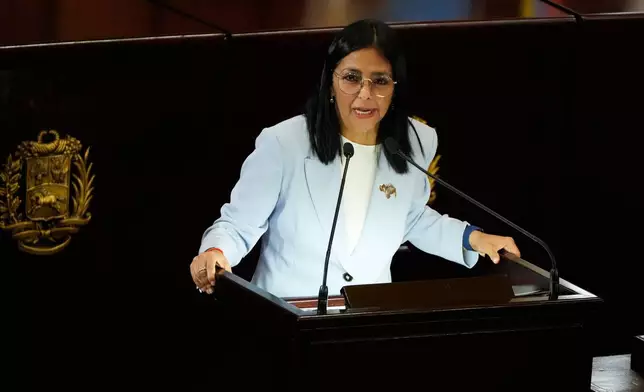
Venezuelan acting President Delcy Rodriguez speaks during a ceremony marking the opening of the new judicial year at the Supreme Tribunal of Justice in Caracas, Venezuela, Friday, Jan. 30, 2026. (AP Photo/Ariana Cubillos)
Rodríguez told a gathering of justices, magistrates, ministers, military brass and other government leaders that the ruling party-controlled National Assembly would take up the bill with urgency.
“May this law serve to heal the wounds left by the political confrontation fueled by violence and extremism,” she added in the pretaped televised event. “May it serve to redirect justice in our country, and may it serve to redirect coexistence among Venezuelans.”
Rodríguez also announced the shutdown of Helicoide, a prison in Caracas where torture and other human rights abuses have been repeatedly documented by independent organizations. The facility, she said, will be transformed into a sports, social and cultural center for police and surrounding neighborhoods.
Rodríguez made her announcement before some of the officials that former prisoners and human rights watchdogs have accused of ordering the abuses committed at Helicoide and other detention facilities.
Relatives of some prisoners livestreamed Rodríguez’s speech on a phone as they gathered outside Helicoide. Some cried. Many chanted “Freedom! Freedom!”
“God is good. God heard us,” Johana Chirinos, a prisoner’s aunt, said as tears rolled down her face.
Opposition leader and Nobel Peace Prize laureate María Corina Machado in a statement said the announced actions were not taken “voluntarily, but rather in response to pressure from the US government.” She also noted that people have been detained for their political activities from anywhere between a month and 23 years.
“The regime’s repressive apparatus is brutal and has responded to the numerous criminal forces that answer to this regime, and it is all that remains,” Machado said. “When repression disappears and fear is lost, it will be the end of tyranny.”
The Venezuelan-based prisoners’ rights group Foro Penal estimates that 711 people are in detention facilities across the South American country for their political activities. Of those, 183 have been sentenced.
Among the prominent members of the political opposition who were detained after the 2024 presidential election and remain in prison are former lawmaker Freddy Superlano, Machado's lawyer Perkins Rocha, as well as Juan Pablo Guanipa, a former governor and one of Machado’s closest allies.
The government did not release the text of the bill on Friday, leaving unclear the specific criteria that will be used to determine who qualifies for amnesty.
Rodríguez said the “general amnesty law” will cover the “entire period of political violence from 1999 to the present.” She also explained that people convicted of murder, drug trafficking, corruption or human rights violations will not qualify for relief.
Rodríguez’s government earlier this month announced plans to release a significant number of prisoners in a goodwill gesture, but relatives of those detained have condemned the slow pace of the releases.
“A general amnesty is welcome as long as its elements and conditions include all of civil society, without discrimination, that it does not become a cloak of impunity, and that it contributes to dismantling the repressive apparatus of political persecution,” Alfredo Romero, president of Foro Penal, said on social media.
The organization has tallied 302 releases since the Jan. 8 announcement.
The human rights group Provea in a statement called out the lack of transparency and “trickle” pace of prisoner releases. It also underscored that while the freeing of those still detained “is urgent, the announcement of an amnesty should not be conceived, under any circumstances, as a pardon or act of clemency on the part of the State.”
“We recall that these people were arbitrarily imprisoned for exercising rights protected by international human rights instruments, the National Constitution, and Venezuelan laws,” the organization said.
The U.S. Department of State on Friday confirmed that all U.S. citizens known to have been held in Venezuelan prisons had been released. It also announced that Laura Dogu, who will serve as its top diplomat in Venezuela, will arrive Saturday in the capital.
Outside another detention facility in Caracas, Edward Ocariz, who was detained for more than five months after the 2024 election, joined prisoners' relatives in demanding their loved ones' swift release.
“We, Venezuelans, have all endured so much, all unjust, merciless and trampling on our dignity. No one deserves this,” Ocariz said. “And today, the guilty continue to govern Venezuela.”
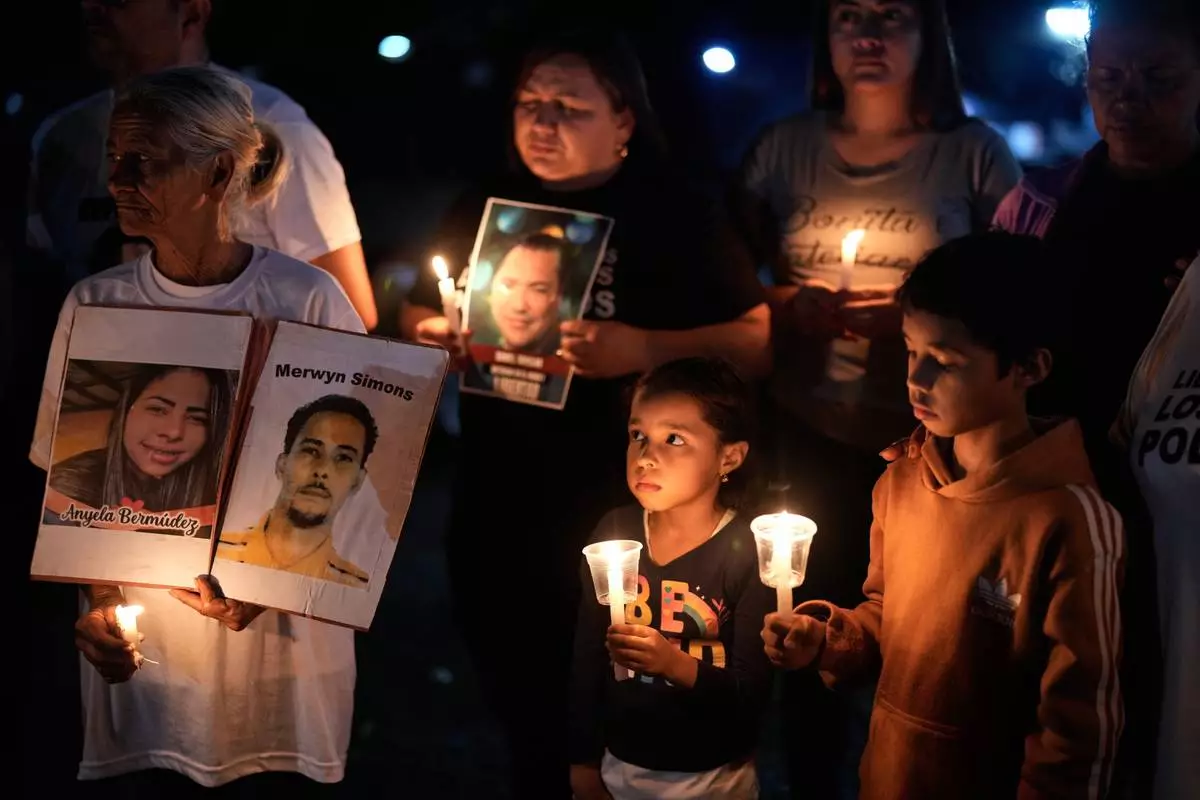
Relatives of people they consider political prisoners hold a vigil calling for the release of their loved ones outside the Rodeo I prison in Guatire, Venezuela, Friday, Jan. 23, 2026. (AP Photo/Ariana Cubillos)
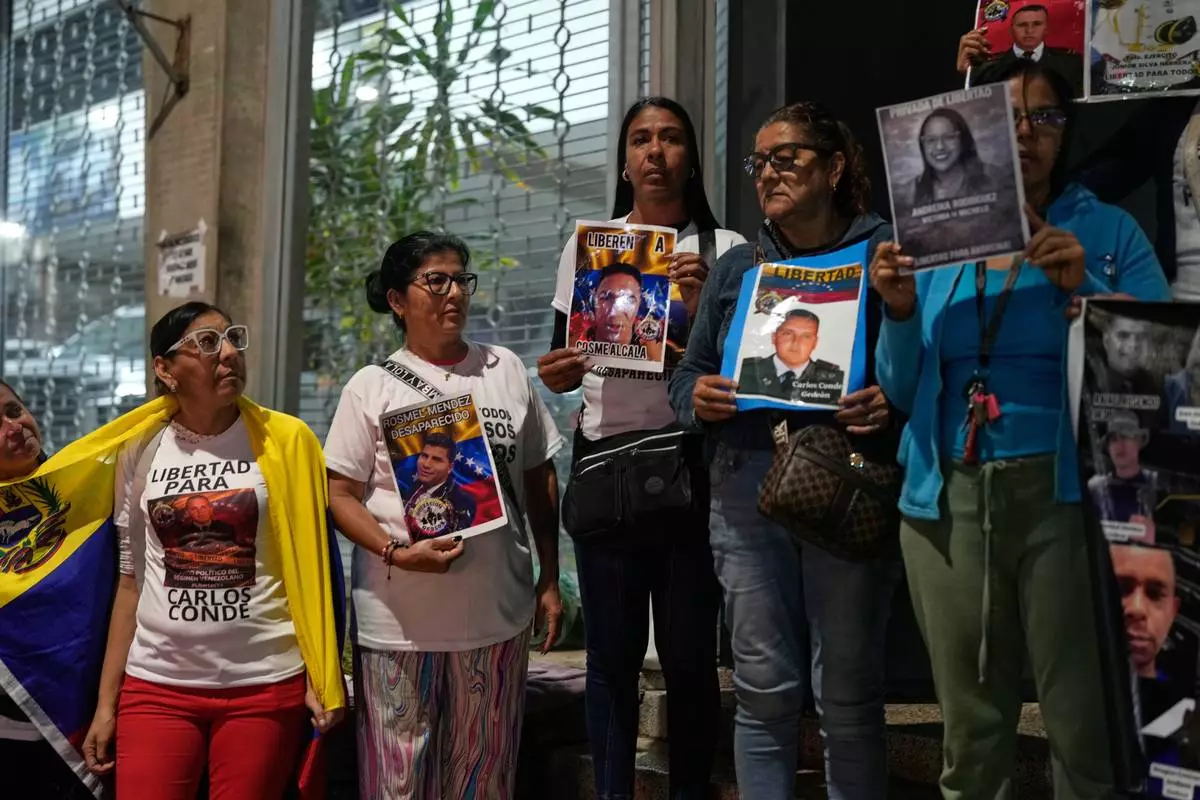
Relatives of detainees gather the near El Helicoide, headquarters of Venezuela's intelligence service and a detention center, in Caracas, Venezuela, Friday, Jan. 30, 2026, on the same day acting President Delcy Rodríguez announced an amnesty bill that could lead to the release of hundreds of prisoners, including opposition leaders, journalists and human rights activists detained for political reasons. (AP Photo/Ariana Cubillos)
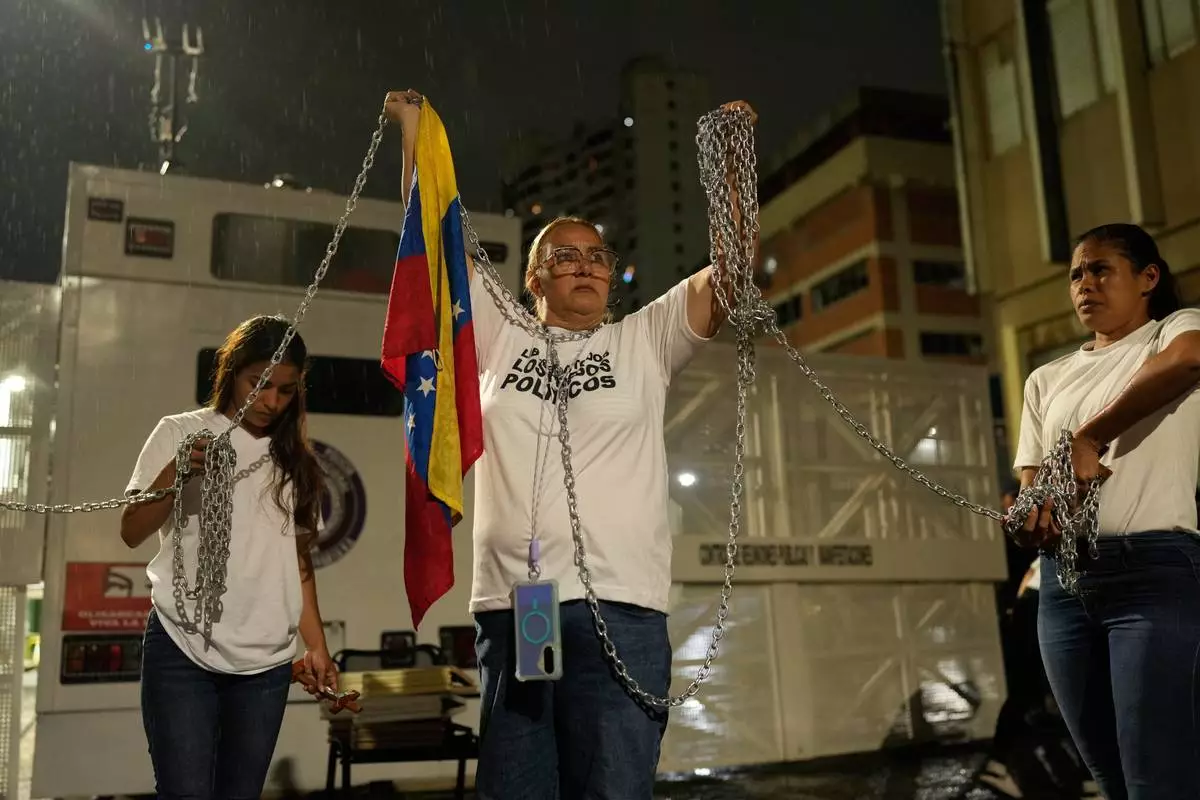
Relatives of people they consider to be detained for political reasons protest holding chains in front of police guarding the Zona 7 Bolivarian National Police detention center in Caracas, Venezuela, Friday, Jan. 30, 2026, on the same day acting President Delcy Rodríguez announced an amnesty bill that could lead to the release of hundreds of prisoners, including opposition leaders, journalists and human rights activists detained for political reasons. (AP Photo/Ariana Cubillos)
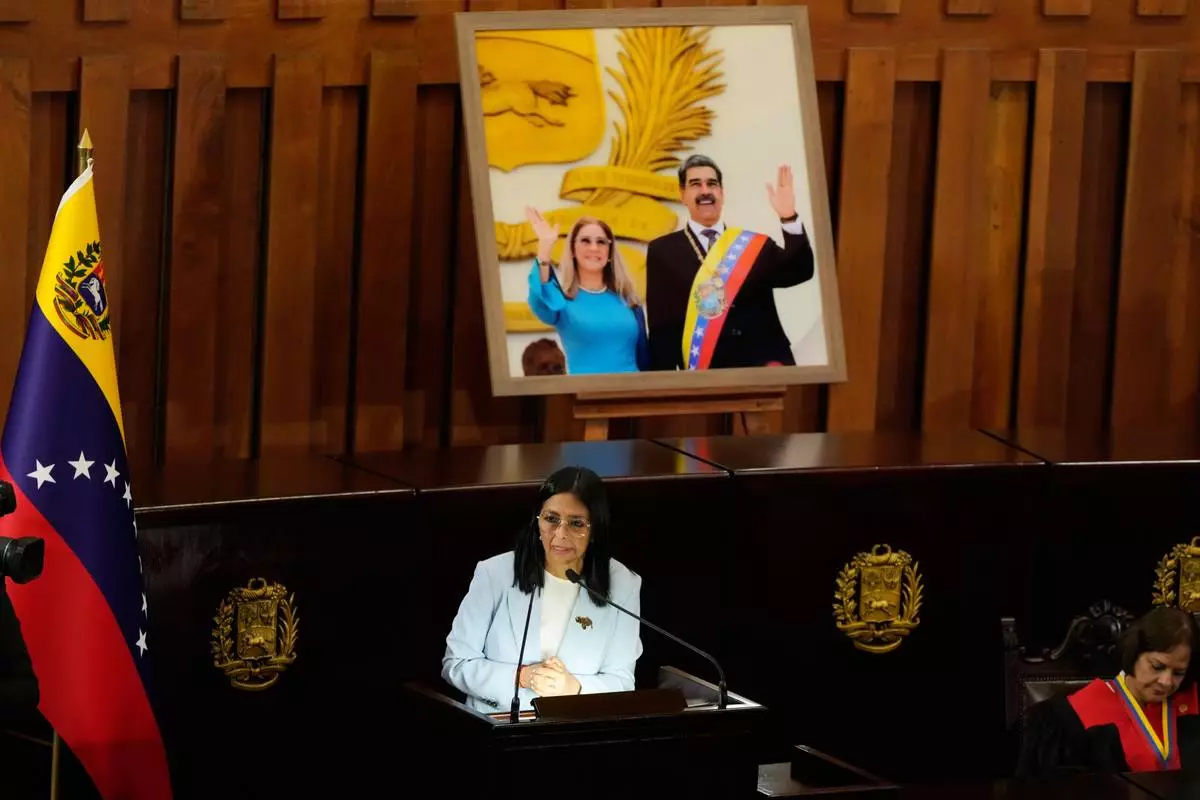
Venezuelan acting President Delcy Rodriguez speaks under a framed image of former President Nicolas Maduro and his wife Cilia Flores, during a ceremony marking the opening of the new judicial year at the Supreme Tribunal of Justice in Caracas, Venezuela, Friday, Jan. 30, 2026. (AP Photo/Ariana Cubillos)
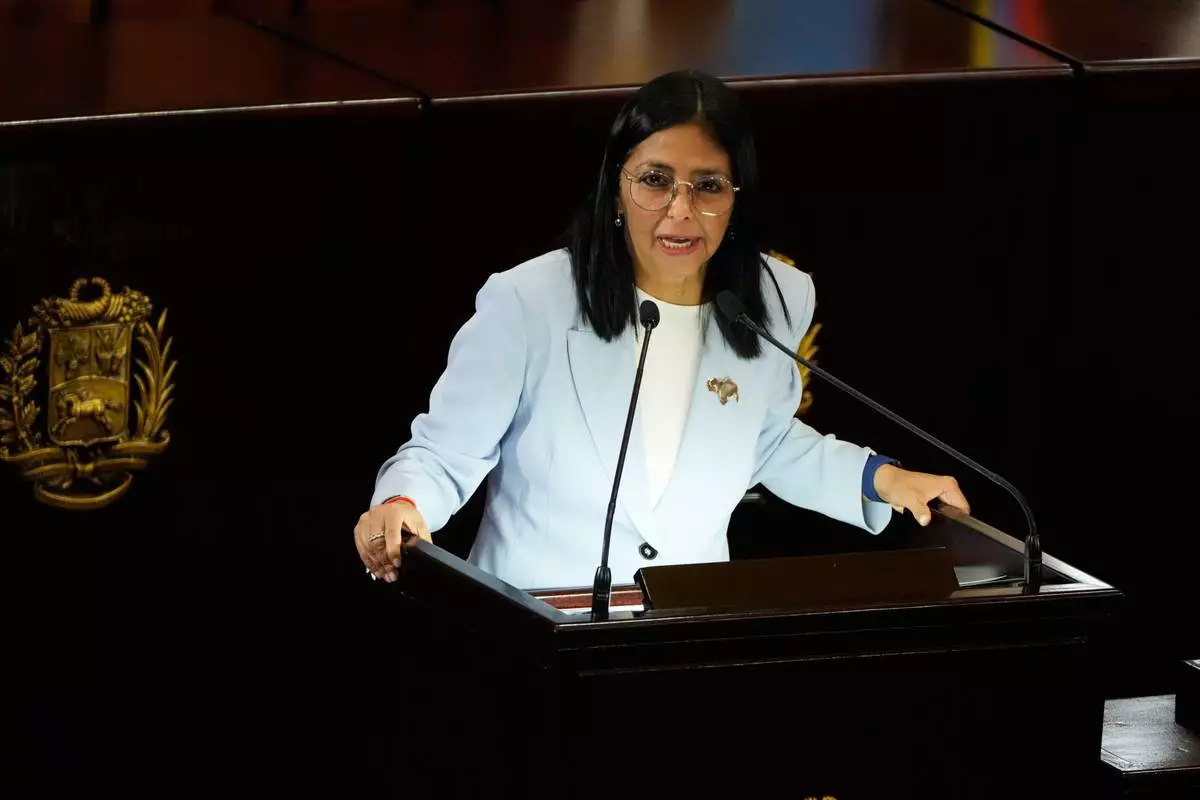
Venezuelan acting President Delcy Rodriguez speaks during a ceremony marking the opening of the new judicial year at the Supreme Tribunal of Justice in Caracas, Venezuela, Friday, Jan. 30, 2026. (AP Photo/Ariana Cubillos)