Catherine O’Hara was never afraid to go big. The wild accent as Moira Rose on “Schitt’s Creek.” Delia Deetz’s possessed dance to “Day-O (The Banana Boat Song)” in “Beetlejuice.” The way she screamed “KEVIN!” in two “Home Alones” as Kate McCallister.
But it wasn’t boldness alone that made her one of the greats, and her characters memorable: No matter how absurd or how preposterous or even cliche on the page, there was always a beating heart underneath the silliness, a compassion that shone through. Yes, even as Cookie Fleck, with all her ex-boyfriends, in “Best in Show.”
Kevin Nealon said it simply: “She changed how so many of us understand comedy and humanity.”
Because of that innate grasp on her craft, unwillingness to settle into nostalgia and uncanny ability to invent herself anew with each project, her characters would impact multiple generations of film, television and comedy fans. Before she died at age 71, she was still forging new trails as the ousted studio executive Patty Leigh in “The Studio.” And she did it all with grace and humility, a diva only when the role and costume demanded it.
As fellow Canadian Sarah Polley, who she acted with on “The Studio,” wrote on Instagram Friday: “She was the kindest and the classiest. How could she also have been the funniest person in the world?”
Just eight years younger than another comedy trailblazer Gilda Radner, whom she understudied for at “The Second City” in Toronto, O’Hara was not an obvious candidate for stardom as the second youngest of seven in a decidedly non-showbiz, Catholic family. But she loved comedy, obsessing over “Monty Python” in high school and even trying to meet them at the airport once after hearing they were flying in. And when her brother began dating Radner, she followed that trail to the improv stage.
Her first job was not on stage, however, but as a server where she absorbed all that she could. Though she was turned down after her first audition, she wasn’t deterred; She joined the company in 1974. By 1976 she was an essential part of the cast’s transition to television on “SCTV,” where she did original characters and impersonated well-known personalities of the time, including Meryl Streep, who she’d later act alongside.
“My crutch was, in improvs, when in doubt, play insane,” O’Hara told The New Yorker in 2019. “You didn’t have to excuse anything that came out of your mouth. It didn’t have to make sense.”
By the time the show ended in 1984, she was itching for something more, something deeper and started reading scripts for films. Some equated her pickiness (including pulling out of “Saturday Night Live”) with a kind of lack of ambition. For her, it was about waiting for the right thing. Though her film debut was less than auspicious (in the poorly reviewed Canadian thriller “Double Negative” alongside “SCTV” peers like John Candy and Eugene Levy) she soon found her footing working with the likes of Martin Scorsese in “After Hours” and Mike Nichols in “Heartburn,” where she’d play the gossipy beltway journalist friend of Streep and Jack Nicholson.
“You have to try to make this person a real person,” she said in a 1986 CNN interview. “When I first read it, I thought oh this woman does nothing but gossip. But then I started seeing her as a human being, like myself.”
It’s an impulse that served her well during her Hollywood ascent in the late 1980s and early 1990s. You can watch “Home Alone” for the hijinks, but O’Hara made it emotional and grounded as the mom just trying to get back to her child. There was humor, yes (remember the fake Rolex?) but then, a beat later, there were tears. Even Delia Deetz was relatable, giving her husband a withering glare at his tone-deaf suggestion that she might now be able to make a decent meal in her new suburban prison.
She was feisty in period garb as Wyatt Earp’s sister-in-law, sweetly crazy as the depressed, overwhelmed mother to Colin Hanks in “Orange County,” and crazy-crazy as Marty Funkhouser’s sister Bam Bam in “Curb Your Enthusiasm.”
From her perspective, nothing was as big as “Schitt’s Creek,” an unlikely cultural phenomenon that had everyone suddenly pronouncing baby as “bébé” (and it wasn't because of a sudden French language surge on Duolingo). Few actors get to create their own language and cadence as O’Hara managed to do with Moira Rose.
That unmistakable and unplaceable accent, she told Rolling Stone in 2020, was sort of “in defense of creativity.” She was inspired by women she’d met over the years who, out of insecurity and pride, create new personas whole cloth. As far as the look went, socialite Daphne Guinness was the starting point.
“I think that Canadians have not only a sense of humor about others but about themselves, which I think is the healthiest and best kind of sense of humor to have,” she said in that same Rolling Stone interview. “There’s an edge to it but with a compassion and love.”
Just think about Levy’s Mitch and O’Hara’s Mickey in Christopher Guest’s “A Mighty Wind” singing that mock folk song “A Kiss at the End of the Rainbow” with its saccharine sweet lines. It is ridiculous. It is funny. And it might just make you cry a little too.

FILE - Eugene Levy, from left, Annie Murphy, Daniel Levy and Catherine O'Hara cast members in the series "Schitt's Creek" pose for a portrait during the 2018 Television Critics Association Winter Press Tour in Pasadena, Calif., on Jan. 14, 2018. (Photo by Willy Sanjuan/Invision/AP, File)

FILE - Former cast members of SCTV, from left, Dave Thomas, Joe Flaherty, Catherine O'Hara, Andrea Martin, foreground, Harold Ramis, Eugene Levy and Martin Short, pose at the U.S. Comedy Arts Festival on March 6, 1999, in Aspen, Colo. (AP Photo/E Pablo Kosmicki, File)
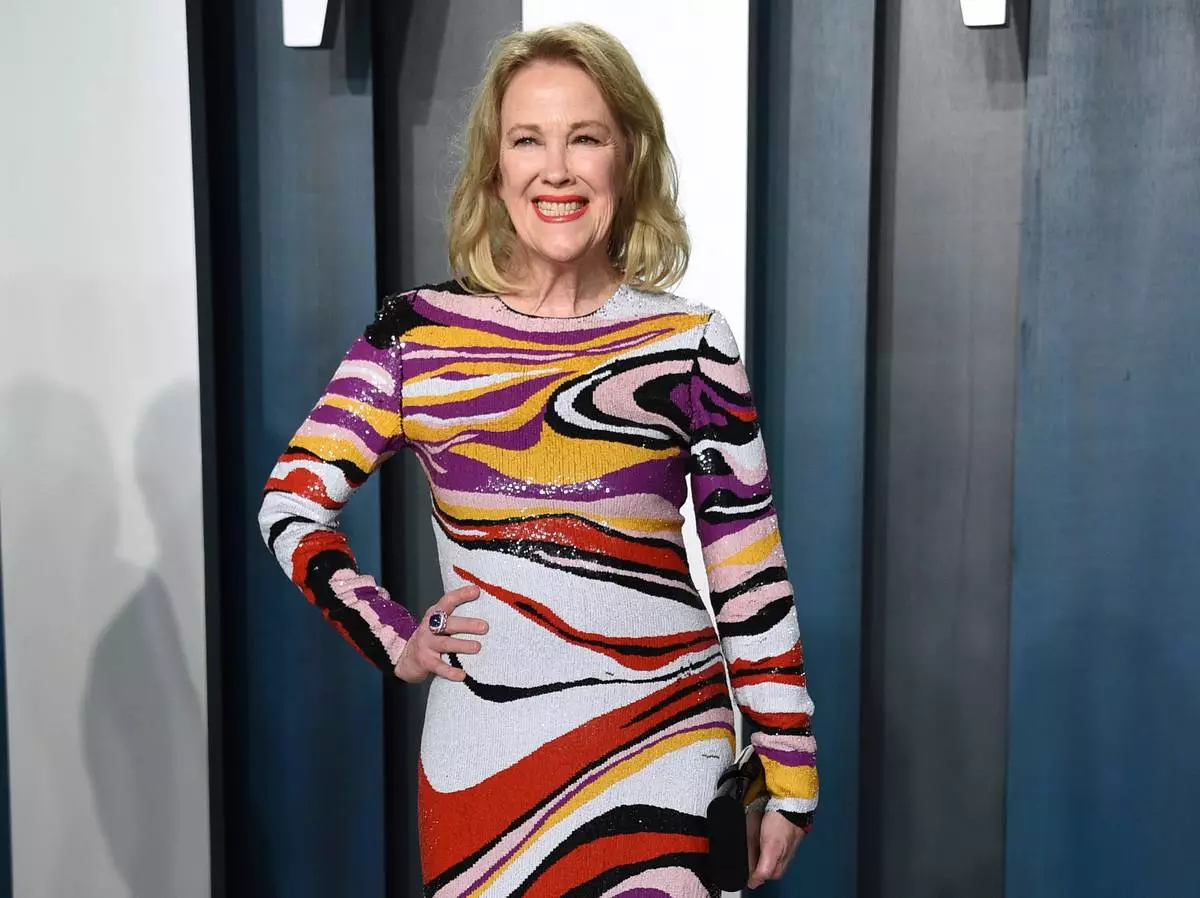
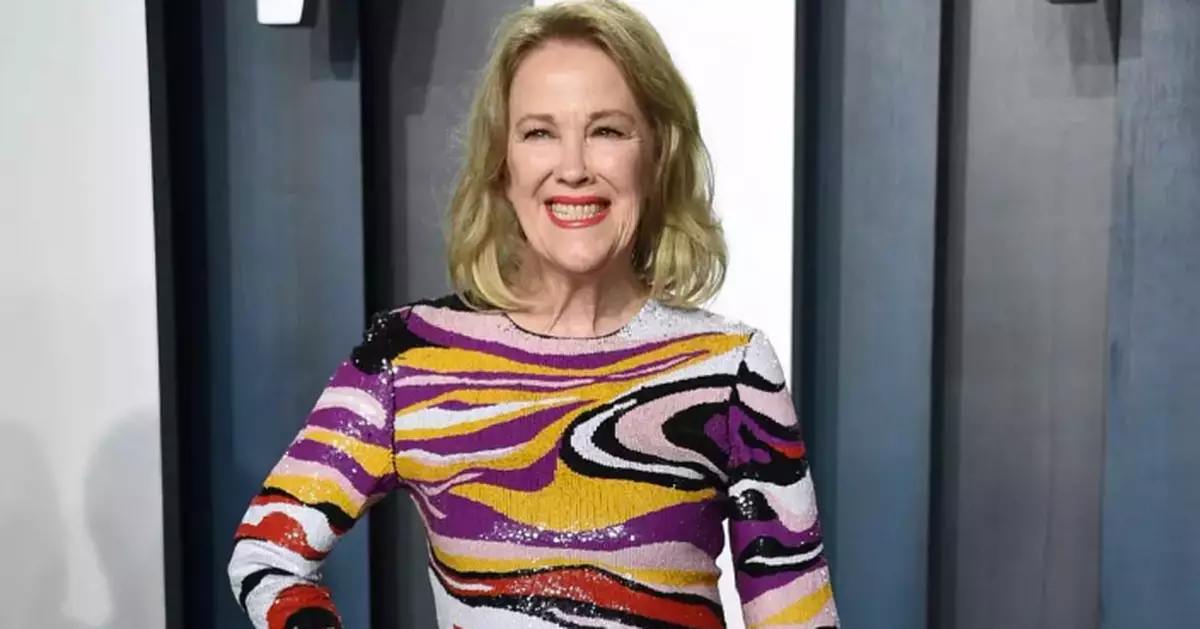
FILE - Catherine O'Hara, star of "Schitt's Creek," appears at the Vanity Fair Oscar Party in Beverly Hills, Calif., on Feb. 9, 2020. (Photo by Evan Agostini/Invision/AP, File)
BOGOTÁ, Colombia (AP) — Colombians milled into voting stations on Sunday in the first round of the South American nation’s presidential election, choosing between candidates with radically diverging visions for the future of peace in a country haunted by decades of armed conflict.
The vote, seen as a referendum on outgoing President Gustavo Petro’s policies, comes 10 years after Colombia signed an historic peace pact with guerrillas of the Revolutionary Armed Forces of Colombia, or FARC.
That agreement offered hope to break the nation out of a vicious cycle of fighting between rebel groups and the government but violence has roared back since then, coming to a head in the lead-up to the presidential vote. Criminal groups have increasingly launched drone strikes, armed attacks have plagued the race and last June, 39-year-old politician and presidential hopeful Miguel Uribe Turbay was fatally shot at a political rally.
In a country where the fight for peace has long been a part of the political ethos, the question of how to address the conflict is once again dividing the country.
The vote is slated to send a message to Latin America at a time voters are increasingly ditching leaders that pitched progressive policies, like providing opportunities to youths and rooting out corruption, to solve security ails, turning instead to heavy-handed security crackdowns like El Salvador's. It also comes as the Trump administration is placing renewed pressure on the region.
“Today's election isn't just important for us, it's important for all of Latin America,” said Juan Acevedo, a 62-year-old sociologist walking out of a voting station in Colombia's capital on Sunday morning. “Whoever wins here will suggest to the region if progressive policies will continue or if things are going to return to the right.”
There are 11 candidates running for president, but the election has basically turned into a three-horse race.
Senator and peace-builder Ivan Cepeda — a Petro ally — has led the polls and promises to carry on with Petro's “total peace” initiative to negotiate with the country’s remaining rebel groups and sign peace agreements with them in an effort to resolve the persistent crisis.
While the peace plan has largely failed as criminals have taken advantage of ceasefires with the government, Cepeda and Petro have maintained strong support among many because of progressive policies pushed forward under Petro, such as boosting the minimum wage.
Running against Cepeda are Abelardo de la Espriella and Paloma Valencia, who have vowed to come down on armed groups with a heavier hand.
De la Espriella — a bombastic lawyer known as “The Tiger” — has particularly gained traction among voters in recent weeks for pitching himself as an outsider keen on emulating the heavy-handed tactics used in El Salvador’s war on gangs, which sharply reduced gang violence but fueled accusations of human rights abuses.
Valencia is considered the political protege of Colombia's former president and strongman Álvaro Uribe, who governed from 2002 to 2010 with strong support from the United States and whose government beat back FARC rebels in an offensive that took a massive civilian toll.
Both de la Espriella and Valencia have touted their affinity for U.S. President Donald Trump even as he has taken a more aggressive stance toward Latin America than any U.S. president in decades and has pressured nations like Colombia, Ecuador and Mexico to more forcefully crack down on criminal groups.
If no candidate wins at least 50% of the vote — something extremely rare in Colombia — the two top vote-getters will face a runoff in June.
Maria Eugenia, a 57-year-old seamstress who was stitching a pair of jeans on Friday in downtown Bogotá, Colombia's capital, said she welcomed an all-out offensive on an expanding slate of criminal groups, regardless of the human cost.
While she approved of Petro’s pushes to improve the country's medical infrastructure, she said she was voting for de la Espriella because violence in rural areas of the country has gotten out of hand. She said negotiating peace pacts was simply “rewarding” armed groups.
“Of course, whenever you come down with a heavy hand, there’s always going to be debate,” she said. “But some people are going to have to fall to clean up what needs to be cleaned.”
Others, like Acevedo, the sociologist strolling out of a polling station on Sunday with packs of other voters, said a security crackdown like the one promoted by de la Espriella would only be returning to past military campaigns that he said only reinforced Colombia's cycle of violence.
He said he planned to vote for Cepeda, adding that while the government hasn't done a perfect job — failing to pass ambitious reforms and follow through on promises to reduce violence — it was better to continue pushing forward with their political coalition's efforts to take a different approach in addressing the country's violence.
He added that his main critique of Petro's administration was the power grabs made by criminal groups as they negotiated with the government. He said he hoped that if Cepeda won, he would strike a better balance between negotiating peace and maintaining control over those groups.
“We're a country that has lived through 60 years of conflict,” Acevedo said. “The danger here is that we return to the times where everyone is saying that the only way to solve our problems is with bullets and more war.”
Follow AP’s coverage of Latin America and the Caribbean at https://apnews.com/hub/latin-america
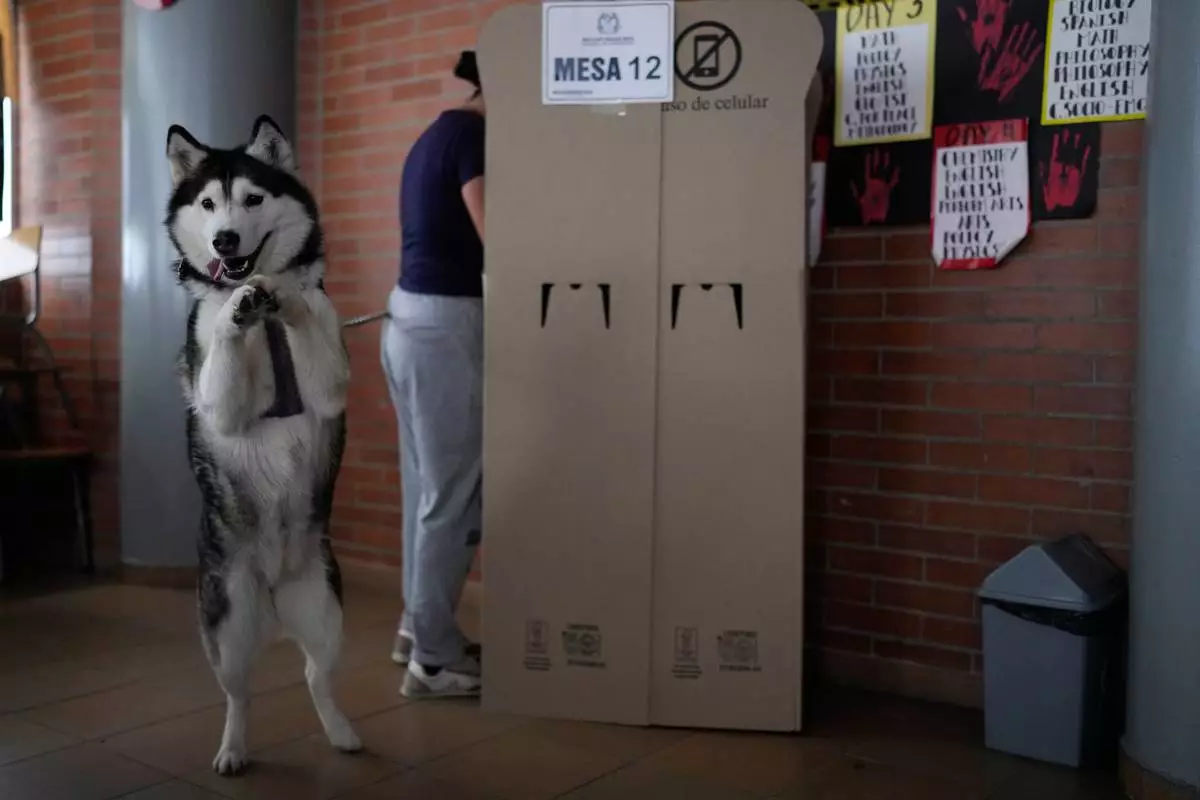
A voter marks a ballot during the presidential election in Bogota, Colombia, Sunday, May 31, 2026. (AP Photo/Matias Delacroix)
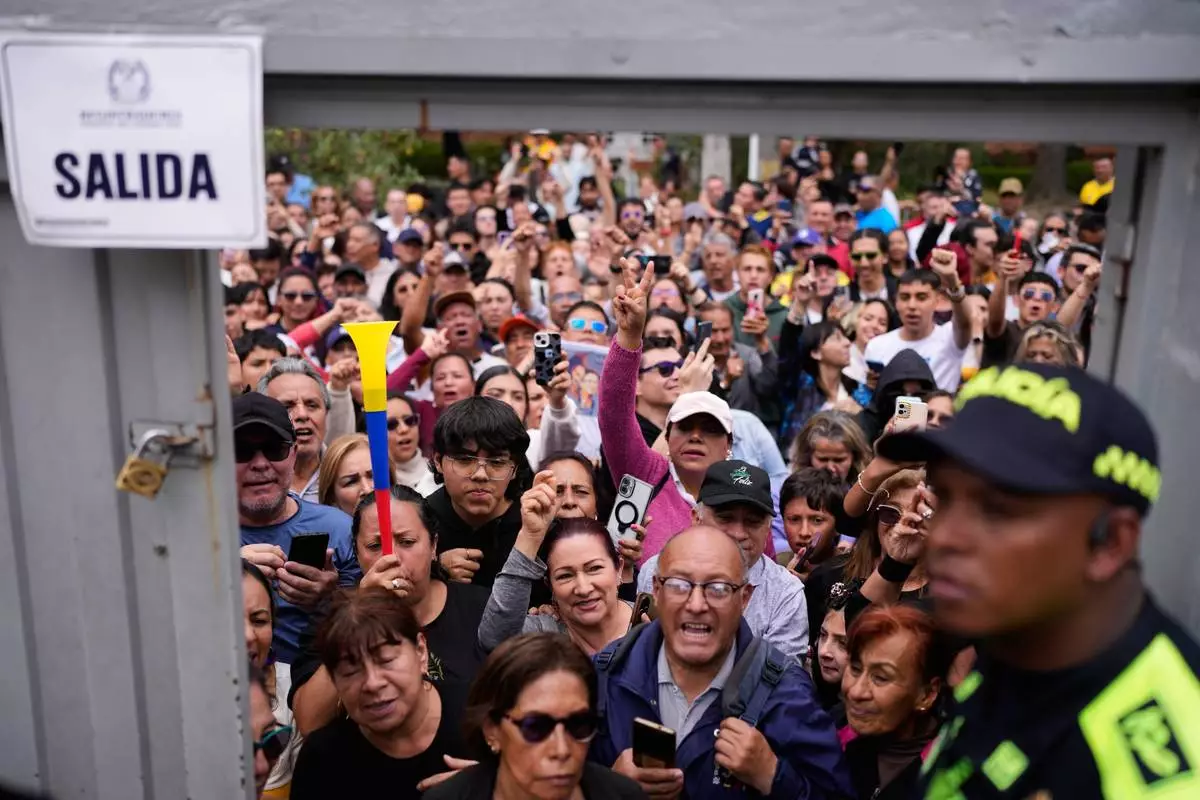
Supporters of presidential candidate Ivan Cepeda of the ruling Historic Pact coalition gather outside the polling station where he voted during the presidential election in Bogota, Colombia, Sunday, May 31, 2026. (AP Photo/Matias Delacroix)

Presidential candidate Ivan Cepeda of the ruling Historic Pact coalition gestures to supporters after voting during the presidential election in Bogota, Colombia, Sunday, May 31, 2026. (AP Photo/Matias Delacroix)
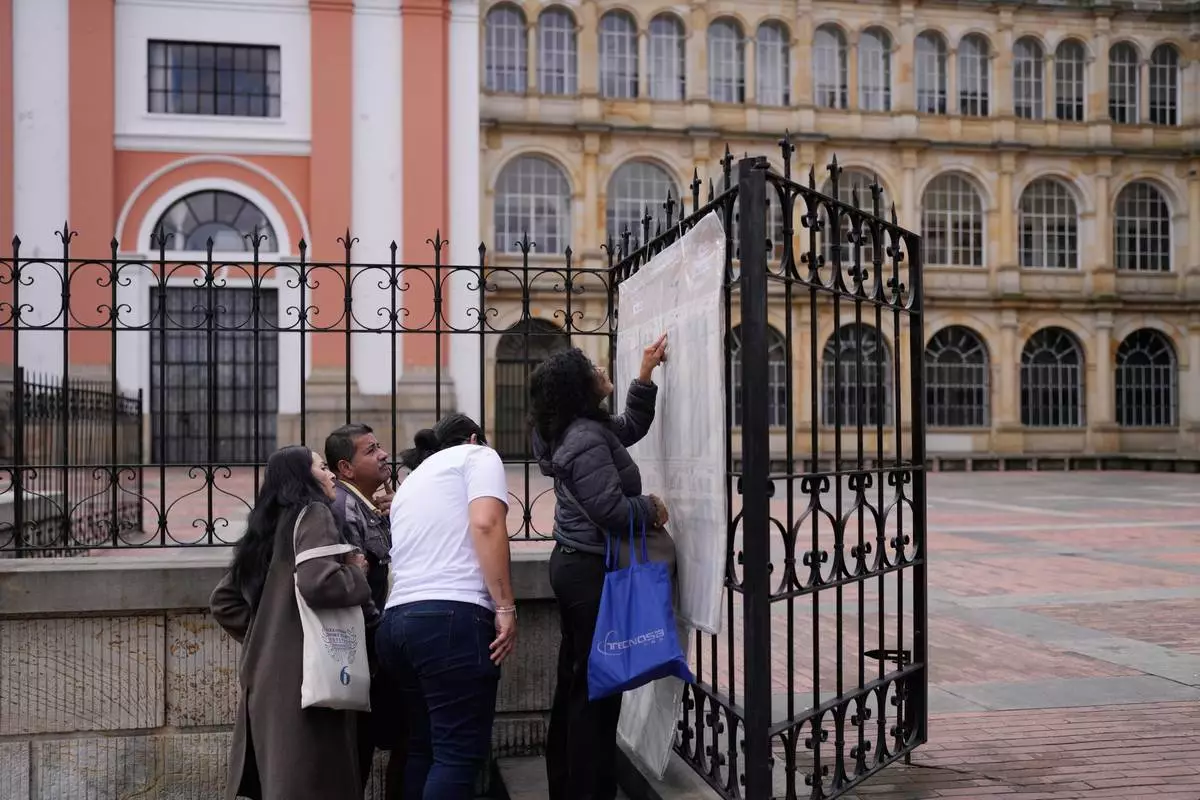
Voters check polling information during the presidential election in Bogota, Colombia, Sunday, May 31, 2026. (AP Photo/Matias Delacroix)

President Gustavo Petro shows a ballot during the presidential election in Bogota, Colombia, Sunday, May 31, 2026. (AP Photo/Matias Delacroix)
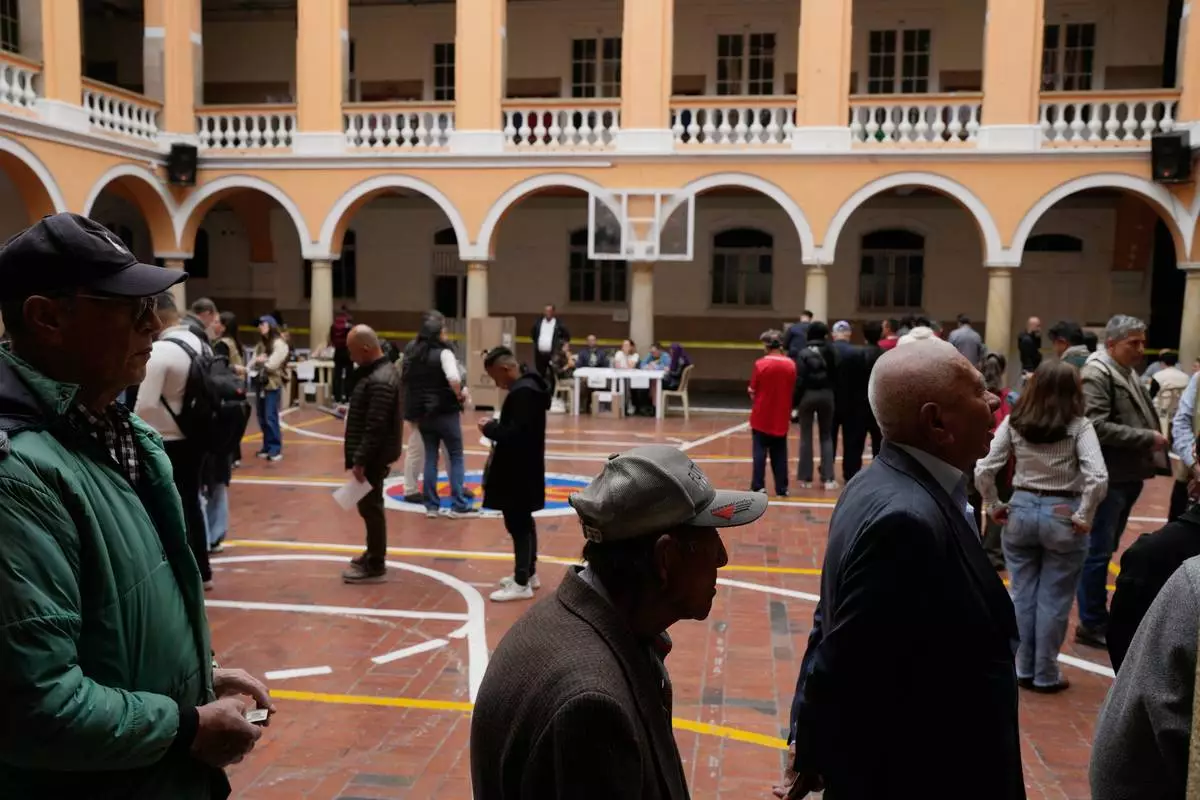
Voters line up at a polling station during the presidential election in Bogota, Colombia, Sunday, May 31, 2026. (AP Photo/Matias Delacroix)
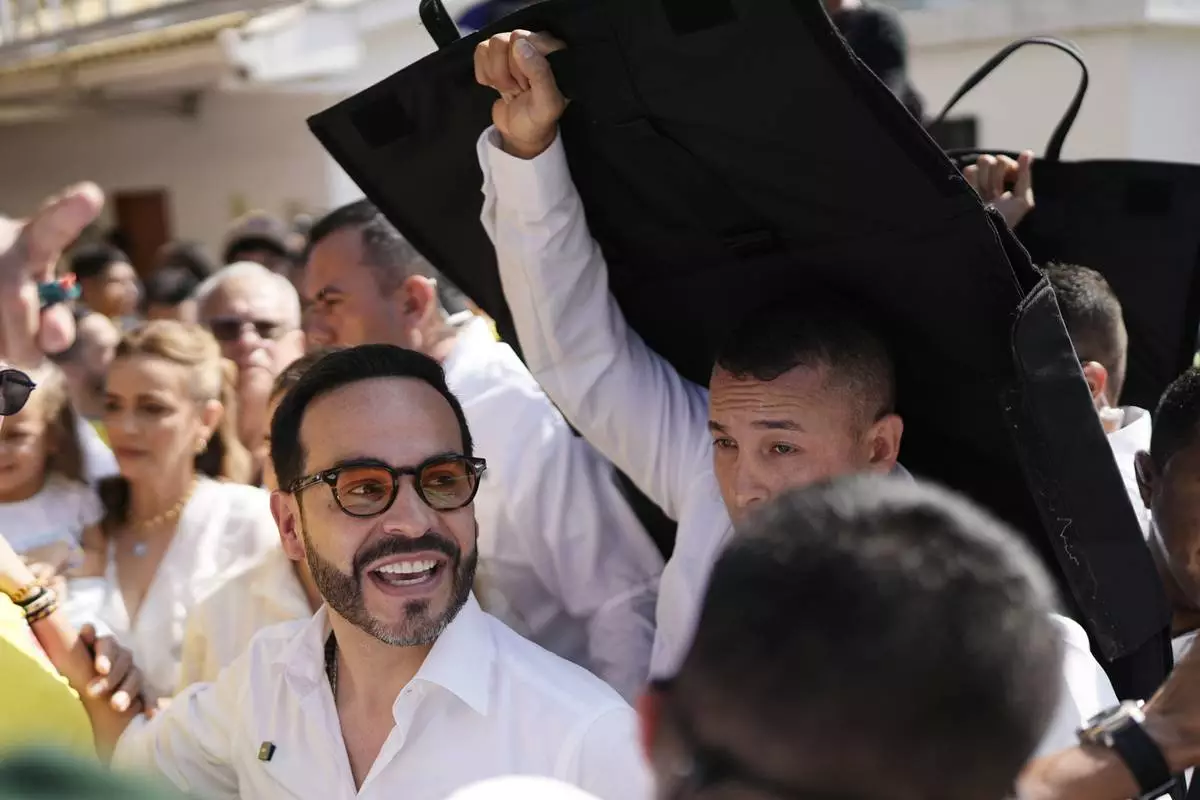
Presidential candidate Abelardo de la Espriella of the Defenders of the Motherland movement depart a polling station after voting during the presidential election in Barranquilla, Colombia, Sunday, May 31, 2026. (AP Photo/Ivan Valencia)
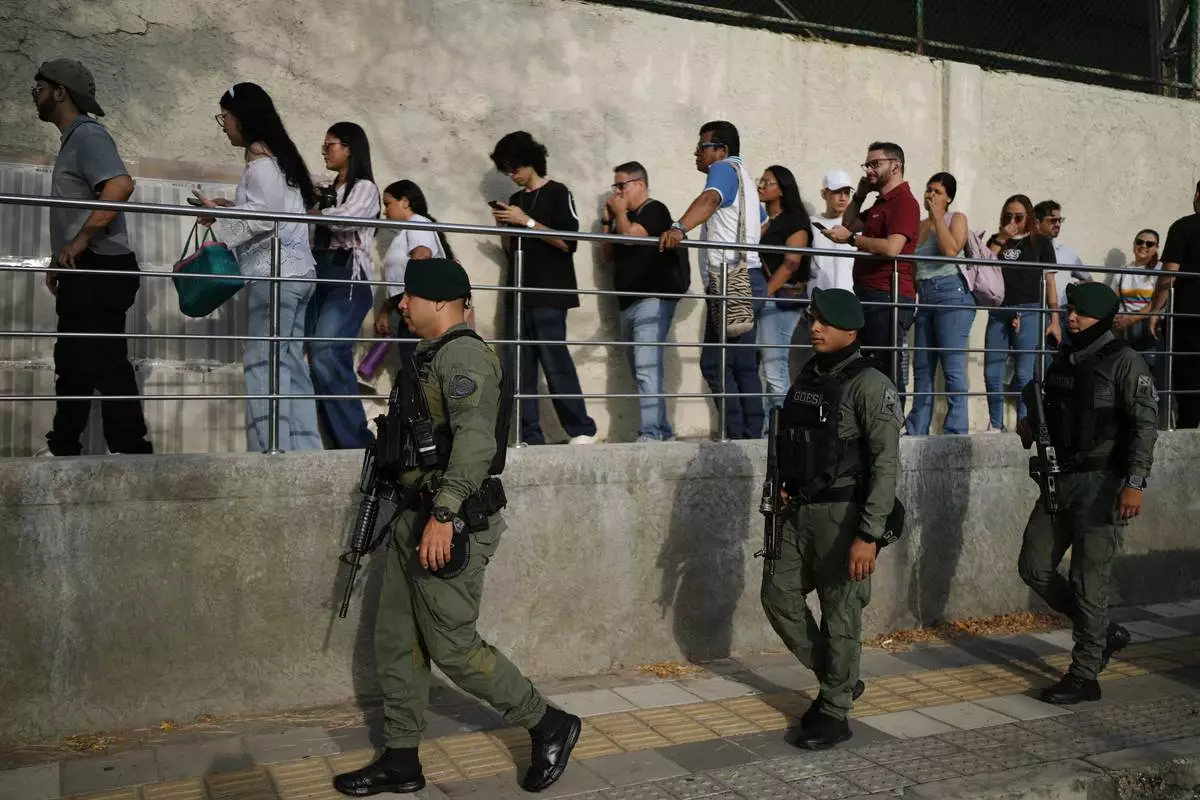
Soldiers patrol as voters arrive at a polling station during the presidential election in Barranquilla, Colombia, Sunday, May 31, 2026. (AP Photo/Ivan Valencia)
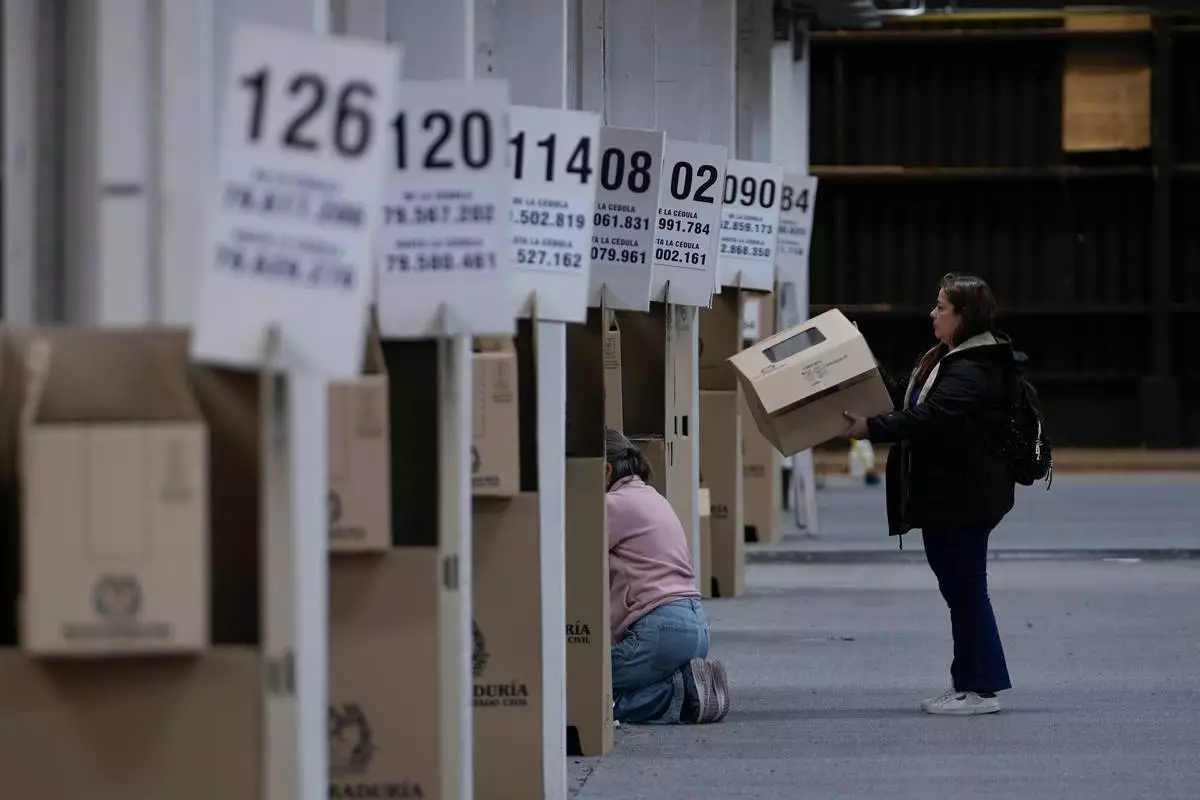
Electoral workers set up a voting center in preparation for Sunday's presidential election in Bogota, Colombia, Friday, May 29, 2026. (AP Photo/Matias Delacroix)
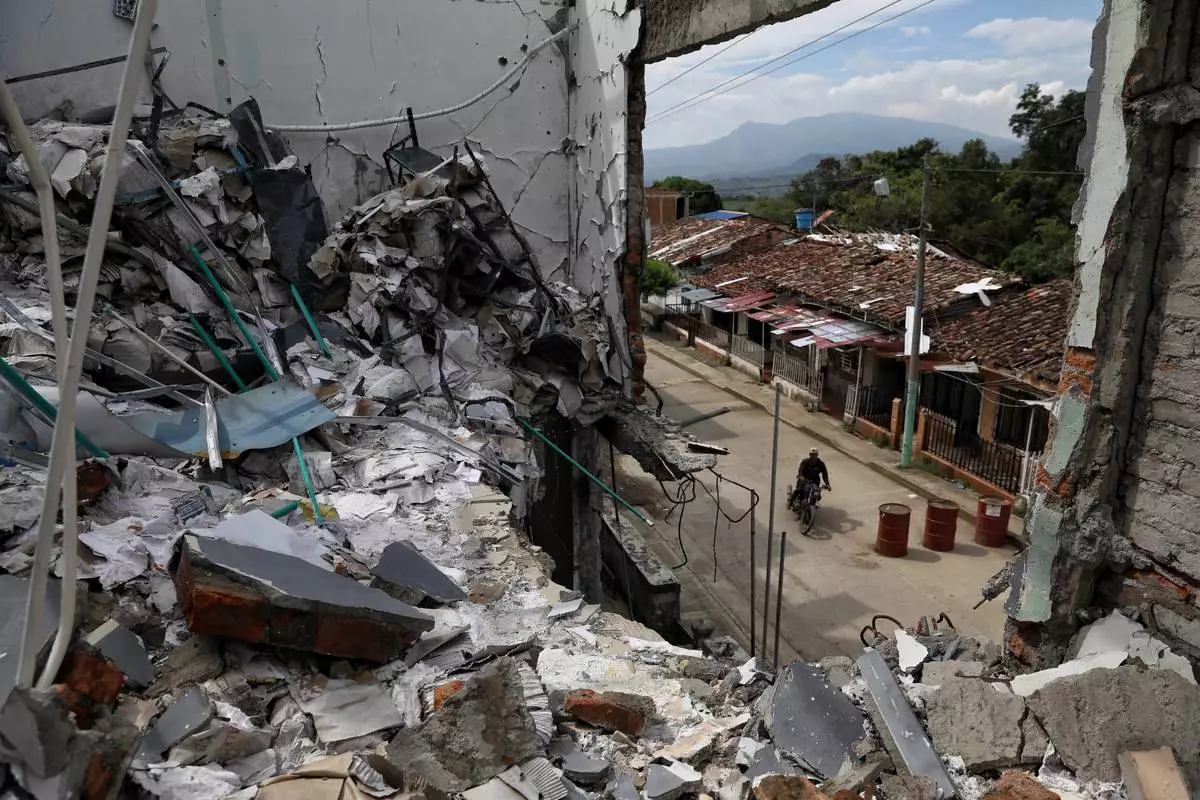
A man rides his motorcycle past the ruins of homes destroyed five months earlier in an attack by dissidents of the former Revolutionary Armed Forces of Colombia, or FARC, in Buenos Aires, Cauca, Colombia, Wednesday, May 20, 2026.(AP Photo/Santiago Saldarriaga)
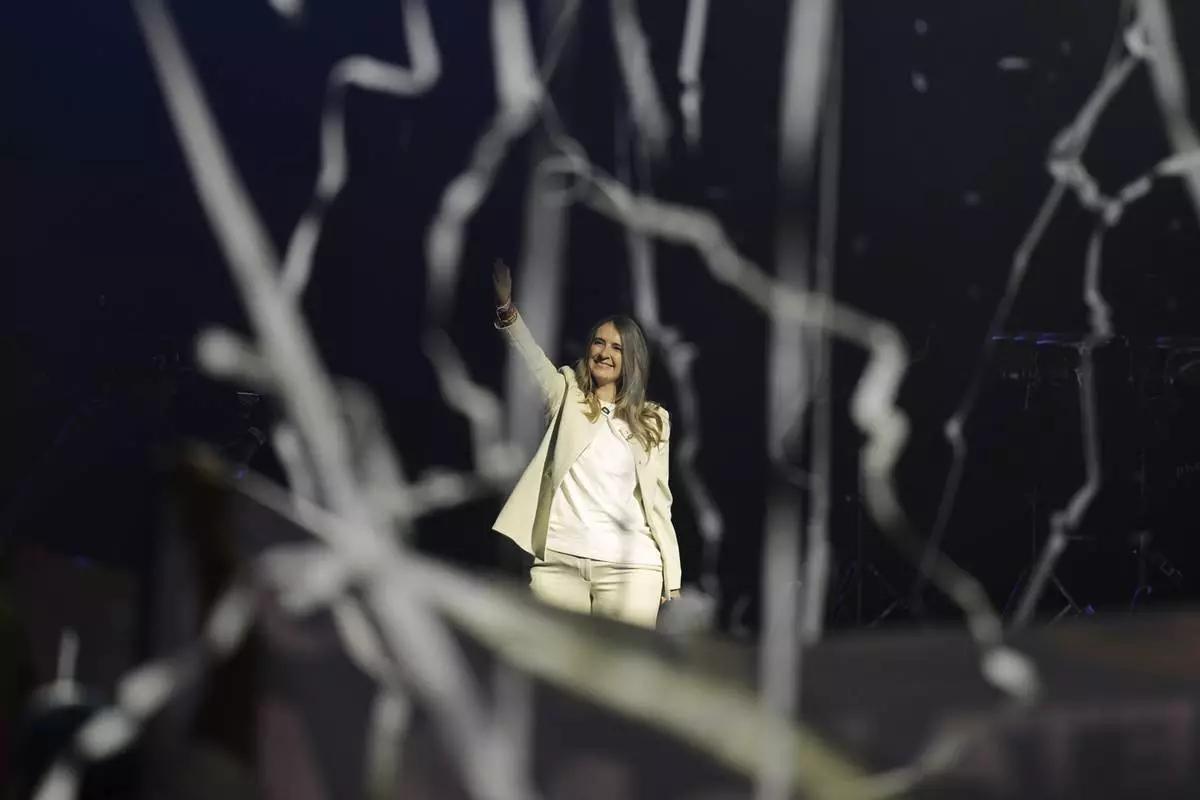
Presidential candidate Sen. Paloma Valencia of the Democratic Center party waves supporters during a campaign rally in Bogota, Colombia, Sunday, May 24, 2026. (AP Photo/Ivan Valencia)
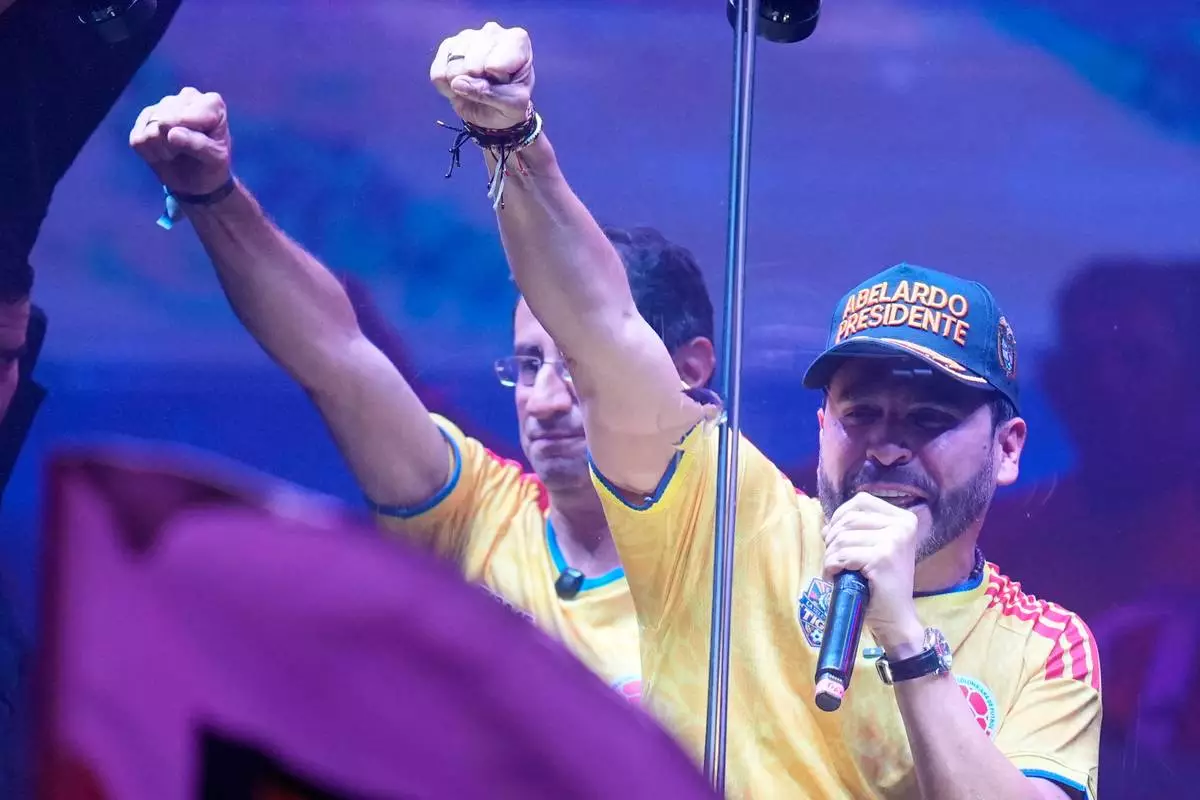
Presidential candidate Abelardo de la Espriella of the Defenders of the Motherland movement and his running mate Jose Manuel Restrepo, left, raise their fit from behind a bullet proof booth during a campaign rally in Barranquilla, Colombia, Saturday, May 23, 2026. (AP Photo/Fernando Vergara)
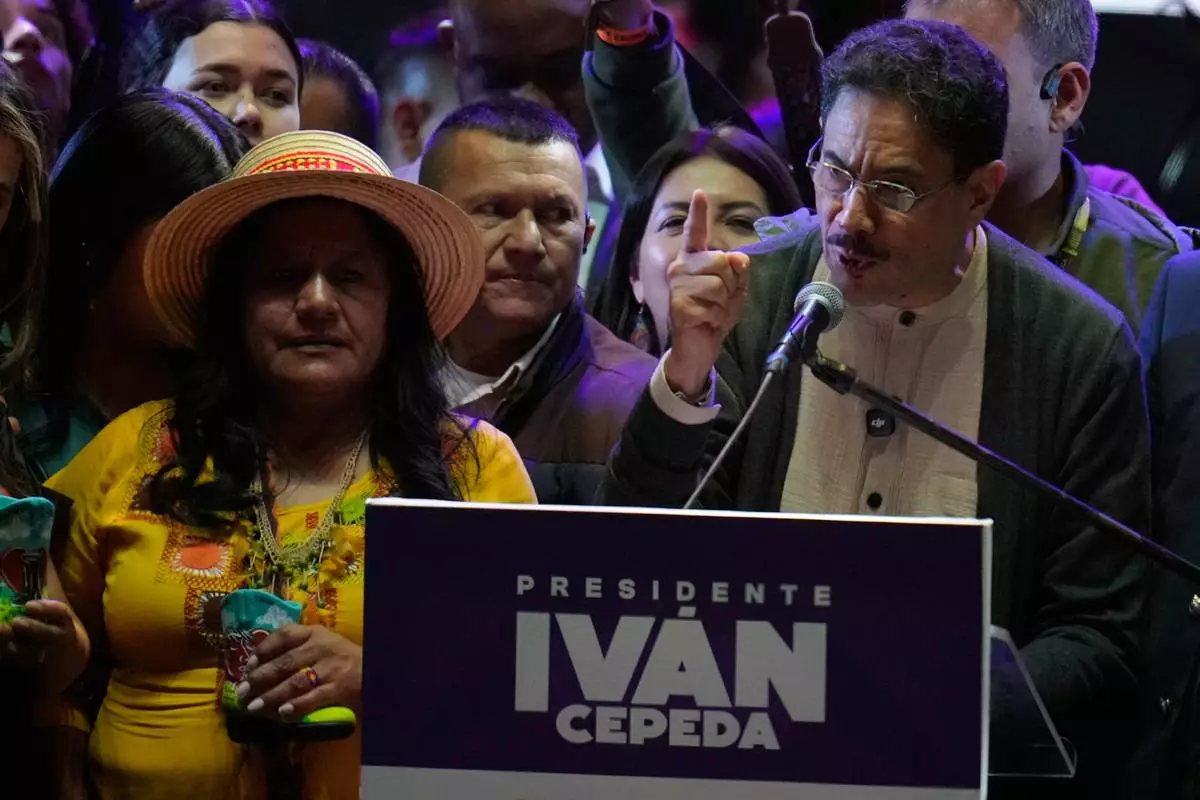
Sen. Ivan Cepeda, presidential candidate of the ruling Historic Pact coalition, speaks to supporters during a campaign rally in Bogota, Colombia, Friday, May 22, 2026. (AP Photo/Fernando Vergara)