Skip to Content Facebook Feature Image

What to know about the civil rights charges Don Lemon faces for covering church protest in Minnesota

News

What to know about the civil rights charges Don Lemon faces for covering church protest in Minnesota
News

News

What to know about the civil rights charges Don Lemon faces for covering church protest in Minnesota

2026-01-31 10:06 Last Updated At:10:10

Seven people, including former CNN anchor Don Lemon and another journalist — have been charged with violating two different federal laws in connection with the protest that interrupted a worship service at a Minnesota church earlier this month.

The group that barged into a worship service that Sunday was upset that the head of a local field office for U.S. Immigration and Customs Enforcement serves as a pastor. The protest was quickly denounced by President Donald Trump, Attorney General Pam Bondi and other officials, as well as many religious leaders.

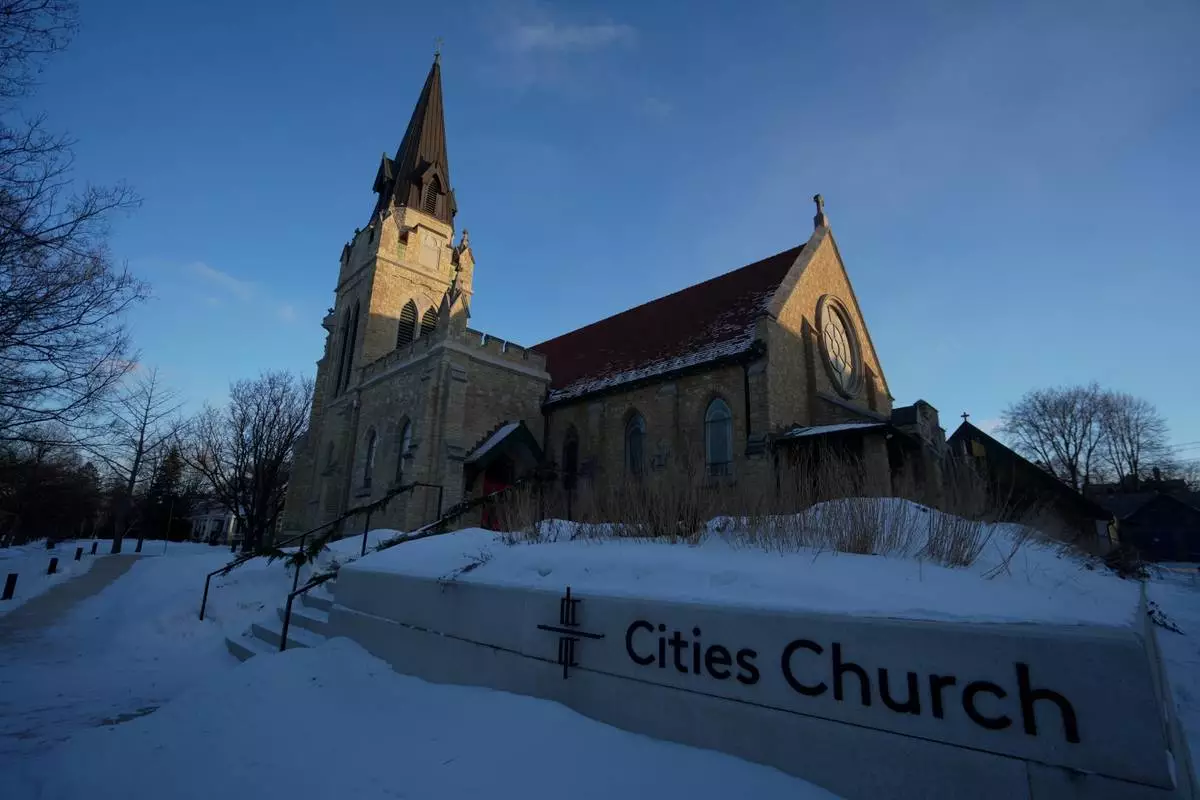
Lemon and a local reporter were covering the protest on Jan. 18 at the Cities Church in St. Paul. Those two and five people who helped organize the protest have all been charged in complaints, but the full details of the allegations against them haven't been released yet because parts of the case files remains sealed.

The arrests of Lemon and independent journalist Georgia Fort are especially troubling for legal experts and media groups who worry about the chilling effect on coverage of the Trump administration.

David Harris, a University of Pittsburgh law professor specializing in criminal law, said the charges against the protesters are more tenable, given the federal laws against disrupting the free exercise of worship. “A court will have to sort that out,” he said.

But charges against reporters are troubling, he said.

“Charging journalists for being there covering the disruption does not mean they were part of the disruption,” Harris said. “Don Lemon and other journalists are the way that we the public are finding out what is happening in these spaces,” he said. “They are our eyes and ears. The message that is being sent is that journalists like Don Lemon and others should feel intimidated from doing this.”

The two key laws cited in the complaints against those who were arrested were passed more than a century apart — one rooted in efforts to prevent intimidation by the post-Civil War Ku Klux Klan and the other to enable access to abortion clinics, though they both have had wider applications.

Here are some details about those laws:

The Freedom of Access to Clinic Entrances law, known as the FACE Act for short, was passed in 1994 to help ensure that patients seeking care at an abortion clinic — as well as the doctors and nurses who work there — could safely access the facilities that often draw protests. It followed incidents of violence targeting clinic workers.

A Republican-sponsored clause that provided for penalties for disruptions of worship services was also incorporated into the law.

Anti-abortion conservatives have denounced the law, focusing on the clinic protections. Trump last year pardoned several people convicted for blockading clinics. His Justice Department scaled back FACE Act prosecutions of those accused of blocking clinics, claiming there had been a “weaponization” of the law.

But the U.S. Supreme Court, despite having overturned the Roe v. Wade decision that had legalized abortion nationwide, last year refused to hear a challenge to the constitutionality of FACE.

In 2025, 42 House Republicans co-sponsored legislation, introduced by Rep. Chip Roy, R-Texas, to repeal the FACE Act. The conservative Heritage Foundation supported the stalled repeal effort, calling the FACE Act “an ideological weapon” designed to suppress anti-abortion activity.

They have contended the worship-protection aspect of the law hasn't been invoked in the past. In 2025, the Justice Department did invoke the act in a lawsuit against demonstrators who protested outside of a synagogue.

Someone charged with their first violation of the FACE Act could be fined or sentenced up to one year in jail. Subsequent offenses, or charges that involve injuries, deaths or damage, could face tougher penalties.

The other charges against Lemon and Fort are based on a law commonly known as the Conspiracy Against Rights law, which was enacted shortly after the Civil War. It was originally designed to target vigilante groups such as the Ku Klux Klan. The law prohibits intimidating or otherwise preventing someone from exercising constitutional rights.

The Klan had been targeting those newly freed from slavery, but over the years the law has been revised to apply to a wide range of violations of constitutional rights. It was used to charge suspects in the “Mississippi Burning” killings of three civil rights workers in 1964. It has been used in cases ranging from church arsons and antisemitic intimidation to political conspiracy and witness tampering.

The law carries a penalty of up to 10 years in prison –- or more if it involves injury, death or destruction of property.

Harris said it's important for Americans to be able to see what's happening so they can make up their own minds, instead of only hearing officials describe what happened.

“We all have had the experience of them telling us things that simply do not square with what we see with our own eyes," he said. “Journalists being present to witness these things and report them are crucial to our being able to make our minds about what our government is doing.”

Jonathan Manes, senior counsel in the MacArthur Justice Center’s Illinois Office, agreed.

“It's astonishing that the federal government is criminally charging journalists for covering a protest,” said Manes, whose work focuses on governmental civil rights violations.

“The crucial point is that a journalist covering activities going on is not part of those activities,” he said. “None of this is to say that the protest here was a good thing or that it was even allowed, but journalists shouldn’t be charged federally with conspiracy when they’re covering it."

AP reporter Tiffany Stanley contributed.

Associated Press religion coverage receives support through the AP’s collaboration with The Conversation US, with funding from Lilly Endowment Inc. The AP is solely responsible for this content.
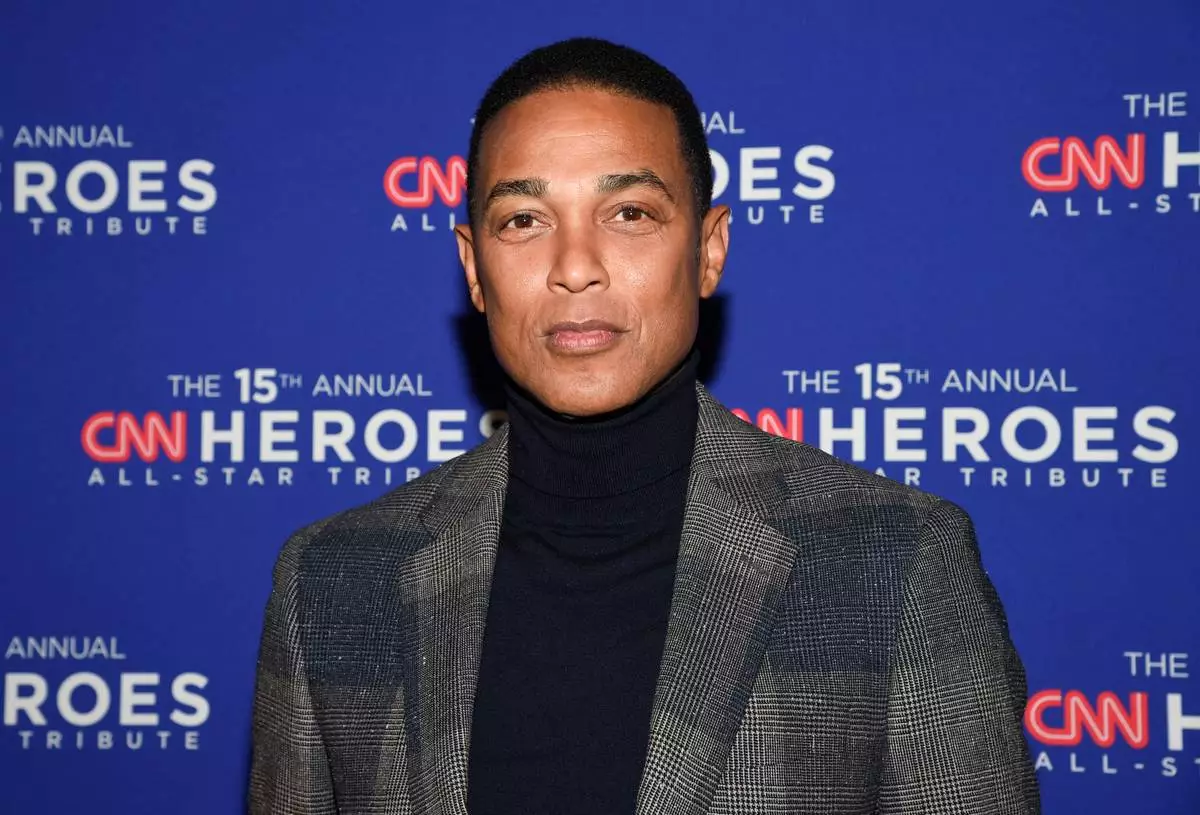
FILE - Don Lemon attends the 15th annual CNN Heroes All-Star Tribute at the American Museum of Natural History, Sunday, Dec. 12, 2021, in New York. (Photo by Evan Agostini/Invision/AP, File)
FILE - Don Lemon attends the 15th annual CNN Heroes All-Star Tribute at the American Museum of Natural History, Sunday, Dec. 12, 2021, in New York. (Photo by Evan Agostini/Invision/AP, File)

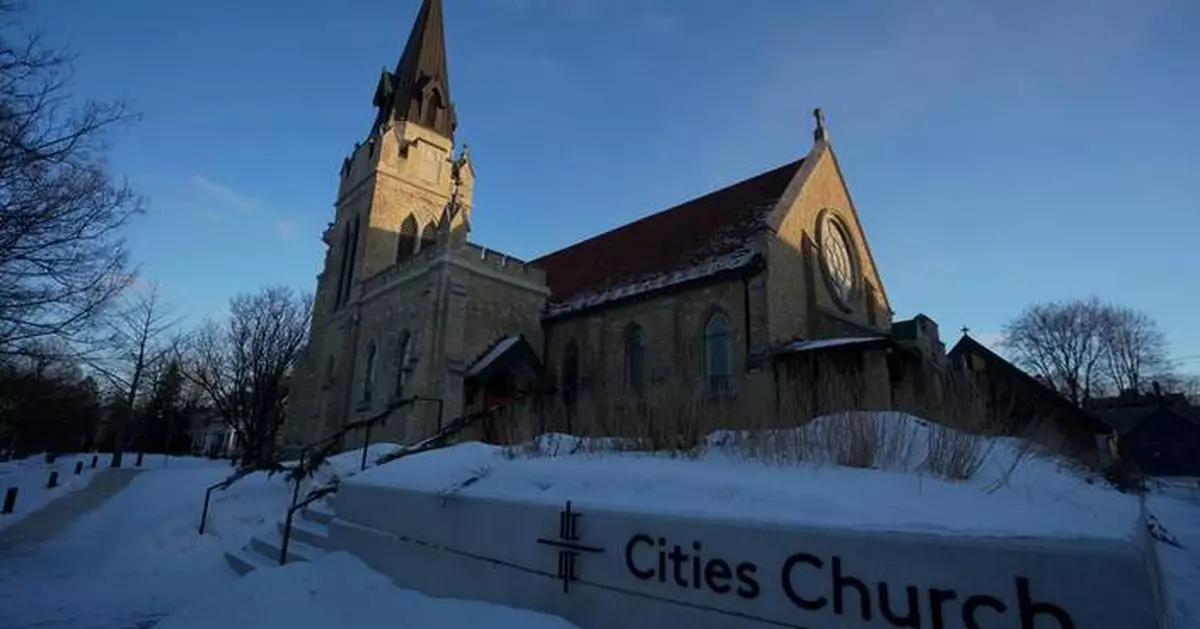
Cities Church is seen in St. Paul, Minn. where activists shut down a service claiming the pastor was also working as an ICE agent, Monday, Jan. 19, 2026 in St. Paul, Minn. (AP Photo/Angelina Katsanis)
Cities Church is seen in St. Paul, Minn. where activists shut down a service claiming the pastor was also working as an ICE agent, Monday, Jan. 19, 2026 in St. Paul, Minn. (AP Photo/Angelina Katsanis)
GLOUCESTER, Mass. (AP) — There wasn't a mayday call from the commercial fishing vessel Lily Jean as it navigated the frigid Atlantic Ocean Friday morning on its way home to Gloucester, Massachusetts, America’s oldest fishing port. The U.S. Coast Guard was notified by the boat’s beacon that alerts when it hits the water.

When rescuers arrived they found one person dead, floating in the water, along with a debris field and an empty life boat. Six people remain missing.

The fate of the Lily Jean, a 72-foot fishing vessel owned by a beloved member of Gloucester’s historic fishing community, is the latest maritime tragedy to befall America’s oldest seaport. The city that inspired “The Perfect Storm” is tied to its fishing heritage in a way that has brought 400 years of history and, sometimes, tragedy. That book and movie were inspired by the FV Andrea Gail, which went missing at sea in 1991.

“We will continue to search throughout the night,” said Coast Guard Commander Timothy Jones, who is coordinating the search and rescue. He noted that the sea spray was freezing on vessels and caused a serious danger to both the missing fishing boat and rescuers.

The Lily Jean, its captain, Gus Sanfilippo, and his crew were featured in a 2012 episode of the History Channel show “Nor’Easter Men.” Sanfilippo is described as a fifth-generation commercial fisherman, fishing out of Gloucester, Massachusetts, in the Georges Bank. The crew is shown working in dangerous weather conditions for hours on end, spending as many as 10 days at sea on one trip fishing for haddock, lobster and flounder.

Republican State Sen. Bruce Tarr, who confirmed seven people were on the vessel, grew emotional as he talked about Sanfilippo, who was a good friend.

“He’s a person that has a big smile, and he gives you a warm embrace when he sees you,” Tarr said. “He is very, very skilled at what he does.”

Tarr said the “fact that vessel now rests at the bottom of the ocean is very hard to understand,” given the owner’s experience.

“This is a community that has felt this type of loss in the past,” Tarr said. “I’m going to make a prediction. Tonight, tomorrow and the days that follow, no matter what happens, you’re going to see the strength, strength that has made this the most historic fishing port in the United States.”

Vito Giacalone, head of the Gloucester Fishing Community Preservation Fund, said he knows Sanfilippo from the captain’s early days in commercial fishing and knew him as a hard worker from a fishing family. He said he and the fishing industry in Gloucester, a community where commercial fishing is a longstanding way of life, are distraught.

“He did well for himself. I was proud of him,” Giacalone said. “And now the dock we own, he ties his boat at the dock so we see him every day. He’s been to all my kids’ weddings. That’s how close we were. I feel a sense of loss. A lot of us do.”

The Coast Guard's Sector Boston Commander Jamie Frederick acknowledged frigid temperatures, stormy conditions and the vast ocean makes finding survivors at night difficult, a task made more challenging with a nor’easter approaching the East Coast this weekend.

“That is the equivalent of searching for a coconut in the ocean,” Frederick said.

At the time of the emergency alert, the National Weather Service said wind speeds out at sea were around 27 mph (24 knots) with waves around four feet high. It was 12 degrees (-11 Celsius) with water temperatures about 39 degrees (4 degrees Celsius.)

Deep-sea fishing in New England can always be hazardous, but it can be especially dangerous in the winter because of high waves, frigid temperatures and unpredictable weather. Commercial fishing is often cited as one of the most dangerous jobs in the world.

“Commercial fishing is a really tough living to begin with, and it's as safe as the elements and all of the things allow it to be,” Giacalone said. “Gus was a very seasoned experienced fisherman.”

Everett Sawyer, 55, a childhood friend of Sanfilippo, said that he is still processing the news of his disappearance. "He was hardworking. He loved fishing,” he said.

After more than five decades living and working near the Atlantic Ocean, Sawyer said he has known 25 people who were lost at sea. Cold winter conditions can complicate operations even for experienced sailors, Sawyer said.

“Things happen very quickly when you’re out on the ocean,” he said.

The National Oceanic and Atmospheric Administration said Friday it was aware that there was a fishery observer on board the vessel. Fishery observers are workers who collect data on board fishing boats for the government to use to inform regulations.

Gloucester Council President Tony Gross, a retired fisherman who had joined other elected officials at the harbor in the city after learning of the missing boat, called it a “huge tragedy for this community.”

“The families are just devastated at this point,” Gross said. “They are half full of hope and half full of dread, I would imagine.”

Massachusetts Gov. Maura Healey said she was “heartbroken” to hear about the boat's sinking.

“I am praying for the crew, and my heart goes out to their loved ones and all Gloucester fishing families during this awful time,” she said in a statement. “Fishermen and fishing vessels are core to the history, economy and culture of Gloucester and Cape Ann, and this tragedy is felt all across the state.”

Casey reported from Boston, Ngowi reported from Gloucester, Massachusetts, and Whittle reported from Portland, Maine.

Flowers are seen placed at the Gloucester Fisherman's Memorial in Gloucester, Mass., after a fishing boat from port city went missing off the coast of Massachusetts with multiple people on board, Friday, Jan. 30, 2026. (AP Photo/Robert F. Bukaty)

Flowers are seen placed at the Gloucester Fisherman's Memorial in Gloucester, Mass., after a fishing boat from port city went missing off the coast of Massachusetts with multiple people on board, Friday, Jan. 30, 2026. (AP Photo/Robert F. Bukaty)

Flowers are seen placed at the Gloucester Fisherman's Memorial in Gloucester, Mass., after a fishing boat from port city went missing off the coast of Massachusetts with multiple people on board, Friday, Jan. 30, 2026. (AP Photo/Robert F. Bukaty)

Flowers are seen placed at the Gloucester Fisherman's Memorial in Gloucester, Mass., after a fishing boat from port city went missing off the coast of Massachusetts with multiple people on board, Friday, Jan. 30, 2026. (AP Photo/Robert F. Bukaty)

FILE - Fishing boats are docked in the harbor of Gloucester, Mass., May 11, 2022. (AP Photo/David Goldman, File)

FILE - Fishing boats are docked in the harbor of Gloucester, Mass., May 11, 2022. (AP Photo/David Goldman, File)

Recommended Articles