Skip to Content Facebook Feature Image

Exclusive: Orbán challenger Magyar says election is a 'referendum' on Hungary's place in the world

News

Exclusive: Orbán challenger Magyar says election is a 'referendum' on Hungary's place in the world
News

News

Exclusive: Orbán challenger Magyar says election is a 'referendum' on Hungary's place in the world

2026-04-03 20:17 Last Updated At:20:21

KISKUNHALAS, Hungary (AP) — Hungarian opposition leader Péter Magyar says a crucial election next week where he's facing pro-Russian Prime Minister Viktor Orbán will be a “referendum” on whether Hungary continues on its drift toward Eastern autocracies, or can retake its place among the democratic societies of Europe.

Magyar, once an Orbán ally, poses the most serious threat to the nationalist prime minister's hold on power since he took office in 2010.

More Images
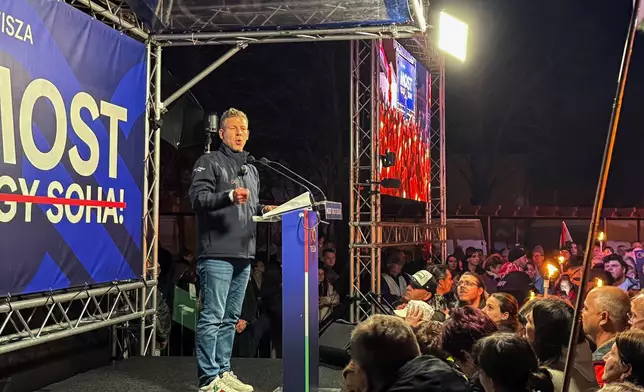
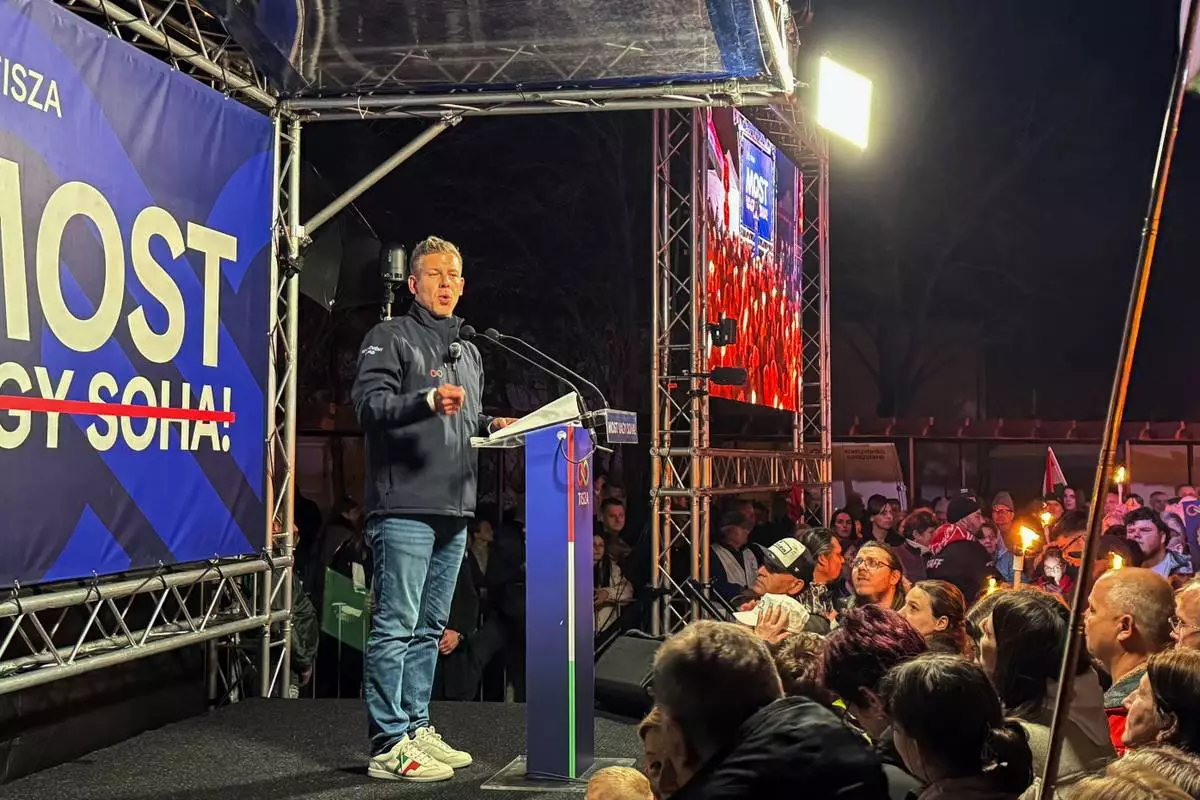
Hungarian opposition leader Peter Magyar addresses people during an election rally in Kiskunhalas, Hungary, Thursday, April 2, 2026. (AP Photo/Bela Szandelszky)
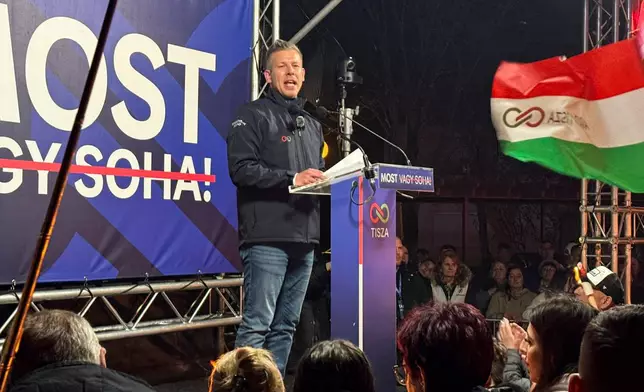
Hungarian opposition leader Peter Magyar addresses people during an election rally in Kiskunhalas, Hungary, Thursday, April 2, 2026. (AP Photo/Bela Szandelszky)
Hungarian opposition leader Peter Magyar addresses people during an election rally in Kiskunhalas, Hungary, Thursday, April 2, 2026. (AP Photo/Bela Szandelszky)

Hungarian opposition leader Peter Magyar addresses people during an election rally in Kiskunhalas, Hungary, Thursday, April 2, 2026. (AP Photo/Bela Szandelszky)

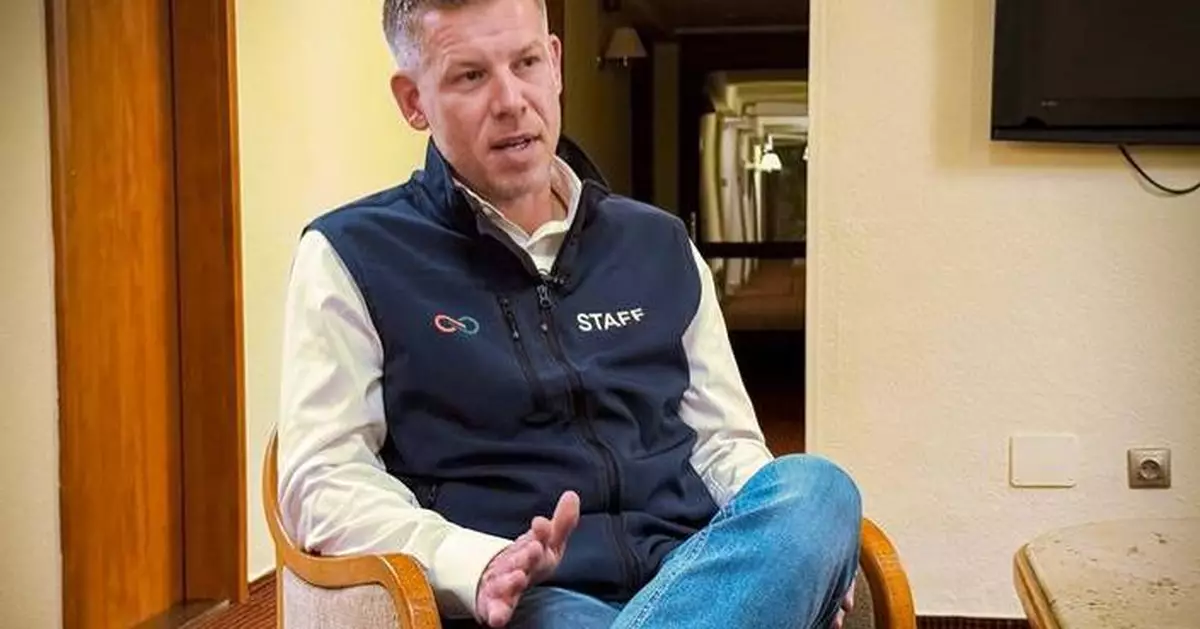
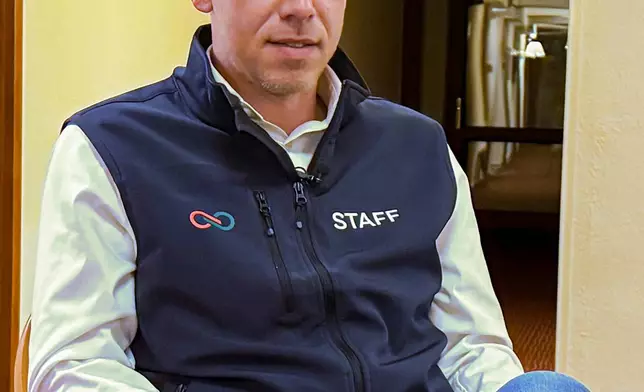
Hungarian opposition leader Peter Magyar speaks during an interview with the Associated Press, Thursday, April 2, 2026, in Kiskunhalas, Hungary. (AP Photo/Bela Szandelszky)
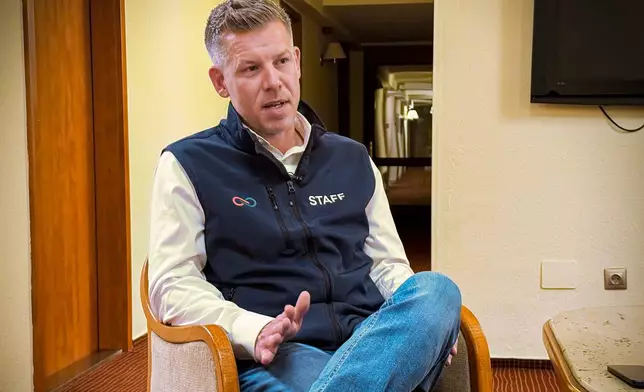
Hungarian opposition leader Peter Magyar speaks during an interview with the Associated Press, Thursday, April 2, 2026, in Kiskunhalas, Hungary. (AP Photo/Bela Szandelszky)

Hungarian opposition leader Peter Magyar speaks during an interview with the Associated Press, Thursday, April 2, 2026, in Kiskunhalas, Hungary. (AP Photo/Bela Szandelszky)

Hungarian opposition leader Peter Magyar speaks during an interview with the Associated Press, Thursday, April 2, 2026, in Kiskunhalas, Hungary. (AP Photo/Bela Szandelszky)

In an exclusive interview with The Associated Press, Magyar said the European Union's longest-serving leader has led the country on a “180-degree turn” in recent years, endangering its Western orientation while cozying up to Moscow.

Yet despite that drift, “Hungarians still see that Hungary’s peace and development are guaranteed by membership of the European Union and NATO,” Magyar said. “I think this really will be a referendum on our country's place in the world.”

Magyar spoke to the AP on Thursday following an election rally by his center-right Tisza party in Kiskunhalas, a small city of around 25,000 on Hungary's southern great plain. It was one of hundreds of rallies he's held in settlements big and small across the country, a campaign blitz that has him visiting up to six towns a day ahead of the April 12 election.

Orbán has gained a reputation as an inveterate disruptor within the EU for his frequent vetoes of important decisions. He has campaigned by sounding the alarm on a myriad of external dangers he says are threatening Hungarians — the war in Ukraine, a cabal of EU bureaucrats and financial elites aligned against Hungary, and an immigration crisis ever on the horizon.

Magyar, who is leading in most polls, has focused on issues that affect voters' everyday lives, like Hungary’s faltering state health care and public transportation sectors and what he describes as rampant government corruption.

At each of his rallies, he charges Orbán and his nationalist-populist Fidesz party with making Hungary the “poorest and most corrupt” country in the EU — and depicts a “peaceful, humane and functioning” country that is within reach.

Yet alongside that domestic message, Magyar has increasingly portrayed Orbán’s brinksmanship with the EU, and his drift toward Russia, as matters of critical importance for the country’s future.

“I think that Tisza will have an overwhelming electoral victory, because even Fidesz voters do not want our country to be a Russian puppet state, a colony, an assembly plant, instead of belonging to Europe,” he said.

Magyar and his party's meteoric rise caught many Hungarians by surprise. For nearly a decade and a half, a broad slate of fractured opposition parties had tried and failed to mount a serious threat to Orbán's hold on power.

While opposition politicians often slammed Orbán during debates in parliament, they rarely made efforts to win over his base of support in the rural countryside. Frustrated after a string of bitter losses, many opposition voters descended into political apathy.

Magyar, a 45-year-old lawyer and former Fidesz insider, was previously married to an Orbán ally who served as Hungary’s justice minister. After working for several years as a diplomat in Brussels, he returned to Hungary and took positions in state institutions, gaining familiarity with the workings of Orbán's system.

But then, in the wake of a political scandal in 2024 involving a presidential pardon to an accomplice in a child sexual abuse case, Magyar publicly broke with Orbán's party, accusing it of overseeing entrenched corruption and capturing Hungary's institutions.

He quickly founded the center-right Tisza party — named for Hungary's second-largest river — which, only four months after Magyar's break into electoral politics, won 30% of the vote in European Parliament elections.

As Tisza's popularity grew, a chant heard at its rallies became a motto for its rise: “The Tisza is flooding.”

While Magyar has cast his task in the election as dismantling Orbán's autocratic system, he has promised to keep some of the prime minister's policies he views as positive, such as a fence along the southern border to keep out migrants, and a popular utility reduction program.

Still, his party — a member of the European Parliament's largest, center-right group — diverges from the constellation of far-right political movements in Europe and beyond that view Orbán as a shining example of nationalist populism in action.

In a sign of U.S. President Donald Trump and his MAGA movement's admiration for Orbán, Vice President JD Vance is set to visit Budapest on Tuesday in support of his reelection.

Many EU leaders are watching Hungary's election in the hopes that Orbán will be defeated.

His frequent vetoes — which most recently included blocking a major, 90-bill euro ($104-billion) EU loan for Ukraine — have often been to please his euroskeptic base, Magyar said, “vetoing just to veto so he can say at home that he is vetoing.”

The prime minister's conduct has led to renewed calls within the EU to reform the bloc’s foundational treaties by reducing the number of decisions that require unanimity — a way to buttress against the paralysis that can be caused by intransigent member states.

Magyar said that under a Tisza government, European leaders can expect a “constructive position,” but one that is “critical and willing to debate. We want to be there at the table.”

Despite Orbán's exploitation of the EU's unanimity rules, the ability to veto important decisions is a “valid option,” he continued, adding: “I think the European leaders have no problem with this, they have a problem with the unnecessary troublemaker role.”

“The task of a Hungarian prime minister at any given time is to represent Hungarian interests, and if necessary, to represent them forcefully,” he said. “Whatever it costs.”

Orbán has confounded, and even angered, nearly every other EU leader with his conciliatory approach to Russia and closeness to President Vladimir Putin. Some EU officials, and many of his opponents at home, have accused him of forsaking his commitments to the bloc on Moscow’s behalf.

As nearly every EU country cut off supplies of Russian fossil fuels following the full-scale invasion of Ukraine in February 2022, Hungary, along with Slovakia, maintained and even increased supplies — drawing ire from many countries who accused them of helping finance the war.

While Magyar has condemned Hungary's drift toward Moscow, as well as reports that Russian secret services are meddling in the election to tip it in Orbán's favor, he said his future government will pursue a “pragmatic” approach toward Russia.

“Pragmatism means that we have no say in Russia’s internal affairs, and they don’t have any say in our affairs,” he said. “We are both sovereign countries, and we respect each other, but we don’t have to like each other.”

Magyar has criticized Orbán's government for failing to diversify its energy mix, and advocated for reaching new agreements and constructing new infrastructure to bring oil and gas from other sources into landlocked Hungary.

Still, he said, “this does not mean that we must stop using Russian oil tomorrow. It means that the European Union’s resources must be used well.”
Hungarian opposition leader Peter Magyar addresses people during an election rally in Kiskunhalas, Hungary, Thursday, April 2, 2026. (AP Photo/Bela Szandelszky)
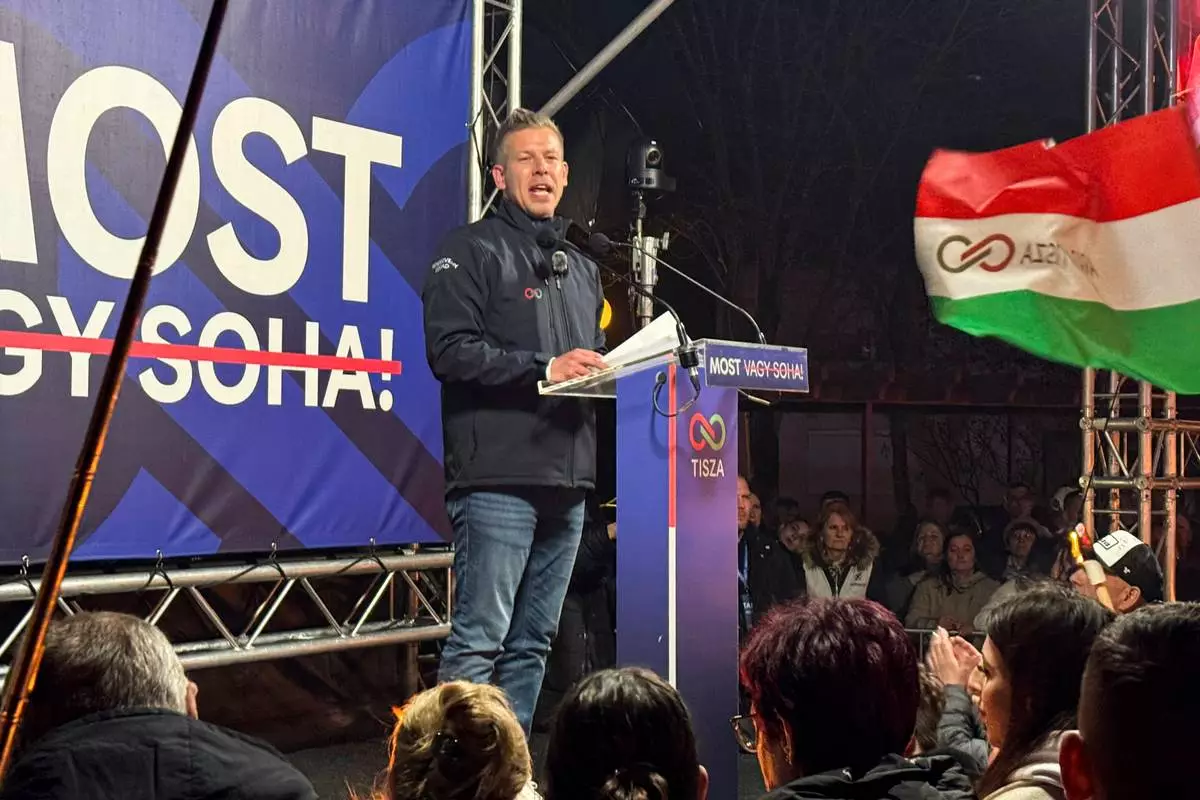
Hungarian opposition leader Peter Magyar addresses people during an election rally in Kiskunhalas, Hungary, Thursday, April 2, 2026. (AP Photo/Bela Szandelszky)
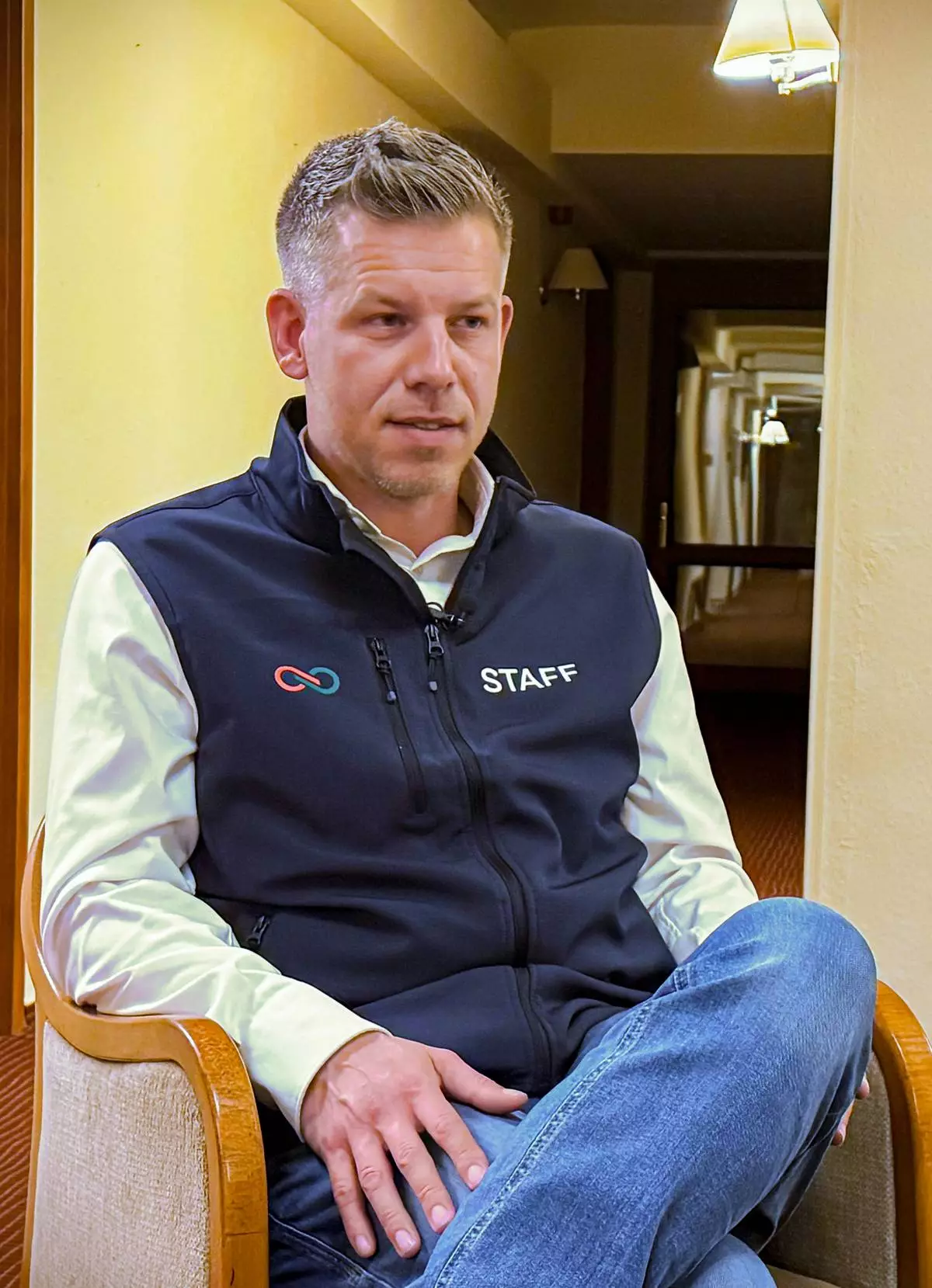
Hungarian opposition leader Peter Magyar addresses people during an election rally in Kiskunhalas, Hungary, Thursday, April 2, 2026. (AP Photo/Bela Szandelszky)

Hungarian opposition leader Peter Magyar addresses people during an election rally in Kiskunhalas, Hungary, Thursday, April 2, 2026. (AP Photo/Bela Szandelszky)

Hungarian opposition leader Peter Magyar speaks during an interview with the Associated Press, Thursday, April 2, 2026, in Kiskunhalas, Hungary. (AP Photo/Bela Szandelszky)
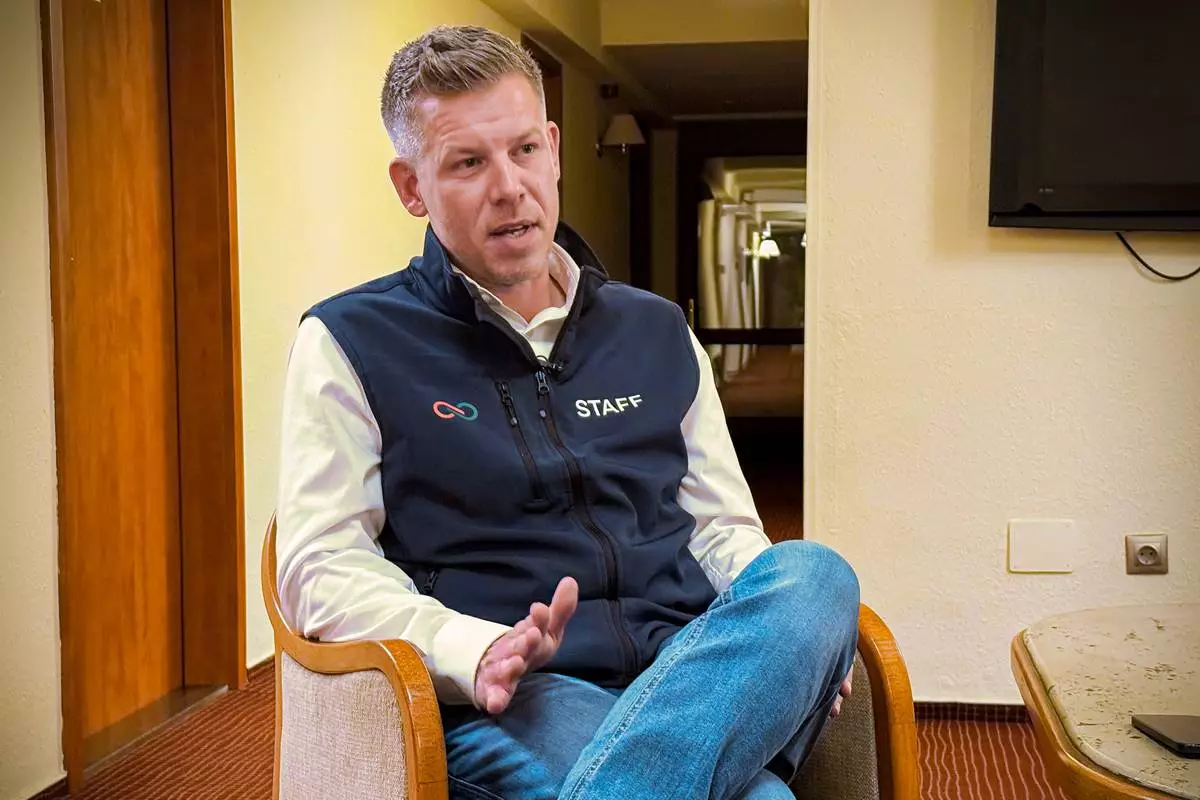
Hungarian opposition leader Peter Magyar speaks during an interview with the Associated Press, Thursday, April 2, 2026, in Kiskunhalas, Hungary. (AP Photo/Bela Szandelszky)
Hungarian opposition leader Peter Magyar speaks during an interview with the Associated Press, Thursday, April 2, 2026, in Kiskunhalas, Hungary. (AP Photo/Bela Szandelszky)
Hungarian opposition leader Peter Magyar speaks during an interview with the Associated Press, Thursday, April 2, 2026, in Kiskunhalas, Hungary. (AP Photo/Bela Szandelszky)
INDIANAPOLIS (AP) — The concept used to be so simple: Professionals played sports for money. College players did not.

Now, it is not so clear-cut, and that confusion now gets wrapped into virtually any conversation about the state of college sports. Not surprisingly, it's bubbling up at the Final Four, where Illinois has five players on the roster who boast pro experience in Europe, and Arizona has a couple of starters who came out of the European pro leagues.

An NCAA playing field founded on the idea that amateurs play college sports has become much more of a business in which players get paid — forever considered the best way to define a pro — while their eligibility hinges on where that money comes from.

All the Illinois players with European roots are allowed to play because their pro teams were more like club teams; they didn't enter a draft or actually get drafted, the way a player might if he was looking to go to the NBA.

The topic is still so fresh that the NCAA announced just this week it was considering changing rules to bar athletes who enter and stay in a pro sports draft from coming back and competing in college, as happened in two instances earlier this season.

All of that is further jumbled by the fact that many of these players will probably make more in college than they would at their “pro” jobs — whether it be basketball, finance or coaching — thanks to the influx of name, image and likeness payments that now permeate college sports.

“The way I would describe it is it's a middle ground, between what college athletics used to be about, which was not paying, to now, where you're paying student-athletes,” Michigan athletic director Warde Manuel said. “But in a way, we've always paid student-athletes. We've given them a scholarship. We've given them something of value. Now, the only difference is, we’re adding cash to that for their name, image, likeness.”

That cash has widened the recruiting pipeline to Europe and other points overseas. Nobody has exploited it better this season than the Illini, whose “Balkan Bloc” — including twins Tomislav and Zvonimir Ivisic and David Mirkovic — accounts for 36% of both their scoring and their minutes.

Illinois' key recruiter in Europe, Geoff Alexander, explained that a European “pro” who comes to the U.S. for college is something much different than, say, a player with experience in the NBA.

“In Europe and around the world, they don't have high school basketball," Alexander said. "They go to these clubs as youths and find their path. That's like their high school. So anyone who wants to pigeonhole these guys into all this discussion about college eligibility, it's apples and oranges.”

The eligibility discussion concerns an NCAA proposal that came out this week to tweak the rules about who can play and who can't. It was partly a reaction to two players, Alabama's Charles Bediako and Baylor’s James Nnaji, who each played in college this season after entering the 2023 NBA draft.

Bediako's case drew headlines because he actually played three years in the NBA's developmental G League. He sued the NCAA after it denied Alabama's request to allow him to return to college this season, arguing he remined within his five-year eligibility window. One judge issued a temporary-restraining order that allowed Bediako to play. That lasted five games until new rulings barred him again.

Looming next could be the case of 22-year-old Amari Bailey, a former UCLA star who played 10 games in the NBA with the Charlotte Hornets. He has hired a lawyer and is seeking a return, telling ESPN, "right now, I’d be a senior in college. I'm not trying to be 27 years old playing college athletics."

Neither are the European transplants, though many certainly do play against players 27 and older in the overseas leagues before they arrive in the U.S. college system.

“If you've played in the EuroLeague, you are not a freshman,” Michigan coach Dusty May said, in reference to Arizona freshman Ivan Kharchenkov, who has played at different levels for a club team in Munich since he was 12 and could end up in the NBA soon.

Another Arizona starter, Motiejus Krivas, is from Lithuania.

Wildcats coach Tommy Lloyd spent decades at Gonzaga, a school that took a lead in international recruiting (Domantas Sabonis, Rui Hachimura) long before the onset of NIL made coming to America a more lucrative proposition for the up-and-coming European club players.

“To be honest with you, I think it’s maybe opened a few more doors,” Lloyd said. “One of the detriments to international recruiting back in the day was if a kid wanted to get paid, the European clubs could pay them legally, and obviously we couldn’t.”

Lloyd predicts that soon, “the convoluted notion of who's eligible” will get sorted out and it will become more clear that college sports is for players in their late teens and early 20s.

Illinois coach Brad Underwood acknowledges that no matter where the players come from, the business model of college sports has changed.

“I’d argue that in today’s world, all these kids are finding opportunities that allow them to receive compensation,” he said.

AP March Madness bracket: https://apnews.com/hub/ncaa-mens-bracket and coverage: https://apnews.com/hub/march-madness

Illinois forward David Mirkovic (0) reacts during the second half against Houston in the Sweet 16 of the NCAA college basketball tournament Thursday, March 26, 2026, in Houston. (AP Photo/Ashley Landis)

Illinois forward David Mirkovic (0) reacts during the second half against Houston in the Sweet 16 of the NCAA college basketball tournament Thursday, March 26, 2026, in Houston. (AP Photo/Ashley Landis)

Illinois center Zvonimir Ivisic, left, listens as brother and teammate Tomislav Ivisic, right, answer questions during a news conference for the Elite Eight of the NCAA college basketball tournament, Friday, March 27, 2026, in Austin, Texas. (AP Photo/Eric Gay)

Illinois center Zvonimir Ivisic, left, listens as brother and teammate Tomislav Ivisic, right, answer questions during a news conference for the Elite Eight of the NCAA college basketball tournament, Friday, March 27, 2026, in Austin, Texas. (AP Photo/Eric Gay)

Arizona center Motiejus Krivas (13) reaches for a rebound next to Purdue forward Trey Kaufman-Renn (4) during the second half in the Elite Eight of the NCAA college basketball tournament, Saturday, March 28, 2026, in San Jose, Calif. (AP Photo/Godofredo A. Vásquez)

Arizona center Motiejus Krivas (13) reaches for a rebound next to Purdue forward Trey Kaufman-Renn (4) during the second half in the Elite Eight of the NCAA college basketball tournament, Saturday, March 28, 2026, in San Jose, Calif. (AP Photo/Godofredo A. Vásquez)

Illinois' Zvonimir Ivisic celebrates after an Elite Eight game against Iowa in the NCAA college basketball tournament Saturday, March 28, 2026, in Houston. (AP Photo/Eric Gay)

Illinois' Zvonimir Ivisic celebrates after an Elite Eight game against Iowa in the NCAA college basketball tournament Saturday, March 28, 2026, in Houston. (AP Photo/Eric Gay)

Recommended Articles