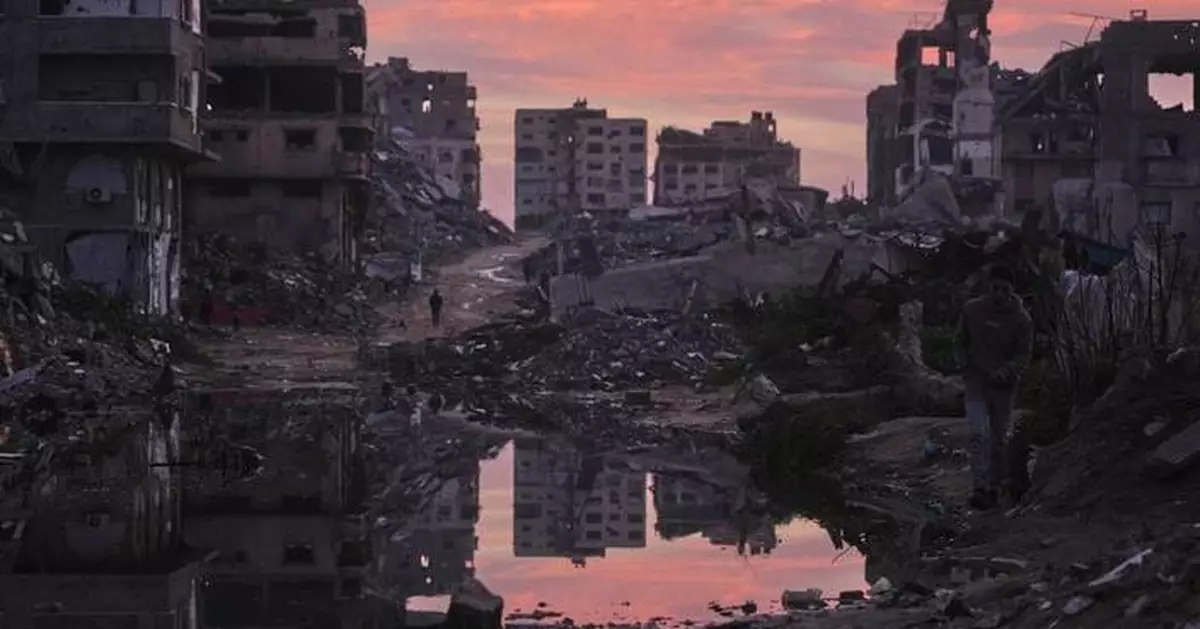
DEIR AL-BALAH, Gaza Strip (AP) — Hospitals in Gaza said Israeli strikes killed at least 12 Palestinians Saturday, one of the highest tolls since an October ceasefire aimed at stopping the fighting.
The strikes hit locations in northern and southern Gaza, including an apartment building in Gaza City and a tent camp in Khan Younis, officials at hospitals that received the bodies said. The casualties included two women and six children from two different families.
This also came a day before the Rafah crossing along the border with Egypt is set to open in Gaza’s southernmost city. All of the territory’s border crossings have been closed since the start of the war.
Rafah's opening, limited at first, marks the first major step of the second phase of the U.S.-brokered ceasefire. Reopening borders is among the challenging issues on the agenda for the phase now underway, which also include demilitarizing the strip after nearly two decades of Hamas rule and installing a new government to oversee reconstruction.
Palestinians see the Rafah crossing as a lifeline for the tens of thousands in need of treatment outside the territory, where the majority of medical infrastructure has been destroyed.
Still, Saturday’s strikes are a reminder that the death toll in Gaza is still rising even as the ceasefire agreement inches forward.
Shifa Hospital said the Gaza City strike killed three children, their aunt and grandmother on Saturday morning. Their mother survived. Meanwhile, Nasser Hospital said the strike on the tent camp caused a fire to break out, killing seven, including a father, his three children and three grandchildren.
Gaza’s Health Ministry has recorded more than 500 Palestinians killed by Israeli fire since the start of the ceasefire on Oct. 10. The ministry, which is part of the Hamas-led government, maintains detailed casualty records that are seen as generally reliable by U.N. agencies and independent experts.
Israel’s military did not immediately respond to questions about the strikes.
Magdy reported from Cairo. Sam Metz contributed from Jerusalem.
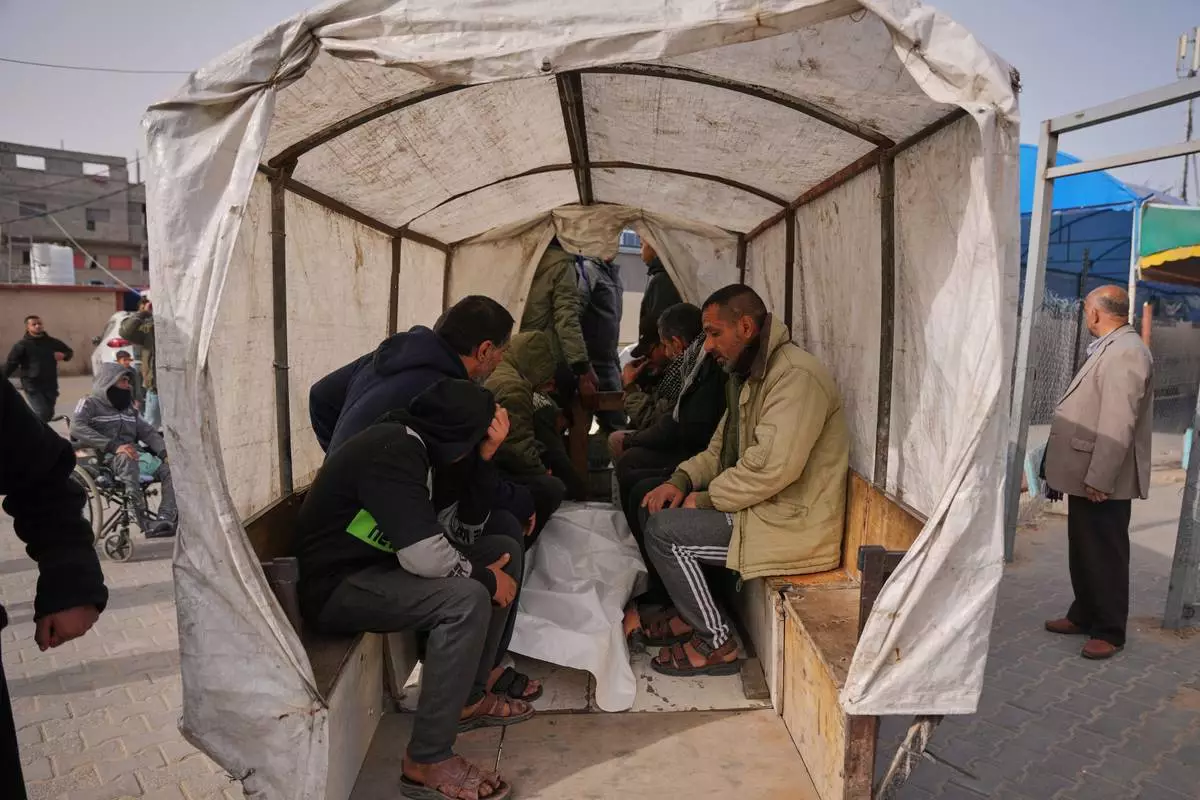
Palestinians mourn over the body of a person who was killed in an Israeli strike, as they sit on a cart during his funeral outside at Al-Aqsa Hospital in Deir al-Balah, central Gaza Strip, Friday, Jan. 30, 2026. (AP Photo/Abdel Kareem Hana)
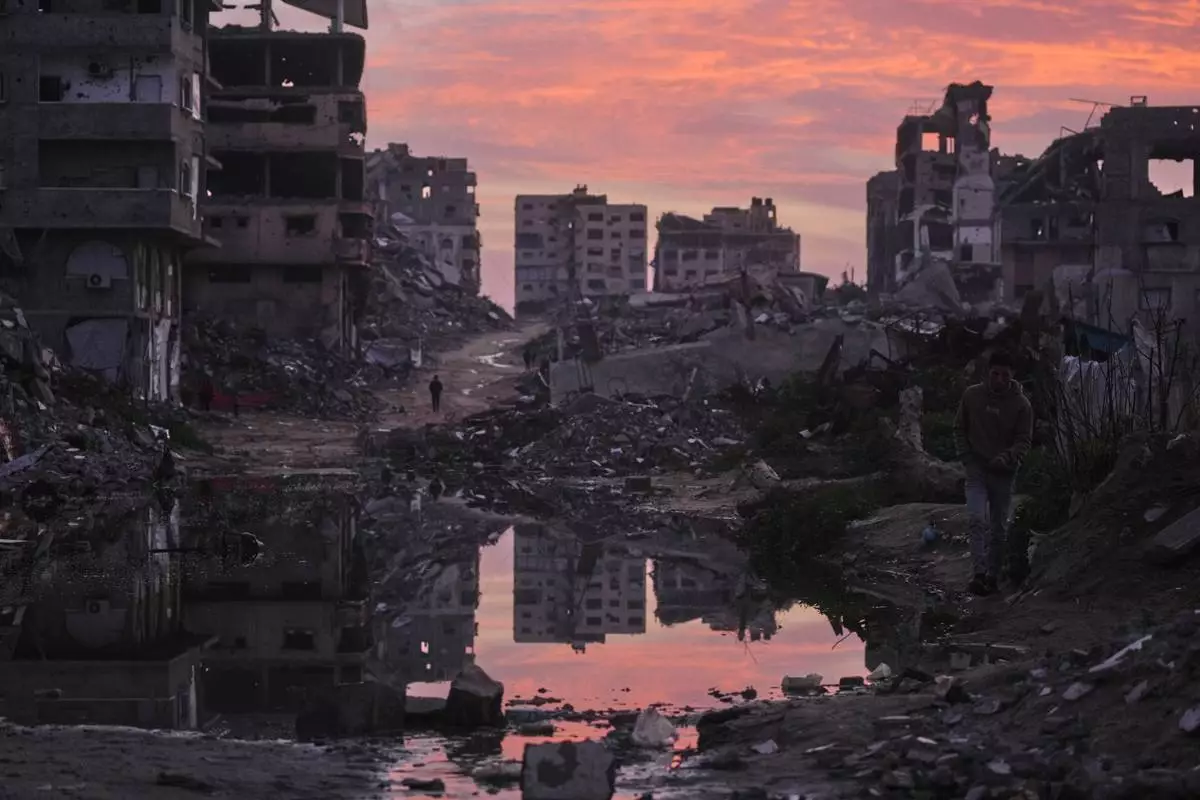
Palestinians walk amid buildings destroyed by Israeli air and ground operations in Gaza City, Thursday, Jan. 29, 2026. (AP Photo/Jehad Alshrafi)
GOMA, Congo (AP) — A landslide earlier this week collapsed several mines at a major coltan mining site in eastern Congo, leaving at least 200 people dead, rebel authorities said Saturday.
The collapse took place Wednesday at the Rubaya mines, which are controlled by the M23 rebels, Lumumba Kambere Muyisa, the spokesperson of the rebel-appointed governor of North-Kivu province told The Associated Press. He said the landslide was caused by heavy rains.
“For now, there are more than 200 dead, some of whom are still in the mud and have not yet been recovered,” Muyisa said. He added that several others were injured and taken to three health facilities in the town of Rubaya, while ambulances were expected to transfer the wounded Saturday to Goma, the nearest city around 50 kilometers (30 miles) away.
The rebel-appointed governor of North Kivu has temporarily halted artisanal mining on the site and ordered the relocation of residents who had built shelters near the mine, Muyisa said.
A former miner at the site told The Associated Press there have been repeated landslides because the tunnels are dug by hand, poorly constructed, and left without maintenance.
“People dig everywhere, without control or safety measures. In a single pit, there can be as many as 500 miners, and because the tunnels run parallel, one collapse can affect many pits at once,” Clovis Mafare said.
Rubaya lies in the heart of eastern Congo, a mineral-rich part of the Central African nation which for decades has been ripped apart by violence from government forces and different armed groups, including the Rwanda-backed M23, whose recent resurgence has escalated the conflict, worsening an already acute humanitarian crisis.
Congo is a major supplier of coltan, a black metallic ore that contains the rare metal tantalum, a key component in the production of smartphones, computers and aircraft engines.
The country produced about 40 percent of the world’s coltan in 2023, according to the U.S. Geological Survey, with Australia, Canada and Brazil being other big suppliers. Over 15% of the world’s supply of tantalum from Rubaya’s mines.
In May 2024, M23 seized the town and took control of its mines. According to a U.N. report, since seizing Rubaya, the rebels have imposed taxes on the trade and transport of coltan, generating at least $800,000 a month.
Eastern Congo has been in and out of crisis for decades. Various conflicts have created one of the world’s largest humanitarian crises with more than 7 million people displaced, including 100,000 who fled homes this year.
Despite the signing of a deal between the Congolese and Rwandan governments brokered by the U.S. and ongoing negotiations between rebels and Congo, fighting continues on several fronts in eastern Congo, continuing to claim numerous civilian and military casualties.
The deal between Congo and Rwanda also opens up access to critical minerals for the U.S. government and American companies.
Banchereau reported from Dakar, Senegal.
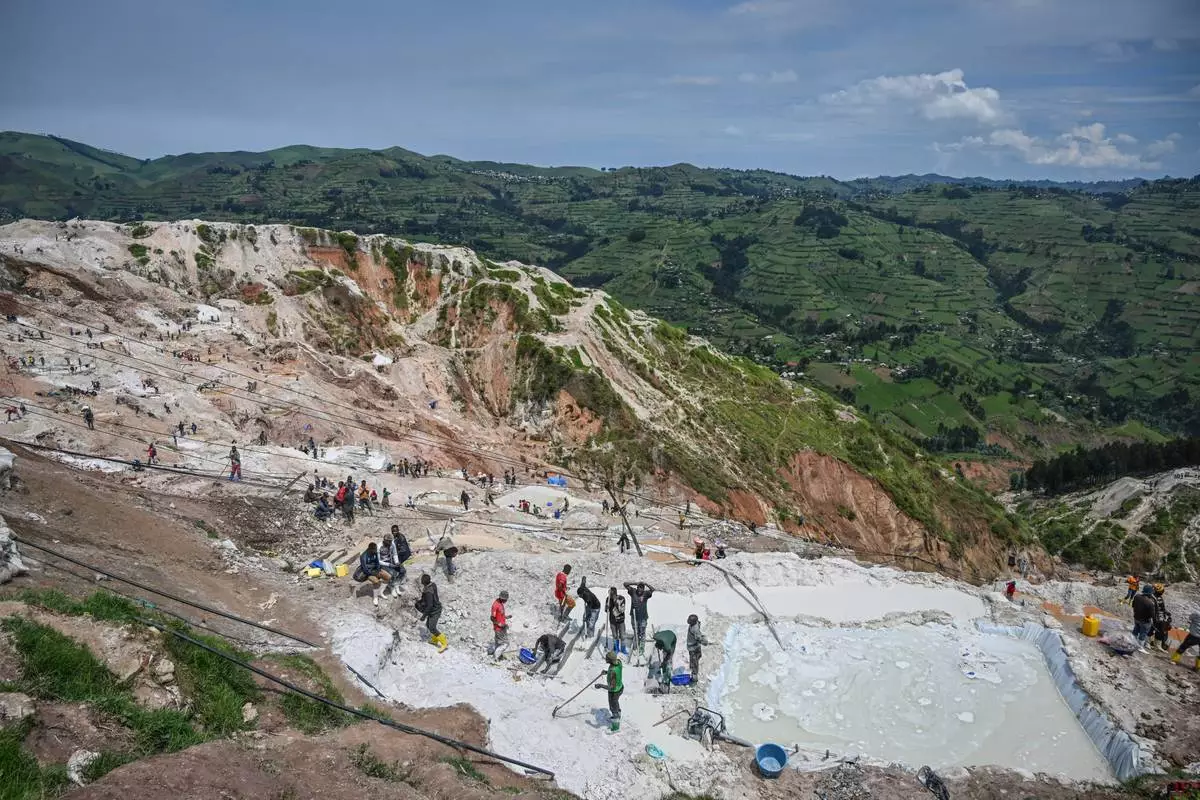
FILE - Miners work at the D4 Gakombe coltan mining quarry in Rubaya, Congo, May 9, 2025. (AP Photo/Moses Sawasawa, File)