Skip to Content Facebook Feature Image

The Carolinas emerge as new population boom states. Affordability and lifestyle drive growth

News

The Carolinas emerge as new population boom states. Affordability and lifestyle drive growth
News

News

The Carolinas emerge as new population boom states. Affordability and lifestyle drive growth

2026-02-01 02:24 Last Updated At:12:18

ORLANDO, Fla. (AP) — Move over Florida and Texas. The United States has new hot spots for growth, and they both have Carolina in their name.

North Carolina last year attracted more new residents, 84,000 people, from other parts of the country than any other state, a title held by Texas in 2024 and Florida in the two years before that. South Carolina had the highest overall growth rate last year at 1.5%, a distinction among states held by Florida in 2024, according to U.S. Census Bureau figures released this past week.

Domestic migration, or people moving within the U.S., slowed in Texas. The 67,300 domestic migrants heading to the second most populous state year over year barely squeaked by South Carolina, which had the third highest number of domestic migrants at 66,600.

The appeal of Florida, the nation's third most populous state, dimmed. It dropped to No. 8 for state-to-state migration, as more U.S. residents preferred to move elsewhere, including Alabama.

Sabrina Morley and Steven Devereaux sold their Tampa-area house last year, moved out of Florida and landed outside Valencia, Spain. Growing up in the 1990s, they both enjoyed Florida’s diversity and being able to run around freely outdoors. But in recent years, as they planned to have children, they had grown wary of the state’s costs, regular threats of mass shootings at schools, the quality of education and political divisiveness. They are expecting a daughter in the spring.

“I had a pretty good childhood, but I don’t think we’d be able to give our child the same quality of life because of the cost of living, food quality, and guns have become more prevalent,” Devereaux said. “We think where we are now, it’s the best decision we could make to give any future children the best quality of life.”

North Carolina state demographer Michael Cline credited the state's growth to high-paying jobs in banking and tech, the topographical diversity and having smaller big-cities than Florida and Texas.

“North Carolina is attracting younger folks because we have so many nice areas in North Carolina — the mountains and beaches and lakes in between — that we're benefiting from younger people who decided they can work from anywhere and would rather be in a nice area,” Cline said. “One of the things about North Carolina, our cities are not huge, and that may be attractive to folks, too.”

Last year's changes among the states were significant because population growth brings more taxpayers, economic dynamism and demand for goods and services. It also signals potential changes in the nation’s political landscape after the next census in 2030, with certain states gaining or losing clout in Congress and the Electoral College.

In the next few years, domestic migration is going to play a larger role in states' growth or population decline. That is because the Trump administration's immigration crackdown has contributed to a significant reduction in migration from abroad, which had been the prime driver of growth in most states for the first half of this decade.

Without immigration growth, the U.S. population will start shrinking in five years as deaths outpace births, according to the Congressional Budget Office.

Despite the comparative year-over-year slowdown in domestic migration, Texas' overall growth of 391,000 people and Florida's overall growth of 196,000 people were still the two highest in the U.S. last year.

In Florida, it was driven by international migration, and in Texas by international migration as well as births outpacing deaths. Both states boomed during the early part of the decade, when pandemic-era lockdowns and remote work encouraged residents from other states to move to Florida and Texas, where coronavirus restrictions were more lax.

“The sharp domestic migrations they observed during the pandemic have now petered out, especially for Florida, at the same time that immigration is being diminished,” said Brookings demographer William Frey.

Demographers in Florida and Texas said they were not entirely sold on the accuracy of the Census Bureau's migration numbers, which are the hardest variables to pin down because they fluctuate the most year to year, although they did not question the rigor of the bureau’s work. The bureau uses data from the IRS and its American Community Survey to calculate migration, although the ACS data lags by a year and requires statisticians to project the data forward.

The Bureau of Economic and Business Research at the University of Florida uses a method different from the Census Bureau's to calculate growth — electrical customer data, said research demographer Richard Doty.

There are no definitive explanations for why domestic migration to Florida went from almost 319,000 people in 2022 to 22,500 people in 2025. Doty said some factors might include the state no longer being the bargain it once was, a series of hurricanes and return-to-office employer mandates.

“The cost of housing, in particular, is driving young people and retirees to other states,” he said. “Also, insurance is higher in Florida than most other states.”

When asked about the decline, Gov. Ron DeSantis' press secretary, Molly Best, noted in an email that Florida had a significant influx of new residents during the pandemic. It remains a top-ranked placed to live, she said.

The Texas economy has been growing, but that is not the only thing that influences the inflow of potential migrants. Conditions outside the state also do, Texas state demographer Lloyd Potter said in an email.

“If jobs are plentiful, living is affordable, and the overall quality of life is good, they will be less likely to move for an opportunity outside that community,” Potter said.

Follow Mike Schneider on the social platform Bluesky: @mikeysid.bsky.social.

Follow the AP’s coverage of the U.S. Census Bureau at https://apnews.com/hub/us-census-bureau.
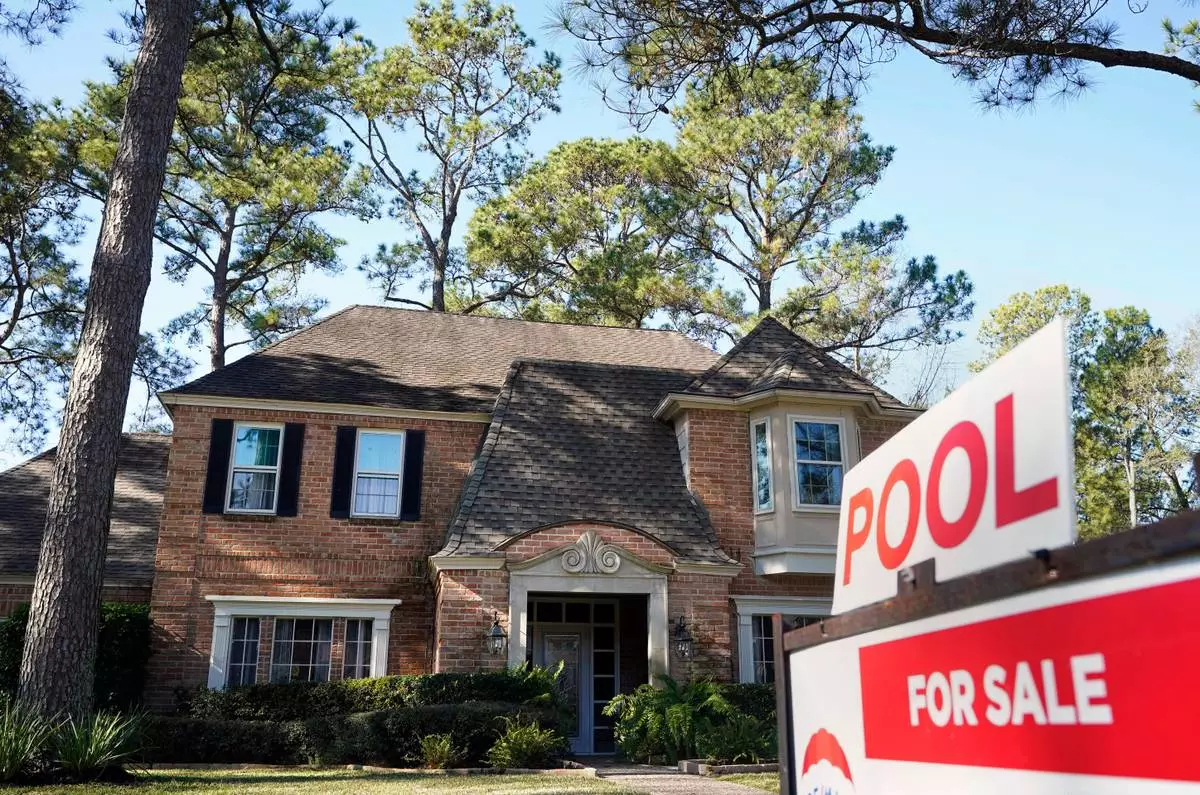
FILE - A real estate sign is shown at a home for sale in Houston, Jan. 13, 2021. (Melissa Phillip/Houston Chronicle via AP, File)
FILE - A real estate sign is shown at a home for sale in Houston, Jan. 13, 2021. (Melissa Phillip/Houston Chronicle via AP, File)

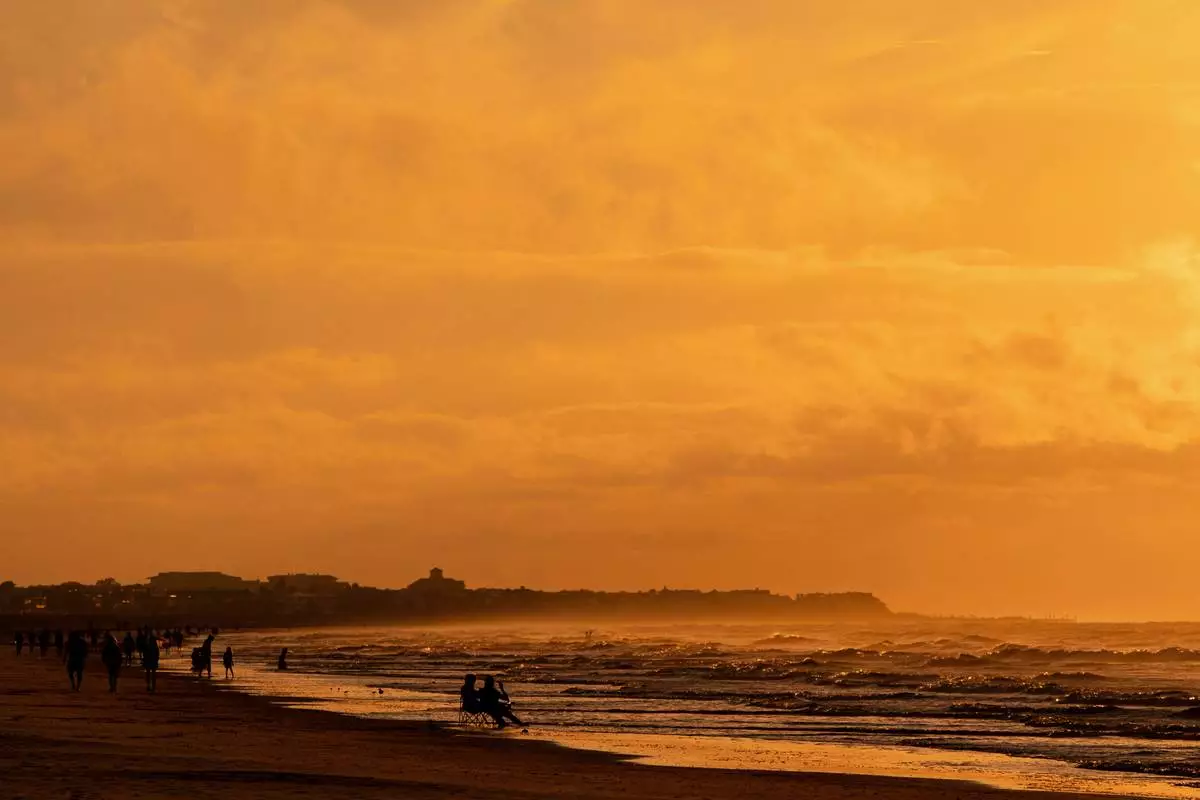
FILE - The sun rises over Isle of Palms, S.C., Aug. 13, 2022. (AP Photo/Julia Nikhinson, File)
FILE - The sun rises over Isle of Palms, S.C., Aug. 13, 2022. (AP Photo/Julia Nikhinson, File)

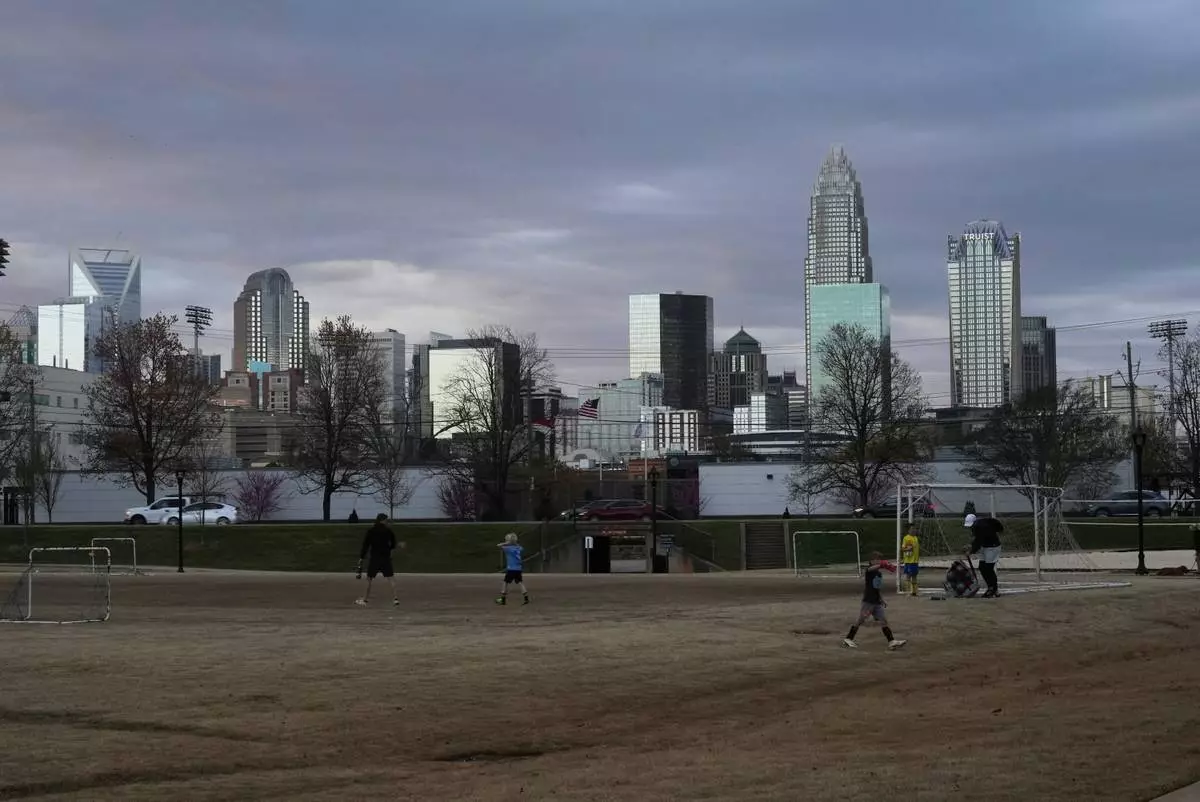
FILE - Children walk through a sports field in Independence Park under the skyline of Charlotte, N.C., on March 20, 2025. (AP Photo/Mary Conlon, File)
FILE - Children walk through a sports field in Independence Park under the skyline of Charlotte, N.C., on March 20, 2025. (AP Photo/Mary Conlon, File)

RALEIGH, N.C. (AP) — Hold on to those Thanksgiving turkeys! WKRP is coming to Cincinnati — for real this time.

“I cannot, by contract, tell you when. I cannot tell you who. But I can tell you, direct to the camera, WKRP, after 48 years, is coming to Cincinnati,” D.P. McIntire, who runs the media nonprofit that is auctioning the famous call letters, told The Associated Press. “Book it! It’s done!”

The call sign was made famous by “WKRP in Cincinnati,” a CBS television sitcom that ran from 1978 to 1982. It made stars of actors like Loni Anderson and Richard Sanders, whose bumbling newsman Les Nessman reported on a Thanksgiving promotion gone bad when live but flightless turkeys were dropped from a helicopter.

McIntire remembers watching the show’s first episode — featuring disc jockeys Dr. Johnny Fever (Howard Hesseman) and Venus Flytrap (Tim Reid) — in the living room with his parents and older sister.

“And at the end of the 30-minute episode,” he said, “I got up and I proclaimed, `I’m going to be in radio. And if I ever have the opportunity, I’m going to run a station called WKRP.’”

McIntire said he got his first on-air job at 13 as a news anchor at WNQQ “Wink FM” in Blairsville, Pennsylvania.

Fast forward to 2014, when his North Carolina-based nonprofit acquired the call sign from the Federal Communications Commission. Stations in Dallas, Georgia, and Alexandria, Tennessee, previously bore the letters.

McIntire laughs as he recalls his chat with a woman in the agency’s audio division.

He had two sets of call letters in mind. She told him he needed a third.

“Being the jokester that I am, I said, `Well, if you need three, and if it’s available, we’ll take WKRP,’” he said. “And 90 seconds later, she came back and she said, `Mr. McIntire. Congratulations. You’re the general manager of WKRP in Raleigh, North Carolina.’”

WKRP-LP — 101.9 on the FM dial — went live Nov. 30, 2015. The LP stands for “low power,” a class of station created to serve more local audiences that didn’t want mass-market content.

“Our format is what radio used to be 35 years ago in small-town America,” he said. “There is Greats of the 80s, Sounds of the 70s, 90s Rewind.”

LPFM is restricted to nonprofit organizations like his Oak City Media, and it’s definitely local.

“Your broadcast capacity is limited to 100 watts,” McIntire said. “So, your average range is between, depending on your terrain and circumstances, 4 and 12 miles (6 and 19 kilometers) in any direction. Enough to cover a small town.”

And, by necessity, it’s a low-budget affair.

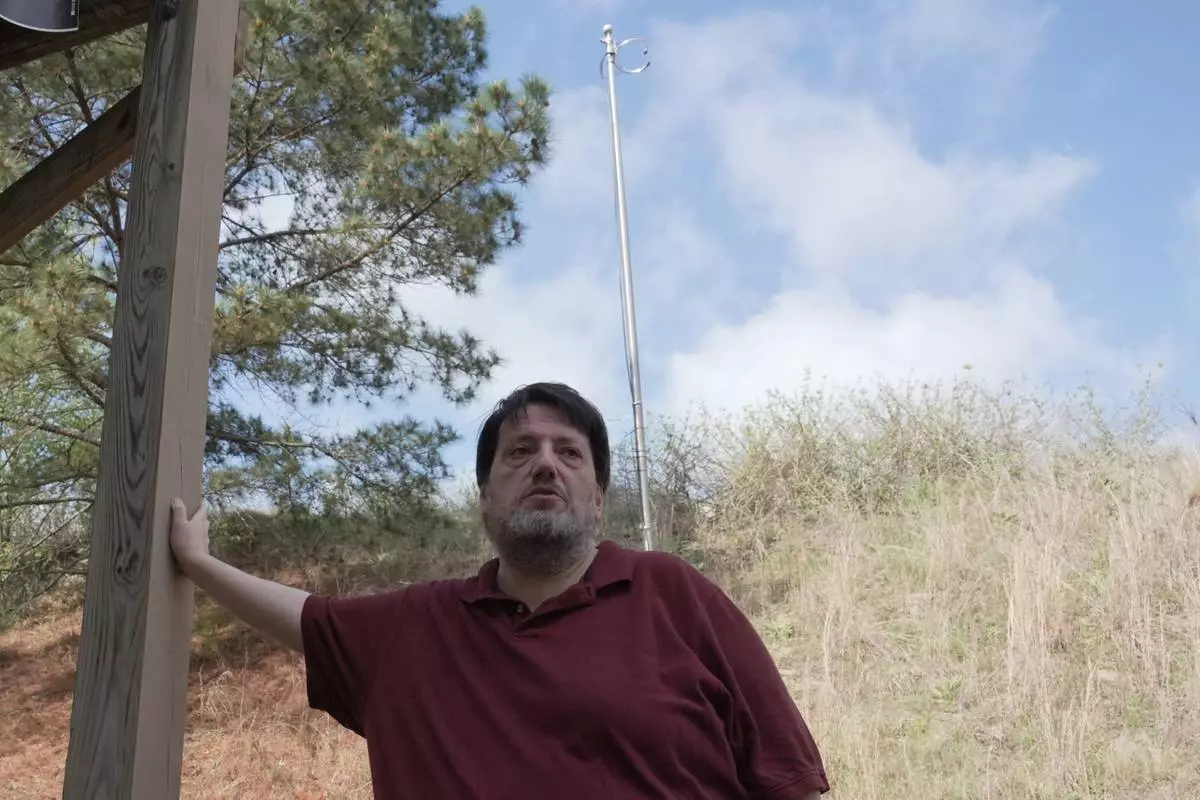
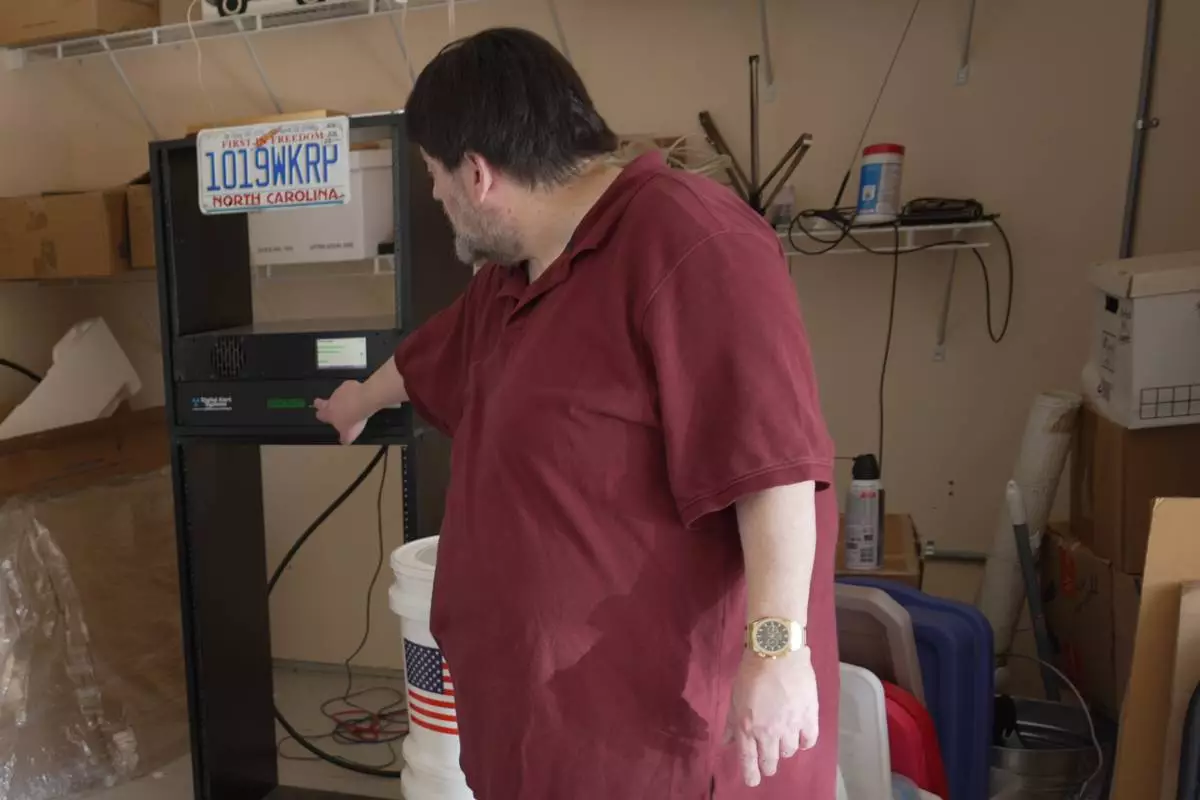
The transmitter is in a corner of McIntire’s garage, between a recycling bin and the cleaning supplies. The broadcast antenna sits atop a 25-foot (7.62-meter) metal flagpole in the backyard. The studio — microphones and a mixing board hooked up to a computer — is in McIntire’s basement.

Like the WKRP of television, McIntire and his partners set out to be “irreverent.” One of their offerings is a two-hour show called “Weird Al and Friends,” focusing on the satirical works of Weird Al Yankovic.

They even had an annual Thanksgiving turkey giveaway. But don’t call the American Society for the Prevention of Cruelty to Animals — they hand out gift certificates to a local grocery store.

“We don’t toss them out of helicopters,” he said with a laugh.

After more than a decade on the air, the 56-year-old McIntire decided it was time to pass the reins.

“We’re in a position where the older members like me who started the station are turning the leadership over to younger members,” he said. “They’re not interested in radio.”

They put out a call for bids to use the call letters on FM and AM radio, as well as television and digital television.

They intend to use the proceeds for a new nonprofit venture called Independent Broadcast Consultants. He said IBC will be “geared specifically toward helping these new broadcasters get up and running, get the consulting that they need in order to be, hopefully, more successful than we have been.”

Oak City Media was all set to hand off the television-related suffixes — WKRPTV and WKRPDT — when another group defaulted on the agreement, McIntire said. But he said the Cincinnati deal is in the bag, he just can’t legally discuss it.

“It will be radio,” he said. “But that’s all I can tell you at this time.”

Robert Thompson, who uses a season 2 episode of “WKRP” in his TV history class at Syracuse University, said it’s telling that people see real value in a fictional station whose call letters invoke the word “crap.”

“The value comes from the love of the characters for each other,” he said. “And now by buying this thing, the value comes from our love of the characters themselves.”

Whatever they do with the call sign, McIntire hopes they will be true to the show that inspired it.

“It has a special place in the hearts of an awful lot of people,” he said. “And we have been very, very, very proud to have been a steward of that legacy.”

D.P. McIntire leans against a deck beneath the WKRP radio antenna in the backyard of his home in Raleigh, N.C., on Thursday, April 2, 2026. (AP Photo/Allen G. Breed)

D.P. McIntire leans against a deck beneath the WKRP radio antenna in the backyard of his home in Raleigh, N.C., on Thursday, April 2, 2026. (AP Photo/Allen G. Breed)

D.P. McIntire points to the transmitter for WKRP radio in a corner of his garage in Raleigh, N.C., on Thursday, April 2, 2026. (AP Photo/Allen G. Breed)

D.P. McIntire points to the transmitter for WKRP radio in a corner of his garage in Raleigh, N.C., on Thursday, April 2, 2026. (AP Photo/Allen G. Breed)

The WKRP radio antenna sits atop a 25-foot flagpole behind D.P. McIntire's home in Raleigh, N.C., on Thursday, April 2, 2026. (AP Photo/Allen G. Breed)

The WKRP radio antenna sits atop a 25-foot flagpole behind D.P. McIntire's home in Raleigh, N.C., on Thursday, April 2, 2026. (AP Photo/Allen G. Breed)

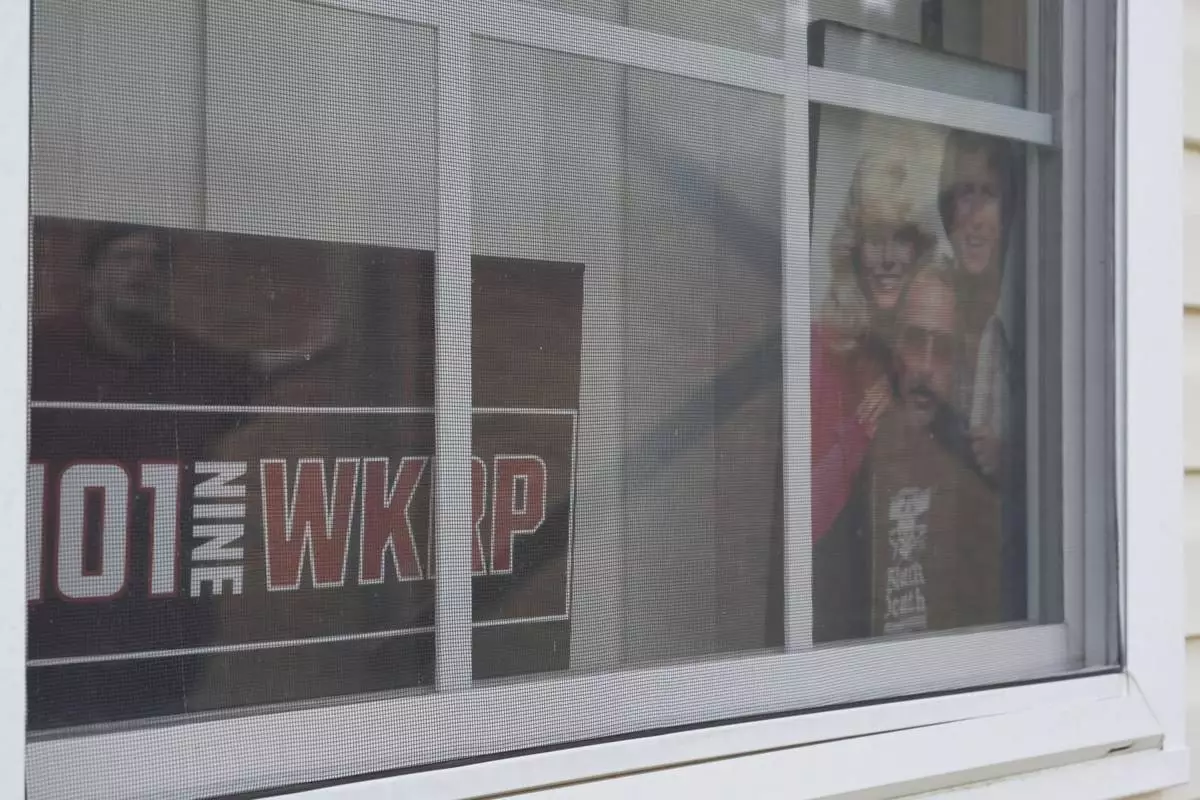
A photo of the cast members of the sitcom "WKRP in Cincinnati" sits in a window at the home of D.P. McIntire in Raleigh, N.C., on Thursday, April 2, 2026. (AP Photo/Allen G. Breed)

A photo of the cast members of the sitcom "WKRP in Cincinnati" sits in a window at the home of D.P. McIntire in Raleigh, N.C., on Thursday, April 2, 2026. (AP Photo/Allen G. Breed)

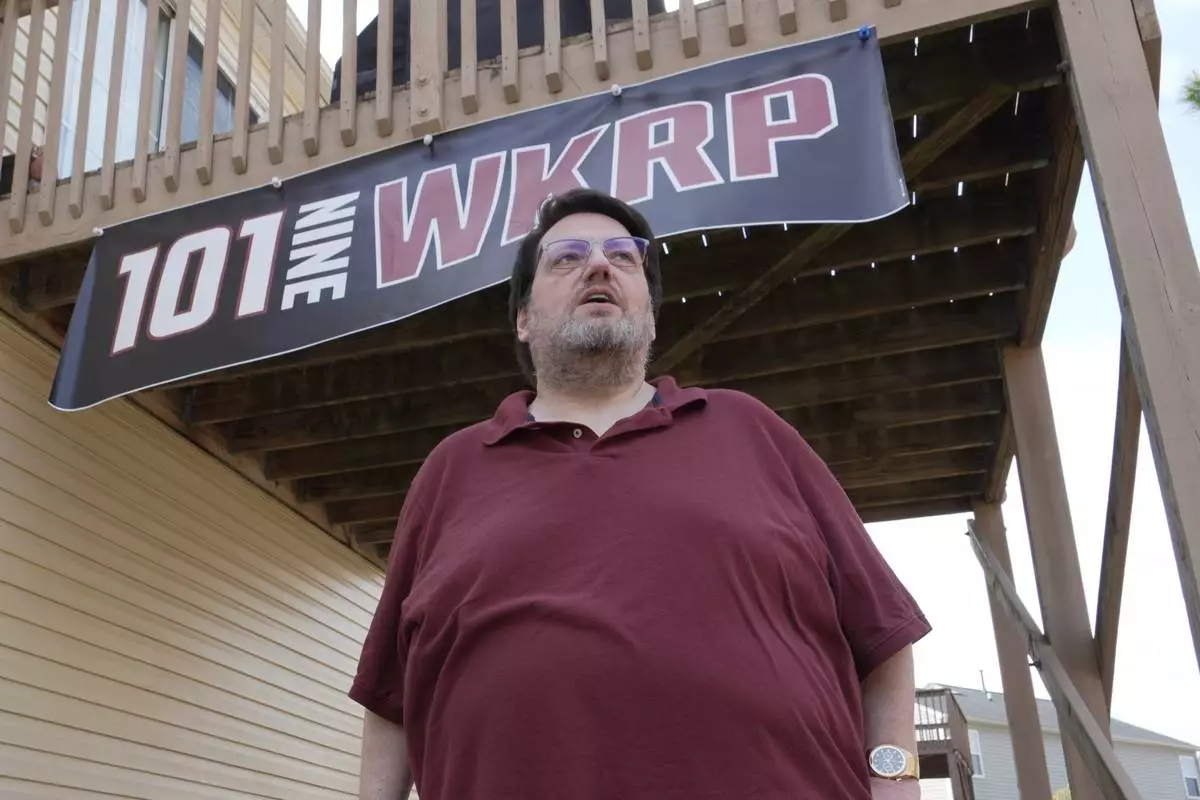
D.P. McIntire stands beneath a WKRP banner in the backyard of his home in Raleigh, N.C., on Thursday, April 2, 2026. (AP Photo/Allen G. Breed)

D.P. McIntire stands beneath a WKRP banner in the backyard of his home in Raleigh, N.C., on Thursday, April 2, 2026. (AP Photo/Allen G. Breed)

Recommended Articles