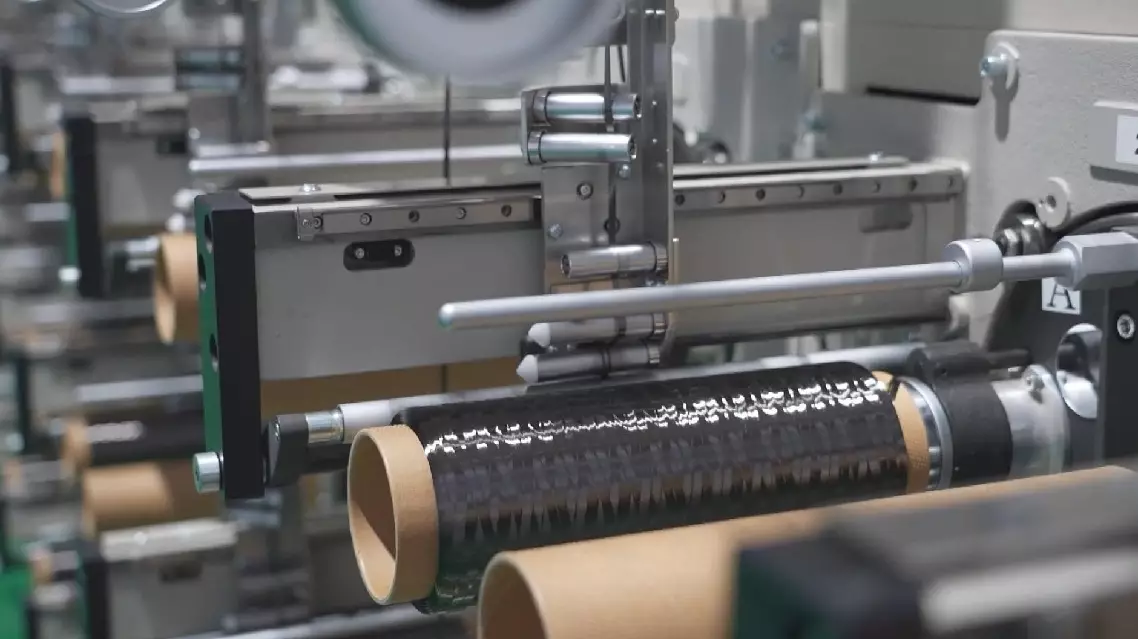
Collaboration between private firms and academic researchers in China has accelerated integration of scientific research and industrial innovation, addressing the country's supply bottlenecks in the development of new materials of carbon fiber.
High-performance carbon fiber, also known as the "king of new materials," is a core material for advanced manufacturing and national defense.
In Langfang City of north China's Hebei Province, T-1100-grade carbon fiber is now in stable mass production. Daily testing shows a 95-percent pass rate.
The new material was developed in a lab at the Shenzhen University in south China's tech hub of Shenzhen City.
"This is the T-1100-grade carbon fiber we developed. Its tensile strength reaches 7,000 megapascals," said Zhu Caizhen, a professor from the College of Chemistry and Environmental Engineering, the Shenzhen University.
The filament is only five micrometers wide. Its density is one-quarter that of steel, but its strength is about seven times higher. With high strength and low weight, and resistance to heat, cold, corrosion, and wear, carbon fiber is widely used in defense, aerospace, railway, and the low-altitude economy.
To secure stable output, the Shenzhen University has worked closely with Changsheng Technology, a private company in Hebei Province.
Since 2023, their partnership has produced a new breakthrough every three to four months.
"Relying on oneself would take a much longer time. The university's research helps guide us and solve key technical problems," said Li Penghui, deputy director of the Research and Development Department, Changsheng Technology.
The team at the Shenzhen University ran repeated tests, examining hundreds of factors to reduce internal voids and increase fiber density. Lab results were soon scaled up and tested under real manufacturing conditions.
After more than 30 rounds of lab-to-factory iteration, the partners successfully cut the key performance-limiting defect and achieved mass production. It has reduced China's reliance on imports and contributed to strengthening the security of strategic materials for China.
China achieves unprecedented synergy in carbon fiber development by bridging lab, factory
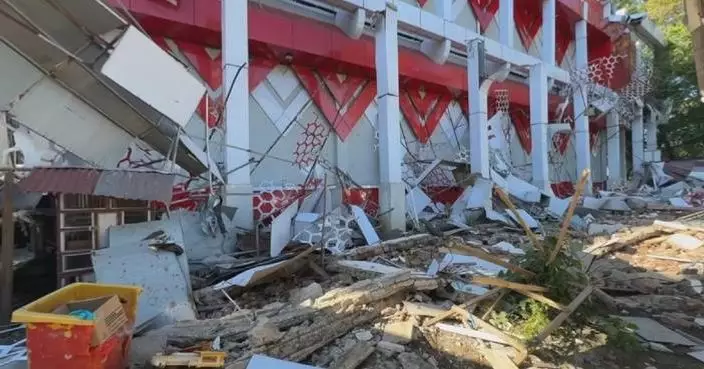
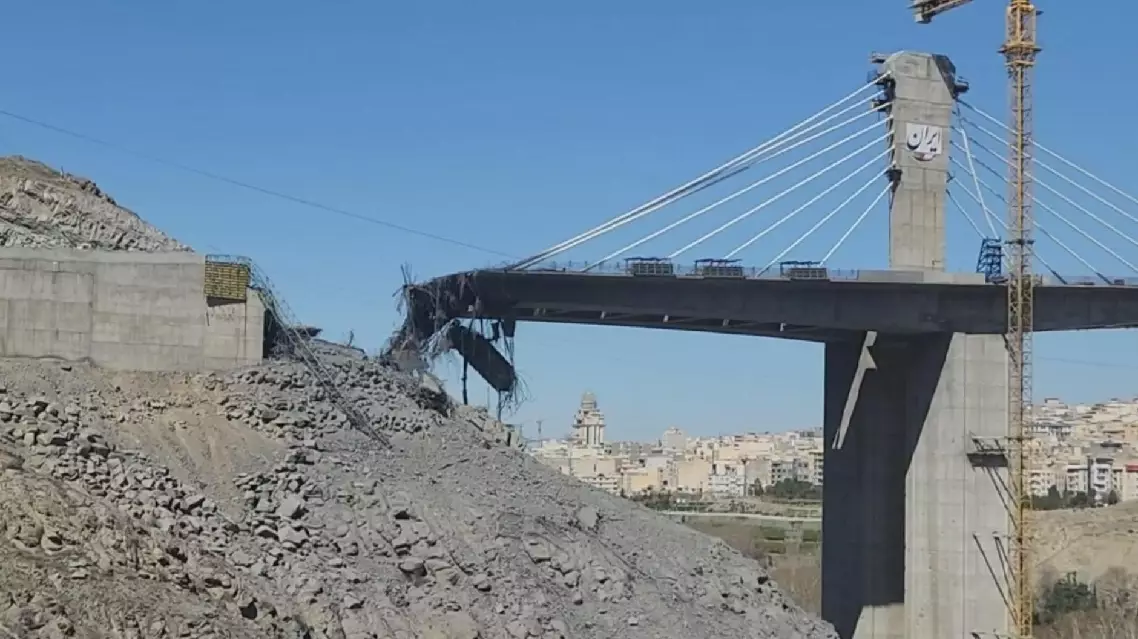
At least eight civilians were killed and 95 others wounded in U.S. and Israeli attacks on a bridge in Iran's northern Alborz province on Thursday, the official news agency IRNA reported.
According to the report, the B1 bridge, located in the provincial capital Karaj, is one of the highest bridges in the Middle East and among the most complicated projects in Iran. It was targeted twice with missiles on Thursday.
IRNA cited Qodratollah Seif, the province's deputy governor for political, security and social affairs, as saying that among those killed and injured were inhabitants of Bileqan village, passengers and the families who had gathered in the nearby areas for the Nature Day, a traditional Iranian holiday marking the end of the Nowruz holidays.
He added that there were no military activities in the areas surrounding the bridge, stressing that the structure was under construction and scheduled to be inaugurated in the coming days.
Seif said those injured in the strikes were immediately transferred to nearby medical centers, and some of them were hospitalized.
U.S. President Donald Trump posted a video on the social media Truth Social, showing smoke rising from the B1 bridge in Karaj, hours after threatening to bomb the country "back to the Stone Ages," warning of further destruction unless Iran comes to the table to end the five-week war.
Trump delivered a speech earlier on Wednesday in which he argued that the war launched by the United States and Israel was almost over -- even as he threatened to bomb Iran "extremely hard" if it did not bow to his demands.
Condemning the attacks in a post on X, Iran's Foreign Minister Seyed Abbas Araghchi said, "Striking civilian structures, including unfinished bridges, will not compel Iranians to surrender."
He added, "It only conveys the defeat and moral collapse of an enemy in disarray. Every bridge and building will be built back stronger. What will never recover: damage to America's standing."
On Feb 28, Israel and the United States launched joint attacks on Tehran and several other Iranian cities, killing Iran's then Supreme Leader Ali Khamenei, along with senior military commanders and civilians. Iran responded with waves of missile and drone strikes targeting Israel and U.S. assets in the Middle East.
8 killed, 95 wounded in US-Israeli attacks on Iran bridge