A newly released video evidence from a former member of Japan's notorious Unit 731 further confirmed that its atrocities of biological experiments were systematic and state crimes carried out during Japan's invasion of China.
The 47-minute video was made public on Saturday by the Exhibition Hall of Evidences of Crime Committed by Unit 731 of the Japanese Imperial Army, featuring Hideo Sato, a member of the bubonic plague research squad of the Japanese wartime germ-warfare unit.
Japanese scholar Fuyuko Nishisato donated the video to the exhibition hall in 2019, according to the institution, which was built on the former site of the Unit 731 headquarters in Harbin, the capital city of northeast China's Heilongjiang Province.
In the footage, Sato's testimony reveals details of the unit's human experimentation, which include the locations of the experiments, their secrecy measures, the specific requirements for experimental subjects, and the strict hierarchy among the personnel involved.
"Human experiments were consistently carried out. More than 100 people were used as experimental material, right? Buildings 7 and 8. The surrounding buildings were taller. Yes. Buildings 7 and 8 were enclosed within them, for the sake of secrecy," Sato said.
Buildings 7 and 8 mentioned by Sato referred to Unit 731's special prison, the core site of the human experiments. They were part of the Unit 731 compound, which was called the "square building" due to its quadrilateral layout.
The overall design of the square building was meticulously planned. The special prison was surrounded by outer structures, forming a natural isolation barrier. This layout was tailor-made from the very beginning of its construction to conceal the human experiments.
According to Sato, Unit 731 strictly controlled the health condition of those used as "experimental material" so as to ensure the experiments' smooth progression.
"The nutrition provided to these individuals used as experimental subjects was adequate. Unhealthy individuals could not be used as subjects; you had to ensure they were physically healthy. So, the food given to them was actually quite good," he said.
"Unit 731 required accurate data from their experiments. Therefore, they demanded that every test subject be in a normal, healthy state when conducting these experiments to obtain the most accurate data possible," said Jin Shicheng, head of the education and exhibition department at the Exhibition Hall of Evidence of Crime Committed by Unit 731 of the Japanese Imperial Army.
In his testimony, Sato said that as a low-level employee of Unit 731, he was not qualified to directly participate in the human experiments. Those involved were primarily the so-called "elites" of the Japanese medical community at the time.
"Who could enter Buildings 7 and 8 was basically predetermined," said Sato.
"From what we know, Unit 731 had a system similar to that of civilian personnel within the military. Even if they were not soldiers, they served in the unit. They were categorized by rank: servants, employees, technicians, and senior technicians. Those considered as experienced were typically technicians or senior technicians. A senior technician would be equivalent to a doctoral degree holder," said Tan Tian, a researcher with the exhibition hall.
"At that time, Unit 731 gathered the so-called elites of the Japanese medical community. Doctors and students from universities including Japan's Tokyo Imperial University, Kyoto Imperial University, and Kyushu Imperial University were sent to Unit 731 in large numbers. The Japanese medical community dispatched these individuals through a delegated system to participate in human experimentation and live vivisection. Unit 731 had more than 200 personnel holding doctoral degrees in medicine or science. Such a highly educated group was precisely what enabled them to carry out such criminal human experimentation," said Jin Shicheng.
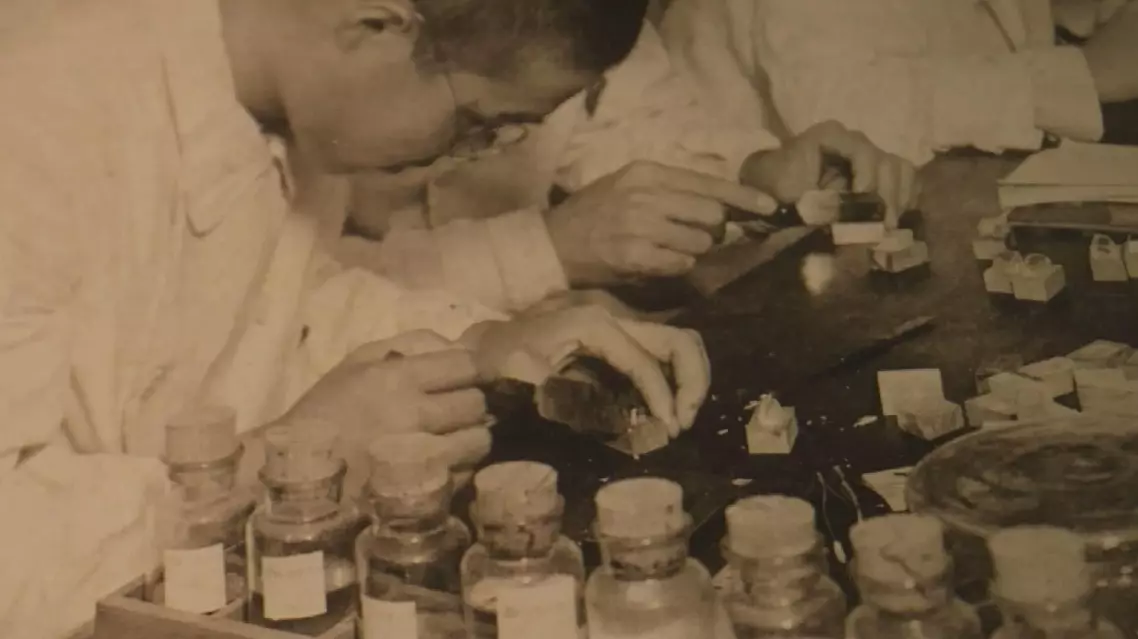
Experts explained that these researchers, holding advanced degrees and bearing the title of "medical elites," willingly became accomplices of the war machine, disguising live vivisection and bacterial experiments as so-called "scientific research." This further proves that the human experiments of Unit 731 were not isolated case of atrocity, but a systematic state crime involving the collusion of the Japanese medical community and top-down promotion of the Japanese government.
"The release of this testimony supplements the current chain of evidence regarding Unit 731's crimes. From the perspective of a perpetrator's testimony, it further solidifies the evidence of Japan's bacteriological warfare crimes during its invasion of China. It corroborates and reinforces existing archival records, documents, and historical sites, completing the chain of criminal evidence and further confirming that Japan’s Unit 731, responsible for bacteriological warfare during its invasion of China, committed a state-sponsored crime organized, systematic, and conducted from the highest levels down," said Jin.
New evidence adds details of Japan's state-ordered biological warfare