The Sanya Phoenix International Airport, located in the resort city of Sanya in south China's tropical island province of Hainan, commenced the trial operation of its newly built Terminal 3 (T3) on Sunday, marking a major expansion of the tourism hub's capacity ahead of the 2026 Spring Festival travel rush.
With the addition of T3, the airport's annual passenger throughput is projected to reach 30 million trips.
The terminal will fully assume the function of handling domestic flights, featuring 40 check-in counters, 23 security screening lanes, and seven fixed boarding bridges.
Connected to Terminals 1 and 2 via enclosed corridors, it is intended to deliver a seamless travel experience for passengers.
During the 2026 Spring Festival travel season, spanning from February 2 to March 13, the Sanya Phoenix International Airport is expected to handle about 18,600 flights and 3.49 million passenger trips.
By leveraging T3's added capacity, the airport aims to alleviate operational pressure on other terminals and improve service efficiency during the peak travel period.
"The airport will work to enhance its overall operational capacity and turnover efficiency, strengthen end-to-end flight management, and focus efforts on increasing the rate of flights docking at bridges and the on-time rate, to keep improving travel experience for passengers," said Li Xiaohuan, assistant to the president of the Sanya Phoenix International Airport.
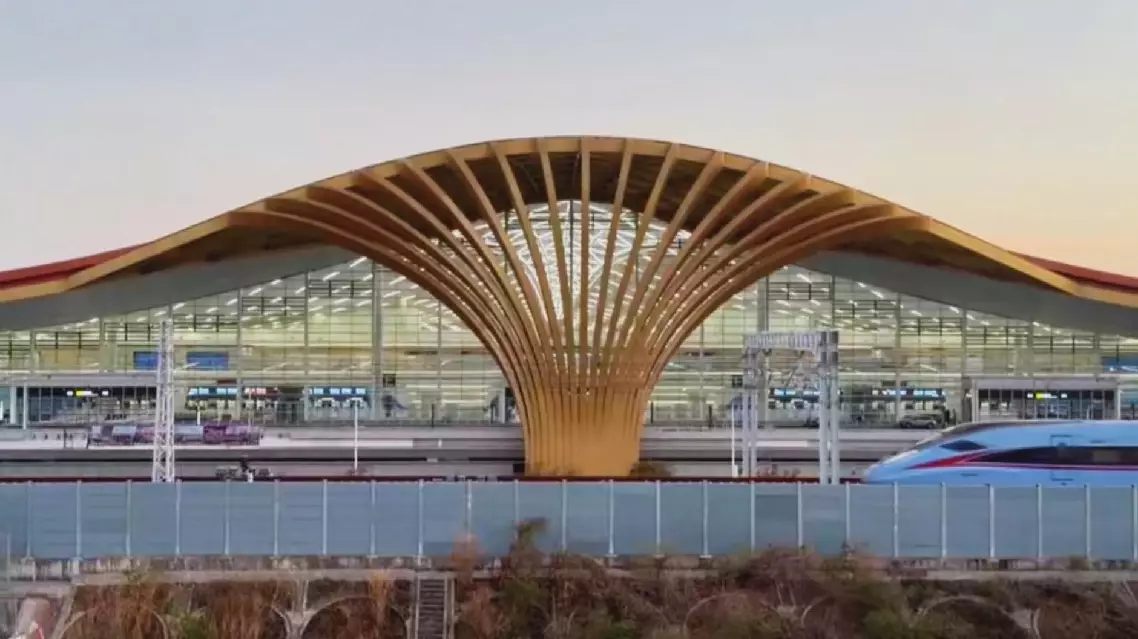
South China's Sanya Phoenix International Airport launches trial operation of new terminal
South China's Sanya Phoenix International Airport launches trial operation of new terminal
For more than 1,000 years, Jingdezhen, the "porcelain capital" in east China's Jiangxi Province, has shaped how the world understands porcelain, with even discarded shards preserving a living tradition.
Weng Yanjun, president of the Jingdezhen Imperial Kiln Institute, reflected on the scale and challenge behind Jingdezhen's historic creations.
"When I look at this gigantic dragon jar, I couldn't help going back to 600 years ago, when the emperor had this order to create something bigger than ever before. The failure rate of the dragon jar is so high. It could be nine out of 10. Even making failure products like this takes courage, takes techniques and takes commitment," said Weng.
Those failed attempts, once discarded, now preserve the evidence of how Jingdezhen pursued perfection.
For more than 1,000 years, Jingdezhen's porcelain industry has endured through the Song, Yuan, Ming and Qing dynasties (960-1911). What has survived is not only its porcelain, but also a living heritage of raw materials, workshops, kilns and specialized craftsmanship.
Those firings produced masterpieces as well as failures, with the discarded pieces forming another kind of archive.
At the Jingdezhen Imperial Kiln Institute, Weng told archaeology students that fragmented specimens sometimes provide more information than complete artifacts.
Weng leads the development of the world's first Ancient Ceramics Gene Bank, which extracts and catalogs the defining characteristics of each ceramic shard.
"For our institute alone, we have excavated more than 20 million pieces of shards for the past over 1,200 years. Among those shards, we do sorting, we do restoration, and we do scientific tests. And then we find, wow, a small shard can tell us much more information than even a whole piece," said Weng.
Using a standardized sample library and unified data framework, the project records each piece's shape, decoration, body material, glaze, color, firing marks and inscriptions, creating a valuable resource for authentication and research around the world.
"The whole city is a wonderful lab and space range makes Jingdezhen uniquely a wonderful example of how the handicraft ancient industry with porcelain as the focus survived even to today," Weng added.
Jingdezhen once helped establish benchmarks for how porcelain was made. Now, the gene bank is turning fragments into a language that can be read beyond the city. For French artist and researcher Yann Colleu, learning to read that language has also changed the way he creates.
"Since my childhood, my parents had these teapots, tea sets, plates and cups. I was very curious about the pattern, like the meaning, what was behind it? Actually when I discovered in Jingdezhen that it was a bat, because of 'fu' and 'fu' is fortune, but also you have the 'wufu,' like the five blessings. I was like a child with stars in the eyes, discovering the world for the first time," said Colleu, PhD candidate at Jingdezhen Ceramic University.
What once seemed abstract became part of Yann's own visual language. In his work, traditional Jingdezhen motifs and production scenes are reimagined through a contemporary, cross-cultural lens.
"Jingdezhen is a timeless city. The past, the present and even the future are tied together. This is one of illustration of 72 traditional steps developing during the Ming Dynasty (1368-1644). The difference is, instead of using Chinese characters, I use foreigners. I want to use the past to talk about the present and even the future with Jingdezhen," said Colleu.
The Jingdezhen Handicraft Porcelain Industry Sites were inscribed on the UNESCO World Heritage List on Saturday. The inscription recognizes not just a single kiln or masterpiece, but an entire production system, from its archaeological remains and traditional craftsmanship to its industrial knowledge and global influence.
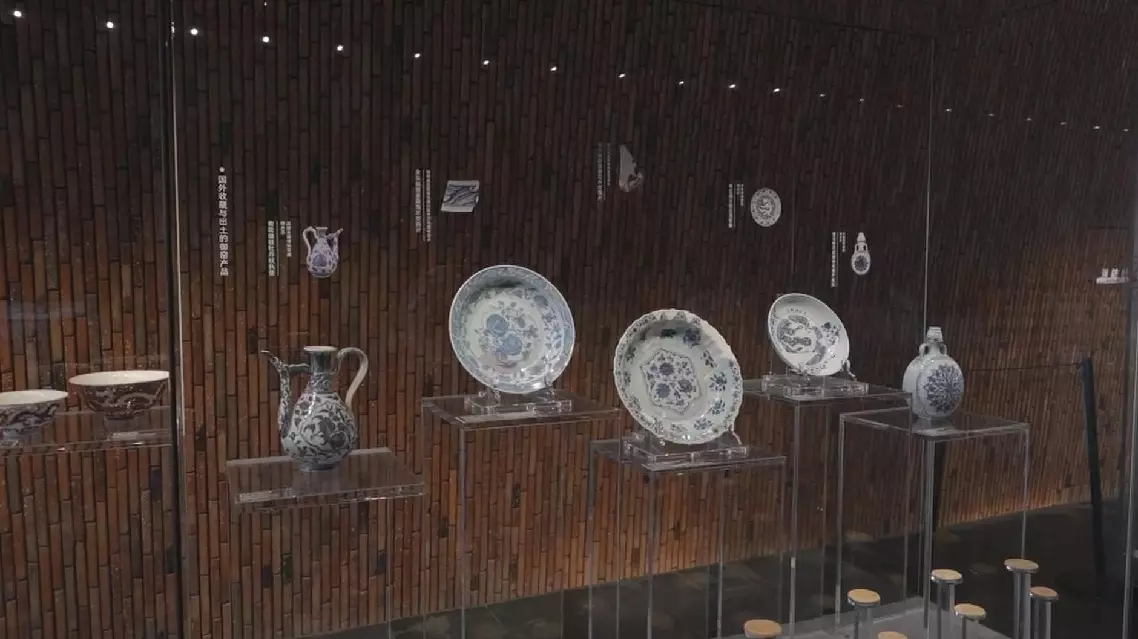
Porcelain shards preserve Jingdezhen’s timeless legacy