Survey on Small and Medium-Sized Enterprises' Credit Conditions for fourth quarter 2025
The following is issued on behalf of the Hong Kong Monetary Authority:
The Hong Kong Monetary Authority (HKMA) published today (February 2) the results of the Survey on Small and Medium-Sized Enterprises (SMEs)' Credit Conditions for the fourth quarter of 2025. According to the survey, SMEs' credit conditions remained broadly stable.
Regarding SMEs' perception of banks' credit approval stance relative to six months ago, excluding respondents who answered "no idea/don't know", 70 per cent perceived a "similar" or "easier" credit approval stance in the fourth quarter of 2025, up from 59per cent in the previous quarter (Chart 1 in the Annex). 30per cent perceived a "more difficult" credit approval stance, compared to 41per cent in the previous quarter. The perception of a more difficult credit approval stance may not necessarily reflect actual difficulties faced by SMEs in obtaining bank credit as the perception could be affected by a number of factors, such as media/news reports, business conditions and opinions of relatives and friends.
Among respondents with existing credit lines, 1 per cent reported a "tighter" banks' stance, down from 3 per cent in the previous quarter (Chart 2 in the Annex). In this survey, a tighter stance on existing credit lines denotes a range of possible measures or arrangements, such as reducing unused and used credit lines, raising the interest rate, imposing additional collateral requirements, or shortening loan tenor. Therefore, respondents' indication of banks' stance on existing credit lines may not directly reflect banks' supply of credit to SMEs.
The survey also gauged the results of new credit applications from SMEs. 2 per cent of the respondents reported that they had applied for new bank credit during the fourth quarter of 2025. Among the respondents who had already known their application outcomes, 77 per cent reported fully or partially successful applications, up from 72per cent in the previous quarter (Chart 3 in the Annex).
Owing to small sample sizes of SMEs with existing credit lines (14 per centof surveyed SMEs) and with new credit applications (2per cent of surveyed SMEs) during the quarter, the results could be prone to large fluctuations, and hence should be interpreted with care.
About Survey on SMEs' Credit Conditions
In light of the importance of SMEs to the Hong Kong economy and concerns about potential funding difficulties facing SMEs over the past few years, the HKMA has appointed the Hong Kong Productivity Council (HKPC) to carry out this survey, starting from the third quarter of 2016. This survey is conducted on a quarterly basis, covering about 2 500 SMEs from different economic sectors each time. The results of this survey can help monitor the development of SMEs' access to bank credit from a demand-side perspective.
The results of this survey should be interpreted with caution. Similar to other opinion surveys, views collected in this survey may be affected by changes in sentiment due to idiosyncratic events that occurred over the survey period, which can make the results prone to fluctuations. Readers are advised to interpret the results together with other economic and financial information. In addition, views collected are limited to the expected direction of inter-quarter changes (e.g. "tighter", "no change" or "easier") without providing information about the magnitude of these changes.
Detailed tables and technical information of this survey are published on the website of the HKPC (smecc.hkpc.org).
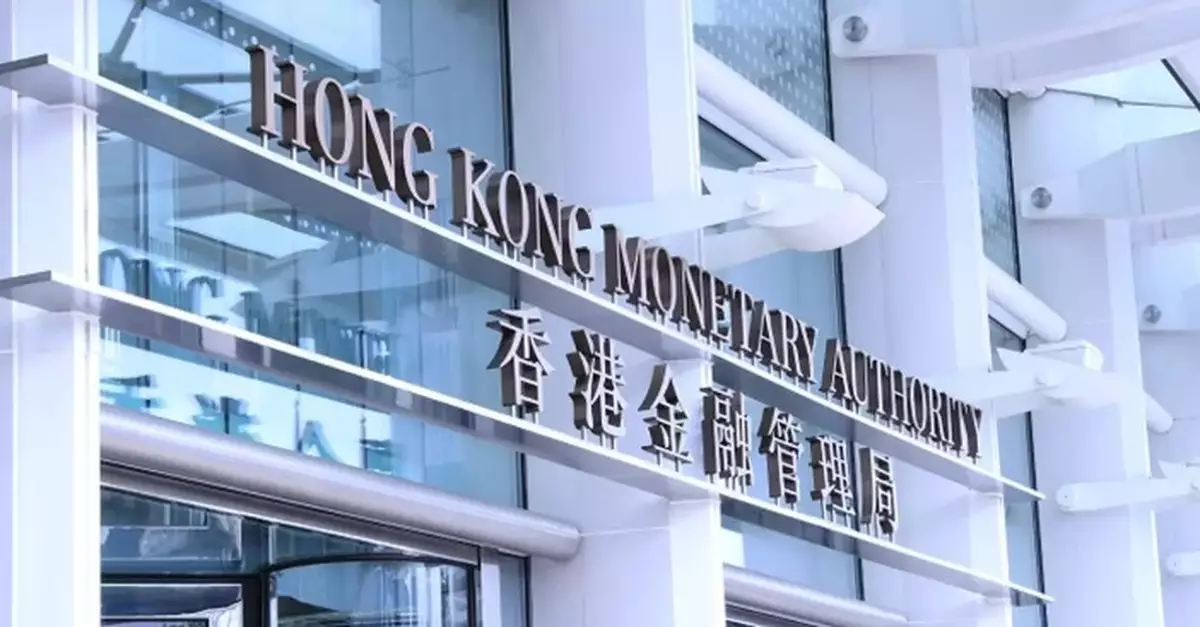
HKMA, Photo source: reference image
DH announces latest situation of Legionnaires' disease cases
The Centre for Health Protection (CHP) of the Department of Health (DH) today (February 2) reported the latest number of Legionnaires' disease (LD) cases, and reminded the public of the importance of using and maintaining properly designed man-made water systems, adding that susceptible groups should strictly observe relevant precautions.
From January 25 to 31, the CHP recorded one community-acquired and one imported LD case. Both patients involved had underlying illnesses. The details of the cases are as follows:
- a 57-year-old male patient living in Yuen Long District, classified as a community-acquired case; and
- an 82-year-old male patient who travelled to Australia during the incubation period, classified as an imported case.
The CHP is conducting epidemiological investigations to identify potential sources of infection and high-risk exposure. Initial investigations revealed that these are sporadic cases. No epidemiological linkages have been established between these two cases and other confirmed cases previously recorded in Hong Kong.
As of January 31, seven LD cases had been recorded this year. In 2025 and 2024, there were 167 and 135 LD cases respectively.
Men, people aged over 50, smokers, alcoholics and persons with weakened immunity are more susceptible to LD. Some situations may also increase the risk of infection, including poor maintenance of water systems; living in areas with old water systems, cooling towers or fountains; using electric water heaters, whirlpool spas or hot water spring spas; and recent stays in hotels or ships.
Legionellae are found in various environmental settings and grow well in warm water (20 to 45 degrees Celsius). They can be found in aqueous environments such as water tanks, hot and cold water systems, cooling towers, whirlpool spas, water fountains, humidifiers and home respiratory devices that support breathing. People may become infected when they breathe in contaminated droplets (aerosols) and mist generated by artificial water systems, or when handling garden soil, compost and potting mixes.
Immunocompromised persons should:
- Use sterile or boiled water for drinking, tooth brushing and mouth rinsing;
- Avoid using humidifiers, or other mist- or aerosol-generating devices; and
- If using humidifiers, or other mist- or aerosol-generating devices, fill the water tank with only sterile or cooled freshly boiled water, and not water directly from the tap. Also, clean and maintain humidifiers/devices regularly according to manufacturers' instructions. Never leave stagnant water in a humidifier/device. Empty the water tank, wipe all surfaces dry, and change the water daily.
The public should observe the health advice below:
- Observe personal hygiene;
- Do not smoke and avoid alcohol consumption;
- Strainers in water taps and shower heads should be inspected, cleaned, descaled and disinfected regularly or at a frequency recommended by the manufacturer;
- If a fresh-water plumbing system is properly maintained, it is not necessary to install domestic water filters. Use of water filters is not encouraged as clogging occurs easily, which can promote growth of micro-organisms. In case water filters are used, the pore size should be 0.2 micrometres (µm) or less and the filter needs to be changed periodically according to the manufacturer's recommendations;
- Drain and clean water tanks of buildings at least quarterly;
- Drain or purge for at least one minute infrequently used water outlets (e.g. water taps, shower heads and hot water outlets) and stagnant points of the pipework weekly or before use;
- Seek and follow doctors' professional advice regarding the use and maintenance of home respiratory devices and use only sterile water (not distilled or tap water) to clean and fill the reservoir. Clean and maintain the device regularly according to the manufacturer's instructions. After cleaning/disinfection, rinse the device with sterile water, cooled freshly boiled water or water filtered with 0.2 µm filters. Never leave stagnant water in the device. Empty the water tank, keep all surfaces dry, and change the water daily; and
- When handling garden soil, compost and potting mixes:
- Wear gloves and a face mask;
- Water gardens and compost gently using low pressure;
- Open composted potting mixes slowly and make sure the opening is directed away from the face;
- Wet the soil to reduce dust when potting plants; and
- Avoid working in poorly ventilated places such as enclosed greenhouses.
The public may visit the CHP's LD page, the Code of Practice for Prevention of LD and the Housekeeping Guidelines for Cold and Hot Water Systems for Building Management of the Prevention of LD Committee, and the CHP's risk-based strategy for prevention and control of LD.
Additionally, as smokers and alcoholics are more susceptible to LD, the Government urgesmembers of the public to quit smoking and avoid drinking. Members of the public may call the DH Integrated Smoking Cessation Hotline at 1833 183, which is answered by registered nurses who provide professional counselling and referral to a wide range of free smoking cessation services. The public may also visit the smoking cessation thematic website (www.livetobaccofree.hk) for more information on smoking cessation. The DH has also launched the Pilot Alcohol Cessation Counselling Service, which provides free counselling to people identified as having probable alcohol dependence, through a subvented non-governmental organisation, the Tung Wah Group of Hospitals (TWGHs). Information on the service has been uploaded to the DH's Change for Healthwebsite. Eligible persons who are interested can call the enquiry hotline of the TWGHs (2884 9876).
The Centre for Health Protection (CHP), Photo source: reference image