WASHINGTON (AP) — President Donald Trump said Monday that he plans to lower tariffs on goods from India to 18%, from 25%, after Indian Prime Minister Narendra Modi agreed to stop buying Russian oil.
The move comes after months of Trump pressing India to cut its reliance on cheap Russian crude. India has taken advantage of reduced Russian oil prices as much of the world has sought to isolate Moscow for its February 2022 invasion of Ukraine.
Trump said that India would also start to reduce its import taxes on U.S. goods to zero and buy $500 billion worth of American products.
“This will help END THE WAR in Ukraine, which is taking place right now, with thousands of people dying each and every week!” Trump said in a Truth Social post announcing the tariff reduction on India.
Modi posted on X that he was “delighted” by the announced tariff reduction and that Trump's “leadership is vital for global peace, stability, and prosperity.”
“I look forward to working closely with him to take our partnership to unprecedented heights,” Modi said.
Trump has long had a warm relationship with Modi, only to find it complicated recently by Russia's war in Ukraine and trade disputes.
Trump has struggled to make good on a campaign pledge to quickly end the Russia-Ukraine war and has been reluctant since his return to office to place pressure on Russian President Vladimir Putin. He has simultaneously imposed tariffs without going through Congress to achieve his economic and foreign policy aims.
The announcement of the agreement with India comes as his special envoy, Steve Witkoff, and son-in-law Jared Kushner are expected to hold another round of three-way talks with Russian and Ukrainian officials in Abu Dhabi later this week aimed at finding an endgame to the war, according to a White House official who requested anonymity to describe the upcoming meeting.
Trump has voiced that he believes that targeting Russia’s oil revenue is the best way to get Moscow to end its nearly four-year war against Ukraine, a view that dovetails with his devotion to tariffs.
In June, Trump announced the United States would impose a 25% tariff on goods from India after his administration felt the country had done too little to narrow its trade surplus with the U.S. and open up its markets to American goods. In August, Trump imposed additional import taxes of 25% on Indian products because of its purchases of Russian oil, putting the combined rate increase at 50%.
With the commitment to stop buying Russian oil and the lower rate, the tariff rate on Indian products could fall to 18%, which is close to the 15% rate charged on goods from the European Union and Japan, among other nations.
Historically, India’s relationship with Russia revolves more around defense than energy. Russia provides only a small fraction of India’s oil but the majority of its military hardware.
But India, in the aftermath of the Russian invasion, used the moment to buy discounted Russian oil, allowing it to increase its energy supplies while Russia looked to cut deals to boost its beleaguered economy and keep paying for its brutal war.
The announced tariff reduction comes days after India and the European Union reached a free trade agreement that could affect as many as 2 billion people after nearly two decades of negotiations. That deal would enable free trade on almost all goods between the EU’s 27 members and India, covering everything from textiles to medicines, and bringing down high import taxes for European wine and cars.
The deal between two of the world’s biggest markets also reflected a desire to reduce dependence on the U.S. after Trump's import tax hikes disrupted established trade flows. While the cost of Trump's tariffs have largely been borne by American businesses and consumers, the taxes can reduce trade volumes among countries.
In recent months, India has accelerated a push to finalize several trade agreements. It signed a deal with Oman in December and concluded talks for a deal with New Zealand.
Trump seemed to hint at a positive call with Modi on Monday morning, posting to social media a picture of the two of them on a magazine cover.
When the pair met last February, the U.S. president said that India would start buying American oil and natural gas. But the talks proved frustrating and the tariffs imposed last year by Trump did little to initially change India's objections.
While the U.S. has been seeking greater market access and zero tariff on almost all its exports, India has expressed reservations on throwing open sectors such as agriculture and dairy, which employ a bulk of the country’s population for livelihood, Indian officials said.
The Census Bureau reported that the U.S. ran a $53.5 billion trade imbalance in goods with India during the first 11 months of last year, meaning it imported more than it exported.
At a population exceeding 1.4 billion people, India is the world’s most populous country and viewed by many government officials and business leaders as geopolitical and economic counterbalance to China.
Roy reported from New Delhi, India.
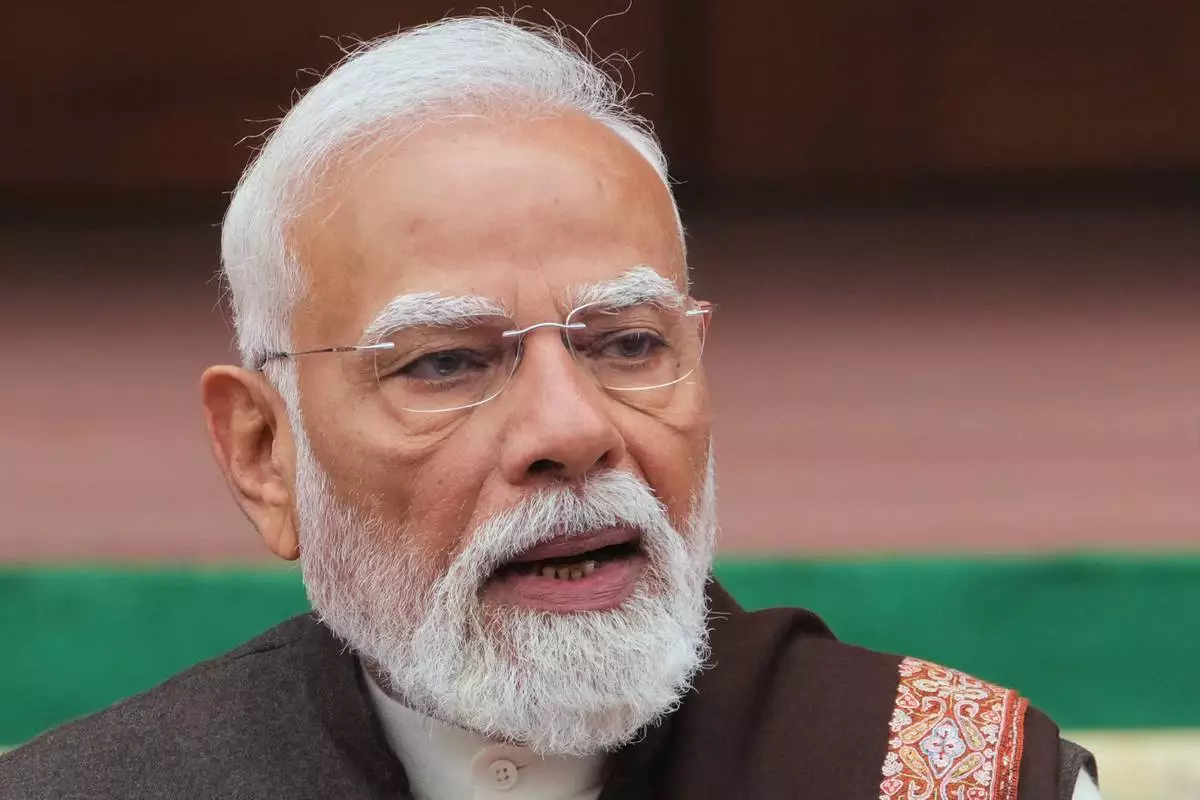
Indian Prime Minister Narendra Modi, addresses the media on the opening day of the budget session of the Indian Parliament in New Delhi, India, Thursday, Jan. 29, 2026. (AP Photo/Manish Swarup)
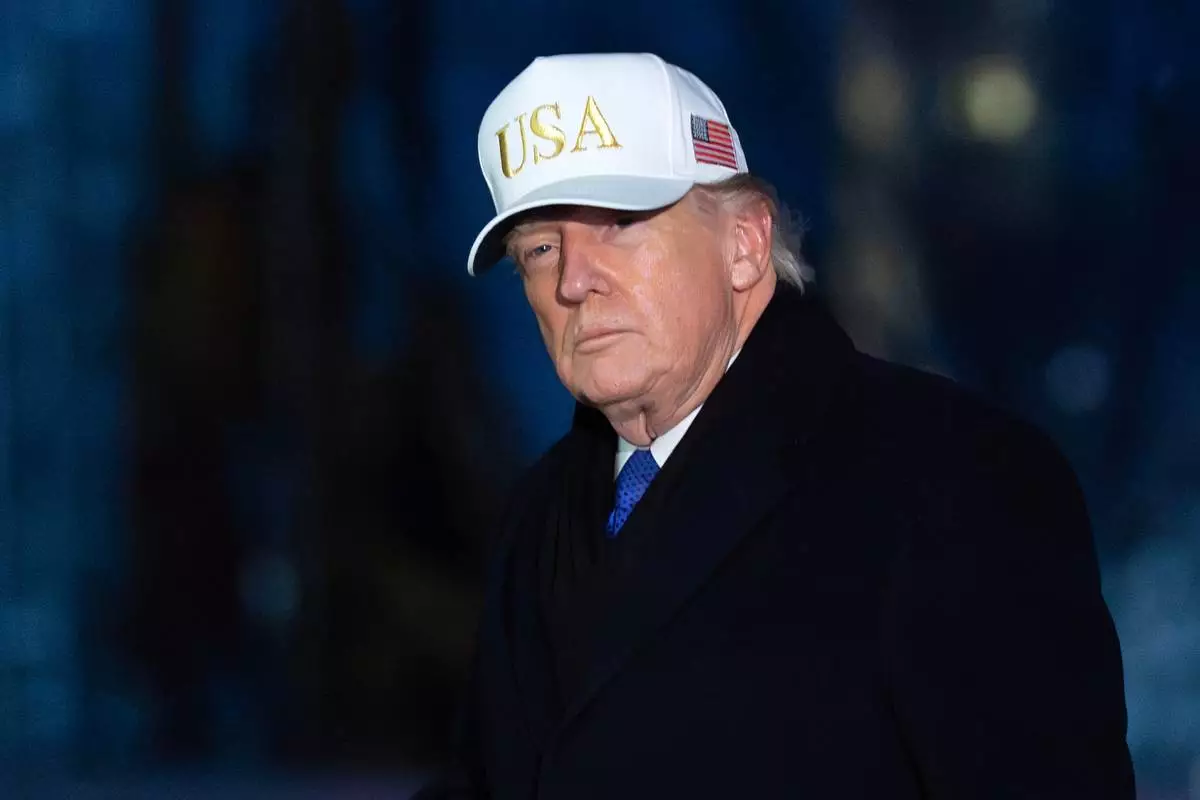
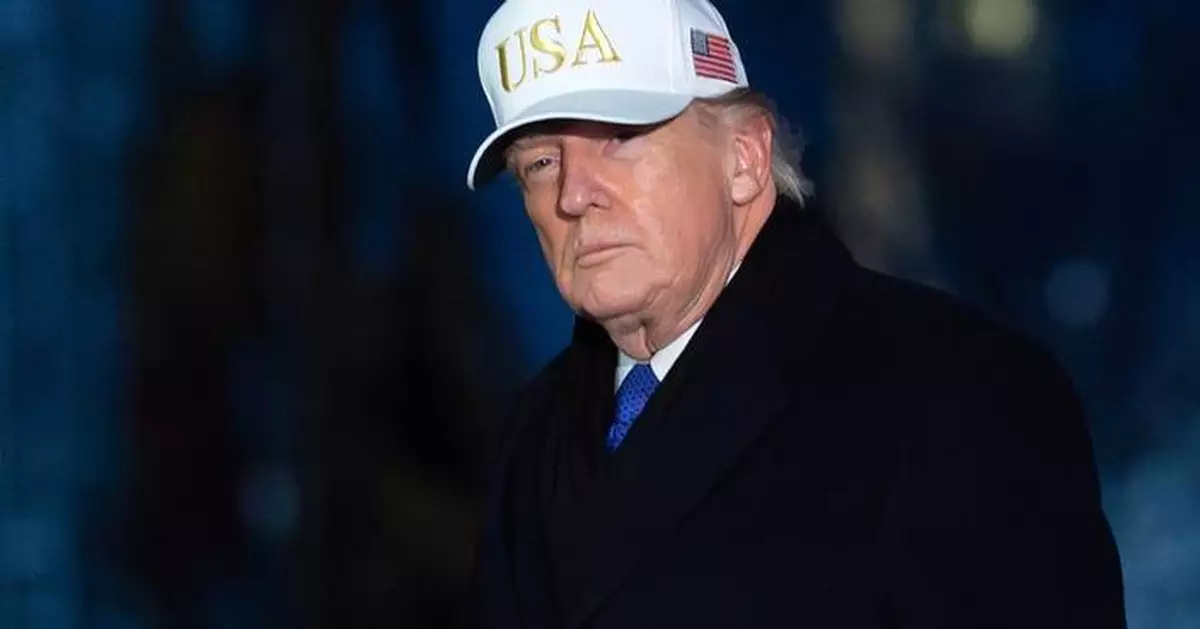
President Donald Trump walks on the South Lawn upon his arrival to the White House, Sunday, Feb. 1, 2026, in Washington. (AP Photo/Jose Luis Magana)
RALEIGH, N.C. (AP) — Hold on to those Thanksgiving turkeys! WKRP is coming to Cincinnati — for real this time.
“I cannot, by contract, tell you when. I cannot tell you who. But I can tell you, direct to the camera, WKRP, after 48 years, is coming to Cincinnati,” D.P. McIntire, who runs the media nonprofit that is auctioning the famous call letters, told The Associated Press. “Book it! It’s done!”
The call sign was made famous by “WKRP in Cincinnati,” a CBS television sitcom that ran from 1978 to 1982. It made stars of actors like Loni Anderson and Richard Sanders, whose bumbling newsman Les Nessman reported on a Thanksgiving promotion gone bad when live but flightless turkeys were dropped from a helicopter.
McIntire remembers watching the show’s first episode — featuring disc jockeys Dr. Johnny Fever (Howard Hesseman) and Venus Flytrap (Tim Reid) — in the living room with his parents and older sister.
“And at the end of the 30-minute episode,” he said, “I got up and I proclaimed, `I’m going to be in radio. And if I ever have the opportunity, I’m going to run a station called WKRP.’”
McIntire said he got his first on-air job at 13 as a news anchor at WNQQ “Wink FM” in Blairsville, Pennsylvania.
Fast forward to 2014, when his North Carolina-based nonprofit acquired the call sign from the Federal Communications Commission. Stations in Dallas, Georgia, and Alexandria, Tennessee, previously bore the letters.
McIntire laughs as he recalls his chat with a woman in the agency’s audio division.
He had two sets of call letters in mind. She told him he needed a third.
“Being the jokester that I am, I said, `Well, if you need three, and if it’s available, we’ll take WKRP,’” he said. “And 90 seconds later, she came back and she said, `Mr. McIntire. Congratulations. You’re the general manager of WKRP in Raleigh, North Carolina.’”
WKRP-LP — 101.9 on the FM dial — went live Nov. 30, 2015. The LP stands for “low power,” a class of station created to serve more local audiences that didn’t want mass-market content.
“Our format is what radio used to be 35 years ago in small-town America,” he said. “There is Greats of the 80s, Sounds of the 70s, 90s Rewind.”
LPFM is restricted to nonprofit organizations like his Oak City Media, and it’s definitely local.
“Your broadcast capacity is limited to 100 watts,” McIntire said. “So, your average range is between, depending on your terrain and circumstances, 4 and 12 miles (6 and 19 kilometers) in any direction. Enough to cover a small town.”
And, by necessity, it’s a low-budget affair.
The transmitter is in a corner of McIntire’s garage, between a recycling bin and the cleaning supplies. The broadcast antenna sits atop a 25-foot (7.62-meter) metal flagpole in the backyard. The studio — microphones and a mixing board hooked up to a computer — is in McIntire’s basement.
Like the WKRP of television, McIntire and his partners set out to be “irreverent.” One of their offerings is a two-hour show called “Weird Al and Friends,” focusing on the satirical works of Weird Al Yankovic.
They even had an annual Thanksgiving turkey giveaway. But don’t call the American Society for the Prevention of Cruelty to Animals — they hand out gift certificates to a local grocery store.
“We don’t toss them out of helicopters,” he said with a laugh.
After more than a decade on the air, the 56-year-old McIntire decided it was time to pass the reins.
“We’re in a position where the older members like me who started the station are turning the leadership over to younger members,” he said. “They’re not interested in radio.”
They put out a call for bids to use the call letters on FM and AM radio, as well as television and digital television.
They intend to use the proceeds for a new nonprofit venture called Independent Broadcast Consultants. He said IBC will be “geared specifically toward helping these new broadcasters get up and running, get the consulting that they need in order to be, hopefully, more successful than we have been.”
Oak City Media was all set to hand off the television-related suffixes — WKRPTV and WKRPDT — when another group defaulted on the agreement, McIntire said. But he said the Cincinnati deal is in the bag, he just can’t legally discuss it.
“It will be radio,” he said. “But that’s all I can tell you at this time.”
Robert Thompson, who uses a season 2 episode of “WKRP” in his TV history class at Syracuse University, said it’s telling that people see real value in a fictional station whose call letters invoke the word “crap.”
“The value comes from the love of the characters for each other,” he said. “And now by buying this thing, the value comes from our love of the characters themselves.”
Whatever they do with the call sign, McIntire hopes they will be true to the show that inspired it.
“It has a special place in the hearts of an awful lot of people,” he said. “And we have been very, very, very proud to have been a steward of that legacy.”
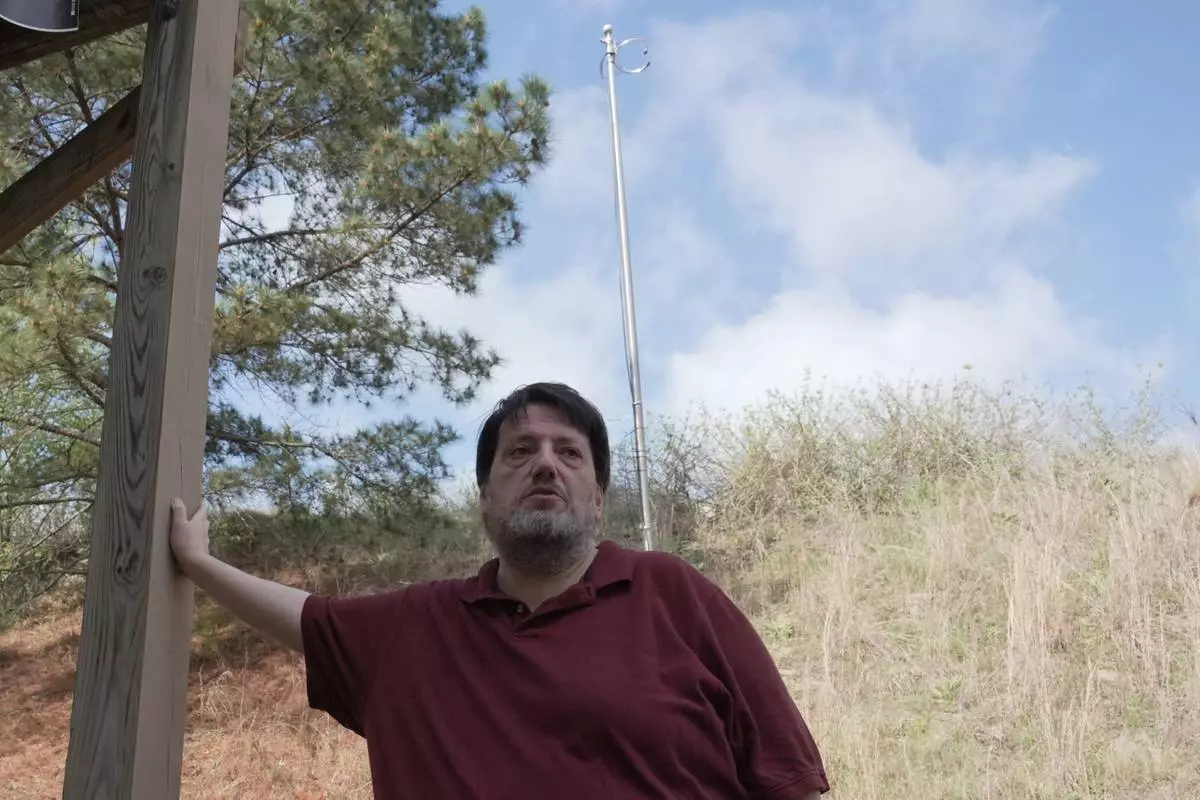
D.P. McIntire leans against a deck beneath the WKRP radio antenna in the backyard of his home in Raleigh, N.C., on Thursday, April 2, 2026. (AP Photo/Allen G. Breed)
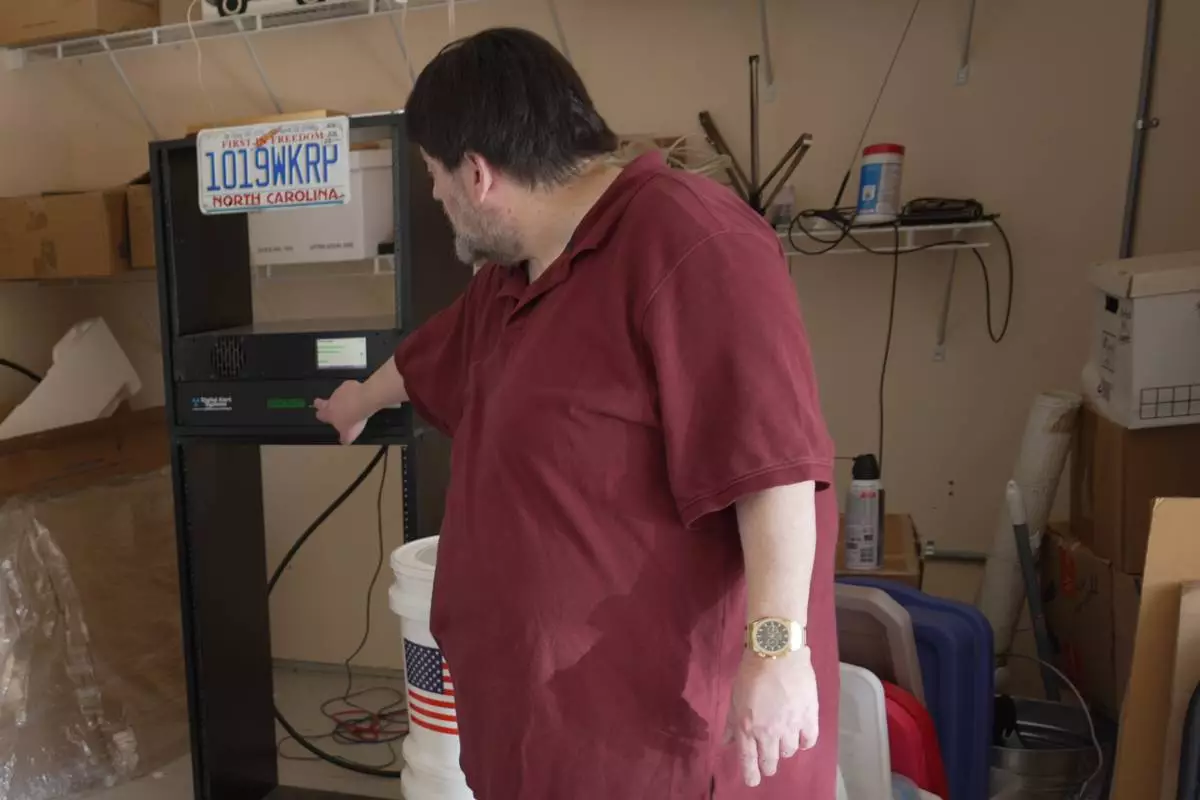
D.P. McIntire points to the transmitter for WKRP radio in a corner of his garage in Raleigh, N.C., on Thursday, April 2, 2026. (AP Photo/Allen G. Breed)
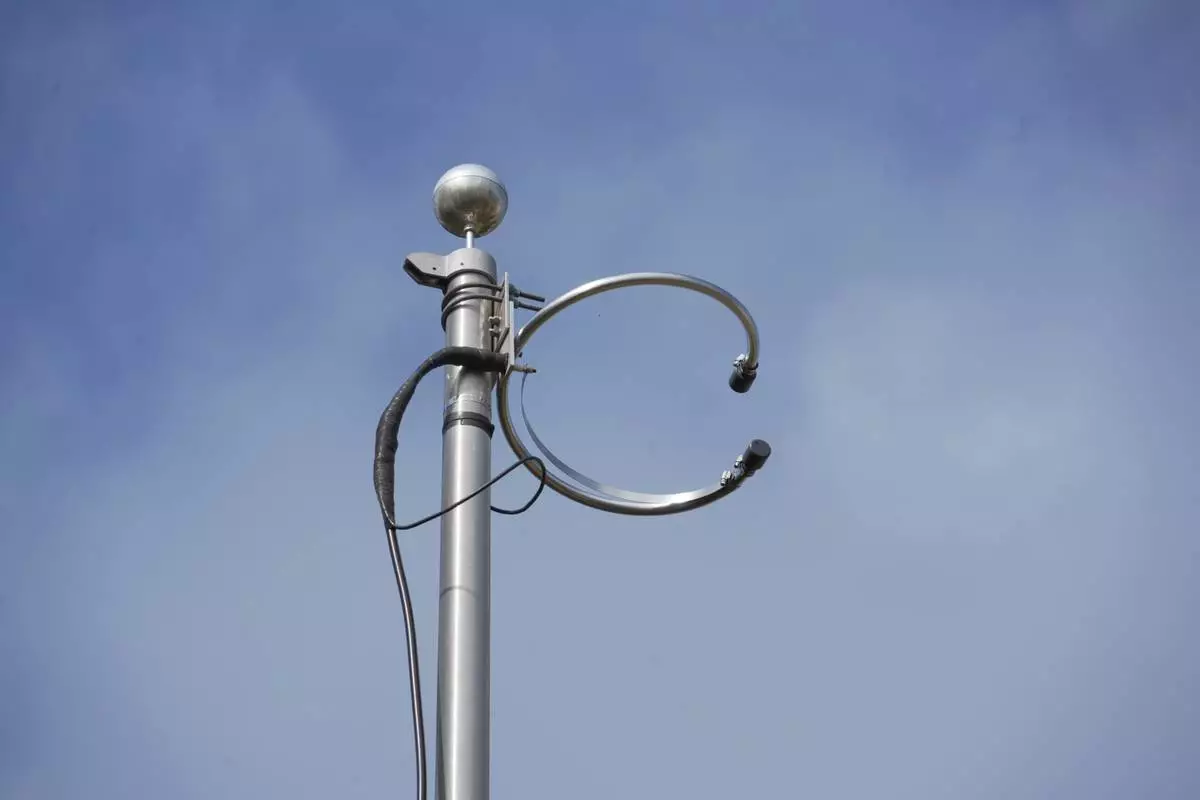
The WKRP radio antenna sits atop a 25-foot flagpole behind D.P. McIntire's home in Raleigh, N.C., on Thursday, April 2, 2026. (AP Photo/Allen G. Breed)
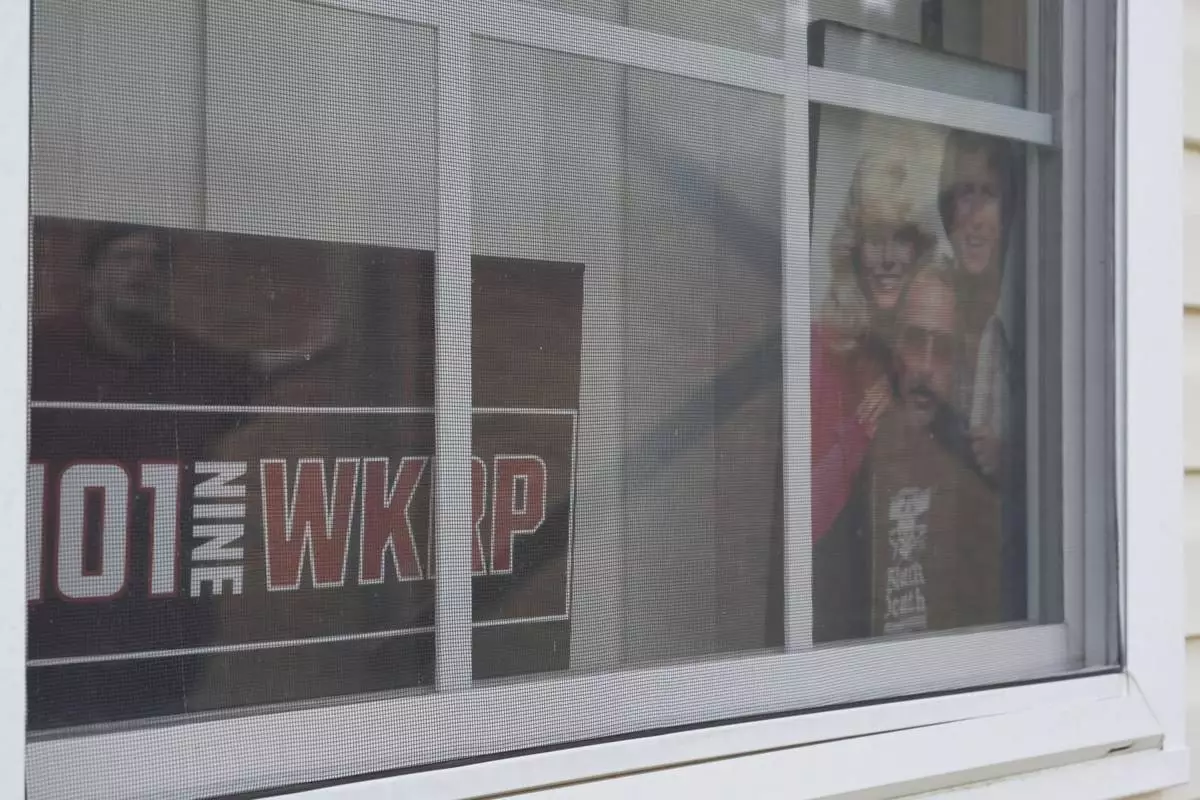
A photo of the cast members of the sitcom "WKRP in Cincinnati" sits in a window at the home of D.P. McIntire in Raleigh, N.C., on Thursday, April 2, 2026. (AP Photo/Allen G. Breed)
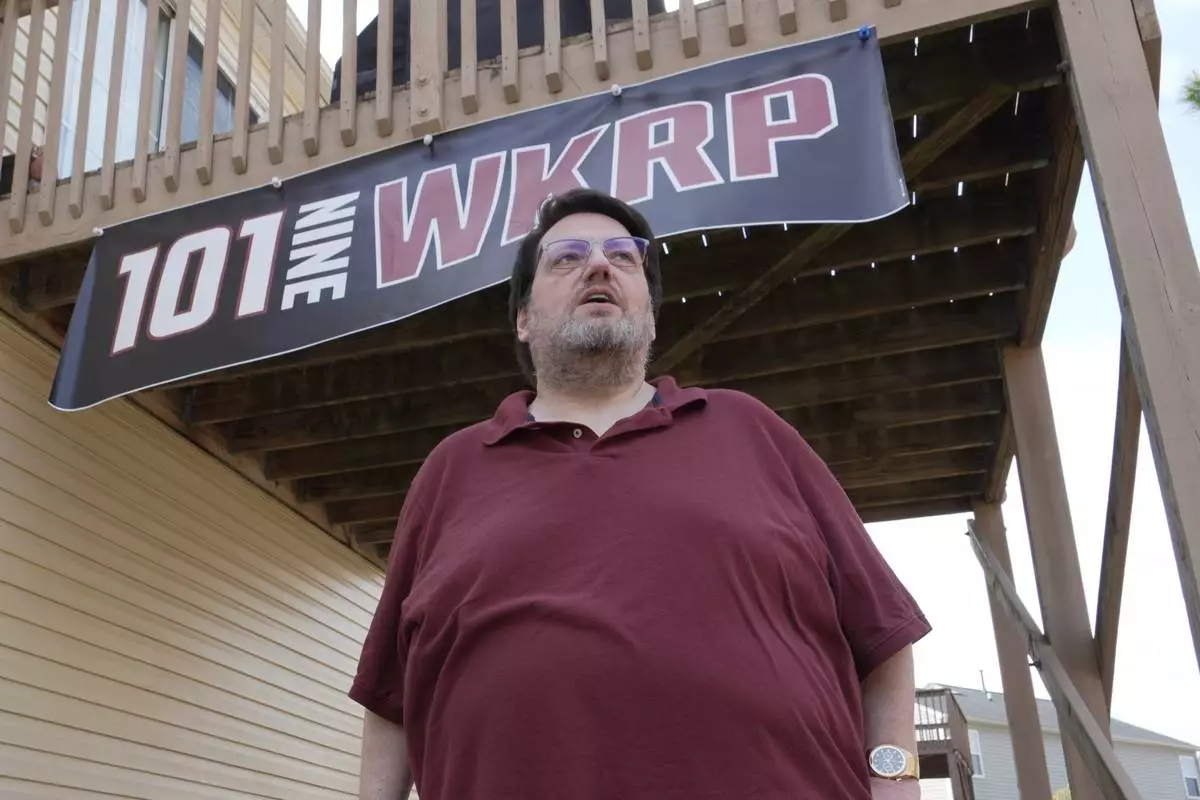
D.P. McIntire stands beneath a WKRP banner in the backyard of his home in Raleigh, N.C., on Thursday, April 2, 2026. (AP Photo/Allen G. Breed)