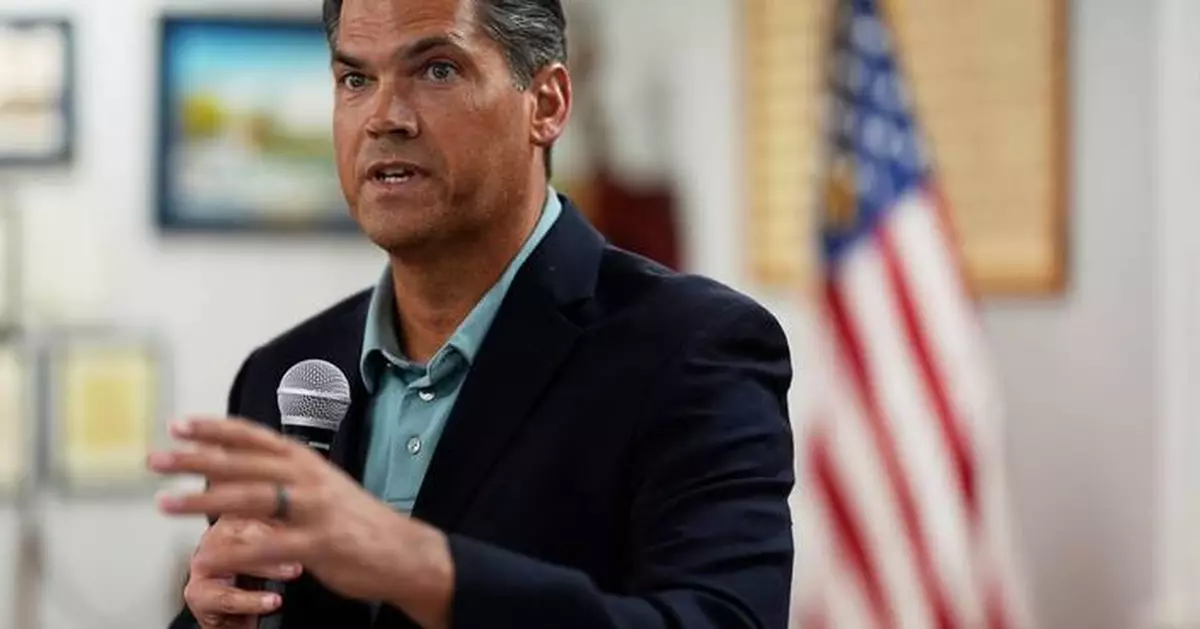
MARIETTA, Ga. (AP) — Under the fluorescent lights of an American Legion hall near Atlanta, in front of more than a dozen Democratic activists, Geoff Duncan apologized for all the things that he did as a Republican.
He regrets opposing gun control. He's sorry for fighting the expansion of Georgia's Medicaid program. And he's most remorseful about supporting some of the strictest abortion rules in the country.
“Unlike most folks in politics, I’m willing to say I’m sorry for that," Duncan said.
He's doing a lot of apologizing these days because the former Republican is running for governor as a Democrat, trying to win over members of his newly-adopted party in a crowded primary in a critical battleground state. Although some view Duncan as an interloper, he's pitching himself as Democrats' best chance to break their 24-year losing streak for Georgia's highest office.
“You’ve got to win more than your base,” Duncan said. “And so I’m the only one that shows up in this Democratic primary that’s building a big enough coalition of Democrats, independents, and this growing batch of disgusted Republicans.”
Duncan was a standard-issue suburban Republican serving as lieutenant governor until the 2020 election, when he rejected President Donald Trump's false claims about fraud. His stand earned him the respect of many Democrats, and he campaigned for Kamala Harris in 2024. Now he's testing whether that can translate into votes in the party's primary.
He's not the only one. Former Republican congressman David Jolly is running for governor in Florida and former Republican lawyer George Conway is running for Congress in New York City, both as Democrats.
Their success or failure could provide lessons for the national party as it debates whether to focus on progressive ideas or court moderates and even conservatives turned off by Trump. Some still question why Harris barnstormed with Liz Cheney, a former Republican congresswoman, rather than focusing on motivating liberal voters during her failed presidential campaign.
“The question for the Democratic Party is, which kind of church do you want to be?" asked Democratic commentator and political consultant Paul Begala. ”Do you want to be a church that hunts down heretics, or do you want to be a church that seeks out converts?"
There are six other people seeking the Democratic nomination as Georgia prepares to choose a successor to Republican Gov. Brian Kemp, who has served two terms and can't run again.
Other candidates include former Atlanta Mayor Keisha Lance Bottoms, former state Sen. Jason Esteves, former elected state Labor Commissioner Michael Thurmond, and state Reps. Ruwa Romman and Derrick Jackson.
Some Democrats are at least curious about Duncan, a perpetually tanned former minor-league baseball player. Tamara Stevens, a Democratic activist in Forsyth County north of Atlanta, said Esteves is her “ideal candidate.” But she's considering Duncan because she's seeking the most likely winner.
“I don’t have to agree with him on every issue. I don’t have to like him personally," Stevens said. "I want a candidate that can win. Because we’ve been on the losing end far too long, and it’s been devastating to our community.”
Mindy Seger, a prominent Cobb County Democrat who attended Duncan's meeting at the American Legion hall, described him as “relatable” but had her doubts.
“I think people have trust issues,” she said. “I do.”
Fred Hicks, a Democratic strategist in Georgia, noted Duncan kept identifying as a Republican, even while campaigning for Kamala Harris, until finally converting last August. He said some Democrats fear Duncan could be "a Trojan horse.”
“It looks like he just wants to be in power and he couldn’t get there by being a Republican" Hicks said.
Duncan's challenge was clear when he was campaigning at a coffee shop in Atlanta on the day after he announced his candidacy in September. While talking to reporters, he stood under a mural of civil rights icons and Democratic politicians — including Bottoms, one of Duncan's primary opponents.
Black voters are typically the majority of the Democratic primary electorate in Georgia, with Black women having particular influence. Hicks said it’s a “bit of reach” to believe they'll choose Duncan over Bottoms, Esteves and Thurmond, who are all Black.
“I think he’s going to really struggle with that when you have different types of Democrats who have been Democrats for their entire life who are running," Hicks said.
Duncan’s message about transcending partisanship could attract donors. He said in Marietta that he had already received 8,900 contributions from all 50 states, although he didn’t say how much he'd raised.
One option in Georgia — which doesn’t register voters by party — is for Duncan to court independents and Republicans to cross over into the Democratic primary on May 19. Two years ago, more than 37,000 typically Democratic voters voted in the Republican primary to help Secretary of State Brad Raffensperger defeat Trump’s handpicked candidate.
Duncan said he’s not taking anyone for granted, campaigning Monday among small business owners and union members in Macon.
“I'm meeting Georgians where they're at and working to build the trust of every voter I meet," Duncan said in a statement.
Begala said Democrats alarmed by the Trump administration may look past purity tests in 2026.
“Electability is a more potent message in a primary this year than I have ever seen,” he said.
He said converting former Republicans will be key to any Democratic victories in states like Georgia, Texas or Alaska.
“You actually have to get people coming over to your side who used to be on the other side,” Begala said.
Whit Ayres, a longtime Republican pollster and consultant, estimates around 10% of Republicans remain deeply opposed to Trump, not counting those who already left the party. But they may already be voting in Georgia's Republican primary, where Raffensperger is running for governor.
He's skeptical that Democratic primary voters will think strategically about a general election, rather than just seek out the candidates who most closely align with their own views.
“Donald Trump has changed so many things about American politics that I think we need to keep an open mind about other things that might be changed,” Ayres said. “But we’re going to have to have the folks like the Liz Cheneys, the Geoff Duncans, the George Conways prove that they can be successful as Democrats before many of us will believe.”
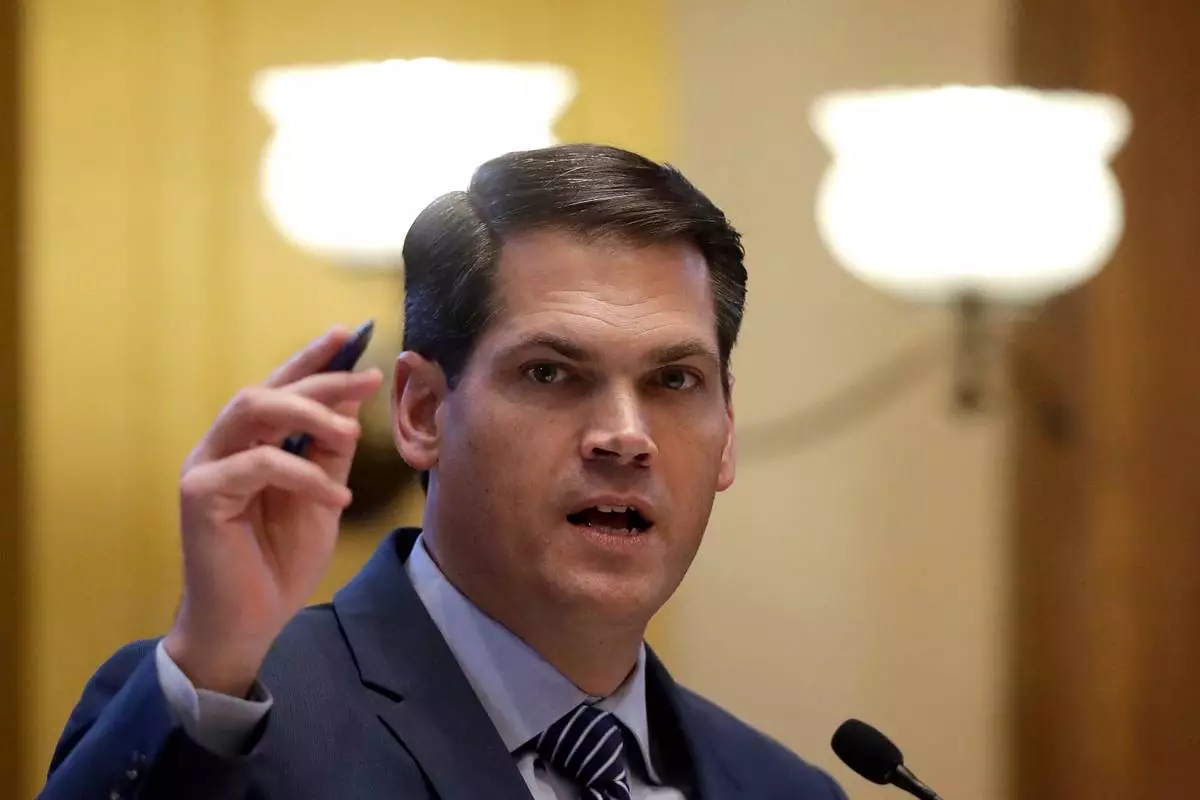
FILE - Lt. Gov. Geoff Duncan speaks from his desk on the floor of the Georgia State Senate, Feb. 4, 2020, in Atlanta. (AP Photo/John Bazemore)
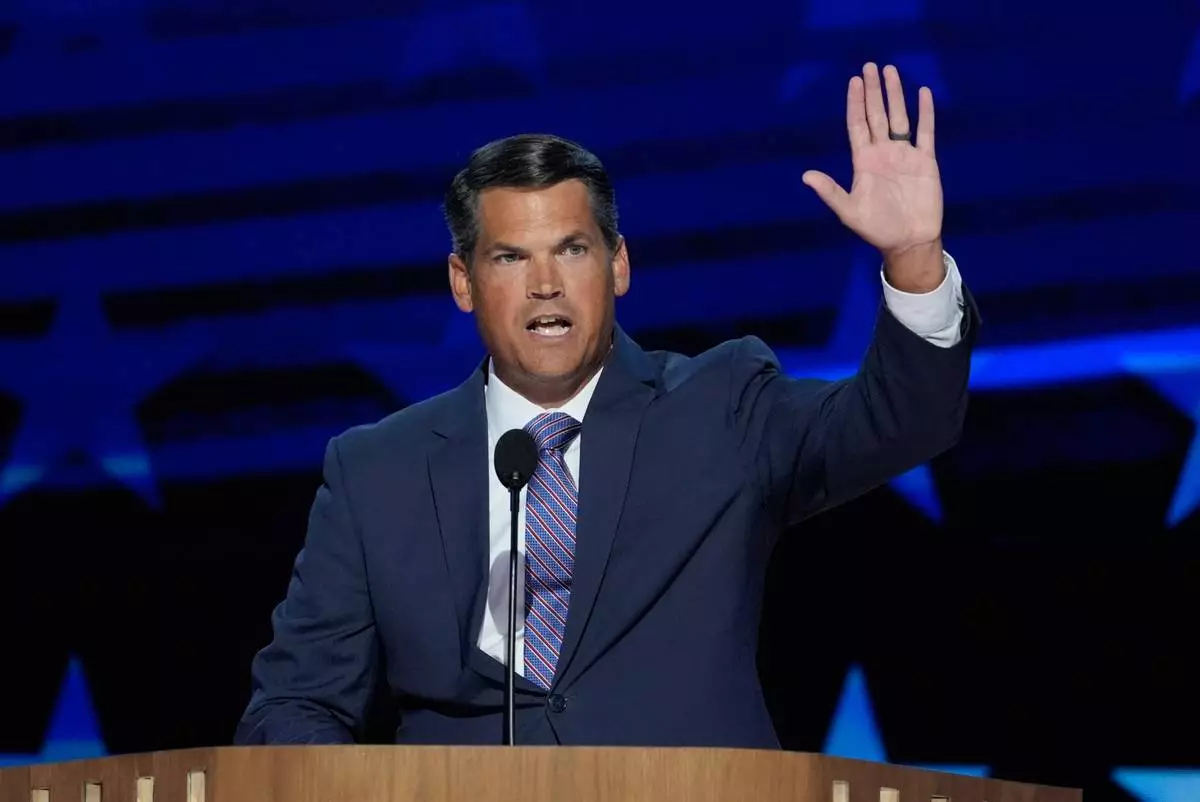
FILE - Former Georgia Lt. Gov. Geoff Duncan speaks during the Democratic National Convention, Aug. 21, 2024, in Chicago. (AP Photo/J. Scott Applewhite, File)
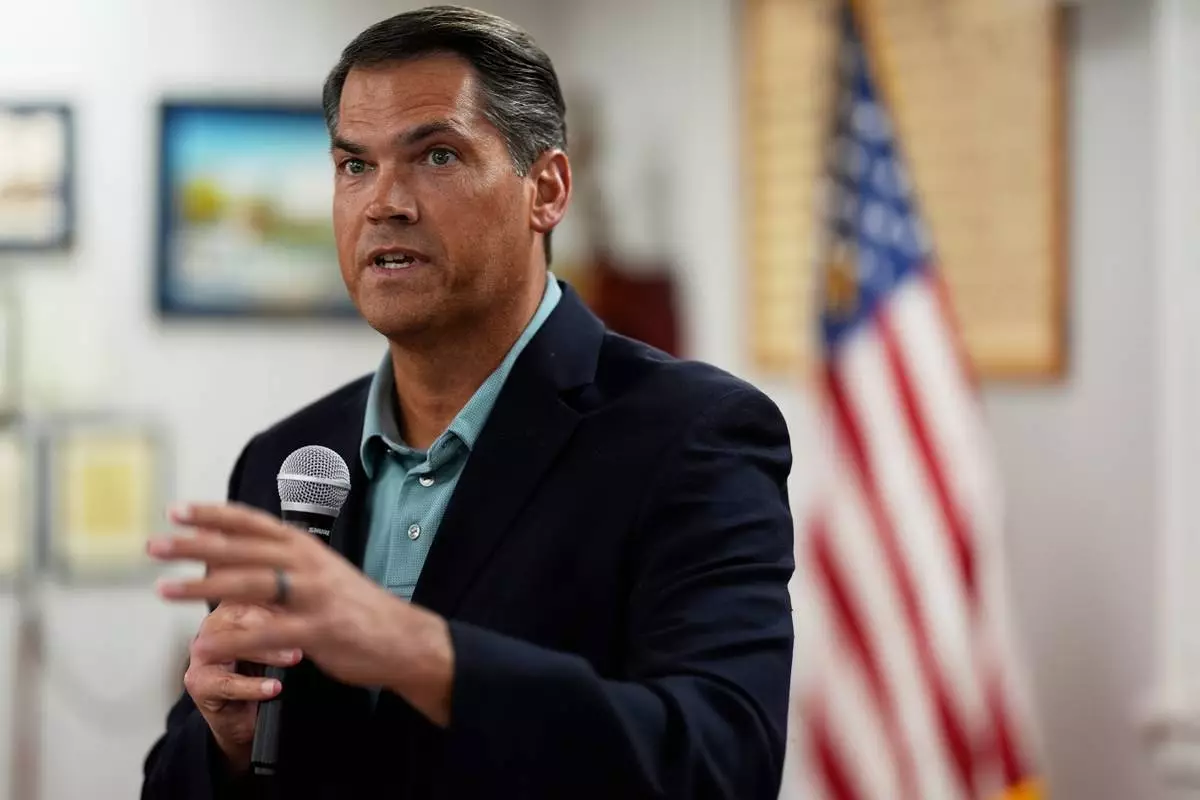
Democratic gubernatorial candidate Geoff Duncan speaks to a group, Jan. 21, 2026, in Marietta, Ga. (AP Photo/Mike Stewart)
DUBAI, United Arab Emirates (AP) — Turkey is attempting to bring U.S. and Iranian officials to the negotiating table in hopes of easing the threat of U.S. military action against Iran.
Neither the U.S. nor Iran has confirmed whether they plan to take part in any negotiations. Two Turkish officials, who spoke on the condition of anonymity because they were not authorized to speak to the media, said Turkey is trying to organize a meeting between U.S. special envoy Steve Witkoff and Iranian leaders. The meeting could take place as soon as the end of the week, one of the officials said.
The U.S. military has moved the USS Abraham Lincoln and several guided-missile destroyers into the Middle East, but it remains unclear whether U.S. President Donald Trump would decide to use force against the Iranian government, as he has suggested he might do in retribution for their devastating crackdown on last month’s protests and as he presses for a deal on Iran's nuclear program.
"We have talks going on with Iran, we’ll see how it all works out,” Trump told reporters in the Oval Office. Asked what his threshold was for military action against Iran, he declined to elaborate.
“I’d like to see a deal negotiated,” Trump said. “Right now, we’re talking to them, we’re talking to Iran, and if we could work something out, that’d be great. And if we can’t, probably bad things would happen.”
Defense Secretary Pete Hegseth was asked by reporters during a trip to Florida if “regime change” was possible in Iran. He said, “Not right now.”
An Arab diplomat who spoke on condition of anonymity because the meeting has not been confirmed said there had been discussions about Turkey hosting a high-level meeting to bring Arab and Muslim countries together with the United States and Iran.
Trump also has sought to pressure Iran to make a deal that would constrain its nuclear program. Iranian Foreign Minister Abbas Araghchi and Witkoff met multiple times last year in negotiations over Iran's nuclear program in Rome and Oman but never finalized a deal.
On June 13, Israel launched attacks on Iran that sparked a 12-day war between the countries, effectively halting those talks. The U.S. bombed three Iranian nuclear sites during the war.
Iranian Foreign Ministry spokesman Esmail Baghaei declined to give any specifics about the possibility of talks in Ankara. The U.S. didn't immediately comment on the possible talks.
Witkoff is expected to meet Prime Minister Benjamin Netanyahu and other Israeli security officials on Tuesday, according to a White House official who was not authorized to comment publicly about the talks and spoke on condition of anonymity. He will travel to Abu Dhabi later in the week for Russia-Ukraine talks, the official said.
Also Monday, Iran said it had summoned all European Union ambassadors in the country to protest the bloc’s listing of the paramilitary Revolutionary Guard as a terror group.
The 27-nation bloc agreed to list the Guard as a terror group last week over its part in the crackdown on nationwide protests in January that killed thousands of people and saw tens of thousands of others detained.
Other countries, including the U.S. and Canada, have previously designated the Guard as a terrorist organization. While the move is largely symbolic, it adds to the economic pressure squeezing Iran.
Baghaei of the Iranian Foreign Ministry told journalists that the ambassadors had begun to be summoned Sunday and went into Monday.
“We think that in coming days, a decision will be made about a reciprocal action,” Baghaei said.
Iran’s parliamentary speaker said Sunday that the Islamic Republic now considers all EU militaries to be terrorist groups, citing a 2019 law. The European Commission, the bloc’s executive branch, said it was keeping diplomatic channels open with Tehran, despite the tensions, and urged restraint from military action.
The Guard emerged from Iran’s 1979 Islamic Revolution as a force meant to protect the Shiite cleric-overseen government and was later enshrined in its constitution. It operates in parallel with the regular armed forces and has expanded into private enterprise, allowing it to thrive.
The Guard’s Basij force likely was key in putting down the demonstrations, starting in earnest from Jan. 8, when authorities cut off the internet and international telephone calls for the nation of 85 million people. Videos that have come out of Iran via Starlink satellite dishes and other means show men likely belonging to its forces shooting and beating protesters.
On Monday, the U.K. government joined a number of countries that sanctioned Iran’s interior minister, who oversees the country’s police, and nine other Iranians for their alleged role in facilitating the crackdown. They were subjected to immediate asset freezes and travel bans.
Baghaei also said an exercise by the Guard in the Strait of Hormuz, the narrow mouth of the Persian Gulf through which a fifth of all of the global oil trade passes, was “ongoing based on its timetable.”
Iran warned ships last week that a drill would be carried out on Sunday and Monday, but prior to Baghaei's comments hadn't acknowledged it taking place. U.S. Central Command issued a strong warning to Iran not to harass its warships and aircraft or impede commercial vessels moving through the strait.
Satellite photos taken Sunday by Planet Labs PBC and analyzed by The Associated Press showed small vessels moving at speed in the strait between Iran's Qeshm and Hengam islands, some distance away from the corridor commercial vessels take. The Guard relies on a fleet of small, fast-attack ships in the strait.
Asked whether Iran could face a war, Baghaei told the public “don't worry at all.” He declined to discuss whether Trump set a deadline for Iran to respond to Washington's demands regarding the protests and Iran's nuclear program.
Iran's state-run IRNA news agency reported on Monday that prosecutors in Tehran filed charges against the head of state television's Ofogh channel, as well as producers and the host of a program who mocked those killed in the crackdown.
The program, which aired Saturday, saw the host reference allegations made abroad about Iran hiding bodies of the dead in freezers to bring out as victims if the U.S. attacks the country. The host asked viewers a multiple-choice question about where Iran would hide the bodies, listing things like ice cream freezers and supermarket refrigerators.
The crackdown on the demonstrations killed at least 6,848 people, according to the U.S.-based Human Rights Activists News Agency, which has been accurate in other rounds of unrest in Iran. It fears more may be dead. The AP has been unable to independently assess the death toll. An additional 49,930 people have been arrested, the Human Rights Activists News Agency said.
As of Jan. 21, Iran’s government put the death toll at a far lower 3,117, saying 2,427 were civilians and security forces, labeling the rest “terrorists.” In the past, Iran’s theocracy has undercounted or not reported fatalities from unrest. However, the country's presidency published a list of names Sunday it said belonged to 2,986 of those killed, something it hasn't done in past protests.
Suzan Fraser reported from Ankara, Turkey. AP writers Sam McNeil in Brussels, Aamer Madhani, Matthew Lee and Konstantin Toropin in Washington, Melanie Lidman in Tel Aviv, Israel, and Sylvia Hui in London contributed to this report.
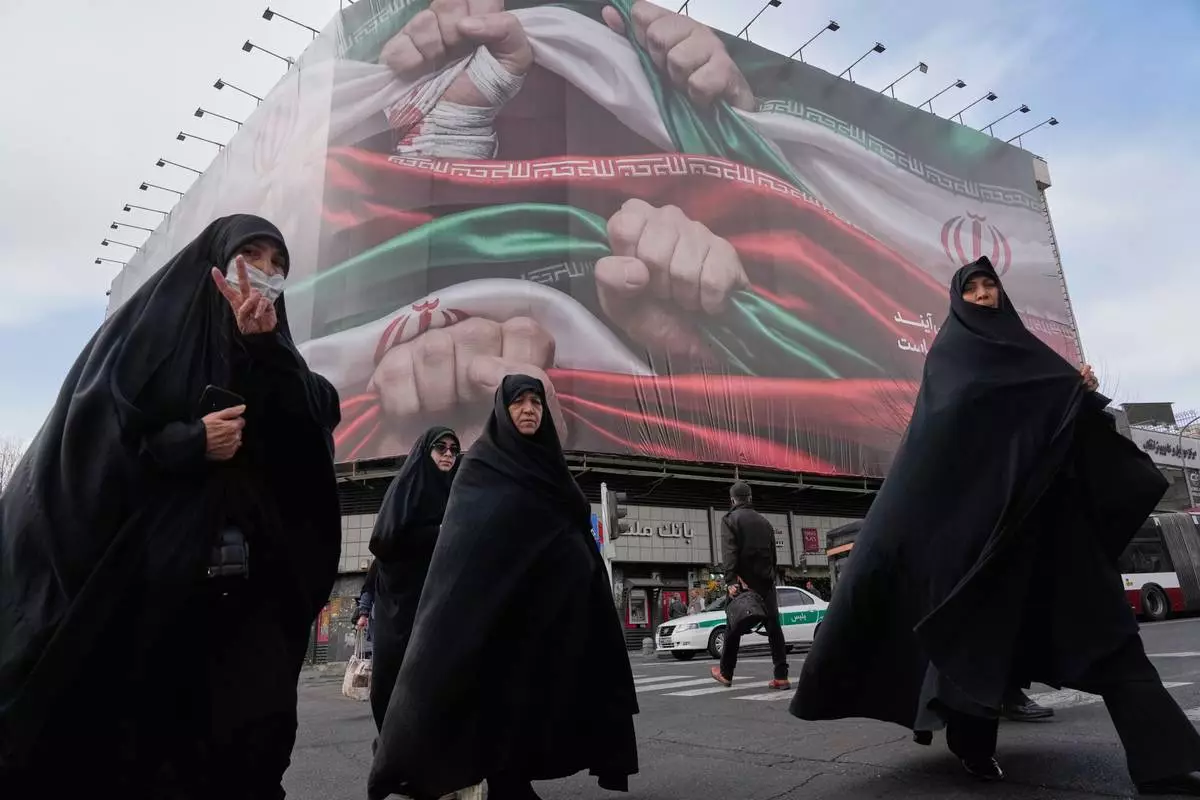
FILE - Women, one flashing a victory hand gesture, cross a street under a huge banner showing hands firmly holding Iranian national flags as a sign of patriotism, in Tehran, Iran, Jan. 14, 2026. (AP Photo/Vahid Salemi, File)