Skip to Content Facebook Feature Image

MedeAnalytics Appoints Chris Lance as Chief Product Officer

Business

MedeAnalytics Appoints Chris Lance as Chief Product Officer
Business

Business

MedeAnalytics Appoints Chris Lance as Chief Product Officer

2026-02-03 02:06 Last Updated At:12:21

RICHARDSON, Texas--(BUSINESS WIRE)--Feb 2, 2026--

MedeAnalytics, an enterprise healthcare performance company delivering AI-driven data, analytics, and SaaS solutions, today announced the appointment of Chris Lance as Chief Product Officer.

This press release features multimedia. View the full release here: https://www.businesswire.com/news/home/20260202762973/en/

Lance brings more than 20 years of experience leading enterprise product and technology organizations, with a proven track record of building scalable platforms and high-performing portfolios that deliver measurable value for payers and providers. As Chief Product Officer, he will lead MedeAnalytics’ product vision, strategy, and execution across its Enterprise Healthcare Performance Cloud.

“Chris is a seasoned product leader with deep healthcare expertise and a strong ability to translate strategy into real-world impact,” said Steve Grieco, CEO of MedeAnalytics. “His experience building platform-based solutions and customer-informed products will be instrumental as we continue advancing our AI-native platform, built on our proprietary Health Fabric TM, to help customers move faster from insight to measurable impact.”

“I’m excited to join MedeAnalytics at what I believe is a true inflection point for healthcare,” said Lance. “By connecting trusted data with advanced analytics, AI, and intelligent workflows, MedeAnalytics is uniquely positioned to help organizations manage complexity, move faster, and achieve better outcomes. I look forward to working with the team to build products that turn data into intelligence, intelligence into action, and action into measurable healthcare performance across the ecosystem.”

Prior to joining MedeAnalytics, Lance served as Chief Product Officer at Avalon Healthcare Solutions, where he built high-performing teams, shaped enterprise and product strategy, and delivered innovative laboratory benefit management solutions. He also played a key leadership role in Avalon’s successful sale to WindRose Health Investors.

Before Avalon, Lance was Chief Product Officer at Edifecs, where he led a portfolio of market-leading products. During his tenure, he spearheaded the company’s transition to a cloud-first SaaS business model and, in partnership with the CEO and CFO, facilitated a successful multi-billion-dollar sale of the company to Cotiviti.

Earlier in his healthcare journey, Lance served as Chief Product Officer at Evolent Health, leading the development and delivery of the organization's health plan administration software and services portfolios. Prior to that, he rose through increasingly senior leadership roles at Change Healthcare, ultimately serving as Head of Product for a broad suite of payer financial management solutions, including Payment Integrity, Clinical Editing, Risk Adjustment, and Value-Based Payments. In these roles, he led multiple business transformation initiatives, including the adoption of platform-based operating models.

Lance began his career outside of healthcare, holding leadership roles across management consulting, general management, product management, sales, and engineering in the manufacturing and brewing industries. This diverse background has shaped his perspective on product leadership, customer value creation, and organizational transformation. He holds an MBA from the Olin School of Business at Washington University in St. Louis and a bachelor’s degree in industrial engineering from Purdue University.

Lance’s appointment underscores MedeAnalytics’ continued investment in product leadership and its commitment to delivering AI-driven, outcome-focused solutions that improve cost efficiency and MLR, strengthen revenue performance, and enhance care outcomes.

About MedeAnalytics

MedeAnalytics is an Enterprise Healthcare Performance company that delivers AI-driven, cloud-native solutions to help payers, providers, and employers measurably improve performance by reducing costs, improving MLR, increasing reimbursement, and elevating care quality. Its enterprise health data management platform—built on our proprietary Health Fabric™—unifies clinical, claims, financial, and social data into a single, scalable source of truth that fuels insights, action, and AI.

As the healthcare intelligence partner of choice for more than 30 years, MedeAnalytics combines comprehensive analytics, AI-powered workflows, and Strategic Advisory™ services to transform intelligence into accountable execution—delivering greater ROI across value-based care, risk and quality, utilization management, network optimization, population health, and revenue cycle operations.

MedeAnalytics empowers organizations to move faster from insight to impact with confidence and measurable results. To learn more, visit medeanalytics.com or follow MedeAnalytics on LinkedIn.

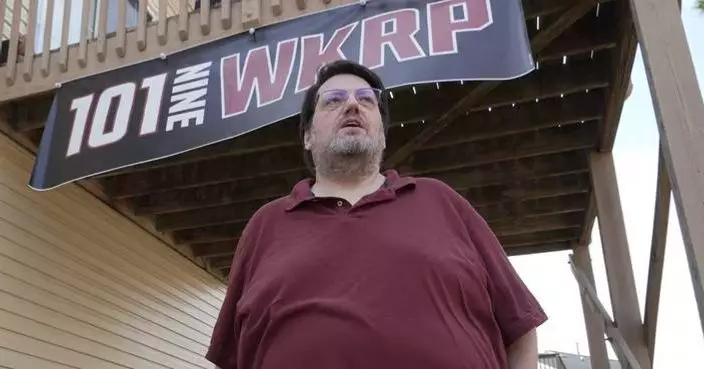
Chris Lance has joined MedeAnalytics, an enterprise healthcare performance company delivering AI-driven data, analytics, and SaaS solutions, as Chief Product Officer.

Chris Lance has joined MedeAnalytics, an enterprise healthcare performance company delivering AI-driven data, analytics, and SaaS solutions, as Chief Product Officer.

ATLANTA (AP) — The Georgia General Assembly ended its annual session early Friday without a plan for new equipment to overhaul the state's voting system by a July deadline, plunging into doubt the future of elections in the political battleground.

The lawmakers' failure to offer a solution after months of debate raises uncertainty about how Georgians will vote in November and leaves confusion that could end in the courts or a special legislative session.

“They’ve abdicated their responsibility,” Democratic state Rep. Saira Draper said of inaction by Republicans who control the legislature.

Currently, voters make their choices on Dominion Voting machines, which then print ballots with a QR code that scanners read to tally votes. Those machines have been repeatedly targeted by President Donald Trump following his 2020 election loss, and Trump’s Georgia supporters responded by enacting a law in 2024 that bans using barcodes to count votes.

But state law still requires counties to use the machines. No money has been allocated to reprogram them, and lawmakers failed to agree on a replacement.

“We’ll have an unresolvable statutory conflict come July 1,” said House Governmental Affairs Committee Chairman Victor Anderson, a Cornelia Republican who backed a proposal to keep using the machines in 2026 that Senate Republicans declined to consider.

Republican House Speaker Jon Burns said he would meet with Gov. Brian Kemp and “take his temperature” on the possibility of a special session.

Kemp spokesperson Carter Chapman said he Republican governor will examine the situation.

“We’ll analyze all bills, as well as the consequence of those that did not pass,” Chapman said Friday.

House Republicans and Democrats backed Anderson's plan, which would have required that Georgia choose a voting process that didn't use QR codes by 2028. Election officials preferred that solution.

“The Senate has shown that they’re not responsible actors,” Draper said. She added that Lt. Gov. Burt Jones, a Trump-endorsed Republican running for governor, seemed more interested in keeping Trump's backing than “doing right by Georgia voters.”

A spokesperson for Jones didn't immediately respond to a request for comment early Friday.

Joseph Kirk, Bartow County election supervisor and president of the Georgia Association of Voter Registration and Election Officials, said he’ll look to the secretary of state for guidance and assumes a judge will rule to instruct election officials how to proceed.

“This is uncharted territory,” he said.

Robert Sinners, a spokesperson for Republican Secretary of State Brad Raffensperger, who is also running for governor, said officials are “ready to follow the law and follow the Constitution.”

Burns told reporters that his chamber was seeking to minimize changes this year.

“You can’t change horses in the middle of the stream,” Burns said.

Anderson said without action, the state could be required to use hand-marked and hand-counted paper ballots in November.

Election officials say switching to a new system within just a few months, as advocated by some Republicans, would be nearly impossible.

“They made no way for this to happen except putting a deadline on it," Cherokee County elections director Anne Dover said of the switch away from barcodes. Dover said one problem under some plans is that a very large number of ballots would have to be printed.

Lawmakers seemed more concerned about scoring political points than making practical plans, Paulding County Election Supervisor Deidre Holden said.

“If anyone is resilient and can get the job done, it’s all of us election officials, but the legislators need to work with us, and they need to understand what we do before they go making laws that are basically unachievable for us,” Holden said.

Supporters of hand-marked paper ballots say voters are more likely to trust in an accurate count if they can see what gets read by the scanner.

Right-wing election activists lobbied lawmakers for an immediate switch to hand-marked paper ballots, but the House turned away from a Senate proposal to do so.

Anderson said he wasn’t sure if a special session could escape those political crosswinds, but said Georgia lawmakers must fix the problem.

“This is a legislative problem,” Anderson said. “It’s a legislative solution that has to happen.”

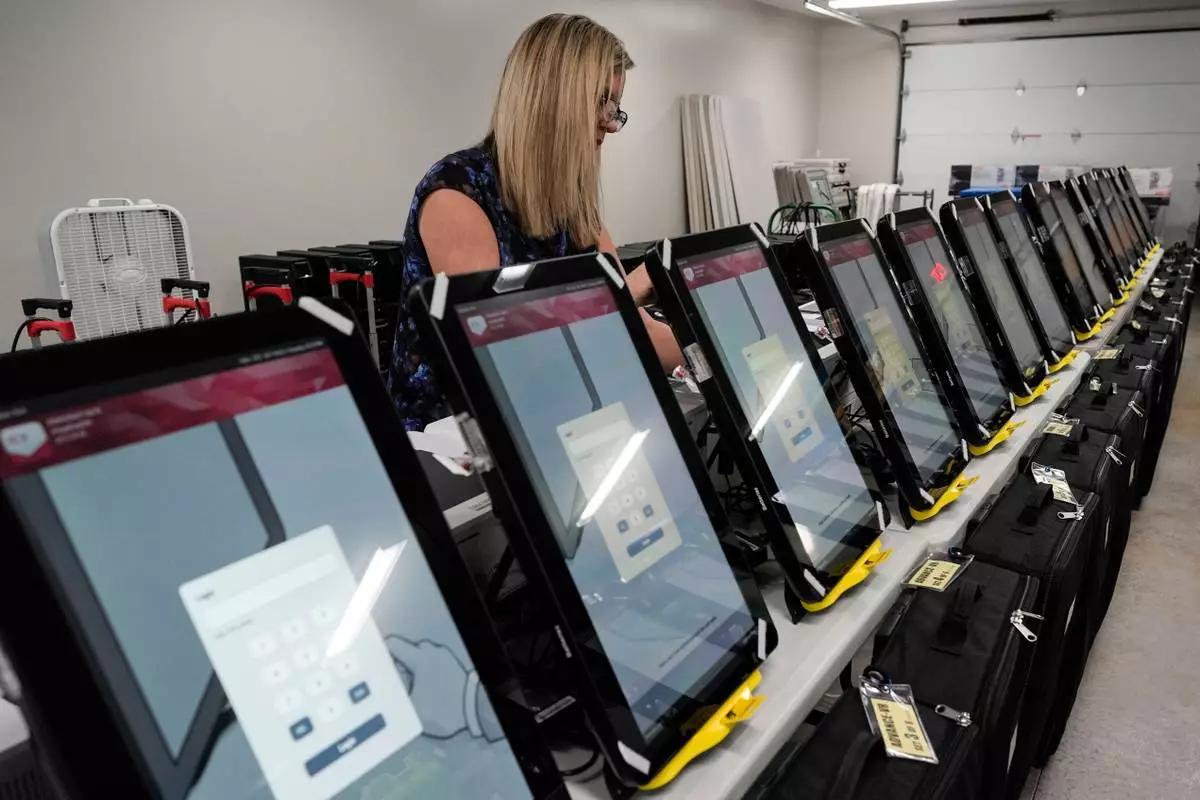
FILE - Voting machines are seen at the Bartow County Election office, Jan. 25, 2024, in Cartersville, Ga. (AP Photo/Mike Stewart, File)

FILE - Voting machines are seen at the Bartow County Election office, Jan. 25, 2024, in Cartersville, Ga. (AP Photo/Mike Stewart, File)

Recommended Articles