HAVANA (AP) — A senior Cuban diplomat told The Associated Press on Monday that his government does not have a dialogue with the United States but is open to one if certain criteria are met, as tensions remain high between the countries.
Deputy Foreign Minister Carlos Fernández de Cossío spoke days after U.S. President Donald Trump said his administration is starting to talk with Cuban leaders after he threatened tariffs on any country providing oil to the island.
“We’re not talking specifically about negotiation yet,” Cossío said. “That’s another issue.”
“We are open to dialogue,” he added. “If we can have a dialogue, maybe that can lead to negotiation.”
Cossío said Cuba is ready to have “informal dialogue” with the U.S. “with the aim of ensuring that we can have a respectable, serious coexistence in spite of the differences between our two countries.”
But Cossío stressed that certain things are off the table for Cuba, including the country’s constitution, economy and system of government, which is socialist.
“But there are many, many other issues which we can discuss,” he said.
Cuba is struggling with an acute economic crisis, ongoing blackouts, a disruption in oil shipments from Venezuela and U.S. sanctions that Cuban officials say cost the country more than $7.5 billion between March 2024 and February 2025.
Cuba had relied heavily on oil shipments from Venezuela, but those were disrupted when the U.S. attacked the South American country on Jan. 3 and arrested its president.
When asked how long Cuba can sustain the current conditions, Cossío said he could not reveal “any avenue” the island has to ensure the supply of petroleum or cope with what he described as “ a very difficult situation.”
“Cuba, of course, is preparing itself with creativity, with stoicism and with austerity,” he added. “What can Cuba do? Just watch us.”
On Tuesday, Russian Foreign Minister Sergey Lavrov spoke via telephone with his Cuban counterpart, Bruno Rodríguez, and pledged to provide “the necessary political and material support,” according to a statement from Russia's government.
Russia said they also discussed issues of bilateral cooperation as it condemned what it said was unacceptable "economic and military pressure against Cuba, including the obstruction of energy supplies to the island. Such actions would lead to a serious deterioration of the economic and humanitarian situation in the country."
When Trump signed an executive order late last week to impose tariffs, he called Cuba a “failing nation” and said “it looks like it’s something that’s just not going to be able to survive.”
Meanwhile, Trump has said he asked Mexico to suspend oil shipments to Cuba.
On Sunday, Mexican President Claudia Sheinbaum announced she would send food and other humanitarian aid to Cuba, adding that her government was trying to “diplomatically solve everything related to the oil shipments” to the island.
Meanwhile, U.S. chief of mission in Cuba, Mike Hammer, has been traveling across the island, posting videos on social media about his meetings with Cubans. Some have hugged him and invited him into their home, with one man noting he couldn’t offer the diplomat coffee because he was without power.
Not everyone is welcoming the ambassador. In a video posted elsewhere on social media, a group of angry Cubans confronted Hammer recently in the province of Camagüey.
“Down with the blockade!” they yelled. “Murderer!” “Trump’s puppet!”
In response, the U.S. Bureau of Western Hemisphere Affairs demanded that Cuba “stop its repressive acts of sending individuals to interfere with the diplomatic work" of Hammer and other embassy members.
“Our diplomats will continue to meet with the Cuban people despite the regime’s failed intimidation tactics,” the bureau wrote on X on Sunday.
In the brief interview, Cossío stressed that Cuba is not a threat to the United States.
“Cuba is a peaceful country,” he said. “We only wish to relate with the United States in the way we relate with the rest of the world. The United States is the exception today.”
Associated Press reporter Andrea Rodríguez in Havana contributed to this report.
Follow AP’s coverage of Latin America and the Caribbean at https://apnews.com/hub/latin-america
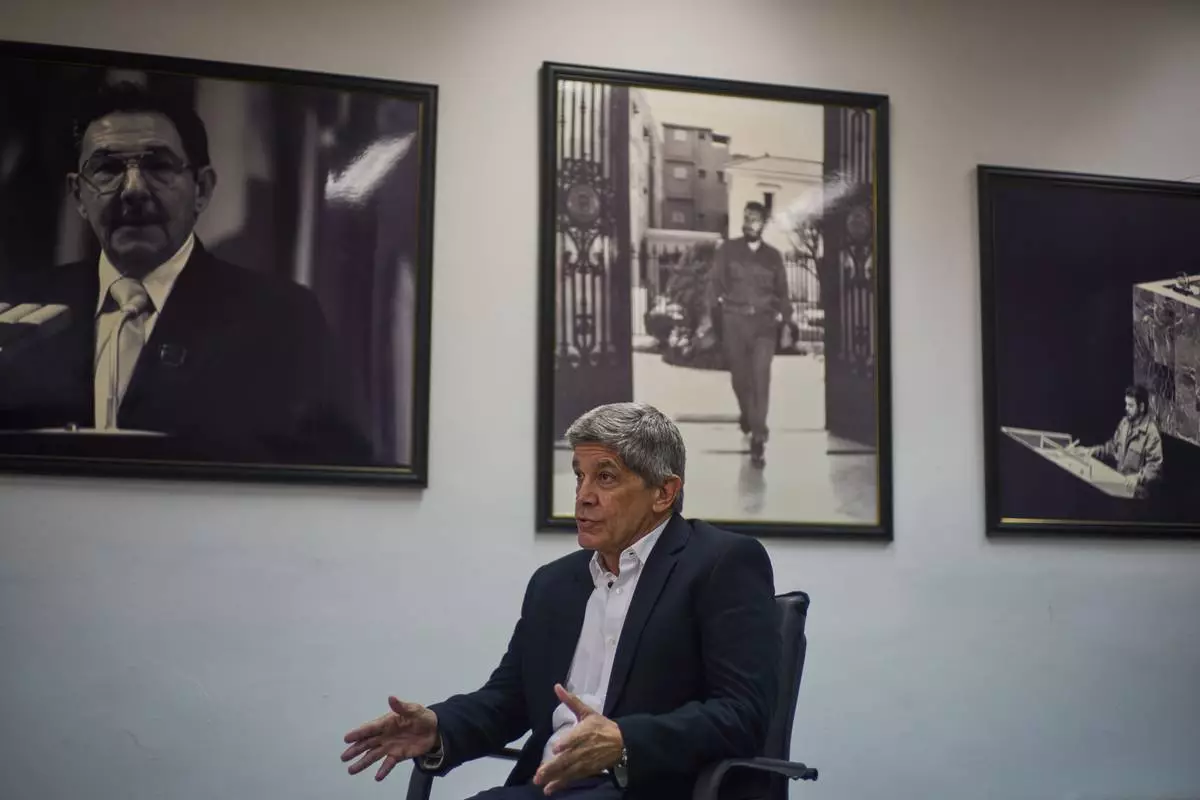
Cuban Deputy Foreign Minister Carlos Fernandez de Cossio gives an interview in front of images of Raul Castro, Fidel castro and Che Guevara, at the Foreign Ministry in Havana, Cuba, Monday, Feb. 2, 2026. (AP Photo/Ramon Espinosa)

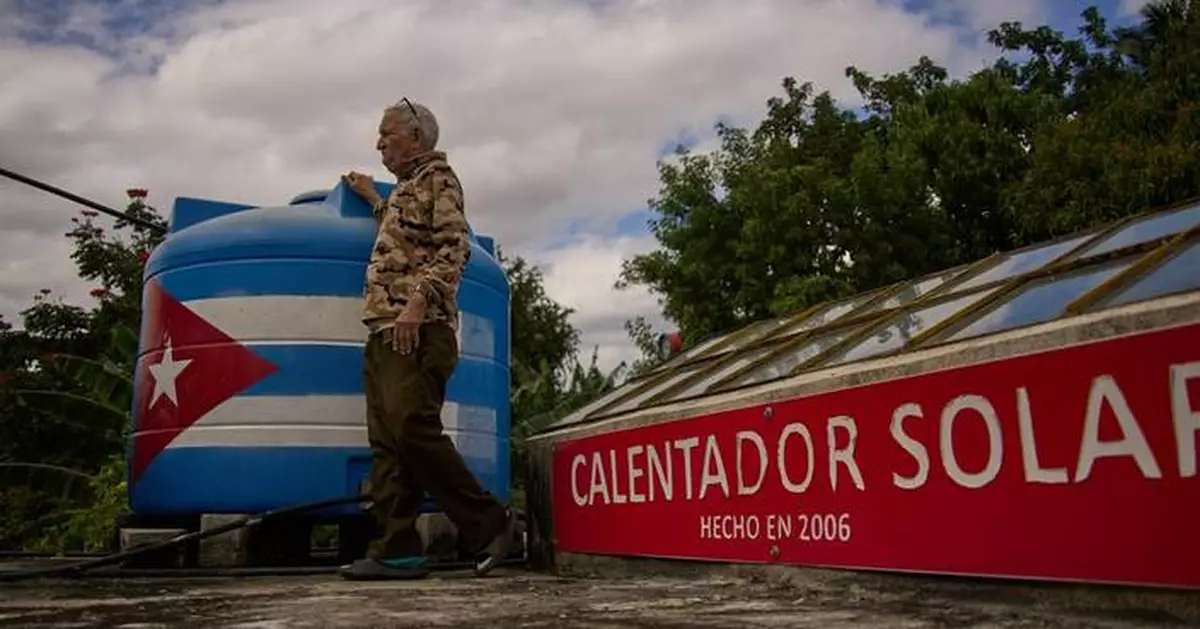
Felix Jose Morfi stands by his solar-powered water heater system he set up on his home's roof in Regla, Havana province, Cuba, Thursday. Jan. 29, 2026. (AP Photo/Ramon Espinosa)
House Speaker Mike Johnson faces tough days ahead trying to muscle a federal funding package to passage and prevent a prolonged partial government shutdown as debate intensifies over the Trump administration’s sweeping immigration enforcement operations.
Johnson signaled he is relying on help from President Donald Trump to ensure passage.
Trump struck a deal with senators to separate funding for the Department of Homeland Security from a broader package after public outrage over two shooting deaths during protests in Minneapolis against Immigration and Customs Enforcement.
Under the plan approved by the Senate, DHS would be funded temporarily to Feb. 13, setting up a deadline for Congress to try to find consensus on new restrictions on ICE operations.
A first test will come Monday afternoon during a committee meeting, when Johnson will need his own GOP majority to advance the package after Democrats refused to provide the votes for speedy consideration.
The Latest:
Republican leadership in the House is hoping to begin the process of reopening the government by advancing a funding package on Monday that passed the Senate last week.
But the bill faces pushback from lawmakers in both parties, with Democrats broadly opposing it and some Republicans raising new demands that could put passage in jeopardy.
As members returned to Washington, Trump urged lawmakers not to oppose the package in a post on Truth Social.
“We need to get the Government open, and I hope all Republicans and Democrats will join me in supporting this Bill, and send it to my desk WITHOUT DELAY. There can be NO CHANGES at this time,” Trump wrote.
Trump’s push to swiftly reopen the government marks a shift from last year’s record-breaking shutdown. He warned against “another long, pointless, and destructive Shutdown that will hurt our Country so badly.”
Chicago Mayor Brandon Johnson says he’ll direct city police to document and investigate alleged wrongdoing by federal immigration agents.
The mayor of the nation’s third-largest city signed an executive order over the weekend that he says will lay the groundwork for prosecuting agents with Immigration and Customs Enforcement or Customs and Border Protection.
It comes after an immigration crackdown unfolded last year in the Chicago area where one suburban man was fatally shot by agents. Multiple lawsuits have been filed alleging other wrongdoing by federal officers.
“Nobody is above the law,” Johnson said in a statement. “There is no such thing as ‘absolute immunity’ in America.”
Johnson says his office will forward its findings to the Cook County state’s attorney’s office to bring charges. The state’s attorney’s office says it’s reviewing the executive order.
Because of the partial federal government shutdown, the U.S. Bureau of Labor Statistics will not release the January jobs report as scheduled on Friday.
“Once funding is restored, BLS will resume normal operations and notify the public of any changes to the news release schedule,’’ BLS said in a statement.
It is also delaying the Tuesday release of the December report on U.S. job openings.
Schumer, the Democratic minority leader, argued the legislation would lead to “voter suppression” and vowed to oppose its passage.
“I have said it before and I’ll say it again, the SAVE Act would impose Jim Crow type laws to the entire country and is dead on arrival in the Senate,” Schumer said in a statement.
Some House Republicans have called on House Speaker Mike Johnson, R-La., to include the SAVE Act in the latest government funding package, which is returning to the House for a vote this week after a bipartisan deal was brokered in the Senate.
Schumer predicted that if House Republicans added the conservative election legislation to the package it would “lead to another prolonged Trump government shutdown.”
“It is a poison pill that will kill any legislation that it is attached to,” the New York Democrat warned.
Senate Majority Leader John Thune, R-S.D., has expressed support for the SAVE Act, which stands little chance of passage because of the Senate’s filibuster rules.
President Donald Trump said Monday that he plans to lower tariffs on goods from India to 18%, from 25%, after Indian Prime Minister Narendra Modi agreed to stop buying Russian oil.
The move comes after months after Trump pressing India to cut its reliance on cheap Russian crude. India has taken advantage of slacked Russian oil prices as much of the world has sought to isolate Moscow for its February 2022 invasion of Ukraine.
Trump said that India would also start to reduce its import taxes on U.S. goods to zero and buy $500 billion worth of American products.
“This will help END THE WAR in Ukraine, which is taking place right now, with thousands of people dying each and every week!” Trump said in a Truth social post announcing the tariff reduction on India.
▶ Read more about tariffs on India
Pam Bondi announced it on social media without providing details. Nine people have now been arrested following a protest inside a Minnesota church. They were named in a grand jury indictment unsealed Friday.
Independent journalists Don Lemon and Georgia Fort were among four people arrested Friday, following the arrest of local activist Nekima Levy Armstrong.
A grand jury in Minnesota indicted all nine on federal civil rights charges of conspiracy and interfering with the First Amendment rights of worshippers during the Jan. 18 protest at the Cities Church in St. Paul, where a pastor at the church doubles as a U.S. Immigration and Customs Enforcement official.
The protest generated strong objections from the Trump administration.
▶ Read more
The Trump administration plans to deploy nearly $12 billion to create the stockpile, which could counter China’s ability to use its dominance of these hard-to-process metals as leverage in trade talks.
The White House confirmed on Monday that “Project Vault” would initially be funded by a $10 billion loan from the US Export-Import Bank and nearly $1.67 billion in private capital. The minerals kept in the reserve would help to shield the manufacturers of autos, electronics and other goods from any supply chain disruptions.
During trade talks spurred by Trump’s tariffs last year, the Chinese government restricted its exports of rare earths needed for jet engines, radar systems, electric vehicles, laptops and phones. China represents about 70% of the world’s rare earths mining and 90% of global rare earths processing.
In the past few weeks alone, Trump has mulled taking control of Greenland, pushed for U.S. control of Venezuelan oil, and penalized Iran for killing thousands of peaceful protesters. He’s predicted that the Cuban government is ready to fall, and told reporters Saturday that talks with Cuban leaders have begun as his administration cuts off the island’s oil supplies.
Polling shows that many Americans want Trump more focused on issues at home. About 4 in 10 voters want Trump less locked in on foreign policy, according to the Fox poll. Roughly one-third of Americans said Trump’s time spent on foreign policy was “about right,” and about 3 in 10 said he was not spending enough time on it.
Control of Greenland is an unpopular issue for Trump. A recent Pew Research Center poll found that about 6 in 10 U.S. adults strongly or somewhat opposed the U.S. taking over Greenland, as Trump has proposed. Republicans were split on the issue: about 4 in 10 favored a takeover, but about one-third were opposed. About one-quarter were uncertain.
The Pew survey also found sharp declines in Republicans’ confidence that Trump has the mental fitness to serve as president, respects the country’s democratic values or acts ethically in office. Only about 4 in 10 Republicans are now “extremely” or “very” confident in Trump acting ethically, down from 55% early last year.
Also concerning for Trump, given his focus on his predecessor’s mental fitness, about two-thirds of Republicans are now highly confident that Trump has the mental fitness needed to do the job of president. That’s down from 75% at the start of his second term.
Trump has been a prominent political figure for about a decade, and his supporters have often not been deterred by his non-traditional or brash behavior in the White House. Polling has often shown that issue priorities often drive voters much more than candidate character.
Despite that, there’s a possible warning for Trump in new Pew Research Center polling that shows that just over half of Republicans, 56%, support “all” or “most” of Trump’s plans and policies, down from 67% just after he took office last year.
Sen. Sheldon Whitehouse said Trump is “covering up his failures by shuttering a national landmark that belongs to the American people.”
The Rhode Island Democrat is the ranking member of the Environment and Public Works Committee, which oversees public buildings, and is an ex-officio member of the Kennedy Center Board of Trustees. He launched a probe into the Kennedy Center’s financial management in November.
Whitehouse said the planned closure is part of Trump’s “demolition tour of Washington.”
“If he succeeds, it will be because of a series of suspect and illegal actions to commandeer the Kennedy Center as a clubhouse for his friends and political allies and install leadership who satisfy his every whim.”
Many Americans still support Trump’s goal of deporting people in the country illegally, but polling shows they’re increasingly uncomfortable with his tactics.
About 6 in 10 registered voters said ICE tactics have “gone too far” in a recent New York Times poll. A Fox News poll found a similar share of voters felt ICE was being “too aggressive,” a measure up 10 percentage points from July.
Immigration was among Trump’s strongest issues when he started his second term in AP-NORC polling, but it’s since fallen. Just 38% of U.S. adults approve of how Trump is handling immigration, down from 49% in March, and that support could be slipping among Republicans as well, falling to 76% from 88% in March.
That poll was conducted Jan. 8-11, shortly after the death of Renee Good, who was shot and killed by an ICE officer in Minneapolis.
Voters care about the economy.
A large share of registered voters see the economy as one of the top issues the country faces, and about half in a recent New York Times poll said Trump’s policies have made life “less affordable.”
Similarly, about 7 in 10 registered voters in a Fox News poll — including about half of Republicans — said Trump is not spending enough time focusing on the economy.
Meanwhile, about 4 in 10 voters in the Fox poll said Trump’s economic policies have “hurt” them personally. Only about 2 in 10 say it has benefitted them — and looking ahead, 45% of voters say they expect the economy will “get worse” in the next year.
Trump has been bragging about his administration’s work on affordability, but recent polling suggests that Americans aren’t buying it.
Many say Trump is focusing on the wrong priorities, and they largely think he is neglecting the issue of costs. There are also signs that frustration is rising over his immigration approach, and some of his recent fixations – such as taking over Greenland -- are downright unpopular.
This has created problems for Trump headed into a midterm year. Many Americans want him to focus more on the economy and less on immigration and foreign policy. But those are the issues that dominated the headlines over the past month, thanks to Trump’s aggressive approach.
Democrats in the Senate and House are seeking new constraints on federal immigration agents after the shooting deaths of Alex Pretti and Renee Good in Minneapolis. The Democratic demands include:
Republicans are open to some of the changes, but have drawn a line on judicial warrants and unmasking. They say the warrants would be onerous and warn that unmasked federal agents would face doxxing — the publishing of their private info online.
Residents of Columbia Heights, Minnesota, gathered outside the house where Liam was detained to celebrate his release and call attention to others from the community who remain in ICE detention.
Luis Zuna held up photographs of his 10-year-old daughter, Elizabeth, who he said had been detained, along with her mother, Rosa, while driving to school on Jan. 6. He said they both remain in custody at the same facility where Liam and his father were held.
“It’s the same situation as Liam, but there were no pictures,” said Carolina Gutierrez, who works as a secretary at the school that Elizabeth attended. “Seeing Liam released, it gives us faith.”
Inquiries to DHS about that case were not immediately returned.
The government said the boy’s father entered the U.S. illegally from Ecuador in December 2024, but the family’s lawyer said he entered properly and his pending asylum claim allows him to stay. The Justice Department’s Executive Office for Immigration Review’s online court docket shows no future hearings for Liam’s father.
The vast majority of asylum-seekers are released in the United States, with adults having eligibility for work permits, while their cases wind through a backlogged court system. Ecuadorians, who left in droves in recent years as their country spiraled into violence, have fared poorly in immigration court, with judges granting asylum in 12.5% of decisions in the 12-month period through September, according to the Transactional Records Access Clearinghouse.
Five-year-old Liam Conejo Ramos and his father are back in Minnesota after a federal judge ordered their release from a detention center in Texas. Images of immigration officers surrounding the young boy in a blue bunny hat and Spider-Man backpack drew outrage about the Trump administration’s crackdown.
Judge Fred Biery blasted the administration, writing, “The case has its genesis in the ill-conceived and incompetently-implemented government pursuit of daily deportation quotas, apparently even if it requires traumatizing children.”
A statement from Homeland Security Assistant Secretary Tricia McLaughlin said ICE did not target or arrest the boy, and repeated assertions that his mother refused to take him after his father’s apprehension.
Neighbors and school officials accused the officers of using the preschooler as “bait” by telling him to knock on the door to his house to lure his mother outside. DHS has called that description of events an “abject lie.”
Pushback from music’s biggest stars was visible at the Grammy Awards Sunday night.
Activists had pressed celebrities to don pins protesting Immigration and Customs Enforcement tactics. Billie Eilish, Finneas and Carole King wore them. So did Justin and Hailey Bieber, who don’t normally address American politics.
Eilish began her song of the year speech saying “no one is illegal on stolen land.” British soul pop singer Olivia Dean, recognized as best new artist, said she’s the granddaughter of an immigrant — people who “deserve to be celebrated.” And expletives flew as ICE got cursed multiple times.
“Before I say thanks to God, I’m gonna say: ICE out,” Bad Bunny said to great applause while accepting the award for best música urbana album. “We’re not savage, we’re not animals, we’re not aliens. We are humans and we are Americans.”
Trevor Noah joked that the Grammy Awards were coming to viewers “completely live” because “if we edited any of the show, the president would sue CBS for $16 billion.”
It’s a not-so-subtle reference to Trump’s uneasy history with CBS News. He won a $16 million settlement last summer from Paramount over a
“60 Minutes” interview that he claimed was edited deceptively for Kamala Harris’ benefit. White House press secretary Karoline Leavitt more recently reportedly told new “CBS Evening News” anchor Tony Dokoupil that they would “sue your ass off” if his 13-minute interview with the president was cut in any way.
▶ Read more from the AP’s Grammy Awards coverage:
The U.S. president is threatening to sue comedian Trevor Noah after the Grammy host mocked Trump during Sunday’s show.
After the song of the year presentation, Noah said, “That is a Grammy that every artist wants almost as much as Trump wants Greenland, which makes sense because Epstein’s island is gone, he needs a new one to hang out with Bill Clinton.”
Trump answered Monday on Truth Social, calling it “false and defamatory” to suggest he visited Jeffrey Epstein’s island. Trump, Clinton and other powerful men are in headlines after another release of the U.S. government’s files on Epstein.
The president called Noah a “poor, pathetic, talentless, dope of an M.C.” and referenced his previous lawsuits against ABC and CBS. Those yielded settlement payments that will go to Trump’s future presidential library.
“Get ready Noah, I’m going to have some fun with you!” Trump wrote.
Trump said Sunday he will move to close Washington’s Kennedy Center performing arts center for two years starting in July for construction, his latest proposal to upturn the storied venue since returning to the White House.
Trump’s announcement on social media follows a wave of cancellations by leading performers, musicians and groups since the president ousted the previous leadership and added his name to the building. Trump made no mention in his post of the recent cancellations.
His proposal, announced days after the premiere of “Melania, ” a documentary of the first lady was shown at the center, he said was subject to approval by the Kennedy Center board, which now is stocked with his hand-picked allies and chaired by Trump himself.
Neither Trump nor Kennedy Center President Ric Grenell, a Trump ally, have provided evidence of disrepair. Last October, Trump had pledged the center would remain open during renovations.
▶ Read more
A top Justice Department official played down the possibility of additional criminal charges arising from the Jeffrey Epstein files, saying Sunday that the existence of “horrible photographs” and troubling email correspondence does not “allow us necessarily to prosecute somebody.”
Department officials said over the summer that a review of Epstein-related records did not establish a basis for new criminal investigations, and Deputy Attorney General Todd Blanche said that position remains unchanged even as a massive document dump since Friday has focused fresh attention on Epstein’s links to powerful individuals around the world and revived questions about what, if any, knowledge the wealthy financier’s associates had about his crimes.
He said victims of Epstein’s sex abuse “want to be made whole,” but that “doesn’t mean we can just create evidence or that we can just kind of come up with a case that isn’t there.”
▶ Read more
Trump said the U.S. is beginning to talk with Cuban leaders as his administration puts greater pressure on the communist-run island and cuts off key oil supplies.
He made the comment to reporters on Saturday night as he was flying to Florida. It comes in the wake of his moves in recent weeks to cut off supplies of oil from Venezuela and Mexico, which he suggested Saturday would force Cuba to the negotiating table.
His goals with Cuba remain unclear, but Trump has turned more of his attention toward the island after his administration in early January captured Venezuela’s then-President Nicolás Maduro and has been more aggressive in confronting nations that are adversaries of the U.S.
Trump has predicted that the Cuban government is ready to fall.
▶ Read more

In an aerial view, protesters form a human banner on Ocean Beach during a protest amidst the ongoing nationwide federal immigration raids and unrest in Minneapolis, in San Francisco, Saturday, Jan. 31, 2026. (Stephen Lam/San Francisco Chronicle via AP)

People visit a makeshift memorial for Alex Pretti, who was fatally shot by a U.S. Border Patrol officer last week, on Saturday, Jan. 31, 2026, in Minneapolis. (AP Photo/Ryan Murphy)
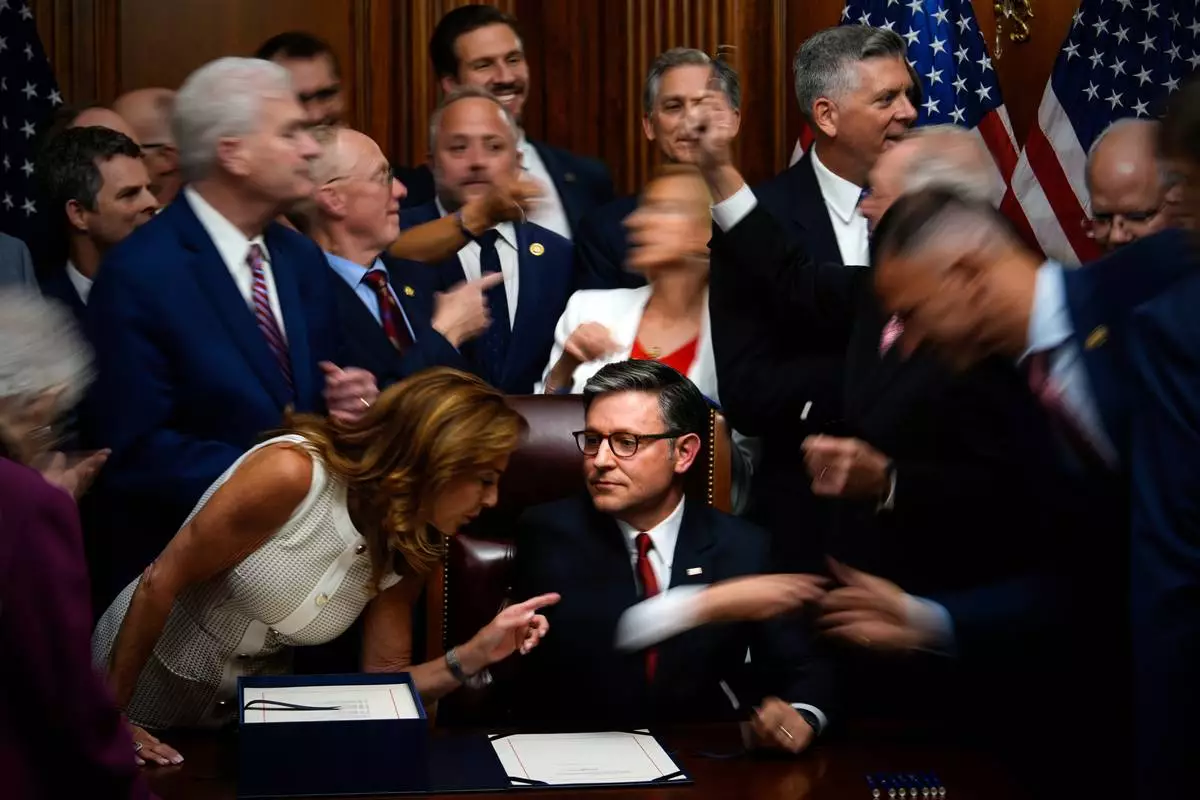
FILE - Republican members of Congress gather round to shake hands with Speaker of the House Mike Johnson, R-La., center bottom, after he signed President Donald Trump's signature bill of tax breaks and spending cuts, at the Capitol in Washington, July 3, 2025. (AP Photo/Julia Demaree Nikhinson, File)
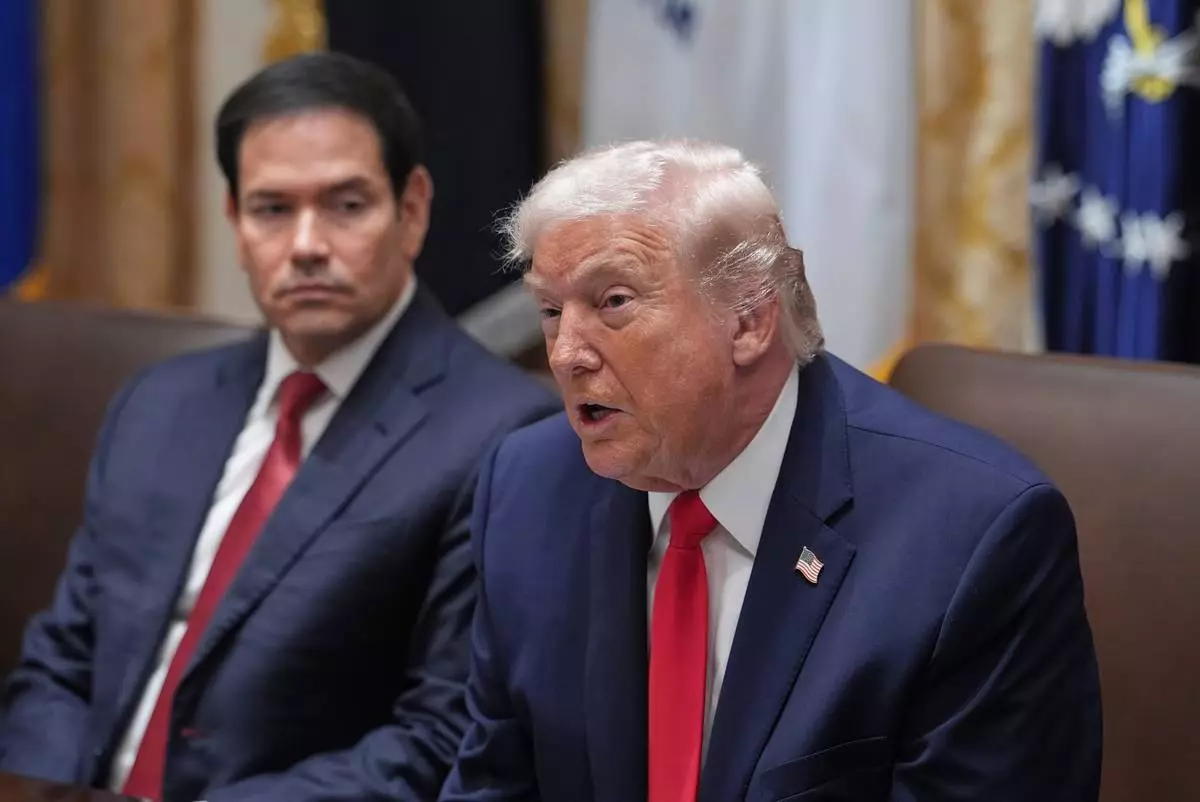
President Donald Trump speaks as Secretary of State Marco Rubio listens during a cabinet meeting at the White House, Thursday, Jan. 29, 2026, in Washington. (AP Photo/Evan Vucci)