A Northern Arizona University student found dead at a fraternity house drank a large amount of vodka during an initiation event and some partygoers suspected he may have had alcohol poisoning, according to court documents released Monday.
Witnesses told police that some people looked up the symptoms of alcohol poisoning online after hearing the 18-year-old snoring loudly around 3 a.m. Saturday, and readjusted his sleeping position and checked his pulse and breathing, the documents said. About six hours later, the student was found unresponsive, police said in the documents laying out the reasons three members of the fraternity were arrested.
People at the Delta Tau Delta house performed CPR on him and the student wasn't breathing when officers arrived, police said on Saturday. Officers continued life-saving measures until paramedics arrived, but the student, whose name hasn't been released, died at the scene, police said.
Three 20-year-old leaders in the fraternity — new member educator Carter Eslick, vice president Ryan Creech and treasurer Riley Cass — were arrested on the criminal charge of hazing, police said. Lawyers representing each of them did not immediately return telephone calls seeking comment. Home telephone numbers for the three couldn't be immediately found.
According to the documents, Cass had put the victim on an air mattress on his side on Friday night and remained near him until around 6 a.m. The student was last heard speaking late Friday and was discovered unresponsive at 8:44 a.m. Saturday, the documents said.
The victim and three others people identified as candidates to join the fraternity passed around and shared two large bottles of vodka to ensure they vomited, the documents said, though some witnesses told investigators they thought the vodka had been diluted with water.
The cause of death is under investigation, said Trish Lees, a spokesperson for the Coconino County Medical Examiner’s Office
The international leader of the fraternity, which is based in Indiana, said the group is encouraging its members to participate in the investigation into the student's death and is committed to understanding what led to it.
“Our position on hazing is clear: it is the antithesis of brotherhood and a violation of the values of Delta Tau Delta,” fraternity CEO Jack Kreman said in a statement.
The university said the Northern Arizona chapter of the fraternity has been temporarily suspended while the school conducts its own investigation focused on its policies. In a statement, the university said it had robust hazing prevention training and requirements.
“We want to be clear: The safety and well-being of our students remain our highest priorities. Violence, hazing or any other behavior that endangers others has no place at NAU,” it said.
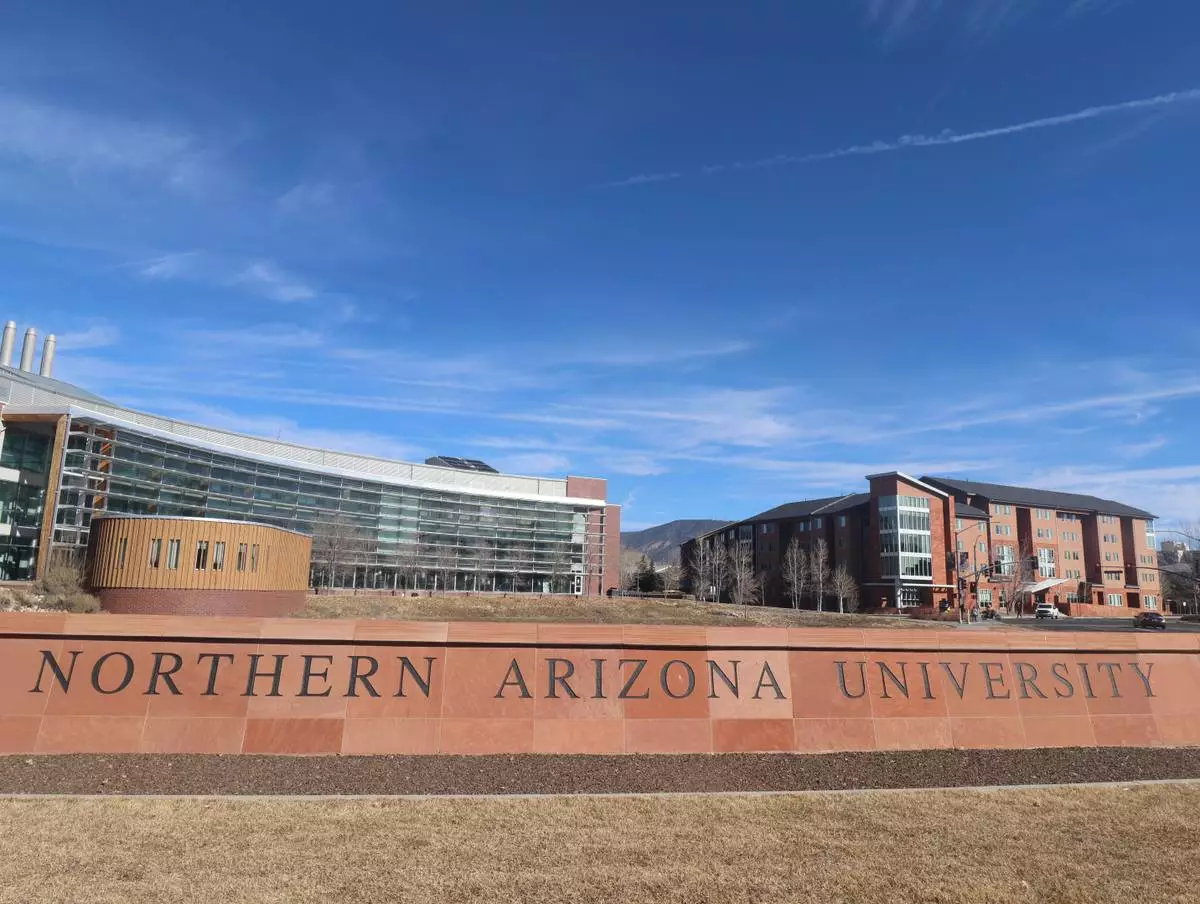
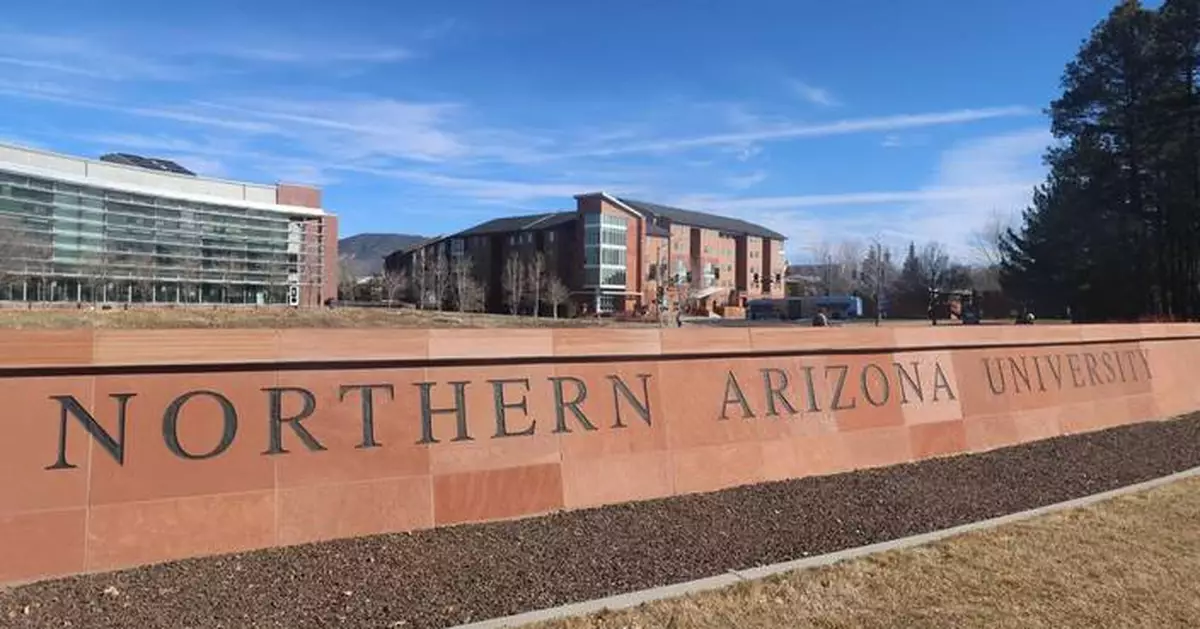
The Northern Arizona University campus in Flagstaff, Ariz., is shown Monday, Feb. 2, 2026. (AP Photo/Cheyanne Mumphrey)
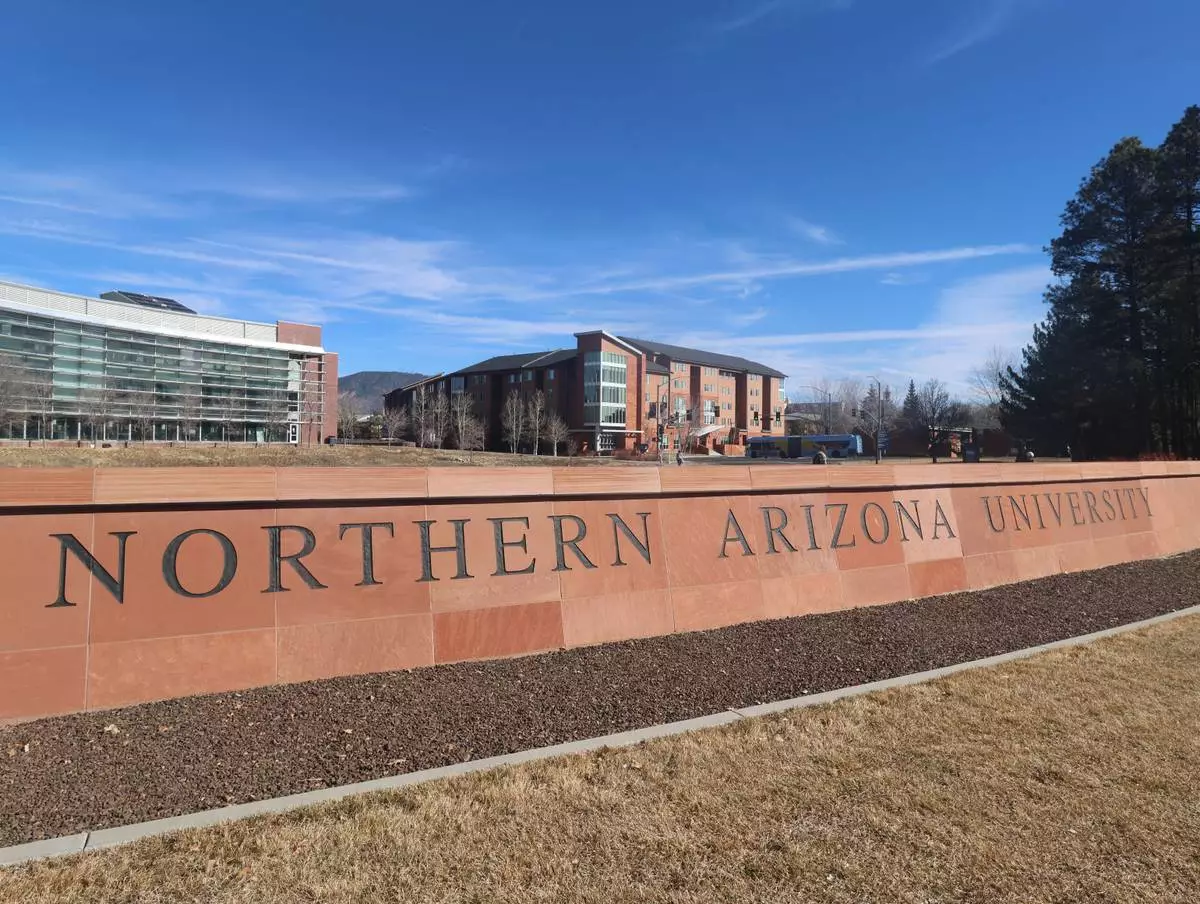
The Northern Arizona University campus in Flagstaff, Ariz., is shown Monday, Feb. 2, 2026. (AP Photo/Cheyanne Mumphrey)
BEIRUT (AP) — When the Israel- Hezbollah war broke out in early March, Hussein Shuman fled the heavy bombardment of the southern suburbs of Beirut, but he didn’t bother trying to rent an apartment elsewhere.
In areas deemed “safe” because the Lebanese militant group has no presence, he feels that Shiite Muslims like him are not welcome. Residents regard them with suspicion as potential Hezbollah members, and landlords charge exorbitant prices to rent to displaced families.
Instead, the 35-year-old, who works at a perfume company, headed to central Beirut where he set up a small tent where he has been staying, along with his wife, 7-year-old son and 5-year-old daughter.
Shuman even rejected an offer from a friend who invited him to bring his family to the Christian mountain town of Zgharta. He preferred to remain in his tent, even though it has flooded twice in the past two weeks.
“By staying here I have my dignity and respect,” Shuman said, sitting on a chair near his tent as a barber gave him an open-air hair cut. “We will not stay in a place where we are going to be humiliated.”
In a country full of suspicion, the more than 1 million people — most of them Shiite — displaced as a result of Israel’s evacuation orders and airstrikes have limited options.
Some landlords in Christian areas refuse to rent to Shiites. Others demand inflated rents and deposits that few can afford. Fatima Zahra, 42, from Beirut’s southern suburbs, said she and her sister sold their finest jewelry to pay the $5,000 the landlord charged up front for two months’ rent.
In some Beirut neighborhoods, displaced people who can afford to pay high rents are only allowed to take the apartment after landlords inform the security agencies to check on whether the family has any links to Hezbollah.
Sectarian tensions are a sensitive issue in Lebanon because the country fought a 15-year civil war ending in 1990 that largely broke down along sectarian lines.
Social frictions have worsened since Israel’s targeted airstrikes killed Hezbollah officials or members of Iran’s paramilitary Revolutionary Guard in predominantly Christian, Sunni and Druze areas, raising fears among the hosts that Hezbollah members are mingling within the civilian population.
The Lebanese are deeply divided over Hezbollah’s wars with Israel, with many in the small nation blaming the Iran-backed group for dragging the country into a deadly conflict that has so far left more than 1,300 people dead and over 4,000 wounded. Hezbollah fired missiles into Israel two days after the U.S. and Israel attacked Iran on Feb. 28, triggering the ongoing Middle East war.
The renewed war has caused widespread destruction and paralyzed the economy at a time when Lebanon is still in the throes of a historic economic crisis that broke out in late 2019. The country has not yet recovered from the last Israel-Hezbollah war in 2024.
In mid-March, an Israeli airstrike on an apartment in the town of Aramoun killed three people, prompting some local residents to call for the displaced to leave the area.
Days later, an airstrike on the nearby town of Bchamoun also killed three people, including a four-year-old girl, who were displaced from Beirut’s southern suburbs, where Hezbollah has a strong presence.
In neither case did Israel announce the intended target of the strikes, but neighbors assumed that someone in the targeted apartments was a Hezbollah member.
“Had we known that they were linked to Hezbollah, we would have kicked them out,” an angry man who owns an apartment in the building in Bchamoun said at the scene.
In late March, a missile exploded over the predominantly Christian Keserwan region north of Beirut, with debris falling on different areas. Although the Lebanese army later said that it was an Iranian missile passing over Lebanon that fell, many initially assumed that it was an Israeli airstrike targeting displaced people.
No one was was hurt by the missile debris, but a group of young men attacked displaced Shiites in the district of Haret Sakher near the coastal city of Jounieh, calling for their eviction, before local officials intervened.
“We don’t want them here,” shouted a Haret Sakher resident shortly after the strike. He said that some of the displaced refer to their hosts as “Zionists,” accusing them of being aligned with Israel because they criticize Hezbollah for dragging the country into the conflict. He added: “We don’t want national coexistence.”
George Saadeh, a member of Jounieh’s municipal council, told The Associated Press that he had called on Haret Sakher residents to avoid any reaction “so that we can preserve civil peace.”
In a predominantly Christian area just north of Beirut, plans to house displaced people in an abandoned warehouse near the port were suspended last week after drawing backlash from lawmakers and residents.
“The Israeli targeting campaign has created a lot of paranoia,” said Maha Yahya, director of the Beirut-based Carnegie Middle East Center. “If you see a displaced person, maybe you wonder, ‘What if this person is a target?’”
Fearing the tension could slip out of control, the army has beefed up its presence on the streets.
Last week, army commander Gen. Rudolphe Haikal toured Beirut and the southern city of Sidon and told troops that they should be “firm in the face of any attempt to undermine internal stability,” the army said in a statement.
Police forces, including a SWAT unit, were deployed at major intersections in the capital to preserve peace and prevent any friction between the displaced and locals. Police patrols pass through the tent city by Beirut’s coast where Shuman and his family are staying.
An official at the municipality of the predominantly Sunni town of Naameh, just south of Beirut, said that they have received thousands of people displaced from southern Lebanon.
The official said that in order to avoid tensions, they opened a school in one district for displaced Shiites and another in a different neighborhood for people displaced from Sunni border villages.
“There are concerns among people,” that conflict could break out said the official who spoke on condition of anonymity because he was not authorized to speak to the media.
With the Israeli airstrikes and ground invasion mainly targeting Shiite areas, U.S. ambassador to Lebanon Michel Issa, a Lebanese-American, was criticized for stoking sectarianism. He told reporters in late March that the U.S. had asked Israel for a commitment that Christian villages in southern Lebanon will not be attacked.
“We have asked the Israelis to leave Christian villages in the south alone and they told us that they will not touch Christian villages,” Issa said. However, he added, “They (Israelis) said that they cannot guarantee” that the villages would be left alone “if there is infiltration into these villages” by Hezbollah members.
Several Christian villages in southern Lebanon have asked displaced Shiites who were sheltering there to leave, fearing that their presence might trigger Israeli attacks.
Legislator Taymour Joumblatt who is the leader of the Progressive Socialist Party, the largest Druze-led political group in the country, said that the biggest concern in the country now is “strife.”
“The most important thing is to reduce sectarian pressures on the ground,” Joumblatt said. “Our Shiites brothers are part of this country and our humanitarian duty is to help them.”
———
Associated Press writer Isabel DeBre contributed to this report from Beirut.
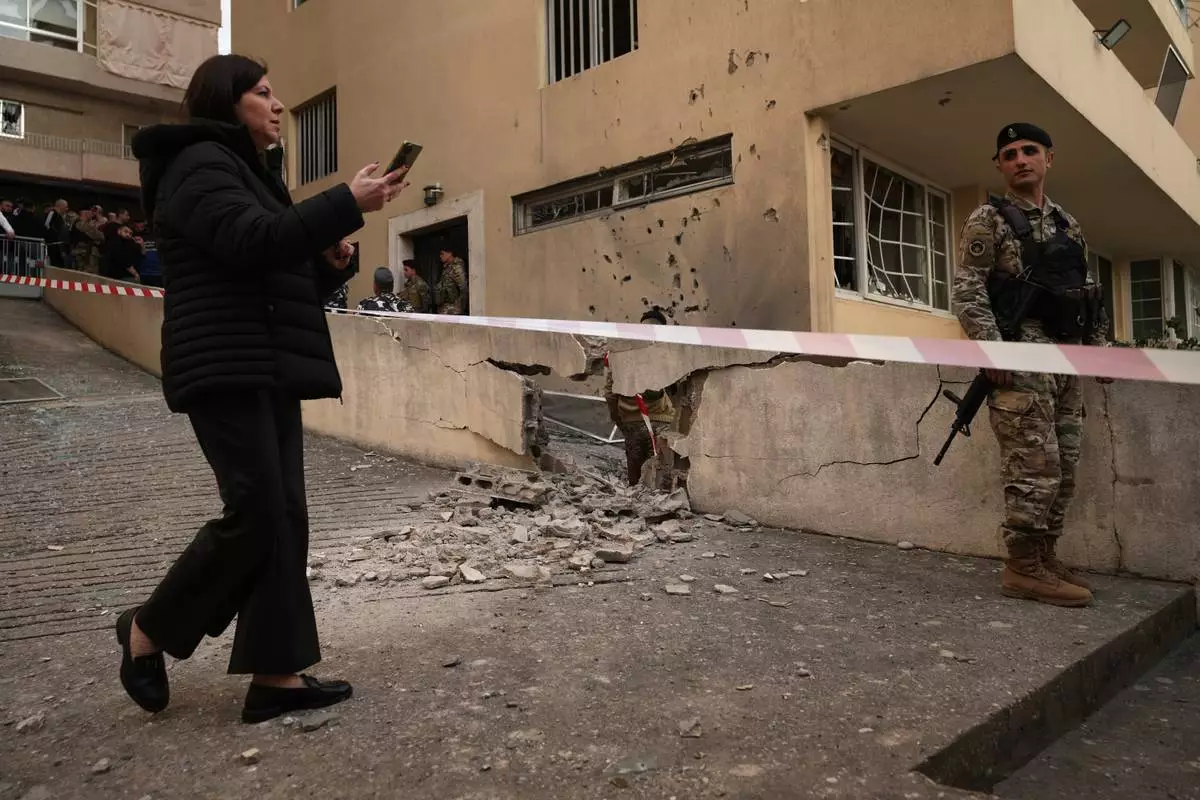
A woman passes an army soldier at the site where an intercepted missile fell in Sahel Alma, north of Beirut, Lebanon, Tuesday, March 24, 2026. (AP Photo/Hassan Ammar)
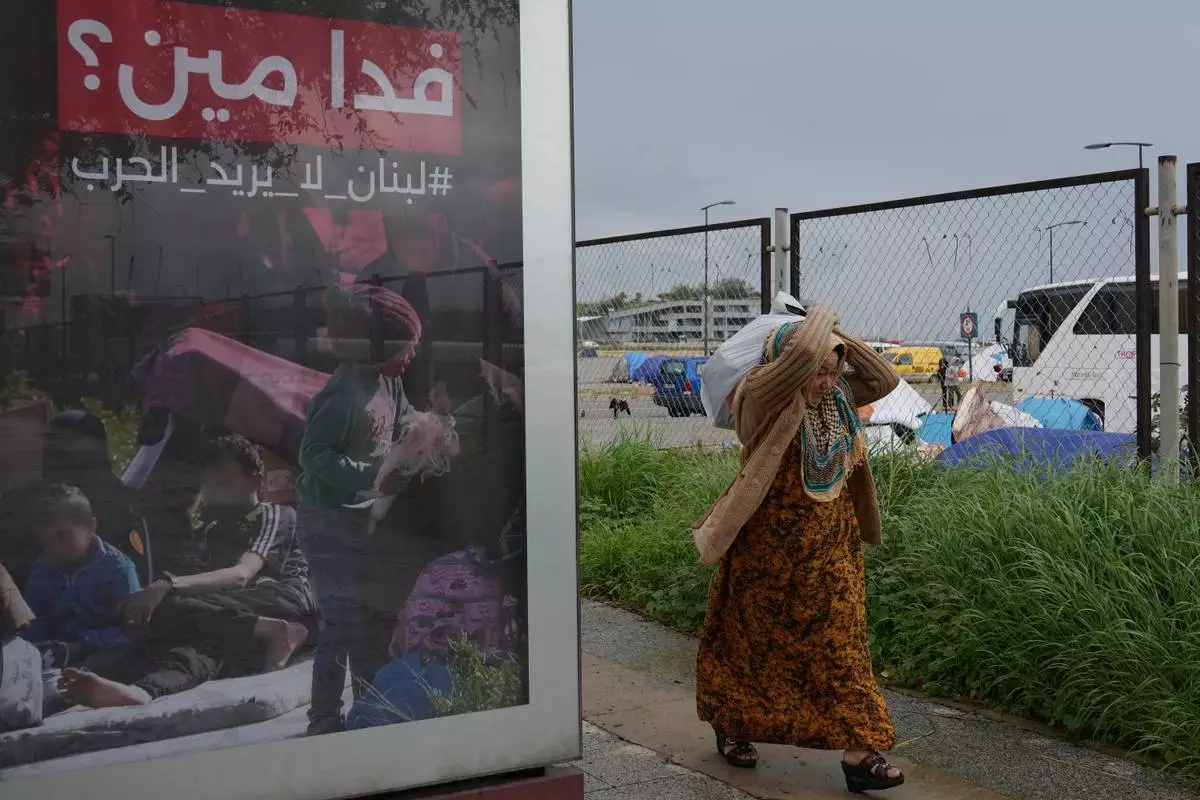
FILE — A displaced woman who fled Israeli airstrikes in southern Lebanon, carries her belonging as she moves to a better spot to shelter from the rain, past an Arabic anti-war poster that reads, "Sacrificing for whom? Lebanon does not need war," in Beirut, Saturday, March 21, 2026. (AP Photo/Hussein Malla, File)

Special forces police officers deployed amid tensions between people displaced by Israeli strikes and local residents in Beirut neighborhoods, Lebanon, Wednesday, April 1, 2026. (AP Photo/Hussein Malla)
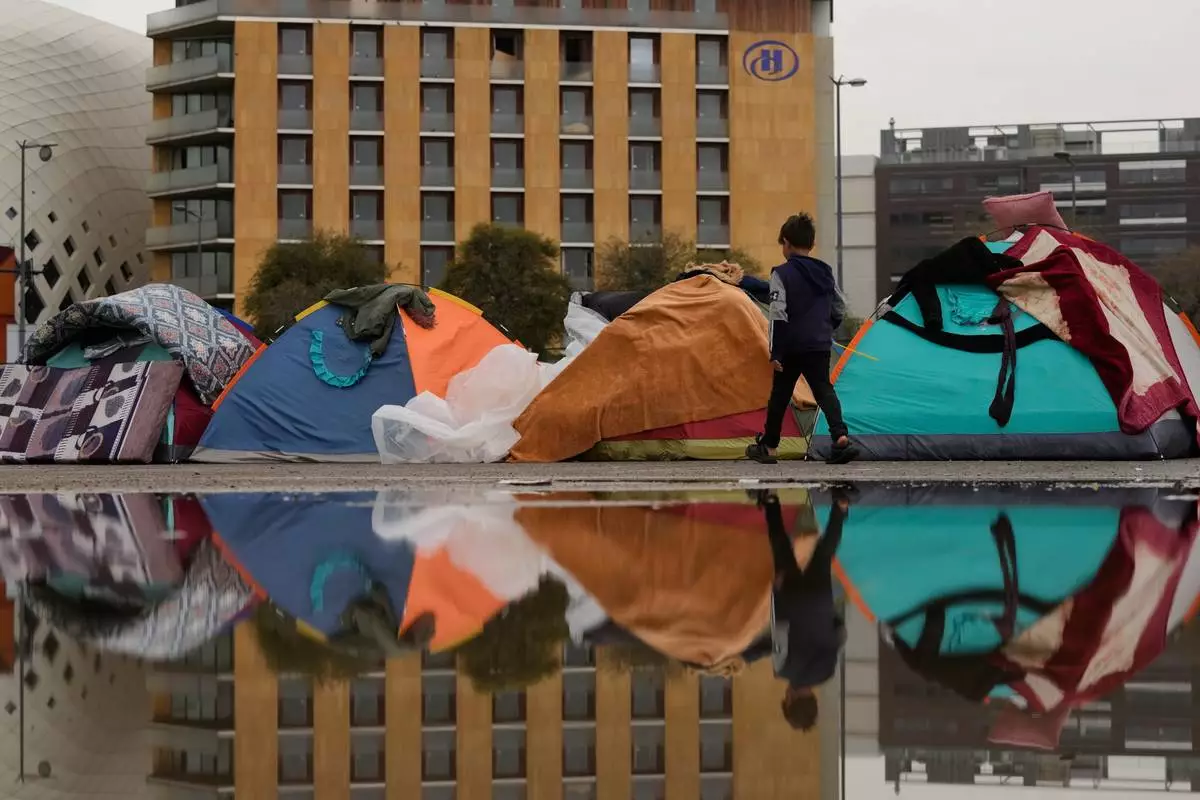
FILE — A child walks past tents sheltering people displaced by Israeli airstrikes in southern Lebanon and Dahiyeh, Beirut's southern suburbs, along the Beirut waterfront in Beirut, Lebanon, Saturday, March 14, 2026. (AP Photo/Hassan Ammar, File)
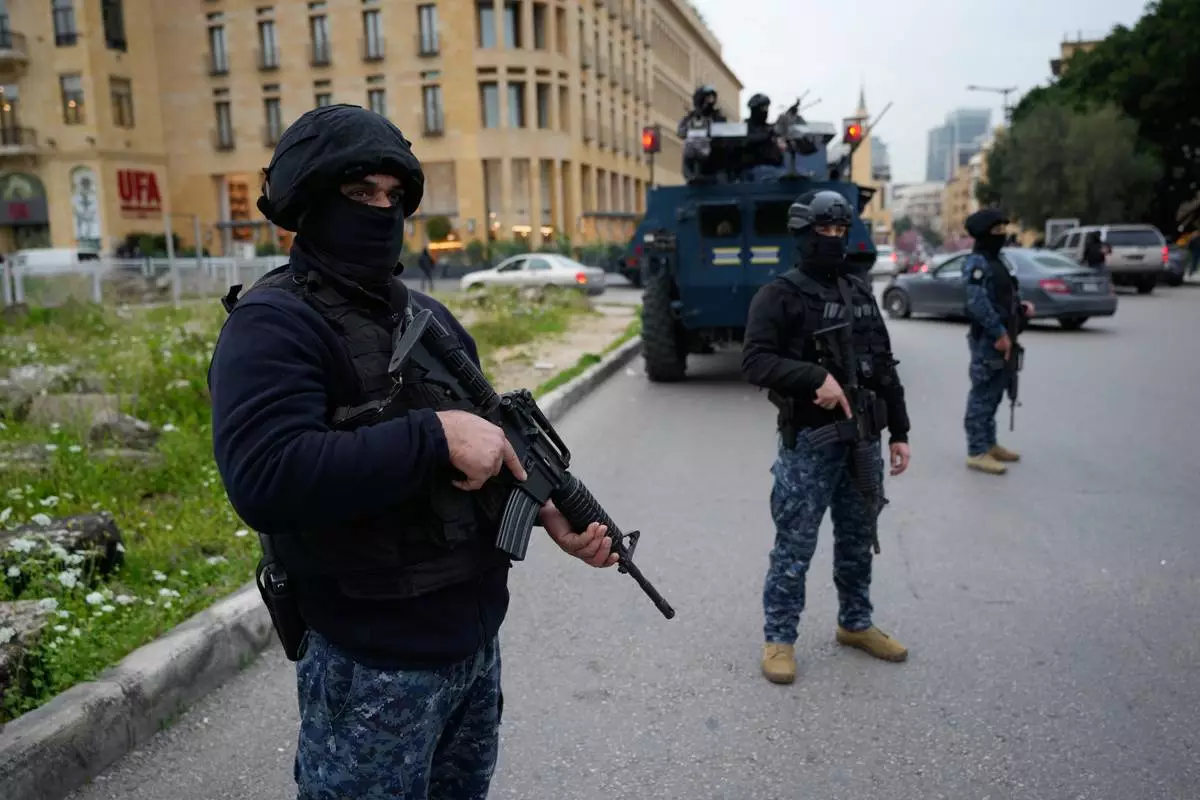
Special forces police officers deployed amid tensions between people displaced by Israeli strikes and local residents in Beirut neighborhoods, Lebanon, Wednesday, April 1, 2026. (AP Photo/Hussein Malla)
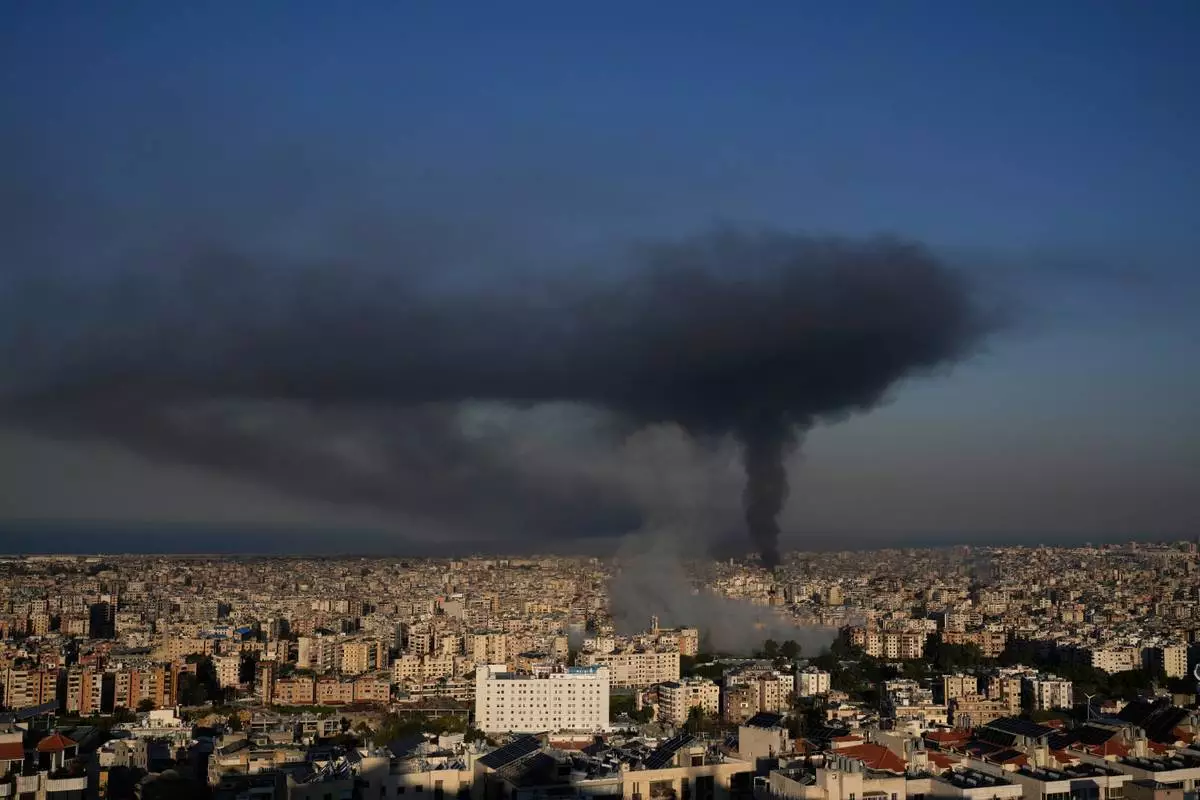
File — Smoke rises from Israeli airstrikes in Dahiyeh, a southern suburb of Beirut, Lebanon, Tuesday, March 3, 2026. (AP Photo/Hussein Malla, File)