NEW YORK (AP) — Chuck Negron, a founding member of the soul-rock sensations Three Dog Night who sang lead on such hits as “One” and “Just an Old Fashioned Love Song” and hollered the immortal opening line “Jeremiah was a bullfrog!” on the chart-topping “Joy to the World,” died Monday. He was 83.
He died of complications from heart failure and chronic obstructive pulmonary disease at his home in the Studio City neighborhood of Los Angeles, according to publicist Zach Farnum.
Negron and fellow vocalists Cory Wells and Danny Hutton were Los Angeles-based performers who began working together in the mid-1960s, originally called themselves Redwood and settled on Three Dog Night, Australian slang for frigid outback weather. Between 1969 and 1974, they were among the world’s most successful acts, with 18 top 20 singles and 12 albums certified gold for selling at least 500,000 copies.
The group contributed little of its own material, but proved uniquely adept at interpreting others, reworking songs by such rising stars of the time as Randy Newman (“Mama Told Me Not to Come),” Paul Williams (“Just an Old-Fashioned Love Song”) and Laura Nyro (“Eli’s Coming”). No matter the originator, the sound was unmistakably Three Dog Night: The trio of stars worked themselves into a raved-up, free-for-all passion, as if each singer were attempting to vault in front of the others. “The Kings of Oversing,” the Village Voice would call them.
Three Dog Night was so popular, and so in demand, it released four albums within 18 months. In December 1972, the band hosted and performed on the inaugural edition of Dick Clark’s “New Year’s Rockin’ Eve.”
“We were really on a roll and very prolific,” Negron told smashinginterviews.com in 2013. “We were in the zone so to speak and really putting it out there. Back then, I don’t think it hurt us. It started hurting a little after that when there was just too much product. We were going to towns too many times a year. I remember getting off a plane in Dallas and thinking, ‘Wait a second. Weren’t we just here?’ Just thinking, ‘Oh, God, how are we going to sell out?’”
Negron himself stood out for his drooping mustache, in contrast to his clean-shaven peers, and for his multi-octave tenor. He helped transform “One,” a Harry Nilsson ballad, from a breakup song to a cry of helpless solitude. And he helped convince Wells and Hutton not to pass on what became their most famous song.
“Joy to the World,” written by Hoyt Axton, shared the title and little else with the 18th century English hymn. Axton’s novelty anthem was a secular blessing — “Joy to the fishes in the deep blue sea, joy to you and me” — with carefree asides about women, rainbow-riding and the friendship of a wine-guzzling bullfrog named Jeremiah. According to Negron, the other singers had twice turned down “Joy to the World” in his absence before Axton played him a demo.
“When he started, I liked it immediately. I thought we could have some fun with it,” Negron told forbes.com in 2022. “We had some free time later, so we started jamming ‘Joy’ for fun. We didn’t have to be so cool all of the time, right? That opening line had to be screamed. Did that guy just say, ‘Jeremiah was a bullfrog’? I got up the scale to D, which is pretty high, and just screamed it out. When the band heard that, they went, ‘Holy crap, that’s great.‘”
No one seemed to care what “Jeremiah was a bullfrog!” was supposed to mean; it became a catchphrase of the era. “Joy to the World” outsold all other songs in 1971, received two Grammy nominations and lived on through oldies radio stations and movie soundtracks, notably for “The Big Chill” and “Forrest Gump.” The song caught on so fast, and for so long, that Three Dog Night performed it at back-to-back Grammy ceremonies.
Their other hits included “Black and White,” “Celebrate,” “Shambala” and “Easy to Be Hard.” But by the mid-1970s, the band was burned out, feuding and self-destructing. They broke up in 1976, attempted the occasional reunion and settled in as an oldies act, with Hutton the only remaining original singer. Wells died in 2015, while Negron had dropped out for good in the mid-1980s, when his drug problems led to his being fired.
Negron would call his memoir, published in 1998 and reissued 20 years later, “Three Dog Nightmare.” Chapter titles included “Making Millions and Stoned All the Time” and “Threw Up My Guts and Loved It.”
After decades of estrangement between him and Hutton, the two men reconciled last year.
Negron was married four times, most recently to his manager, Ami Albea Negron, and he is survived by five children His previous wives include Julie Densmore, former wife of drummer John Densmore of the Doors.
Born Charles Negron II in 1942, he was a New York City native who was still a toddler when his parents broke up: For a time, Negron lived in a foster home because his mother couldn’t afford to raise him and his twin sister, Nancy. He initially dreamed of playing basketball, but his life changed in adolescence when his best friend convinced him to try singing. He won a school talent show, and was soon singing professionally, at the Apollo and other venues around New York.
After graduating from Hancock, a junior college in Santa Maria, California, Negron performed in clubs in Los Angeles and met Wells and Hutton, whose friends included Brian Wilson of the Beach Boys. They nearly signed with the Beach Boys’ Brothers Records before Wilson’s bandmates, worried that their leader was using up his talents elsewhere, intervened. Negron, Wells and Hutton ended up at ABC-Dunhill, and recruited a backing band, including Floyd Sneed on drums, Joe Schermie on bass and Jimmy Greenspoon on keyboards.
In his post-Three Dog Night years, Negron released several solo albums, including “Joy to the World” and “Long Road Back,” a companion to his memoir, and otherwise dedicated himself to helping others struggling with substance abuse. Before cleaning up in the 1990s — Sept. 17, 1991 — he had been so addicted to heroin and other drugs that he nearly died numerous times, lost his family and all of his money and descended from a luxurious villa in Hollywood Hills to sleeping on a mattress in a vacant lot.
“That’s what drugs do. I don’t care if it gives you a hit song. What does it matter?” he told smashinginterviews.com. “The point is not if it helps you create, the point is it kills you! Are you willing to die because you wanted to try drugs to try a new experience? That’s the question. I’m in a town here where there are many who ain’t the same and never will be.”
Associated Press writer Beth Harris in Los Angeles contributed to this report.
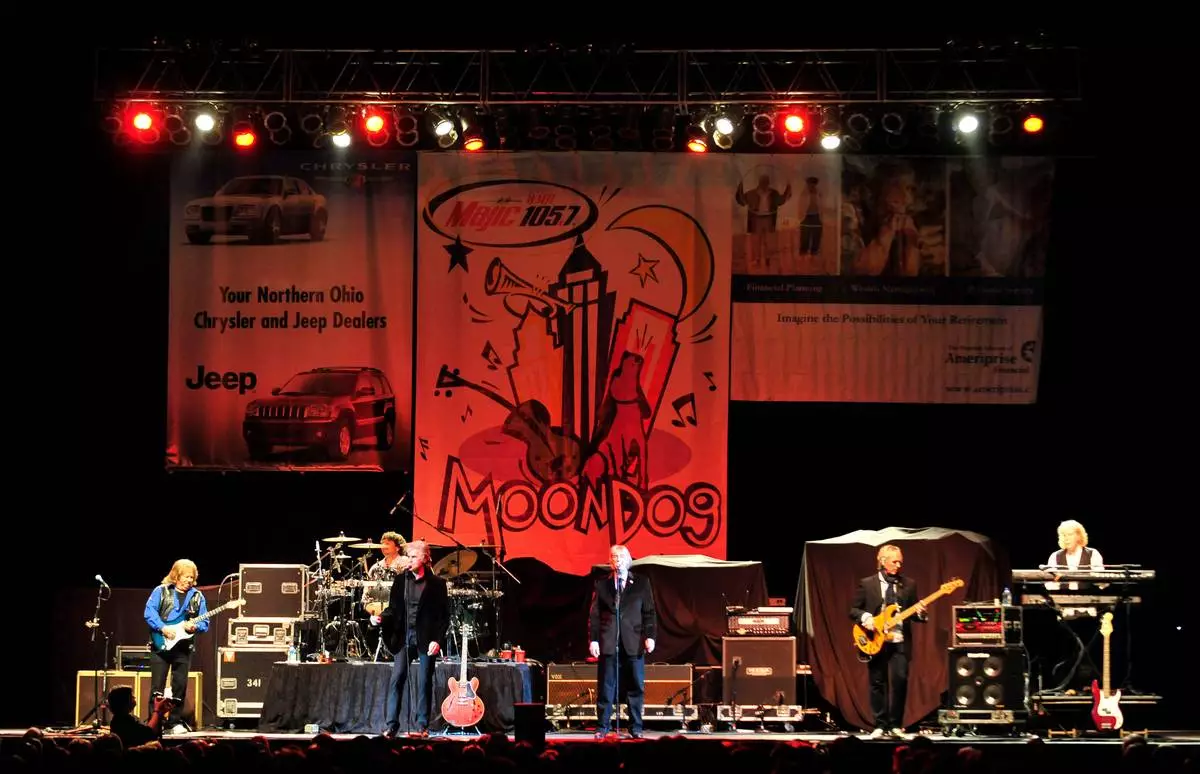
FILE - The '70s rock band Three Dog Night performs in the Moondog Coronation Ball at Quicken Loans Arena on Saturday, March 28, 2009. (AP Photo/Jason Miller, file)
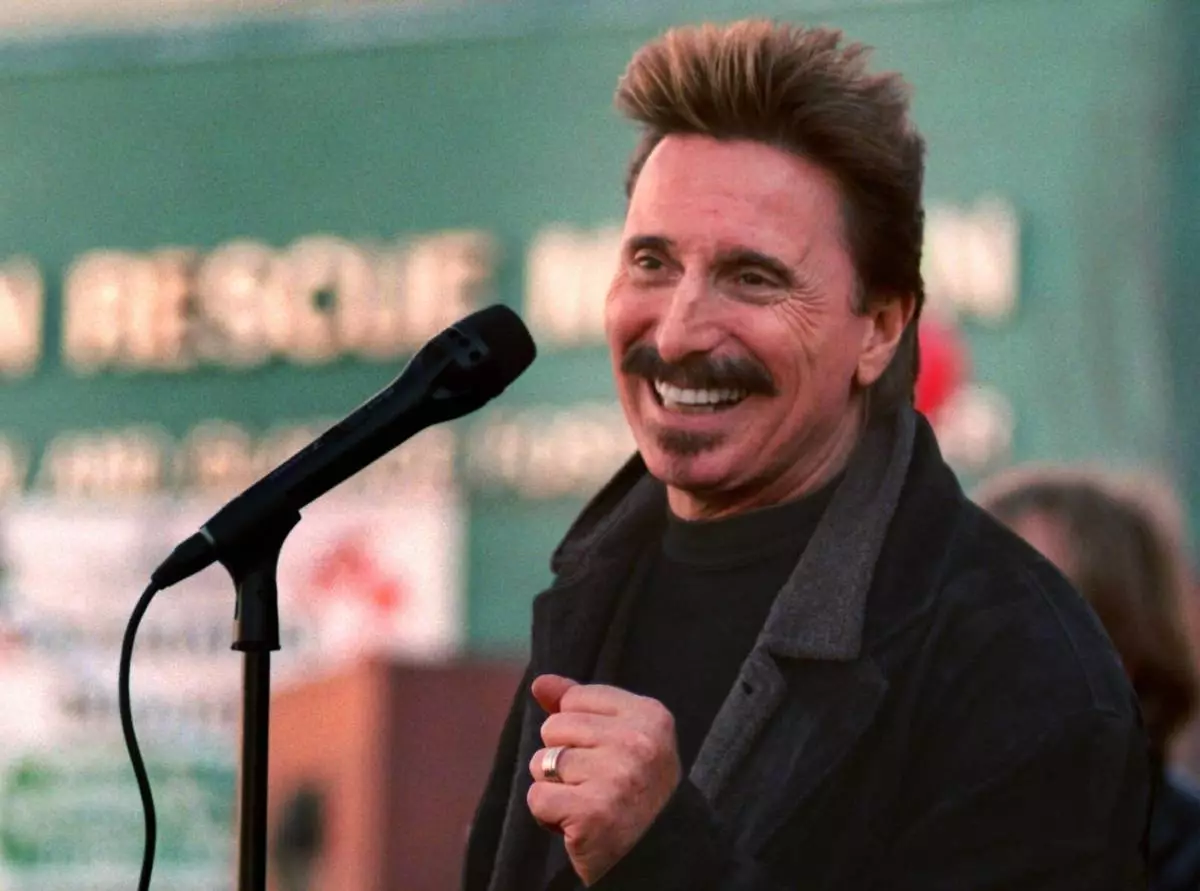
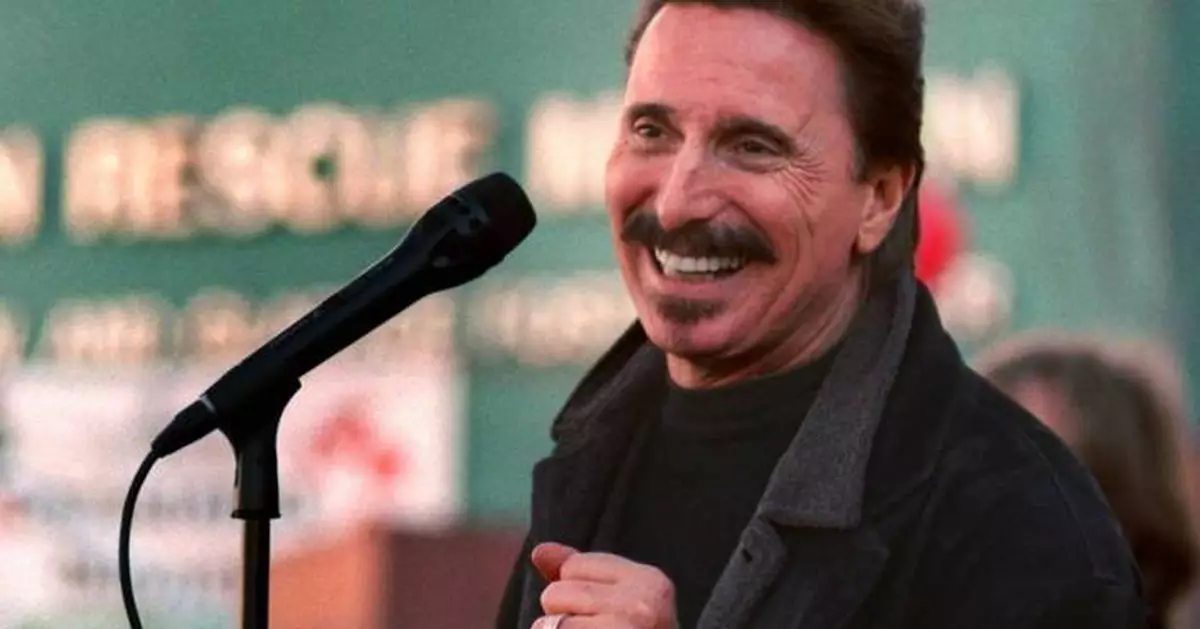
FILE - Chuck Negron, former lead singer of Three Dog Night, sings to a crowd during a Christmas Eve party, Dec. 24, 1997, at the Union Rescue Mission in Los Angeles. (AP Photo/John Hayes, File)
NEW YORK (AP) — On a recent weeknight, three tenants of an aging Bronx building were trading apartment horror stories inside a packed ballroom lined with city bureaucrats.
The occasion was the third in a series of “rental rip-off hearings,” a new forum launched by New York Mayor Zohran Mamdani for disgruntled renters to air their complaints directly to housing officials — and in some cases, the mayor himself.
As she waited in line, Gulhayo Yuldosheva said she worried that noxious mold in her apartment had worsened her child’s asthma. Nearby, her downstairs neighbor, Marina Quiroz, was showing a video of rats scurrying through her kitchen to a representative of the city’s tenant protection office.
Ann Maitin, a longtime resident of the same building, had just met with the mayor.
“He let me go over my three minutes,” she said, holding up a spiral notebook’s worth of grievances.
Mamdani, a democratic socialist swept into office on a promise of zealous tenant advocacy, framed the event as a struggle session for renters, assuring the standing room only crowd that their stories would guide the city's efforts “to actually hold landlords accountable when they don’t follow the law."
To the residents of 705 Gerard Avenue, this raised a practical problem: No one seemed to know who actually owned their building.
“It feels like such a basic question,” said Maitin, a retired Verizon technician who recently organized the building’s tenant association. “You’d think we’d have the right to that information.”
Their situation is hardly unique. As corporate owners and investor groups have grown their share of the rental market in New York City, they are increasingly shielding their identities behind limited liability companies, or LLCs.
The practice, which has also been spreading nationally, is legal. But experts warn it could complicate Mamdani’s promised crackdown, making it harder for the city and tenants to track the chronically negligent owners whose buildings the mayor has vowed to target and even seize.
“There are these big slumlords that everyone knows are doing predatory investment, but pinning them down is going to be difficult, for the LLC reason,” said Oksana Mironova, a housing policy analyst at the Community Service Society. “That’s a problem for the administration, and it’s even worse for tenants.”
For Yuldosheva and her neighbors, finding their landlord is one of many problems afflicting their six-story building near Yankee Stadium.
Heat and hot water outages are regular enough that some tenants keep a thermometer on their fridge and the city’s complaint hotline on speed dial. Common areas are often filthy, and increasingly populated by drug users. Getting help with an urgent maintenance issue “feels like waiting for Christmas in July,” said Maitin.
During a monthslong elevator outage, a tenant who uses a wheelchair, Tommy Rodriguez, said he was forced to “slide down the steps, like a kid.” Calls to the building management about a repair timeline went unanswered, he said.
Growing up in the building in the 1980s, Rodriguez recalled the previous landlord as a friendly and responsive neighborhood presence.
“This felt like a home before,” Rodriguez said. “Now they treat us the same as the rats.”
A large rodent had recently chewed a hole through his couch cushion. He handled the extermination himself, with a two-by-four.
Recently, tenants received a clue about their landlord, following the partial collapse of another Bronx building. The man identified in news stories as the owner of that building, David Kleiner, shared a Brooklyn office with their building manager, Binyomin Herzl.
A handful of tenants visited each of the building’s 72 units, logging an array of decrepit conditions and unusual alterations.
“We didn’t want to become the next news story,” said Yuldosheva, pointing to a crack in the wall of a bedroom shared by her three children — a result, she feared, of the subway that rumbles just below her windows.
Lawsuits show that Herzl has been ordered to pay more than $100,000 for violations across at least six Bronx buildings, several of which were found by a judge to pose an imminent hazard.
Reached by phone, Herzl said he didn't own any of those properties, but simply acted as a middleman between tenants and the true owners, whom he declined to list. “There’s no one landlord,” he said. “It’s a group of investors.”
Kleiner, who was previously featured on the city’s “worst landlord” list, confirmed his partial ownership of 705 Gerard in a brief phone call, but declined further comment.
Herzl, meanwhile, attributed the tenants’ complaints to “normal wear and tear” of a nearly century old building. He said Mamdani should focus on improving the city’s public housing, rather than going after private landlords.
“Our buildings look like five star hotels against his,” he added.
When landlords refuse to address a serious violation, like heat or hot water outages, the city can step in and order repairs, then bill the owner directly.
In the last three years, inspectors have ordered emergency repairs at 38 buildings that list either Herzl or Kleiner as an owner, according to records provided by the city’s housing department. The men have been billed $446,521 for those repairs.
Mamdani has proposed using such fines as a vehicle to bring distressed rental properties under city stewardship, by aggressively pursuing liens on delinquent landlords and buying up their portfolios through foreclosure auctions.
Just as the city can shut down unsanitary restaurants, Mamdani has said, landlords that “repeatedly put New Yorkers at risk will not be allowed to operate in New York City — with no exceptions."
In reality, the process is resource-intensive and legally fraught. It is made more complex by the nest of LLCs often used by landlords to obfuscate the full scope of their portfolios, according to Cea Weaver, director of the Mayor’s Office to Protect Tenants.
“It’d be great to have a better sense of who owns the buildings that we are regulating and overseeing,” she said.
State legislation that would have made it easier to identify LLC owners was recently vetoed by New York Gov. Kathy Hochul amid pressure from landlords.
Kenny Burgos, the CEO of the New York Apartment Association, a landlord lobbying group, said Mamdani’s tenant proposals — including freezing the rent for regulated tenants — would force landlords to cut back on maintenance and services.
“That’s going to take away from the elevator budget, the boiler budget, the heating budget,” he said. “It’s a question of math: These buildings are crumbling because of policy, not because of bad landlords.”
He characterized the rental rip-off hearings as “show trials” that took a “tribal approach” to the city’s affordable housing crisis.
Despite the combative branding — “New Yorkers vs. Bad Landlords,” blares one promotion — the Bronx event mostly resembled a standard constituent service night: City officials fielded questions about local laws, helped residents with paperwork and connected them to service providers.
Maitin left feeling “glad to be heard by someone who can actually do something about the problem,” but felt it was too early to tell “if it’s all talk."
The next morning, she was surprised to find the building’s superintendent applying a fresh coat of paint to a staircase. Outside, workers were removing scaffolding that had been in front of the building for years.
“I think they caught wind of the rental rip-off,” Maitin said. “They’re scared.”
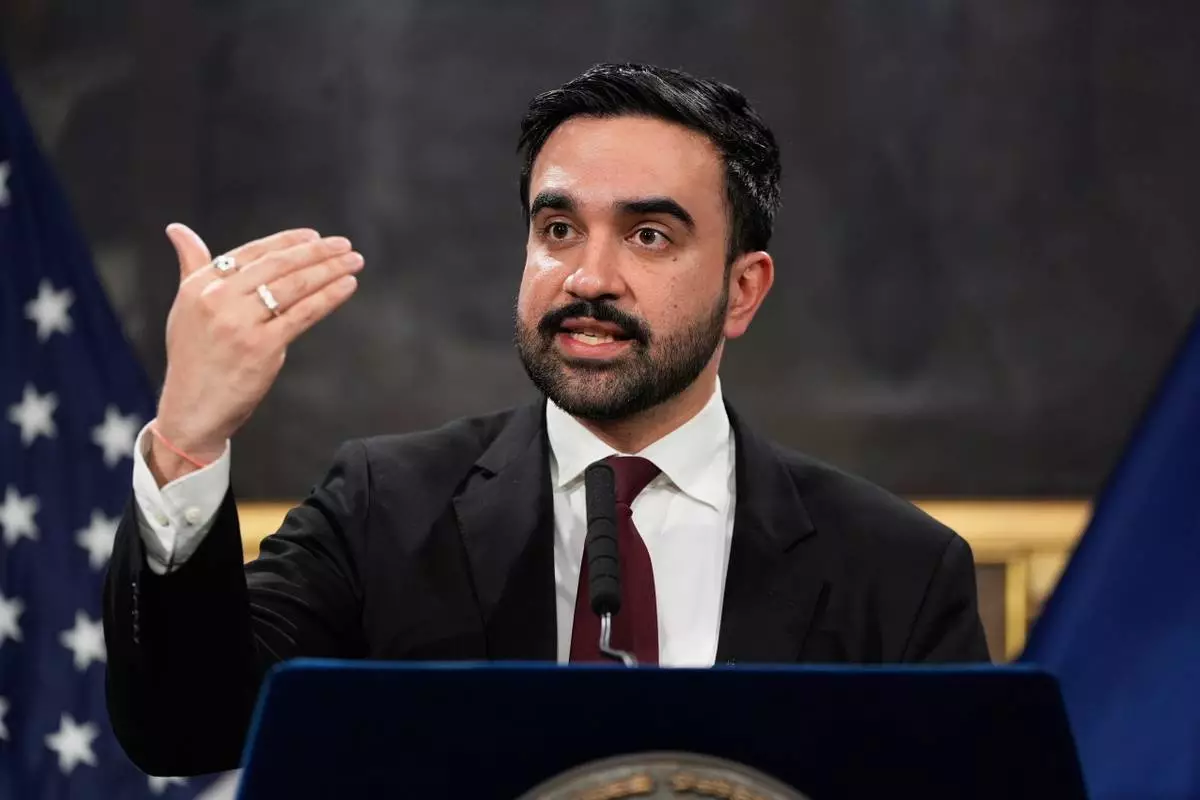
FILE - New York City Mayor Zohran Mamdani speaks to reporters during a news conference in New York, Tuesday, Feb. 17, 2026. (AP Photo/Seth Wenig, File)

FILE - New York City Mayor Zohran Mamdani speaks during a Rental Ripoff Hearing at Fordham University on Wednesday, March 11, 2026, in New York. (AP Photo/Andres Kudacki, File)
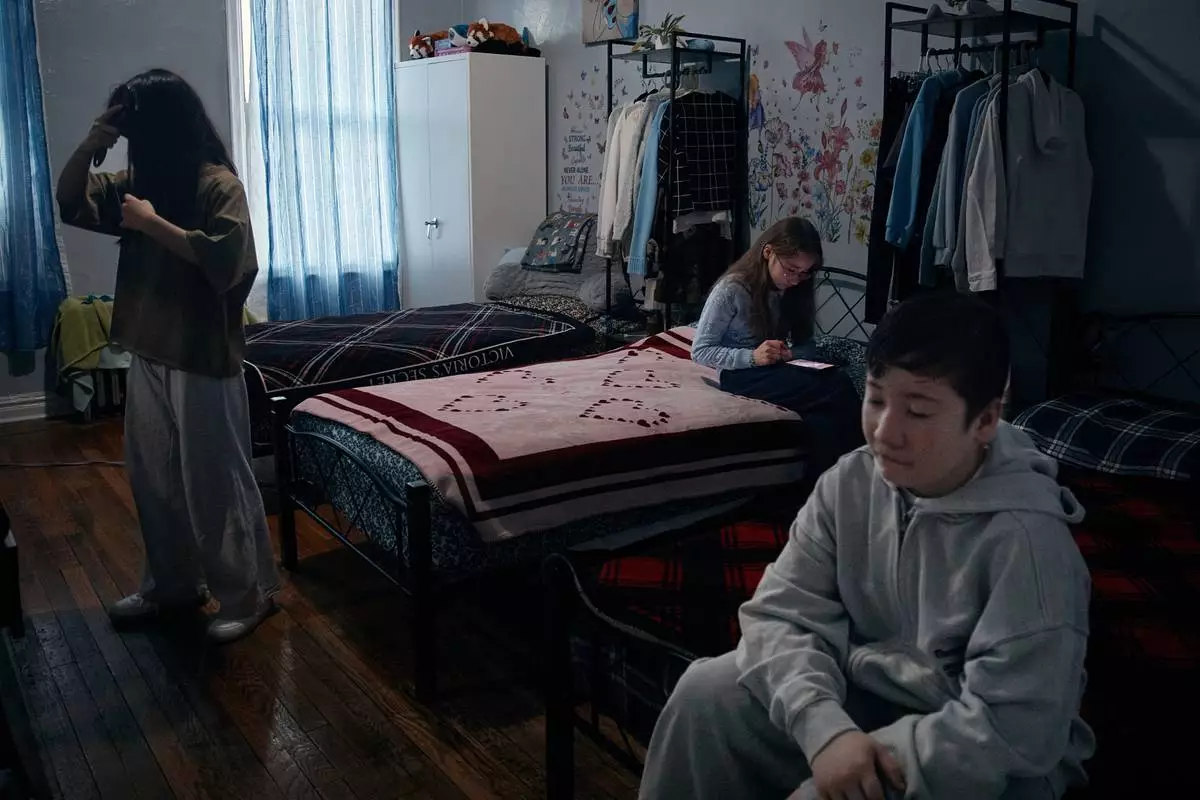
Gulhayo Yuldosheva's children get ready for school in an apartment building where tenants report maintenance issues and pest infestations, in the Bronx borough of New York, Tuesday, March 17, 2026. (AP Photo/Andres Kudacki)
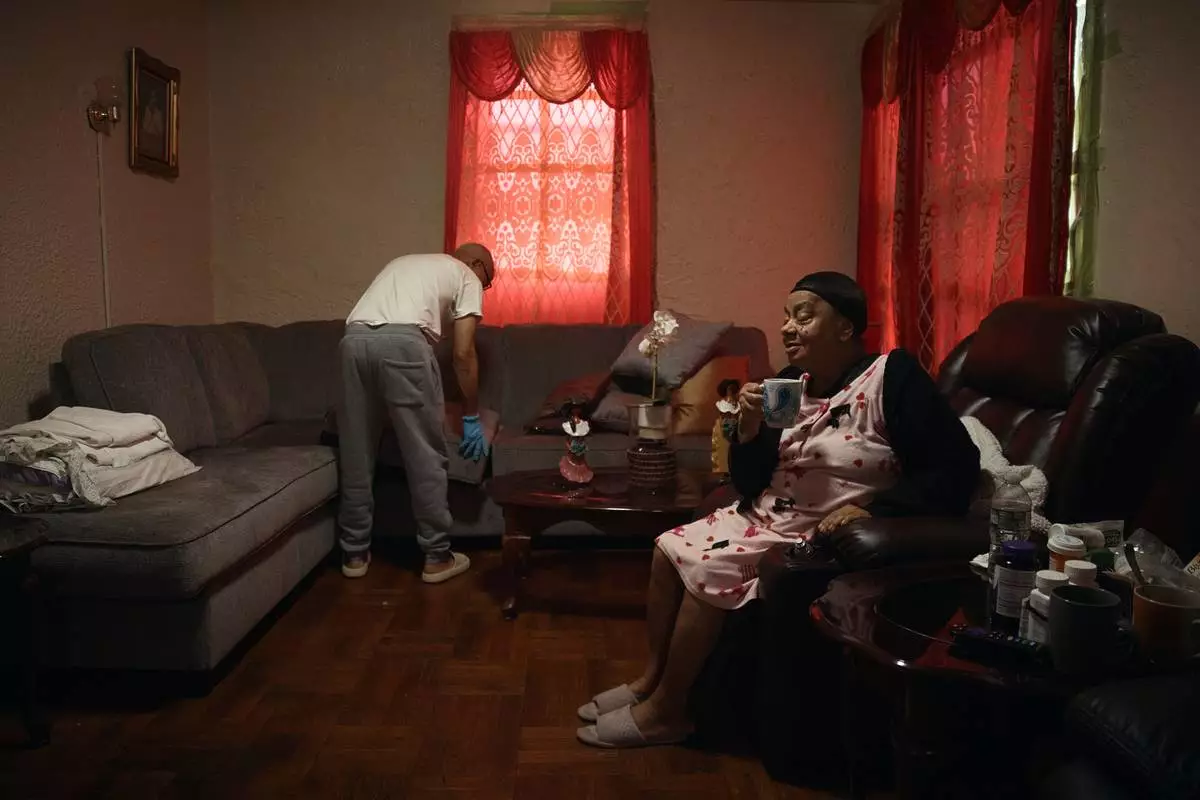
Francisco Medina, left, cleans his apartment next to his relative, Maria Frias, right, in an apartment building where tenants report maintenance issues and pest infestations, in the Bronx borough of New York, Tuesday, March 17, 2026. (AP Photo/Andres Kudacki)
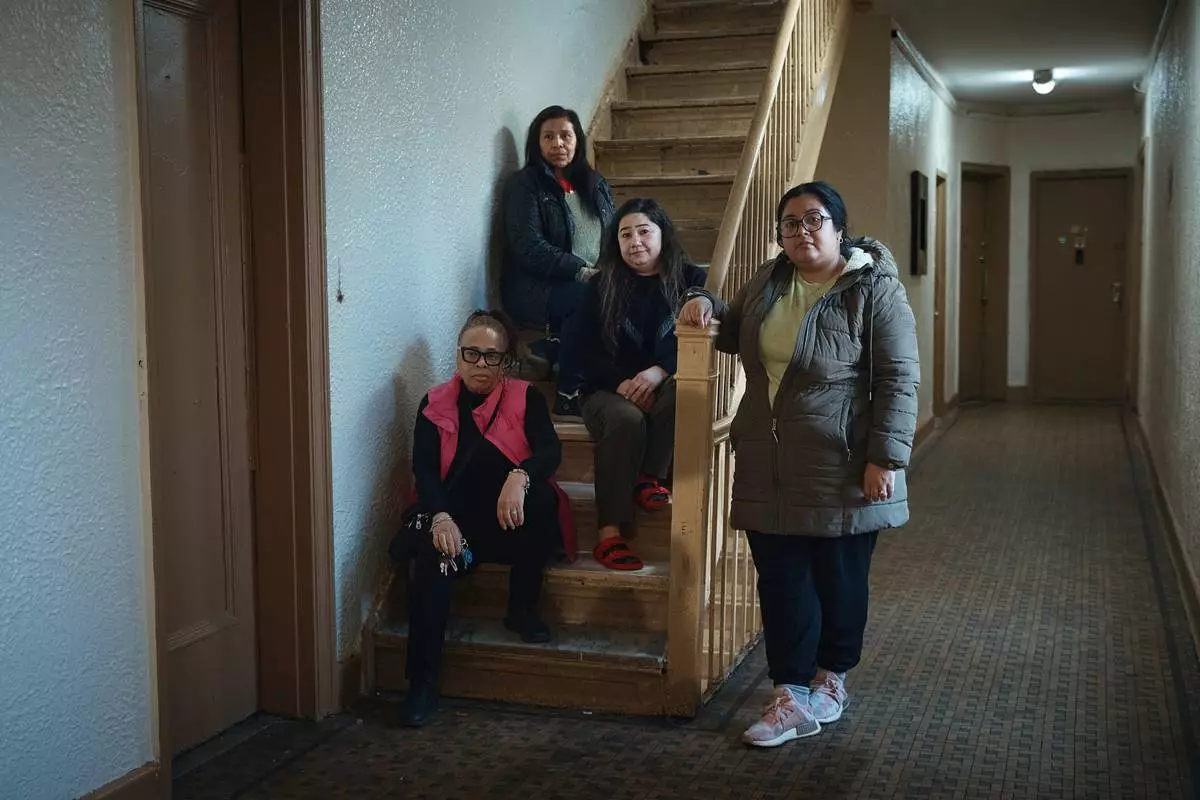
Gulhayo Yuldosheva, 33 , center right, Marina Quiroz, 65, top, pose for a portrait with other two residents in an apartment building where tenants report maintenance issues and pest infestations, in the Bronx borough of New York, Tuesday, March 17, 2026. (AP Photo/Andres Kudacki)
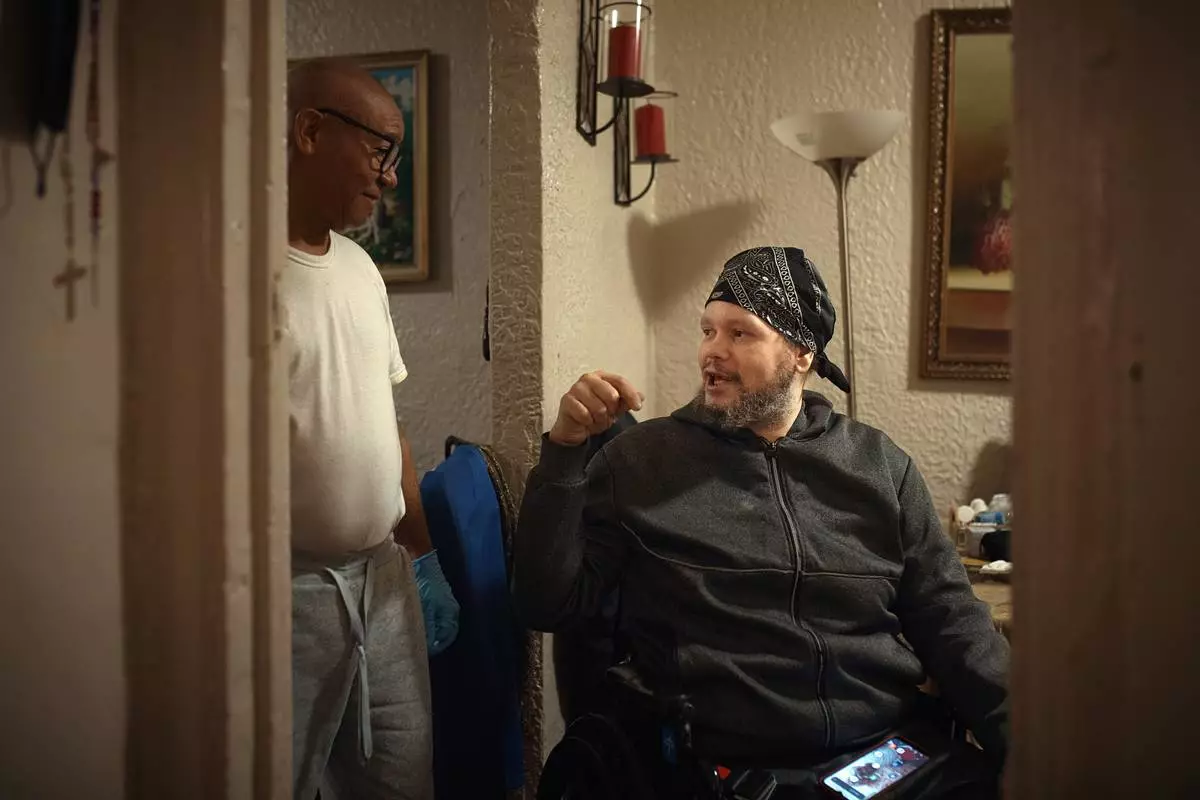
Tommy Rodriguez, right, talks to his relative, Francisco Medina, left, in an apartment building where tenants report maintenance issues and pest infestations, in the Bronx borough of New York, Tuesday, March 17, 2026. (AP Photo/Andres Kudacki)
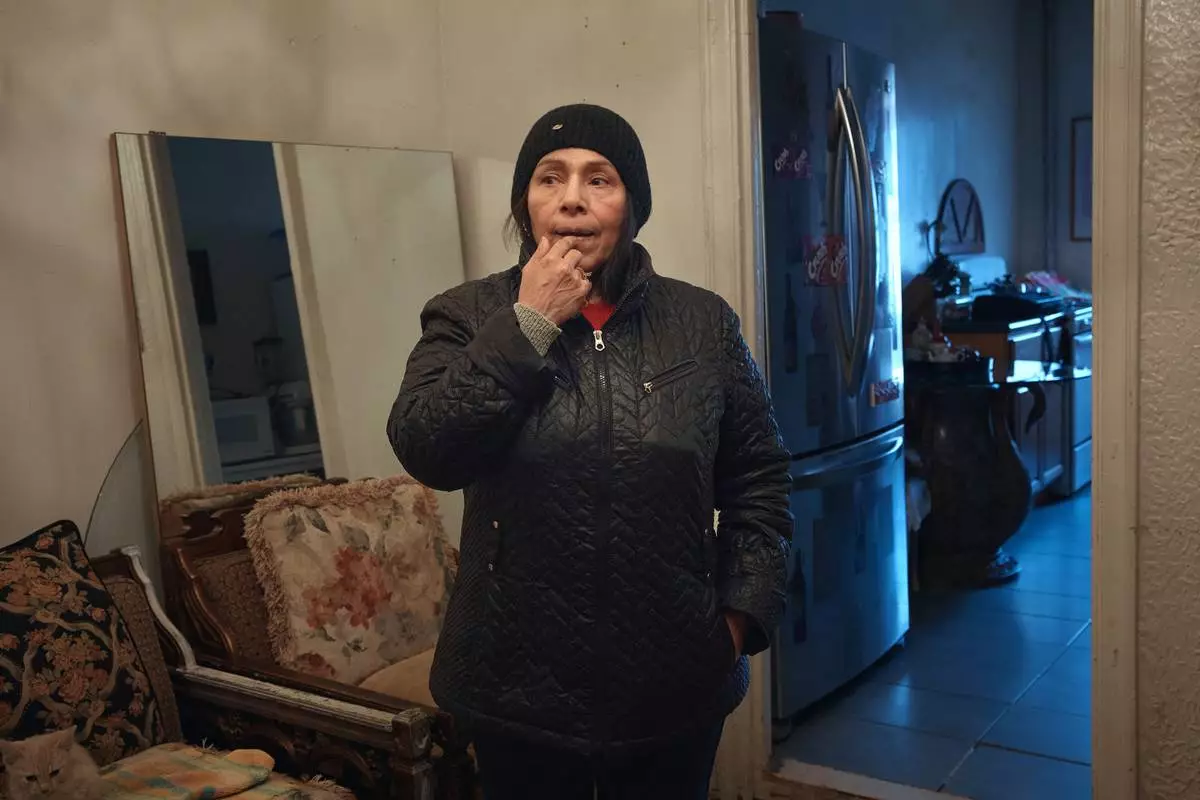
Marina Quiroz stands in her living room in a Bronx apartment building, where tenants report maintenance issues, pest infestations, Tuesday, March 17, 2026, in New York. (AP Photo/Andres Kudacki)