WASHINGTON (AP) — Don't tune into the Super Bowl hoping for a break from the tumultuous politics gripping the U.S.
The NFL is facing pressure ahead of Sunday's game between the Seattle Seahawks and the New England Patriots to take a more explicit stance against the Trump administration's aggressive immigration enforcement. More than 184,000 people have signed a petition calling on the league to denounce the potential presence of Immigration and Customs Enforcement at the Super Bowl, which is being held at Levi's Stadium in the San Francisco Bay Area. The liberal group MoveOn plans to deliver the petition to the NFL's New York City headquarters on Tuesday.
Meanwhile, anticipation is building around how Bad Bunny, the halftime show's Spanish-speaking headliner, will address the moment. He has criticized President Donald Trump on everything from his hurricane response in his native Puerto Rico to his treatment of immigrants. On Sunday, he blasted ICE while accepting an award at the Grammys. His latest tour skipped the continental U.S. because of fears his fans could be targeted by immigration agents.
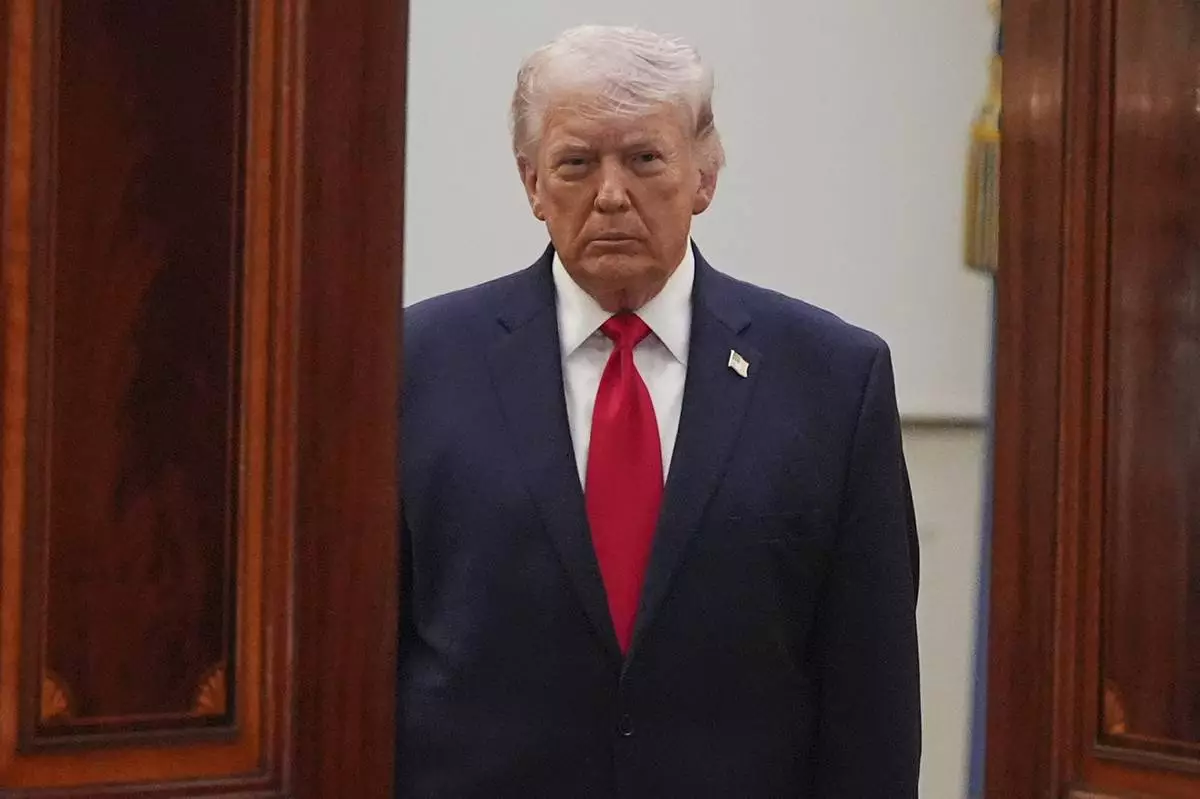
Trump, a Republican, has said he doesn't plan to attend this year's game, unlike last year, and has derided Bad Bunny as a “terrible choice.” A Republican senator is calling it “the woke bowl.” And a prominent conservative group plans to hold an alternative show it hopes will steal attention from the main event.
The Super Bowl is one of the few remaining cultural touchstones viewed by millions of people in real time, and the halftime show is no stranger to controversy, perhaps most notably Janet Jackson's 2004 performance in which her breast was exposed. But there are few parallels to this year's game, which could become an unusual mix of sports, entertainment, politics and protest. And it will unfold at a tinderbox moment for the U.S., two weeks after Alex Pretti's killing by federal agents in Minneapolis reignited a national debate over the Trump administration's hard-line law enforcement tactics.
“The Super Bowl is supposed to be an escape, right? We’re supposed to go there to not have to talk about the serious things of this country,” said Tiki Barber, a former player for the New York Giants who played in the Super Bowl in 2001 and has since attended several as a commentator. “I hope it doesn’t devolve, because if it does, then I think we’re really losing touch with what’s important in our society.”
Bad Bunny, born in Puerto Rico as Benito Antonio Martínez Ocasio, has elevated Latino music into the mainstream and gained global fame with songs almost entirely in Spanish — something that irks many of his conservative detractors. He has leaned into the controversy, referring to the halftime show when he hosted “Saturday Night Live” in October by joking “everybody is happy about it — even Fox News.”
He segued into a few sentences in Spanish, expressing Latino pride in the achievement, and finished by saying in English, “If you didn’t understand what I just said, you have four months to learn!”
Those who follow him closely doubt he'll back down now.
“He has made it very clear what he stands for,” said Vanessa Díaz, a professor at Loyola Marymount University and co-author of “P FKN R: How Bad Bunny Became the Global Voice of Puerto Rican Resistance.” “So I can’t imagine that this would all go away with the Super Bowl.”
The halftime show is a collaboration between the NFL, Roc Nation and Apple Music. Roc Nation curates the performers and Apple Music distributes the performance while the NFL controls the stage, broadcast and branding.
The NFL, which is working to expand its appeal across the world, including into Latin America, said it never considered removing Bad Bunny from the halftime show even after criticism from Trump and some of his supporters.
NFL Commissioner Roger Goodell on Monday described the singer as “one of the great artists in the world" and someone who understands the power of the Super Bowl performance “to unite people."
About half of Americans approved of Bad Bunny as the halftime performer, according to an October poll from Quinnipiac University. But there were substantial gaps with about three-quarters of Democrats backing the pick compared to just 16% of Republicans. About 60% of Black and Hispanic adults approved of the selection compared with 41% of whites.
Republicans are eager to maintain Latino support in their bid to keep control of Congress. But as the Super Bowl draws near, many in the GOP have kept up their Bad Bunny critiques.
White House press secretary Karoline Leavitt on Tuesday criticized Bad Bunny's anti-ICE statement at the Grammys, saying celebrities don't face the same dangers as other Americans.
“It’s very ironic and frankly sad to see celebrities who live in gated communities with private security, millions of dollars to protect themselves, trying to demonize, again, law enforcement,” she said.
Sen. Tommy Tuberville of Alabama, the former head football coach at Auburn University who's now running for governor, derided the “Woke Bowl" on Newsmax last week and said he'll watch an alternative event hosted by Turning Point USA. Kid Rock, a vocal Trump supporter, will be among the performers at its event.
In recent days, Department of Homeland Security official Jeff Brannigan hosted a series of private calls with local officials and the NFL in which he indicated that ICE does not plan to conduct any law enforcement actions the week of the Super Bowl or at the game, according to two NFL officials with direct knowledge of the conversations.
On Tuesday, NFL chief security officer Cathy Lanier said the federal security presence at the game will be consistent with past Super Bowls and ICE will not be among the federal agencies present.
“There are no planned ICE enforcement activities. We are confident of that,” Lanier said at a security briefing.
Still, some worry that Trump and his MAGA allies who lead DHS can change their minds ahead given their recent statements. DHS official Corey Lewandowski, a key adviser to DHS Secretary Kristi Noem, said in October that ICE agents would be conducting immigration enforcement at the game.
“There is nowhere that you can provide safe haven to people who are in the country illegally, not the Super Bowl, not anywhere else,” he said at the time.
Asked to clarify ICE's role this week, DHS spokeswoman Tricia McLaughlin refused to say whether federal immigration agents will be present for the Super Bowl.
The progressive group MoveOn will host a Tuesday rally outside the NFL headquarters in New York to present a petition telling the league, "No ICE at the Super Bowl."
“This year’s Super Bowl should be remembered for big plays and Bad Bunny, not masked and armed ICE agents running around the stadium inflicting chaos, violence, and trauma on fans and stadium workers,” MoveOn spokesperson Britt Jacovich said, adding the NFL has a responsibility to protect Super Bowl fans and stadium workers and "keep ICE out of the game.”
In an interview, San Francisco Mayor Daniel Lurie was optimistic the event would be a success even in a politically tense climate.
“We are going to keep everybody safe — our residents, our visitors,” he said. "Obviously with everything going on, we're staying on top of it, monitoring everything. But I expect everything to be safe and fun.”
Peoples reported from New York.
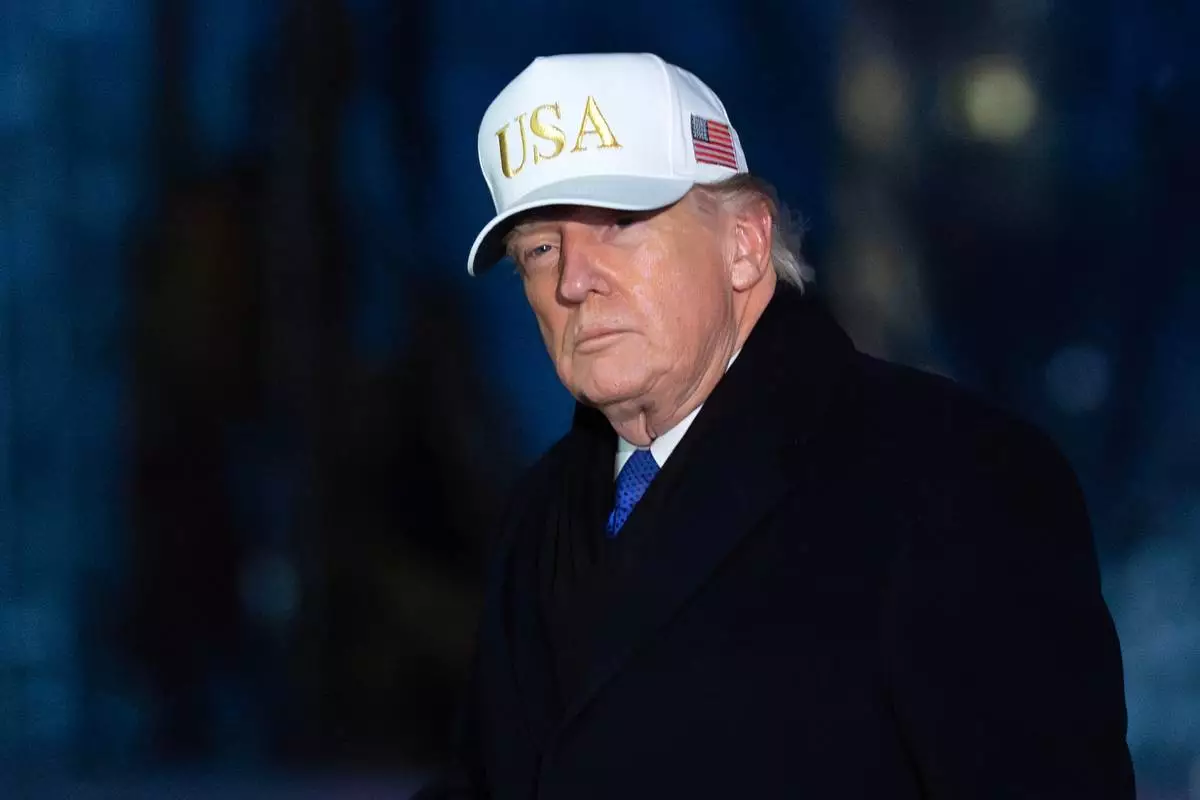
President Donald Trump walks on the South Lawn upon his arrival to the White House, Sunday, Feb. 1, 2026, in Washington. (AP Photo/Jose Luis Magana)
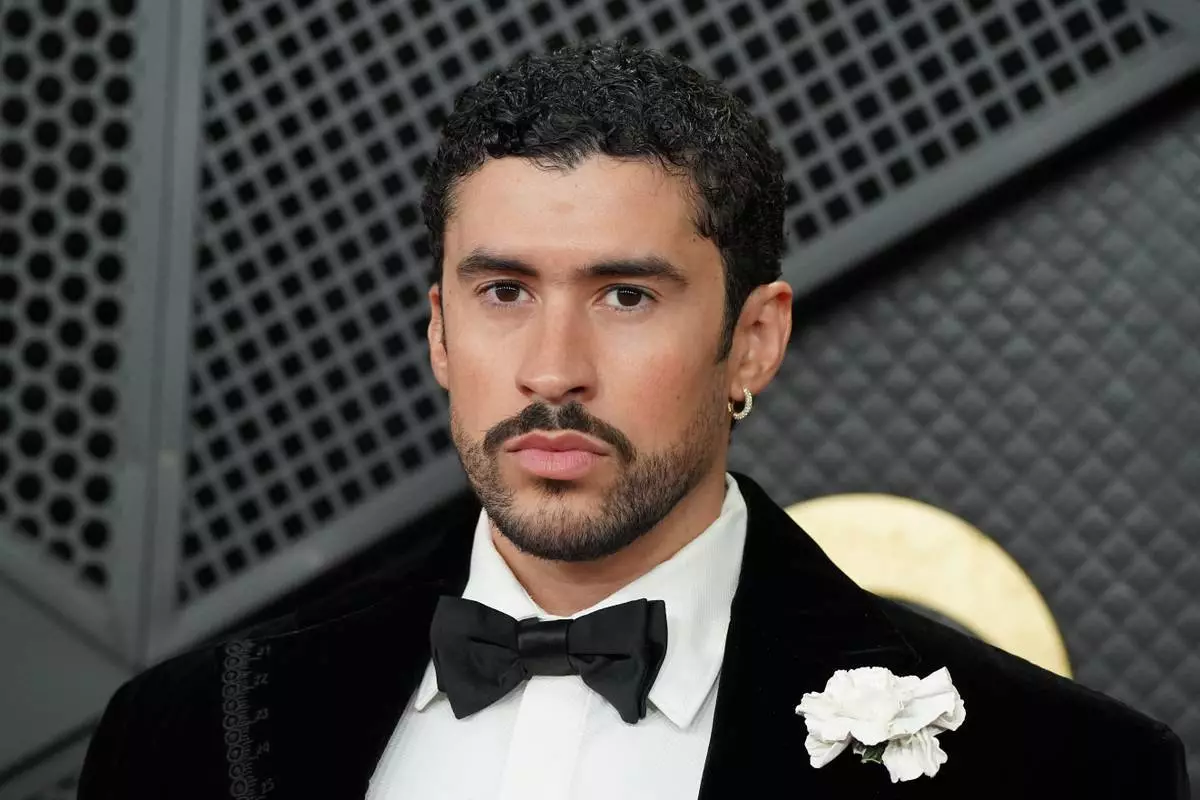
Bad Bunny arrives at the 68th annual Grammy Awards on Sunday, Feb. 1, 2026, in Los Angeles. (Photo by Jordan Strauss/Invision/AP)